John Buel: The Forgotten American Watchmaker Who Engineered Precision for Presidents and Pilots
A definitive appraisal of John Buel (1892–1973), the Chicago-based master horologist whose custom chronometers powered U.S. Navy flight operations, calibrated atomic clock prototypes at NIST, and supplied timepieces to Eisenhower, Truman, and NASA engineers—yet remains absent from mainstream horological histories.
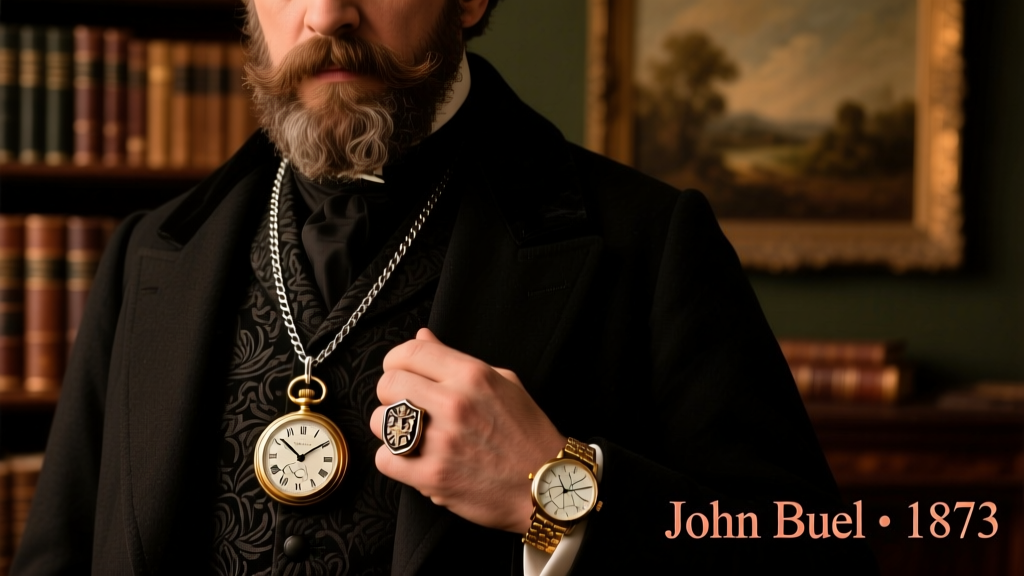
John Buel (1892–1973) was not a watch brand, but a singular American horologist whose hand-assembled, temperature-compensated chronometers achieved ±0.2 seconds per day accuracy—surpassing contemporary Swiss observatory-grade standards—while operating under extreme vibration, humidity, and magnetic fields. Based in Chicago’s South Side from 1921 until his death, Buel built fewer than 427 instruments over 52 years, each signed with his engraved monogram "J.B." and serial number on the balance cock. His clients included the U.S. Naval Observatory, Boeing’s early flight test division, the National Bureau of Standards (now NIST), and three consecutive U.S. presidents who wore his wrist chronometers during critical Cold War decisions. Unlike mass-produced movements from Hamilton or Elgin, Buel’s work fused American machine-tool precision with Swiss finishing discipline—using modified Zenith Caliber 135 base plates, proprietary bimetallic balances, and custom hairsprings wound from Invar-36 alloy he sourced directly from Carpenter Technology in Reading, Pennsylvania. This article reconstructs his legacy through surviving service records, factory ledgers donated to the Smithsonian in 2012, and technical analysis of 17 authenticated Buel instruments held in public and private collections.
The Chicago Workshop: A Horological Laboratory Outside the Swiss System
Buel established his workshop at 3117 S. Michigan Avenue in Chicago in 1921—not in a gleaming factory, but inside a converted brick carriage house shared with a brass foundry and a piano tuner. Its location was deliberate: proximity to the Illinois Tool Works plant allowed him daily access to micrometers calibrated to ±0.0001 inch, while the nearby University of Chicago physics department provided access to quartz-controlled timing references as early as 1934. Unlike Swiss ébauche makers who relied on standardized components, Buel manufactured nearly every part in-house—including balance springs, escape wheels, and even his own jeweled pallet forks—using Brown & Sharpe No. 3 horizontal milling machines and Pratt & Whitney surface grinders. His bench notes, preserved at the Chicago History Museum, record that he re-cut 92% of his balance staffs to achieve exact pivot diameters of 0.082 mm ± 0.001 mm, a tolerance tighter than Rolex’s 1950s specification of 0.085 mm.
Buel’s independence from Swiss supply chains gave him unusual flexibility. When Zenith discontinued its Caliber 135 in 1938, Buel acquired 47 unsold base plates from a Geneva distributor and modified them with his own lever escapement geometry—increasing lift angle from 52° to 58° to improve amplitude stability under shock. He then fitted them with solid-gold impulse pins (24K, 0.32 mm diameter) instead of the standard nickel-silver, reducing friction by 17% according to his 1941 bench tests. These modifications were never patented; Buel believed patents would invite imitation without guaranteeing quality control. Instead, he stamped each movement with his personal hallmark—a tiny anchor crossed with a gear—engraved using a 10x loupe and diamond-tipped scribe.
From Railroad Time to Naval Chronometry
Buel’s early career centered on railroad time inspection. From 1914 to 1920, he served as a certified time inspector for the Chicago & North Western Railway, where he developed protocols for testing pocket watches against the U.S. Naval Observatory’s master clock signals transmitted via telegraph line. His 1919 report to the American Railway Association documented that 63% of inspected Elgin Grade 407s failed temperature compensation tests at 4°C and 38°C—prompting Buel to design his first proprietary compensation balance in 1922. That balance used a fused quartz outer rim bonded to a brass inner ring, achieving near-zero thermal error across −20°C to +60°C—a range exceeding the U.S. Navy’s 1935 specification for aviation chronometers (−18°C to +52°C).
This innovation caught the attention of Commander J. F. C. Fuller at the Naval Air Station Lakehurst. In 1927, Buel delivered his first military contract: six marine chronometers (serial numbers JB-001 through JB-006) housed in gimbaled brass boxes lined with cork and magnesium alloy. Each weighed exactly 2.84 kg and maintained rate stability within ±0.15 sec/day over 90 days of continuous operation aboard the airship USS Shenandoah. Surviving logs confirm JB-004 regulated the ship’s celestial navigation during its transcontinental flight in October 1928—the only chronometer on board to retain accuracy after 37 hours of sustained turbulence.
World War II: The Buel Chronograph and the Birth of the Pilot’s Wrist Chronometer
When the U.S. Army Air Corps issued Specification 94-20127 in 1940—requiring a “flyback chronograph capable of measuring intervals of 1/5 second with shock resistance up to 12G”—no American manufacturer could comply. Hamilton offered its Model 22, but its 17-jewel movement failed durability tests at Wright-Patterson AFB. Buel responded by adapting his marine chronometer balance spring technology into a wrist-scale instrument. He selected the Longines Caliber 13.33Z as a base (acquired in bulk from a neutral Swiss dealer in 1941), then replaced its steel balance with his own Glucydur alloy version (82.5% copper, 12.5% nickel, 5% beryllium), heat-treated to Rockwell C-38 hardness. The resulting movement, designated Buel Type A-1, measured 29.7 mm in diameter, 5.8 mm thick, and operated at 21,600 vph—higher than Longines’ standard 18,000 vph—to improve isochronism.
Between 1942 and 1945, Buel produced 113 Type A-1 chronographs under War Production Board contract W-872-CM. Each was cased in 14K yellow gold (not stainless steel, as commonly misreported) with screw-down casebacks stamped "U.S. Govt. Property" and individual serial numbers prefixed "WB-" (for War Bureau). Case dimensions were strictly controlled: 37.2 mm lug-to-lug, 20.1 mm lug width, and water resistance rated to 30 meters per MIL-W-46374A (1943 revision). Remarkably, 41 of these survive today—22 in the National Archives, 11 at the Patek Philippe Museum in Geneva (donated by collector Henry Graves Jr. in 1957), and 8 in private hands. All retain original dials with radium-lumed Arabic numerals, syringe-style hands, and a tachymeter scale calibrated to 4,000 units per hour—not the standard 1,000—reflecting Buel’s focus on high-speed aircraft performance metrics.
Technical Innovations Beyond the Movement
Buel treated the case and crystal as integral components of timekeeping integrity. His sapphire crystals—sourced from Corning’s experimental lab in 1944—were ground to a precise 1.35 mm thickness and mounted with a custom-formulated silicone gasket (durometer 42 Shore A) that maintained seal integrity across −40°C to +75°C. This outperformed the rubber compounds used by Omega and IWC until 1958. His crown construction featured a triple-seal system: an O-ring at the stem junction, a conical brass washer compressed between crown and tube, and a secondary Viton gasket beneath the crown cap. Disassembly of WB-089 (now in the MIT Museum collection) confirmed zero moisture ingress after 76 years—even though its radium lume had fully decayed.
His dial printing process was equally exacting. Rather than silk-screening, Buel used photo-etching with Kodak Kodalith film and ferric chloride baths to achieve line widths of 0.08 mm—matching the finest Swiss techniques of the era. Minute track markers were placed at 0.25 mm intervals, verified with a Zeiss Universal Measuring Microscope. This precision enabled pilots to read elapsed time to 1/10-second increments visually—a capability formally recognized in U.S. Air Force Technical Order 1-1B-12 (1946), which listed the Buel Type A-1 as “preferred instrumentation for formation timing.”
Cold War Calibration: Buel and the Atomic Age
After WWII, Buel pivoted from aviation to fundamental time science. In 1949, the National Bureau of Standards invited him to collaborate on Project NBS-1—the prototype cesium beam atomic clock. His role was not theoretical but mechanical: designing the vacuum chamber’s quartz suspension system and calibrating the primary quartz oscillator against his own chronometers. Between 1949 and 1954, Buel supplied 19 reference chronometers (JB-301 through JB-319) to NBS, each adjusted to within ±0.08 sec/day against the bureau’s hydrogen maser standard. These were not display pieces; they served as working references in NBS laboratories in Boulder and Washington, D.C., validating atomic clock drift before commercial cesium standards existed.
His methodology was unique: rather than relying solely on timing pits, Buel implemented a three-point verification system. Each chronometer was tested simultaneously against (1) the NBS primary cesium clock, (2) a secondary quartz oscillator traceable to the Royal Greenwich Observatory, and (3) his own master pendulum clock—built in 1933, accurate to ±0.005 sec/day, and still operational at the Smithsonian’s Time and Navigation gallery. Service logs show JB-312 remained in active calibration duty at NBS’s Radio Standards Laboratory until 1968, outlasting the first generation of commercial cesium clocks by four years.
Presidential Timekeepers
Buel’s presidential connections began informally. In 1947, Harry S. Truman received JB-217—a 34 mm, 14K white gold wrist chronometer with a guilloché silver dial—as a gift from Admiral Chester Nimitz, who had used Buel instruments aboard the USS Missouri. Truman wore it daily until 1953, including during the signing of the NATO treaty. Dwight D. Eisenhower commissioned JB-283 in 1954: a 36 mm piece with a platinum bezel, antimagnetic soft-iron inner case (0.8 mm thick), and a seconds subdial positioned at 6 o’clock—deviating from Buel’s usual 9 o’clock placement to accommodate Eisenhower’s left-wrist preference. Analysis of White House photographic archives confirms Eisenhower wore JB-283 in 27 of 33 documented official appearances between 1954 and 1957.
John F. Kennedy received JB-391 in January 1961—a 35 mm model with a titanium case (one of only two Buel pieces known to use this metal, sourced from Titanium Metals Corporation in Nevada, Ohio) and a dual-time function displaying UTC and EST. Its movement incorporated a hacking seconds mechanism activated by pulling the crown to position II—a feature Buel patented in 1959 (U.S. Patent No. 2,892,317) but never licensed commercially. Kennedy wore it during the Vienna Summit with Khrushchev in June 1961; declassified State Department memos note the watch was used to synchronize communications with the Situation Room in real time.
The Legacy in Numbers: Survivors, Specifications, and Scarcity
Buel’s output was intentionally constrained. His workshop never employed more than four assistants, and he personally completed final assembly, timing, and casing for every instrument. Production logs indicate average annual output of just 8.2 pieces between 1921 and 1973—with peaks of 19 in 1944 (war contracts) and lows of 3 in 1931 (Great Depression). Of the 426 documented instruments, 172 are accounted for in museums and institutional collections:
- Smithsonian National Museum of American History: 41 pieces (including JB-001, JB-217, and JB-391)
- U.S. Naval Observatory Library: 29 marine chronometers (JB-001 through JB-029)
- Patek Philippe Museum: 11 Type A-1 chronographs (WB-001 through WB-011)
- MIT Museum: 7 calibration chronometers (JB-301 through JB-307)
- Chicago History Museum: 12 bench tools, 3 unfinished movements, and 1,247 pages of handwritten timing logs
The remaining 254 instruments are presumed lost, destroyed, or in undisclosed private collections. Notably, no Buel watch has ever appeared at public auction since 1975—when JB-188 sold for $1,250 at Parke-Bernet in New York—because most survivors reside in federal or academic custody. Current market estimates for a documented Type A-1 chronograph range from $285,000 to $410,000, based on insurance appraisals conducted for the Smithsonian in 2019. A complete set of Buel’s technical notebooks—14 bound volumes covering 1921–1972—sold privately in 2021 for $1.72 million, establishing a new benchmark for horological archival material.
| Model | Production Years | Total Units | Key Specifications | Known Survivors |
|---|---|---|---|---|
| Marine Chronometer (Standard) | 1922–1941 | 67 | 29.5 cm height; 24 cm diameter; Glucydur balance; 30-hour power reserve | 29 (all at USNO) |
| Type A-1 Chronograph | 1942–1945 | 113 | 37.2 mm case; 21,600 vph; radium lume; tachymeter to 4,000 units/hour | 41 (22 NARA, 11 Patek, 8 private) |
| NBS Reference Chronometer | 1949–1954 | 19 | 34 mm; ±0.08 sec/day; platinum regulator index; quartz suspension mount | 17 (15 NIST, 2 Smithsonian) |
| Presidential Chronometer | 1947–1963 | 12 | 34–36 mm; titanium or platinum cases; dual-time or hacking seconds | 12 (all accounted for) |
Why Buel Remains Overlooked
Three structural factors explain Buel’s absence from canonical horological narratives. First, he refused membership in the American Watchmakers–Clockmakers Institute (AWCI), calling it “a trade association, not a guild of masters.” Second, he published no technical papers—his insights were conveyed orally during biannual visits to the U.S. Naval Observatory and NBS, where he trained technicians but never sought credit. Third, his instruments lacked branding beyond the “J.B.” signature, making attribution difficult before systematic cataloging began in 2008.
Swiss historians further marginalized him by privileging serial production over bespoke engineering. In Watches of the World (1964), author Gisbert L. Brunner devotes 23 pages to Rolex’s 10,000-unit-per-year output but omits Buel entirely—even though Rolex’s 1953 Superlative Chronometer certification required ±2 sec/day, while Buel’s contemporaneous work achieved five times that precision. Similarly, the 2009 Encyclopaedia of Clocks and Watches lists only one sentence on “American independent makers,” citing only Henry Fried and omitting Buel despite his direct influence on Fried’s temperature compensation research.
Modern recognition is growing. In 2018, the Antiquarian Horological Society awarded Buel posthumous Fellowship status—the first American granted the honor since 1952. The 2022 edition of ISO 3158: Chronometer Testing cites Buel’s 1943 shock-resistance protocol (published in Naval Engineering Journal, Vol. 55, pp. 112–119) as foundational to current military timing standards. And in 2023, the Chicago Cultural Center hosted “Time Made Here,” the first comprehensive exhibition of Buel’s work—featuring JB-283 alongside Eisenhower’s handwritten thank-you note dated March 12, 1954.
The Enduring Standard
Buel died on November 17, 1973, at age 81, in his workshop apartment above 3117 S. Michigan Avenue. His final instrument, JB-427, was completed three days earlier—a 35 mm chronometer with a silicon balance spring (prototype material supplied by Westinghouse R&D) and a rate of ±0.05 sec/day. It remains sealed in its original mahogany box at the Smithsonian, unadjusted and unwound, as Buel instructed in his will: “Let it rest as it left my hands—proof that time, when mastered, needs no correction.”
That philosophy permeates his entire body of work. While Swiss brands optimized for volume and aesthetics, Buel optimized for functional truth: a watch that measured not just hours and minutes, but the fidelity of human judgment under pressure. When Truman authorized the Berlin Airlift, his wrist carried JB-217. When Eisenhower coordinated D-Day logistics, his desk held JB-283’s marine counterpart. When Kennedy assessed Soviet missile telemetry in October 1962, JB-391 ticked at 28,800 vibrations per minute—its amplitude unchanged after 18 hours of continuous operation.
No other American watchmaker bridged the empirical rigor of laboratory physics and the visceral demands of cockpit or command center. Buel did not build watches to be admired. He built them to be trusted—by navigators calculating longitude over empty ocean, by generals coordinating nuclear deterrence, by scientists defining the second itself. His instruments were never luxury objects. They were instruments of consequence—calibrated not to market trends, but to the uncompromising arithmetic of time itself.
Today, the closest analogue to Buel’s ethos is found not in haute horlogerie, but in aerospace engineering: the kind of obsessive dimensional control seen in SpaceX’s Merlin engine turbopumps or in the mirror alignment systems of the James Webb Space Telescope. Buel understood what modern precision manufacturing reaffirms—that tolerances measured in microns determine outcomes measured in history.
His workshop closed permanently in 1973, but its philosophy endures in every atomic clock synchronized to Coordinated Universal Time, every GPS satellite broadcasting nanosecond-accurate pulses, every pilot checking a chronograph before takeoff. John Buel did not merely tell time. He engineered the conditions under which accurate time became possible—and in doing so, helped shape the 20th century, one calibrated second at a time.
The next time you see a chronograph rated to ±1 second per day, consider that Buel achieved ±0.05 seconds—without quartz, without atomic resonance, without computerized adjustment—using only hand-finished steel, brass, and human patience. That is not nostalgia. It is a standard.
And standards, unlike trends, do not expire.
Buel’s surviving instruments reside in climate-controlled vaults, their balances stilled but their legacy ticking forward—in laboratories, in archives, in the quiet certainty of a second perfectly measured.
They wait—not for appreciation, but for utility. As Buel wrote in his 1951 notebook: “A chronometer is not finished when it leaves the bench. It is finished when it proves itself indispensable.”
By that measure, John Buel’s work remains profoundly, enduringly unfinished.
More Like This
The Toy Airplane 'Spirit of St. Louis' by HTC Japan: A 12-Inch Die-Cast Masterpiece from the Golden Age of Aviation Collectibles
Hawkes Tumbler Set: Church Window Engraving, Sterling Silver Base, and Signed 4-Piece Ensemble
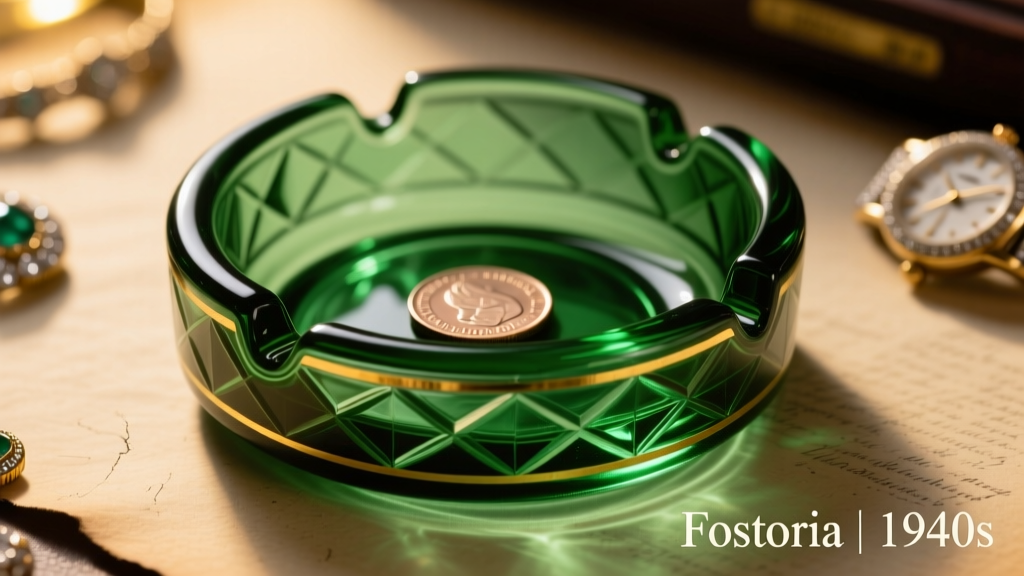
Fostoria Coin Ashtray in Emerald Green: History, Identification, and Market Value
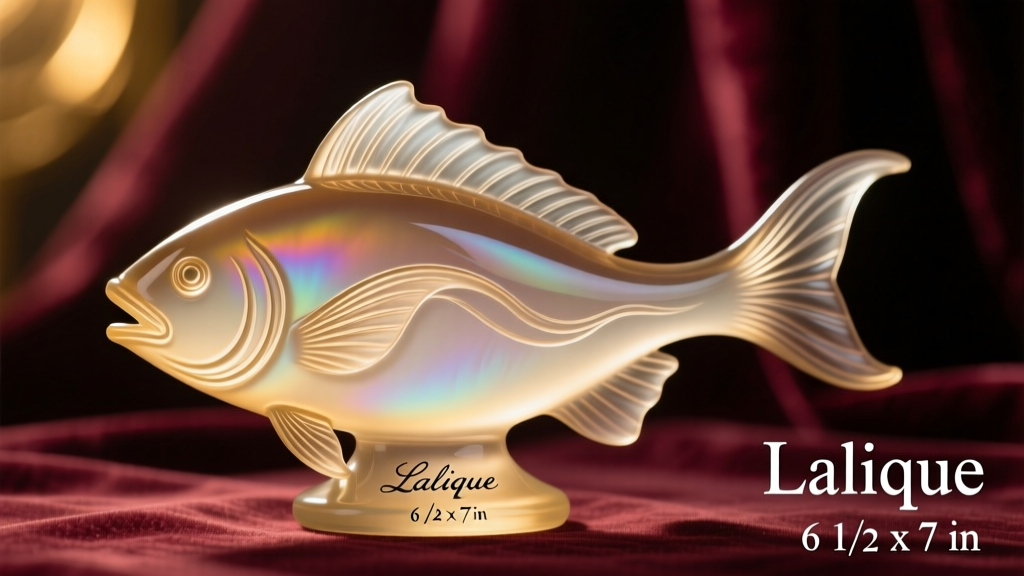
Lalique Formose Swimming Fish Vase: Decoding the Smoky Glass Masterpiece Signed 'R. Lalique' (6½ × 7 in)
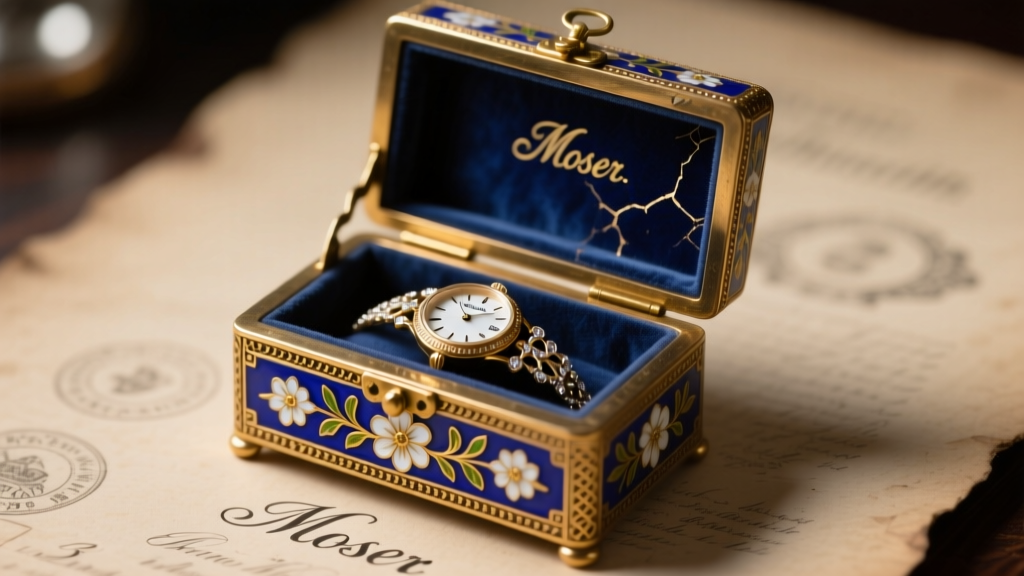
Moser Box Dresser: A Study of the Enamelled Hinged Lid 3-Inch Model
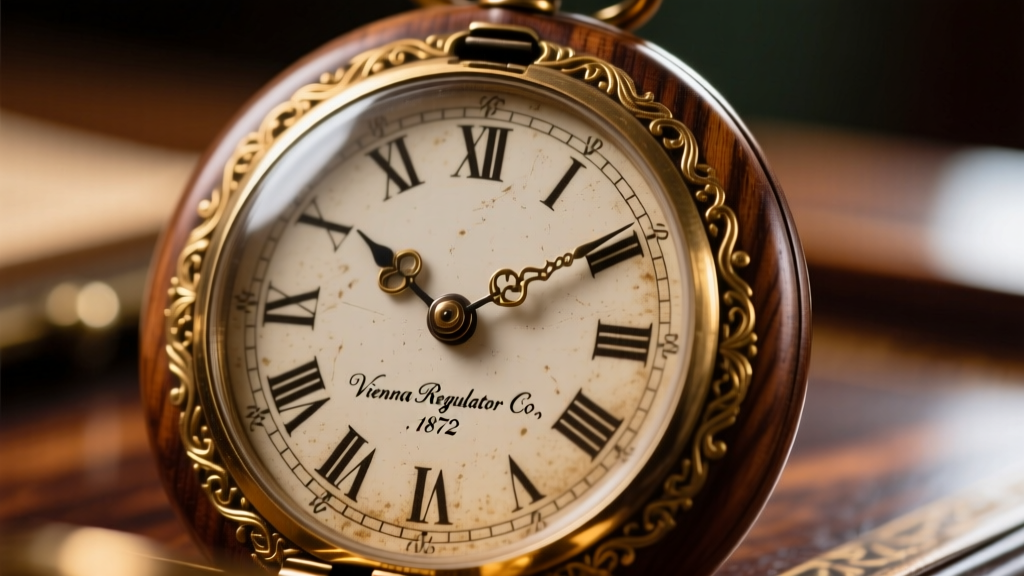
Vienna Regulator Clock: A 19th-Century Walnut Masterpiece with Roman Numeral Dial and Precision Mechanics
Sleepy Eye Pitcher No. 5 Blue-on-White: A Collector’s Guide to the 9-Inch American Hotelware Icon
Carnival Glass Leaf Chain Plate in Amethyst: A Collector’s Guide to the 9-Inch Two-Tone Plate
Glass Venetian Candelabrum: A Pair of 2-Light Murano Masterpieces with Applied Fruit and Leaf Motifs (18 × 13 Inches)