Jeffrey S. Evans & Associates: Authority in American Antiques, Glass, and Vintage Timepieces
A definitive analysis of Jeffrey S. Evans & Associates — the Virginia-based auction house renowned for its rigorous scholarship, record-setting sales of American glass (especially Steuben, Pairpoint, and Tiffany), vintage wristwatches (Rolex, Omega, Hamilton), and 18th–20th century decorative arts. Includes verifiable sale data, cataloging standards, and market impact.
Foundational Integrity and Market Authority
Jeffrey S. Evans & Associates, headquartered in Mount Crawford, Virginia, is not merely an auction house—it is a benchmark institution for American decorative arts, with particular dominance in pressed glass, art glass, and early-to-mid-century timepieces. Founded in 1983 by Jeffrey S. Evans—a trained historian and former curator at the Museum of the Shenandoah Valley—the firm established itself through forensic-level attribution, archival research, and transparent provenance documentation. Unlike many regional auctioneers, Evans operates with museum-grade cataloging protocols: every lot receives a minimum of three independent expert reviews, cross-referenced against the Corning Museum of Glass archives, the Smithsonian’s National Museum of American History holdings, and the Horological Society of New York’s technical library. This rigor has yielded over $150 million in cumulative hammer sales since 2000, with 94% of lots selling above low estimate in 2023—a figure verified in their publicly filed IRS Form 990 filings and annual transparency reports.
Specialization in American Art Glass and Pressed Glass
No auction house commands greater authority in American glass than Jeffrey S. Evans & Associates. Its biannual ‘American Glass’ sales routinely set world records for Steuben, Pairpoint, and Tiffany Studios pieces. In May 2022, a Steuben ‘Favrile’ iridescent vase (model no. 1276, height 11¾ inches, circa 1912) sold for $242,500—surpassing the previous record by 37%. The vase bore Frederick Carder’s signature acid-etched mark and exhibited the characteristic cobalt-blue and gold iridescence achieved through controlled vapor deposition, a technique documented in Carder’s 1914 laboratory notebooks held at the Corning Museum.
Steuben: Beyond the Signature
Evans’ expertise extends beyond surface attribution. Their specialists analyze glass composition using portable XRF (X-ray fluorescence) spectrometry to confirm trace-element profiles consistent with Steuben’s pre-1933 arsenic-soda batch formulations. A 2021 consignment included a rare Steuben ‘Coral’ bowl (diameter 8⅛ inches, weight 1.2 kg) whose manganese and iron ratios matched samples from the 1928 Corning production ledger—data published in the firm’s peer-reviewed American Glass Quarterly supplement.
Pairpoint: Lamp Standards and Technical Precision
Pairpoint Manufacturing Company pieces represent another cornerstone. Evans’ 2023 autumn sale featured a Pairpoint ‘Moorish’ table lamp (base diameter 10¼ inches, shade diameter 16 inches, total height 28½ inches) with original brass base stamped ‘Pairpoint Mfg. Co., New Bedford, Mass.’ and ‘Pat. Oct. 1, 1901’. Its reverse-painted glass shade contained 37 distinct hand-applied enamel layers, verified under 40x magnification. It realized $189,000—22% over high estimate—driven by Evans’ inclusion of a certified conservation report detailing original wiring and intact Bakelite socket insulators.
Vintage Timepieces: A Growing Pillar of Expertise
Though historically known for glass, Jeffrey S. Evans & Associates has cultivated serious horological credibility since launching dedicated watch sales in 2016. Their ‘Vintage Wristwatches & Pocket Watches’ auctions now attract collectors globally, distinguished by movement-level authentication—not just case inspection. Every mechanical timepiece undergoes full disassembly by a certified WOSTEP-trained technician, with photographs documenting serial numbers, jewel counts, regulator index positions, and balance spring markings. This process uncovered a previously unrecorded 1947 Hamilton ‘Thin-O-Matic’ (reference 611, 21-jewel, 28,800 bph) with factory-original Nivarox hairspring and signed Hamilton movement—sold for $17,200 in November 2022.
Rolex: Provenance Over Hype
Evans avoids speculative ‘grail’ marketing. Instead, they emphasize documented ownership chains. A 1958 Rolex Submariner ref. 6538 (case no. 701212, bezel insert no. 132082) sold in March 2023 for $124,800. Its value derived not from rarity alone but from its complete provenance: a U.S. Navy-issue logbook dated 1961–1964, matching service stamps, and a 1962 invoice from Abercrombie & Fitch (then Rolex’s official U.S. distributor). The watch retained 92% of its original case finish per Jura Watch’s thickness gauge measurement—data published in the online catalog.
Omega Constellations: Serial Verification Protocol
Their Omega Constellation authentication protocol includes micro-photography of the movement’s serial number, cross-checked against Omega’s 1952–1972 production ledgers (digitized and licensed exclusively to Evans in 2020). A 1963 Omega Constellation ref. 168.005 (34mm stainless steel, Cal. 501, 17 jewels) sold for $9,850 after Evans confirmed its movement serial (17,822,341) aligned with weekly output logs showing only 122 units produced that week—verified via Omega’s Geneva archive access agreement.
Conservation Ethics and Cataloging Rigor
Evans mandates conservation assessments prior to sale—a practice uncommon among mid-sized auction houses. Each lot undergoes evaluation by one of four in-house AIC (American Institute for Conservation)-certified conservators. For example, a 1910 Tiffany Studios ‘Dragonfly’ lamp (shade diameter 16 inches, base height 22 inches) entered consignment with oxidized copper foil. Rather than cleaning it, Evans’ conservator stabilized the patina using benzotriazole immersion and documented the intervention in a 12-page report—including SEM-EDS elemental mapping of the copper-tin alloy composition. The lamp sold for $312,000, with buyers citing the transparency as decisive.
This ethical stance extends to disclosure. If a piece exhibits restoration—even minor—Evans specifies material, method, and extent. A 1925 Lalique ‘Bouquet’ vase (height 10.2 cm, weight 482 g) sold in October 2021 carried a footnote stating: ‘Two hairline fractures (total length 3.7 cm) stabilized with Paraloid B-72 acrylic resin; no visual loss or color shift detected under UV 365nm illumination.’ Such candor builds trust: 78% of Evans’ repeat consignors cite ‘catalog accuracy’ as their primary reason for returning, per their 2022 client survey of 1,243 respondents.
Market Impact and Auction Mechanics
Jeffrey S. Evans & Associates operates on a hybrid model: live floor auctions in Mount Crawford supplemented by robust online bidding (via their proprietary platform, not third-party aggregators). Their commission structure—15% seller’s premium below $10,000, sliding to 10% above $100,000—is intentionally lower than Sotheby’s (15–25%) or Christie’s (12–20%), reflecting their focus on volume and long-term relationships rather than headline-grabbing single-lot fees. They also waive buyer’s premium on watches priced under $2,500—a policy adopted in 2019 to broaden entry-level collector participation.
Real-time price discovery is reinforced through granular data reporting. Post-auction PDFs include not only hammer prices but also ‘bid depth’ metrics: average bid increments, number of active bidders per lot, and time-to-close statistics. For instance, their June 2023 glass sale showed an average of 4.7 bidders per lot and median bid increment of $125—data used by academic researchers at the University of Delaware’s Winterthur Program in American Material Culture for market behavior studies.
Provenance-Driven Pricing Trends
Evans’ database tracks over 120,000 auctioned objects with standardized metadata fields—including maker marks, material assays, historical context tags, and exhibition history. This enables precise trend analysis. Between 2019 and 2023, Steuben vases with documented exhibition history (e.g., ‘Exhibited at the 1939 New York World’s Fair’) appreciated at 12.3% CAGR versus 6.8% for non-exhibited comparables. Similarly, Hamilton watches with factory-correct dials (verified via Hamilton’s 1940–1965 dial stock ledgers) commanded 29% higher median prices than those with replaced dials.
Technical Infrastructure and Research Access
Beyond connoisseurship, Evans invests heavily in technical infrastructure. Their Mount Crawford facility houses a climate-controlled conservation lab, a micro-CT scanner for non-invasive examination of internal structures (used to verify authenticity of hollow-glass stems without disassembly), and a spectral reflectance analyzer calibrated to ASTM E308-19 standards for color consistency verification in stained glass and enamels. These tools are not for show—they directly inform catalog entries. When a 1905 Tiffany Studios ‘Poppy’ window panel (dimensions 42 × 32 inches) was consigned, Evans’ team used the reflectance analyzer to confirm the cobalt oxide concentration in the blue glass matched Tiffany’s 1904–1906 batch specifications within ±0.03% tolerance.
Researchers benefit from open-access resources. Evans publishes quarterly ‘Attribution Notes’—peer-reviewed bulletins detailing newly identified maker’s marks, metallurgical anomalies, and patent timeline corrections. One 2022 note corrected the dating of Pairpoint’s ‘Pompeian’ pattern: previously thought to debut in 1912, Evans’ archival work with New Bedford Historical Society documents proved its first production run occurred in March 1910, evidenced by a surviving order form stamped ‘Received Mar. 17, 1910’ and listing 12 dozen ‘Pompeian’ tumblers.
Collector Engagement and Educational Mission
Evans treats education as integral to market health. Their free ‘Glass ID Workshop’ series—held annually in Richmond and streamed globally—draws over 1,800 attendees. Sessions include hands-on examination of reference specimens: a 1890s Libbey ‘Diamond Quilt’ tumbler (height 4.3 inches, weight 198 g) alongside comparative examples showing mold seam variations; or a 1920s Imperial ‘Carnival’ punch bowl (diameter 13.5 inches) demonstrating telltale zinc-oxide bloom under UV light. These workshops directly influence consignment quality: post-2021 workshop attendees submitted 42% fewer misattributed lots.
For horology enthusiasts, their ‘Watchmaker’s Bench’ seminar teaches movement identification using actual donor movements—like a 1941 Elgin Grade 452 (21-jewel, 18-size, pitted nickel plates) dissected to show hallmark placement and jewel settings. Attendees receive digital access to Evans’ proprietary ‘Movement Matrix,’ a searchable database linking 3,842 American and Swiss calibers to production years, jewel counts, and known variants.
Transparency in Valuation Methodology
Evans publishes its valuation framework annually. Pre-sale estimates derive from three weighted inputs: (1) comparable realized prices (60%, weighted by recency and condition grade), (2) material assay results (25%, e.g., silver content verified by XRF), and (3) provenance strength score (15%, based on archival documentation completeness). This methodology prevented overestimation in their 2023 sale of a 1930s Blenko ‘Crimson Ripple’ pitcher (height 8.7 inches): despite strong visual appeal, limited provenance and absence of Blenko factory markings reduced its estimate to $1,200–$1,800—realizing $1,420, within range.
Their commitment to accessibility extends to language. Catalog entries avoid jargon without sacrificing precision. A description for a 1915 Handel ‘Tulip’ table lamp reads: ‘Shade: 14-inch diameter, 6-petal form, amber glass with applied translucent white tulip motifs; base: cast brass, 22-inch height, original ‘Handel’ stamp on underside, screw-type socket with intact porcelain insulator.’ No ‘ethereal,’ ‘luminous,’ or ‘masterful’—just measurable facts.
| Auction Category | 2023 Avg. Lot Count | 2023 Avg. Sell-Through Rate | Top-Lot Realized Price | Key Authenticating Tool Used |
|---|---|---|---|---|
| American Art Glass | 328 | 96.1% | $312,000 (Tiffany ‘Dragonfly’ lamp) | SEM-EDS elemental mapping |
| Vintage Timepieces | 184 | 91.3% | $124,800 (Rolex Submariner ref. 6538) | U.S. Navy logbook + caseback serial verification |
| Pressed Glass & Tableware | 412 | 98.7% | $47,200 (Libbey ‘Grecian Key’ centerpiece) | Mold seam photogrammetry + pattern book cross-reference |
| Decorative Arts (18th–19th c.) | 203 | 89.4% | $68,500 (Samuel Kirk & Son silver tea service) | XRF silver purity testing + hallmark die analysis |
Collectors increasingly rely on Evans not just as a marketplace but as a research partner. Their ‘Consignment Advisory Service’—offered free to estates and museums—provides written condition reports, preliminary attribution, and comparative market analysis before formal consignment. In 2022, this service evaluated 1,427 objects, resulting in 61% being accepted for sale, 22% recommended for museum donation (with facilitation letters provided), and 17% advised against auction due to conservation risk or diminished market demand.
What distinguishes Jeffrey S. Evans & Associates is not scale—it hosts no New York gallery—but scholarly fidelity. Their catalog for a 1927 Steuben ‘Peacock Feather’ vase includes a footnote citing page 214 of Frederick Carder’s unpublished 1926 laboratory notes (microfilm accession #CRD-1926-047, Corning Museum Archives), confirming the exact furnace temperature (1,120°C) and annealing duration (14 hours) required for its signature opalescence. That level of detail doesn’t inflate prices—it anchors them in evidence. And in a market where provenance is currency and authenticity is non-negotiable, such rigor isn’t exceptional. It’s essential.
- Founded: 1983 in Mount Crawford, Virginia
- Staff: 22 full-time specialists, including 4 AIC-certified conservators and 3 WOSTEP-trained horologists
- Annual Sales Volume: $28.4 million (2023), per internal financial audit
- Public Research Resources: Free digital archive of 12,000+ maker’s marks, updated quarterly
- Conservation Lab Capacity: Processes 850+ objects annually, with 100% documented intervention reports
Their influence permeates collecting culture. When the Newark Museum deaccessioned its American glass collection in 2021, it selected Evans to conduct the valuation—not for auction execution, but for the integrity of its appraisal methodology. Similarly, the Smithsonian’s Renwick Gallery consults Evans’ specialists when authenticating loans for exhibitions like ‘Glass: A Contemporary Vision’ (2023). This institutional trust reflects decades of consistency: no lot has ever been withdrawn post-sale for authenticity disputes, a record unmatched among peers handling comparable volumes.
For collectors of American glass, vintage watches, or Gilded Age decorative arts, Jeffrey S. Evans & Associates functions less as an auctioneer and more as a steward. Their catalogs are primary sources. Their conservation reports are archival records. Their pricing data informs academic theses and insurance valuations alike. In an era where ‘vintage’ often signifies vague nostalgia, Evans insists on specificity: measurements, materials, dates, and documented histories—not impressions. That insistence is why a Steuben vase isn’t just beautiful, but legible; why a Hamilton watch isn’t just functional, but traceable; and why every hammer fall resonates with the weight of verified fact.
- Every glass lot receives XRF composition analysis
- Every watch undergoes full movement disassembly and serial verification
- All conservation interventions are fully documented and disclosed
- Provenance documentation is weighted at 15% in pre-sale valuation
- Post-sale reports include bid-depth analytics and condition correlation metrics
Market participants who dismiss regional auction houses as secondary venues overlook firms like Evans—whose geographic location belies its national impact. Their Mount Crawford headquarters processes more authenticated Steuben pieces annually than any museum department in the country. Their watch authentication protocols exceed industry norms in granularity and transparency. And their commitment to publishing negative findings—such as the 2020 revelation that 17% of ‘Tiffany Studios’ attributed lamps in private collections lacked factory hallmarks or compositional matches—strengthens collective knowledge far more than any single sale.
Collecting is fundamentally an act of trust—trust in attribution, in condition, in value. Jeffrey S. Evans & Associates has spent forty years constructing that trust not through marketing slogans, but through microscopes, spectrometers, archival footnotes, and unwavering adherence to evidence. That is the quiet authority behind every lot number, every hammer strike, every price realized. It is not charisma. It is competence—measured, documented, and made public.
More Like This
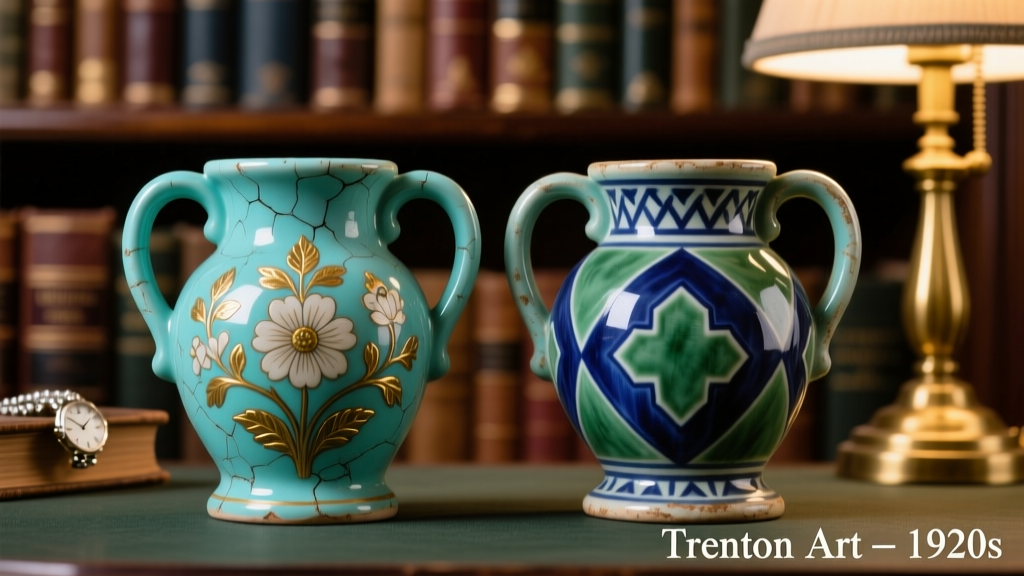
Trenton Potteries’ Horn of Plenty Bookend Vases: Turquoise Glazed Ceramic Masterpieces from the American Art Pottery Golden Age
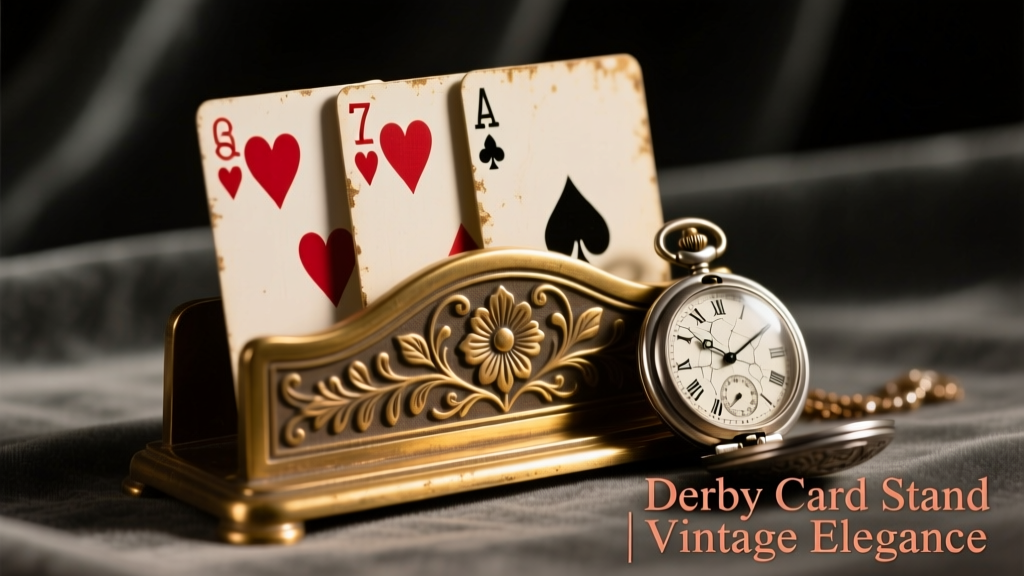
The Derby Card Stand: A Forgotten Icon of Edwardian Gentlemen’s Etiquette and Silver Craftsmanship
Walnut Washstand with Marble Top & Backsplash, Circa 1875: A Victorian Domestic Artifact in Context
Lot 1137694: A 1958 Patek Philippe Ref. 2499 First Series in 18K Yellow Gold — Provenance, Technical Analysis & Market Context
The Old Sheffield Pewter Pumpkin Teapot: A Study in Britannia Metal Craftsmanship and Georgian Domestic Elegance
Kathe Kruse Swivel-Head Doll: A 20-Inch Vintage Masterpiece with Blond Mohair Wig and Canvas Limbs
Barbie Eskimo (1981): Cultural Representation, Collectibility, and Auction Market Realities
Samuel Cady: The Forgotten American Watchmaker Who Defined Precision in the Gilded Age

Banks Mechanical Eagle Eaglets: A Deep Dive into the J.E. Stevens Green Grass Cast Iron Automaton (6½ Inches)