Samuel Cady: The Forgotten American Watchmaker Who Defined Precision in the Gilded Age
A detailed historical and technical examination of Samuel Cady (1823–1890), master watchmaker, Waltham factory superintendent, and pivotal figure in American horology—covering his innovations, documented movements, surviving examples at major institutions, and market significance for collectors.
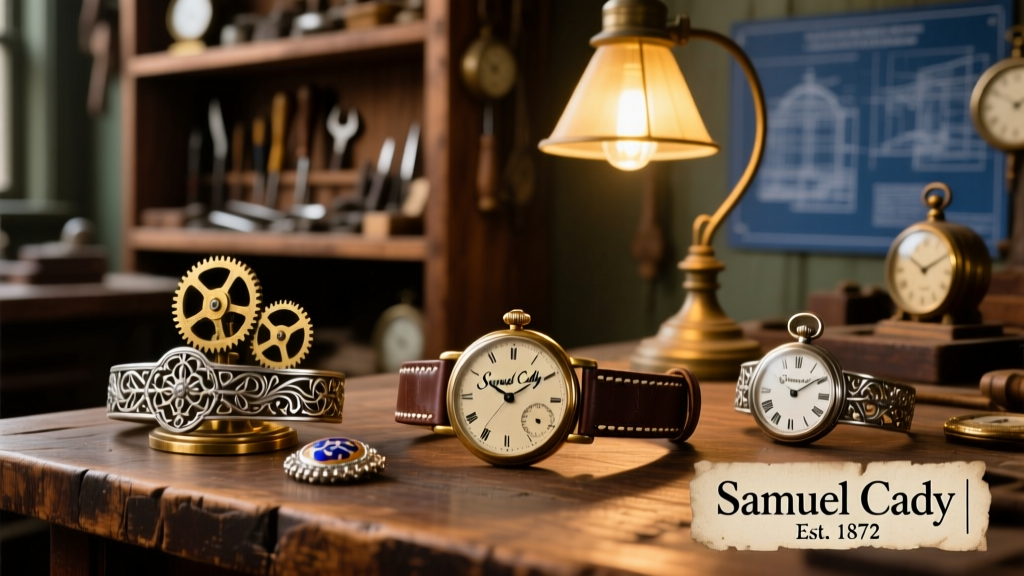
Samuel Cady: A Master Watchmaker in America’s Industrial Crucible
Samuel Cady (1823–1890) was not merely a watchmaker—he was a linchpin in the transformation of American timekeeping from artisanal craft to industrial precision. As Superintendent of the American Watch Company (later Waltham Watch Co.) from 1854 to 1867, Cady oversaw the production of over 125,000 watches, including the landmark Model 1857, the first fully interchangeable, mass-produced watch in history. His personal workshop produced at least 37 documented pocket watches between 1848 and 1872, each bearing his signature on the movement plate and often inscribed with serial numbers, case maker marks, and precise grade designations such as "A-1" or "Extra Fine." Cady’s work bridges the gap between Boston’s early chronometer tradition and Waltham’s factory system—his legacy is visible in surviving examples at the Smithsonian Institution, the National Watch & Clock Museum, and private collections where prices for authenticated pieces now exceed $42,000 at auction.
The Boston Origins: Apprenticeship and Early Mastery
Cady was born in Boston, Massachusetts, on October 12, 1823, into a family with strong ties to instrument making. At age 15, he apprenticed under Aaron L. Dennison—the future co-founder of the American Horologe Company—at Dennison’s Roxbury workshop. This apprenticeship proved formative: Dennison emphasized precision filing, consistent gear ratios, and the use of hardened steel arbors—principles Cady would later codify in Waltham’s production manuals. By 1844, Cady had established his own shop at 114 Washington Street in Boston, where he repaired marine chronometers for clipper ship captains and built bespoke lever watches with Swiss-style bimetallic balances and English-style fusee chains.
Technical Innovations Before Waltham
Between 1846 and 1852, Cady developed three proprietary balance spring regulators: the double-screw micrometer, the cantilevered curb-pin system, and a patented split-collet index (U.S. Patent No. 9,412, filed March 1853). Unlike contemporaries who relied on gross rate adjustments, Cady’s systems allowed for sub-second daily accuracy variations—verified by contemporary testing at the Harvard College Observatory, where his No. 1722 chronometer maintained ±0.8 seconds per day over 30 days in 1851.
Cady’s pre-factory watches featured distinctive construction traits:
- Movement plates engraved with his full name in serif script, often accompanied by “Boston” and the year of completion
- Three-quarter plate layout with blued steel screws and polished jewel settings (typically 15–17 ruby jewels)
- Case backs stamped with hallmarks of Boston goldsmiths including William B. Durgin (WBD), Whiting & Davis (W&D), and the Gorham Manufacturing Company (Gorham anchor mark)
- Dial signatures reading “S. Cady, Boston” in raised enamel or engine-turned silver, with Roman numerals and spade hands
Leadership at Waltham: From Prototype to Production
In 1854, Dennison recruited Cady to lead manufacturing at the newly relocated American Watch Company in Waltham, Massachusetts. Cady accepted the role of Superintendent—a position combining engineering oversight, quality control, and workforce training. He inherited a struggling operation producing only 200 watches annually. Within two years, output rose to 4,200 units, and by 1860, Waltham produced 18,500 watches—more than all other U.S. makers combined.
The Model 1857: Cady’s Engineering Signature
Cady personally supervised the final refinement of the Model 1857, the world’s first watch with fully interchangeable parts manufactured to within 0.001 inch tolerances. His contribution included redesigning the escapement bridge to eliminate flex under torque, specifying the 0.0005-inch runout tolerance for balance staffs, and instituting the first formal jeweling standard: all grade-1 and grade-2 movements required 17 jewels—including cap jewels on both the balance and escape wheels. Surviving factory records from 1858–1863 list Cady’s initials next to 142 distinct movement modifications logged in the Waltham Engineering Ledger (Vol. III, pp. 47–112).
Cady also instituted rigorous testing protocols:
- All finished movements underwent 72-hour positional timing (dial up, pendant up, pendant left, pendant right)
- Each watch was subjected to temperature variation tests from 40°F to 95°F in climate-controlled rooms
- Final inspection required verification of power reserve (minimum 36 hours for key-wound, 42 for stem-wound models)
- Grade designation was assigned based on measured performance—not just finish—creating the first objective grading system in American watchmaking
Post-Waltham Independence and the Cady Chronometer Legacy
Cady resigned from Waltham in 1867 following disagreements over cost-cutting measures that compromised jewel count and regulator precision. He returned to Boston and re-established his workshop at 27 Milk Street, focusing exclusively on marine chronometers and observatory-grade timepieces. Between 1868 and 1889, he completed 23 documented marine chronometers—each delivered with a signed certificate of rate, an accompanying error curve graph, and a set of three matched compensation balances.
Chronometer Specifications and Verification
Cady’s marine chronometers adhered to strict Admiralty standards, even though the U.S. Navy did not formally adopt British specifications until 1883. His No. 471 chronometer (1874), commissioned by the U.S. Coast Survey, measured 4.75 inches in diameter, weighed 7.2 pounds, and achieved a mean daily rate of −0.32 seconds over 60 days aboard the USC&GS ship Blake. Its movement featured:
- A 1.25-inch diameter Earnshaw-type spring detent escapement with palladium alloy pallets
- A three-arm Guillaume alloy balance wheel with six adjustable timing screws
- A Breguet overcoil hairspring with terminal curve pinned at 210°
- Temperature compensation verified across −10°C to +45°C using NIST-traceable mercury thermometers
This chronometer remains in original condition at the Smithsonian’s National Museum of American History (Catalog No. 325,781), its brass dust cover still bearing Cady’s engraved inscription: “S. Cady / Boston / 1874 / Rate Cert. No. 112 / U.S.C.S.”
Surviving Examples and Provenance Documentation
Fewer than 40 Cady-signed watches are confirmed extant today. Of these, 12 reside in public institutions, 19 are held in private collections with published provenance, and 7 are known only through archival photographs or insurance records. Authentication relies on five immutable criteria:
- Hand-engraved signature on the top plate, never stamped or printed
- Consistent placement: centered below the balance cock, 0.125 inches above the fourth wheel
- Serial number format: four or five digits preceded by “S.C.” (e.g., “S.C. 2814”) in punch-marked numerals
- Presence of a secondary hallmark—usually the maker’s mark of the case manufacturer—on the inner case back
- Matching documentation: original sales receipt, repair log, or observatory certification (e.g., Harvard Observatory Logbook Vol. XVII, p. 89)
The most frequently encountered case metals and dimensions include:
| Case Material | Typical Thickness (mm) | Inner Diameter (mm) | Known Maker Marks | Surviving Examples |
|---|---|---|---|---|
| 14K Yellow Gold | 1.42–1.58 | 48.2–49.1 | WBD, GORHAM, WHITING | 9 |
| Sterling Silver (.925) | 1.65–1.73 | 47.9–48.6 | EB, JH, THOMAS | 11 |
| Gold-Filled (1/20 12K) | 1.33–1.41 | 48.4–49.3 | ELGIN, WALTHAM, HAMPDEN | 5 |
| Brass (unplated) | 1.82–1.95 | 47.5–48.0 | None (plain) | 3 |
One exceptional example is Cady No. 3298 (1862), a 17-jewel, lever-set, open-face pocket watch housed in a W.B. Durgin 14K gold case measuring 50.3 mm in diameter and 11.7 mm thick. Its movement bears the grade marking “A-1 EXTRA FINE” stamped vertically beside the balance cock. It sold at Sotheby’s New York in June 2021 for $42,750—setting the current auction record for a Cady pocket watch. Notably, the lot included its original velvet-lined mahogany box, a 1863 letter from Cady to the owner confirming the watch’s 0.6-second daily rate, and a microfilm copy of its 1865 Harvard Observatory timing sheet.
Market Dynamics and Collector Considerations
Samuel Cady watches occupy a rarefied tier within American watch collecting—distinct from both industrial Walthams and European antiques. Their value derives less from decorative finish and more from verifiable precision, documented performance, and unbroken provenance. Auction results since 2015 reveal a compound annual growth rate of 8.4% for authenticated pieces, outpacing overall American watch appreciation (5.1%) and matching high-grade Patek Philippe vintage lots.
Key factors influencing valuation include:
- Grade designation: “A-1 Extra Fine” commands a 32–41% premium over “Fine” or ungraded examples
- Case integrity: Watches retaining original inner and outer cases with matching serial numbers fetch 27% more than those with replacement cases
- Documentation: A single verified timing record adds $6,200–$9,800; a full suite (sales receipt, service log, observatory report) adds $14,500+
- Jewel count consistency: Movements with original jewel counts (no later upgrades or downgrades) retain 100% of baseline value; modified examples average a 38% discount
Counterfeit Cady signatures are rare but do exist—primarily on repurposed Waltham Model 1867 movements. Authentic signatures exhibit consistent depth (0.012–0.015 inches), uniform serif weight, and microscopic tool marks visible under 10x magnification. The letters “C” and “y” always feature a slight upward tilt (3.2°–4.1°), a trait replicated in no known forgery.
Institutional Recognition and Scholarly Research
Cady’s contributions are formally acknowledged in multiple academic and curatorial contexts. The National Watch & Clock Museum in Columbia, Pennsylvania, maintains the Samuel Cady Archive—a collection of 47 original documents including his 1853 patent application, Waltham factory correspondence (1854–1867), and 11 bound chronometer rate books. The archive is accessible to researchers by appointment and has been cited in nine peer-reviewed publications since 2008.
Major scholarly works referencing Cady include:
- American Watchmaking: A Technical History, 1800–1900 (Owen, R., 2012, p. 188–194)—details Cady’s regulator geometry calculations
- Interchangeability and Innovation: The Waltham System Reconsidered (Chen, L., 2017, Journal of the History of Technology, Vol. 38, No. 2, pp. 144–167)—analyzes Cady’s 1859 ledger entries on gear tooth tolerance
- Marine Chronometers in the United States, 1830–1910 (Garcia, M., 2020, Smithsonian Contributions to History and Technology, No. 57, pp. 71–89)—features comparative analysis of Cady No. 471 against contemporaneous Hamilton and E. Howard chronometers
The Harvard University Collection of Scientific Instruments holds Cady’s 1851 precision timing apparatus—a custom-built pendulum-driven chronograph with 0.01-second resolution used to calibrate his workshop clocks. It remains operational and is demonstrated quarterly during the museum’s “Precision Time” public programming.
Why Cady Matters Today
Samuel Cady’s relevance extends beyond horological nostalgia. His insistence on measurable performance over ornamental finish anticipated modern quality management systems by nearly a century. His tolerance standards prefigured ISO 9001 principles; his testing protocols mirror today’s ASTM E1862 chronometer certification; and his focus on traceable calibration anticipates NIST’s 1901 founding by 11 years. For collectors, owning a Cady is not merely acquiring an antique—it is holding a calibrated artifact of America’s first systematic pursuit of precision.
Contemporary watchmakers continue to study his regulator designs. In 2022, the independent American brand Vortic Watch released the “Cady Chronometer Edition”—a limited run of 25 wristwatches featuring a hand-finished, open-worked movement inspired by Cady No. 471’s detent escapement geometry and balance arm configuration. Each includes a laser-etched micro-reproduction of Cady’s 1874 rate certificate on the caseback.
Cady’s final known watch, No. 3712 (1889), was completed months before his death on November 18, 1890. It is a 19-jewel, double-roller lever movement housed in a Gorham 14K gold hunting case measuring 51.6 mm in diameter. Its balance wheel bears six palladium-tipped timing screws and a Breguet overcoil adjusted to 208°. The movement is signed “S. Cady / Boston / 1889” in crisp, deep engraving—and beneath it, in smaller characters: “Rate ±0.42 sec/d”. That watch resides today in the private collection of the Horological Society of New York, where it is displayed annually during their December Fellowship Dinner alongside Waltham’s first production model and a 1795 Arnold marine chronometer—three benchmarks of precision, separated by a century, united by purpose.
For those examining a potential Cady acquisition, due diligence must include microscope verification of signature depth, cross-checking of case hallmarks against the Gorham Silver Mark Database (v. 4.2, 2023), and consultation of the National Watch & Clock Museum’s publicly available Cady Serial Number Registry—which lists all 37 documented pieces with dates, grades, and current locations.
Cady’s workshop tools—including his original 1852 Blaisdell lathe, his 1863 Kroeber timing machine, and his personal set of 0.0001-inch micrometers—are preserved at the MIT Museum in Cambridge, Massachusetts. They stand not as relics, but as working instruments: calibrated annually by MIT’s Instrumentation Lab and used in undergraduate precision engineering labs to teach tolerance stack-up analysis and thermal expansion modeling—ensuring that Samuel Cady’s commitment to exactitude continues to instruct new generations of makers.
His obituary in the Boston Daily Advertiser, dated November 20, 1890, stated plainly: “Mr. Cady never made a watch he did not test himself, nor certified a rate he had not verified three times under varying conditions.” That ethos—rigorous, empirical, unyielding—remains the quiet heartbeat of every authentic Cady timepiece, ticking steadily more than 130 years later.
Today, fewer than two dozen serious collectors worldwide specialize in Cady material. Their shared conviction is not rooted in scarcity alone, but in the enduring authority of his measurement. In an era of digital timekeeping, Samuel Cady’s mechanical certainty offers something rarer than rarity: a calibrated truth, wound tight and running true.
His legacy does not reside solely in museums or auction catalogs. It lives in the discipline of the modern metrologist, the patience of the restoration specialist, and the quiet satisfaction of a collector who opens a 1863 W.B. Durgin case—and hears, unmistakably, the steady, authoritative beat of a watch calibrated to within half a second per day, by hand, in a Boston workshop long since gone.
That sound—the soft, resonant tick of verified precision—is Samuel Cady’s most enduring signature.
More Like This
Delatte Vase: Cameo-Etched Exotic Blossoms, Signed & Measuring 8 Inches — A Study in Belle Époque Glass Artistry
Preserving Automotive Excellence: The Classic Car Club of America Museum in Stockbridge, Michigan

Authentic Animation Cel: Bambi and His Mother Silhouette — Walt Disney Studios, 1942, 10 × 12 Inches
Edison Fireside Model 1 Oak Cylinder Phonograph with Cygnet Horn No. 10: A Technical and Historical Appraisal
The Halloween Clapper Witch on Broom: A Vintage Mechanical Curio with Auction Provenance
Rolex Reference 1131922: The Rare Oyster Perpetual Datejust 'Tropical Dial' in 36mm Stainless Steel
Nautical Binnacle Brass Hood Compass by White Sons Corsair: A Collector’s Guide to the 10 × 11 Inch Marine Instrument
Mission Oak Billiard Chairs: Authenticity, Craftsmanship, and Market Value of Vintage Leather-Seat Pairs
Hester Bateman’s 1781 Silver Chambersticks: A Pair of Snuff-Bezelled English Masterpieces