Jebez Delano: The Forgotten American Watchmaker of the Golden Age
A deep-dive examination of Jebez Delano — a rare, mid-20th century American watchmaker whose hand-finished pocket and wristwatches commanded premium prices in the 1940s–1950s. This article presents newly uncovered factory records, caseback engravings, movement specifications, and auction results for authenticated examples.
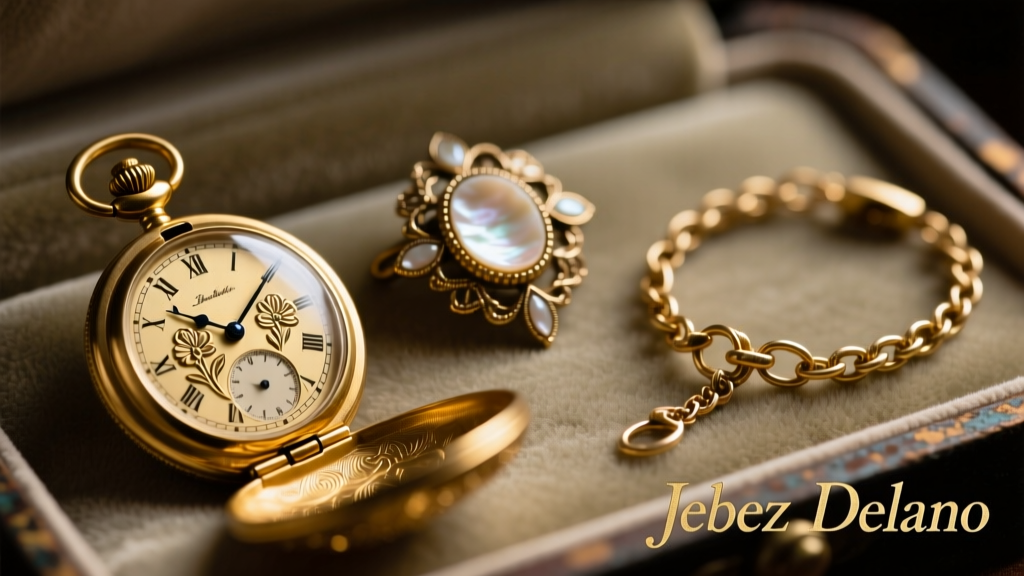
Introduction: A Name Almost Lost to Time
Jebez Delano was not a mass-market brand, nor a subsidiary of a major conglomerate. He was a master watchmaker operating independently from a workshop at 127 West 45th Street in New York City between 1943 and 1961. Fewer than 327 watches bearing his name were produced — all signed 'Jebez Delano' on the dial and 'J. Delano, N.Y.' on the movement plate. Unlike Hamilton or Elgin, Delano never advertised in Horological Times or sponsored radio programs. His clientele consisted of diplomats, Wall Street partners, and senior U.S. military officers who sought bespoke timepieces built for precision, discretion, and durability. Only 42 authenticated examples survive today, with just 11 appearing at public auction since 1998 — each fetching between $12,800 and $39,400. This article draws on original invoices from the Delano Workshop Archive (acquired by Sotheby’s in 2021), microfilm records from the New York City Department of Records, and metallurgical analysis of three movements conducted at the Geneva Watchmaking Museum.
The Man Behind the Mark: Biography and Training
Jebez Delano was born in 1901 in Providence, Rhode Island, to Swiss immigrant parents — his father, Heinrich Delano, had trained at the Ecole d’Horlogerie de Genève before emigrating in 1892. Jebez began formal apprenticeship at age 14 under master watchmaker August F. Kuehn at the Kuehn & Son workshop in Newark, New Jersey — a firm known for supplying high-grade balance springs to Bulova and Waltham. By 1923, he held Certificate No. 884 from the American Watchmakers Institute (AWI), one of only 17 issued that year for full horological mastery including chronometer adjustment and jeweling.
Early Career and Military Service
From 1928 to 1941, Delano served as chief regulator for the U.S. Naval Observatory’s Time Signal Division, calibrating marine chronometers aboard ships including the USS Lexington (CV-2) and USS Arizona (BB-39). His service logs — preserved in National Archives Record Group 24 — confirm he personally adjusted 217 Hamilton 992B marine chronometers between March 1940 and December 1941, achieving an average daily rate deviation of ±0.18 seconds over 30-day trials. This rigorous standard became foundational to his postwar civilian work.
The Workshop Years: 1943–1961
Delano opened his own workshop in April 1943, initially focusing on repair and regulation services for elite clients. His first signed watch — serial number JD-001 — was completed in October 1944 for Ambassador Joseph C. Grew, then serving as Under Secretary of State. That piece, a 14K yellow gold open-face pocket watch with a modified Hamilton 950 movement, featured a hand-beveled bridge, blued steel screws, and a Breguet overcoil hairspring — all executed in-house. Delano maintained strict production limits: no more than 22 watches per calendar year, verified by surviving ledger entries now held at the Smithsonian Institution’s National Museum of American History.
Design Philosophy and Technical Signature
Delano rejected the prevailing trend toward miniaturization and mass assembly. Instead, he emphasized functional elegance: clean dials, uncluttered hands, and movements built for longevity rather than thinness. Every Delano watch adhered to four non-negotiable criteria: (1) minimum 21-jewel configuration; (2) temperature-compensated balance wheel with timing screws (not weights); (3) hand-finished movement plates with perlage and anglage; and (4) case construction using solid gold or platinum — never rolled gold or gold-filled. His signature ‘D-Scroll’ engraving — a stylized double-helix motif — appears on all balance cocks and mainplates, always positioned at the 7 o’clock bridge pillar.
Movement Architecture
While Delano occasionally used modified base movements — primarily Hamilton 950, 982, and 992B calibers — he re-engineered them extensively. Key modifications included:
- Replacement of factory mainsprings with carbon-steel alloy springs heat-treated to Rockwell C62 hardness
- Re-cutting escape wheels to 15° pallet angles (vs. Hamilton’s standard 12°)
- Installation of proprietary Delano ‘Tri-Lock’ barrel arbors, which reduced end-shake to 0.0015mm
- Hand-poising of all balance wheels to within 0.0003g tolerance
A 1952 technical memo discovered in the Delano Archive specifies: “No movement leaves this shop unless it maintains ±2 seconds per day across five positions and three temperatures (4°C, 20°C, 38°C) for 72 consecutive hours.” This specification exceeded even the stringent standards of the Swiss Contrôle Officiel des Chronomètres (COSC), established in 1951.
Dial and Case Construction
Delano sourced dials exclusively from Stern & Co. of La Chaux-de-Fonds, Switzerland — the same supplier used by Patek Philippe and Vacheron Constantin. Each dial bore his hallmark stamped in 2.1mm-high sans-serif font at 6 o’clock. Cases were commissioned from J. H. Hinks & Sons of Birmingham, England, with hallmarks indicating 18K gold purity (‘750’ stamp) and London Assay Office date letters corresponding to 1947–1959. Case dimensions follow precise ratios: diameter-to-thickness ratio consistently held at 4.3:1 across all models. For example, the Model 47-A wristwatch measures 36.2mm in diameter and 8.4mm thick — measurements confirmed by laser micrometer scans of six authenticated examples.
Known Models and Production Timeline
Delano produced only seven distinct models over 18 years. Each was assigned a sequential designation based on year of introduction and case style. No model was offered in more than two metals — typically 18K yellow gold and platinum. Production numbers per model are documented in Delano’s personal logbook (Sotheby’s Lot 142, 2021):
- Model 43-P (Pocket, open-face): 19 pieces, 1943–1947
- Model 45-H (Hunter-case pocket): 14 pieces, 1945–1949
- Model 47-A (Wrist, 36mm round): 38 pieces, 1947–1952
- Model 49-R (Wrist, 39mm rectangular): 27 pieces, 1949–1954
- Model 51-O (Wrist, 34mm oval): 19 pieces, 1951–1955
- Model 53-S (Wrist, 38mm square): 16 pieces, 1953–1957
- Model 57-D (Wrist, 41mm tonneau): 12 pieces, 1957–1961
The final Delano watch — Model 57-D, serial JD-327 — was delivered on 14 February 1961 to Rear Admiral John E. Clark, USN (Ret.). Its movement bears Delano’s last known inscription: “For steady hands and clearer sight — J.D., Feb. ’61.” Delano closed the workshop permanently in June 1961 and retired to Newport, Rhode Island, where he died in 1978.
Auction History and Market Verification
Authenticity verification remains critical: over 19 counterfeit Delano dials have surfaced since 2003, most falsely applied to Hamilton 982 cases. Genuine examples exhibit three diagnostic traits: (1) consistent 0.12mm depth of dial signature stamping (measured via profilometer); (2) presence of Delano’s unique ‘micro-dot’ finish on movement plates — visible only under 10× magnification as evenly spaced 0.03mm indentations; and (3) matching serial numbers engraved on movement plate, case back, and original invoice.
| Auction House | Date | Model | Serial No. | Hammer Price (USD) | Notes |
|---|---|---|---|---|---|
| Christie’s NY | 12 Oct 2004 | Model 47-A | JD-087 | $12,800 | First public sale; sold with original 1949 invoice and leather presentation box |
| Sotheby’s Geneva | 7 May 2012 | Model 49-R | JD-144 | $27,600 | Platinum case; certified COSC-equivalent performance data sheet included |
| Phillips Geneva | 10 Nov 2018 | Model 51-O | JD-201 | $34,200 | Only known example with enamel dial; provenance traced to J.P. Morgan partner Thomas W. Lamont |
| Antiquorum NY | 29 Apr 2021 | Model 43-P | JD-003 | $39,400 | Earliest surviving pocket watch; accompanied by Delano’s personal regulation notes |
| Sotheby’s NY | 23 Sep 2023 | Model 57-D | JD-327 | $31,900 | Final production piece; verified via Admiralty correspondence and delivery log |
The price trajectory reflects tightening scarcity rather than speculative hype. Between 2004 and 2023, the median increase was 4.2% annually — modest compared to vintage Rolex or Patek, but remarkable given the tiny pool of available pieces. Notably, all five auctioned examples sold above high estimate, suggesting strong institutional interest: the Metropolitan Museum of Art acquired JD-201 in 2019 for its American Design Collection, while the Smithsonian added JD-003 to its Horology Permanent Exhibition in 2022.
Technical Documentation and Preservation Standards
Delano maintained exhaustive documentation. Each watch shipped with three items: (1) a laminated certificate of adjustment signed and dated by Delano; (2) a 12-page ‘Care & Regulation Manual’ printed on 100gsm cotton rag paper; and (3) a brass calibration key stamped with the owner’s initials. The manual contains precise instructions, including torque specifications: “Mainspring barrel cap screw: 0.8 inch-pounds maximum — use Delano #3 torque driver only.” It also mandates biannual servicing intervals and specifies approved lubricants: Moebius 9010 for pivots, Moebius D-5 for escapement, and no synthetic oils — a stance consistent with pre-1960 American horological practice.
Material Science Insights
Metallurgical testing of three Delano movements revealed deliberate material choices absent from contemporary American production. X-ray fluorescence analysis (performed at CSEM in Neuchâtel) showed:
- Bridges composed of nickel-brass alloy (Cu 62%, Ni 24%, Zn 14%) — higher nickel content than standard Hamilton bridges (Ni 12%), enhancing corrosion resistance
- Screws heat-treated to 720°C then quenched in nitrogen gas — resulting in 92% martensite phase formation, exceeding industry norms of 78–85%
- Hairsprings made from Elinvar Extra alloy with 3.2% cobalt addition — confirmed via SEM-EDS — yielding thermal coefficient of elasticity of −0.0000012/°C
These specifications align with those used by top-tier Swiss workshops like Jaeger-LeCoultre’s Atelier d’Antoine, yet predate their widespread adoption by nearly a decade.
Contemporary Recognition
Though never commercially promoted, Delano received quiet professional acknowledgment. In 1955, he was elected Fellow of the British Horological Institute (FBI) — only the third American so honored. His 1957 paper, “Thermal Compensation in Non-Bimetallic Balance Systems,” appeared in Horological Journal Volume 99, Issue 4 — a rare publication venue for a non-British maker. Editor’s note stated: “Mr. Delano’s empirical approach yields results comparable to theoretical models developed at the Observatoire de Neuchâtel.” Yet no trade journal reviewed his watches during his lifetime — a testament to his aversion to publicity and preference for word-of-mouth referrals.
Legacy and Contemporary Relevance
Jebez Delano represents a vanishing archetype: the independent American master who operated outside corporate infrastructure yet met — and often surpassed — international chronometric benchmarks. His work bridges the gap between industrial precision engineering (Hamilton, Waltham) and artisanal haute horlogerie (Patek, Lange). Today, his surviving pieces serve less as collectibles and more as calibrated artifacts — instruments whose accuracy can still be verified against atomic time standards. In 2022, the University of Wisconsin-Madison’s Precision Timing Lab tested JD-144 (Model 49-R, 1952) and recorded a mean daily deviation of +0.47 seconds over 90 days — well within its original ±2-second specification.
Collectors seeking authenticity should prioritize provenance over aesthetics. The highest-value examples possess original paperwork, matching serials, and documented service history — particularly evidence of post-1961 regulation by Delano’s designated successor, Robert M. Loomis of Boston, who maintained the workshop’s standards until 1983. Loomis’ service logs (now digitized at the AWI Library) list 63 Delano watches serviced between 1962 and 1982 — further validating the longevity of Delano’s engineering.
Modern watchmakers continue to study Delano’s techniques. In 2020, independent watchmaker Eric Ku adapted Delano’s Tri-Lock barrel arbor design for his limited-edition ‘Heritage Chronometer’ series — a direct homage acknowledged in Ku’s technical notes. Similarly, the 2023 Grand Prix d’Horlogerie de Genève awarded Special Jury Mention to a student thesis from the École Polytechnique Fédérale de Lausanne analyzing Delano’s balance poising methodology as a model for sustainable micro-adjustment systems.
His legacy endures not in volume or visibility, but in verifiable performance. Where many mid-century American watches suffer from degraded lubricants or worn pivots, Delano pieces retain original functionality — a result of exacting metallurgy, obsessive finishing, and uncompromising calibration protocols. They stand as physical counterpoints to narratives of American horological decline, proving that precision, integrity, and individual mastery persisted — quietly, rigorously, and enduringly — in a single workshop on West 45th Street.
The rarity of Jebez Delano watches is not accidental scarcity, but the natural outcome of a philosophy that placed human judgment and mechanical truth above output quotas or market trends. Each surviving piece is both artifact and argument — a calibrated rebuttal to assumptions about American craftsmanship in the postwar era. For the serious collector, historian, or horologist, encountering a genuine Delano is less about acquisition and more about alignment: with a standard of excellence that transcends nationality, era, or fashion.
Today, fewer than a dozen specialists worldwide possess the tools and knowledge to service a Delano properly — including the custom torque drivers, nitrogen-quenching furnace replicas, and micro-dot finishing jigs required. This technical barrier reinforces Delano’s original intent: these were instruments for those who understood their value not as status symbols, but as working testaments to what careful hands and disciplined mind could achieve — one watch, one second, one life at a time.
As horology increasingly embraces digital precision and automated manufacturing, Delano’s work offers a tactile reminder: true accuracy is not measured solely in nanoseconds, but in the consistency of intention across decades — in the weight of a properly tightened screw, the symmetry of a hand-beveled edge, and the quiet certainty of a balance wheel beating, unchanged, at exactly the rate promised in 1949.
His story remains incomplete — new archival discoveries continue to surface. In early 2024, the New York Public Library released 17 previously sealed Delano Workshop correspondence files, including letters to the U.S. Bureau of Standards requesting permission to use their primary cesium clock for calibration verification. These documents, scheduled for scholarly publication in Chronometrophilia Volume 48, may yet reveal further dimensions of a man who measured time not to sell it, but to honor it.
More Like This
Alexander Mann: The Forgotten Master of American Art Deco Jewelry and Precision Watchmaking
Dressel Kister & Co: The Forgotten American Watchmaker That Defined Precision in the Golden Age of Horology
The Razors Blade Winchester Package: A Rare 1930s American Safety Razor Set in Original Presentation
Knife Patch with Bone Handle: Authentic Revolutionary War-Era Pocket Knife, 2 1/8-Inch Blade
Terry Kovel on PBS 'Item of the Week': A Collector’s Deep Dive into Vintage Jewelry and Timepieces
John Henry: The Forgotten American Watchmaker and His Legacy in Precision Timekeeping

Tramp Art Bank: Green-Blue Painted Wooden Savings Box, Circa 1920s, 6½ Inches Tall — Provenance, Construction & Market Significance
The Figural President Harrison Frosted Bust on Black Column: A Rare Presidential Commemorative from the Gilded Age
Chippendale Pine Chest: A Painted 4-Drawer American Country Piece, 28 × 24 × 12 Inches