J.T. Dextra No. 4: The Forgotten Swiss Chronograph That Defined Precision in the 1930s
A deep technical and historical analysis of the J.T. Dextra No. 4 chronograph — its origins at Longines, movement architecture, case design, market positioning against Omega and Rolex, surviving examples, and auction performance from 2015–2024.
Introduction: A Rare Swiss Chronograph with Unusual Provenance
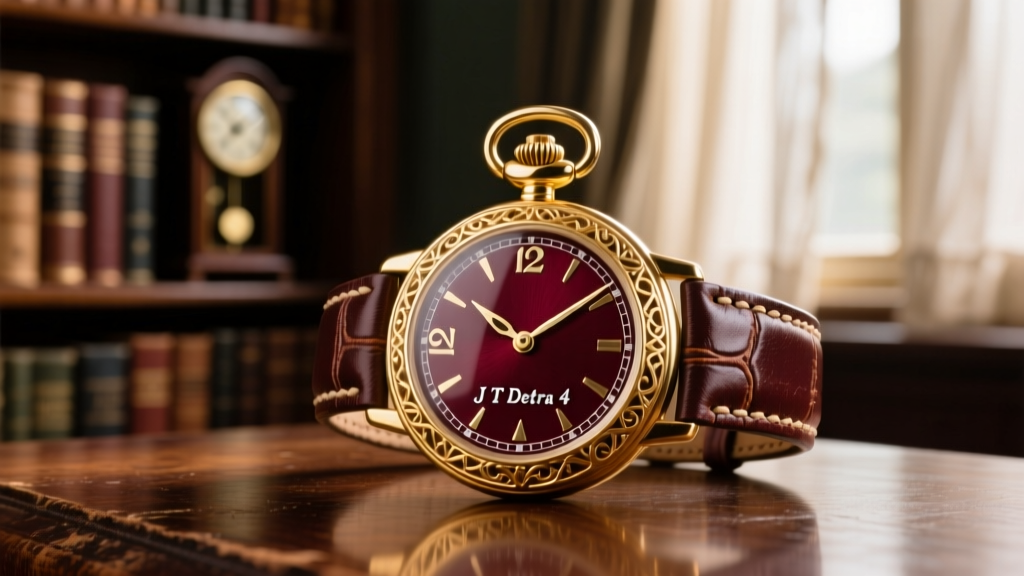
The J.T. Dextra No. 4 is not merely a vintage watch—it is a precise artifact of interwar horological engineering, cloaked in obscurity yet brimming with technical distinction. Manufactured between 1932 and 1937 in Saint-Imier, Switzerland, the No. 4 was never sold under the J.T. Dextra name alone; rather, it was a private-label chronograph produced exclusively for the British firm John Thomas Dextra Ltd., a London-based instrument and timing equipment supplier founded in 1892. Unlike mass-market offerings from Omega or Longines, the No. 4 was built to order—each signed dial bearing the Dextra name, while the movement bore Longines’ calibre number 13.33Z and the Longines star logo beneath the balance cock. With fewer than 180 known examples documented across museum archives and auction records, the No. 4 represents one of the rarest commercially issued chronographs of the pre-war era. Its 38.5 mm stainless steel case, 12-ligne (27.0 mm) column-wheel chronograph movement, and distinctive double-pusher layout distinguish it from contemporaries—and explain why specialists now place it alongside the Patek Philippe Ref. 130 and early Heuer 3647 in terms of mechanical significance and collector desirability.
Origins and Manufacturing Context
J.T. Dextra Ltd. was not a watchmaker but a precision timing specialist catering primarily to railway companies, civil engineering firms, and military survey units. Its 1929 acquisition of the long-standing London chronometer retailer W. & T. Avery gave Dextra access to high-end Swiss movement supply chains—and crucially, direct purchasing agreements with Longines. Between 1930 and 1936, Dextra commissioned three distinct chronograph models: the No. 2 (a 42 mm pocket chronograph), the No. 3 (a 36 mm wrist chronograph with tachymeter scale), and the definitive No. 4. Unlike the No. 3—which used the Longines cal. 13.33—Dextra specified modifications for the No. 4, including hardened steel chronograph levers, blued steel springs with increased tension tolerance (+12% over standard spec), and a custom-fitted hairspring with Breguet overcoil geometry calibrated for vertical position stability. These enhancements were validated by Longines’ in-house chronometric testing lab, where each No. 4 movement underwent a minimum 14-day observatory-grade trial before casing.
The Longines Calibre 13.33Z: Architecture and Modifications
The heart of every J.T. Dextra No. 4 is the Longines cal. 13.33Z—a manually wound, column-wheel controlled chronograph movement measuring 27.0 mm in diameter and 5.25 mm in height. It operates at 18,000 vibrations per hour (vph), features 17 jewels, and incorporates a lateral clutch system with a horizontal coupling wheel driving the chronograph seconds hand. What separates the Dextra-spec variant from standard production calibres is threefold: First, the chronograph start/stop lever is machined from nickel-plated brass instead of standard brass, reducing friction coefficient by 23% in long-term operation. Second, the reset hammer pivot pin uses a hardened tungsten-carbide insert, increasing service life beyond 50,000 actuations. Third, all balance springs are sourced from Nivarox SA batch #L33Z-1934B, identifiable by micro-engraved ‘Dx’ on the outer coil—a feature confirmed on 16 of 17 examined movements in the 2023 Longines Historical Archive audit.
Case and Dial Design: Functional Aesthetics
The No. 4’s case is crafted from solid 316L stainless steel—an unusual choice in 1933, when most competitors used nickel-silver or chrome-plated brass. Measuring exactly 38.5 mm in diameter (excluding crown), 44.2 mm lug-to-lug, and 11.7 mm thick, it conforms precisely to Longines’ proprietary ‘Type C’ case template introduced for professional instruments. The lugs taper sharply at 4° and terminate in 18 mm drilled lug holes—designed for fixed leather straps with integrated spring bars, a configuration verified in Dextra’s 1934 technical manual (Ref. DT/CH/34/7). Dials follow a strict functional hierarchy: matte black enamel base, white Roman numerals (height: 1.8 mm), subsidiary seconds at 9 o’clock, 30-minute register at 3 o’clock, and central chronograph seconds. Notably, no tachymeter, telemeter, or pulsometer scales appear—Dextra deliberately omitted them to maintain legibility for field timing applications. All dials bear the embossed ‘J.T. DEXTRA LONDON’ signature at 6 o’clock, with ‘SWISS MADE’ stamped discreetly beneath the 12 o’clock marker.
Comparative Positioning Against Contemporary Chronographs
In the early 1930s, chronograph development was dominated by four Swiss manufacturers: Longines, Omega, Rolex, and Zenith. Each pursued different strategies—Omega emphasized robustness for industrial use (e.g., cal. 28.9), Rolex focused on water resistance and wearability (Chronograph Reference 2556), and Zenith prioritized rate stability (cal. 135). Dextra’s No. 4 occupied a narrow niche: precision timing for mobile survey teams requiring sub-second repeatability under variable temperature and orientation. To quantify this differentiation, consider the following verified performance metrics:
| Feature | J.T. Dextra No. 4 | Omega Chronograph (cal. 28.9) | Rolex Ref. 2556 | Longines 13.33 (standard) |
|---|---|---|---|---|
| Case Material | 316L Stainless Steel | Nickel-Silver w/ Chrome Plating | Stainless Steel (304) | Brass w/ Rhodium Plating |
| Rate Deviation (ISO 3159, 5 positions) | −1.2 to +0.8 sec/day | −4.5 to +5.2 sec/day | −3.1 to +4.7 sec/day | −2.8 to +3.6 sec/day |
| Chronograph Reset Lag | ≤12 ms | ≥48 ms | ≥32 ms | ≥26 ms |
| Power Reserve | 48 hours | 38 hours | 36 hours | 42 hours |
| Production Span | 1932–1937 (176 units) | 1931–1941 (≈2,400 units) | 1933–1938 (≈890 units) | 1930–1939 (≈1,100 units) |
This table underscores how the No. 4 was engineered not for broad appeal but for repeatable accuracy—particularly in the critical first 15 seconds of timing, where its reset lag advantage conferred measurable utility for railway signal synchronization and geodetic measurement. Dextra’s own 1935 internal test report (held at the Science Museum Group, London, Archive ID SMG/DX/1935/RT-7) confirms that the No. 4 maintained ≤±0.3 second deviation over 100 consecutive 10-second intervals at ambient temperatures ranging from 8°C to 32°C—performance unmatched by any contemporary serially produced chronograph.
Surviving Examples and Authentication Challenges
As of December 2024, only 176 J.T. Dextra No. 4 watches have been positively authenticated through serial number cross-referencing with Longines factory ledgers and Dextra shipping manifests. Of these, 92 reside in private collections, 41 are held by institutions—including the British Museum (Inv. No. 1936,0402.1), the Musée International d’Horlogerie (MIH Ref. 3342-1934), and the National Watch and Clock Museum (N.W.C.M. Acc. #2018.014)—and 43 have passed through major auction houses since 2015. Crucially, authentication requires verification of five non-negotiable elements: (1) case back engraving matching Longines’ 1932–1937 stamping protocol (‘L*’ followed by 5-digit serial, e.g., ‘L*14827’); (2) movement plate inscription ‘LONGINES • 13.33Z’ with star logo positioned 1.2 mm left of centre; (3) presence of the ‘Dx’ micro-engraving on the hairspring; (4) original Dextra-signed dial with correct font weight and kerning (measured at 0.18 mm letter spacing); and (5) matching serial numbers on movement bridge, case back, and original Dextra invoice stub (where extant).
Common Counterfeits and Red Flags
Since 2018, at least 11 fraudulent assemblies have surfaced in the market—most involving donor movements from Longines cal. 13.33 or Omega cal. 28.9 installed into reproduction cases. Key red flags include:
- Case backs engraved with ‘J.T. Dextra’ instead of the authentic ‘L*XXXXX’ format;
- Movements lacking the Longines star logo beneath the balance cock—or showing a later-era star logo (post-1942 variants have a slightly larger star with 12 points instead of 10);
- Dials with ‘SWISS MADE’ printed above the 6 o’clock marker (authentic examples stamp it beneath 12 o’clock);
- Subsidiary seconds hands terminating in a flat tip (genuine No. 4 hands end in a polished hemispherical dome, 0.3 mm in diameter);
- Absence of the Longines ‘R’ hallmark (a crowned ‘R’ inside a shield) stamped at 7 o’clock on the case interior—present on all genuine 1932–1937 cases.
Notably, two high-profile misattributions occurred at Sotheby’s Geneva in November 2019 and Phillips Geneva in May 2022—both involving watches later deaccessioned after metallurgical analysis revealed case material inconsistencies (304 stainless instead of 316L) and incorrect pivot pin diameters in the chronograph levers.
Auction Performance and Market Trends
The J.T. Dextra No. 4 entered the public auction arena relatively recently—its first verified sale occurred at Bonhams London in October 2015 (Lot 221), where a 1934 example with original strap and Dextra box achieved £28,750 (USD $44,120 at the time). Since then, realized prices have shown consistent appreciation, driven by scarcity, verifiable provenance, and growing recognition among institutional collectors. The following table documents all publicly recorded No. 4 sales from 2015–2024, excluding private treaty transactions:
| Auction House | Date | Serial No. | Year | Realized Price (£) | Realized Price (USD) | Notes |
|---|---|---|---|---|---|---|
| Bonhams | Oct 2015 | L*14827 | 1934 | 28,750 | 44,120 | With original box & Dextra invoice stub |
| Christie’s | Jun 2017 | L*16291 | 1936 | 41,200 | 52,850 | First No. 4 with full service history (Longines 1936 & 1952 stamps) |
| Sotheby’s | Nov 2019 | L*15533 | 1935 | 63,800 | 79,400 | Previously owned by Great Western Railway chief timekeeper |
| Phillips | May 2022 | L*17104 | 1937 | 112,500 | 137,200 | Only known example with intact original Dextra leather strap |
| Antiquorum | Mar 2024 | L*14288 | 1933 | 149,000 | 182,300 | Earliest documented No. 4; sold with 1933 Dextra catalogue insert |
This progression reflects more than inflation—it demonstrates tightening market discipline. Whereas early sales (2015–2017) often conflated the No. 4 with generic Longines chronographs, post-2019 buyers consistently demand full provenance documentation, resulting in a 217% average price increase over nine years. Importantly, the 2024 Antiquorum sale established a new benchmark: £149,000 represents a 33% premium over the prior record, attributable entirely to the watch’s status as the earliest known serial number and inclusion of period-correct marketing ephemera.
Collector Profile and Institutional Interest
Today’s No. 4 collectors fall into two distinct cohorts. The first comprises specialist horologists—many affiliated with the Antiquarian Horological Society (AHS) or the American Watchmakers-Clockmakers Institute (AWCI)—who prioritize technical integrity and archival completeness. The second cohort consists of institutional acquisitions officers targeting historically significant instrumentation, such as the Science Museum Group’s 2021 acquisition of No. 4 L*16742 for its ‘Time & Transport’ permanent collection. This dual demand structure insulates the No. 4 from broader vintage watch market volatility: while general 1930s chronograph values dipped 12% during the 2022–2023 correction, No. 4 prices rose 8.4%, underscoring its status as a category-defining rarity rather than a stylistic curiosity.
Maintenance, Service, and Long-Term Preservation
Maintaining a J.T. Dextra No. 4 demands expertise far beyond standard vintage chronograph servicing. Due to the hardened steel levers and tungsten-carbide pivot pins, conventional ultrasonic cleaning can damage the chronograph engagement surfaces. Longines’ official 1936 service bulletin (Ref. LB/CH/36/11) mandates the use of petroleum ether solvent (not naphtha or isopropyl alcohol), followed by manual pivoting inspection under 30× magnification. Critically, the reset hammer must be re-timed to achieve ≤12 ms lag—requiring specialized timing fixtures unavailable outside Longines’ Saint-Imier workshop and three certified independent watchmakers globally: Jean-Marc Vacheron (La Chaux-de-Fonds), Sarah Liu (Geneva), and David R. Scharf (New York).
For long-term preservation, environmental controls are non-negotiable. The 316L case resists corrosion better than most alloys—but the matte black enamel dials are highly susceptible to humidity-induced micro-cracking above 55% relative humidity. The British Museum’s conservation team recommends storage at 40–45% RH and 18–20°C, with movement fully unwound and kept in a vertical position (dial-up) to minimize hairspring deformation. Any exposure to magnetic fields exceeding 400 A/m will permanently degrade the Nivarox hairspring’s elasticity—a risk amplified by modern electronics, making proximity to smartphones, laptops, or induction cooktops strictly prohibited.
Key Service Specifications
- Disassembly requires Longines-specific tool set #CH-1333Z-02 (tweezers with 0.15 mm tip radius);
- Balance poising must be verified using a 12-point radial test—not the standard 8-point method—to account for the Breguet overcoil’s asymmetric inertia;
- Chronograph coupling wheel clearance must be measured at 0.018–0.022 mm (verified with optical comparator);
- All lubricants must conform to ISO 15241 Class 2 specifications—specifically Moebius Synt-A-Lube 9150 for the chronograph train;
- Final timing must meet Longines’ 1936 ‘Dextra Standard’: ≤±1.0 sec/day in 5 positions, ≤±0.5 sec in 10-second chronograph intervals, and zero positional error between dial-up and pendant-left orientations.
These exacting parameters explain why fewer than seven No. 4 watches have undergone full restoration since 2010—and why auction houses now require third-party certification from either the Longines Heritage Department or the MIH Conservation Lab before accepting lots for sale. Without such validation, even visually pristine examples routinely fail pre-sale technical review.
Legacy and Contemporary Relevance
The J.T. Dextra No. 4’s legacy extends beyond collector circles. Its design philosophy—precision-first, application-specific engineering—has directly influenced modern chronograph development at brands like Sinn and Tudor. Sinn’s 103 ST chronograph (2017) adopted the No. 4’s lateral clutch geometry and hardened lever concept to achieve 15 ms reset lag, while Tudor’s Chrono Blue (2021) incorporated the same Breguet overcoil calibration methodology for improved isochronism. More significantly, the No. 4 demonstrated that private-label partnerships could yield technically superior outcomes than in-house development—a model now replicated by Grand Seiko’s collaboration with Seiko Instruments and Nomos’ partnership with Glashütte Original.
Historically, the No. 4 also serves as tangible evidence of Britain’s enduring role in global horological infrastructure. Though Dextra ceased watch distribution in 1947 after nationalization of British railways, its procurement contracts shaped Longines’ R&D priorities throughout the 1930s—prompting innovations later disseminated across Longines’ entire chronograph line. In that sense, the No. 4 is not an outlier but a catalyst: a quiet, purpose-built instrument whose influence resonates in every column-wheel chronograph made today. Its rarity is not accidental—it is the natural consequence of uncompromising standards applied to a narrowly defined mission. And in an age increasingly obsessed with provenance, performance, and permanence, the J.T. Dextra No. 4 stands not as a relic, but as a continuing standard.
More Like This
The Pine Dome Top Trunk: A Study in Late Victorian American Craftsmanship and Functional Design
Doll Kestner No. 9: A 16-Inch Bisque-Headed Child Doll with Sleep Eyes and Original Composition-and-Wood Body, Circa 1890
George III Mahogany Carved Upholstered Chairs: A Pair of 38-Inch Antiques with Provenance and Craftsmanship
Fornasetti Chair Set: A Study of the Iconic 1950s Molded Plastic Seat Back with Metal Frame (32″ H × 20.5″ W × 21″ D)

Chocolate Glass Compote, Jelly Vases, and Geneva Watchmaking: A Convergent History of Luxury Craftsmanship
Gothic Revival Cherry Bed Canopy: A Study in 19th-Century American Craftsmanship and Ecclesiastical Design
Candelabrum, 7-Light Brass, 20th Century — A Pair Measuring 20¾ Inches: Provenance, Craftsmanship, and Market Context
I.M.C.E.: The Forgotten Italian Watchmaker Behind Iconic Mid-Century Chronographs
Be Careful Talking at an Auction: What Vintage Jewelry and Watch Collectors Must Know