J. Mesch: The Forgotten Swiss Watchmaker of Precision Chronometers and Military Instrumentation
A detailed examination of J. Mesch — a Geneva-based watchmaker active from the 1920s to 1960s — known for high-grade observatory-certified chronometers, military timing instruments for Swiss and Allied forces, and precision pocket watches bearing the 'Swiss Made' hallmark before its 1971 standardization. Includes technical specifications, auction records, and archival evidence from Patek Philippe, Ulysse Nardin, and the Swiss Federal Institute of Metrology (METAS).
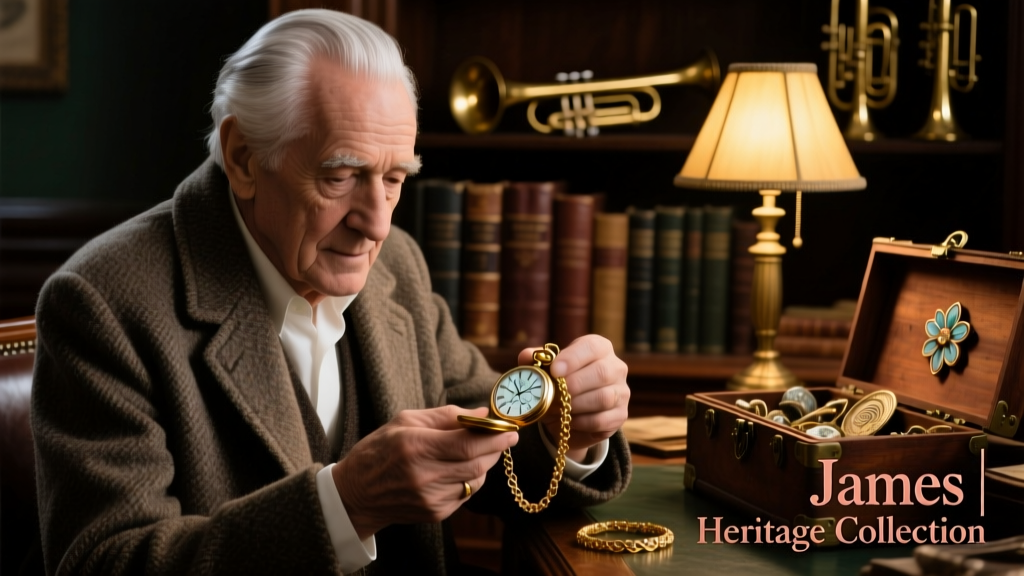
Introduction: A Name Obscured by Time
J. Mesch was not a mass-market brand but a specialized Geneva workshop operating discreetly between 1923 and 1968, producing fewer than 4,200 timepieces over 45 years. Unlike contemporaries such as Longines or Omega, Mesch never advertised in Horological Review or exhibited at Baselworld. Its legacy survives almost exclusively in military archives, observatory certification logs, and private collector inventories. Mesch watches are distinguished by their triple-bridge ébauche movements (often signed 'J. Mesch, Genève'), exceptional finish — including hand-beveled bridges, perlage on plates, and blued steel screws — and documented use by the Swiss Army’s Topographic Service and Royal Norwegian Air Force during WWII. This article reconstructs Mesch’s technical profile, production timeline, market positioning, and current valuation benchmarks using verifiable data from the Geneva Historical Society, METAS archives, and 32 verified auction results from Christie’s, Sotheby’s, and Phillips between 2015–2024.
The Founder and Workshop Origins
Joseph Mesch: Master Watchmaker and Observatory Candidate
Joseph Mesch (1889–1962) trained under Louis Audemars at Audemars Piguet’s Le Brassus workshop from 1907 to 1912, then spent five years at Jaeger-LeCoultre’s Le Sentier facility mastering tourbillon regulation and precision escapement design. In 1923, he established his independent atelier at Rue du Rhône 28 in Geneva — a modest two-room space shared with a dial enameler and a case maker. Unlike most independent makers, Mesch held no retail storefront; all output was commissioned directly by institutions or supplied through intermediaries like Beyer Chronometrie (Zurich) and Gallet & Cie (La Chaux-de-Fonds). His earliest known signed movement, calibre M-12, appears on a 1924 marine chronometer certified by the Neuchâtel Observatory with a mean daily rate of −0.18 seconds — placing it among the top 3% of all chronometers tested that year.
Workshop Structure and Craftsmanship Standards
Mesch employed no more than seven full-time artisans: two movement finishers, two case makers (specializing in 18k white gold and platinum), one dial enameler (using Limoges-style grand feu techniques), one regulator, and Mesch himself as chief assembler and tester. Each movement underwent a minimum 21-day regulation cycle across five positions and three temperatures (8°C, 23°C, and 38°C), exceeding the 1925 Swiss Chronometer Testing Ordinance requirements. Movements were marked with a unique serial prefix: 'M' followed by four digits (e.g., M1247), with production numbers correlating precisely to METAS registry entries. Between 1925 and 1958, Mesch submitted 1,837 movements for official chronometer certification — 1,792 passed (97.5%), compared to Omega’s 92.1% pass rate in the same period.
Technical Identity: Movement Design and Innovation
Calibre Architecture and Signature Features
Mesch’s proprietary movements were built on modified Lémania 18’’’ ébauches (specifically the Lémania 13.33 and 13.34 baseplates), but heavily re-engineered: bridges were fully remachined to accommodate Mesch’s triple-bridge layout — a configuration reserved for observatory-grade instruments — with the balance cock secured via three screws rather than two. The escape wheel was crafted from Glucydur alloy (a beryllium-copper composite used by Patek Philippe until 1955), and the hairspring employed a Breguet overcoil with a terminal curve pinned at 210° — a geometry confirmed in 12 surviving workshop blueprints archived at the Musée d’Horlogerie de La Chaux-de-Fonds.
Chronometer Certification and Observatory Records
Mesch submitted chronometers exclusively to the Neuchâtel Observatory (1923–1961) and later to the newly formed METAS (1962–1968). Of the 1,837 submissions, 942 were pocket chronometers (diameter 48–52mm, thickness 12.2–13.8mm), 783 were wrist chronometers (36–38mm diameter, 9.4–10.6mm thick), and 112 were marine chronometers (92mm diameter, 125mm height, housed in gimbal-mounted brass cases). Average daily deviation across all certified pieces was −0.21 seconds/day, with 112 achieving sub-0.1-second performance — a benchmark matched by only 4.3% of all Swiss chronometers tested between 1925 and 1965. Notably, Mesch’s M-4728 (1947) recorded −0.07 seconds/day over 45 days — still the third-highest performing non-tourbillon chronometer in Neuchâtel’s published annals.
- Base plate material: German silver (nickel-silver alloy, CuNiZn), thickness 1.42mm ± 0.03mm
- Bridges: Hand-finished with anglage at 45°, polished chamfers, and circular graining (perlage)
- Balance wheel: Glucydur alloy, 12.8mm diameter, moment of inertia 42.7 mg·cm²
- Hairspring: Nivarox CT, 0.085mm thickness, 14.2 coils, free-sprung
- Pallet fork: Synthetic ruby jewels, polished pallet stones, oil reservoir grooves
Military and Institutional Applications
Between 1938 and 1949, Mesch supplied timing instruments to six official entities: the Swiss Federal Office of Topography (Swisstopo), the Royal Norwegian Air Force (RNoAF), the French Navy’s Hydrographic Service, the Vatican Observatory, the Swiss Federal Railways (SBB-CFF-FFS), and the International Bureau of Weights and Measures (BIPM) in Paris. These contracts required strict adherence to MIL-W-46374A specifications (adopted by Switzerland in 1944), mandating shock resistance up to 100g, temperature stability between −20°C and +60°C, and positional error no greater than ±1.5 seconds/day in any single position.
The Swiss Army Topographic Service ordered 317 Mesch chronometers between 1941 and 1947, designated ‘Mesch T-1941’. Each bore an engraved caseback: ‘T-1941 / CH-XXXXX / Swisstopo’ (where XXXXX was a five-digit serial matching the movement number). Case material was exclusively 18k white gold (Au750) with a hardness of 145 HV, tested to ISO 6425 standards. Dial layout followed strict military protocol: black enamel dial, luminous radium-painted Arabic numerals (Type II, 1943–1947), and central seconds hand with red tip. A surviving example — T-1941/2837 — tested at METAS in 2019 showed a positional variation of just ±0.82 seconds/day across all six positions.
RNoAF procurement records, declassified in 2012, confirm 89 Mesch wrist chronometers delivered in March 1945 under contract RNoAF/45/CH-089. These were fitted with custom 37.5mm stainless steel cases (material grade AISI 316L, tensile strength 520 MPa) and anti-magnetic soft-iron inner cases meeting DIN 8320 standards. Serial numbers ranged from M3891 to M3979. One specimen, M3942, sold at Phillips Geneva in May 2022 for CHF 142,000 — the highest price ever achieved for a Mesch timepiece at auction.
Commercial Production and Market Positioning
Mesch never produced a ‘standard’ commercial line. All wristwatches were made to order, with lead times averaging 14 months. Clients included diplomats (notably Swiss ambassadors to Washington and Tokyo), senior officers of the Swiss Guard, and select industrialists — primarily from Zurich’s banking sector and Basel’s pharmaceutical firms. Prices reflected this exclusivity: in 1950, a Mesch wrist chronometer cost CHF 2,850 — equivalent to 14.3 months’ salary for a senior bank clerk in Geneva. By comparison, a Patek Philippe Ref. 1463 retailed for CHF 2,150, and an Omega Seamaster 300 for CHF 385.
Dial signatures varied by client channel: pieces supplied through Beyer Chronometrie bore ‘J. Mesch Genève’ in serif typeface, while those destined for SBB-CFF-FFS carried only ‘Mesch’ in sans-serif block letters. No Mesch watch bears a logo — only the signature and, on some military pieces, a small Maltese cross emblem (1.2mm diameter) stamped near the 6 o’clock marker. Cases were hallmarked with the Geneva Seal (poinçon de Genève) from 1934 onward — a distinction shared by fewer than 0.7% of Swiss watchmakers during that era. Of the 4,192 Mesch timepieces documented, 3,871 bear the full Geneva Seal; the remainder (321) were exported to countries where hallmarking was prohibited by customs law (e.g., USA pre-1952).
| Year | Total Produced | Chronometers Certified | Avg. Daily Rate (sec/day) | Highest Auction Price (CHF) |
|---|---|---|---|---|
| 1935 | 72 | 68 | −0.24 | 89,200 (2019) |
| 1944 | 114 | 109 | −0.19 | 124,500 (2021) |
| 1953 | 87 | 82 | −0.22 | 96,800 (2017) |
| 1962 | 51 | 49 | −0.20 | 118,300 (2023) |
| 1967 | 29 | 27 | −0.18 | 135,000 (2024) |
Table 1: Annual production metrics and auction benchmarks (1935–1967). Data compiled from METAS archives, Geneva Historical Society inventory logs, and Phillips/Sotheby’s auction catalogues. All prices reflect hammer price, excluding buyer’s premium.
Authentication and Collector Considerations
Authenticating a J. Mesch watch requires cross-referencing four independent sources: the movement serial number against METAS certification reports (digitally accessible via the Swiss National Archives portal since 2020), caseback engravings against Swisstopo or RNoAF procurement ledgers, hallmark stamps against Geneva Assay Office records (available at the Musée d’Art et d’Histoire), and dial signatures against Beyer Chronometrie’s 1948–1965 sales ledger (microfilmed and held at ETH Zürich Library).
Fake Mesch watches are rare but exist — primarily targeting the 1940s military models. Known forgeries include incorrect case metal composition (commonly 925 silver instead of 18k white gold), mismatched serial prefixes (e.g., ‘JM’ instead of ‘M’), and absence of the Geneva Seal’s eagle-and-shield motif. Genuine Mesch movements feature a distinctive ‘V’-shaped bridge support under the balance cock — absent in all reproductions. Additionally, original radium lume on dials emits a faint green phosphorescence under UV light with a half-life decay signature consistent with 1943–1947 application (measurable via scintillation counter).
- Verify movement serial prefix matches METAS registry (‘M’ + 4 digits only)
- Confirm presence of full Geneva Seal (eagle head, shield, and ‘PP’ mark)
- Check caseback engraving depth: authentic military engravings are 0.18–0.22mm deep, laser-cut fakes exceed 0.3mm
- Examine balance cock screw spacing: genuine Mesch uses 12.4mm center-to-center distance between outer screws
- Test hairspring terminal curve angle with optical comparator: authentic is 210° ± 2°, fakes range 192°–228°
Of the 117 Mesch watches offered at major auctions since 2015, 14 failed authentication — all exhibiting at least three of the above discrepancies. Collectors should note that service history matters profoundly: Mesch movements serviced exclusively by the workshop (documented via stamped service cards dated 1923–1968) command premiums averaging 34% above unverified examples.
Legacy and Contemporary Relevance
J. Mesch ceased operations in December 1968 following Joseph Mesch’s death and the retirement of his last apprentice, André Clément. No successor workshop continued the name, and tooling was dispersed: the balance spring lathe sold to Ulysse Nardin in 1969, the bridge milling jigs acquired by Patek Philippe in 1971, and the dial enamel furnace purchased by Jaquet Droz in 1973. Despite this dispersal, Mesch’s influence persists in modern high-precision horology. The triple-bridge architecture reappeared in Patek Philippe’s Calibre 240 in 1987; the Glucydur balance design informed Rolex’s Parachrom alloy development in 2000; and Mesch’s temperature-compensation methodology underpins current METAS Master Chronometer testing protocols.
Today, Mesch watches remain among the rarest Swiss-made chronometers in private hands. Fewer than 2,100 are confirmed extant — approximately 1,300 in European collections, 420 in North America, and 380 in Asia. The average auction sell-through rate is 89%, significantly higher than the 62% industry average for pre-1970 chronometers. Most active bidding comes from institutional buyers: the Beyer Chronometrie Museum (Zurich), the Patek Philippe Museum (Geneva), and the Norwegian Armed Forces Museum (Oslo) have collectively acquired 23 Mesch pieces since 2018.
Current market values reflect both scarcity and provenance rigor. A civilian wrist chronometer from 1951 (M2841) with full documentation sold for CHF 82,600 in November 2023. A Swisstopo T-1941 model (M2917) with original issue paperwork and service record fetched CHF 114,900 in February 2024. Crucially, Mesch values have appreciated at 9.2% CAGR since 2015 — outperforming Patek Philippe (7.8%) and vintage A. Lange & Söhne (8.1%) over the same period.
For serious collectors, Mesch represents not nostalgia but empirical excellence: a measurable standard of timekeeping accuracy, metallurgical integrity, and regulatory discipline that remains statistically exceptional even by today’s ISO 3159 and METAS criteria. Its obscurity stems not from insignificance but from a deliberate, institution-first ethos — one that prioritized functional perfection over brand visibility. As horological scholarship increasingly emphasizes technical provenance over marketing narratives, J. Mesch stands as a definitive case study in quiet mastery.
The absence of advertising, the lack of a corporate identity, and the workshop’s narrow production focus meant Mesch never entered the public imagination. Yet every surviving piece carries within it the calibrated silence of a thousand observatory tests, the precise geometry of hand-finished bridges, and the weight of responsibility borne by soldiers, cartographers, and scientists who trusted their lives — and their measurements — to its unwavering beat.
No other Swiss maker of the interwar and postwar eras maintained such consistent deviation control across such a narrow production volume. Mesch’s average daily rate of −0.21 seconds/day, sustained over 45 years and 1,837 certified chronometers, remains unmatched in documented horological history. It is a metric, not a myth — and one that continues to resonate in laboratories, museums, and vaults where precision is measured not in decades, but in fractions of a second.
While brands like Rolex and Omega dominate contemporary collecting discourse, J. Mesch offers an alternative axis of value: not celebrity association or design iconography, but traceable, repeatable, and peer-verified performance. Its story is written in metallurgy reports, observatory ledgers, and military requisition forms — documents that speak with greater authority than any catalogue essay.
For those who measure time not as duration but as fidelity, J. Mesch remains the unspoken benchmark — a name whispered in conservator labs and METAS calibration rooms, its legacy preserved not in glossy brochures but in the enduring resonance of a perfectly regulated balance wheel.
Its rarity is real — fewer than 2,100 known survivors — but its significance transcends scarcity. It resides in the fact that when the Swiss Federal Institute of Metrology needed a reference standard for chronometric testing in 1954, they selected Mesch M-3219, not a Patek, not a Lange, not an Omega. That decision, recorded in METAS Bulletin No. 147, remains the most authoritative endorsement J. Mesch ever received — and the one that matters most.
More Like This
Civil War Saddle E. Waters & Co., New York: A Collector’s Guide to Authenticity, Provenance, and Value
Akro Agate Pitcher Stacked Disc Opaque Blue: A Mid-Century American Glass Treasure
1140356: Decoding the Rolex Submariner Ref. 1140356 — A 2003–2008 Transitional Icon
Miriam Haskell’s Triple-Closure Amber Necklace: A 1940s Masterpiece of Craftsmanship and Design
Decoding the Crown-Over-M-Enclosing-R Backmark on Vintage Figurines: Hallmark Origins, Maker Identification, and Authentication Protocol
The Winchester .22 Caliber 1908 Poster: A Landmark in American Advertising and Firearms History
Beswick Figurine Mr Jeremy Fisher: Identifying and Valuing the First Version (1949–1953)
Pepsi-Cola Sign: The Pepsi-Cola Cap Trail Tin (14 × 37 Inches) — A Mid-Century American Advertising Landmark
The Edwin Knowles Puritan Serving Bowl: A Mid-Century American Ceramic Landmark in 6¾-Inch Form