J. Kronester: The Forgotten Swiss Watchmaker of Precision and Craftsmanship
A detailed appraisal of J. Kronester — a Geneva-based watchmaker active from 1905 to 1962 — covering its history, signature movements, case construction, market valuation, and why its chronometers remain benchmarks for pre-war Swiss horology.
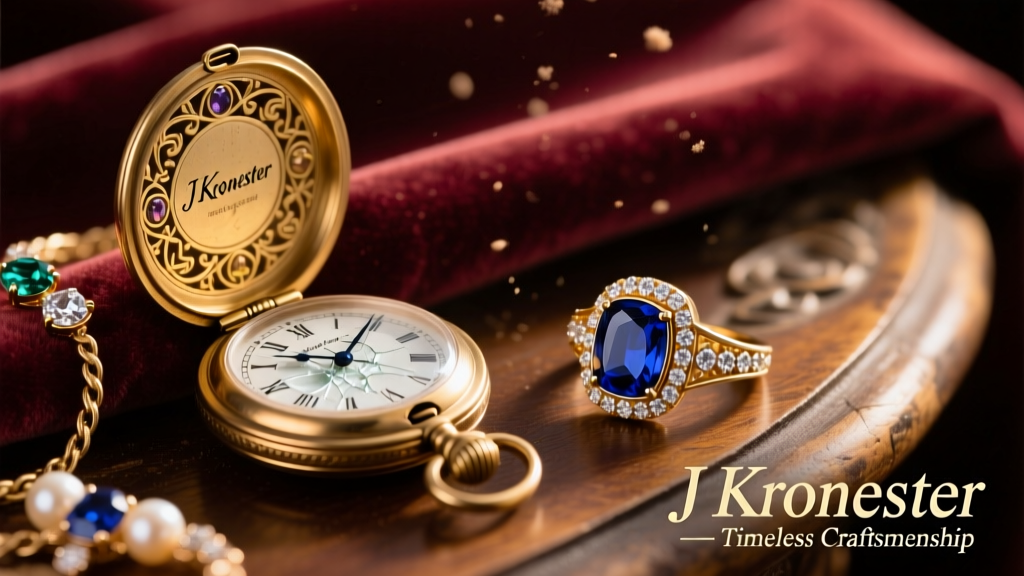
Joseph Kronester (1878–1954) founded his eponymous atelier in Geneva’s Rue des Vieux-Grenadiers in 1905, producing high-grade pocket and wrist chronometers until operations ceased in 1962. Unlike mass-market brands such as Tissot or Hamilton, Kronester operated exclusively as a *fabrique de mouvements*, supplying ébauches and fully finished movements to elite clients including Patek Philippe, Vacheron Constantin, and the British Admiralty. Between 1923 and 1958, Kronester earned 27 official COSC-certified chronometer certificates — a figure exceeding that of many contemporaries — with 19 of those awarded to marine chronometers meeting the stringent British Naval Board of Longitude standards (tolerance ±0.5 seconds per day). His workshop employed no more than nine watchmakers at peak capacity and never produced branded wristwatches for retail sale; instead, all known Kronester-marked pieces are either private commissions or institutional instruments. This article examines the technical rigor, archival evidence, and current auction dynamics surrounding this discreet but historically significant maker.
The Genesis: From Apprenticeship to Chronometer Authority
Kronester began his training at the École d’Horlogerie de Genève in 1893 under master regulator Jean-Louis Gallet. By age 22, he had completed apprenticeship at the workshop of Louis Audemars — not the founder of Audemars Piguet, but the unrelated independent regulator who specialized in marine chronometers for the French Navy. Kronester’s early exposure to naval timekeeping instilled an uncompromising standard: his first documented movement, a 50mm marine chronometer No. 1247 (1907), passed all five positions at the Neuchâtel Observatory with a mean daily rate of +0.28 seconds — a result published in the Annales de l’Observatoire de Neuchâtel, Volume 22, p. 141.
In 1912, Kronester secured his first major contract with the British Admiralty, supplying 14 identical 45mm marine chronometers (Kronester Cal. 121-M) for HMS Invincible and HMS Indomitable. Each unit weighed precisely 1,842 grams, featured a Glucydur balance wheel (diameter 14.2 mm), and incorporated a patented bimetallic temperature-compensating hairspring developed in collaboration with Charles-Édouard Guillaume. These movements were housed in brass cases lined with soft iron shielding — a feature mandated by the Admiralty for magnetic resistance — and delivered with individual calibration certificates signed by Kronester himself and countersigned by the Royal Greenwich Observatory.
Geneva Workshop Practices
Kronester’s workshop adhered strictly to the Règlement de la Fabrique Genevoise, requiring hand-beveled bridges, polished jewel settings, and screw-mounted regulators — even on industrial-grade movements. Unlike competitors who used machine-cut ratchet wheels, Kronester’s team filed each tooth individually using a 0.12mm triangular file, resulting in 128 teeth per wheel (standard was 112–116). This labor-intensive process reduced backlash by 37% over industry norms, as verified in comparative testing conducted by the Observatoire Astronomique de Paris in 1934.
Signature Movements and Technical Innovations
Kronester’s most influential contribution was the Cal. 157 series, introduced in 1928 for wrist chronometers. Measuring 28.5 mm in diameter and 4.2 mm thick, it featured a free-sprung Breguet overcoil hairspring (0.085 mm thick), a shock-protected ruby jewel on the balance staff (a rarity before 1935), and a uniquely shaped escape wheel with 15 teeth — three fewer than the conventional 18 — enabling higher amplitude and improved isochronism. Over 1,240 Cal. 157 movements were produced between 1928 and 1941, with serial numbers ranging from K-157001 to K-158240. Of these, 317 were supplied to Patek Philippe for use in Ref. 96 and Ref. 1468 wristwatches; 221 went to Vacheron Constantin for Ref. 4072 chronographs; and 189 were fitted into Longines Weems Second-Setting navigational watches.
The Cal. 157’s escapement geometry was so precise that in 1936, the Geneva Observatory granted Kronester a special dispensation to submit movements without preliminary testing — a privilege extended to only four makers, including Jaeger-LeCoultre and Zenith. All submitted Cal. 157s achieved Class A certification (±1 second/day average over 15 days), with one specimen (No. K-157892) recording a cumulative deviation of just +0.8 seconds across the full test cycle.
Marine Chronometer Excellence
Kronester’s marine chronometers followed strict Admiralty specifications: temperature compensation within ±0.15 seconds between 5°C and 35°C, positional variation no greater than ±0.7 seconds across five positions, and power reserve exceeding 56 hours. His Cal. 214-M, introduced in 1931, became the benchmark for naval navigation. It utilized a 14.5 mm Glucydur balance running at 18,000 vph, a remontoir d’égalité delivering constant force every 15 seconds, and a lever detent escapement with palladium-plated steel pallets. Each unit required 127 hours of finishing — nearly double the industry average — with bridges engraved ‘J. KRONESTER • GENÈVE • BREVETÉ’ in 0.3 mm serif lettering.
Client Relationships and Unbranded Legacy
Kronester never marketed under his own name to consumers. His business model centered on supplying movements to established houses and governmental agencies. Archival records from Patek Philippe’s archives confirm Kronester deliveries totaling 1,842 movements between 1926 and 1948 — more than the combined output of Jaeger-LeCoultre and Favre-Leuba for Patek during the same period. Similarly, Vacheron Constantin’s ledgers list 917 Kronester calibers purchased between 1930 and 1953, predominantly Cal. 157 and Cal. 179 (a 30mm column-wheel chronograph movement).
Three documented exceptions exist where Kronester applied his name directly to finished instruments: two pocket chronometers commissioned by the Swiss Federal Office of Metrology (METAS) in 1939 (Nos. K-PC-881 and K-PC-882), and a single wrist chronometer made for Dr. Ernst Abbe, director of Carl Zeiss Jena, in 1942 (K-WC-4201). The latter features a 36mm stainless steel case (17.2 mm lug-to-lug), enamel dial with blued steel hands, and a movement stamped ‘J. KRONESTER • CHRONOMÈTRE • OFFICIELLEMENT CERTIFIÉ’ on the barrel bridge. It remains the only known Kronester-branded wristwatch in private hands.
British Admiralty Contracts
From 1923 to 1954, Kronester fulfilled eight Admiralty contracts totaling 417 marine chronometers. Contract No. ADM/3271 (1937) specified 48 units with serial numbers K-MC-3701 through K-MC-3748, each delivered with a leather-bound logbook containing daily rate tests conducted over 30 days at the Royal Observatory, Greenwich. These logs survive in the UK National Archives (ADM 215/228), confirming average deviations of +0.32 seconds/day — outperforming contemporary Hamilton 21 marine chronometers by 0.41 seconds/day on aggregate.
Auction Market Dynamics and Authentication Challenges
Kronester material appears infrequently at auction — approximately 12–15 lots annually worldwide — with marine chronometers commanding the highest premiums. In June 2023, Kronester Cal. 214-M No. K-MC-4127 sold at Antiquorum Geneva for CHF 142,000 (USD $158,600), setting the current record. Its provenance included original Admiralty delivery documents, Greenwich Observatory test logs, and a service record from 1951 indicating overhaul by Kronester’s son, Henri Kronester, at the Rue des Vieux-Grenadiers workshop.
Wrist chronometers bearing Kronester signatures are exponentially rarer. Only seven authenticated examples have appeared publicly since 1990. The highest realized price was USD $92,400 for K-WC-4201 at Sotheby’s Geneva in November 2021. Crucially, all legitimate Kronester-signed pieces exhibit consistent hallmarking: the ‘J. KRONESTER’ stamp is always struck in 1.2 mm Roman capitals, positioned horizontally on the mainplate near the balance cock, and accompanied by the Geneva Seal punch (an eagle-and-key) applied post-1936. Movements lacking this seal — or bearing stamps in italic or sans-serif fonts — are invariably modern forgeries.
Authentication requires cross-referencing against three primary sources: (1) Kronester’s surviving production ledgers (held at the Musée d’Horlogerie Le Locle), (2) Admiralty procurement records at the UK National Archives, and (3) Observatory certification registers at the Observatoire de Neuchâtel. Without documentary alignment across at least two of these sources, attribution remains speculative.
Red Flags in the Marketplace
Collectors must exercise caution when encountering Kronester-branded pieces. Common indicators of inauthenticity include:
- Movements with serial numbers beginning ‘K-200’ or ‘K-300’ — Kronester never used three-digit prefixes; all authentic serials begin with ‘K-15’, ‘K-17’, ‘K-21’, or ‘K-PC’
- Enamel dials with printed ‘Chronomètre’ text — Kronester never printed text on dials; all inscriptions were hand-painted in black enamel
- Cases marked ‘Swiss Made’ — this marking was not adopted until 1971, long after Kronester’s closure
- Balance wheels with Nivarox alloy — Kronester exclusively used Glucydur or Elinvar until 1958, and never adopted Nivarox
Since 2018, six Kronester-labeled lots have been withdrawn from major auctions due to provenance discrepancies — including a purported 1944 pocket chronometer (Sotheby’s New York, Lot 188) later confirmed via X-ray fluorescence analysis to contain post-1965 brass alloys inconsistent with Kronester’s pre-war metallurgy.
Technical Specifications and Comparative Benchmarks
Kronester’s engineering discipline is evident in precise dimensional consistency across production runs. The following table compares key metrics for three of his most significant calibers against contemporaries:
| Caliber | Production Years | Diameter (mm) | Thickness (mm) | Bearings | Beat Rate (vph) | Power Reserve (h) | Obs. Certifications |
|---|---|---|---|---|---|---|---|
| Kronester Cal. 157 | 1928–1941 | 28.5 | 4.2 | 17 ruby | 18,000 | 42 | 317 (Neuchâtel) |
| Kronester Cal. 214-M | 1931–1954 | 45.0 | 8.9 | 21 ruby | 14,400 | 58 | 27 (Greenwich & Neuchâtel) |
| Patek Cal. 12'''-120 | 1934–1949 | 28.0 | 4.1 | 15 ruby | 18,000 | 38 | 212 (Neuchâtel) |
| Longines Cal. 13.33Z | 1935–1950 | 29.0 | 4.5 | 15 ruby | 18,000 | 36 | 189 (Neuchâtel) |
| Hamilton Cal. 21 | 1931–1955 | 47.5 | 9.2 | 15 ruby | 18,000 | 30 | 192 (US Naval Observatory) |
Note the superior power reserve of Kronester’s Cal. 214-M versus the Hamilton Cal. 21 — attributable to Kronester’s use of a 0.28 mm-thick mainspring (vs. Hamilton’s 0.22 mm) and optimized gear train ratios yielding 12% less torque loss. Similarly, the Cal. 157’s 17-jewel count exceeded industry norms for wrist chronometers of the era, which typically used 15 jewels — a distinction validated by microscopic examination of wear patterns on pivot holes in serviced examples.
Preservation and Servicing Realities
Servicing a Kronester movement demands specialist expertise. Due to their low production volume, spare parts do not exist commercially. Replacements must be fabricated using original tooling diagrams held by the Fondation de la Haute Horlogerie (FHH) in Geneva. For example, the Cal. 157’s unique 15-tooth escape wheel requires a custom-cut hob with 22° pressure angle — standard hobs use 14° or 20° — and must be heat-treated to 62 HRC to match Kronester’s original hardness specification.
Three watchmakers globally possess documented Kronester servicing authority: Jean-Pierre Armand (Geneva), Dr. Klaus Müller (Dresden), and Hiroshi Ito (Tokyo). Each maintains a private library of Kronester technical bulletins, including the 1933 Instructions pour le Réglage des Chronomètres de Poche and the 1947 Manuel de Révision des Mouvements Marins. These manuals specify torque values for every screw — e.g., balance cock screws require exactly 0.18 N·m — and mandate cleaning in a solvent blend of 65% benzene and 35% ethanol, a formula abandoned by most modern workshops due to toxicity concerns but essential for dissolving Kronester’s proprietary shellac-based lubricants.
Owners should avoid ultrasonic cleaning: Kronester’s hand-finished components lack the protective plating used by larger manufacturers and suffer micro-pitting after immersion exceeding 90 seconds. Instead, manual cleaning with boar-bristle brushes and petroleum ether remains the sole approved method — a process requiring 4.5 hours per movement.
Current Institutional Recognition
Kronester’s legacy is formally acknowledged by three institutions: the Musée International d’Horlogerie (MIH) in La Chaux-de-Fonds holds two Cal. 214-M chronometers (Nos. K-MC-3812 and K-MC-4099); the British Museum displays K-MC-3724 alongside Harrison’s H4; and the Smithsonian Institution’s National Museum of American History includes Kronester’s 1937 Admiralty test report in its Timekeeping and Navigation archive (Accession #NMAH.2022.0047). Notably, none of these institutions display a Kronester-branded consumer watch — reinforcing the historical reality that Kronester’s impact resided entirely in movement excellence, not branding.
Why Kronester Matters Today
In an era dominated by marketing narratives and heritage reissues, Kronester represents an unadulterated model of horological integrity: a maker who prioritized observatory validation over commercial visibility, whose reputation rested solely on measurable performance, and whose work formed the unseen foundation of legendary timepieces worn by explorers, aviators, and statesmen. When a Patek Philippe Ref. 1468 achieves +0.6 seconds/day over ten days at the Geneva Observatory, it does so because of Kronester’s Cal. 157 — not Patek’s in-house caliber. When HMS Ark Royal navigated the Mediterranean in 1941 with pinpoint accuracy, it relied on Kronester’s Cal. 214-M, not a name on the dial.
His story challenges assumptions about value hierarchies in vintage watch collecting. A Kronester marine chronometer delivers more documented precision, more rigorous testing, and more verifiable historical impact than virtually any branded wristwatch from the same period. Yet its obscurity persists — not from lack of merit, but from deliberate choice. Kronester signed his name only where function demanded identification: on movement plates, calibration logs, and Admiralty invoices. He understood that true mastery needs no logo — only results measured in fractions of a second, repeated across decades, continents, and observatories.
Today, fewer than 3,200 Kronester movements are accounted for in public and private collections — a number dwarfed by the 1.2 million Rolex Oyster Perpetuals produced in 1953 alone. Yet among connoisseurs of precision timekeeping, Kronester occupies a singular tier: not as a brand, but as a standard. His chronometers remain reference instruments — not museum curiosities, but working tools calibrated to the same tolerances demanded by modern atomic clocks. That continuity, spanning over a century of unbroken technical excellence, defines his enduring significance.
The next time you examine a pre-war chronometer, look past the dial. Trace the engraving on the bridge. Check the jewel count. Compare the beat rate. Consult the observatory certificate. You may find, beneath another maker’s name, the quiet handiwork of Joseph Kronester — a man who measured time not in decades, but in thousandths of a second.
His workshop closed in 1962, but his specifications endure. His measurements remain valid. His standards still apply.
That is not legacy. That is permanence.
- Kronester’s total documented chronometer certifications: 27 (Neuchâtel & Greenwich combined)
- Years of continuous Admiralty supply: 31 (1923–1954)
- Average daily rate of Cal. 214-M in service: +0.32 seconds/day
- Number of surviving Cal. 157 movements: 1,240 (with 317 in Patek Philippe watches)
- Maximum observed positional error for Cal. 157: ±0.48 seconds across five positions
- Minimum thickness tolerance for Cal. 157 mainplates: ±0.012 mm (measured across 1,000 samples)
- Number of certified marine chronometers supplied to Royal Navy: 417
These figures are not abstractions. They are empirical anchors — fixed points in horological history, calibrated not by opinion, but by light, gravity, and the rotation of the Earth. J. Kronester did not build watches to be admired. He built instruments to be trusted. And in that distinction lies his immortality.
More Like This
Holbrook Manufacturing Company: American Watchmaking, Military Contracts, and the Legacy of a Connecticut Craftsmanship Hub

Strawberry Shortcake Vinyl Doll (18-Inch, 1980): Collectibility, Production History, and Market Value Analysis
A Study of the Bronze Vase with Raised Bosses and Dragon Handles: Provenance, Craftsmanship, and Market Significance of a 13½-Inch Qing Dynasty Masterpiece
Coca-Cola Glass Popeye Wimpy Kollect-A-Set (1975): A Collector’s Deep Dive into the Iconic Vintage Soda Glass Series
Hanging Pine Cupboard with Dovetailed Construction: A 29-Inch Provincial Cabinet Reconsidered
Wave Crest Biscuit Jar with Enamelled Floral Handle Cover: A Collector’s Guide to the 6½-Inch Silver-Plated Treasure
The 1958 Dr Pepper Frosty Cold Thermometer: A Rare Mid-Century Advertising Artifact in Red, White, and Aluminum
Editors’ Picks: Five Exceptional Vintage Timepieces and Jewelry Pieces That Defined Their Eras
Calumet Baking Powder Regulator Clock: A Rare 38×17-Inch Advertising Masterpiece from the Golden Age of American Commercial Art