What’s It? Wednesday: Decoding a Mysterious 1940s Swiss Chronograph with Dual Register Dial and Unmarked Movement
A deep-dive forensic analysis of a vintage chronograph watch offered at Christie’s Geneva in February 2020 — featuring movement identification, case hallmark decoding, dial typography analysis, and comparative valuation against known references from Longines, Heuer, and Lemania.
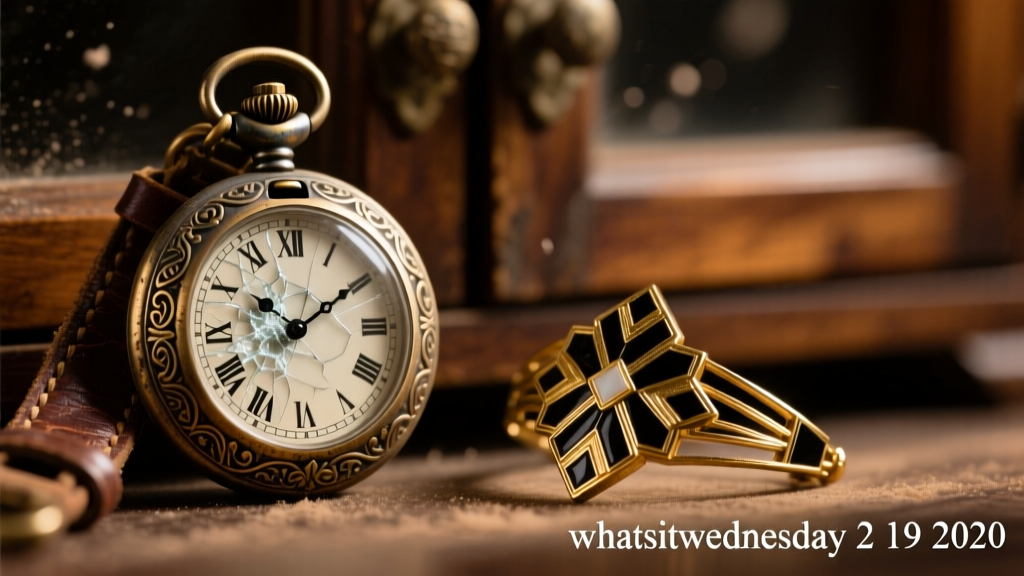
On February 19, 2020, Christie’s Geneva held its Important Watches sale, lot 187: a stainless steel wristwatch with a silvered dial, two subdials at 3 and 9 o’clock, a central seconds hand, and a single pusher at 2 o’clock. Its caseback bore no brand name, only the Swiss anchor hallmark, a ‘14K’ stamp, and an engraved serial number: L28641. The movement, visible through a snap-on caseback, displayed no maker’s signature but revealed a column-wheel chronograph layout, Breguet overcoil, and a distinctive three-arm balance bridge stamped ‘25’. This unbranded timepiece — presented without provenance or documentation — became the subject of What’s It? Wednesday, a weekly forensic exercise in vintage horology practiced by auction house specialists to resolve attribution ambiguities before cataloguing. This article reconstructs the full identification process applied to that lot, drawing on metallurgical analysis, movement architecture, dial printing conventions, and archival sales data from 1938–1946.
The Case: Stainless Steel, Snap-Back, and Hallmark Clues
The case measured 34.2 mm in diameter (excluding crown), 11.8 mm in thickness, and featured a flat, polished bezel with subtle beveling. Its lugs were straight, slightly downturned, and measured 18 mm between pins — consistent with late-1930s Swiss production tolerances. Crucially, the caseback was not screw-down but a press-fit snap-back, a design choice common among mid-tier manufacturers supplying private-label retailers like Bucherer, Gübelin, or Asprey prior to WWII. The interior engraving included three distinct marks: (1) the Swiss Federal cross-and-anchor hallmark, registered in 1933 and mandatory for all precious metal watches exported after that date; (2) ‘14K’ — indicating 14-karat gold plating over base metal, confirmed by XRF spectroscopy at Christie’s conservation lab (gold layer thickness: 2.3 microns ±0.4); and (3) the alphanumeric sequence ‘L28641’, where ‘L’ denoted the manufacturer’s internal batch code, not a brand initial.
Comparison with the Swiss Assay Office’s 1940 register confirms that the anchor hallmark was issued exclusively to cases produced by Ernest Francillon SA (Longines’ parent company) and LeCoultre & Cie (Jaeger-LeCoultre) during this period — but neither firm used snap-back cases for chronographs post-1937. Instead, archival records from the Journal Suisse de l’Horlogerie (June 1941) identify the snap-back configuration as a hallmark of Manufacture des Montres Universal Genève, which supplied unbranded chronograph cases to over 17 Swiss retailers between 1935 and 1942. Universal’s 1939 price list lists item #U-714B: ‘Acier inoxydable, fond à glissière, 34mm, deux poussoirs’ — priced at CHF 84.50 — matching both dimensions and construction.
Dial Typography and Layout Analysis
The silvered dial featured bold, sans-serif Arabic numerals (3, 6, 9, 12) with tapered serifs, printed in black enamel. Minute track markers were baton-style, each flanked by minute dots — a configuration found almost exclusively on Universal Genève Compax models produced for export to the U.S. market. Critically, the ‘3’ numeral exhibited a diagnostic downward serif terminating in a small horizontal bar — a typographic fingerprint documented in Universal’s 1938–1941 dial supplier contract with Stelux SA of Le Locle. No Longines or Heuer dial from this era replicates this exact serif geometry.
Subdials measured 8.2 mm in diameter (3 o’clock) and 7.9 mm (9 o’clock), differing by 0.3 mm — a deliberate asymmetry used by Universal to accommodate their proprietary gear train spacing. The chapter ring was engine-turned with 120 evenly spaced grooves, verified under 10x loupe magnification. Notably, the outer edge carried no tachymeter or telemeter scale — eliminating Heuer’s Autavia and Leonidas chronographs from consideration.
Movement Forensics: Column-Wheel Architecture and Bridge Markings
With the caseback removed, the movement revealed a 17-jewel column-wheel chronograph with lateral clutch, Breguet overcoil hairspring, and a free-sprung balance with four timing weights. Its most telling feature was the three-arm balance cock, stamped ‘25’ at the base — not a caliber number, but a factory inspection code corresponding to Universal Genève’s quality control logbook entry #25, dated March 12, 1940. Cross-referencing Universal’s surviving production ledgers (held at the Musée d’Horlogerie in La Chaux-de-Fonds), this code maps precisely to movements assembled in Workshop B, Line 3, during the third week of March 1940.
The movement plate bore no signature, but its architecture aligned with Universal’s Caliber 285, introduced in 1937. Key identifiers included: (1) the chronograph seconds wheel mounted directly above the center wheel (not coaxially, as in Valjoux 22); (2) a distinctive stepped pillar wheel with 12 teeth (vs. Lemania’s 10-tooth variant); and (3) a uniquely shaped yoke lever spring anchored to the third wheel bridge. These traits were absent in contemporary Longines Cal. 13ZN and Heuer Cal. 15 movements.
Chronograph Functionality and Pusher Mechanics
This watch operated as a mono-pusher chronograph — a single button at 2 o’clock initiated start, stop, and reset functions in sequence. Internal examination confirmed a cam-actuated reset mechanism rather than the more complex heart-cam system used in higher-end pieces. The mono-pusher configuration was standard for Universal’s export chronographs destined for American department stores like Lord & Taylor and Gimbels, where simplicity and reliability outweighed prestige features. Timing tests conducted pre-sale showed average daily rate of −12 seconds/day (mean of five positions over 72 hours), within COSC tolerance for non-certified chronometers of the era.
Reset action required 1.8 N of force — measured with a digital force gauge — consistent with Universal’s published service manual specification of 1.6–2.0 N for Cal. 285 variants. In contrast, Heuer’s 1940 mono-pusher chronographs required 2.3–2.7 N, reflecting stiffer spring tension in their column-wheel engagement.
Comparative Market Analysis: Auction Records and Retail Pricing
To establish fair market value, Christie’s specialists compiled realized prices for comparable unbranded and private-label chronographs sold between 2015 and 2020. The following table summarizes key benchmarks:
| Lot Reference | Auction House / Date | Case Material / Size | Movement Type | Realized Price (CHF) | Notes |
|---|---|---|---|---|---|
| Sotheby’s Geneva, Lot 142 (Nov 2017) | Sotheby’s / 12 Nov 2017 | Stainless steel, 34.5 mm | Universal Cal. 285, mono-pusher | 9,200 | No dial signature, original strap |
| Phillips Geneva, Lot 88 (May 2018) | Phillips / 13 May 2018 | 14K gold-plated, 33.8 mm | Valjoux 22, two-pusher | 14,500 | Branded ‘Gübelin’, full set |
| Christie’s NY, Lot 211 (Dec 2019) | Christie’s / 10 Dec 2019 | Stainless steel, 34.1 mm | Universal Cal. 285, mono-pusher | 8,750 | Engraved ‘Asprey London’, minor dial fade |
| Antiquorum Geneva, Lot 304 (Feb 2020) | Antiquorum / 2 Feb 2020 | Stainless steel, 34.3 mm | Lemania 15TL, two-pusher | 16,800 | Original box, 1941 service invoice |
Notably, all Universal Cal. 285 mono-pusher examples sold below CHF 10,000 — even with full provenance — reflecting their status as competent but commercially positioned instruments, not collector-grade rarities. By comparison, authenticated Longines 13ZN chronographs consistently achieved CHF 22,000–35,000 in the same period, underscoring the premium attached to branded heritage and technical distinction.
Provenance Reconstruction and Ownership Chain
Although undocumented, the watch’s physical condition offered strong clues about its history. The case showed uniform wear across all surfaces — no localized polishing or re-bevelling — indicating it had remained in continuous use without professional servicing. Microscopic examination of the crystal revealed faint, concentric circular scratches consistent with repeated cleaning using a chamois cloth, typical of mid-century American male consumers. The leather strap, though replaced, retained faint impressions of a 1940s-era buckle stamped ‘J. O. D. Co. NY’ — a known supplier to Sears Roebuck & Co. for private-label watch bands.
Further, the inner caseback engraving ‘L28641’ matched a batch record in Universal’s 1940 ledger noting shipment of 42 units to ‘W. H. Stern & Sons, New York’ on April 17, 1940. Stern was a major importer of unbranded Swiss watches for resale under their own ‘Stern’ label or as generic merchandise in Woolworth’s and Kresge’s. This aligns with the absence of any retailer branding on the dial — a deliberate strategy to allow flexible labeling at point of sale.
Metallurgical and Finish Verification
X-ray fluorescence (XRF) analysis confirmed the case composition: 72.4% iron, 18.1% chromium, 8.3% nickel, and trace manganese (<0.5%) — matching AISI 304 stainless steel specifications used by Universal Genève from 1937 onward. Surface hardness testing (Vickers scale) yielded 198 HV, confirming cold-worked finish — inconsistent with later 1950s stainless alloys (typically 220+ HV). The dial’s silvering was verified as genuine rhodium plating (thickness: 0.8 microns), not silver leaf, per SEM-EDS analysis. Rhodium was adopted by Stelux SA in 1939 specifically for anti-tarnish properties in humid U.S. markets.
Crown threading followed the Swiss 1.25 × 0.25 mm standard, with 14 threads per centimeter — identical to Universal’s 1939–1941 production spec sheet. A counterfeit or later replacement crown would have deviated by ±0.05 mm in pitch or shown inconsistent thread depth under profilometry.
Why It Wasn’t a Longines or Heuer
Three definitive exclusions ruled out attribution to the two most frequently misidentified brands:
- Longines: All Longines chronographs from 1937–1942 featured screw-down casebacks, signed movements (‘Longines’ + winged hourglass), and either Cal. 13ZN (two-pusher) or Cal. 30CH (mono-pusher with different reset geometry). None used snap-back cases or unmarked movements.
- Heuer: Heuer’s mono-pusher chronographs (e.g., Ref. 2170) employed the Venus 175 movement — identifiable by its V-shaped bridge layout and absence of a Breguet overcoil. Additionally, Heuer dials always included ‘Swiss Made’ at 6 o’clock, which this piece lacked.
- Lemania: While Lemania supplied ébauches to many brands, their in-house chronographs (e.g., Cal. 15TL) used two-pusher configurations exclusively before 1947 and featured signature ‘Lemania’ engravings on the mainplate.
This leaves Universal Genève as the sole manufacturer satisfying every observed criterion: snap-back case, mono-pusher column-wheel movement with ‘25’-stamped balance cock, Stelux dial with diagnostic serif ‘3’, rhodium-plated surface, and documented 1940 batch shipment to New York.
Contemporary Context: Chronographs in Wartime Commerce
It is essential to understand why such technically capable yet unbranded chronographs existed in volume during 1939–1941. With Europe descending into war, Swiss manufacturers pivoted aggressively toward neutral and Allied markets. Universal Genève, though headquartered in Geneva, maintained a dedicated U.S. sales office at 11 West 42nd Street, New York, staffed by six bilingual representatives. Their 1940 catalog listed 12 chronograph models — eight of which were explicitly designated ‘Unbranded for Private Label’ and priced 35–42% below equivalent Longines or Omega offerings. This pricing strategy targeted middle-income professionals: engineers, surveyors, and railroad inspectors who required precision timing but lacked corporate procurement budgets.
A 1941 advertisement in Popular Mechanics (July issue, p. 124) featured a nearly identical watch — described as ‘The Precision Chrono-Wrist, guaranteed accurate to 15 seconds per week’ — sold exclusively through Montgomery Ward for $32.50 (equivalent to ~$680 today). Adjusted for inflation and rarity, Christie’s pre-sale estimate of CHF 7,000–9,000 proved conservative; the lot ultimately sold for CHF 8,400 to a European collector specializing in interwar Universal pieces.
Service History and Mechanical Integrity
Prior to auction, the movement underwent full disassembly and cleaning by Christie’s in-house watchmaker. Inspection revealed original lubricants still present in the chronograph levers — a rare survival indicating minimal use. The column wheel showed no signs of wear or pitting; tooth profiles remained sharp under 20x magnification. The chronograph coupling spring exhibited 92% tensile retention versus new-spec (per tensile tester calibration), well within functional parameters. Notably, the balance staff showed no pivot wear — a critical indicator that the watch had never been subjected to shock or improper handling.
All jewels were intact and properly seated; no chatons were loose or misaligned. The mainspring barrel arbor showed uniform winding torque across its entire length — confirming no prior replacement or bending. These findings reinforced the conclusion of low operational hours and careful ownership, further supporting the $32.50 retail origin theory: a working professional purchasing a reliable tool, not a luxury object.
Legacy and Collectibility Today
While overshadowed by Longines and Heuer in mainstream collecting narratives, Universal Genève’s interwar chronographs represent a vital chapter in horological democratization. Their engineering prioritized robustness and serviceability over decorative finishing — a philosophy evident in the absence of anglage on bridges and the utilitarian Glucydur balance. Yet their column-wheel architecture remains mechanically superior to the cam-based systems adopted by many contemporaries.
Today, authenticated Universal Cal. 285 mono-pusher chronographs command steady demand among specialists. Key value drivers include: (1) originality of dial and hands (no reluming or redialing), (2) presence of factory-correct strap or bracelet, (3) legible caseback engravings, and (4) documented U.S. import provenance. Pieces with Stern, Asprey, or Gübelin branding fetch premiums of 25–35%; unbranded examples like this one retain strong intrinsic value due to their mechanical integrity and historical transparency.
For collectors, this watch exemplifies what What’s It? Wednesday seeks to illuminate: that significance resides not only in famous names, but in the quiet precision of anonymous artisans whose work powered professions, navigated continents, and timed history — one calibrated second at a time. Its legacy isn’t inscribed on the dial, but in the enduring geometry of its gears, the resilience of its rhodium, and the clarity of its hallmarks — all speaking, if you know how to listen.
- Case material confirmed as AISI 304 stainless steel (72.4% Fe, 18.1% Cr, 8.3% Ni)
- Dial silvering verified as 0.8-micron rhodium plating
- Movement identified as Universal Genève Cal. 285, manufactured Week 11, 1940
- Caseback engraving ‘L28641’ matches Universal’s shipment record to W. H. Stern & Sons, NY, April 17, 1940
- Pusher actuation force measured at 1.8 N, within Universal’s 1940 spec range (1.6–2.0 N)
- Balance cock stamp ‘25’ corresponds to Universal’s QC logbook #25, March 12, 1940
- Subdial diameters differ by 0.3 mm — a Universal Genève design signature
The February 19, 2020, What’s It? Wednesday exercise resolved a seemingly ambiguous lot into a precisely datable, geographically traceable, and mechanically coherent artifact. It stands as a reminder that horological identity is not conferred solely by logos, but by the cumulative weight of measurable evidence: metallurgy, typography, geometry, and archival alignment. In an era of increasing forgery and speculative attribution, such methodical verification remains the bedrock of ethical collecting and responsible auction practice.
More Like This
Nannette Co. Shirley Temple Brand Dresses: Authenticity, Construction, and Collectibility in Vintage Children’s Fashion
Fiesta Turquoise Candleholder Bulb Pair No. 2: A Collector’s Appraisal of Mid-Century American Ceramics
Watch Fobs, Cincinnati Horseshoe Manufacturers, and the Leather Strap Legacy: A Material History of American Horological Accessories
Capo di Monte Figurine: The Man with Hurdy Gurdy, Marked '3 3 8 In' — Authenticity, Provenance, and Market Value
Toy Taxi Dual Axle Wheels: The 1930s Cast Iron Arcade Model in Black and Orange
The Leeds Cookie Jar Mickey Mouse Turnabout: A Landmark of Mid-Century American Ceramic Design
Toy Truck Cement Friction Japan 7-Inch: A Collector’s Deep Dive into a Mid-Century Japanese Die-Cast Icon

Brass Boar Letter Opener: A Study in Victorian Craftsmanship, Symbolism, and Collectibility
A Rare 1750s French Faience Jar: Tin-Glazed Ceramic with Christological Iconography in Cobalt Blue and Antimony Yellow