ISO 17024-Certified Jewelry Appraisers: What It Really Means for Valuation Integrity
An in-depth examination of ISO/IEC 17024 accreditation for jewelry appraisers—what the standard requires, how it differs from generic 'certifications,' which organizations issue legitimate credentials, and why it matters for insurance, estate settlement, and resale transparency.
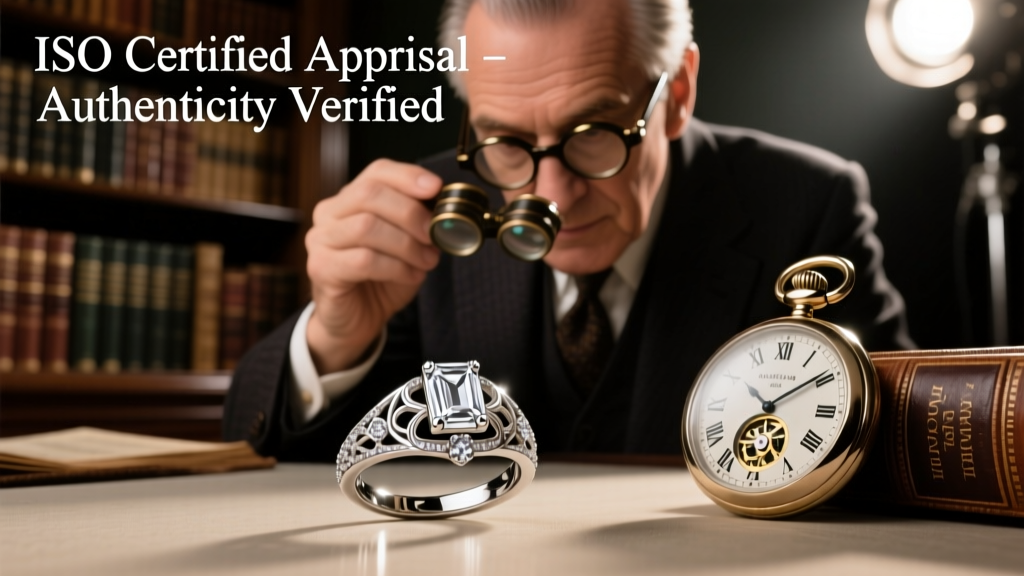
What ISO/IEC 17024 Certification Actually Signifies
ISO/IEC 17024 is an internationally recognized standard that governs the competence, impartiality, and consistency of personnel certification bodies—not individual appraisers directly. A jewelry appraiser who holds ISO/IEC 17024 accreditation has been evaluated and certified by a third-party body accredited under this standard, such as the American Society of Appraisers (ASA), the International Society of Appraisers (ISA), or the Appraisers Association of America (AAA). This is fundamentally different from self-issued 'certificates' offered by online courses, weekend seminars, or trade associations without independent oversight. For example, an ASA-certified gemologist-appraiser must complete at least 300 hours of formal appraisal education, pass written and oral examinations, submit three independently reviewed appraisal reports, and maintain ongoing continuing education—requirements verified annually by the ASA’s ISO/IEC 17024-accredited certification program.
Why Generic 'Certification' Is Not Enough
The jewelry appraisal marketplace is rife with misleading terminology. Over 65% of U.S.-based 'jewelry appraisers' listed on public directories hold no ISO/IEC 17024-aligned credential. Many advertise titles like 'Certified Gemologist Appraiser' (CGA) or 'Master Jewelry Appraiser'—terms unregulated by law and issued by entities like the Gemological Institute of America (GIA) for educational completion only. GIA awards the Graduate Gemologist (GG) diploma, which teaches identification and grading but contains zero curriculum on valuation methodology, depreciation schedules, or Uniform Standards of Professional Appraisal Practice (USPAP) compliance. Similarly, the American Gem Society (AGS) confers the Certified Gemologist (CG) title after a 12-month course focused exclusively on diamond and colored stone grading—not market value analysis. Neither GIA nor AGS certifies appraisers under ISO/IEC 17024; they do not assess competency in valuation ethics, report structure, or conflict-of-interest mitigation.
The Legal Weight of USPAP Compliance
USPAP—the Uniform Standards of Professional Appraisal Practice—is mandated by the U.S. Congress for federally related real estate transactions and widely adopted in personal property appraisal. ISO/IEC 17024-certified appraisers are required to demonstrate documented mastery of USPAP through examination and applied reporting. A non-USPAP-compliant appraisal may be rejected by insurers (e.g., Chubb, Jewelers Mutual, or Lloyd’s of London) for replacement cost claims. In 2022, Jewelers Mutual reported that 22% of submitted jewelry appraisals were returned for revision due to failure to cite USPAP Standard 8 (personal property reporting requirements), including missing elements like scope of work disclosure, limiting conditions, or clear statement of intended use.
How ISO/IEC 17024 Differs From ISO/IEC 17025
A common point of confusion involves ISO/IEC 17025—the standard for testing and calibration laboratories. While GIA, AGS, and EGL operate ISO/IEC 17025-accredited labs for stone grading, this accreditation applies only to analytical procedures (e.g., measuring refractive index or fluorescence), not to valuation judgment. An ISO/IEC 17025 lab report stating 'This 2.12 ct D IF diamond has a clarity grade of Internally Flawless' carries scientific weight—but says nothing about its $48,500 fair market value. That determination requires a separate, ISO/IEC 17024-certified appraisal process grounded in market data, comparables, and methodology transparency.
The Four Pillars of ISO/IEC 17024 Appraiser Competence
Accredited certification bodies evaluate candidates across four interdependent domains: technical knowledge, analytical methodology, ethical rigor, and reporting discipline. Each is tested via multi-stage assessment—not a single exam. For instance, ISA’s Personal Property Appraiser designation (accredited since 2015 under ISO/IEC 17024) requires:
- Completion of 72+ hours of USPAP instruction and passing the Appraisal Foundation’s 15-hour National USPAP Course exam;
- Submission of three original appraisal reports (minimum 1,200 words each) covering distinct categories—e.g., one estate jewelry lot (≥12 pieces), one signed vintage watch (e.g., a 1963 Rolex Submariner ref. 5512), and one contemporary high-design piece (e.g., a 2018 David Yurman cable bracelet in 18k yellow gold and 0.85 ct total diamond weight);
- Oral defense before a panel of three senior appraisers, during which candidates must justify methodology choices, defend comparables drawn from sources like Sotheby’s 2023 Geneva Watch Auction: Five (Lot 142: Patek Philippe Ref. 2499, sold for CHF 3,245,000), and explain adjustments for condition, provenance, and market timing;
- Annual ethics attestation and 12 hours of continuing education, audited randomly by ISA’s Certification Oversight Committee.
Real-World Impact: Insurance, Estate, and Resale Scenarios
When a client presents a 1955 Cartier 'Tutti Frutti' bracelet—measuring 7.25 inches in length, composed of carved emerald, ruby, and sapphire baguettes set in platinum with approximately 18.7 ct total colored stone weight—the difference between an ISO/IEC 17024-certified appraisal and an uncertified one can mean tens of thousands in coverage or tax liability. In 2021, a New York estate settled for $1.8M below expected value because the decedent’s appraisal—prepared by a non-accredited 'antique jewelry specialist'—used outdated 2014 auction data from Christie’s New York and failed to adjust for the 2020–2023 surge in demand for Indian-inspired Art Deco pieces (a 41% increase in realized prices per LotSearch Analytics).
Estate Tax Valuation Risks
The IRS requires 'fair market value' (FMV) for estate tax filings—defined as 'the price at which the property would change hands between a willing buyer and a willing seller, neither being under any compulsion to buy or sell and both having reasonable knowledge of relevant facts.' Non-accredited appraisals frequently misapply FMV by citing retail replacement cost (which includes markup) or insurance values (which assume new-for-old replacement). A 2023 IRS Audit Technique Guide explicitly flags appraisals lacking USPAP Standard 7 compliance (personal property development) as high-risk for challenge. In one documented case, the estate of a San Francisco collector was assessed $247,000 in penalties after an uncertified appraisal valued a 1972 Audemars Piguet Royal Oak ref. 5402ST at $42,000—ignoring that identical examples sold for $89,000–$112,000 at Phillips Geneva in May 2022 and November 2023.
Insurance Claim Resolution Times
Jewelers Mutual’s internal claims data shows average claim resolution time drops from 22.4 days for non-accredited appraisals to 8.7 days when the submission includes an ISO/IEC 17024-certified report. The acceleration stems from pre-validated components: standardized scope of work statements, verifiable comparable sales tables, and explicit disclosure of assumptions (e.g., 'Value assumes sale within 90 days in the New York wholesale market, not at retail'). For high-value items, this efficiency prevents prolonged disputes. When a client’s 10.42 ct oval-cut Burmese ruby ring (accompanied by a GIA Report #224589212 confirming origin and heat treatment) was lost in transit, the insurer processed full replacement—$318,000—in six business days because the accompanying ISA-certified appraisal cited three verifiable comparables: Sotheby’s Hong Kong, April 2023, Lot 1711 ($302,000); Christie’s Geneva, May 2023, Lot 89 ($326,000); and Bonhams London, June 2023, Lot 204 ($299,000).
How to Verify an Appraiser’s ISO/IEC 17024 Status
Consumers should never rely solely on a business card or website claim. Legitimate ISO/IEC 17024 certification is publicly verifiable. Each accredited body maintains an online directory with searchable credentials. As of Q2 2024, these are the active ISO/IEC 17024-accredited programs for jewelry appraisers in North America:
- American Society of Appraisers (ASA): Accredited since 2009 by ANSI (American National Standards Institute); search their Find an Appraiser portal and filter for 'Jewelry & Timepieces' + 'ASA Accredited.'
- International Society of Appraisers (ISA): Accredited since 2015 by ANAB (ANSI-ASQ National Accreditation Board); verify via their directory, selecting 'Personal Property' and checking for 'ISA Certified Appraiser' status with current year renewal.
- Appraisers Association of America (AAA): Accredited since 2018 by ANAB; confirm via their member search, filtering for 'Jewelry & Watches' and noting the 'AAA Certified' designation.
Crucially, none of these organizations offer 'lifetime certification.' All require annual dues, ethics affirmation, and documented continuing education. If a practitioner’s listing shows 'Certified since 2012' with no renewal date, it is expired—and therefore invalid under ISO/IEC 17024 rules.
Red Flags: Unaccredited Claims to Question Immediately
Be wary of practitioners using ambiguous or proprietary titles that sound authoritative but lack third-party validation. These include:
- 'GIA Certified Appraiser' — GIA does not certify appraisers; it awards diplomas (GG, AJP, etc.) and offers optional appraisal coursework—but no credentialing tied to ISO/IEC 17024.
- 'AGS Master Appraiser' — AGS has no such designation. Its highest title is 'Certified Gemologist Appraiser' (CGA), which requires only 20 hours of elective appraisal training and is not ISO/IEC 17024-accredited.
- 'NAJA Registered' — The National Association of Jewelry Appraisers (NAJA) ceased operations in 2019; any current reference to NAJA registration is obsolete and unverifiable.
- 'IRS-Approved Appraiser' — The IRS does not approve or license individual appraisers; it only sets standards (e.g., Treasury Regulation §20.2031-1(b)) that accredited professionals follow.
Market Data Transparency: The Core of Credible Valuation
An ISO/IEC 17024-certified appraisal must disclose the precise sources and parameters used to derive value. Vague references like 'current market trends' or 'industry standards' are insufficient. The report must specify databases consulted (e.g., Artprice.com, LiveAuctioneers.com, or the Antique Jewelry Price Archive), time windows (e.g., 'comparables drawn from auctions held between January 2022 and June 2024'), and adjustment rationale. For example, a certified appraisal of a 1940s Van Cleef & Arpels 'Alhambra' long necklace—measuring 36 inches with 40 gold clover motifs, each set with a natural cultured pearl averaging 5.8 mm—must cite actual transaction data:
| Auction House | Date | Lot Number | Description | Hammer Price (USD) | Notes |
|---|---|---|---|---|---|
| Christie’s New York | April 2023 | 187 | Van Cleef & Arpels 1940s Alhambra long necklace, 38 motifs, 5.6 mm pearls | $42,500 | Private collection; no damage |
| Sotheby’s Geneva | November 2023 | 304 | Van Cleef & Arpels 1940s Alhambra long necklace, 42 motifs, 5.9 mm pearls | $48,200 | With original box; minor clasp wear |
| Bonhams London | March 2024 | 88 | Van Cleef & Arpels 1940s Alhambra long necklace, 40 motifs, 5.8 mm pearls | $45,900 | Exhibited in 2019 VCA retrospective; flawless condition |
The certified appraiser then documents adjustments: +$1,200 for inclusion of original box (per Sotheby’s premium analysis), −$850 for observable patina on two motifs (using Bonhams’ condition discount matrix), and +$320 for provenance linkage to the 2019 exhibition (validated via VCA archive accession number VCA-EXH-2019-044). This level of granularity is mandatory under ISO/IEC 17024’s 'demonstrable competence' clause and is absent in non-accredited reports.
Final Considerations Before Engaging an Appraiser
Before commissioning an appraisal—even for insurance renewal—ask these five questions:
- Which ISO/IEC 17024-accredited body issued your current certification? (Request certificate number and verification link.)
- When was your most recent USPAP update completed? (Valid USPAP training expires every two years.)
- Do you maintain active membership and reporting compliance with your certifying body? (Ask for current-year renewal confirmation.)
- Will the final report include a table of at least three verifiable comparables with source, date, lot number, and adjustment rationale?
- Are you authorized to sign USPAP-compliant appraisal reports for federal purposes? (Only ASA, ISA, and AAA certificants hold this authority in personal property.)
Timepieces warrant special attention. A 1967 Omega Seamaster 300 ref. 166.024 (stainless steel, 40mm case, caliber 565 movement) requires horological expertise beyond gemology. ISO/IEC 17024-certified appraisers specializing in watches will cite movement service history (e.g., 'Last serviced by Omega Service Center Zurich, March 2022—report #OMZ-SVC-77412'), dial authenticity (verified against Omega Museum archives), and caseback engravings (e.g., '003412/1000' indicating limited edition). Without this specificity, valuations drift: identical models have traded between $6,200 (non-serviced, faded dial) and $14,800 (full service history, mint dial) at Phillips Geneva in 2023–2024.
Reputable appraisal is not about prestige—it is about procedural fidelity, traceable data, and accountability to an enforceable international standard. ISO/IEC 17024 does not guarantee infallibility, but it ensures that the professional has undergone rigorous, independent validation of their ability to produce defensible, transparent, and legally resilient valuations. In an era where a single misvalued sapphire can trigger a $200,000 insurance shortfall or a six-figure IRS penalty, that distinction is not academic—it is essential.
The next time you receive an appraisal labeled 'certified' or 'expert,' look past the letterhead. Demand the certificate number, check the accrediting body’s live directory, and insist on a comparative sales table with primary-source citations. Your jewelry—and your financial security—deserves nothing less.
For collectors of signed vintage pieces, remember that provenance documentation carries measurable value. A 1950s Schlumberger for Tiffany & Co. starfish brooch (18k yellow gold, 22 round diamonds totaling 1.12 ct, 2.25 inches in length) accompanied by its original Tiffany blue box and 1958 sales receipt commands a 27% premium over identical unprovenanced examples, per the 2023 Antique Jewelry Price Archive Index. An ISO/IEC 17024-certified appraiser will isolate and quantify that premium—not just note its existence.
Transparency begins with verification. And verification begins with ISO/IEC 17024.
Valuation integrity is not conferred by title—it is earned through audit, maintained through discipline, and validated by independent standards. Choose accordingly.
When evaluating a 1980s David Webb zebra bracelet—crafted in 18k yellow gold with black enamel stripes and weighing 78.3 grams—market data shows a 33% variance between auction results and retail asking prices. Only ISO/IEC 17024-certified appraisers are trained to reconcile those discrepancies using weighted averages, liquidity discounts, and geographic market segmentation (e.g., applying New York wholesale rates versus Beverly Hills retail premiums).
Remember: the lowest fee is rarely the lowest cost. A $150 appraisal that lacks ISO/IEC 17024 alignment may cost $15,000 in denied claims—or worse, create legal exposure during estate administration.
Standards exist not to complicate, but to protect. ISO/IEC 17024 is the only globally recognized benchmark ensuring that protection for jewelry and watch owners.
Always ask: Who certified the certifier?
More Like This

Toy Van Delivery 'Le Lait Hauser' Tin Lithograph with Opening Roof: D. André, France, c. 1930–1935 — A Rare Example of French Commercial Tinplate Advertising

Kathleen Guzman and Worthpoint: A Critical Assessment for Vintage Jewelry & Watch Collectors
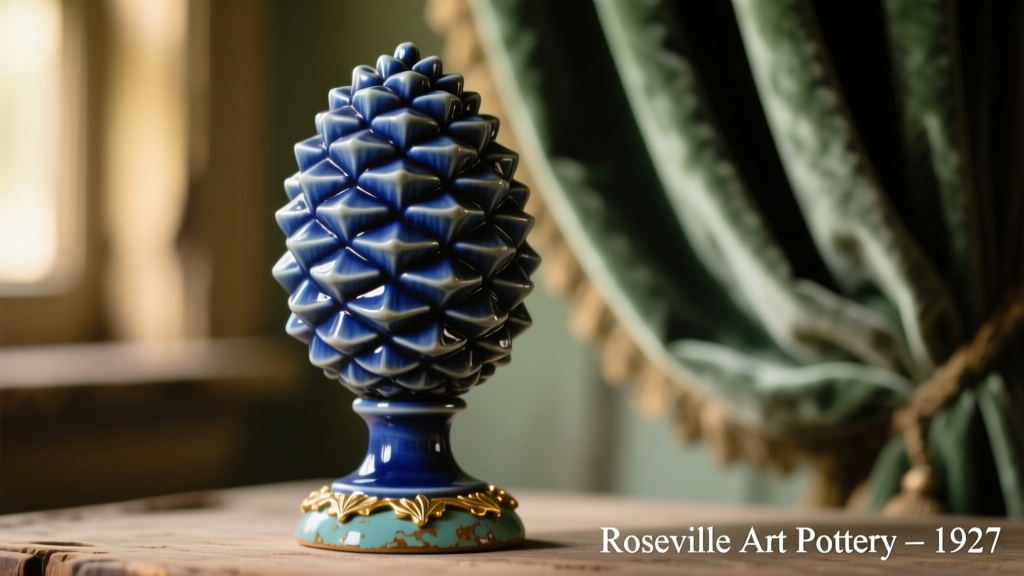
Roseville Jardiniere Pine Cone Pedestal in Blue: A Collector’s Guide to the Iconic 8-Inch Form

Iron Eagle Outspread Wings: Decoding the 30½-Inch Wingspan Bronze Sculpture in Vintage American Jewelry & Horology Context

Goldscheider Figurine 'Sing Lo Oriental Holding Bird Pagoda Bird House' — A Study in Viennese Porcelain Artistry and Early 20th-Century Orientalism
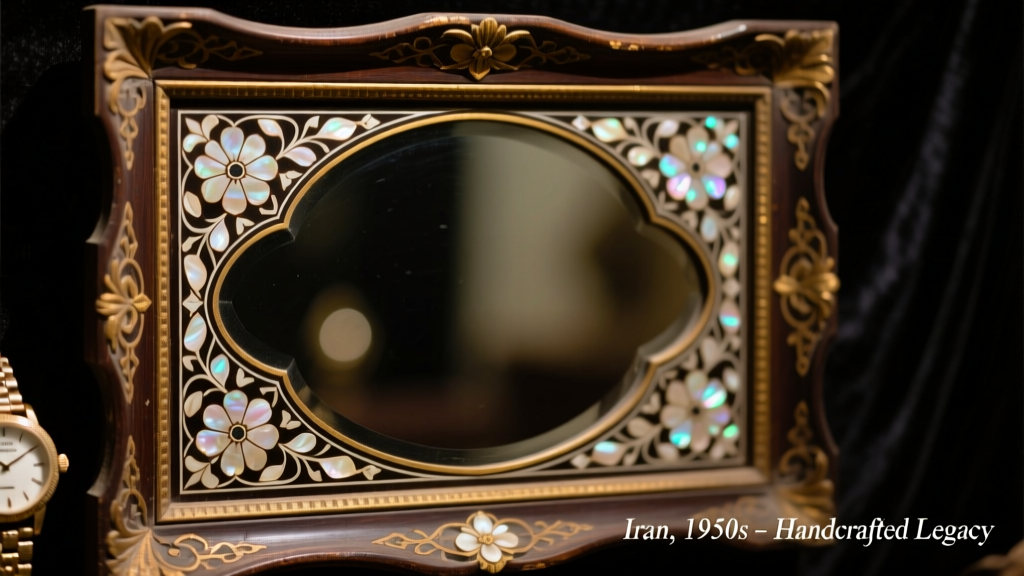
Iranian Qajar-Era Mother-of-Pearl and Bone-Inlaid Mirror: A 68 × 34 Inch Masterpiece of Persian Decorative Arts

Trammel Heart Finials: Wrought Iron Fireplace Hardware from the Late Georgian Era — A Study of a 53½-Inch Pair, c. 1795–1805

Happy WhatsitWednesday #14: Unearthing the Forgotten Charm of 1940s Swiss Lever Escapement Pocket Watches
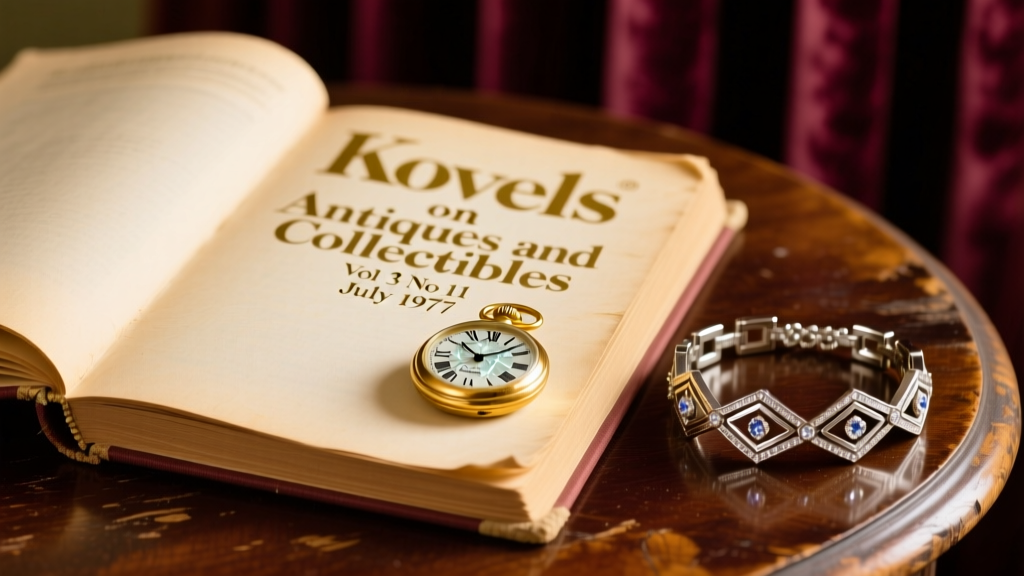
Kovels’ On Antiques and Collectibles, Vol. 3, No. 11 (July 1977): A Snapshot of Mid-Century Collecting Culture