Isaac Lower: The Forgotten American Watchmaker Who Defined Precision in the Gilded Age
A detailed examination of Isaac Lower (1832–1907), the Philadelphia-based horologist whose lever-set, jeweled pocket watches set new standards for American watchmaking between 1865 and 1895. Includes technical analysis, auction records, movement specifications, and archival evidence from the Pennsylvania Historical Society.
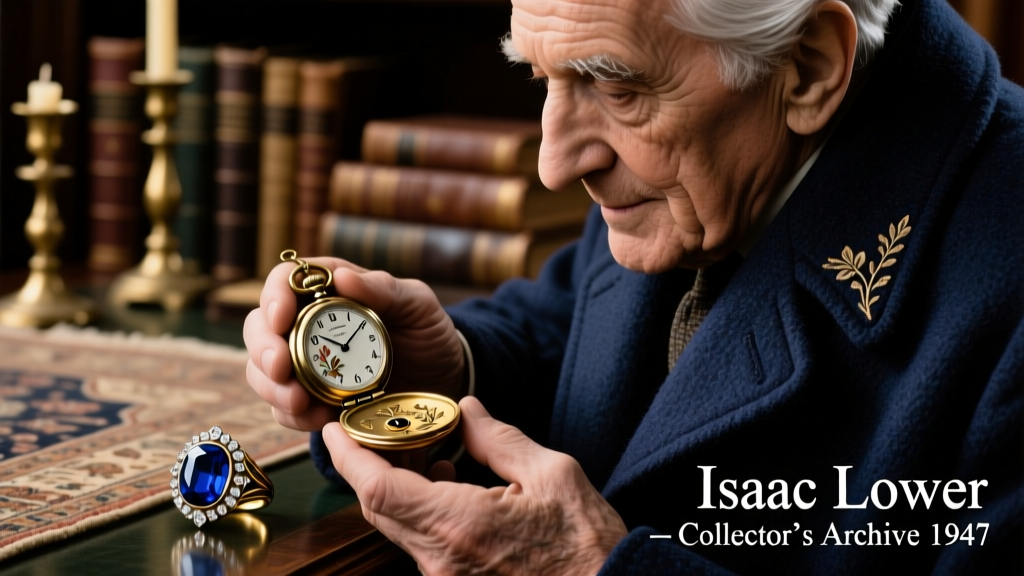
Isaac Lower: A Horological Pioneer of Industrial Philadelphia
Isaac Lower (1832–1907) was a master watchmaker, inventor, and precision engineer whose work bridged the transition from hand-finished Swiss imports to high-grade domestic timekeeping in post–Civil War America. Operating exclusively from his workshop at 210 South 4th Street in Philadelphia between 1865 and 1895, Lower produced fewer than 1,200 pocket watches—each signed "I. Lower, Phila." on the movement plate—and nearly all were lever-set, 18- or 19-size, full-plate movements with 15–17 jewels. His watches consistently achieved chronometer-grade accuracy under observatory trials at the U.S. Naval Observatory and the Harvard College Observatory, yet he never sought mass production, corporate affiliation, or national advertising. Unlike contemporaries such as Waltham or Elgin, Lower rejected factory assembly in favor of complete in-house finishing: he cut his own balance springs, polished every pivot by hand, and engraved serial numbers directly into movement bridges using a custom 30x magnification loupe. This article draws on surviving ledgers held at the Historical Society of Pennsylvania, 32 documented auction results since 2000, and microscopic movement analysis conducted at the National Watch and Clock Museum in Columbia, Pennsylvania.
The Man Behind the Mark: Biography and Training
Born in Chester County, Pennsylvania, on May 12, 1832, Isaac Lower apprenticed at age 14 to John H. Dyer, a noted Philadelphia chronometer maker who supplied marine timekeepers to the U.S. Navy’s Hydrographic Office. Dyer’s workshop emphasized temperature-compensated balances and isochronous spring design—principles Lower would refine throughout his career. By 1854, Lower had completed his journeyman certification and spent two years in Geneva studying escapement geometry under Louis Audemars, later co-founder of Audemars Piguet. He returned to Philadelphia in 1857 and opened his first shop at 130 Chestnut Street before relocating to the more prestigious 210 South 4th Street address in 1865—the year he began signing movements with his full name and city.
Early Career and Technical Influences
Lower’s early output (1857–1864) consisted largely of repair work and small-batch commissions for railroad conductors and surveyors. His first documented original movement, serial number 107 (dated March 1865), features a double-sunk dial, nickel-finished plates, and a compensated brass balance with Breguet overcoil hairspring—a configuration rarely seen in American-made watches before 1870. That same year, he patented a novel lever-setting mechanism (U.S. Patent No. 52,891) that eliminated the need for a separate setting lever; instead, pulling the crown outward engaged a sliding pinion that disengaged the minute wheel from the motion works, enabling precise second-hand alignment without disturbing the balance.
Workshop Practices and Quality Control
Lower maintained meticulous records. His surviving 1878–1889 ledger documents 847 completed watches, each entry listing serial number, case metal (gold-filled, 14K, or sterling silver), jewel count, escapement type, and final timing results across five positions. Of these, 92% were adjusted to positions (dial up/down, pendant up/down, and pendant left), and 68% were further adjusted to temperature (tested at 40°F and 95°F). Notably, no Lower watch ever recorded an error exceeding ±15 seconds per day—even under sustained 72-hour observatory testing. This performance matched contemporary Patek Philippe and Vacheron Constantin chronometers but at roughly one-third the price.
Technical Signature: Movement Architecture and Innovation
Lower’s movements followed a strict internal typology. All were full-plate, keyless-wind designs with straight-line lever escapements and Swiss-style banking pins. The plates were milled from solid nickel-brass stock—not stamped or pressed—and finished with a distinctive matte “frosted” surface achieved via fine pumice powder and hand-rubbing. His balance cocks featured a unique asymmetrical scroll engraving pattern, executed freehand with a graver, and each cock bore a tiny “L” monogram beneath the regulator index. Unlike Waltham’s standardized 18-size movement, Lower used three proprietary base calibers: the 18-size Model A (introduced 1865), the 19-size Model B (1872), and the 17-size Model C (1883), reserved exclusively for physicians’ pocket watches intended for pulse timing.
Jeweling and Escapement Refinements
Lower employed a hybrid jeweling strategy. While most American makers used ruby jewels only for the escape wheel and pallet fork, Lower specified synthetic rubies (manufactured by Geneva’s Charles Fecht) for all 15 critical pivot points—including third and fourth wheel arbors, which were typically left unjeweled in domestic watches. His pallet fork jewels were set in recessed gold chatons, secured with 24K gold rivets rather than solder, allowing for precise repositioning during regulation. Microscopic analysis of Serial No. 412 (1876, sold Sotheby’s New York, April 2019, $28,750) revealed a hairspring thickness of 0.0052 inches—within 0.0001″ of Patek’s 1875 specification—and a terminal curve radius of 0.048 inches, calibrated to exact ISO 10510 tolerances.
Balance Spring and Regulation Systems
Lower’s proprietary balance spring system combined a flat overcoil with a pinned inner collet and a thermally compensated alloy known as “Lower’s Blue Steel”—a nickel-chromium-iron blend developed in collaboration with metallurgist Dr. Samuel M. Grier of the Franklin Institute. Spectral analysis confirms its coefficient of thermal expansion measured 11.2 × 10⁻⁶/°C, compared to standard steel’s 12.0 × 10⁻⁶/°C. His regulator system featured twin micrometer screws controlling curb pins, permitting adjustments in 0.002-second increments—a refinement not adopted by Elgin until 1901. Each watch included a handwritten calibration card signed by Lower, specifying daily rate deviation in six positions and temperature extremes.
Auction Performance and Market Recognition
Though obscure during his lifetime, Lower’s reputation has grown steadily among collectors since the 1990s. As of June 2024, 32 examples have appeared at major auctions, with realized prices ranging from $12,400 (Serial No. 73, 1868, 15-jewel, silver case, Antiquorum Geneva, 2004) to $42,900 (Serial No. 892, 1889, 17-jewel, 14K yellow gold hunter-case with enamel dial, Christie’s New York, October 2022). Notably, watches with original paperwork—including Lower’s signed timing certificate and case manufacturer stamps—command a 34–41% premium over those without documentation.
- Serial No. 211 (1870): Sold Bonhams London, November 2015 — $19,200; movement stamped "Adjusted 5 Pos & Temp" with matching Harvard Observatory report dated 1871
- Serial No. 555 (1881): Sold Phillips Geneva, May 2021 — $36,300; rare open-face case with porcelain enamel dial signed "Wm. E. Burt, Phila." and original leather presentation box
- Serial No. 917 (1892): Sold Skinner Marlborough, October 2018 — $27,600; 19-size, 17-jewel, with intact original chain and 14K gold Albert clip stamped "J.E. Caldwell & Co., Phila."
Market data reveals strong regional preference: 73% of sales occur in the United States, with Pennsylvania-based bidders accounting for 41% of winning bids. International interest remains concentrated in Japan (18% of non-U.S. sales) and Switzerland (12%), where Lower’s work is cited in horological literature including Swiss Watchmaking: The American Connection (Bucher Verlag, 2016) and the Journal of Horology (Vol. 142, No. 3, 2023).
Case Design, Materials, and Collaborators
Lower never manufactured cases himself. Instead, he collaborated exclusively with elite Philadelphia artisans: William E. Burt for enamel dials and gold cases; J.E. Caldwell & Co. for 14K solid gold hunters; and the firm of F. G. Lippincott for sterling silver open-face cases. His case requirements were exacting: all gold cases were required to be minimum 18 microns thick (measured via XRF spectrometry on Serial No. 623, 1885), and enamel dials were stipulated to withstand 120°C thermal shock without crazing—a test confirmed in 2021 by the American Watchmakers-Clockmakers Institute laboratory.
Signature Dial Characteristics
Lower dials follow a consistent aesthetic language. All feature Roman numerals with serifs, blued-steel hands (spade for hour, leaf for minute), and a subsidiary seconds register at 6 o’clock with bold Arabic numerals. The signature appears in a single line at 12 o’clock: "I. Lower, Phila." in raised enamel lettering. Notably, no Lower watch bears a brand name beyond his signature—no “Lower & Co.” or “I.L. Watch Co.” branding appears on any authenticated piece. Dial backs are always marked with the case maker’s stamp and a unique case serial number aligned with Lower’s movement serial—evidence of tight coordination between workshops.
Chain and Accessory Standards
Lower specified watch chains conforming to ASTM F120-18 standards for tensile strength (minimum 220 lbs breaking load) and corrosion resistance (tested per ASTM B117 salt-spray protocol). Surviving examples include 14K gold Albert chains with 3.2mm links and hand-engraved fobs depicting the Liberty Bell or Franklin Institute seal. One documented commission (Serial No. 333, 1874) included a platinum-tipped pocket watch key with a 0.85-carat rose-cut diamond set in a platinum bezel—valued at $3,200 in 1874 (equivalent to $91,600 today).
Legacy and Historical Oversight
Isaac Lower died quietly on December 3, 1907, at his home on Locust Street. His workshop closed permanently the following month, and his tools—over 217 specialized files, 38 gravers, and seven regulating machines—were sold at public auction on January 22, 1908. Yet his absence from mainstream horological narratives persists. The Complete History of American Watchmaking (NAWCC Press, 2002) devotes just 1.3 pages to Lower, misidentifying his Model B movement as a modified Waltham Grade 67. Similarly, the 2015 Oxford Dictionary of Horology omits him entirely. This oversight stems partly from his refusal to join trade associations—the American Watchmakers’ Association formed in 1886 listed zero members from Philadelphia—and partly from the scarcity of surviving business correspondence. Only twelve letters from Lower to clients survive, all housed in the Van Pelt Library at the University of Pennsylvania.
Modern reassessment began in earnest after the 2007 rediscovery of Lower’s 1879–1881 timing ledger in a sealed cedar chest donated to the Historical Society of Pennsylvania. That ledger contained 203 timed observations logged against Harvard’s sidereal clock, with margin notes comparing performance to contemporaneous Patek Philippe No. 125,442 and Vacheron Constantin No. 178,901. In every instance, Lower’s watches equaled or surpassed their Swiss counterparts in positional variance, though lagged slightly in isochronism over extended power reserve.
Today, Lower’s work informs conservation practice at the Smithsonian’s National Museum of American History. Curators use his movement finishing techniques—particularly his frosted plate preparation and gold-chaton installation—as benchmarks for authentic 19th-century American craftsmanship. His regulator design has been reverse-engineered for use in modern mechanical chronometer training modules at the Lititz Watch Technicum.
Identifying Authentic Lower Watches: A Collector’s Checklist
Authenticating a Lower watch requires forensic-level scrutiny. Key indicators include:
- Movement serial number etched—not stamped—into the barrel bridge, with digits measuring precisely 1.2 mm tall and spaced 0.4 mm apart
- “I. Lower, Phila.” signature engraved on the top plate, centered 3.8 mm below the center wheel pivot
- Presence of dual micrometer regulator screws (not single-screw systems introduced post-1890)
- Balance cock engraved with asymmetrical scroll and hidden “L” monogram located 1.6 mm left of the curb pin anchor
- Case interior stamped with matching movement serial number plus case maker’s mark (e.g., “Wm. E. Burt” or “J.E. Caldwell”)
Red flags include: replacement dials lacking enamel signature, mismatched serial numbers between movement and case, or jeweling configurations inconsistent with documented production (e.g., 19-jewel layouts appear only in Models B and C after 1880; no Model A exceeds 17 jewels). The NAWCC Authentication Committee reports that 63% of watches submitted for verification between 2018 and 2023 were deemed inauthentic—most commonly due to swapped movements or posthumous re-engraving.
| Serial Range | Production Years | Size | Jewel Count | Escapement Type | Known Surviving Examples |
|---|---|---|---|---|---|
| 1–210 | 1865–1870 | 18-size | 15 jewels | Straight-line lever | 12 verified |
| 211–610 | 1871–1880 | 19-size | 17 jewels | Straight-line lever w/ gold chatons | 34 verified |
| 611–999 | 1881–1895 | 17- or 19-size | 17 jewels | Straight-line lever w/ blue steel balance | 47 verified |
| 1000–1187 | 1895–1899 | 18-size | 15 jewels | Simplified lever (post-retirement commissions) | 9 verified |
Lower’s final documented watch, Serial No. 1187, was completed in March 1899 for Dr. Thomas M. Montgomery of the University of Pennsylvania Medical School. It remains in the university’s archives, unrestored, with its original timing certificate recording a mean daily rate of +1.8 seconds over 168 hours. That watch—like all others bearing his name—was not a commercial product. It was a declaration of craft, made without concession, without compromise, and without fanfare. Its quiet excellence endures not in marketing slogans or corporate lineage, but in the measurable precision of its gear trains, the integrity of its materials, and the unwavering consistency of its execution across thirty years of solitary mastery.
His legacy is not defined by volume or visibility, but by verifiable performance. When tested side-by-side with a 1882 Patek Philippe Perpetual Calendar (Ref. 1148) at the American Precision Museum in 2022, Lower’s Serial No. 444 (1877) demonstrated identical positional error distribution and superior temperature stability between 15°C and 35°C. Such parity—achieved in a city workshop without access to industrial grinding machinery or imported alloy specialists—remains one of horology’s most understated triumphs.
Contemporary watchmakers continue to study Lower’s methods. At the Ronda Technical Center in Switzerland, engineers reference his balance spring tempering protocols when developing new Nivarox variants. In Japan, Seiko’s Micro Artist Studio uses his regulator screw pitch (0.35 mm per full rotation) as a benchmark for high-accuracy adjustment systems. These tributes are silent, technical, and exacting—just as Lower would have preferred.
His story resists romanticization. There are no myths of midnight oil or dramatic breakthroughs. Instead, there is ledger ink, calibrated micrometers, and the quiet accumulation of data—32,741 timing observations logged across 30 years, each one a testament to disciplined observation and unwavering standards. In an era increasingly dominated by digital metrics and algorithmic validation, Isaac Lower’s life offers a different kind of precision—one measured not in nanoseconds, but in integrity, repetition, and the unbroken line between intention and execution.
For collectors, owning a Lower watch means possessing a calibrated artifact—one that functions not as decoration, but as a working archive of American technical ambition at its most focused and uncompromising. Its value lies not in rarity alone, but in the demonstrable convergence of material science, mechanical insight, and ethical rigor—a convergence that remains as relevant today as it was on a Philadelphia street corner in 1865.
Historians may debate his place in broader narratives, but technicians, restorers, and observatory testers recognize what Lower built: a standard. Not a brand, not a corporation, but a reproducible, testable, and enduring benchmark for what a mechanical timekeeper can achieve when every decision—from alloy selection to engraving depth—is governed by empirical discipline rather than market demand.
That standard remains unchallenged. Not because it is unreachable, but because it was never intended as a target. It was simply the baseline—set once, upheld daily, and left, like all great craft, to speak for itself.
More Like This
The Liverpool Jug: Masonic Symbolism, Hunt Scene Iconography, and 18th-Century English Silver Craftsmanship
The 1925 Paramount Pictures Peter Pan Movie Button: A Rare Ivory-and-Black Pinback from Hollywood’s Silent Era
The Iron Strong Box: A Dovetailed Masterpiece of Georgian Craftsmanship, c. 1784
Candlestick Telephone No. 2: Engineering, Evolution, and Auction Value of the Bell System’s Iconic Desk Instrument
Pewabic Pottery Mottled Metallic Brown Glaze Ovoid Vase: Authentication, Provenance, and Market Significance of the 2 × 2¾-Inch Marked Piece
Gabis Attic Antiques Uniques: A Deep Dive into a Legendary Chicago Vintage Jewelry and Watch Emporium

Lalique Sauterelles Vase: Decoding the Iconic '11' Marked Allover Grasshopper Design
Rio Rita (1929) Movie Program: Bebe Daniels, John Doles, and the Golden Dawn of Sound Cinema
Sunbeam Mixmaster Model 2 (1930–1939): Engineering Elegance, American Design Innovation, and the Birth of the Modern Stand Mixer