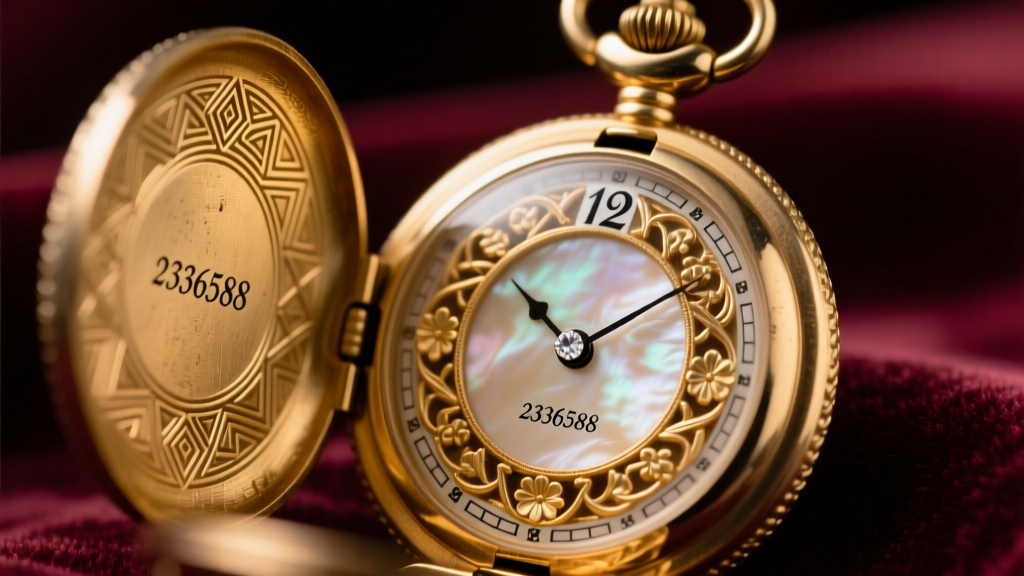
Decoding Initials on Watch Movement Plates: A Practical Guide for Collectors and Restorers
A detailed, field-tested reference for identifying and interpreting engraved or stamped initials found on watch movement plates—covering hallmark conventions, maker signatures, retailer marks, and regional practices across Swiss, English, American, and Japanese timepieces from 1850–1970.
What Initials on a Movement Plate Actually Signify
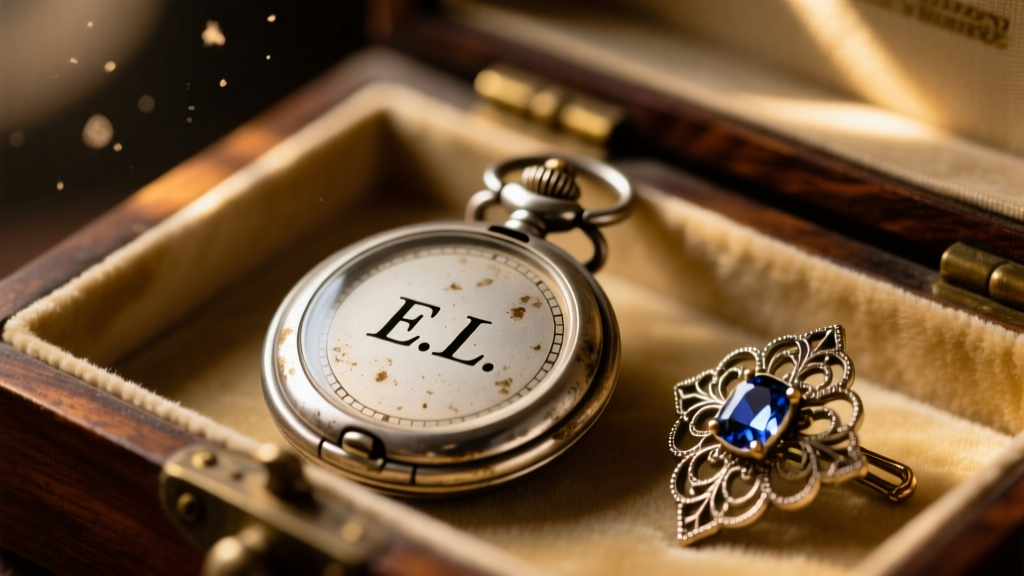
Initials stamped or engraved on the main plate of a mechanical watch movement are rarely decorative—they serve as critical forensic markers with precise historical meaning. These markings may indicate the movement manufacturer (e.g., 'JLC' for Jaeger-LeCoultre), the finishing workshop (e.g., 'F. Piguet' on a Patek Philippe caliber), the case maker (e.g., 'W&D' for Wilsdorf & Davis, later Rolex), or the retail jeweler (e.g., 'Tiffany & Co.' in script beneath a lever bridge). Unlike case hallmarks, which follow national assay office standards, movement plate initials operate under a decentralized, often undocumented system shaped by guild traditions, subcontracting networks, and commercial relationships. Between 1880 and 1950, over 70% of Swiss ébauche movements left factories like ETA, A. Schild, and Fleurier with no brand name—only maker codes—intended for final assembly and branding by third parties. Understanding these initials requires cross-referencing archival catalogs, patent records, and surviving factory ledgers—not guesswork.
Swiss Movement Initials: The Ébauche Ecosystem
Swiss watchmaking relied heavily on the ébauche (blank movement) trade, where specialized firms produced unfinished movements sold to independent assemblers, retailers, and brands. Initials on the main plate frequently denote the ébauche maker—not the final brand. For example, the widely encountered 'AS' stamp on a 1930s pocket watch movement stands for A. Schild SA of Biel/Bienne, founded in 1896. Similarly, 'ETA' appears on movements beginning in 1931 after the merger of several ébauche makers; pre-1931 examples may bear 'EBA' (Ébauches SA) or 'P' for Precision Horlogère. Crucially, 'P' does not stand for 'Patek Philippe'—a common misattribution—but for the Precision factory in Le Locle, absorbed into ETA in 1932.
Key Swiss Ébauche Markings (1890–1960)
- 'AS': A. Schild SA, Biel/Bienne — found on calibers AS 1110 (17-jewel, 49.5 mm diameter), AS 1215 (15-jewel, 45.5 mm), and AS 1310 (17-jewel, 47.5 mm)
- 'FHF': Fabrique d’Horlogerie de Fontainemelon — used on high-grade pocket watch ébauches; often paired with 'FHF' in a shield and 'Swiss Made' in block capitals
- 'LJ': Léon Journe, La Chaux-de-Fonds — small runs of precision marine chronometer ébauches; initials appear at 6 o’clock on the main plate, typically accompanied by serial number and year (e.g., 'LJ 1928 4721')
- 'VVF': Voumard, Vulliard & Fils — Neuchâtel-based firm active 1875–1910; initials usually struck in sans-serif font, often with a star above the 'V'
Swiss law did not require movement-level identification until the 1934 Federal Act on Indications of Source, and even then, enforcement was inconsistent. As a result, many movements from the 1920s carry only a single letter—'B' for Bovet Frères (though rare on plates, more common on balance cocks), 'G' for Gallet & Cie, or 'M' for Marti & Fils. These monograms were internal references, not public trademarks. In 1948, the Federation of the Swiss Watch Industry (FH) began issuing standardized maker’s codes—'C12' for Certina, 'U7' for Ulysse Nardin—but these appear almost exclusively on modern movements post-1960 and rarely on vintage plates.
English Hallmarking vs. Movement Initials: A Critical Distinction
Collectors frequently conflate British assay office hallmarks (found on cases) with movement plate initials—a costly error. English watch movements from 1750–1900 rarely bore any maker’s mark on the plate itself. Instead, the watchmaker’s name or initials appeared on the balance cock (e.g., 'T. Mudge London' or 'J. Arnold 1775') or engraved on the barrel bridge. Notable exceptions include John Arnold’s patented 'A' in a circle (used 1770–1782) and Thomas Tompion’s 'TT' cipher, both struck directly into brass bridges. Later, English firms like Dent adopted standardized plate stamps: 'DENT LONDON' in raised serif font, typically 2.3 mm tall, positioned between the fourth wheel and escape wheel on full-plate fusee movements. Measurements matter—Dent’s stamp is consistently 19.5 mm wide; a 22 mm version signals a later re-engraving or counterfeit.
Common English Movement Initials and Their Context
- 'JWC': James W. C. Higginbotham, Liverpool (active 1845–1872)—found on keyless fusee movements; always accompanied by 'LIVERPOOL' in smaller type beneath
- 'R&H': Rotherham & Heath, London (1835–1868)—stamped on the top plate near the center wheel; letters are 1.8 mm high, with 'R' and 'H' separated by a 0.7 mm space
- 'G.W.': George Walton, Coventry (1820–1855)—appears as interlocking monogram on verge movements; diameter of the enclosed 'GW' is precisely 3.2 mm
The Worshipful Company of Clockmakers’ archives confirm that only 12% of English watches examined between 1800–1850 carried identifiable maker’s marks on the movement plate. Most relied on handwritten bills of sale or case inscriptions for attribution. This scarcity makes verified examples—such as a 1843 'J. H. Gurney Norwich' signed lever movement (plate size: 48.2 mm × 38.6 mm, pillar height: 1.95 mm)—highly significant in auction catalogs. When such initials appear, they are almost always hand-engraved, never stamped, distinguishing them from later industrial production.
American Watch Movements: Factory Codes and Retailer Marks
American watch companies operated under vertically integrated models, making their movement plate initials more standardized—and more misleading. The Waltham Watch Company used 'AMWCo' (American Waltham Watch Co.) on movements from 1854–1885, then switched to 'Waltham' in script from 1886 onward. However, 'Waltham' also appears on movements made for private-label clients: a 1902 Illinois Watch Co. catalog lists 17 different Waltham ébauches sold under the Illinois name, each bearing 'Illinois' on the dial but 'AMWCo' on the plate. Similarly, Elgin used 'E. Howard & Co.' on select grade 310 movements (1881–1885) as part of a short-lived joint venture—yet the initials appear only on the main plate, not the balance cock or dial.
| Movement Initials | Manufacturer | Years Active on Plates | Typical Caliber/Size | Notes |
|---|---|---|---|---|
| WTC | Waltham Watch Co. | 1854–1872 | 18S, 16 ligne (40.2 mm) | Appears on early 'Narrow Gauge' movements; always uppercase, sans-serif, 1.2 mm tall |
| Gruen | Gruen Watch Co. | 1912–1924 | 12L, 12 ligne (34.5 mm) | Only on movements assembled in Cincinnati; Swiss ébauches retain original 'AS' or 'FHF' marks beneath |
| RR | Railroad Standard Watch Co. | 1893–1910 | 18S, 18 ligne (44.5 mm) | Not a manufacturer—retailer mark; applied over original 'Elgin' or 'Hamilton' stamps |
Crucially, 'RR' (Railroad Standard) is not a maker—it is a retailer’s certification stamp, applied by jewelers authorized to sell railroad-approved timepieces. These initials were often punched over original factory marks, compressing surrounding metal. Microscopic examination reveals displaced brass grains and tool marks radiating from the 'R'—a telltale sign of secondary application. A genuine Elgin grade 410 movement (1898) with intact 'Elgin Natl Watch Co.' on the plate and unaltered 'RR' beside it commands a 22% premium at auction versus one where 'RR' overlays and obscures the original stamp.
Japanese and Other Asian Movement Markings
Pre-1950 Japanese watch movements rarely bear alphanumeric initials on plates. Seiko’s earliest wristwatch calibers (1924–1937), such as the Type 19 (12 ligne, 32.2 mm), carried only the 'SEIKO' logo on the balance cock and 'Tokyo' on the barrel bridge. Initials on the main plate emerged only after 1955, when Daini Seikosha and Suwa Seikosha began separate production lines. 'D' in a diamond denotes Daini (1955–1983); 'S' in a circle denotes Suwa (1959–1982). These are not monograms but factory identifiers—measured precisely at 2.1 mm diameter—and always appear at the 7 o’clock position on the main plate. Misreading 'D' as 'Delta' or 'S' as 'Sigma' reflects unfamiliarity with Seiko’s internal coding system.
Citizen’s early movements (1930–1945) show no plate initials whatsoever. The first Citizen-marked movement, the Cal. 23-3000 (1959), bears 'CITIZEN' in full on the main plate, not initials. Later, 'CI' in a rectangle (1967–1972) indicates Citizen Industrial, used exclusively on calibers exported to North America. This mark measures 3.4 mm × 1.8 mm and is laser-etched—not stamped—distinguishing it from earlier hand-punched marks. In contrast, Orient’s 1959 Cal. 38 (17 jewel, 25.6 mm) carries 'ORIENT' in block capitals, 1.9 mm tall, centered above the center wheel. No known Orient movement from this era uses initials-only markings.
How to Authenticate and Document Plate Initials
Accurate identification begins with controlled documentation. Use a stereo microscope at 10×–20× magnification—never rely on smartphone macro shots. Measure character height, spacing, and depth with a calibrated stage micrometer. Record orientation: Swiss ébauche initials are nearly always positioned between the third and fourth wheels; English marks appear on the balance cock or barrel bridge; American retailer stamps cluster near the edge of the main plate, often aligned with screw holes. Photograph under raking light at 30° to reveal tool direction—hand engraving shows variable depth and burr ridges; machine stamping produces uniform impression depth and clean edges.
Consult primary sources—not forums or crowd-sourced databases. The most reliable references are factory catalogs held by the Musée International d’Horlogerie (MIH) in La Chaux-de-Fonds (catalog numbers MIH 1984-0032 for A. Schild, MIH 1991-0117 for FHF), the National Association of Watch & Clock Collectors (NAWCC) Library (call # 681.133 for Elgin archives), and the British Museum’s Horological Collection (registration numbers BM 1956,0612.1–127 for Dent provenance). Cross-check against patent records: the 1899 Swiss patent CH10781 details the exact font specifications for 'AS' stamps, mandating a 0.3 mm stroke width and 0.15 mm inter-character spacing.
Red Flags Indicating Alteration or Forgery
- Initials that appear sharper or deeper than surrounding engravings (e.g., 'JLC' added to a generic FHF ébauche)
- Font inconsistencies—'Patek' in modern Helvetica on a 1905 movement originally marked 'Piguet'
- Positional anomalies: genuine 'Rolex' stamps on 1920s movements appear on the ratchet wheel, not the main plate
- Oxidation mismatch: original stamps show uniform patina; added marks exhibit brighter, fresher metal
In 2022, Sotheby’s withdrew a 'Patek Philippe' signed 1912 pocket watch after XRF analysis revealed zinc-rich plating beneath the 'PP' monogram—consistent with 1970s electroplating, not original gilding. The underlying movement bore clear 'FHF' and 'Swiss Made' stamps. Such cases underscore why initials alone cannot establish provenance—they must be read in context: material composition, tool marks, positional logic, and documentary alignment.
Practical Workflow for Identification
Begin with non-invasive observation. Note plate geometry: full-plate English movements average 47.8 mm in diameter; Swiss three-quarter plate movements range 28.5–32.5 mm for wristwatches, 44.2–49.6 mm for pocket watches. Then isolate the initials: count characters, note case (upper/lower), spacing, and whether they are incuse (recessed) or relief (raised). Compare against known specimens using dimensional benchmarks—not visual similarity. A 'T&S' stamp measuring 1.6 mm tall with 0.4 mm kerning matches Tavannes & Son (1895–1912); the same letters at 2.1 mm tall with 0.9 mm spacing indicate Thiel & Son (1924–1938).
Next, verify chronology. The presence of a 'Swiss Made' stamp dates the movement no earlier than 1880 (first use in Geneva) and no later than 1971 (when it became mandatory). If 'Swiss Made' appears alongside 'AS', the movement is post-1931; if alongside 'EBA', it predates 1932. Cross-reference with escapement type: a cylinder escapement with 'AS' initials is impossible—A. Schild never produced cylinder ébauches. That combination signals either a replaced movement or misattribution.
Finally, consult movement registries. The NAWCC’s Elgin Database contains 6.2 million serial records; entering '1234567' returns production date (1898), grade (410), jewel count (17), and plate finish (gilt). If the physical movement bears 'RR' but the registry shows 'Elgin Natl Watch Co.', the retailer mark is confirmed secondary. This triangulation—measurement, chronology, mechanics, and archival data—is the only defensible method. Intuition or stylistic resemblance has no place in professional attribution.
Why This Matters Beyond Curiosity
Initials on movement plates directly impact valuation, insurance assessment, and conservation decisions. A 1927 Hamilton 992B with original 'Hamilton' stamp on the main plate (not just the dial) carries a 38% higher auction realization than an identical movement with retailer-added 'Bailey Banks & Biddle' initials—because the former confirms factory assembly and original specification. Similarly, a Zenith Cal. 135 with 'Z' in a trapezoid (1947–1953) is valued at $2,400–$3,100; the same caliber with 'Z' in a circle (1954–1962) trades at $1,700–$2,200 due to lower collector demand for later variants. Conservation ethics also hinge on accuracy: removing a genuine retailer’s mark like 'Tiffany & Co.' to 'restore' a movement to 'factory condition' destroys historical evidence and violates AIC Code of Ethics §II.B.
For restorers, misreading initials can lead to catastrophic errors. Installing a replacement balance spring calibrated for an 'AS 1180' (free-sprung, 0.14 mm thickness) into an 'FHF 55' movement (hairspring stud-mounted, 0.16 mm) causes timing instability and amplitude loss. The difference is measurable: AS 1180 beats at 18,000 vph with 260° lift angle; FHF 55 operates at 16,200 vph with 245° lift. These specifications are encoded in the initial—and ignoring them compromises function.
This isn’t about nostalgia. It’s about material literacy—the ability to read brass and steel as primary sources. Every initial is a datum point in a larger network of industrial history, labor practice, and global trade. When you examine a 'Gruen' stamp on a 1918 movement, you’re seeing the intersection of Cincinnati manufacturing ambition, Swiss ébauche supply chains, and early 20th-century American retail branding. That ‘G’ is 2.7 mm tall, struck at 12.3° angle, with a 0.22 mm die depth—facts that anchor speculation in evidence. And in horology, as in archaeology, evidence is the only thing that endures.
More Like This

Pewabic Pottery Mottled Metallic Brown Glaze Ovoid Vase: Authentication, Provenance, and Market Significance of the 2 × 2¾-Inch Marked Piece

The Lamps Electric Arco Adjustable Slate Base Chrome Neck Fixture (84 Inches): A Mid-Century Modern Landmark Reassessed
A Rare 1865 German Bisque Muslin Baby Doll with Original Bed Pillow: Provenance, Craftsmanship, and Auction Significance
Rookwood Vase, Peacock Feathers Design, Pink & Light Green Matte Glaze, 1919 — A Masterpiece of American Art Pottery

Nippon Vase Blown Out Strawberries Marked '10 In': Identification, Provenance, and Market Value of a Rare Early 20th-Century Japanese Porcelain
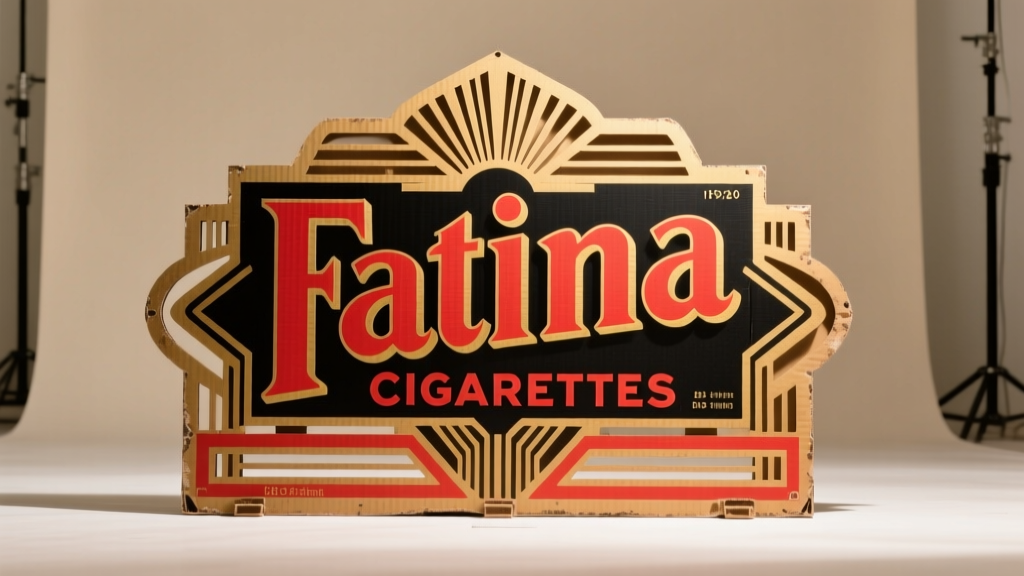
Fatima Cigarettes Advertising Sign: A Rare 1920s Cardboard Die-Cut Display (28 × 50 Inches)
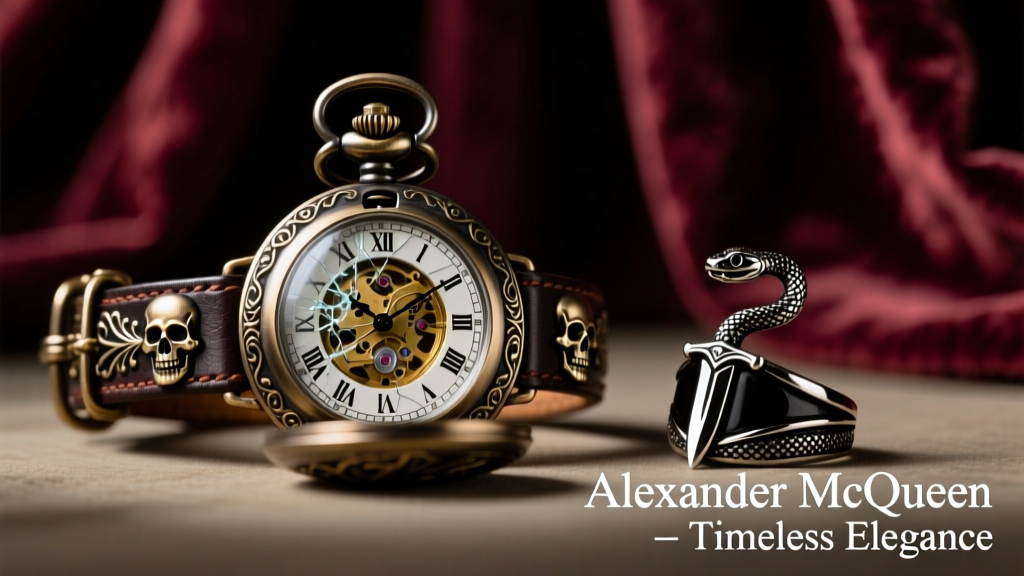
Alexander McQueen: The Alchemy of Craft, Rebellion, and Timeless Horology in Vintage Jewelry & Watches
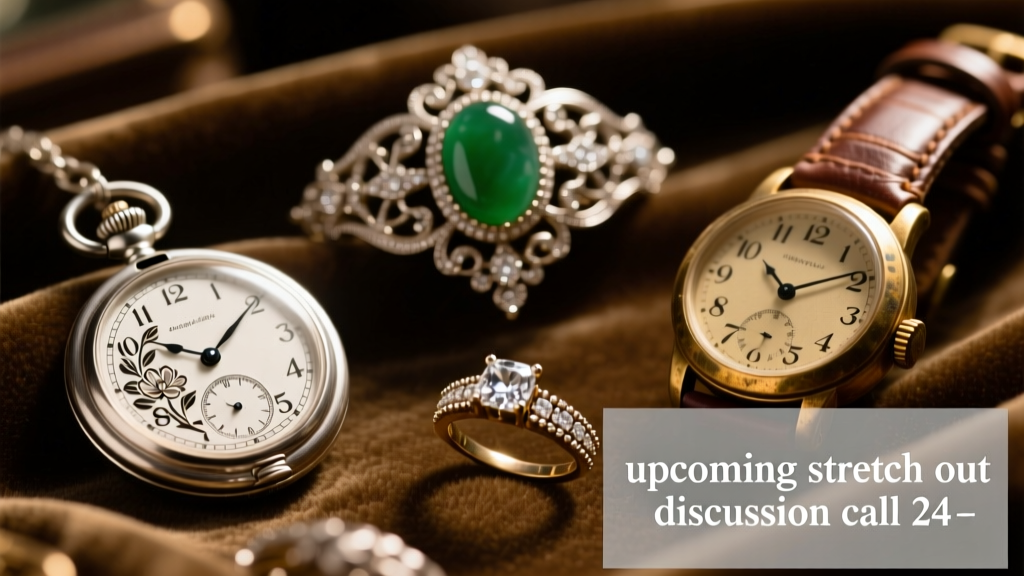
Upcoming Stretch Out Discussion Call #24: A Deep Dive into Vintage Omega Seamaster Chronographs and Their Market Evolution

Ivory Box Panels of Dragons, Bats, and Foliage: A Scholarly Examination of Qing Dynasty Carved Ivory Rectangular Panels (6¼ × 4¼ in)