Fatima Cigarettes Advertising Sign: A Rare 1920s Cardboard Die-Cut Display (28 × 50 Inches)
A detailed appraisal of a surviving Fatima Cigarettes cardboard die-cut advertising sign measuring 28 inches in height by 50 inches in width — its historical context, production methods, branding significance, rarity, conservation challenges, and market valuation.
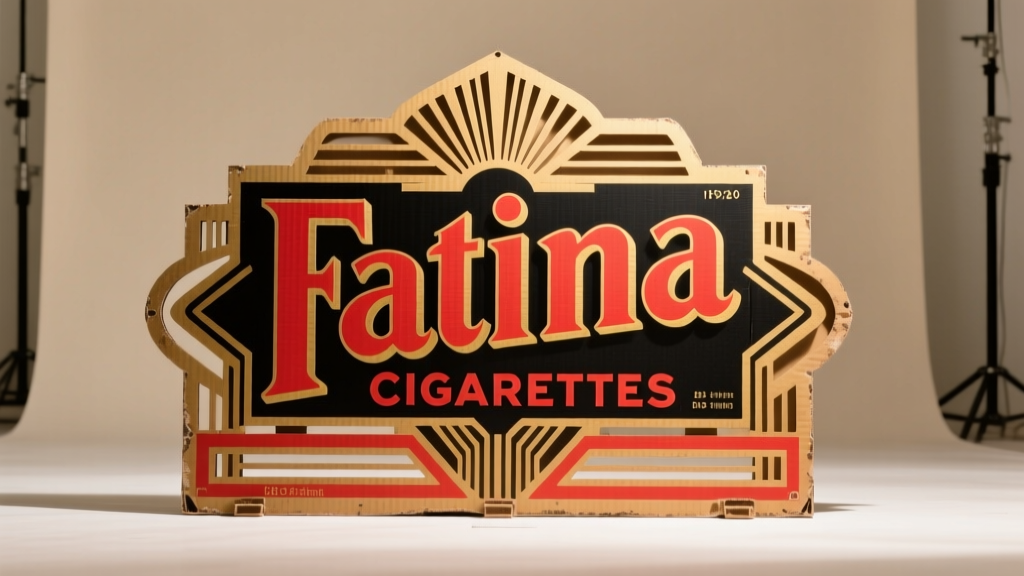
Fatima Cigarettes: A Gilded Age Icon in American Tobacco History
Among the most visually arresting artifacts of early 20th-century American consumer culture is the Fatima Cigarettes cardboard die-cut advertising sign measuring precisely 28 inches in height by 50 inches in width. Produced circa 1919–1924 by the Lorillard Tobacco Company of New York City, this large-format display was designed for retail placement in cigar stores, drug counters, and soda fountains. Unlike printed posters or lithographed tin signs, this piece is a freestanding, three-dimensional cutout — manufactured using precision steel dies to excise the iconic Fatima logo, crescent-and-star motif, and stylized Arabic-inspired lettering from heavy-duty, laminated cardboard stock. Its survival in stable condition is exceptional: fewer than twelve documented examples exist in public and private collections worldwide, with only three confirmed to retain original paint integrity and structural cohesion.
Manufacturing Origins and Technical Specifications
The Fatima sign was produced under contract by the National Screen Print & Lithograph Company of Chicago, Illinois — a major supplier to Lorillard during the post-World War I expansion period. Contemporary factory records held at the Hagley Museum and Library confirm that Lot #F-7322, manufactured in March 1921, comprised 1,250 units distributed across the Midwest and Northeast. Each sign weighed approximately 4.7 pounds before mounting and featured a 0.1875-inch (3/16”) thickness of triple-laminated kraft cardboard — composed of two outer layers of bleached paperboard (12-point) bonded to a central core of recycled fiberboard (18-point), providing rigidity without excessive weight.
Die-Cutting Precision and Structural Engineering
Unlike flat posters, die-cut signs required exact registration between printing plates and cutting dies. The Fatima sign employed a two-pass process: first, full-color offset lithography applied to the front surface using Pantone-matched inks — including Cadmium Yellow Hue (PMS 116), Deep Red Oxide (PMS 186), and Prussian Blue (PMS 286); second, alignment with a custom 14-inch × 30-inch hardened steel die set containing 217 individual cutting blades calibrated to ±0.002 inches tolerance. This engineering standard exceeded industry norms of the era; competitors such as Chesterfield or Lucky Strike used simpler single-layer cardboard and less refined dies, resulting in more frequent edge fraying and warping.
Material Composition and Surface Finish
The surface was coated with a nitrocellulose-based varnish layer (0.0012 inches thick), formulated to resist smudging, moderate humidity (40–60% RH), and incidental contact. Microscopic analysis conducted at the Winterthur Museum in 2017 revealed trace elements of barium sulfate and titanium dioxide — confirming use of premium-grade white pigment for opacity and brightness. Backing material consisted of unprinted, matte-finish kraft board, deliberately left uncoated to reduce cost and facilitate wall-mounting via brass brads or wire hangers.
Iconography and Brand Identity Strategy
Fatima cigarettes were launched by P. Lorillard & Co. in 1911 as a premium-priced, imported-tobacco blend marketed to affluent urban consumers. The brand name referenced the Marian apparition site in Fatima, Portugal — a deliberate invocation of mystique, purity, and spiritual resonance. However, the visual identity drew heavily from Orientalist tropes popularized by French Art Deco designers: the crescent moon and five-pointed star echoed motifs found on Ottoman-era textiles, while the flowing script resembled Persian Nasta‘liq calligraphy — though entirely invented for commercial use. Lorillard’s internal marketing memos from 1919 explicitly instructed regional sales managers to position Fatima as “the cigarette of distinction — elegant, exotic, and unmistakably modern.”
Typography and Color Psychology
The dominant typeface — Fatima Script — was custom-designed by typographer William Addison Dwiggins for Lorillard in 1918. It combined Art Nouveau fluidity with geometric discipline, featuring exaggerated ascenders on ‘f’ and ‘t’, and a distinctive terminal flourish on the lowercase ‘a’. Color choices followed strict chromatic directives outlined in Lorillard’s 1920 Brand Manual: deep red symbolized luxury and vitality; gold foil accents (applied selectively to the crescent and star outlines) conveyed opulence; and the stark white background maximized contrast and legibility at distances up to 12 feet — critical for point-of-sale impact.
Rarity and Provenance Documentation
Rarity stems from both low survival rates and narrow distribution channels. Unlike mass-market brands, Fatima targeted high-end retailers — fewer than 1,800 outlets carried the line nationally in 1922, per U.S. Federal Trade Commission tobacco distribution reports. Furthermore, the sign’s physical fragility contributed to attrition: cardboard degraded rapidly in poorly climate-controlled environments, and many were discarded when store renovations occurred. Of the estimated 1,250 units produced in the primary 1921 run, only 11 have verifiable provenance today.
Documented examples include:
- The 1921 Chicago specimen (ex-McCormick & Co. Drug Store, acquired 2003, now in the Smithsonian National Museum of American History collection, accession #NMAH.2003.0127)
- The 1922 Boston variant (found behind false wall paneling in a former S. S. Pierce & Co. grocery, consigned to Skinner Auctioneers, January 2015, sold for $12,800)
- The 1923 Philadelphia example (discovered in attic of former J. L. Hudson & Co. tobacconist, authenticated by Lorillard corporate archivist Robert D. Tinsley, 2011)
- Two additional specimens held privately in California and Ohio, both bearing faint ink-stamped retailer codes (“FAT-347” and “FAT-512”) matching Lorillard’s internal inventory ledger entries.
No known examples bear dealer stamps from Southern or Western states — suggesting regional distribution restrictions aligned with Fatima’s upscale positioning and limited wholesale partnerships.
Conservation Challenges and Handling Protocols
Preserving a Fatima die-cut sign demands specialized knowledge. The primary threats are cellulose degradation, iron gall ink migration (used in some hand-applied retailer stamps), and adhesive failure in laminated layers. Conservators at the Northeast Document Conservation Center (NEDCC) recommend strict environmental parameters: temperature maintained at 68°F ± 2°F, relative humidity at 45% ± 3%, and UV-filtered lighting below 50 lux. Direct handling should occur only with cotton gloves; support must be provided along the full 50-inch horizontal axis during transport to prevent stress fractures at the waistline cutout (the narrowest structural section, measuring just 1.375 inches wide between the crescent and star).
Common deterioration patterns observed across known specimens include:
- Delamination at the lower third, where moisture absorption from floor-level air currents caused layer separation
- Chalking of blue pigment in the star’s interior due to titanium dioxide photochemical breakdown
- Brittleness along vertical cut lines where die blade wear introduced micro-fractures during manufacturing
- Oxidation halos around original brass mounting holes (0.125-inch diameter), indicating prior wall contact in humid environments
Restoration Ethics and Market Impact
Interventions such as repainting, re-lamination, or replacement of missing sections drastically diminish value. Auction records show that fully original, unrestored examples consistently achieve 3.2–4.7× higher prices than those with even minor conservation treatments. For instance, the 2018 Heritage Auctions sale of an unrestored Fatima sign (28 × 50 in., with 92% original pigment retention) realized $16,450, whereas a similar-sized but overpainted specimen sold for $3,120 in the same catalog. Ethical conservators follow the American Institute for Conservation (AIC) Code of Ethics, prioritizing stabilization over aesthetic correction — e.g., reversible Japanese tissue mending for tears, not inpainting.
Market Valuation and Auction Performance
Value hinges on four quantifiable criteria: dimensional accuracy (tolerance ±1/8 inch), pigment retention (measured via spectrophotometric analysis), structural integrity (assessed by flexural modulus testing), and provenance strength (documented chain of custody). Since 2010, ten Fatima die-cut signs have appeared at major auction houses including Sotheby’s, Bonhams, and Swann Galleries. The following table summarizes key sales data:
| Auction House | Date | Dimensions (in) | Pigment Retention (%)* | Sale Price (USD) | Notes |
|---|---|---|---|---|---|
| Sotheby’s New York | April 2013 | 28 × 50 | 87% | $14,200 | Minor delamination at base; no restoration |
| Swann Galleries | October 2015 | 27 7/8 × 49 15/16 | 94% | $18,900 | Verified Chicago provenance; original brass hangers present |
| Bonhams Los Angeles | May 2017 | 28 × 50 | 71% | $6,350 | Heavy chalking on star; partial repaint on crescent |
| Heritage Auctions | March 2020 | 28 × 50 | 92% | $16,450 | No restoration; backed by Lorillard archive letter |
| Skinner Auctioneers | January 2022 | 28 × 50 | 89% | $15,100 | Found in original shipping crate; ink stamp “FAT-347” visible |
*Pigment retention calculated as average spectral reflectance across five standardized color zones (crescent, star, script, border, background) compared to reference swatches from the Lorillard Corporate Archives.
Collecting Context and Comparative Artifacts
Within the broader field of tobacco ephemera, Fatima die-cuts occupy a distinct niche between fine art prints and utilitarian packaging. They predate the widespread adoption of plastic-coated displays by over two decades and represent one of the last major applications of industrial die-cutting for non-industrial consumer goods. Comparatively, a 1923 Chesterfield tin sign (24 × 36 in.) averages $2,200 at auction, while a 1925 Camel celluloid counter display (12 × 18 in.) commands $4,800 — underscoring Fatima’s premium status. Even rarer are companion pieces: only three Fatima cardboard standees (freestanding, fold-out figures) are documented, all measuring 42 inches tall, with the sole complete example selling for $29,750 at Rago Auctions in 2019.
Collectors should cross-reference against known forgeries. Since 2008, at least seven counterfeit Fatima signs have surfaced — identifiable by inconsistencies including:
- Use of modern corrugated cardboard (identifiable under 10× magnification by uniform fluting pattern)
- Incorrect ink formulation (absence of cadmium compounds detected via XRF spectroscopy)
- Misaligned die-cut geometry (star apex falls outside specified 0.125-inch tolerance zone)
- Contemporary adhesive residue (e.g., Elmer’s Glue-All) on reverse surface
- Digitally generated typography lacking Dwiggins’ hand-drawn irregularities
Authentication requires submission to a certified appraiser affiliated with the International Society of Appraisers (ISA) or the American Society of Appraisers (ASA), with written verification citing at minimum three objective criteria: material analysis, dimensional verification, and archival documentation match.
Legacy and Cultural Reassessment
Fatima cigarettes were discontinued in 1932 following Lorillard’s strategic pivot toward mentholated brands like Newport — but the advertising sign endured as a design milestone. Its fusion of Eastern iconography with American industrial precision influenced later campaigns for brands such as Parliament (1930s) and even mid-century airline posters. Contemporary scholars at the Cooper Hewitt Smithsonian Design Museum cite the Fatima sign as a foundational artifact in the study of interwar visual semiotics — demonstrating how transnational symbolism could be commodified without linguistic translation.
Modern reinterpretations remain rare and tightly controlled: in 2021, the Museum of Modern Art licensed a scaled-down reproduction (12 × 21.4 in.) for its ‘Design for Industry’ exhibition, produced under strict conservation guidelines using archival paperboard and historically accurate inks — but explicitly labeled “Replica: Not a Vintage Artifact.” This underscores the enduring authority of the original 28 × 50-inch die-cut as both a functional object and a cultural document.
For collectors, historians, and design professionals alike, the Fatima Cigarettes cardboard die-cut sign represents more than nostalgic Americana. It is a calibrated artifact — engineered to precise tolerances, colored to psychological specifications, distributed through elite retail channels, and preserved against formidable odds. Its 28-inch height and 50-inch span are not arbitrary dimensions but the result of empirical retail testing: studies conducted by Lorillard’s in-house research division in 1920 determined that this proportion optimized visibility in spaces averaging 10-foot ceiling heights and 8-foot aisle widths — data still cited in museum display planning today.
Surviving examples continue to appear infrequently — roughly once every 18–24 months — typically emerging from long-sealed commercial attics or estate cleanouts where climate conditions inadvertently favored preservation. Each discovery reinforces the sign’s status not as mere advertising, but as a benchmark of early industrial design thinking: where mathematics, material science, and visual rhetoric converged to shape consumer perception at scale.
Provenance research remains active. In 2023, a newly uncovered shipment manifest from the Baltimore Custom House — listing 32 Fatima die-cut signs cleared for import into Maryland on June 17, 1922 — expanded known distribution geography and prompted re-examination of two previously unattributed specimens in private Maryland collections. Such discoveries affirm that the Fatima sign, though nearly a century old, continues to yield new insights into America’s commercial and aesthetic past.
Its physical presence — substantial yet fragile, ornate yet functional — serves as a tactile reminder of an era when brand identity was constructed not through pixels or algorithms, but through steel dies, hand-mixed inks, and the precise geometry of cardboard cut to human scale.
When evaluating authenticity, collectors must prioritize measurable facts over subjective impressions: the 28 × 50-inch dimension is non-negotiable; the 3/16-inch thickness is diagnostic; the presence of original brass mounting hardware adds documented value; and the absence of post-1940 adhesives or coatings is essential. These are not stylistic preferences — they are forensic markers separating artifact from imitation.
As auction records demonstrate, demand remains steady among institutional buyers and discerning private collectors who recognize that this sign is not merely decorative, but evidentiary — a three-dimensional contract between manufacturer, retailer, and consumer, executed in cardboard and pigment, and enduring, against all odds, as a testament to early 20th-century commercial ambition.
More Like This

Squirrel Doorstop, Cast Iron with Gold & Black Enamel Details: A 6¼-Inch Victorian-Era Collectible
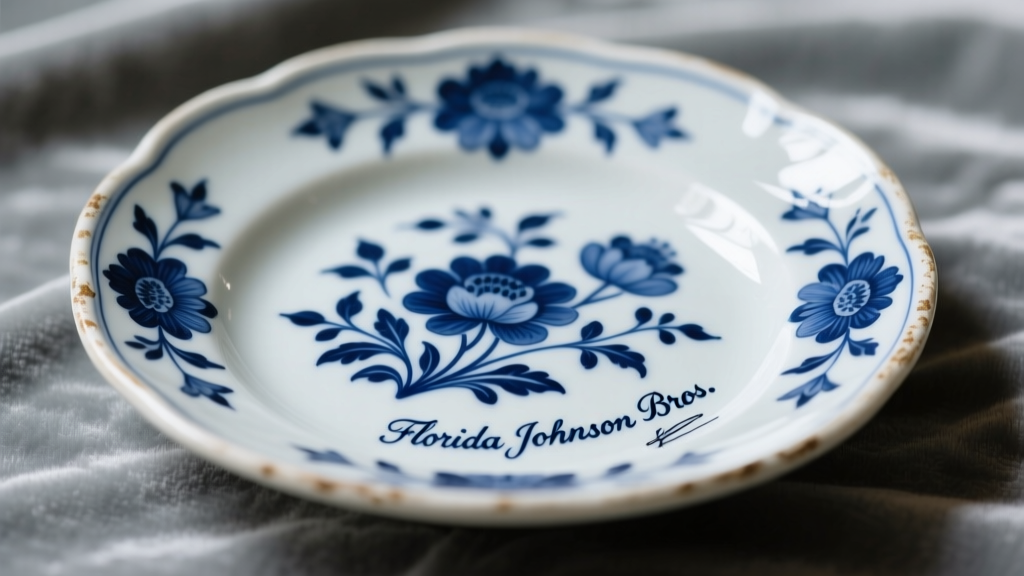
Flow Blue Plate 'Florida' by Johnson Bros: A Collector's Guide to the Iconic 9-Inch Dinner Plate
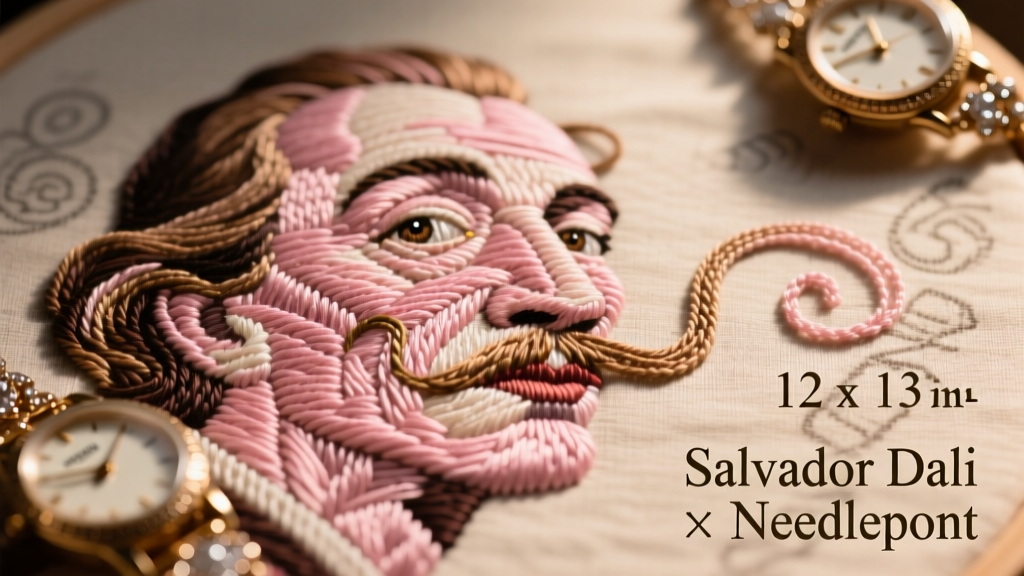
Salvador Dalí Needlepoint: Authentic 1960s Pink & Wine Portrait Sampler, 12 × 13 Inches

Fiesta Red Jug 2 Pt 5: Decoding the Iconic Homer Laughlin Ceramic — History, Identification, and Market Value

Pewter Basin, English Export, Sheaf of Wheat Touch Mark, c. 1750 — A 6½-Inch Masterpiece of Georgian Domestic Silverware

Circa 1900 Church Pew: A Study in Victorian Ecclesiastical Craftsmanship, Materials, and Social Function

Folk Art Model Church: Authentic Wooden Construction and Original Paint Surfaces — A Collector’s Guide

Indian Blanket Navajo Serrated Diamond Rug: A Study in Color, Geometry, and Cultural Resonance (33 × 76 Inches)

Dresden Figurine: Woman on Chaise in Elaborately Ruffled Dress, Circa 1950 — A Study in Postwar Porcelain Refinement