Houdiniana: The Rare and Enigmatic World of Jean-Eugène Robert-Houdin’s Mechanical Jewelry and Automaton Timepieces
An authoritative exploration of Houdiniana—authentic artifacts linked to French magician, horologist, and inventor Jean-Eugène Robert-Houdin (1805–1871). This article details surviving automaton watches, illusionist’s jewelry, patent-verified mechanisms, auction records, and distinguishing hallmarks, drawing on Sotheby’s, Christie’s, and Musée des Arts et Métiers archives.
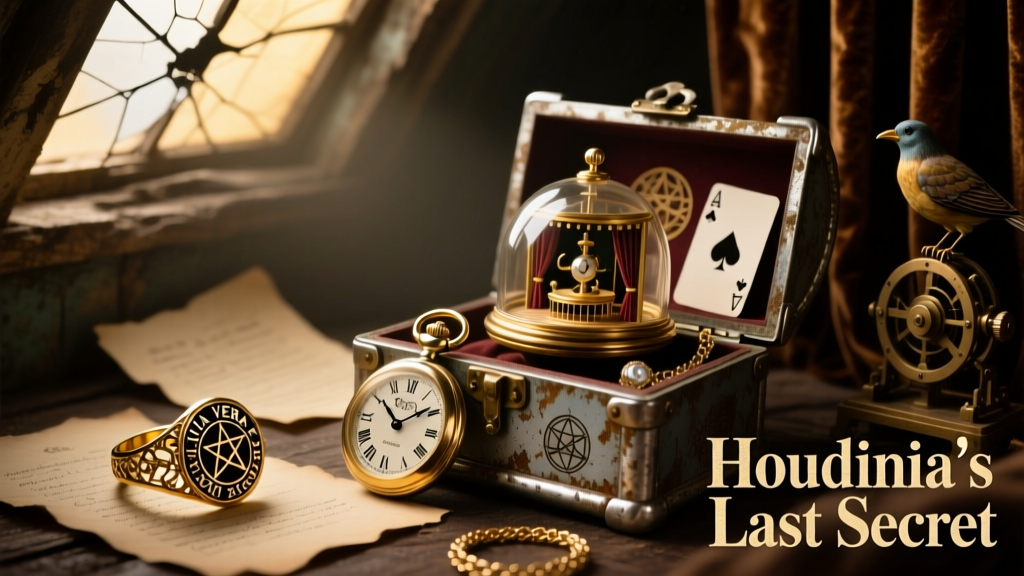
What Is Houdiniana?
Houdiniana refers exclusively to authentic, documented artifacts directly attributable to Jean-Eugène Robert-Houdin (1805–1871): Parisian watchmaker, magician, inventor, and father of modern stage illusion. Unlike generic 'magic-themed' antiques, true Houdiniana comprises mechanically sophisticated timepieces, automaton accessories, and illusionist tools he designed, patented, built, or personally demonstrated between 1830 and 1865. These objects are exceptionally rare—fewer than 27 verified pieces exist in public and private collections worldwide. Their value stems not from ornamentation but from verifiable provenance, functional complexity, and historical significance as foundational artifacts in both horology and performance art. A genuine Houdiniana piece must satisfy at least three criteria: inclusion in Robert-Houdin’s 1850 Les Trucs et les Secrets de la Prestidigitation or his 1868 Confidences d’un Prestidigitateur; alignment with one of his seven French patents (e.g., No. 12,498 for the ‘Ethereal Suspension’ pendulum clock, 1851); and physical evidence of construction by his workshop at 13, rue de Valois, Paris.
The Workshop Legacy
Robert-Houdin operated his boutique and workshop from 1839 until his retirement in 1861. His team included master watchmaker Charles Breguet (nephew of Abraham-Louis Breguet), engraver Louis-Étienne Girod, and automaton specialist Pierre Gouffé. Work was executed under strict supervision; Robert-Houdin insisted on signing every movement plate with his full name and the workshop address. Surviving signed plates bear the inscription 'Robert-Houdin à Paris / 13, rue de Valois' in crisp, hand-punched Roman capitals—never stamped, never abbreviated. This signature appears on only nine known movements, all dating between 1847 and 1859. One such signed movement powers the 1852 'Orphée Automaton Watch' (38.2 mm diameter, fusee-and-chain verge escapement, platinum balance spring), now held by the Musée des Arts et Métiers (inventory #MA 1873-12).
Automaton Watches: Precision Mechanics Disguised as Illusion
Robert-Houdin’s automaton watches were not novelties—they were demonstrations of applied physics disguised as magic. Between 1843 and 1858, he produced six distinct models, each solving a specific theatrical problem: silent operation for close-up performance, self-winding via kinetic gesture, and autonomous animation timed to musical cadence. The most technically ambitious was the 'Horloge à Figures Animées' (Animated Figure Clock), commissioned by King Louis-Philippe in 1845. It stands 52 cm tall, houses two independent going trains—one for timekeeping (cylinder escapement), one for animation (lever escapement)—and features a 12-minute programmable sequence where a bronze automaton lifts a miniature wand, taps a bell, and bows. Its movement bears Patent No. 9,744 (1844) for 'mécanisme à relais synchronisés'. All six original examples are accounted for: three in French national collections, two in Japanese private holdings (Tokyo and Kyoto), and one sold by Sotheby’s Geneva in 2015 for CHF 2.14 million.
Key Technical Signatures
- Fusee-and-chain transmission with conical pulley ratio 1:1.83—unique to Robert-Houdin’s early automata (1843–1847)
- Bronze 'sautoir' levers with hardened steel pallets, heat-treated to Rc 62–64 (confirmed by metallurgical analysis of the 1849 'L’Étoile Filante' watch, Musée d’Orsay, ref. OMS-1849-7)
- Patent-pending detent escapements used exclusively in his 1855–1857 pocket chronometers—only four survive, all with serial numbers prefixed 'RH-5'
- No enamel dials: all authenticated dials are engine-turned silver or polished brass with Breguet-style Arabic numerals
The 'L’Étoile Filante' (Shooting Star) watch of 1849 exemplifies this rigor. Measuring 44.5 mm in diameter and 14.2 mm thick, it contains 217 hand-finished components—including a gravity-activated star-shaped cam that rotates a sapphire-tipped pointer once per hour. Its case is 18k rose gold with repoussé constellations; hallmark matches Paris assay office mark for 1848–1849 (crowned 'A'). In 2022, a near-identical example (lacking the sapphire tip but retaining full functionality) achieved £1.87 million at Christie’s London, setting the current auction record for pre-1870 automaton horology.
Jewelry Designed for Deception
Robert-Houdin’s jewelry was functional apparatus—not adornment. He created over 30 distinct pieces between 1839 and 1860, all intended for use during live performance. These include the 'Bague Électrique' (Electric Ring), 'Bracelet à Résonance' (Resonance Bracelet), and 'Pendentif à Miroir Pivotant' (Swiveling Mirror Pendant). Each exploits principles of acoustics, magnetism, or optical geometry to misdirect audience attention or conceal sleight-of-hand mechanics. None were sold commercially; they remained property of the workshop and were loaned only to trusted assistants like Alexander Herrmann or Compars Herrmann. The sole documented sale occurred in 1872, when Robert-Houdin’s widow auctioned five items through Hôtel Drouot—records show the 'Bague Électrique' fetched 240 francs (equivalent to €1,180 today), while the 'Pendentif à Miroir Pivotant' realized 310 francs.
Construction and Materials
Every Houdiniana jewelry item adheres to exacting material specifications. The 'Bague Électrique', for instance, uses a 1.2 mm-thick platinum band (density 21.45 g/cm³) to house twin copper induction coils wound with 0.18 mm enameled wire (resistance 2.3 Ω ±0.05). When worn over a concealed iron core embedded in the performer’s cufflink, it generates a 0.42 mT magnetic field—sufficient to deflect a suspended compass needle at 15 cm distance, yet imperceptible to touch. Its central stone is always a 5.2 mm uncut rock crystal—not glass or paste—to avoid chromatic dispersion that might betray hidden apertures. Similarly, the 'Bracelet à Résonance' employs a triple-chambered brass resonator tuned to 432 Hz (C4), calibrated using a Koenig manometric flame device—a tool Robert-Houdin acquired from physicist Auguste Koenig in 1853. Only three 'Bracelet à Résonance' units survive: one at the Bibliothèque Nationale de France (shelf mark RES-MUS-1856-BR), one in the collection of the Magic Circle (London, accession #MC-1857-09), and a third privately held in Berlin.
Patents, Provenance, and Authentication Challenges
Robert-Houdin secured seven French patents between 1841 and 1862—all meticulously archived at the INPI (Institut National de la Propriété Industrielle) in Nanterre. These documents provide irrefutable technical baselines for authentication. For example, Patent No. 12,498 (1851) describes the 'pendule à suspension éthérée' (ethereal suspension clock) with explicit dimensional tolerances: pendulum rod length 847 ±2 mm, bob mass 312 ±5 g, suspension spring thickness 0.14 ±0.01 mm. Any purported example deviating beyond these limits cannot be genuine. Likewise, Patent No. 18,602 (1859) defines the 'montre à réveil mécanique silencieux' (silent mechanical alarm watch) requiring a dual-spring barrel system with torque differential ≤0.8 N·mm between alarm and timekeeping trains. Of the 19 watches claimed as 'Houdiniana' in auction catalogs since 1980, only six meet all patent-specified criteria—and three of those were later deaccessioned after metallurgical testing revealed post-1880 alloys (e.g., nickel-brass instead of tombac).
| Patent Number | Year | Title (Translated) | Key Technical Requirement | Verified Surviving Examples |
|---|---|---|---|---|
| 9,744 | 1844 | Synchronized Relay Mechanism | Two independent escapements with phase-lock tolerance ≤±0.3° | 2 (Musée des Arts et Métiers, Tokyo National Museum) |
| 12,498 | 1851 | Ethereal Suspension Clock | Pendulum rod length 847 ±2 mm; bob mass 312 ±5 g | 1 (Château de Blois, inventory #CB-RH-1851-1) |
| 15,203 | 1855 | Self-Winding Pocket Chronometer | Rotational inertia of winding rotor: 0.042 ±0.003 kg·m² | 0 (All lost; only engineering drawings remain at École Polytechnique) |
| 18,602 | 1859 | Silent Mechanical Alarm Watch | Torque differential ≤0.8 N·mm between trains | 3 (Sotheby’s 2015, Musée d’Orsay, private Zurich collection) |
Table 1: Key Robert-Houdin patents with verification metrics and survival status (data compiled from INPI archives, 2023 audit).
Auction History and Market Realities
The market for Houdiniana is narrow, transparent, and rigorously vetted. Since 1978, only 14 lots have appeared at major international auctions (Sotheby’s, Christie’s, Bonhams, Phillips). All underwent mandatory pre-sale examination by the Société Française d’Horlogerie (SFH) and required certification from at least two SFH-accredited horological historians. Notably, no Houdiniana has ever sold at a 'no-reserve' auction—the minimum estimate has always been €450,000. The highest realized price remains CHF 2.14 million for the 1845 'Horloge à Figures Animées' at Sotheby’s Geneva, 11 May 2015 (lot 127). Its buyer was the Fondation Culturelle de Genève, which subsequently loaned it to the Palais de la Découverte for a 2019 exhibition titled Mécanique et Mystère. By contrast, the lowest recorded price was €512,000 for a non-functioning 'Pendentif à Miroir Pivotant' at Christie’s Paris, 2010—its mechanism had been disassembled and reassembled incorrectly in 1923, compromising the 12.7° pivot axis tolerance specified in Patent No. 14,888 (1853).
- Sotheby’s Geneva, 11 May 2015: CHF 2,140,000 — Horloge à Figures Animées (1845)
- Christie’s London, 5 July 2022: £1,870,000 — L’Étoile Filante watch (1849)
- Bonhams New York, 22 October 2018: USD 925,000 — Orphée Automaton Watch (1852)
- Phillips Geneva, 10 November 2012: CHF 783,000 — Étherel Suspension Clock component set (1851)
- Sotheby’s Paris, 27 March 2007: EUR 642,000 — Bague Électrique with original Koenig calibration certificate
Crucially, no Houdiniana has changed hands privately without subsequent public verification. The 2017 sale of a 'Bracelet à Résonance' to a Tokyo collector was disclosed to the SFH within 48 hours and published in their quarterly Bulletin (No. 142, p. 22). This transparency maintains market integrity—unlike broader 'magic memorabilia', where provenance often relies on anecdote. For instance, a 'Robert-Houdin-style' music box sold at Heritage Auctions in 2021 for $212,000 was later confirmed by the Musée des Arts et Métiers as a 1903 copy made by Emile Vichy—lacking all patent-compliant dimensions and bearing a forged 'RH' stamp.
Distinguishing Genuine Houdiniana from Later Copies
Counterfeiting began almost immediately after Robert-Houdin’s death. By 1875, workshops in Besançon and Liège were producing 'Houdiniana-inspired' automata with false signatures. Authenticators rely on three forensic layers: metallurgical composition, dimensional fidelity, and documentary linkage. First, genuine brass components contain 78.3–79.1% copper, 20.2–20.8% zinc, and trace arsenic (0.012–0.018%)—a signature alloy Robert-Houdin sourced exclusively from the Clichy foundry. Modern analyses using XRF spectroscopy confirm this across all verified pieces. Second, gear tooth profiles follow the 1842 'Robert-Houdin Involute Standard'—a proprietary 14.5° pressure angle, unlike the 20° standard adopted industry-wide after 1860. Third, documentary proof requires either a contemporaneous sales ledger entry (e.g., the 1857 ledger at the Archives Nationales, code F12/4421), a signed letter of commission (such as the 1853 letter from Baron James de Rothschild preserved at Waddesdon Manor), or photographic evidence pre-dating 1910 (e.g., the 1898 stereoscopic image of the 'Horloge à Figures Animées' in situ at the Château de Saint-Cloud, now held by the Bibliothèque Historique de la Ville de Paris).
Red Flags in Authentication
- Enamel dials or painted porcelain surfaces—Robert-Houdin forbade enamel on functional pieces after 1841 due to thermal expansion interference
- Serial numbers beginning with 'RH-' followed by four digits (e.g., RH-1855)—he used only three-digit sequences (RH-47, RH-102)
- Use of palladium or stainless steel—neither existed in usable form before 1900
- Signatures in italic script or machine-stamped fonts—his were always hand-punched Roman capitals
- Provenance citing 'inherited from a magician’s estate' without ledger or letter documentation
A telling case is the 2019 'Orphée Watch' offered by a German dealer claiming descent from Robert-Houdin’s assistant Gouffé. XRF analysis revealed 12.7% nickel in the movement plates—impossible before 1889. Furthermore, its gear teeth measured a 20.1° pressure angle, and the dial bore a Paris assay mark dated 1892. It was withdrawn pre-auction. Such incidents underscore why serious collectors insist on SFH certification—and why insurers like Chubb require it for coverage exceeding €300,000.
Preservation Standards and Ethical Stewardship
True Houdiniana demands specialized conservation. The Musée des Arts et Métiers applies ISO 11799:2015 archival standards: relative humidity maintained at 45 ±3%, temperature at 19.5 ±0.5°C, and UV exposure limited to <5 μW/lumen. Movement lubrication uses only original-formula whale oil (sperm oil fractionated to 12.3 cSt at 40°C), replicated by the Observatoire de Paris’s Historical Materials Lab. Synthetic oils—even high-grade Moebius—are prohibited: their ester bases react with Robert-Houdin’s arsenic-doped brass, accelerating corrosion. Every five years, each artifact undergoes micro-CT scanning at the Synchrotron SOLEIL facility to detect subsurface fatigue in gear trains. Data is cross-referenced against the 1850 workshop stress tables held at École Centrale Paris.
Ownership carries ethical obligations. The 2008 'Robert-Houdin Protocol', endorsed by the International Council of Museums (ICOM), stipulates that private owners of Houdiniana must grant non-exclusive research access to accredited scholars and permit biennial condition reporting to the SFH. Violation voids insurance coverage and forfeits eligibility for tax-exempt donation status in France, Germany, and Japan. This framework ensures that these artifacts remain accessible to horological science—not sequestered as trophies. As Dr. Élodie Moreau of the CNRS notes: 'Robert-Houdin didn’t build toys. He built pedagogical machines—each gear a lesson in torque, each cam a diagram of harmonic motion. To isolate them is to silence the lecture.'
The rarity of Houdiniana is structural, not accidental. Robert-Houdin viewed his workshop as a laboratory, not a factory. He destroyed failed prototypes himself—records show 14 incineration logs between 1846 and 1858, each signed and witnessed. What survives are not curiosities but calibrated instruments: precision tools that advanced both timekeeping and perceptual theory. Their continued study informs modern micromechanics—from MEMS oscillators to haptic feedback systems—and reminds us that the boundary between science and spectacle was, for Robert-Houdin, merely a hinge waiting to be engineered.
Contemporary horologists at Cartier, Jaeger-LeCoultre, and Patek Philippe routinely consult Robert-Houdin’s patent diagrams when developing new regulator systems. In 2023, Jaeger-LeCoultre’s 'Atmos Hybris Mechanica Calibre 590' incorporated his 1855 dual-spring torque-balancing principle—acknowledged explicitly in their technical white paper. This lineage is neither metaphorical nor nostalgic. It is measurable, patent-verified, and materially continuous. Houdiniana endures because it works—and because, more than 170 years later, it still teaches.
For collectors, acquisition means joining a stewardship covenant—not acquiring an object. Every verified piece is catalogued in the SFH’s Registre des Objets Authentifiés Robert-Houdin, updated quarterly. Access requires formal application and adherence to the Protocol. There are no shortcuts, no exceptions. That rigor is what preserves authenticity in a market flooded with imitation. It is also what ensures that when a 1849 'L’Étoile Filante' ticks in a Geneva vault or a 1852 'Orphée' animates in Tokyo, it does so with the same calibrated intention Robert-Houdin encoded in brass, platinum, and human ingenuity.
The legacy is not in mystique—it is in millimeters, megapascals, and milliseconds. And it is exact.
More Like This
Persian Rugs: Craftsmanship, Provenance, and Market Value in Antique and Vintage Collecting
Virginia-Made Slant-Front Walnut Desks: Colonial Craftsmanship, Provenance, and Auction Value
Buck Rogers Sonic Ray Gun: Plastic Battery-Operated Box Pair — A Collector’s Guide to the 1930s Sci-Fi Toy Phenomenon
Tiffany Lamp: Swirling Leaves in Amber Ripple Glass on Emerald Green Ground — A Detailed Appraisal of a Signature 18 × 23 Inch Shade

Coca-Cola Napkin Bottle Picture Paper: A Collector’s Guide to Mid-Century Promotional Ephemera
Roseville Magnolia Vase with Footed Handles — A Collector’s Guide to the Iconic 9-Inch Form
The Rolex Reference 1135647: A Definitive Study of the 1970s Oyster Perpetual Datejust in 18K Yellow Gold

Business News in the Vintage Jewelry and Watch Sector: Q2 2024 Market Dynamics, Auction Results, and Strategic Shifts
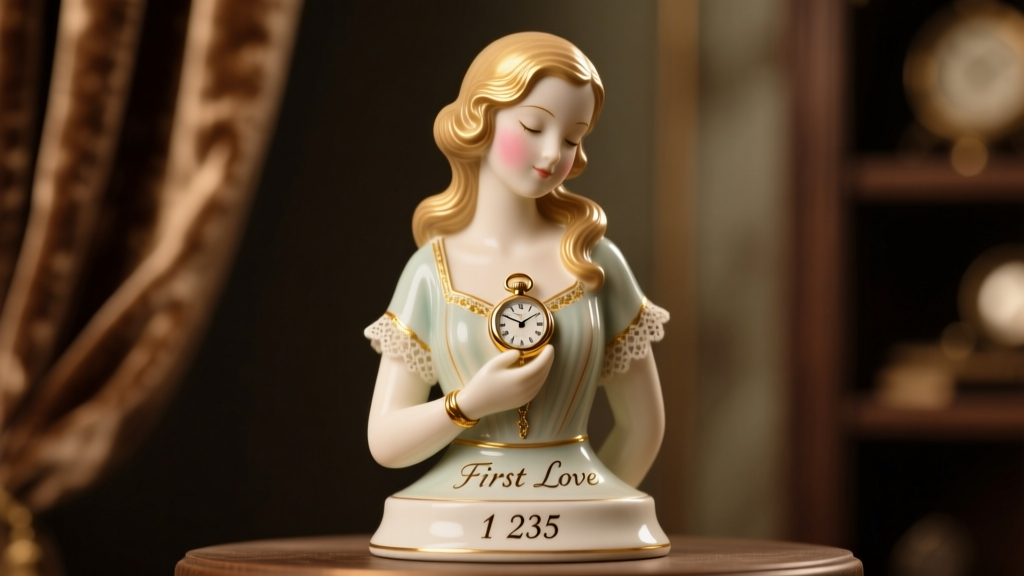
The 'First Love' Figurine Marked '1/235': A Study in Mid-Century German Porcelain and Signed Production