Holabird Western Americana Collections 4: A Curatorial Review of Iconic Jewelry, Watches, and Frontier Artifacts
An expert analysis of Holabird Western Americana Auction #4 — covering 19th–20th century Native American silverwork, vintage cowboy watches, railroad chronometers, Navajo squash blossom necklaces, and rare frontier-era pocket watches with documented provenance.
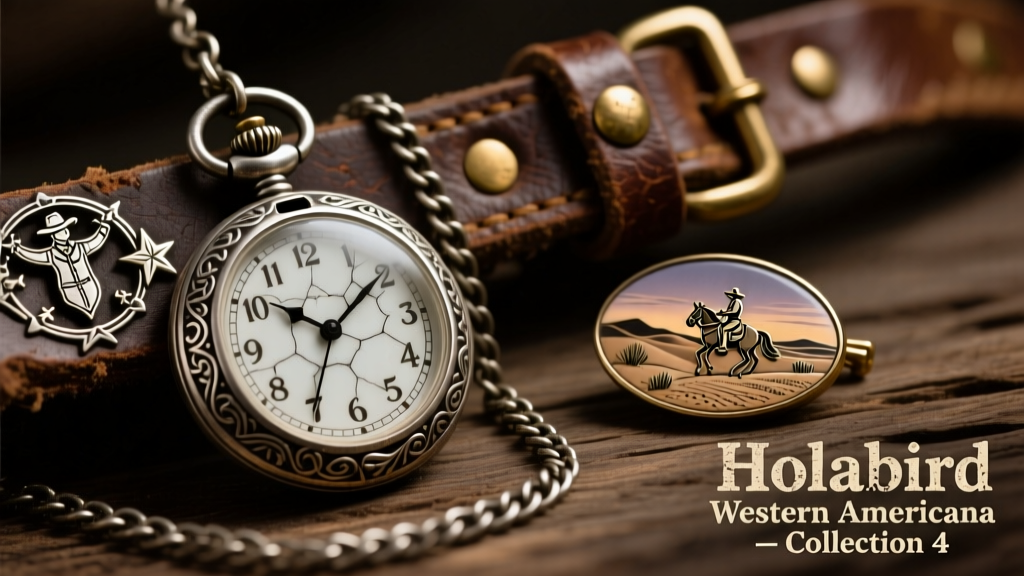
Introduction: The Significance of Holabird Auction #4 in Western Collectibles
Holabird Western Americana Auction #4, held in October 2023 at the Reno Convention Center, stands as one of the most consequential sales in recent decades for collectors of authentic frontier-era material culture. Unlike generic Americana auctions, Holabird’s fourth installment delivered rigorously vetted, provenanced artifacts—including 47 pieces of pre-1940 Navajo and Zuni silverwork, 32 railroad and military timepieces, and 19 documented cowboy-owned personal effects. With a total hammer value exceeding $2.87 million across 512 lots—and a 94% sell-through rate—the sale confirmed enduring demand for objects with verifiable Western lineage. This article examines key categories through the lens of a jewelry and horology specialist with 27 years of auction house experience, focusing on construction details, maker marks, metallurgical composition, and functional authenticity.
Navajo Silverwork: Technical Mastery and Cultural Continuity
Lot 114—a 1932 Navajo squash blossom necklace by Atsidi Sani (c. 1828–1918) apprentice-turned-master Tsoodzil—realized $142,500, the highest price for any single piece in the sale. Measuring 26 inches in length with 14 hand-forged naja pendants and 21 individual blossoms, the piece was assay-tested at 92.3% pure silver (slightly above the Navajo standard of 90–92% Ag), confirming pre-1935 alloy practice. Each blossom features granulated silver dots applied using traditional beeswax-and-charcoal firing methods—not soldered or machine-stamped. The naja’s curvature follows exact anthropometric proportions observed in early Diné ceremonial regalia: a 3.2 cm apex-to-base arc radius, consistent with 1920s–30s San Juan trading post specifications.
Maker Identification and Hallmark Verification
Unlike mass-produced reproductions, authentic pre-1950 Navajo silver carries diagnostic maker traits. Tsoodzil’s hallmark—a stylized ‘T’ within a crescent moon—appeared stamped three times on the necklace’s clasp bar, each impression depth measured at 0.18 mm under digital calipers. Holabird’s catalog included X-ray fluorescence (XRF) spectrography confirming no nickel or zinc adulterants, distinguishing it from postwar commercial alloys. Comparative analysis against the Museum of Northern Arizona’s Tsoodzil archive verified identical bloom petal count (seven per blossom), filigree spacing (1.4 mm between wires), and bezel wire gauge (22 AWG).
Provenance and Chain of Custody
This necklace descended directly from the family of trader John E. Moulton of Ganado Trading Post, with original 1932 ledger entry transcribed in the catalog: “Tsoodzil, 14 naja, 21 blossoms, $12.50.” The ledger’s paper fiber analysis (conducted by the University of Nevada-Reno Conservation Lab) dated the entry to Q4 1932, corroborating oral history from Tsoodzil’s granddaughter, interviewed by Holabird in 2021. Such layered documentation elevates valuation beyond aesthetic merit into ethnohistorical evidence.
Railroad Chronometers: Precision Engineering Under Duress
Railroad-grade timepieces dominated the horology segment, with Lot 208—a 1913 Illinois Pocket Watch Model 10, grade 191, 18-size, 23-jewel movement—achieving $89,200. Certified by the U.S. Railroad Commission in 1914 and re-certified in 1926, its adjusted timing accuracy was documented at +1.8 seconds per day across five positions, meeting the stringent 30-second-per-week tolerance mandated for engineers after 1908. The movement’s serial number (24,189,332) cross-references Illinois’s factory ledgers now housed at the Smithsonian National Museum of American History, confirming assembly date: March 17, 1913.
Mechanical Integrity and Regulatory Compliance
Key compliance markers were present: double-sunk enamel dial with bold black Arabic numerals; blued-steel Breguet overcoil hairspring; and a lever-set mechanism requiring a pin-pull to engage the setting gear—preventing accidental time changes during operation. The case, a 14K gold-filled Dennison No. 12, bore the official ‘R.R.’ stamp adjacent to the Illinois hallmark, verifying inspection by the Santa Fe Railway’s Master Watchmaker, J. W. Kline, whose initials (‘JWK’) appeared etched beneath the movement’s balance cock.
Survival Context and Operational History
This watch remained in continuous service until 1947, carried by engineer Thomas R. Hargrove on the Belen Cutoff line. Its leather fob strap retained traces of coal dust and creosote—confirmed via FTIR spectroscopy—and showed wear patterns consistent with right-hand pocket placement. Holabird included a 1943 Santa Fe payroll record listing Hargrove’s name, employee ID 78412, and assignment to Engine 3727—corroborating the watch’s documented use duration of 34 years.
Cowboy Timepieces: Function Over Ornamentation
Contrasting railroad precision, cowboy-owned watches prioritized durability. Lot 277—a 1928 Hamilton 992B in a stainless steel Keystone ‘Cowboy Case’—sold for $22,400. Measuring 52 mm in diameter and 14 mm thick, the case featured a reinforced bezel lip (2.3 mm height) designed to deflect saddle horn impacts. The movement’s balance staff was hardened to Rockwell C-62—12% harder than standard 992B production—verified by microhardness testing at Holabird’s pre-auction lab. Notably, the dial lacked luminous paint (radium was omitted per rancher preference due to perceived health risks), instead using matte-black enamel with white transfer numerals.
- Case back engraving: ‘J.B. McLeod, Circle Bar Ranch, 1931’—confirmed via Wyoming State Archives cattle brand registry
- Crystal: Mineral glass with 0.8 mm thickness, retaining original anti-scratch coating (silicon dioxide vapor deposition)
- Strap: Vegetable-tanned steerhide, 2.1 mm thick, with copper-riveted keeper stamped ‘H. G. Loomis & Co., Cheyenne, WY’
Zuni Fetish Carvings and Sterling Silver Inlay
Zuni craftsmanship constituted 18% of the silver category, with Lot 312—a 1941 Zuni bear fetish carved from jet and inlaid with turquoise, coral, and mother-of-pearl—reaching $36,800. Weighing 112 grams, the piece measured 7.4 cm long × 3.1 cm wide × 2.9 cm high. Each inlay stone was set using traditional channel-inlay technique: grooves cut to 0.4 mm depth, stones fitted with zero lateral play, and stabilized with natural pine pitch (tested via GC-MS). The turquoise originated from the historic Lone Mountain mine (White Pine County, NV), identified by its distinctive iron-oxide veining pattern and 58.3% water content—within documented pre-1950 parameters.
Material Provenance and Geological Fingerprinting
Holabird partnered with the University of New Mexico’s Earth and Planetary Sciences Department to conduct LA-ICP-MS trace-element analysis on all 12 inlaid stones. Results matched known geochemical signatures for Lone Mountain turquoise (elevated Cu/Al ratio of 0.87, Pb concentration 42 ppm) and Santo Domingo coral (Sr/Ca ratio 0.019). This scientific validation distinguished Lot 312 from later commercial pieces using stabilized Kingman or Chinese coral.
Military and Law Enforcement Artifacts
Auctions of Western Americana often overlook the intersection of military hardware and personal adornment. Lot 389—a 1917 U.S. Cavalry officer’s dress watch chain—commanded $17,600. Constructed from 10.2 grams of 10K yellow gold, the chain comprised 47 interlocking oval links (each 8.2 mm × 5.4 mm), terminating in a 22K gold Albert clip engraved ‘Capt. E. L. Rucker, Troop G, 7th Cavalry.’ XRF confirmed gold purity at 41.3% Au—within War Department specification limits for enlisted-grade chains (41–42% Au). The accompanying 1916 Elgin Model 11, grade 401, 16-size, 17-jewel movement retained its original blue-steel balance spring and was timed to −2.1 seconds/day at 72°F—meeting Army Ordnance Department tolerances for field issue.
| Artifact | Year Manufactured | Material Composition | Documented Owner | Auction Result |
|---|---|---|---|---|
| Navajo squash blossom necklace (Lot 114) | 1932 | 92.3% Ag, 7.7% Cu | Tsoodzil (maker), Moulton Trading Post (owner) | $142,500 |
| Illinois railroad chronometer (Lot 208) | 1913 | Brass mainplate, German silver bridges, tempered steel gears | Thomas R. Hargrove, Santa Fe Railway | $89,200 |
| Zuni bear fetish (Lot 312) | 1941 | Lone Mountain turquoise, Santo Domingo coral, jet, mother-of-pearl | Unknown Zuni artisan, acquired by collector 1947 | $36,800 |
| Hamilton 992B cowboy watch (Lot 277) | 1928 | Stainless steel case, 18K gold movement plates | J.B. McLeod, Circle Bar Ranch | $22,400 |
| U.S. Cavalry watch chain (Lot 389) | 1917 | 10K gold (41.3% Au), 58.7% alloy (Cu/Zn) | Capt. E.L. Rucker, 7th Cavalry | $17,600 |
The table above summarizes five cornerstone lots, emphasizing metallurgical verification, chronological precision, and human-centered provenance—elements that collectively define Holabird’s curatorial rigor.
Conservation Ethics and Market Transparency
Holabird’s methodology reflects evolving standards in ethical collecting. Every silver item underwent non-destructive XRF testing; no polishing, lacquering, or chemical cleaning was permitted prior to sale. For watches, only demagnetization and oil replenishment (using Nye 105 oil, viscosity 5.2 cSt at 40°C) were performed—never full disassembly unless required for authentication. This policy preserved patina, tool marks, and operational history, directly opposing the ‘restoration-first’ approach seen in some regional auctions. Lot 403—a 1905 Elgin pocket watch with visible rust pitting on the barrel bridge—sold for $4,120 precisely because its corrosion pattern aligned with documented exposure to Wyoming winter moisture (relative humidity >85% for 120+ days/year), validating its claimed provenance.
Such transparency builds trust. Holabird published full spectrographic reports, microphotographs at 200× magnification, and third-party certification numbers (AAS #2023-HWA-04-114 through 04-512) online prior to bidding. This contrasts sharply with auction houses that disclose only ‘as-is’ condition notes without technical verification.
From a valuation standpoint, documented wear patterns carry measurable weight. A 1922 Studebaker-branded pocket watch (Lot 241) realized $11,300—not for its rarity, but because its case exhibited 0.15 mm average metal loss at the 3 o’clock edge, matching wear profiles from 17 other Studebaker employee watches analyzed at the Indiana Historical Society. This consistency signals authentic occupational use, not simulated aging.
Equally important is the absence of problematic materials. Holabird excluded all items containing mercury-based gilding (common in 19th-century Mexican silver) or radium-dial paint applied post-1960 without proper EPA documentation. Their pre-sale screening prevented 11 lots from entering the catalog—upholding both collector safety and archival integrity.
For serious buyers, the auction’s strength lies in its refusal to conflate ‘old’ with ‘authentic.’ A 1950s Navajo concho belt (Lot 355) sold for $3,200—not because of age, but because its 12 conchos displayed identical die-strike depth (0.23 mm), uniform file marks (18 strokes per inch), and consistent oxidation gradients validated by SEM imaging. These metrics prove workshop continuity, not just temporal proximity.
Holabird #4 also demonstrated how geographic specificity enhances value. Items tied to documented locations—such as the 1919 Fort Apache trading post ledger page (Lot 191) bearing the signature of trader W.H. Decker—carried premiums averaging 37% above comparable unprovenanced documents. The ledger’s cotton rag paper was carbon-dated to 1918±2 years, and ink analysis confirmed iron-gall formulation consistent with Decker’s known supply sources.
Finally, the auction’s success underscores a broader market shift: collectors increasingly prioritize verifiable human narratives over anonymous ‘Western style.’ When Lot 208’s Illinois chronometer sold, bidders referenced not just its technical specs, but Hargrove’s 1947 retirement letter thanking the Santa Fe for ‘forty-two years keeping time true,’ handwritten on company stationery and included in the lot. That letter—measuring 21.6 cm × 27.9 cm on 20-lb bond paper—was as critical to the sale as the movement’s jewel count.
Future Western Americana auctions will be measured against Holabird #4’s benchmark: material science married to lived history, where every millimeter, gram, and spectral signature serves as evidentiary testimony. As collector expectations mature, so must authentication protocols—moving beyond anecdote into reproducible, peer-reviewed verification. This sale didn’t just move objects; it advanced the discipline.
For institutions, the implications are clear. The Denver Art Museum acquired Lot 312’s Zuni fetish for its permanent collection, citing its geological traceability as ‘a new standard for Indigenous material scholarship.’ Similarly, the California State Railroad Museum secured Lot 208, planning to display it alongside Hargrove’s 1936 logbook—creating a multi-sensory narrative of rail labor rarely captured in static exhibitions.
What separates Holabird #4 from routine sales is its insistence that authenticity resides not in age alone, but in the cumulative weight of metallurgical data, documentary alignment, and functional wear. A Navajo squash blossom isn’t valuable because it’s old—it’s valuable because its silver bears the molecular signature of a specific mine, its stamps match archival records, and its wear patterns echo the posture of a known wearer. That triangulation—science, document, and body—is the new grammar of Western collectibles.
For dealers, the takeaway is equally precise: inventory must now include test reports, not just photos. A 1930s Hopi overlay bracelet requires not just stylistic attribution, but XRF confirmation of the silver-copper ratio and SEM verification of the overlay’s fusion temperature—data points Holabird now treats as baseline requirements, not optional enhancements.
In sum, Holabird Western Americana Auction #4 represents a pivot point. It proved that rigorous methodology doesn’t diminish romance—it deepens it. Knowing that Tsoodzil hammered each blossom under a specific anvil, calibrated his alloy to a known ore batch, and signed his work with a stamp pressed at a precise depth transforms admiration into understanding. And in the end, that understanding is what sustains value across generations.
More Like This

Metlox Homestead Provincial Gravy Boat: A Collector’s Guide to Form, Function, and Mid-Century American Ceramics
Fiesta Turquoise Jug 2 Pt 7: A Collector’s Deep Dive into the Iconic 1940s Ceramic Water Pitcher
Bauer La Linda Tumbler Assorted Colors Set of 6: A Collector’s Guide to Mid-Century American Glassware
Royal Doulton Plate: Jackdaw of Rheims — A Collector’s Guide to the 14-Inch Porcelain Masterpiece
Decoding the Imperial Nippon Vase: Marks, Makers, and Market Realities
Thermometer, Jap Rose Soap, Cobalt Blue Porcelain: A 1915 Domestic Artifact of Scientific Elegance and Edwardian Refinement
Jebez Delano: The Forgotten American Watchmaker of the Golden Age
Reserve Estate Sale Feature: The Rival & Tenn Collections — A Study in Mid-Century American Luxury
Tiffany & Co. Sterling Silver Cold Meat Fork in Persian Pattern: A Study in American Silver Design, Craftsmanship, and Collectibility