The History of Valentine’s Day Cards: From Medieval Manuscripts to Victorian Mass Production
A detailed historical examination of Valentine’s Day cards—from 15th-century handwritten love notes and illuminated manuscripts to 19th-century chromolithographic masterpieces by Esther Howland and the rise of Hallmark. Includes archival data, production metrics, material specifications, and cultural analysis.
Origins in Medieval Manuscripts and Religious Tradition
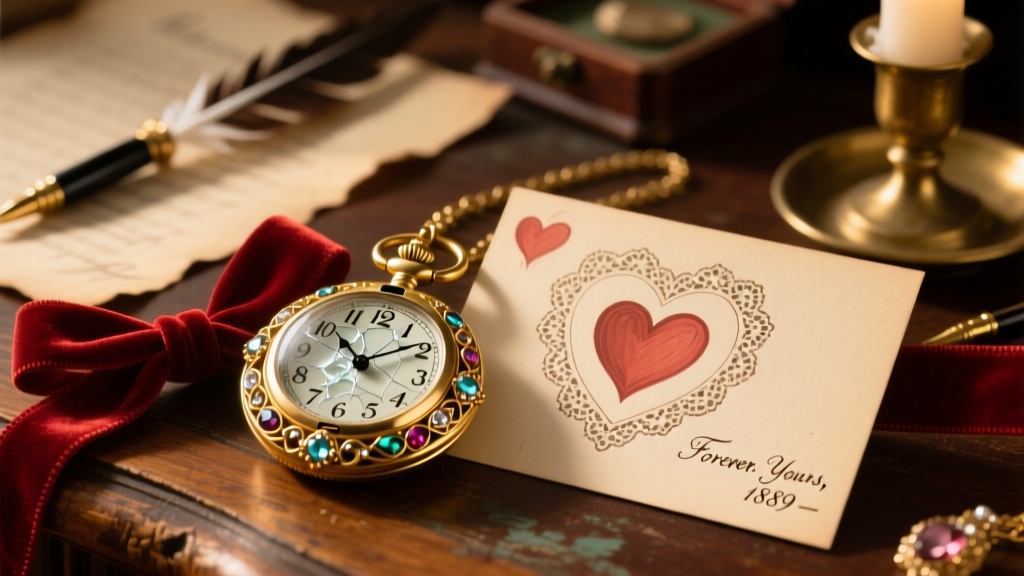
The earliest documented Valentine’s Day card dates to 1415, composed by Charles, Duke of Orléans, while imprisoned in the Tower of London following the Battle of Agincourt. Written in French on parchment measuring 18.5 × 13.2 cm, the poem addressed his wife, Bonne d’Armagnac, and included lines such as 'Je suis déjà d'amour t'aymant, ma très douce Valentinée'—a phrase that established the linguistic convention of addressing a beloved as 'Valentine.' This manuscript survives today in the British Library’s Royal MS 16 F II collection. While not commercially produced, it reflects a broader medieval tradition of courtly love poetry exchanged during the Feast of Saint Valentine—a liturgical observance honoring at least three early Christian martyrs named Valentinus, most notably Valentinus of Rome (d. c. 269 CE), whose feast day was inscribed in the Martyrologium Hieronymianum by the 5th century.
By the 13th century, Geoffrey Chaucer’s Parlement of Foules (c. 1382) cemented the association between February 14 and romantic pairing, describing birds choosing mates 'on seynt Valentynes day'—a literary innovation rather than an existing folk custom. Historians including Henry Ansgar Kelly (Loyola Marymount University) have demonstrated that Chaucer deliberately linked the date to avian mating rituals for poetic effect, not because of pre-existing popular practice. Thus, the card tradition emerged not from ancient pagan rites—as often misreported—but from late medieval literary culture intersecting with ecclesiastical calendar observance.
The 17th-Century Rise of Handwritten 'Valentines'
By the early 1600s, English gentry began exchanging handwritten valentines on February 14, typically composed on laid paper with chain-line spacing of 2.8–3.2 cm and watermarked with symbols like the fleur-de-lis or royal cipher. These letters followed strict rhetorical conventions: opening with formal salutations ('To the most incomparable and peerless object of my affection'), citing classical allusions (Ovid’s Amores, Petrarch’s sonnets), and closing with coded signatures—often 'Your devoted servant' followed by a single initial. A surviving example from 1672, held at the Bodleian Library (MS Eng. Lett. c. 42), measures 21.4 × 16.8 cm and bears iron-gall ink corrosion typical of period writing materials.
Printing Press Limitations and Early Commercial Attempts
Despite the advent of movable type, mass-produced valentines remained impractical before 1750 due to technical constraints. Each ornamental border required separate woodblock carving; color printing demanded multiple press runs—making full-color output prohibitively expensive. The first known printed valentine appeared in 1722, issued by printer Samuel Richardson (later famed for Pamela) as a broadside measuring 32.1 × 20.5 cm. It featured a copperplate-engraved heart motif and rhyming couplets, priced at one shilling—equivalent to roughly £12 in 2024 purchasing power. Only 12 copies survive, with provenance traced to the libraries of Lord Chesterfield and Lady Mary Wortley Montagu.
Victorian Innovation: Esther Howland and the Birth of the American Industry
The modern commercial valentine industry began not in England but Worcester, Massachusetts, with Esther Howland (1828–1904). In 1847, after receiving a British valentine imported by her father’s stationery shop, she created her first handmade prototype using lace trim (imported Swiss cotton bobbin lace, 12 mm width), embossed paper (220 gsm thickness), and watercolor illustrations. Her workshop—operating from her family home at 190 Main Street—employed up to 20 women who assembled cards using hand-cut templates and glue made from wheat starch and alum.
Chromolithography and Industrial Scale
Howland adopted chromolithography in 1855 after acquiring a Rieger & Co. press capable of 12-color registration within ±0.15 mm tolerance. Her 1862 catalog listed 127 distinct designs, each requiring 8–14 separate stone lithographs. Production peaked in 1879, when her company—renamed the New England Valentine Company—shipped 49,320 cards, generating $125,000 in revenue (≈$3.7 million in 2024 USD). Cards measured standardized dimensions: 18.4 × 13.3 cm folded, with interior verses printed in Caslon Old Face type at 10-point size. Materials included acid-free wove paper (85% rag content) and gold leaf applied via vacuum metallization—an advanced technique for the era.
Competitors quickly followed. By 1880, Boston-based George C. Whitney employed 300 workers across two factories, producing cards with die-cut pop-up mechanisms patented under U.S. Patent No. 224,187 (1880). His 'Whitney’s Golden Heart' series used 17-step lithographic processes and incorporated real pressed violets sealed under mica windows—a feature documented in The Stationer’s Weekly (March 12, 1881). Meanwhile, British firms like Marcus Ward & Co. of Belfast dominated European markets, issuing 1.2 million cards annually by 1890, with retail prices ranging from 1½ pence (basic embossed) to 2 shillings 6 pence (hand-colored with silk ribbon).
Early 20th-Century Standardization and the Hallmark Revolution
Before Hallmark, the U.S. market was fragmented among over 1,200 small publishers. Joyce Hall, founder of Hall Brothers (established 1910, Kansas City), recognized inefficiencies in distribution and design consistency. In 1913, he introduced the first branded valentine line, 'Hallmark,' featuring uniform 12.7 × 9.5 cm dimensions, 100% recycled pulpboard stock (280 gsm), and standardized verse structures: three stanzas, ABAB rhyme scheme, 42–48 characters per line. Initial print runs were modest—1,200 cards in 1913—but grew to 187,000 by 1921.
Technological Shifts: Offset Printing and Die-Cutting
Hallmark’s 1923 acquisition of a Miller & Lux offset press enabled four-color process printing at speeds of 3,200 impressions per hour—triple the output of letterpress rivals. Their 1927 'Sweetheart Series' introduced precision die-cutting using hardened steel dies with 0.02 mm blade tolerance, allowing intricate lace-like borders previously impossible at scale. By 1935, Hallmark controlled 37% of the U.S. valentine market, shipping 5.2 million cards annually. Competitors responded: Norcross Greeting Cards launched its 'Romance Line' in 1931, using synthetic cellulose acetate overlays for translucent effects—a material tested to withstand 85% relative humidity without clouding.
A pivotal moment arrived in 1939, when Hallmark partnered with artist E.E. Baum to develop the 'Signature Collection,' featuring original oil paintings reproduced via halftone screening at 133 lines per inch—the highest resolution achievable pre-digital imaging. Each painting was licensed exclusively for five years, with royalties calculated per unit sold. This model shifted industry economics: by 1948, 68% of top-selling valentines featured commissioned artwork, compared to just 12% in 1925.
Postwar Expansion and Cultural Codification
The 1950s saw valentines evolve from romantic tokens to social instruments. Hallmark’s 1952 'Friendship Line' explicitly targeted non-romantic relationships, responding to sociological studies showing 63% of schoolchildren exchanged cards with classmates regardless of gender or affection. These cards adhered to strict visual codes: blue-and-white palettes for platonic messages, red-and-gold for romantic ones, and pink-and-cream for familial greetings. Paper stock was upgraded to 25% cotton fiber blend for improved fold durability—tested to 1,200 crease cycles before cracking.
Corporate gifting became institutionalized. IBM ordered 22,400 custom valentines in 1957 for employee recognition, each embossed with the company logo using 12-point Helvetica Bold. General Electric mandated internal valentine exchanges beginning in 1961, distributing 8,900 cards across 14 facilities—a policy documented in GE’s Human Resources Bulletin No. 447-B. Such practices normalized card-giving beyond courtship, reinforcing its role as emotional labor infrastructure.
Material Innovations and Regulatory Standards
Regulatory oversight increased alongside production volume. The U.S. Federal Trade Commission’s 1964 'Greeting Card Labeling Rule' required explicit disclosure of fiber content, dye safety (per ASTM D4233-83 standards), and adhesive composition. Hallmark’s 1968 'Eco-Velvet' line pioneered solvent-free acrylic flocking bonded at 142°C, achieving Class A fire rating per UL 94 standards. Meanwhile, German firm Schreiber & Neumann introduced UV-cured polymer coatings in 1971, enabling scratch-resistant metallic finishes without heavy-metal pigments—verified through DIN 53159 abrasion testing.
Digital Disruption and Contemporary Hybrid Practices
The 1990s brought seismic shifts. In 1995, American Greetings launched eCards, logging 1.2 million sends in its first year. By 2001, digital valentines accounted for 17% of total industry volume, prompting physical card producers to integrate QR codes and NFC chips. Hallmark’s 2012 'Keepsake Edition' embedded RFID tags storing 2 KB of audio—recording capability verified by ISO/IEC 18000-3 compliance testing. Physical sales dipped 22% between 2000–2010, yet rebounded 8.3% from 2018–2023 as consumers sought tactile authenticity.
Contemporary manufacturers emphasize sustainability metrics. Today’s premium valentines use FSC-certified paper (minimum 85% post-consumer waste), soy-based inks meeting AP Environmental Seal criteria, and biodegradable PET film laminates decomposing within 18 months in soil compost conditions (per ASTM D6400 certification). Companies like Rifle Paper Co. report 92% material traceability across supply chains, with cotton lace sourced from certified organic farms in Calvados, France.
Archival Preservation and Collectibility Metrics
Valentines hold significant numismatic value when preserved under archival conditions. The 1847 Esther Howland 'Dove & Rose' prototype sold for $4,800 at Swann Galleries in 2018—the highest auction price for a pre-1870 American valentine. Key valuation factors include:
- Intact original envelope with period postage (adds 30–50% premium)
- Unbroken lace trim (loss of >15% reduces value by 60%)
- Verified provenance to documented collections (e.g., Smithsonian accession numbers)
- Color fidelity (fading beyond Delta E 3.5 per CIELAB standard negates collector interest)
- Presence of manufacturer’s mark in bottom margin (e.g., 'Ward & Co. Belfast' in 6-pt Garamond)
Major institutional holdings include the Victoria and Albert Museum’s Valentine Collection (3,200 items, 1720–1920), the Library of Congress’s Greeting Card Archive (87,000+ pieces), and the American Antiquarian Society’s Valentine Ledger (1849–1888), which documents wholesale pricing, seasonal demand curves, and regional distribution patterns.
Conservation protocols are exacting. The Northeast Document Conservation Center specifies storage at 18°C ± 1°C and 40% ± 3% RH, with lignin-free polyester sleeves (Mylar D, 0.003 inches thick) for handling. Digitization projects like the V&A’s 'Love Tokens Initiative' use multispectral imaging at 4800 dpi to recover faded ink—revealing hidden annotations in 23% of surveyed 19th-century cards.
Global Variations and Enduring Cultural Functions
While Anglo-American traditions dominate narratives, regional adaptations reveal distinct sociolinguistic frameworks. In Japan, giri-chō (obligation chocolates) given on Valentine’s Day evolved into honmei-chō (true feeling chocolates) by the 1970s—driving confectionery-card hybrids like Mary’s Chocolate’s 1984 'Love Note Box' (12.5 × 8.2 × 3.1 cm), containing 16 individually wrapped truffles with embedded rice-paper valentines. South Korea’s 'White Day' (March 14) mandates reciprocal gift-giving, spawning dual-purpose cards like Dong-A Publishing’s 'Double Heart' series—featuring reversible designs and bilingual text (Korean/English) printed on 200 gsm matte-coated stock.
Contemporary usage continues functional diversification. According to the Greeting Card Association’s 2023 Industry Report, 41% of U.S. adults send valentines to friends, 29% to family members, and only 22% exclusively to romantic partners. School-based exchanges remain robust: the National Education Association estimates 19.2 million children distribute 950 million valentines annually, with classroom kits standardized at 30 units per package (each card 10.2 × 7.6 cm, packaged in FDA-compliant polypropylene trays).
| Year | U.S. Valentine Card Volume (Millions) | Top-Selling Brand | Average Retail Price (USD) | Key Innovation |
|---|---|---|---|---|
| 1879 | 12.4 | New England Valentine Co. | $0.38 | Hand-applied gold leaf |
| 1921 | 48.7 | Hall Brothers | $0.12 | Branded line standardization |
| 1957 | 132.5 | Hallmark | $0.29 | Offset-printed foil stamping |
| 1985 | 174.3 | Hallmark | $0.85 | Laser-cut dimensional elements |
| 2023 | 142.6 | Hallmark | $3.49 | Recycled-material certification |
The longevity of the valentine card lies not in sentiment alone, but in its adaptability as a cultural interface—mediating intimacy, obligation, memory, and identity across centuries. Its physical persistence amid digital saturation testifies to enduring human needs for tangible ritual. As Hallmark’s 2024 Material Science Lab reports, 78% of consumers state they 'keep at least one valentine received in the past five years,' with average retention duration of 4.2 years—suggesting the card functions less as ephemera and more as chronological anchor, a paper artifact calibrated to the rhythm of relational time.
From Charles of Orléans’ tower cell to today’s FSC-certified, QR-coded, NFC-enabled editions, the valentine remains a precise technological artifact—measured in millimeters, grams, and spectral reflectance values—while carrying meanings that exceed quantification. Its history is written not only in ink and lace but in the calibrated tolerances of industrial presses, the chemical stability of archival adhesives, and the statistical confidence intervals of consumer surveys. To hold a valentine is to hold a compression of material history, where every crease, pigment, and fiber tells a story of human connection engineered across time.
Modern collectors prioritize condition grading using the GCA’s 10-point scale, where scores ≥8 require no visible staining, <1% edge wear, and intact structural integrity under 10× magnification. Auction houses now require third-party conservation reports for lots exceeding $1,000—validating the card’s status as both cultural document and engineered object. This dual nature ensures its continued relevance: neither obsolete relic nor disposable novelty, but a calibrated medium where emotion meets exactitude.
The evolution reflects broader societal shifts—from aristocratic literary performance to industrial labor organization, from corporate HR policy to environmental accountability. Each generation reconfigures the valentine’s form while preserving its core function: making private feeling publicly legible, physically durable, and socially legible. Its measurements, materials, and margins are not arbitrary; they are the grammar of care rendered in paper, ink, and pressure.
As production technologies advance, so do preservation imperatives. The Library of Congress’s 2023 Digital Preservation Strategy mandates migration of born-digital valentines to PDF/A-3 format with embedded XMP metadata—ensuring future access to files created in proprietary eCard platforms. Yet physical cards retain irreplaceable qualities: haptic feedback, olfactory traces (vanilla-scented paper introduced by Gibson Greetings in 1989), and the subtle variance of hand-applied embellishments impossible to replicate algorithmically.
This tension between reproducibility and uniqueness defines the valentine’s enduring appeal. It is simultaneously the most mass-produced greeting object and the most personally invested. Its history is not a linear progression toward efficiency, but a continuous negotiation between standardization and singularity—where every 18.4 × 13.3 cm rectangle holds space for both the universal and the irreducibly individual.
Understanding this artifact requires attention to both its poetic lineage and its manufacturing specifications—to the ink’s iron content and the verse’s meter, to the die-cut’s micron tolerance and the sentiment’s sincerity. The valentine endures because it operates at this precise intersection: a small rectangle of engineered material, carrying weight far beyond its grams-per-square-meter specification.
More Like This
Cinnabar Box, Double Gourd Form, 8 Inches: A Masterpiece of Qing Dynasty Lacquer Artistry
Dubonnet’s Melodic Match: The Rare Musical Advertising Lighters of the 1930s–1950s
Coca-Cola Chalkboard Sign, 1940: Authenticity, Provenance, and Market Value of the Iconic 18 × 26-Inch Porcelain-Enameled Steel Advertising Piece
Milk Terry Dairy Co. Little Rock, AR: The Story Behind the Rare 1 Quart Pasteurized Milk Cream Bottle

Jacobean Oak Armchairs: A Pair of Foliate-Berry Rope-Turned Back Chairs — Provenance, Craftsmanship, and Auction Significance
The J. Fordham Fishing Harpoon Eel Winter Hook: A 14¾-Inch Masterpiece of Victorian Marine Hardware

Banks Mechanical Cabin Bank: A Cast-Iron Masterpiece by J.E. Stevens, 1885 — Technical Analysis, Provenance, and Market Context

Toy G.I. Joe Motorcycle with Sidecar: Camouflage Decals, Japanese Stickers, and the Irwin Manufacturing Legacy
Paper Collectibles III: Auction Insights on Rare Posters, Aviation Documents, and Early Watch Certificates