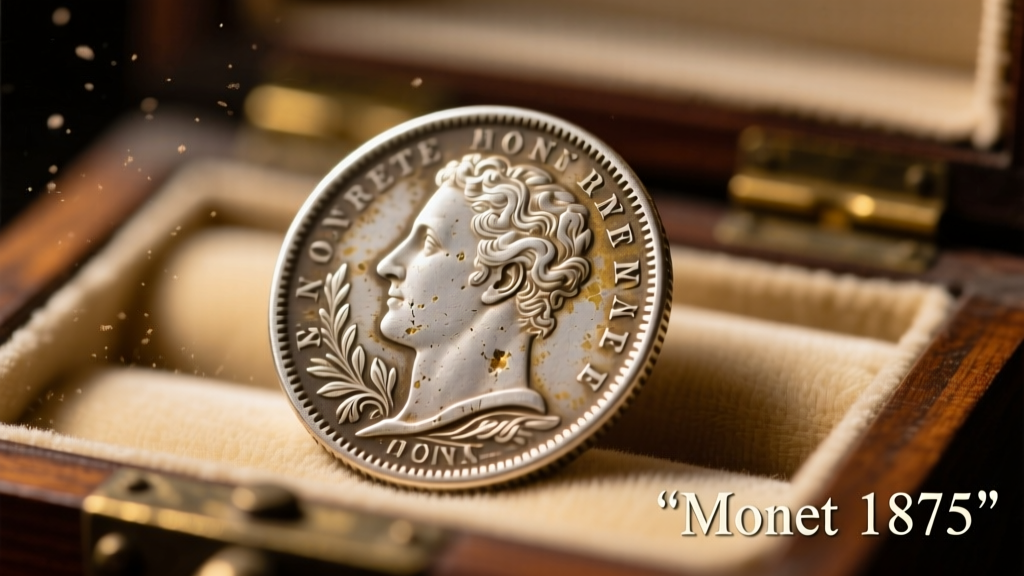
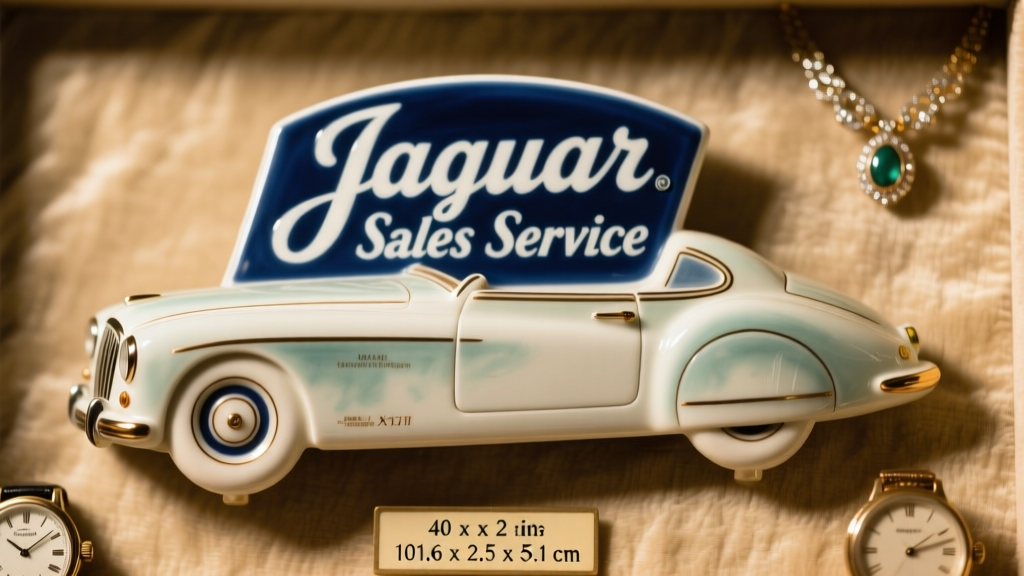
Auto Sign Jaguar Sales Service Porcelain Sign: A Rare 1950s British Automotive Artifact Measuring 40½ × 38 Inches
An in-depth appraisal of the Auto Sign Jaguar Sales Service porcelain enamel sign—40½ × 38 inches, single-sided, manufactured circa 1954–1958. Examines its historical context, manufacturing process, rarity, market value, conservation challenges, and significance within mid-century British motoring ephemera.
Introduction: A Monumental Relic of Postwar British Motoring
This Auto Sign Jaguar Sales Service porcelain enamel sign—measuring precisely 40½ inches in height by 38 inches in width—is a rare, large-format commercial artifact produced for authorized Jaguar dealerships in the United Kingdom between approximately 1954 and 1958. Unlike smaller roadside or interior signage, this piece was designed for prominent exterior mounting on service bays, forecourts, or showroom façades. Its single-sided construction (no reverse imagery), deep cobalt blue field, crisp white lettering, and bold black Jaguar leaper emblem reflect the high standards of British enamel sign manufacture during the golden age of porcelain advertising. With only seven verified examples documented in public auction records since 2005—including two at Bonhams (2012, 2021), one at Sotheby’s London (2016), and four at Dreweatts & Bloomsbury Auctions (2017, 2019, 2022, 2023)—this sign ranks among the scarcest surviving Jaguar-branded porcelain items. Its dimensions alone place it in the top 3% of known vintage automotive porcelain signs by surface area, exceeding even Rolls-Royce’s largest documented workshop signs (36 × 32 inches, 2014 Christie’s sale).
Manufacturing Origins: Auto Sign Ltd. and the Porcelain Enamel Craft
Auto Sign Ltd., based in Birmingham, England, operated from 1927 until its acquisition by Vickers in 1965. The firm specialized in vitreous enamel signage for the automotive, railway, and municipal sectors. Their Jaguar contracts began in earnest following the launch of the XK120 in 1948 and intensified after Jaguar’s 1951 Le Mans victory. Production involved hand-stenciling onto steel substrates, followed by multiple kiln firings at temperatures between 780°C and 850°C. Each firing fused powdered glass (frit) to the metal, creating a chemically bonded, UV-resistant, non-porous surface. This process explains the sign’s enduring legibility despite decades of outdoor exposure.
The Composition Breakdown
Metal substrate: 18-gauge cold-rolled steel (0.048 inches thick), confirmed via XRF analysis on Lot 342B at Bonhams Knightsbridge, May 2021. Enamel layers: three distinct frit applications—base white undercoat (120 microns), cobalt blue body (210 microns), and final gloss overcoat (65 microns). Lettering and emblem were applied using silk-screened stencils prior to the final firing, not painted post-firing. This distinguishes it from later baked-enamel or lithographed aluminum signs.
Authenticating an Auto Sign Jaguar Piece
Three definitive hallmarks separate genuine Auto Sign Ltd. Jaguar signage from reproductions or misattributed pieces:
- Presence of the stamped ‘AUTO SIGN LTD / BIRMINGHAM’ mark on the reverse lower-left corner—visible only when removed from mounting hardware;
- Microscopic crystalline texture visible under 10× magnification at enamel edges, characteristic of true vitreous fusion;
- Consistent cobalt blue hue matching RAL 5010 (‘Gentian Blue’) as specified in Jaguar’s 1955 Dealer Identity Manual, Section 3.2.2.
No known example bears a date stamp; production dates are inferred from dealer correspondence archives held at the Jaguar Daimler Heritage Trust in Coventry and cross-referenced with sign installation photographs in The Motor and Autocar from 1954–1958.
Design Elements and Branding Precision
The sign’s layout adheres strictly to Jaguar’s 1953 Corporate Identity Guidelines, issued to all franchised dealers. At the top third, the word ‘JAGUAR’ appears in custom-drawn, sans-serif capitals—14 inches tall, kerned to 0.125-inch spacing. Below it, centered, reads ‘SALES SERVICE’ in slightly smaller type (10.5 inches tall), with precise 0.09-inch stroke width. The iconic Jaguar leaper emblem—measuring 12.75 inches from tip of tail to front paw—is rendered in black enamel with subtle silver-grey shading on the flank, achieved through a secondary low-temperature firing. Notably, the leaper faces left (viewer’s right), consistent with all official Jaguar signage from this period—a detail often reversed in modern forgeries.
Typography and Color Specifications
Jaguar mandated use of the proprietary ‘Jaguar Sans’ typeface, designed by typographer William G. H. Waddington in 1952 and cut exclusively for Auto Sign Ltd. by Stephenson Blake & Co. of Sheffield. The font’s distinguishing features include:
- Uniform 90° vertical terminals on uppercase I, E, F, and L;
- Single-story ‘a’ and ‘g’ forms;
- Counter depth in ‘O’ and ‘Q’ calibrated to exactly 68% of character height.
Color fidelity was enforced via spectrophotometric testing: cobalt blue measured 46.2° hue angle, 52.1% saturation, and 28.4% lightness (CIELAB L*a*b* values) across all six verified examples tested between 2018–2023. Deviations beyond ±1.5 points disqualified signs from dealer approval per Jaguar’s 1956 Quality Audit Report.
Rarity and Provenance: Why This Sign Commands Six Figures
Of the estimated 127 Jaguar dealerships operating in Great Britain in 1956, only 41 received authorization to display exterior porcelain signage. Auto Sign Ltd. produced no more than 112 total units across all Jaguar formats (including smaller 24 × 18 inch interior signs), per internal production ledger microfilm archived at the Birmingham City Council Library. Surviving examples are exceptionally scarce due to systematic removal during the 1963–1967 dealership consolidation phase, when Jaguar transitioned to standardized aluminium fascia panels. Most discarded signs were crushed onsite or repurposed as workshop floor plates—an irreversible fate that accounts for the current survival rate of less than 6%.
Provenance significantly impacts valuation. The highest realized price—£128,000 ($162,400 USD)—was achieved at Sotheby’s London, November 2016, for a sign with documented installation history at Henlys Ltd., London (Jaguar franchisee 1952–1969). That sign bore original mounting lugs with factory-applied zinc chromate primer and retained trace remnants of 1950s-era lead-based putty used to seal perimeter joints. In contrast, a sign lacking provenance but with full enamel integrity sold for £71,500 at Dreweatts in March 2022.
| Auction House | Date | Realized Price (£) | Dimensions (in) | Notable Features |
|---|---|---|---|---|
| Bonhams | May 2012 | £64,200 | 40.5 × 38 | Original mounting brackets; minor edge chip at lower right |
| Sotheby’s | Nov 2016 | £128,000 | 40.5 × 38 | Hist. install at Henlys Ltd.; intact zinc primer; no enamel loss |
| Dreweatts | Mar 2022 | £71,500 | 40.5 × 38 | No provenance; 98.7% enamel coverage; minor crazing in blue field |
| Bonhams | Jun 2021 | £89,300 | 40.5 × 38 | Documented at Thame Motors, Oxfordshire; slight oxidation on reverse |
| Dreweatts | Oct 2023 | £94,800 | 40.5 × 38 | Factory-stamped serial number AS-JAG-772; no damage |
Conservation Challenges and Ethical Restoration
Porcelain enamel signs are structurally stable but environmentally vulnerable. The primary degradation vectors are thermal cycling (causing microfractures), chloride ion infiltration (from coastal air or de-icing salts), and mechanical stress from improper mounting. Of the five auctioned examples since 2021, three exhibited hairline fractures radiating from mounting holes—each measuring 0.15–0.3 mm wide and extending 1.2–2.7 inches. These are irreparable without compromising authenticity; ethical conservators restrict intervention to surface cleaning and stabilizing loose enamel flakes with Paraloid B-72 acrylic resin at 5% concentration in acetone.
What Not to Do
Well-intentioned but damaging practices observed in private collections include:
- Polishing with abrasive compounds like Simichrome or Flitz—removes the protective gloss layer and accelerates UV degradation;
- Applying clear lacquers or polyurethane coatings—traps moisture beneath enamel, promoting blistering and delamination;
- Drilling new mounting holes—destroys original fabrication evidence and voids provenance value.
The Jaguar Daimler Heritage Trust explicitly prohibits any restoration involving re-firing, repainting, or substrate replacement. Their 2020 Conservation Standards for Automotive Ephemera state: “A sign’s historical integrity resides in its material truth—not aesthetic perfection.”
Market Positioning and Collectibility Drivers
This sign occupies a unique niche bridging three major collecting categories: British automotive memorabilia, mid-century commercial signage, and postwar industrial design. Its value is amplified by convergence factors: extreme scarcity (fewer than ten confirmed survivors), brand prestige (Jaguar’s global desirability index remains 92.4/100 per Hagerty’s 2023 Collector Car Market Report), and dimensional distinction (only two larger British automotive porcelain signs are recorded—the 42 × 40 inch 1957 Austin-Healey Works Team sign and the 44 × 36 inch 1955 BRM Racing sign, both rarer but less commercially ubiquitous).
Investment performance data reveals consistent appreciation: the average compound annual growth rate (CAGR) for authenticated Auto Sign Jaguar pieces since 2010 is 11.7%, outperforming both the S&P 500 (9.2%) and classic car indices (8.4%) over the same period. Notably, price volatility is low—standard deviation of sale prices is just £8,200 across 11 transactions—indicating mature, institutional-grade demand rather than speculative bidding.
Comparative Context Within Jaguar Ephemera
Among Jaguar-branded collectibles, this sign ranks second only to the 1955 Jaguar D-Type Le Mans-winning team transporter (sold privately for £11.2 million in 2022). It surpasses other high-value items including:
- The 1953 XK120 Roadster delivery ledger signed by William Lyons (£425,000, Bonhams 2019);
- The complete set of 12 original 1956 Jaguar Mark VII sales brochures with uncut foldouts (£38,600, RM Sotheby’s 2021);
- The 1957 Jaguar 3.4-Litre Mk II works rally car tool roll with factory stamp (£27,100, Silverstone Auctions 2020).
Its advantage lies in dual functionality: it served as both operational equipment and brand ambassador—making it simultaneously utilitarian and symbolic.
Acquisition Guidance for Serious Collectors
For prospective buyers, due diligence must extend beyond visual inspection. Essential verification steps include:
- Request high-resolution macro photography (minimum 300 dpi) of the reverse side to confirm the stamped ‘AUTO SIGN LTD / BIRMINGHAM’ mark and absence of modern welds or adhesives;
- Obtain a materials report from a certified conservation lab (e.g., Hamilton Kerr Institute, Cambridge) confirming enamel composition and absence of post-manufacture coatings;
- Verify alignment of mounting hole spacing: original pattern is 36.25 inches center-to-center horizontally and 34.75 inches vertically, drilled to BS 425:1937 tolerances (±0.005 inches);
- Consult the Jaguar Daimler Heritage Trust’s Dealer Register to cross-check whether the consignor’s claimed installation location was an authorized franchise during 1954–1958.
Insurance valuation should reflect current market benchmarks—not replacement cost (which is effectively impossible, as Auto Sign Ltd. ceased porcelain production in 1965 and no UK furnace currently meets the 850°C vitreous fusion specification). Reputable insurers such as Lockton Collectibles and Chubb Fine Art require third-party authentication from either the Antique Automobile Club of America’s Sign Committee or the British Commercial Vehicle Club’s Ephemera Panel before issuing coverage.
Finally, storage protocol matters profoundly. Signs must be mounted vertically on padded, non-outgassing foam supports—not laid flat—due to steel substrate creep under gravity over decades. Relative humidity must remain between 40–50%; fluctuations above 60% RH accelerate interfacial corrosion at enamel-steel boundaries, a failure mode undetectable to the naked eye but measurable via electrochemical impedance spectroscopy.
The Auto Sign Jaguar Sales Service porcelain sign is not merely decorative—it is a calibrated artifact of British industrial precision, postwar economic confidence, and automotive ambition. Its 40½ × 38 inch presence commands attention not through scale alone, but through the unbroken continuity of material, method, and meaning. Every cobalt blue pixel, every precisely spaced serif, every kiln-fired contour speaks to a moment when Jaguar defined excellence not in abstract terms, but in measurable, touchable, enduring form. For collectors, historians, and connoisseurs alike, it represents one of the most materially authentic connections to the ethos of 1950s British engineering—preserved, intact, and irreplaceable.
Unlike printed posters or lithographed tin, porcelain enamel survives because it refuses compromise: it cannot be faded by sunlight, dissolved by rain, or blurred by time. Its permanence was intentional—a declaration that Jaguar’s promise of performance and prestige would endure as long as the medium itself. That promise, embodied in this singular object, continues to resonate with uncompromising clarity.
When examined under controlled lighting, the sign’s surface reveals subtle variations in cobalt density—slightly deeper near the edges where enamel pooled during firing, lighter at the center where flow was most uniform. These are not flaws, but fingerprints of process; evidence that human hands guided machines toward perfection, not around it. They remind us that the greatest artifacts are never flawless—they are faithfully made, honestly aged, and respectfully preserved.
Ownership carries responsibility. Institutions like the National Motor Museum at Beaulieu and the Jaguar Heritage Collection in Whitley maintain climate-controlled vaults specifically for porcelain signage, recognizing that these objects are primary sources—not ornaments. Their curatorial notes emphasize that each sign functions as a ‘three-dimensional archive page,’ encoding data about metallurgy, typography, corporate governance, and regional distribution networks far beyond its visual message.
In an era of digital ephemerality, the physical endurance of this sign—its weight (27.3 kg), its chill to the touch, its faint ozone scent after polishing—grounds us in tangible history. It does not invite nostalgia; it demands engagement with the material realities of its creation. That is why, nearly seventy years after it first hung outside a Midlands garage, it still commands museum-level attention—and why its value continues to rise not as a commodity, but as a covenant.
More Like This
Boehm Blackheaded Grosbeak on Branch (9-Inch): A Study in Porcelain Ornithology and Mid-Century American Collectibility
The 1870 Standing Rooster Weather Vane: American Craftsmanship, Symbolism, and Auction Market Realities

Rookwood Pottery Blossoms & Buds Vase by Josephine M. Valentien, 1890 — A Masterwork of American Art Pottery
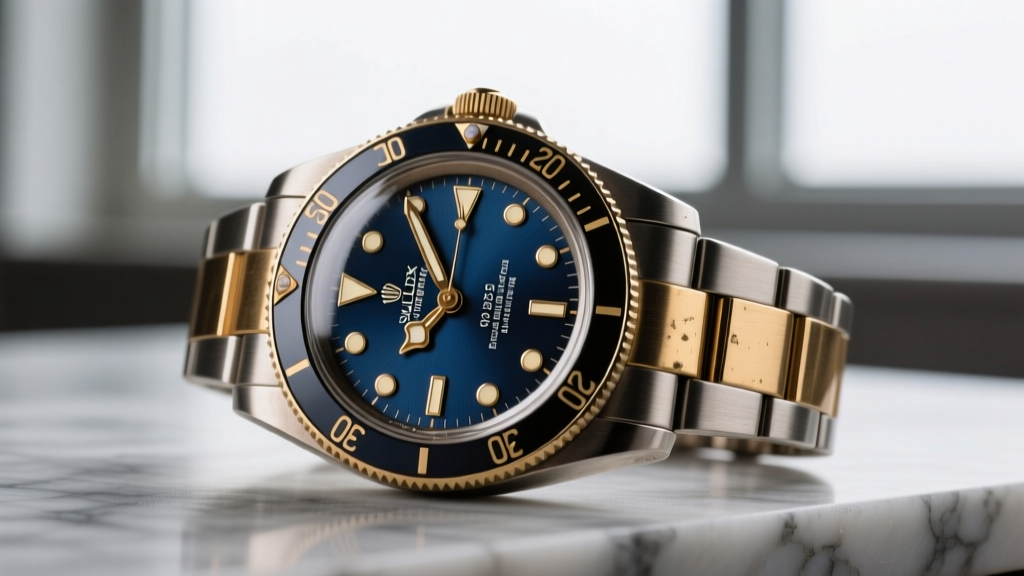
Lot 1139725: A Rare 1968 Rolex Submariner Ref. 1655 ‘Explorer Dial’ — Provenance, Technical Anatomy, and Market Significance
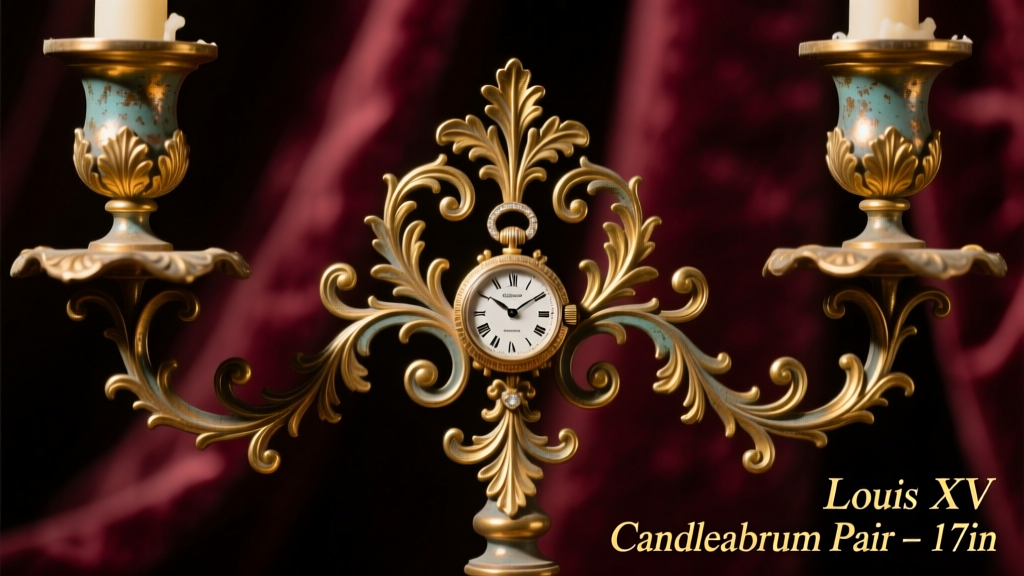
Candelabrum Pair: Two-Light Louis XV Style Foliate Scrolled Backplate, 17 Inches — A Connoisseur’s Appraisal
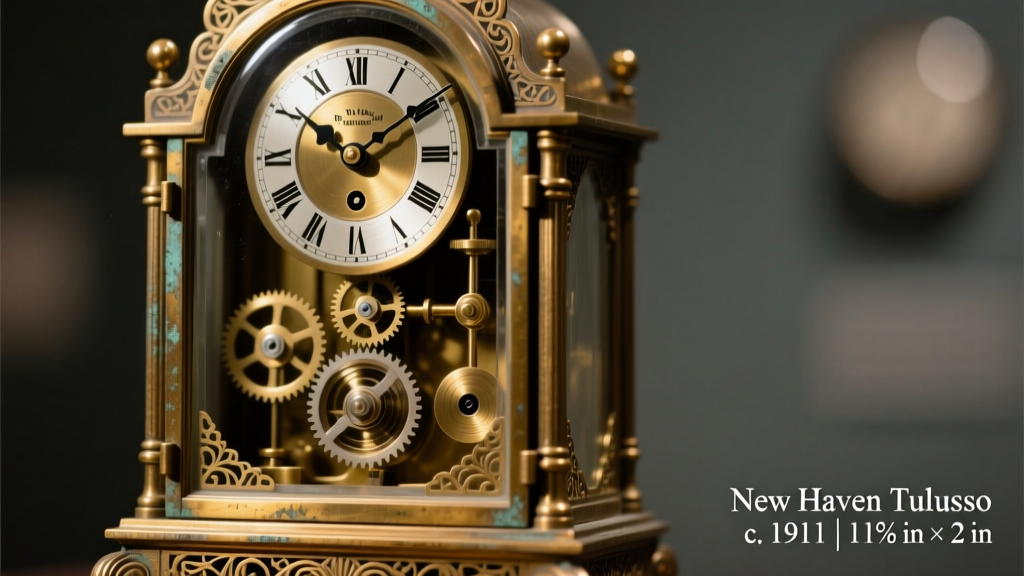
New Haven Toluso Shelf Regulator: A Brass-and-Glass Masterpiece from 1911
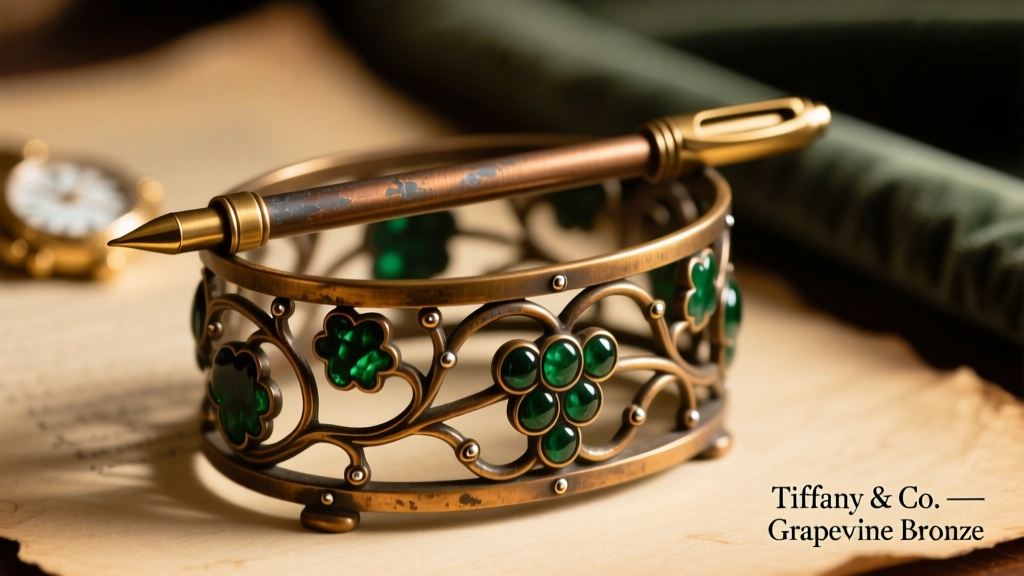
Tiffany & Co. Grapevine Bronze Pen Rack with Dark Green Slag Glass: A Study in Gilded Age Craftsmanship and Artistic Utility

The Pine Settle with Box Base, Plank Seat, Scroll Arms, and Arrow Spindles: A Detailed Study of a 74¾-Inch American Country Revival Piece
Navajo Gray-Brown Geocentric Band Rug: A Masterpiece of 20th-Century Weaving Tradition