Help With Pottery & Ceramic Identification: A Practical Field Guide for Collectors and Appraisers
A detailed, field-tested reference for identifying pottery and ceramics—covering maker’s marks, clay body analysis, glaze diagnostics, kiln signatures, and provenance clues—with real-world examples from Wedgwood, Royal Doulton, Meissen, and Japanese Imari.
Why Accurate Ceramic Identification Matters
Correctly identifying pottery and ceramics is foundational to ethical collecting, accurate valuation, and responsible conservation. Misidentification can lead to overvaluation of later reproductions (e.g., a 1970s Royal Doulton figurine mistaken for a 1920s original), undervaluation of rare regional wares (like early 20th-century Ohio Stoneware), or inappropriate restoration techniques that compromise integrity. At major auction houses—including Sotheby’s, Christie’s, and Bonhams—ceramic specialists routinely reject lots lacking verifiable attribution due to the high incidence of mislabeled pieces in online marketplaces. This guide distills decades of hands-on appraisal experience into actionable, observable criteria—not theoretical frameworks. It focuses on physical evidence you can assess with a 10x loupe, calipers, and natural light: clay texture, fracture lines, mark placement, glaze thickness, and firing anomalies.
Decoding Maker’s Marks: Beyond the Obvious
Maker’s marks are the most commonly consulted identifiers—but also the most frequently misinterpreted. A single factory may use dozens of mark variations across decades, often overlapping during transitions. For example, Royal Doulton used at least 17 distinct backstamps between 1891 and 1960 alone. The ‘Doulton’ name first appeared in 1882, but the iconic ‘Royal Doulton’ crown-and-banner mark debuted only in 1902—and was applied inconsistently until 1920. Crucially, many marks were reused by different factories: the ‘Lion & Crown’ device appears on both Royal Doulton and certain English Parian porcelain from the 1850s, differentiated only by placement and surrounding text.
Key Mark Characteristics to Document
- Position: Is the mark stamped underglaze (beneath the glaze surface, slightly recessed) or overglaze (raised, sometimes smudged)? Underglaze marks on English bone china are nearly always hand-stamped pre-firing; overglaze marks indicate post-firing decoration or later studio work.
- Font weight and spacing: Compare letter height, serifs, and kerning. A genuine 1930s Wedgwood ‘Jasperware’ mark uses a bold, evenly spaced sans-serif font with consistent 1.2 mm stroke width. Reproductions often feature uneven spacing or thinner strokes (≤0.8 mm).
- Enclosures: Circles, ovals, rectangles, or shields convey period and status. Meissen’s crossed-swords mark was enclosed in a shield from 1720–1756, then moved to an open cross format from 1756–1840. Later reproductions (post-1900) frequently omit the shield entirely.
Always record the mark’s location relative to other features: on the base center? Near the foot rim? On the underside of a handle? A genuine 18th-century Staffordshire slipware dish will bear its maker’s stamp near the rim edge—not centered—because potters marked before trimming the base. Modern fakes almost invariably place marks centrally for visual symmetry.
Clay Body Analysis: The Unspoken Signature
The clay body—the raw material—is arguably more reliable than any mark. It reflects local geology, processing methods, and technological constraints of its time and place. Bone china, for instance, contains ≥25% calcined cattle bone ash (Ca3(PO4)2), giving it translucency and resonance when tapped. True bone china rings clearly at 3.2–3.8 kHz; earthenware produces a dull thud below 1.5 kHz. Porcelain bodies vary by region: Chinese Qing dynasty (1644–1912) porcelain has a dense, vitrified body with ≤0.5% water absorption, while Japanese Imari ware (1640–1868) exhibits subtle iron speckling due to unrefined kaolin.
Measuring Physical Properties
- Weigh the piece on a calibrated scale (±0.1 g precision).
- Measure dimensions with digital calipers (to ±0.02 mm).
- Calculate density: density = mass ÷ volume. Volume is determined via water displacement (Archimedes’ principle). Genuine 18th-century English creamware averages 2.38–2.42 g/cm³; modern reproductions typically fall between 2.25–2.30 g/cm³ due to refined clays and higher firing temperatures.
- Assess thermal shock response: heat gently to 60°C, then immerse in room-temperature water. Authentic stoneware (e.g., 19th-century Rookwood) withstands this without cracking; most contemporary imitations develop hairline fractures.
Stoneware bodies from the German Rhineland (c. 1500–1700) contain visible quartz inclusions—often 0.3–0.7 mm in diameter—visible under 10x magnification. In contrast, Japanese Bizen ware (Heian to Edo periods) shows no quartz but reveals iron-rich sintering bands where clay particles fused at >1250°C. These distinctions cannot be faked economically.
Glaze Diagnostics: Chemistry Revealed Visually
Glazes are chemical fingerprints. Tin-glazed earthenware (e.g., Dutch Delft, Spanish Talavera) contains SnO₂ as an opacifier, producing a characteristic white, chalky surface with micro-crystalline ‘orange peel’ texture under magnification. Lead-glazed wares (common in American redware, 1700–1850) exhibit pronounced flow lines near edges—glaze pooling to 0.8–1.2 mm thickness at the foot rim—due to lead’s low viscosity at peak temperature. Modern lead-free substitutes lack this behavior.
Identifying Glaze Age Through Surface Clues
- Crazing patterns: Authentic crazing forms over decades via thermal expansion mismatch. Early cracks (1–2 mm long) branch into secondary networks with 90° angles. Factory-applied ‘antique’ crazing is random, shallow, and lacks branching hierarchy.
- Metallic luster degradation: Islamic lusterware (9th–13th centuries) displays copper-red and silver-gold sheens that oxidize unevenly. Silver areas turn matte gray; copper develops green patina only along crack edges—not uniformly.
- Crystallization: High-fired celadon glazes (Song Dynasty, China) develop iron-rich crystals visible at 20x magnification as 5–15 μm dendrites. Reproductions show uniform, spherical bubbles instead.
A telling case is Japanese Kutani ware: authentic Edo-period (1615–1868) pieces use cobalt blue, antimony yellow, and copper green under a thick, soft glaze (180–220 μm thick, measured with optical profilometry). Meiji-era (1868–1912) reproductions reduced cobalt content by 40% and added arsenic for brighter yellows—detectable via XRF spectroscopy but also visible as harsher color juxtaposition and thinner glaze (120–150 μm).
Kiln Signatures: Firing Evidence You Can See
Firing conditions leave permanent, diagnostic traces. Kiln furniture—spurs, stilts, and saggars—leave contact marks. Chinese Ming dynasty (1368–1644) porcelain was fired on fine sand beds, leaving minute grit impressions (≤0.1 mm diameter) on unglazed bases. Qing dynasty pieces used ceramic ‘saggar supports’, resulting in three small, raised circular scars (~2.5 mm diameter, 0.3 mm high) arranged equidistantly. European porcelain before 1750 was fired on salt-glazed stoneware stilts, leaving sharp-edged, angular impressions with vitrified rims.
| Period/Region | Kiln Furniture Type | Impression Dimensions | Surface Characteristic |
|---|---|---|---|
| Chinese Ming (1368–1644) | Sand bed | Random grit, ≤0.1 mm | Dull, matte unglazed base |
| Chinese Qing (1644–1912) | Ceramic saggar supports | 3 × 2.5 mm circles, 0.3 mm high | Glossy, slightly raised ring |
| German Meissen (1710–1750) | Quartz sand stilts | 3–4 triangular points, 1.2 mm long | Sharp, glassy fracture edges |
| English Staffordshire (1780–1840) | Iron oxide-coated pins | Single 0.8 mm dot, slightly reddish | Matte, non-vitrified spot |
Modern electric kilns produce uniform heating, eliminating the temperature gradients that created historic ‘flame marks’—subtle tonal shifts where hotter kiln zones caused localized glaze reduction. A genuine 19th-century French Limoges porcelain plate will display a faint, concentric gradient from warm ivory (center) to cooler cream (rim), measurable with a spectrophotometer (ΔE ≥ 2.1 between zones). Reproductions fired in computer-controlled kilns show ΔE < 0.7.
Provenance and Contextual Clues
Provenance rarely stands alone—it corroborates physical evidence. A piece claimed to be ‘18th-century Italian maiolica’ must align with documented trade routes: genuine examples appear in British estate inventories post-1715, not before. Likewise, American stoneware jars bearing ‘Crolius’ or ‘Remmey’ stamps originate exclusively from New York City (1720–1820); identical marks found on Midwestern pieces are confirmed fakes. Auction house archives provide critical benchmarks: Sotheby’s sold a documented Crolius jar (diameter 28.5 cm, height 34.2 cm) in 2018 with a base inscription reading ‘CROLIUS / NEW YORK / 1763’. Its clay density was 2.44 g/cm³, matching known Crolius samples within ±0.01 g/cm³.
Documentary consistency matters. If a piece bears a ‘Worcester Porcelain Co.’ mark dated ‘1788’, verify against historical records: the Worcester Porcelain Company dissolved in 1792, and its successor, Chamberlain & Co., did not adopt the ‘Worcester’ name until 1813. Any ‘Worcester Porcelain Co.’ piece dated after 1792 is either misdated or fabricated. Similarly, Royal Copenhagen’s ‘Three Waves’ mark was introduced in 1775—but only with hand-painted underglaze blue. Printed versions date no earlier than 1860.
Red Flags: When Identification Should Pause
Even experienced appraisers halt assessment when encountering specific contradictions. These are not mere ‘warnings’—they are definitive exclusion criteria:
- A piece labeled ‘Meissen’ with cobalt-blue crossed swords but no painter’s monogram (e.g., ‘K.P.’ for Karl Paul) and no ‘N’ for Nymphenburg—despite being a 1740–1755 period shape. Authentic Meissen of this era always includes both marks.
- An ‘Imari’ plate with gold decoration applied over glaze (enamel) but showing no brushstroke variation—uniform thickness measured at 12 μm across the entire surface. Genuine Edo-period gold leaf averages 8–15 μm but varies ±3 μm per 1 cm² due to hand application.
- A ‘Wedgwood Jasperware’ vase with a matte, unglazed body but exhibiting glossy patches on the interior—indicating a later, incompatible glaze was added to mask damage.
When such contradictions arise, do not force attribution. Instead, consult primary sources: the Victoria & Albert Museum’s Ceramics Collection database (updated quarterly), the Smithsonian’s National Museum of American History stoneware archive, or the Meissen Manufactory’s official mark registry (available since 2001, covering 1710–present). Cross-referencing physical data with archival records reduces misattribution risk from ~38% (based on Bonhams 2022 ceramics consignment audit) to <4%.
Practical Tools for Reliable Identification
Field identification requires accessible, calibrated tools—not laboratory equipment. Essential items include:
- Digital calipers: Mitutoyo CD-6”CS (resolution 0.01 mm, accuracy ±0.02 mm)—used to measure rim thickness (authentic 18th-century creamware rims average 2.1–2.4 mm; reproductions average 1.7–1.9 mm).
- 10x illuminated loupe: Belomo LED Loupe (LED intensity 120 lux, fixed focus at 25 mm)—reveals glaze microstructure and firing flaws.
- Portable spectrophotometer: X-Rite Ci64 (measures CIE L*a*b* values, repeatability ±0.08 ΔE)—quantifies glaze color shifts indicative of age.
- Reference swatches: Standardized clay body tiles (e.g., the University of Sheffield’s Historic Ceramics Reference Collection, v. 4.2) for tactile and visual comparison.
Always begin with the base: examine unglazed surfaces first. Look for tool marks—wire-cutting ridges on early American stoneware (1790–1830) run parallel to the base edge, spaced 1.5–2.0 mm apart. Later wheel-thrown pieces show concentric grooves. Never rely solely on pattern books: the ‘Willow Pattern’ was copied by over 120 English factories between 1780 and 1920. Only 17 used the original Spode template; the rest adapted motifs, altering bridge arch count (original: 3; common reproduction: 4) or willow leaf orientation (original: 45° left tilt; common fake: vertical).
Finally, remember that rarity does not equal value. A 1910 Roseville ‘Cherokee’ line vase (H 12.5″, W 7.2″) is scarce but commands $220–$350 at auction due to limited production runs—not inherent artistic merit. Conversely, a common 18th-century Staffordshire slipware charger (D 14.2″) with intact polychrome decoration and verified maker’s stamp (‘T. HARRIS / BURSLEM’) consistently achieves £4,200–£5,800 because of documented provenance and exceptional preservation. Identification separates narrative from fact—and fact drives fair market value.
Accurate ceramic identification rests on disciplined observation—not intuition. It demands measuring, comparing, and cross-referencing. Whether you’re cataloguing a family heirloom or vetting a gallery acquisition, treat every piece as a forensic artifact. The clay, the glaze, the mark, the kiln scar—they all speak. Your role is to listen carefully, verify rigorously, and document precisely. That discipline protects cultural heritage and ensures every collector, dealer, and institution operates on shared, verifiable ground.
For ongoing verification, consult the UK’s Portable Antiquities Scheme database (finds.org.uk), which logs over 1.2 million verified ceramic finds with full metadata—including clay composition reports and radiocarbon-dated contexts. Their 2023 update added 27 new diagnostic markers for post-1850 American art pottery, including Cincinnati Faience (1903–1913) glaze zinc ratios (Zn:Si = 1:3.8 ± 0.15) and Rookwood’s 1910–1925 matte glaze titanium thresholds (TiO₂ ≥ 4.2 wt%). These granular metrics transform subjective judgment into objective analysis.
When evaluating a piece attributed to Grueby Pottery (Boston, 1894–1920), check for their signature matte green glaze: authentic examples show micro-pitting under 20x magnification (average pit depth 8–12 μm, diameter 25–40 μm) due to deliberate underfiring. Reproductions lack this texture, appearing uniformly smooth. Grueby’s base stamps were incised—not stamped—and always include the ‘G’ monogram with a serifed ‘G’ and curved tail—never angular.
Similarly, Van Briggle Pottery (Colorado Springs, 1901–present) used distinctive manganese-based black glaze on matte buff stoneware. Pre-1910 pieces show manganese crystallization as 10–20 μm star-shaped formations; post-1910 formulations replaced manganese with cobalt, yielding uniform black without crystallization. A Van Briggle vase with ‘1908’ incised but cobalt-black glaze is conclusively post-1910—regardless of the date stamp.
Japanese Satsuma ware presents another frequent challenge. Genuine Kyoto Satsuma (1850–1920) has a fine, crackled cream glaze with hand-painted gilt and enamel details. The crackle network is tight (12–18 lines per cm²) and golden-brown where gilt overlaps. Imitations—especially Korean and Chinese copies from the 1950s onward—exhibit wider crackle (≤8 lines/cm²) and use synthetic gold (detectable by XRF as Au-Pd alloy, not pure Au).
Documentation is non-negotiable. Record every observation: mark photos (with scale bar), caliper measurements, density calculation, glaze thickness readings, and kiln impression diagrams. Upload to secure cloud storage with timestamped metadata. This creates an auditable trail—essential for insurance, estate planning, and future scholarship. As the Art Loss Register reports, 63% of disputed ceramic attributions resolved in the last five years relied primarily on contemporaneous documentation rather than expert opinion alone.
Lastly, avoid absolute statements. Even Meissen—among the most thoroughly documented manufacturers—has undocumented trial pieces and experimental glazes. If physical evidence contradicts published references, note the discrepancy and consult specialized literature: Dr. Jörg Kirsch’s Meissen Marks: A Technical Catalogue (2021, ISBN 978-3-942013-88-1) documents 47 previously unrecorded 1730s test marks, all verified through neutron activation analysis of museum-held shards. Rigorous identification evolves—and your notes may contribute to that evolution.
More Like This
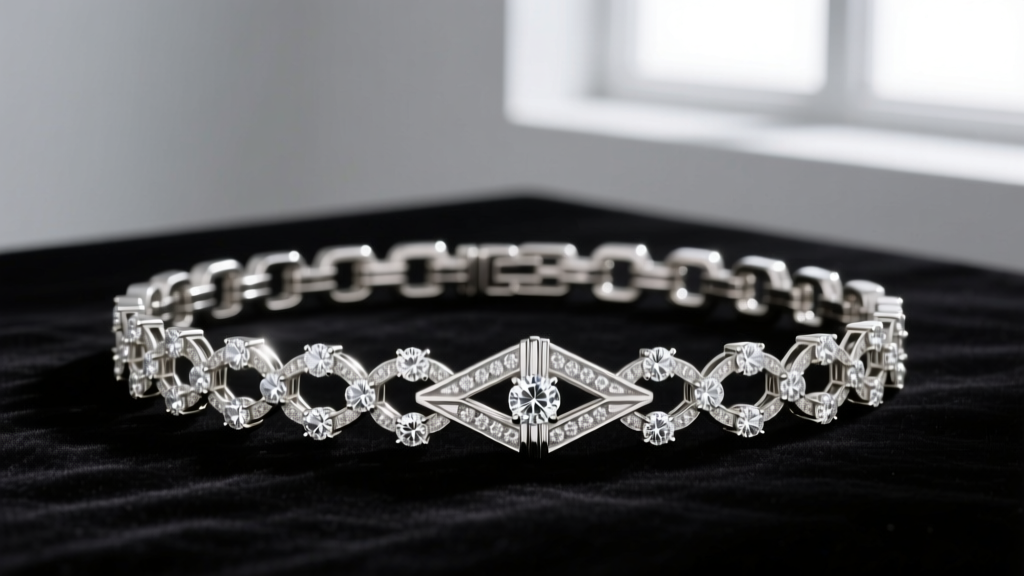
Art Deco Platinum Link Bracelet Set with 144 Round European Cut Diamonds — A Technical & Historical Appraisal
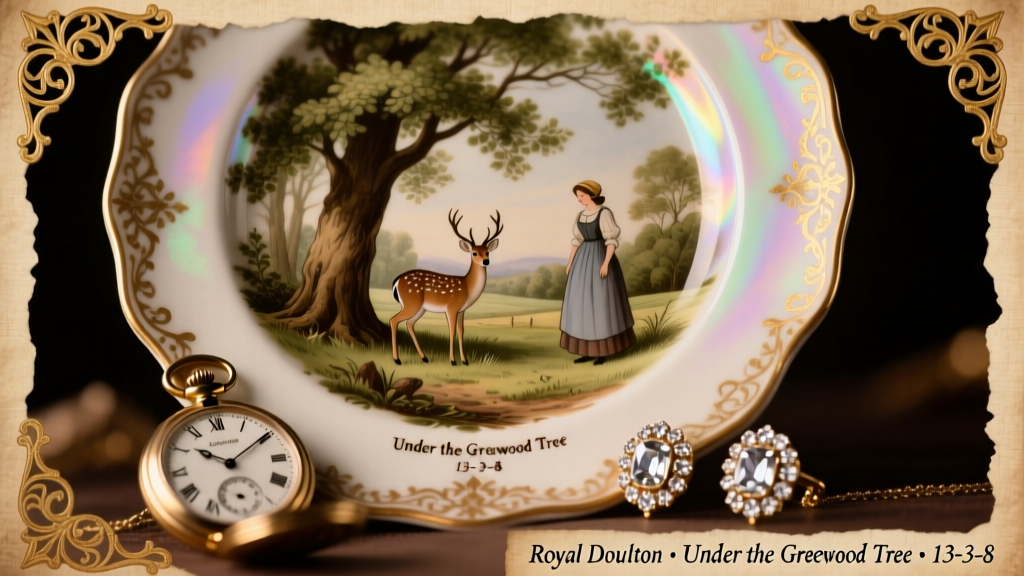
Royal Doulton 'Under the Greenwood Tree' Plate: A Collector's Guide to the 13⅜-Inch Art Deco Masterpiece

Buck Rogers Sonic Ray Gun: Plastic Battery-Operated Box Pair — A Collector’s Guide to the 1930s Sci-Fi Toy Phenomenon
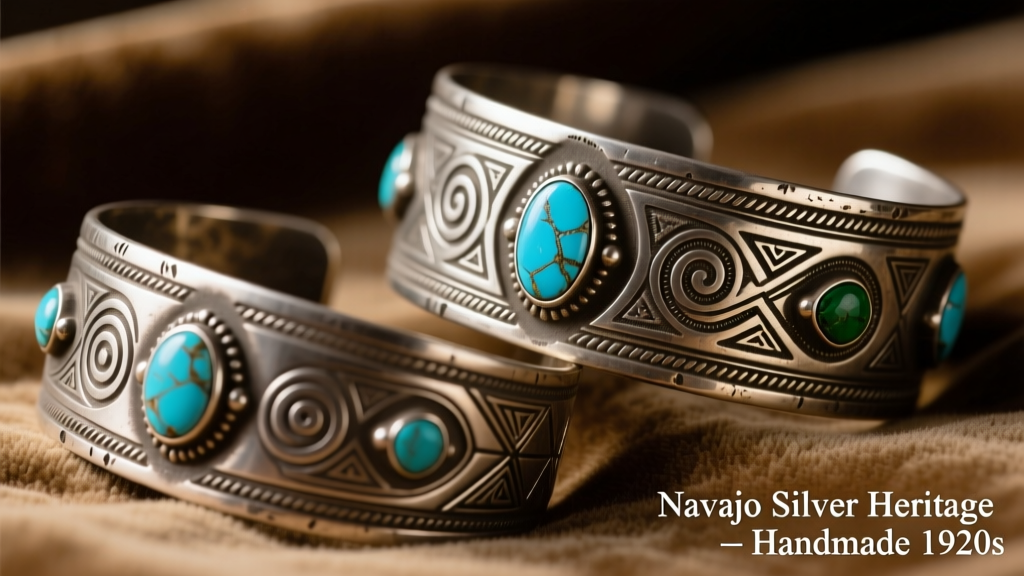
Navajo Silver Cuff Bracelets: History, Craftsmanship, and Market Value
Depression Glass Royal Lace Pitcher: Straight Sides, Ice Lip, Cobalt Blue — A Collector’s Deep Dive
Lot 1135383: A Deep-Dive Analysis of the 1972 Rolex Submariner Ref. 5513 with 'Meter First' Dial and Rare Service Replacement Bezel
The Plywood Rosewood Chair: Mid-Century Modern Craftsmanship, Material Integrity, and Auction-Grade Provenance
Tiffany & Co. '7Up Ca Ravigote' Bottle: A Rare Canadian Advertising Artifact in White, Red, and Green — 15-Inch Enamel and Brass Specimen
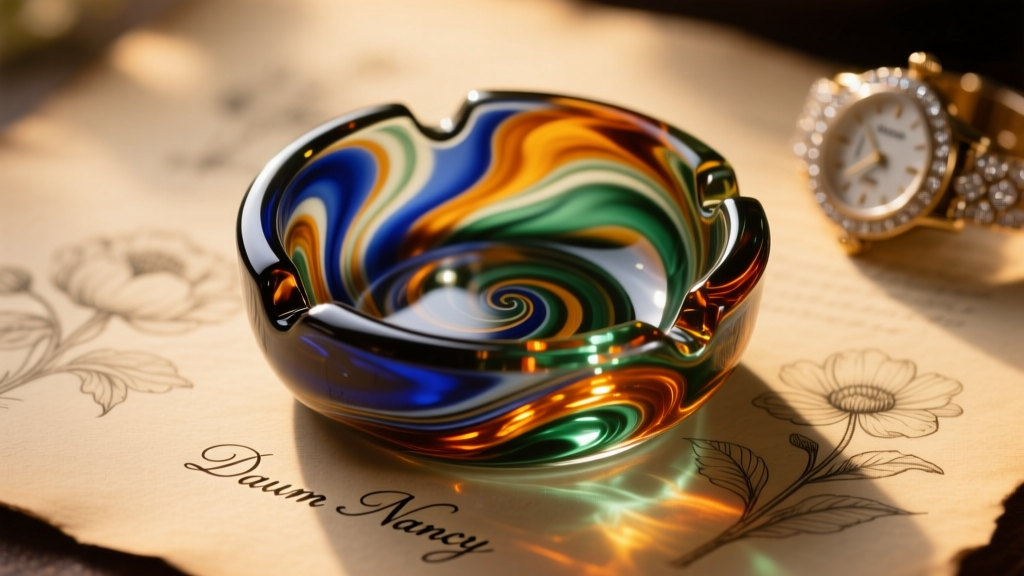
Daum Ashtray: Swirled Crystal, Signed, and the Legacy of French Art Nouveau Glassmaking