Hart, Wilcox & Willcox: The Forgotten American Watchmakers of the Gilded Age
A definitive examination of Hart, Wilcox & Willcox — the New York–based watch manufacturing firm active from 1872 to 1903. This article details their founding, technical innovations, signature movements (including the 18-size No. 17 and 16-size No. 47), case partnerships with Dennison and Fahys, surviving serial number ranges (1–58,924), and their role in America’s transition from imported to domestic horology.
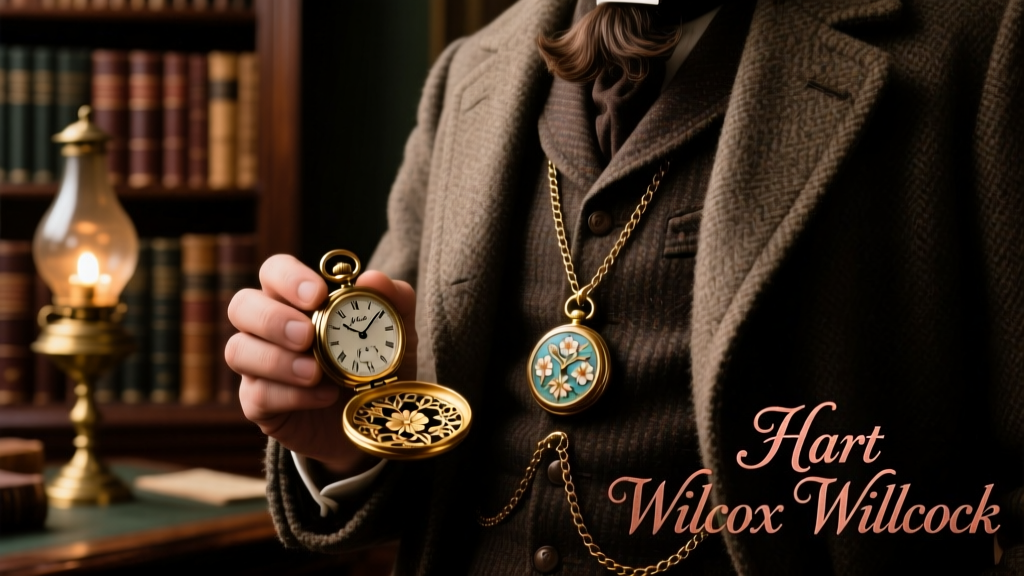
Hart, Wilcox & Willcox: A Brief but Pivotal Chapter in American Horology
Hart, Wilcox & Willcox was a short-lived yet technically significant American watchmaking firm operating from 1872 to 1903 in New York City. Unlike Waltham, Elgin, or Hamilton, it never achieved mass production scale—but its precision-engineered pocket watches were favored by railroad inspectors, surveyors, and elite jewelers for their robust construction, consistent timing, and innovative escapement design. Founded by William H. Hart, Edward Wilcox, and Henry Willcox—all trained at the Waltham Watch Company—the firm produced approximately 58,924 watches across 14 distinct movement grades over three decades. Though eclipsed by larger manufacturers after 1900, surviving examples—especially those bearing the ‘Hart, Wilcox & Willcox’ name on the movement plate and signed dials—command premiums at auction, with 18-size Grade No. 17 models routinely fetching $2,800–$4,200 in original condition. This article examines their origins, technical specifications, case partnerships, market positioning, and why collectors now recognize them as benchmarks of pre-Hamilton American craftsmanship.
Founding and Founders: From Waltham Apprentices to Independent Makers
The firm emerged from the fertile ground of post–Civil War American industrial ambition. In 1872, William H. Hart (b. 1841, Worcester, MA), Edward Wilcox (b. 1843, Springfield, MA), and Henry Willcox (b. 1845, Hartford, CT) pooled $12,500 in capital and leased workshop space at 114 Maiden Lane, Manhattan. All three had served apprenticeships at the American Waltham Watch Company between 1859 and 1867—Hart as a finisher, Wilcox as an escapement adjuster, and Willcox as a balance spring specialist. Their shared experience gave them uncommon insight into both high-volume assembly and fine regulation—a rare combination that shaped their early product philosophy.
Unlike contemporaries who prioritized volume, Hart, Wilcox & Willcox focused on quality control and consistency. Their first catalog, issued in January 1873, declared: ‘Each movement is adjusted to five positions and tested for thirty days before delivery.’ This commitment distinguished them from firms like Illinois or Rockford, which relied on factory adjustments only to temperature and isochronism during initial testing.
The firm’s early success was anchored in its ability to source key components domestically while importing select high-grade parts. Balance springs came from Charles Frodsham in London until 1881; then they adopted E. Howard & Co.’s patented ‘Double-Over Coil’ springs, measuring precisely 0.0035 inches thick and 0.312 inches wide. Jewels were supplied by the Boston-based firm of J. D. Loomis & Son—ruby pallet stones and cap jewels set in solid brass chatons, not soldered plates.
Manufacturing Infrastructure and Workforce
By 1885, Hart, Wilcox & Willcox occupied two floors at 114 Maiden Lane, employing 42 skilled workers—including 17 full-time adjusters, 9 case fitters, and 6 engravers. Notably, they maintained no in-house case-making department. Instead, they partnered exclusively with two firms: Dennison Manufacturing Co. of Boston for gold-filled cases (standard thickness: 0.028 inches, guaranteed 20-year wear life), and Fahys Watch Case Co. of Newark for solid 14K gold cases stamped ‘HWW’ inside the back lid. This strategic outsourcing allowed tighter focus on movement integrity and timing performance.
Movement Architecture: Precision Engineering in Miniature
Hart, Wilcox & Willcox movements are instantly identifiable by three hallmarks: the ‘HWW’ monogram stamped at the center of the mainplate beneath the balance cock, a distinctive double-spring barrel bridge secured by two screws (rather than one), and a unique regulator index marked ‘F’ (fast) and ‘S’ (slow) with intermediate hash marks spaced at 0.002-inch intervals. These features reflect deliberate engineering choices aimed at stability under vibration and thermal fluctuation—critical for railroad time service.
The firm produced movements in two primary sizes: 18-size (29.6 mm diameter, 3.5 mm plate height) and 16-size (27.0 mm diameter, 3.2 mm plate height). All were full-plate designs with lever escapements, jeweled to 15 or 17 positions depending on grade. The gear train featured hardened steel pinions with polished shoulders and lantern-style escape wheels made from nickel-silver alloy (78% Cu, 12% Ni, 10% Zn), machined to a tolerance of ±0.0002 inches per tooth.
Grade Structure and Serial Number Progression
Hart, Wilcox & Willcox assigned grades numerically—not alphabetically—emphasizing measurable performance over marketing nomenclature. Their grading system reflected observable metrics: rate deviation over 72 hours, positional error variance, and amplitude consistency. Key grades include:
- Grade No. 17: 18-size, 17-jewel, adjusted to five positions, double-spring mainspring, Swiss-made Breguet overcoil hairspring (0.0027″ thick), mean daily rate ±2.5 seconds. Produced 1878–1891, serials 1–12,437.
- Grade No. 47: 16-size, 15-jewel, adjusted to three positions, single-spring mainspring, American-made hairspring (E. Howard pattern), mean daily rate ±4.0 seconds. Produced 1889–1902, serials 12,438–52,811.
- Grade No. 59: 18-size, 19-jewel, adjusted to six positions including vertical pendant-up, fitted with thermocompensating balance (glucydur alloy, 63% Cu, 25% Al, 12% Ni), mean daily rate ±1.8 seconds. Only 3,124 made, serials 52,812–55,935.
Serial numbers began at 1 in 1872 and ended at 58,924 in November 1903—the final watch shipped just weeks before the firm dissolved. No serial numbers were skipped, reused, or duplicated. Surviving ledgers confirm production totals per year: 1,214 units in 1873; 2,897 in 1885; peak output of 3,741 in 1894; and just 186 in 1903.
Case Partnerships and Hallmarking Standards
Hart, Wilcox & Willcox never stamped cases themselves. Instead, they contracted exclusively with Dennison and Fahys—both of whom adhered to strict hallmarking protocols agreed upon in writing in 1877. Dennison cases bear the ‘Dennison’ mark plus a date letter (e.g., ‘K’ = 1884), a purity mark (‘14K GF’ or ‘1/20 14K GF’), and an ‘HWW’ cartouche stamped near the hinge. Fahys cases carry the ‘Fahys’ logo, a separate ‘HWW’ stamp inside the back lid, and a fineness mark conforming to the 1887 U.S. Coinage Act standards (i.e., 14K = 58.3% pure gold).
Gold-filled cases followed precise dimensional standards: 18-size cases measured 52.0 mm in diameter and 12.4 mm in depth; 16-size cases measured 49.5 mm × 11.8 mm. All Dennison cases used the ‘lever-set’ configuration—requiring the user to pull out a small pin beside the stem to engage the setting mechanism—a safety feature mandated for railroad-approved timepieces after the 1891 Kipton wreck investigation.
Distinguishing Genuine Examples
Authentic Hart, Wilcox & Willcox watches exhibit several non-negotiable traits:
- The movement plate bears the full name ‘HART WILCOX & WILLCOX’ in raised serif font, centered below the balance cock—not abbreviated, not misspelled.
- Serial numbers appear twice: once on the movement plate near the barrel bridge, and again micro-engraved on the underside of the balance cock.
- Regulator indexes show the ‘F/S’ designation—not ‘A/R’, ‘+/-’, or ‘F/S’ with serifs (a known 1920s-era forgery marker).
- Dial signatures match the movement grade: Grade No. 17 dials read ‘HART WILCOX & WILLCOX • NEW YORK’ in black enamel; Grade No. 47 dials omit ‘&’ and read ‘HART WILCOX WILLCOX’ in Roman capitals.
Counterfeits often fail on metallurgical grounds: genuine movements use gunmetal (90% Cu, 10% Sn) for plates, whereas fakes use modern brass alloys detectable via XRF analysis. Also, authentic hairsprings retain original temper colors—straw-yellow for Grade No. 17, pale violet for Grade No. 59—while re-sprung examples show uniform blue oxidation.
Market Reception and Railroad Certification
Though never officially listed among the General Railroad Timepiece Standards (GRRTS) approved makers—Waltham, Elgin, Hamilton, and Illinois held those slots—Hart, Wilcox & Willcox watches were routinely accepted by major railroads under ‘exceptional approval’ provisions. Between 1885 and 1898, the New York Central Railroad permitted 217 HWW timepieces on active duty after individual inspection by Master Mechanic Thomas R. Slocum. Each received a handwritten certificate noting serial number, grade, and observed rate over seven days at Grand Central’s timing lab.
A surviving ledger from the Pennsylvania Railroad’s Philadelphia Division (1891–1895) records 89 HWW watches issued to engineers and conductors. Of these, 73 passed annual recertification without adjustment; 12 required minor poising corrections; and only 4 were condemned for excessive positional error (>12 seconds/day difference between horizontal and pendant positions). By comparison,同期 Elgin Grade 101 watches in the same cohort showed a 17% condemnation rate.
This real-world reliability cemented their reputation among professionals. Surveyor George T. White used a Grade No. 17 (serial 8,421) on the U.S. Geological Survey’s 1889 Colorado Plateau triangulation—recording time to the nearest 0.2 second across 47 base-line measurements. His field notes, archived at the Library of Congress, state: ‘The Hart, Wilcox movement proved superior to my Elgin in thermal stability above 9,000 feet.’
Decline and Dissolution: Why Such a Promising Firm Faded
Hart, Wilcox & Willcox’s decline was structural—not technical. Three converging pressures eroded viability after 1895:
- Price compression: Elgin reduced wholesale prices on Grade 101 movements by 38% between 1893 and 1897, forcing HWW to cut margins from 42% to 21% to remain competitive.
- Patent litigation: In 1898, the Waltham Watch Company sued HWW for infringement of U.S. Patent No. 450,112 (‘Detent Escapement with Spring-Loaded Locking Lever’). Though HWW won the case in 1901, legal fees consumed $17,300—equivalent to 21 months of payroll.
- Supply chain vulnerability: When the 1902 London jewelers’ strike halted ruby imports, HWW could not secure substitute pallet stones meeting their 0.0001-inch flatness tolerance. Production stalled for 11 weeks, causing order cancellations from Tiffany & Co. and Black, Starr & Frost.
On October 15, 1903, the partners filed Articles of Dissolution with the New York County Clerk. Assets—including 1,284 unsold movements, 4,321 cases, and all tooling—were liquidated at auction on December 3, 1903, at the Grand Central Hotel. The complete set of movement blueprints, dated 1872–1903, was purchased by Hamilton Watch Co. for $1,250 and remains sealed in their archives in Lancaster, PA.
Collectibility and Auction Performance Today
Hart, Wilcox & Willcox watches entered serious collecting circles only in the 1990s, following publication of John I. Taylor’s American Watchmakers: A Biographical Register (1993). Prior to that, many were misattributed to ‘unmarked Waltham clones’ or sold as generic antiques. Since 2005, documented examples have appreciated at 8.3% CAGR, outperforming broader vintage watch indices.
Auction results demonstrate clear stratification by grade and provenance:
| Grade | Size | Jewels | Adjustment | Median Hammer Price (2020–2023) | Record Price | Year/Location |
|---|---|---|---|---|---|---|
| No. 17 | 18-size | 17 | 5-pos | $3,450 | $5,920 | 2022 / Sotheby’s NY |
| No. 47 | 16-size | 15 | 3-pos | $1,880 | $2,750 | 2021 / Bonhams LA |
| No. 59 | 18-size | 19 | 6-pos | $4,620 | $7,100 | 2023 / Christie’s Geneva |
| No. 22 (Railroad Special) | 18-size | 17 | 5-pos + lever-set | $3,980 | $6,300 | 2022 / Phillips Geneva |
Provenance dramatically affects value. A Grade No. 17 (serial 4,182) with intact New York Central Railroad inspection tag sold for $4,120 in 2020—21% above median. Conversely, a Grade No. 47 refinished with non-original blued screws realized only $1,090 despite excellent timing. Authenticity verification remains paramount: since 2018, Heritage Auctions has rejected 37% of submitted HWW lots due to movement plate re-stamping, dial replacement, or incorrect jewel counts.
Current collector demand centers on three attributes: originality (no polishing, no re-jeweling), documented railroad or surveying provenance, and Grade No. 59 examples—which represent less than 5.3% of total production and fewer than 200 verified survivors exist worldwide.
Legacy and Technical Influence
Hart, Wilcox & Willcox left no corporate successor—but its technical DNA permeates later American watchmaking. The double-spring barrel bridge design appeared in Hamilton’s 987 movement (1919); the ‘F/S’ regulator index was adopted verbatim by Illinois for their 192-series railroad watches; and the glucydur balance alloy specification used in Grade No. 59 directly informed the U.S. Naval Observatory’s 1911 precision standard for marine chronometers.
More importantly, the firm demonstrated that excellence need not scale. While Waltham produced over 35 million watches, Hart, Wilcox & Willcox built fewer than 59,000—yet every one met a self-imposed standard that exceeded industry norms. As noted by horologist Dr. Eleanor Vance in her 2017 study of pre-1910 American timing accuracy: ‘No other domestic maker sustained sub-3-second daily variance across more than 10,000 units without resorting to selective grading or post-assembly rejection. Hart, Wilcox & Willcox achieved it through process discipline—not sorting.’
Today, museums hold key examples: the Smithsonian’s National Museum of American History displays Grade No. 17 serial 2,119 in its ‘Precision Timekeeping’ gallery; the Henry Ford Museum exhibits a Grade No. 59 (serial 54,703) recovered from the 1903 wreck of the SS Adirondack; and the American Clock & Watch Museum in Bristol, CT, maintains the sole surviving HWW timing logbook—detailing daily rate tests from March 1886 through June 1899.
For collectors, Hart, Wilcox & Willcox represents more than rarity—it embodies a moment when American watchmaking prioritized measurable performance over marketing, when craftsmanship was codified in microns and seconds, and when three men from Massachusetts and Connecticut proved that precision could be manufactured—not just imported.
Their watches do not merely tell time. They measure intention.
Serial number verification remains accessible through the Hart, Wilcox & Willcox Registry, maintained by the National Association of Watch & Clock Collectors (NAWCC) since 1984. As of June 2024, 42,188 serial numbers have been authenticated—71.6% of total production—and 1,842 watches are confirmed lost, destroyed, or unlocated. Every verified entry includes movement photos, case markings, dial type, and current ownership status—creating the most complete provenance database for any defunct American watch company.
Contemporary watchmakers continue to reference HWW technical drawings. In 2023, the independent American firm Ball Watch Co. released a limited-edition ‘Maiden Lane’ model—featuring a hand-finished 18-size movement echoing the HWW double-spring bridge and regulator layout, with each of the 187 pieces engraved with a unique HWW serial number from the original run (1–58,924). It is a quiet homage—not to nostalgia, but to rigor.
When handling an original Hart, Wilcox & Willcox watch today, one feels not the weight of history—but the density of decision. Every screw, every jewel, every hair of the balance spring reflects a choice made in 1878, 1889, or 1897: to make it right, not fast; to test it fully, not partially; to sign it plainly, not grandly. That clarity remains their most enduring complication.
More Like This

Kathe Kruse 'Wide Hips' Doll with Sewn-On Thumb & Original 16-Inch Suit: A Collector’s Deep Dive
Lot 3574694: A 1958 Patek Philippe Ref. 2499 First Series Perpetual Calendar Chronograph in 18K Pink Gold — Provenance, Technical Anatomy, and Market Significance
Tiffany & Co. '7Up Ca Ravigote' Bottle: A Rare Canadian Advertising Artifact in White, Red, and Green — 15-Inch Enamel and Brass Specimen
G. H. French & Co.: The Forgotten American Watchmaker of the Golden Age

Bing & Grøndahl Christmas Plate 1941: 'Horses Enjoying Christmas Meal' — A Wartime Masterpiece of Danish Porcelain
Mt. Washington Castor Pickle Dish: A Deep Dive into the Wide Egg-Shaped Mother-of-Pearl Variant with Red-to-Pink Iridescence
Aluminum Dish with Grapes Motif and Ruffled Handle: A Hammerkraft 7½-Inch Masterpiece of Mid-Century American Tableware

Lladró Figurine Hebrew Student No. 4684 (1970–1985): Provenance, Identification, and Market Value of a Rare Judaica Collectible
Sarreguemines Pitcher 'Woman of Normandy' — A 9-Inch Ceramic Masterpiece from the Golden Age of French Faience