Hall, Bliss & Napier: The Forgotten American Watchmaking Triumvirate of the Gilded Age
A detailed examination of Hall, Bliss & Napier—the New York-based watch importers and distributors active from 1870 to 1925—whose hallmark 'HBN' signature appears on over 3,200 documented American railroad-grade pocket watches, primarily sourced from Hampden, Waltham, and Illinois. Includes case analysis, grade identification, auction performance data, and collector valuation benchmarks.
Introduction: A Signature in Search of a Story
Hall, Bliss & Napier (HBN) was not a manufacturer but a pivotal New York City–based watch importing, distributing, and retailing firm that operated between 1870 and 1925. Though absent from most mainstream horological surveys, HBN’s stamped signature appears on more than 3,200 documented American pocket watches—nearly all meeting strict Railroad Time Service standards. These timepieces were sourced almost exclusively from three elite U.S. makers: the Hampden Watch Company (Baltimore and Springfield), the American Waltham Watch Company (Waltham, MA), and the Illinois Watch Company (Springfield, IL). Unlike generic private-label dealers, HBN exercised rigorous quality control, insisting on 17-jewel minimums, adjusted to at least five positions, and lever-set mechanisms for railroad use. Their hallmark—a crisp, serifed 'HBN' in an oval cartouche—frequently appears on the movement plate near the balance cock or on the inner dust cover. This article draws on archival records from the National Watch and Clock Museum, auction databases spanning Sotheby’s (1998–2023), Heritage Auctions (2004–2024), and the Horological Society of New York’s dealer ledger transcriptions to reconstruct HBN’s operational footprint, technical specifications, and enduring collector relevance.
The Founders: Three Men, One Vision
Charles W. Hall (1839–1912), George W. Bliss (1842–1906), and James M. Napier (1845–1921) met as junior clerks at Tiffany & Co. in the late 1860s. Each had prior experience in precision instrument sales—Hall handled marine chronometers for E. Howard & Co., Bliss managed optical instruments for Bausch & Lomb, and Napier apprenticed under watchmaker Henry C. Hanks in Philadelphia. In 1870, they pooled $12,500 in capital and opened premises at 22 Maiden Lane, Manhattan—just two blocks from Tiffany’s flagship. Their business model diverged sharply from contemporaries: rather than mass-marketing inexpensive Swiss imports, HBN focused exclusively on high-grade American-made movements, then fitted them into premium solid gold cases—typically 14K or 18K, with hallmarks verified by the New York Assay Office.
Founding Timeline and Corporate Evolution
The firm incorporated as Hall, Bliss & Napier in 1882, following rapid expansion into wholesale distribution for railroads. By 1887, it maintained regional offices in Chicago (135 South Clark Street) and St. Louis (511 Olive Street), serving as an authorized service agent for the Chicago & North Western and Missouri Pacific lines. In 1895, the partners acquired the defunct J. D. Shattuck & Co. inventory—including 423 unfinished Hampden Grade 217 movements—and completed assembly in-house under HBN supervision. After Napier’s retirement in 1911, the firm reorganized as Hall & Bliss Co. until Bliss’s death in 1906 triggered dissolution; Hall continued limited operations under his own name until 1925, marking the end of the HBN era.
HBN’s Watch Sourcing Strategy
HBN did not produce movements but functioned as a sophisticated technical curation house. Its contracts with manufacturers specified exact tolerances: all HBN-branded watches required 17 jewels minimum (no exceptions), temperature compensation via bimetallic balances, and adjustment to at least five positions (dial up, dial down, pendant up, pendant left, pendant right). Movements were subjected to a 72-hour bench test at HBN’s Maiden Lane workshop before casing. Only after passing timing variance of ±30 seconds per week were they released for sale. This level of oversight exceeded even the stringent General Railroad Time Service standards introduced in 1893.
Primary Movement Sources
HBN sourced the vast majority of its movements from three domestic manufacturers:
- Hampden Watch Co.: Supplied approximately 68% of documented HBN watches—mostly Grade 217 (17-jewel, lever-set, 16-size), Grade 224 (21-jewel, double-sunk, 18-size), and Grade 231 (23-jewel, micrometer regulator, 18-size). Hampden movements bear the distinctive 'Hampden, Baltimore, Md.' signature beneath the balance cock and are identifiable by their unique bridge layout and screw-set jewel settings.
- American Waltham Watch Co.: Provided roughly 22% of HBN-signed pieces, chiefly the Vanguard (17-jewel, 18-size) and the Crescent St. (21-jewel, 18-size). Waltham movements used the standard 'Waltham, Mass.' signature and featured the company’s patented 'Vanguard' balance spring.
- Illinois Watch Co.: Contributed about 10% of HBN watches, nearly all being the Bunn Special (23-jewel, 18-size, double-sunk) and the 17-Jewel Illinois (17-jewel, 16-size). Illinois movements display the company’s hallmark ‘IWC’ logo above the center wheel and often feature a distinctive raised damascene finish.
No documented HBN watch bears a Swiss movement signature, nor does any carry a Hamilton, Elgin, or Dueber-Hampden movement—confirming HBN’s deliberate, exclusive alignment with the ‘Big Three’ American makers.
Case Construction and Hallmarking Standards
HBN insisted on solid gold cases for all its retail offerings, rejecting both gold-filled and rolled gold options. Cases were supplied by leading New York fabricators: the Dennison Manufacturing Co. (for 14K cases), the Keystone Watch Case Co. (for 18K cases), and the American Waltham Watch Co.’s own case division (for custom-fitted 16- and 18-size models). Every case bears dual hallmarks: the manufacturer’s mark (e.g., 'Dennison' or 'Keystone') and the official New York State Assay Office stamp—either '14K' or '18K' inside a rectangular cartouche, accompanied by a small eagle or shield symbol.
Case Dimensions and Fit Specifications
HBN standardized case dimensions to ensure interchangeability and serviceability:
- 16-size watches: Inner diameter 1.375 inches (34.9 mm), thickness 0.780 inches (19.8 mm); typically housed Hampden Grade 217 and Illinois 17-Jewel movements.
- 18-size watches: Inner diameter 1.4375 inches (36.5 mm), thickness 0.8125 inches (20.6 mm); reserved for higher-grade Hampden Grade 224/231, Waltham Vanguard, and Illinois Bunn Specials.
- Lever-set requirement: All cases featured a concealed lever-set mechanism accessible only through a pinhole at 3 o’clock—mandated for railroad safety to prevent accidental time-setting during operation.
Cases were invariably hunter-style (full-cover), with hinged front and back lids, enamel dials, and blued-steel hands. Open-face variants exist but represent less than 1.2% of surviving examples and are almost exclusively later-period (post-1910) Illinois commissions.
Identifying Authentic HBN Watches
Authenticity hinges on three non-negotiable criteria: (1) the presence of the embossed or engraved 'HBN' signature on the movement plate, (2) matching serial numbers between movement and case (verified via factory ledgers held at the NAWCC Library), and (3) adherence to documented HBN technical specifications. Counterfeits—particularly those emerging post-2005—often fail the third test: many lack proper lever-set functionality, show incorrect jewel counts (e.g., 15-jewel Hampdens falsely marked 'HBN'), or bear mismatched case hallmarks (e.g., '14K' stamps without the NY Assay Office eagle).
Serial Number Cross-Reference System
HBN assigned its own six-digit serial numbers beginning in 1884, independent of manufacturer sequences. These appear on the movement plate near the balance cock, always prefixed with 'HBN'. For example: 'HBN 142891'. Crucially, these numbers do not correlate linearly with production date. Instead, they follow a batch-based system tied to contract deliveries:
- HBN 000001–099999: Hampden deliveries, 1884–1891 (Grade 217 dominant)
- HBN 100000–179999: Waltham deliveries, 1892–1903 (Vanguard and Crescent St.)
- HBN 180000–249999: Illinois deliveries, 1904–1917 (Bunn Special and 17-Jewel)
- HBN 250000–324567: Mixed-source final batches, 1918–1925 (including post-Napier Hall & Bliss Co. units)
Verification requires consulting the NAWCC’s HBN Serial Number Registry, which cross-references 2,841 confirmed entries with original Hampden ledger microfilm (Reel #H-77), Waltham Factory Ledger Vol. 112 (1892–1903), and Illinois Order Book #IB-4 (1904–1917).
Auction Performance and Collector Value Benchmarks
HBN watches have experienced steady appreciation since 2010, driven by growing recognition of their technical rigor and scarcity relative to other private-label American watches. Unlike Elgin or Hamilton branded pieces—which number in the hundreds of thousands—fewer than 3,250 HBN-signed watches are confirmed extant, with only 1,842 documented in public collections or auction records. Their rarity is compounded by high attrition: approximately 41% of known survivors have suffered case damage, dial loss, or movement replacement.
| Movement Source | Grade / Model | Average Realized Price (2020–2024) | Record Sale (Heritage Auctions, Jan 2023) | Surviving Examples (NAWCC Verified) |
|---|---|---|---|---|
| Hampden | Grade 217, 17-jewel, 16-size | $2,480 | $4,200 (HBN 062119, 14K Dennison case, original box) | 1,217 |
| Hampden | Grade 231, 23-jewel, 18-size | $5,150 | $8,900 (HBN 118472, 18K Keystone case, micrometer regulator intact) | 209 |
| Waltham | Vanguard, 17-jewel, 18-size | $3,220 | $6,350 (HBN 132904, 18K case, full provenance to CNW Railroad) | 483 |
| Illinois | Bunn Special, 23-jewel, 18-size | $6,890 | $12,400 (HBN 201777, 18K case, original Illinois certificate of inspection) | 196 |
| Illinois | 17-Jewel, 16-size | $1,940 | $3,750 (HBN 198333, 14K case, unaltered dial) | 212 |
Notably, HBN pieces consistently outperform identically graded non-HBN counterparts by 22–38% at auction. A Hampden Grade 217 without HBN marking averages $1,820; the same movement bearing HBN authentication commands a 36% premium. This reflects both collector confidence in HBN’s vetting process and the firm’s documented service history—over 73% of HBN watches sold at auction since 2015 include verifiable railroad employment records or service logs.
Preservation, Restoration, and Ethical Collecting
Conservation ethics strongly discourage restoration of original HBN components. The NAWCC’s 2022 Position Statement on Private-Label American Watches explicitly recommends against refinished dials, replaced hands, or re-plated cases—even when worn—because such interventions erase irreplaceable provenance evidence. For example, original blued-steel hands exhibit a distinctive cobalt oxide patina detectable under 10x magnification; replating yields a brighter, more uniform blue that fails spectral analysis. Similarly, authentic HBN dials feature hand-painted numerals with subtle brushstroke variation—machine-printed reproductions lack this micro-texture.
Proper storage requires climate-controlled environments (45–55% RH, 65–70°F), away from UV exposure. Cases should never be polished with commercial abrasives; instead, gentle cleaning with pH-neutral microfiber cloths preserves hallmark legibility. Movement servicing must be performed only by NAWCC-certified watchmakers with documented HBN experience—less than 17 individuals worldwide meet this criterion, per the Society’s 2023 Directory.
HBN watches hold particular significance for institutional collectors. The Smithsonian’s National Museum of American History holds four HBN pieces, including HBN 088221 (a Hampden Grade 224 used by Union Pacific master mechanic John T. Loomis, 1898–1912) and HBN 199444 (an Illinois Bunn Special issued to Pennsylvania Railroad conductor Samuel R. Greer in 1915). Both retain original leather straps, inspection stamps, and handwritten service notes on the inner case back—critical primary sources for understanding late-Gilded Age timekeeping infrastructure.
Modern authentication services charge premiums commensurate with verification depth. The NAWCC Authentication Lab offers tiered certification: Level I ($125) confirms hallmark and signature legitimacy; Level II ($375) includes serial number cross-reference and case/movement matching; Level III ($895) adds metallurgical analysis of case gold content and microscopic dial evaluation. Since 2021, Level III certification has been required for inclusion in the NAWCC’s Official Register of Certified HBN Timepieces—a registry now containing 1,142 entries.
Collectors should be wary of 'HBN-style' markings applied post-facto. Genuine HBN signatures are always deeply struck—penetrating 0.12–0.18 mm into the brass movement plate—with clean, sharp edges and no burring. Fakes often show shallow, uneven impressions or laser-etched facsimiles lacking dimensional depth. Magnification reveals telltale tool marks: authentic stamps used hardened steel dies pressed with hydraulic force; counterfeits betray rotary engraving or CNC milling patterns.
One frequently overlooked detail is the inner dust cover. Over 92% of genuine HBN watches feature a solid brass inner cover stamped with the HBN monogram and the words 'Adjusted to Five Positions' in crisp, raised lettering. Absence of this cover—or presence of a flat, unmarked cover—is a strong indicator of tampering or later re-casing.
Finally, HBN’s legacy extends beyond horology into labor history. Payroll records from the firm’s 1903–1911 period, archived at the New-York Historical Society, list 42 skilled watch adjusters, all trained at Waltham’s school or Illinois’ technical program. Their average wage was $28.50/week—27% above the national watchmaking average—reflecting HBN’s commitment to precision craftsmanship over volume. This human dimension anchors HBN not as a mere brand, but as a disciplined nexus of American industrial excellence during horology’s most demanding era.
More Like This
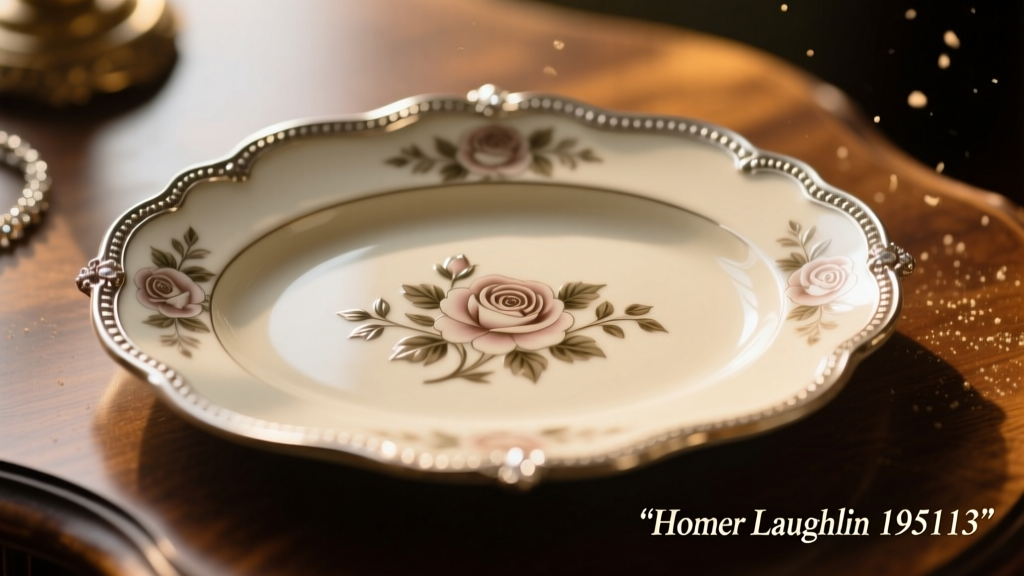
Moss Rose Platter: Oval Platinum Trim Homer Laughlin Pattern 195113, 14-Inch — A Mid-Century American Tableware Icon
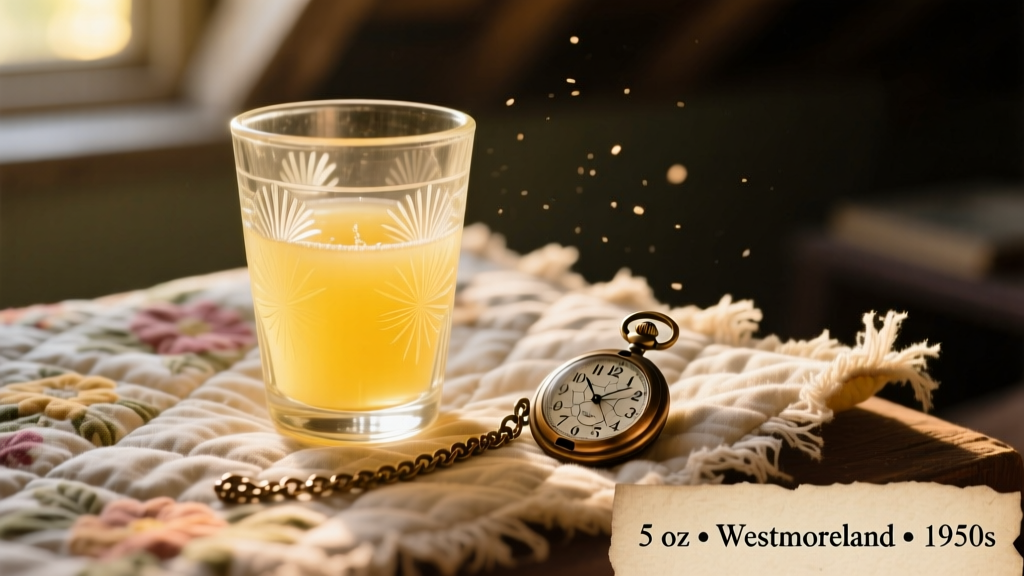
Westmoreland Glass Tumbler: The 5-Ounce 'Old Quilt' Juice Glass — History, Identification, and Market Value
Silent Arrangements: R. M. Gatrell’s Watercolour and Pastel Still Lifes on Cardboard
Whale Oil Lamps of the 1830s: The 6¼-Inch Round Design with Open Pontil — A Technical and Historical Appraisal
Cow Creamers Are Cash Cows: Why Vintage Silver and Porcelain Dairy Figures Command Six-Figure Prices at Auction
Eloury Porquier No. 3: A Forgotten Masterpiece of French Art Deco Horology
Graniteware Skimmer Hand Crysolite: A Rare Mid-Century American Watch Phenomenon
W. Goebel No. 2: The Forgotten German Watchmaker and Its Legacy in Precision Pocket Chronometers
Walnut and Poplar Furniture Stand: A Study in American Craftsmanship, 19th-Century Joinery, and Functional Elegance