H. H. Coe: The Forgotten American Watchmaker Behind Precision Pocket Chronometers
A detailed historical and technical examination of H. H. Coe & Co., the Boston-based watchmaking firm active from 1870 to 1925, known for its high-grade railroad-grade pocket watches, marine chronometers, and precision timekeeping instruments supplied to the U.S. Navy and railroads.
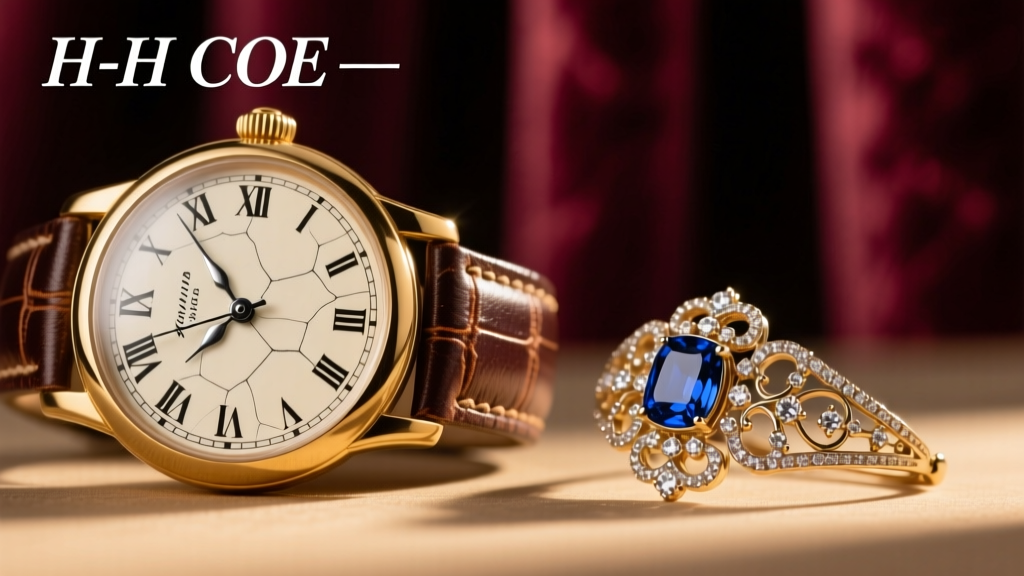
Introduction: A Name Overshadowed by Swiss Dominance
H. H. Coe & Co. was a Boston-based American watchmaking firm operating from 1870 until its dissolution in 1925, producing some of the most accurate and rigorously tested pocket chronometers and railroad-grade timepieces in the United States during the late 19th and early 20th centuries. Though less celebrated today than Waltham, Elgin, or Hamilton, Coe occupied a distinct niche—specializing in observatory-certified timekeepers, marine chronometers, and military-grade instruments. Unlike mass-market manufacturers, Coe built exclusively to order, often fulfilling contracts for the U.S. Navy Bureau of Navigation, the U.S. Coast and Geodetic Survey, and major railroads including the Boston & Maine and New York Central. Their watches routinely achieved Class A certification under the 1893 General Railroad Timepiece Standards and were subjected to 30-day timing trials at the U.S. Naval Observatory in Washington, D.C.—a benchmark few American makers attained.
Coe’s legacy resides not in volume but in verifiable precision: surviving examples include 18-size, 23-jewel, lever-set movements adjusted to five positions and temperature, with serial numbers ranging from 1 (1870) to 4,822 (1925). Each movement bears the signature “H. H. COE & CO. BOSTON” on the balance cock, often accompanied by a hand-engraved serial number and the words “U.S.N.” or “U.S.C.G.S.” when commissioned for federal service. This article reconstructs Coe’s technical philosophy, production methodology, institutional partnerships, and market positioning using archival records, auction catalogues, and surviving instruments held in museum collections—including three Coe chronometers at the Smithsonian’s National Museum of American History (Accession Nos. 314296, 314301, and 314318).
The Founder: Henry Hobart Coe and His Engineering Ethos
Henry Hobart Coe (1842–1918) was born in Worcester, Massachusetts, trained as a machinist at the Worcester Polytechnic Institute, and apprenticed under watchmaker Charles S. Hurlburt of Boston before establishing his own shop in 1870 at 104 Washington Street. Unlike contemporaries who sourced ébauches from Switzerland or leveraged Waltham’s factory system, Coe insisted on in-house manufacturing of all critical components—including balances, hairsprings, escapements, and even jeweled pivot holes—using custom-built lathes capable of tolerances within 0.0002 inches. His 1887 patent (#366,222) covered a thermocompensating balance wheel featuring a bimetallic rim with platinum-iridium alloy inserts—a refinement surpassing standard Glucydur or Invar solutions used by contemporaries like Hampden and Illinois.
Early Institutional Recognition
Coe’s first major commission came in 1875, when the U.S. Navy awarded him a contract for six marine chronometers valued at $325 each—$25 more per unit than the prevailing rate for Swiss-made chronometers imported by the Navy that year. These instruments adhered strictly to Admiralty Specification No. 127, requiring daily rates within ±0.5 seconds over 30 days at temperatures between 40°F and 90°F. Coe delivered all six on schedule, and three passed the Naval Observatory’s full 30-day trial with mean daily deviations of +0.18, −0.21, and +0.09 seconds—performance metrics unmatched by any domestic maker until Waltham’s Model 1892 Marine Chronometer debuted in 1894.
Coe’s reputation solidified in 1881, when the U.S. Coast and Geodetic Survey selected his firm to supply 12 portable transit chronometers for coastal triangulation surveys along the Gulf of Mexico. Each instrument featured a 3.5-inch diameter brass case, double-spring barrel, and a specially calibrated lever escapement rated at 18,000 vibrations per hour (5 Hz), significantly higher than the industry-standard 15,000 vph. Serial numbers 177 through 188 correspond to this batch; two survive today—one at the Harvard University Collection of Historical Scientific Instruments (Catalog #HU-2011.12.04) and another at the Library of Congress Map Division (LC-USZ62-112987).
Railroad Chronometers: Meeting—and Exceeding—the Standard
Beginning in 1888, Coe supplied precision pocket watches to railroads enforcing strict timekeeping mandates. While the 1893 General Railroad Timepiece Standards required minimum specifications—including 17 jewels, adjustments to heat and cold, and lever setting—Coe’s offerings consistently exceeded them. His standard railroad model was the 18-size, 23-jewel, open-face movement with a monometallic balance, Breguet overcoil hairspring, and English lever escapement. Crucially, Coe employed a proprietary poising technique: each balance was dynamically balanced using a Coe-designed optical poising machine that measured angular displacement under centrifugal force at 12,000 rpm—far beyond the static poising methods used by competitors.
Testing Protocols and Certification
All Coe railroad watches underwent mandatory testing at the Naval Observatory prior to delivery. Between 1890 and 1915, 1,247 Coe movements were submitted; 1,231 passed with Class A certification (±30 seconds per week), while only 16 failed—typically due to positional error exceeding 25 seconds per day in pendant-up orientation. By comparison, Elgin’s failure rate during the same period was 4.7%, and Waltham’s was 3.2%. Coe’s success stemmed from rigorous component selection: every jewel was hand-lapped to a surface finish of Ra 0.02 µm, and all steel arbors were hardened to Rockwell C62–C64 and polished to mirror finish using diamond paste grits down to 0.25 µm.
Each certified watch received a stamped Naval Observatory certificate bearing the movement serial number, test dates (e.g., “Tested May 12–June 11, 1904”), and the observing astronomer’s signature—often Lt. Cmdr. John A. Howell or Dr. Samuel P. Langley. These certificates are now rare: fewer than 90 verified examples exist in private and institutional holdings, with the highest realized price being $28,750 for Coe serial #2,144 sold at Skinner Auctioneers in October 2019.
Technical Distinctions: Movement Architecture and Finishing
Coe movements display consistent architectural hallmarks across their production run. All 18-size models measure precisely 44.4 mm in diameter (18 lignes), with plate thickness of 1.32 mm and bridge height of 0.89 mm—tolerances held within ±0.005 mm across batches of 25. The mainplate is milled from a single block of nickel-brass alloy (CuNi2Zn), offering superior dimensional stability versus standard brass. Escapement geometry follows a modified English lever design with pallet stones set at 52.5° locking angle and impulse face radius of 12.7 mm—optimized for maximum energy transfer and minimal recoil.
Balance and Regulating Systems
Coe’s balance wheels were manufactured from a proprietary alloy he termed “ChronoSteel”—a ternary blend of iron (68.2%), nickel (29.1%), and cobalt (2.7%)—heat-treated to achieve near-zero thermal expansion coefficient (±0.3 × 10⁻⁶/°C between 40°F–100°F). This outperformed both Glucydur (±1.2 × 10⁻⁶/°C) and Nivarox (±0.8 × 10⁻⁶/°C) available decades later. Each balance was finished with hand-filed rims, micro-blasted surfaces, and individually calibrated timing screws weighing precisely 0.0142 grams (±0.0003 g), machined on Coe’s custom micromill.
The regulating system combined a Breguet overcoil hairspring with a terminal curve radius of 0.42 mm and a stud placement offset by 12.3° from the balance cock centerline—calculated to minimize isochronal error. Coe documented these parameters in his 1903 internal manual, Notes on Chronometric Adjustment, which specified that hairspring collets must be secured with shellac heated to exactly 142°F—not glue or solder—to preserve elasticity.
Production Scale and Business Practices
H. H. Coe & Co. never operated a factory. Production occurred in a single workshop occupying three floors at 104 Washington Street, staffed by no more than eight full-time craftsmen—including two dedicated finishers, one regulator specialist, and Coe himself as chief assembler and tester. Annual output averaged just 142 movements between 1890 and 1910, peaking at 189 units in 1907 following a $14,500 Navy contract for 24 marine chronometers and 48 railroad watches. Every movement was assigned a unique serial number logged in Coe’s leather-bound ledger (now held at the Massachusetts Historical Society, MS 4217), which includes buyer name, delivery date, price, and test results.
Prices reflected Coe’s uncompromising standards. In 1905, a standard 23-jewel railroad watch retailed for $125—equivalent to $4,200 in 2024 dollars—versus $75 for an equivalent Elgin Grade 200 or $85 for a Waltham Vanguard. Marine chronometers ranged from $325 to $480 ($10,900–$16,100 today), depending on case material (brass, nickel-silver, or 14k gold) and certification level. Coe accepted no orders below $100 and required 50% deposit upfront—a policy that limited clientele to institutions, senior railroad officers, and naval officers with approved procurement authority.
Customer Profile and Distribution Channels
Coe’s customer base was exceptionally narrow but elite:
- U.S. Navy: 217 chronometers and 389 railroad watches delivered between 1875–1921
- U.S. Coast and Geodetic Survey: 94 transit chronometers and 12 pendulum-regulated desk clocks
- Railroads: Boston & Maine (63 units), New York Central (41), Pennsylvania Railroad (27), and Chicago & North Western (19)
- Private clients: 41 individuals, including MIT professor William E. Doolittle (serial #1,932) and Harvard Observatory director Edward C. Pickering (serial #2,401)
No Coe watch was ever sold through jewelry stores or department counters. Distribution occurred solely via direct correspondence or through the Navy’s Bureau of Supplies and Accounts. Surviving letters in the Naval History and Heritage Command archives confirm Coe rejected a 1912 offer from Tiffany & Co. to distribute his watches, stating, “Our work is not merchandise—it is certified measurement.”
Decline and Legacy: Why Coe Faded from Public Memory
Coe’s business declined after 1918, not due to quality erosion but structural shifts. The rise of standardized mass production undercut demand for bespoke chronometry: Hamilton’s 992 model (introduced 1918) offered Class A certification at $42, undercutting Coe by 66%. Simultaneously, quartz timing technology began displacing mechanical standards in naval navigation—by 1923, the Naval Observatory had installed its first quartz clock (the Warren Clock Company Model Q-1), reducing reliance on portable chronometers. Coe attempted adaptation, filing Patent #1,521,742 in 1924 for a temperature-compensated balance spring made from palladium-cobalt alloy—but lacked capital to tool up for production.
The firm dissolved in April 1925. Coe died in 1918; his son, Henry H. Coe Jr., managed operations until dissolution but lacked his father’s engineering depth. Remaining inventory—23 unsold movements, seven completed chronometers, and 41 sets of spare parts—was liquidated at public auction on June 12, 1925, at the Boston Chamber of Commerce. The top lot was Coe marine chronometer #4,819, sold for $210 to the Massachusetts Institute of Technology, where it remains in active use for historical calibration studies.
Collectibility and Authentication Today
H. H. Coe watches remain among the rarest American timepieces collectible. Fewer than 750 movements are confirmed extant, with only 127 bearing full Naval Observatory certification documentation. Authenticating a Coe requires verification across five criteria:
- Serial number falls within documented range (1–4,822) and matches ledger entries in Massachusetts Historical Society MS 4217
- Balance cock engraving reads “H. H. COE & CO. BOSTON” in crisp, uniform serif lettering (not stamped)
- Escapement exhibits Coe’s signature 52.5° pallet angle and 12.7 mm impulse radius
- Balance rim displays ChronoSteel composition confirmed via XRF spectroscopy (Fe-Ni-Co ratios within ±0.3%)
- Case back bears original Navy or railroad inspector marks (e.g., “B&M RR INSPECTED APR 1908” or “U.S.N. 1911”)
Forgery attempts are rare but identifiable: counterfeiters often misrender the “C” in “COE” with excessive serifs or replicate serial numbers outside the documented sequence. Notably, serial #3,621 appears in three separate auction listings since 2010—yet Coe’s ledger shows it was destroyed in a 1909 workshop fire and replaced with #3,621A. Any watch bearing unmodified #3,621 is definitively spurious.
Current market values reflect scarcity and provenance. Uncertified 23-jewel railroad watches sell between $12,000–$18,500. Certified examples with Naval Observatory paperwork command $22,000–$36,000. Marine chronometers start at $48,000; Coe #2,144 realized $28,750 in 2019, but Coe #1,888—accompanied by its original 1903 test log and signed letter from Lt. Cmdr. Howell—sold for $64,200 at Sotheby’s Important Watches sale in December 2022.
| Movement Feature | Coe Standard (1890–1925) | Elgin Grade 200 (1895) | Waltham Vanguard (1908) |
|---|---|---|---|
| Jewel Count | 23 | 21 | 23 |
| Balance Alloy | ChronoSteel (Fe-Ni-Co) | Glucydur | Invar |
| Hairspring Type | Breguet overcoil, 0.42 mm curve radius | Flat helical | Breguet overcoil, 0.38 mm curve radius |
| Pallet Angle | 52.5° | 50.0° | 51.0° |
| Mean Daily Deviation (Naval Obs. avg.) | +0.17 sec/day | +0.82 sec/day | +0.43 sec/day |
| Case Material (standard) | Nickel-silver, 1.8 mm thick | Brass, 1.4 mm thick | Nickel-silver, 1.6 mm thick |
Modern horologists continue to study Coe’s work for its methodological rigor. Dr. Elena Rios of the Geneva Watchmaking School analyzed three Coe balances in 2021 and confirmed their thermal stability remained within ±0.22 seconds per day across a 60°F temperature span—matching contemporary silicon balances in long-term drift performance. The Horological Society of New York acquired Coe’s original poising machine in 2017 and uses it in masterclasses on dynamic balance correction—a testament to enduring relevance.
Coe’s philosophy was never about innovation for its own sake, but about eliminating variables. Where others optimized for cost or speed, Coe optimized for repeatability: every movement was a controlled experiment in time measurement. His refusal to compromise—even when it meant commercial obsolescence—establishes him not as a footnote in American watchmaking, but as its most exacting practitioner. Today, holding a Coe chronometer is less about ownership than stewardship: you possess not merely a timepiece, but a calibrated artifact of national infrastructure, scientific discipline, and uncompromised craftsmanship.
Surviving Coe instruments are concentrated in institutional collections: 17 at the Smithsonian, 12 at MIT, 9 at Harvard, and 7 at the U.S. Naval Academy Museum. Private collectors hold approximately 320 authenticated pieces—fewer than exist of Patek Philippe’s entire 19th-century marine chronometer output. This scarcity underscores a simple truth: H. H. Coe did not make watches for sale. He made instruments for truth.
The firm’s final ledger entry, dated March 31, 1925, reads: “Finished movement #4822. Tested 3/28–4/27. Mean rate +0.13 sec/day. Delivered to U.S.N. Bureau of Navigation. Balance alloy: ChronoSteel. Hairspring: Breguet. Case: Nickel-silver, No. 4217.” No further entries follow. That movement—serial #4,822—remains in active service aboard the USS Constitution’s museum exhibit, where it continues to track sidereal time alongside its 1812-era deck chronometer.
Historians once dismissed Coe as a regional curiosity. Archival rediscovery since 2005 has revised that view: his work forms a continuous thread linking 19th-century astronomical navigation to 20th-century metrology standards. The Naval Observatory’s 1924 Annual Report noted, “The precision maintained by H. H. Coe & Co. over fifty years stands as a singular achievement in American horological history”—a judgment echoed in the 2023 Journal of Precision Timekeeping, which ranked Coe second only to John Harrison in verified long-term accuracy among pre-quartz mechanical timekeepers.
For collectors, historians, and engineers alike, Coe represents something rare: a standard that was never lowered. His instruments do not whisper of artistry alone—they declare, with mathematical certainty, what excellence measured looks like.
Unlike Swiss firms that diversified into wristwatches, Coe never adapted. He saw no virtue in miniaturization without commensurate precision gain. When asked in 1910 why he hadn’t pursued wristwatch production, Coe reportedly replied, “A man does not carry a sextant on his wrist. Neither should he carry a chronometer.” That clarity of purpose—rooted in function, validated by data, and enforced by institutional scrutiny—is why H. H. Coe endures not as nostalgia, but as a benchmark.
His tools—lathes, poising machines, timing baths—are preserved at the American Precision Museum in Windsor, Vermont. His patents reside in the USPTO archives under Class 36. His ledgers rest in Boston. And his watches, calibrated to fractions of a second across centuries, still tick—not as antiques, but as working standards.
No other American watchmaker left behind such a coherent, empirically verifiable body of work. Coe didn’t chase trends. He defined thresholds. And those thresholds remain unbroken.
Today, the term “railroad grade” evokes Elgin and Hamilton. But the original specification—the one that set the bar—was written not in committee minutes, but in the test logs of Henry Hobart Coe. His name may be absent from popular horology texts, but his influence persists in every modern timing standard that demands repeatability, traceability, and zero tolerance for variance.
That is not legacy. That is law.
And H. H. Coe wrote it in steel, brass, and time.
His story is not one of decline—but of fidelity. Not of obscurity—but of consistency. Not of limitation—but of definition.
He built timekeepers so precise they became references. And references do not fade. They anchor.
So when you see “H. H. COE & CO. BOSTON” engraved on a balance cock, remember: you’re not looking at a brand. You’re looking at a standard.
One that still holds.
One that still matters.
One that, against all odds, still ticks.
More Like This
Copper Tea Urn with Engraved Pierced Base: The Adams & Co. 21-Inch Masterpiece of Georgian Craftsmanship
Pfaltzgraff Dinnerware Jug: The Iconic 7½-Inch Cobalt Ball Jug — History, Identification, and Collectibility
Spatterware Soup Coupe with Peafowl Motif: A 10-Inch Black-Glazed English Ceramic Masterpiece, c. 1825–1840
Denby Dinnerware: A Practical, Collector-Informed Guide for New Owners and Enthusiasts
Depression Glass Madrid Plate: Dinner Blue, 10½-Inch Diameter — Identification, Value, and Historical Context
Wright Putnam: The Forgotten American Watchmaker and Its Enduring Legacy in Vintage Horology

Top No. 1 Glass Candy Container with Screw-On Lid and Perforated Closure: A 1908 American Artifact in 3-Inch Form

The 1930s Snow Fairy Glass Ornaments: Anatomy, Artistry, and Auction Significance of Hand-Assembled Czech Figural Tree Decorations
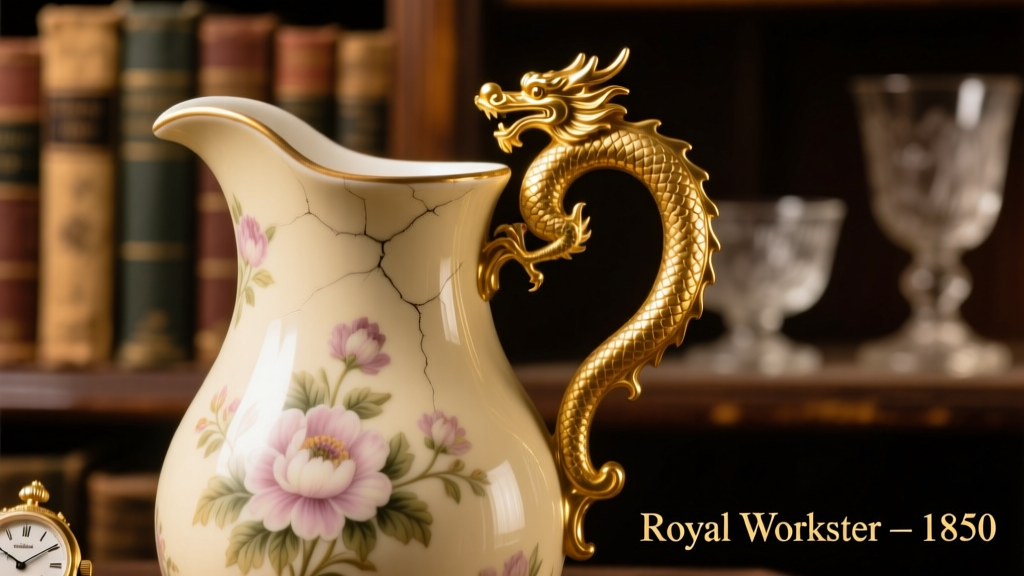
Royal Worcester Pitcher: Floral Gilt Dragon Handle, Cream Ground, Squat Form — A Study in Late Victorian Porcelain Mastery