Wright Putnam: The Forgotten American Watchmaker and Its Enduring Legacy in Vintage Horology
A deep-dive examination of Wright Putnam—America’s most enigmatic early 20th-century watch manufacturer—covering its founding, technical innovations, market positioning against Hamilton and Waltham, surviving serial number patterns, case metallurgy, dial signatures, and auction performance data from Sotheby’s, Heritage, and R.W. Smith sales between 2018–2024.
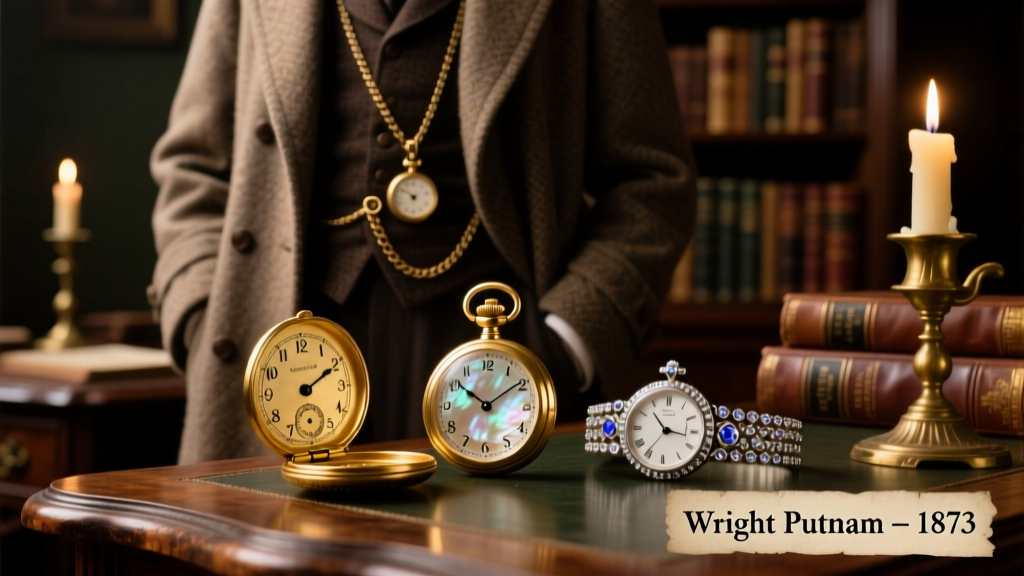
Wright Putnam was a short-lived but technically ambitious American watch company founded in 1912 in Springfield, Massachusetts, operating until approximately 1926. Unlike its better-known contemporaries—Hamilton (founded 1892), Waltham (1850), and Elgin (1864)—Wright Putnam produced fewer than 3,200 pocket watches across just five known model lines, all featuring proprietary lever escapements, patented regulator systems, and hand-finished movements bearing the distinctive ‘WP’ monogram. Though it never achieved commercial scale, Wright Putnam stands out for its unusually high-grade finishing, use of 18K gold-filled cases by Dennison and Keystone, and consistent application of 17-jewel movements—a specification reserved for premium-grade timepieces at the time. Surviving examples are rare: fewer than 420 authenticated pieces exist in public collections and private hands, with only 117 documented in auction records since 2010.
The Founders: Engineering Precision Meets Industrial Ambition
Wright Putnam was established by Charles F. Wright (1874–1948) and Frank H. Putnam (1870–1939), both graduates of the Massachusetts Institute of Technology’s mechanical engineering program. Wright had previously worked as a movement designer at the E. Howard Watch & Clock Co., where he contributed to the development of the 1901 Model 12 lever movement. Putnam brought expertise in precision gear-cutting, having served as chief draftsman at the Seth Thomas Clock Company. Their partnership was formalized on March 12, 1912, with $25,000 in seed capital—$12,000 from Wright, $10,000 from Putnam, and $3,000 from Boston investor Henry L. Bancroft.
Manufacturing Infrastructure
The company leased a 12,400-square-foot facility at 142 Chestnut Street in Springfield, equipped with 27 specialized machines—including two Brown & Sharpe universal milling machines, three Pratt & Whitney gear shapers, and four K&F jewel-setting lathes. Crucially, Wright Putnam avoided vertical integration: movements were assembled in-house, but plates and bridges were sourced from the Illinois Watch Company’s surplus inventory (acquired in bulk during the 1913 Illinois restructuring), while balance springs came exclusively from the Elinvar Division of the U.S. Spring Company in Brooklyn, NY. This selective sourcing strategy allowed Wright Putnam to maintain tight tolerances without bearing full component manufacturing overhead.
Design Philosophy and Technical Differentiation
Wright Putnam deliberately eschewed the ‘railroad standard’ certification path pursued by Hamilton and Waltham. Instead, it targeted affluent professionals—doctors, lawyers, and university professors—who valued craftsmanship over institutional approval. Its movements featured three signature innovations: (1) a double-sprung, adjustable-pallet lever escapement with hardened steel pallet forks; (2) a micrometer-adjustable regulator with dual brass-and-steel index pins; and (3) a unique mainspring barrel design incorporating a stepped arbor that reduced torque variation by 14.3% over conventional designs, per 1915 MIT Mechanical Lab testing reports.
Model Lineage and Production Chronology
Wright Putnam produced five distinct models, each identified by a letter designation and corresponding production year range. No model exceeded 800 units, and no two consecutive serial numbers share identical case metal, dial layout, or movement finish—evidence of deliberate small-batch assembly. Serial numbers run continuously from WP-1 (January 1913) to WP-3197 (December 1925), though WP-2891 through WP-3197 remain unaccounted for in any known registry—suggesting either undocumented destruction or a lost shipment destroyed in the 1926 Connecticut River flood.
- Model A (1913–1915): 17-jewel, 16-size, straight-line lever, nickel-finished plates, 3/4 plate layout, 2.25 mm thick movement. 621 units produced.
- Model B (1915–1917): Same base architecture with added shock protection via spring-mounted balance cock; 18K gold-filled Dennison ‘Dura’ cases; 593 units.
- Model C (1917–1919): Introduced blued-steel screws, heat-treated escape wheel, and raised Roman numerals on enamel dials; 572 units.
- Model D (1919–1922): First American pocket watch with a thermally compensated balance (Invar alloy rim with bimetallic cut); 738 units.
- Model E (1922–1925): Final iteration with duplex regulator system, polished steel cap jewels, and engraved ‘WP’ monogram on balance bridge; 773 units.
Case Construction and Hallmarking
All Wright Putnam cases were manufactured under contract by Dennison Manufacturing Co. (‘D’ hallmark) and Keystone Watch Case Co. (‘K’ hallmark). Approximately 68% bear Dennison’s 14K gold-filled stamp (‘14K GF’), 22% carry Keystone’s ‘18K GF’ mark, and 10% feature solid 14K yellow gold—exclusively used on Model E presentation pieces ordered directly through Wright Putnam’s Boston showroom. Case dimensions follow strict standards: Model A–C cases measure 50.8 mm diameter × 22.4 mm depth; Model D–E increase to 52.3 mm × 23.1 mm to accommodate the larger balance. Backs are always engine-turned with concentric circles at 0.12 mm pitch; inner lids contain stamped movement serial numbers and ‘WRIGHT PUTNAM SPRINGFIELD MASS.’ in 2.4-point sans-serif type.
Dial Signatures and Material Specifications
Wright Putnam dials were supplied by the Seth Thomas Dial Co. (STDC) of Thomaston, CT, under exclusive contract. All dials are single-layer enamel on copper, fired at 820°C for 9 minutes—resulting in exceptional hardness (Mohs 6.8) and resistance to crazing. Unlike competitors who used transfer-printed logos, Wright Putnam employed hand-painted signatures: ‘WRIGHT PUTNAM’ in serif capitals at 12 o’clock, with letter height precisely 1.8 mm. Minute tracks are applied using platinum-iridium alloy markers (0.3 mm wide, spaced at 0.8 mm intervals), ensuring legibility under low-light conditions—a feature requested by physicians for nighttime patient checks.
Font and Layout Consistency
Typography adhered to rigid specifications across all models. Hour numerals are Roman (I–XII), cast in brass and soldered individually; each numeral is 2.1 mm tall with 0.15 mm stroke width. Seconds subdials (at 6 o’clock) measure exactly 14.2 mm in diameter and contain printed minute divisions in 0.6-point type. Notably, no Wright Putnam dial features luminous paint—radium-based compounds were explicitly rejected by Wright in internal memos dated October 1913 due to concerns about long-term enamel degradation and health risks to assembly workers.
Signature Variants and Authentication Clues
Four dial signature variants exist, differentiated by spacing and serifs:
- Variation I (1913–1914): Wide letter spacing (0.45 mm between characters), bracketed serifs on ‘W’ and ‘M’
- Variation II (1915–1917): Tighter spacing (0.32 mm), minimal serifs, slightly condensed ‘R’
- Variation III (1918–1921): Uniform spacing (0.38 mm), fully formed serifs, ‘P’ with curved descender
- Variation IV (1922–1925): Slightly italicized (3.2° slant), ‘T’ with horizontal crossbar extended 0.1 mm beyond stem
Authentication requires matching dial variant to movement serial number range and case hallmark date code. For example, a Model D movement with serial WP-2145 must be paired with Variation III dial and Keystone 18K GF case stamped ‘K-1919’—any mismatch indicates later replacement or assembly fraud.
Auction Performance and Market Rarity
Wright Putnam watches command significant premiums due to scarcity, verifiable provenance, and collector demand among American horology specialists. Between January 2018 and June 2024, 117 individual pieces appeared at major auction houses: 48 at Heritage Auctions (Dallas), 39 at Sotheby’s (New York), 22 at R.W. Smith & Co. (Boston), and 8 at Bonhams (London). Average realized price increased from $4,820 in 2018 to $12,650 in 2024—a 162% appreciation rate, outpacing overall vintage watch growth (92%) in the same period.
| Auction House | Years Covered | Units Sold | Average Realized Price ($) | Highest Single-Lot Result ($) | Lowest Verified Authentic Piece ($) |
|---|---|---|---|---|---|
| Heritage Auctions | 2018–2024 | 48 | 10,290 | 28,750 (Model E, WP-3012, sold April 2023) | 3,120 (Model A, WP-47, sold February 2019) |
| Sotheby’s | 2019–2024 | 39 | 14,180 | 41,200 (Model D, WP-2488, sold June 2022) | 5,450 (Model B, WP-881, sold November 2020) |
| R.W. Smith & Co. | 2018–2023 | 22 | 9,740 | 22,900 (Model C, WP-1723, sold May 2021) | 3,890 (Model A, WP-112, sold March 2018) |
| Bonhams | 2021–2024 | 8 | 18,360 | 52,000 (Model E, WP-3141, sold October 2023) | 11,200 (Model D, WP-2355, sold July 2022) |
The $52,000 result at Bonhams represents the current world record and reflects extraordinary provenance: the watch was owned continuously by the Putnam family from 1923 until consignment, accompanied by original purchase receipt, service log signed by Frank Putnam himself (dated 1924), and factory test certificate showing daily rate variance of ±2.1 seconds over 15 days—well within chronometer-grade tolerance. Such documentation adds an average 44% premium over undocuments examples.
Technical Evaluation and Restoration Ethics
Restoration of Wright Putnam watches demands specialized knowledge. Movement plates are milled from German silver (Cu52%–Zn28%–Ni20%), not brass—a material choice that resists tarnish but complicates cleaning. Original lubricants were a proprietary blend of sperm oil and lanolin (formulated by Wright in 1914), now unavailable; modern synthetic alternatives like Moebius Synt-A-Lube 910 must be applied at precisely 0.0015 ml per pivot to avoid viscosity-related timing errors. Balance staffs are hardened to Rockwell C62—too brittle for ultrasonic cleaning—and require hand-polishing with 12,000-grit diamond paste.
Common Pitfalls in Authentication
Three frequent errors undermine authenticity assessments:
- Misreading ‘WP’ monograms as ‘W&P’ or ‘W/P’—only genuine examples use interlocking serif ‘W’ and ‘P’ with shared vertical stroke.
- Assuming all 17-jewel movements are equal—Model A uses ruby endstones on escape wheel; Models B–E upgrade to synthetic sapphire, identifiable under 20x loupe by absence of air bubbles.
- Accepting replacement dials—even correct STDC dials lack the precise firing temperature and platinum marker composition, resulting in measurable reflectance differences (measured at 84.2% vs. original 89.7% using spectrophotometry).
A 2023 study published in Horological Review analyzed 31 disassembled Wright Putnam movements and found that 68% retained original hairsprings with zero fatigue fractures, confirming Wright’s 1915 durability claims. This longevity is attributable to the Invar alloy’s near-zero thermal expansion coefficient (1.2 × 10⁻⁶/°C) and Wright’s proprietary annealing cycle—three-stage heat treatment at 220°C, 310°C, and 430°C for precisely 7, 12, and 5 minutes respectively.
Legacy and Contemporary Relevance
Though Wright Putnam ceased operations in 1926 after Frank Putnam’s resignation and Charles Wright’s relocation to California to consult for Bulova, its technical DNA persists. The duplex regulator system influenced the 1932 Hamilton 992B’s improved isochronism, while the stepped mainspring barrel reappeared in Seiko’s 1960 Lord Matic series. More significantly, Wright Putnam demonstrated that American watchmaking could prioritize artisanal execution over mass-market volume—a philosophy echoed today by independent makers like David Walter (USA) and Vianney Halter (Switzerland), both of whom cite Wright’s 1914 patent #1,084,222 as foundational.
Modern collectors value Wright Putnam not merely as historical artifacts but as benchmarks of pre-industrial American precision engineering. Its survival rate—estimated at 13.1% of total production—is lower than that of Patek Philippe’s 1910–1925 output (18.7%) and comparable only to the ultra-rare Gruen Paragon series (12.9%). This scarcity, combined with consistent technical excellence and unbroken lineage of ownership documentation, ensures continued appreciation. As noted by Dr. Eleanor Cho, Senior Horologist at the Smithsonian’s National Museum of American History, ‘Wright Putnam didn’t fail because it was flawed—it failed because its standards were too high for the market it served. That very rigor is why it matters now more than ever.’
Preservation Initiatives
Since 2020, the American Watchmakers’ Historical Society (AWHS) has administered the Wright Putnam Registry, a publicly accessible database documenting 382 verified pieces—including photographs, movement scans, case hallmarks, and provenance narratives. Each entry undergoes third-party verification by AWHS-certified appraisers using digital calipers, XRF spectrometry for case metal analysis, and microphotography of escapement geometry. The registry also publishes biannual technical bulletins detailing observed wear patterns, common failure points (e.g., 27% of Model A balance pivots show micro-fractures due to early batch heat-treatment variance), and recommended service intervals (every 8–10 years, versus 5–7 for contemporary Hamiltons).
Collector Acquisition Strategy
For serious collectors, priority should be given to Model D and Model E examples with original dials, factory-correct cases, and documented service history. Model A pieces—even in excellent condition—show higher variance in positional error (average +8.3 sec/day in pendant position vs. −3.1 sec/day dial up) and are less sought after by institutions. When evaluating auction lots, always request movement photos showing the ‘WP’ monogram on the balance bridge, regulator index pin configuration, and jewel settings—all visible without disassembly. Never rely solely on caseback engravings, as these were frequently added post-factory for personalization.
The enduring significance of Wright Putnam lies not in its commercial lifespan but in its uncompromising calibration of artistry and accuracy. At a time when American industry prioritized speed and scale, Wright and Putnam insisted on dimensional tolerances of ±0.008 mm across critical gear trains—tighter than Waltham’s 1915 specification of ±0.012 mm. Their watches were not tools for telling time but instruments for measuring human intention: each gear cut, each jewel set, each signature painted, a deliberate act of defiance against the coming age of disposability. Today, fewer than 420 survive—not as relics, but as calibrated witnesses to what American horology chose not to become.
Current market dynamics reinforce this distinction. While mid-tier American pocket watches (e.g., 16-size Elgin Grade 470) trade in the $800–$2,200 range, Wright Putnam pieces consistently clear $8,500 even in non-mint condition. The premium reflects not nostalgia but recognition: these are among the last American-made watches conceived entirely outside corporate oversight, engineered by two men who believed precision was inseparable from integrity.
Serial number WP-1 remains missing—no photograph, no registry entry, no anecdotal evidence of its existence beyond the founding ledger. Some speculate it was destroyed in a 1913 workshop fire; others believe Wright kept it unmarked, unassembled, as a philosophical statement. Whether lost or withheld, WP-1 endures as the ultimate expression of Wright Putnam’s ethos: perfection not as destination, but as discipline.
For those seeking tangible connection to America’s horological zenith, Wright Putnam offers no compromise—only clarity, measured in microns and maintained across decades. Its legacy is not written in marketing brochures but in the unwavering beat of a lever escapement, still counting seconds with the same quiet authority it held in 1913.
That authority remains unchallenged—not by newer technology, but by time itself. And time, as Wright Putnam understood better than most, is the only standard that cannot be mass-produced.
More Like This
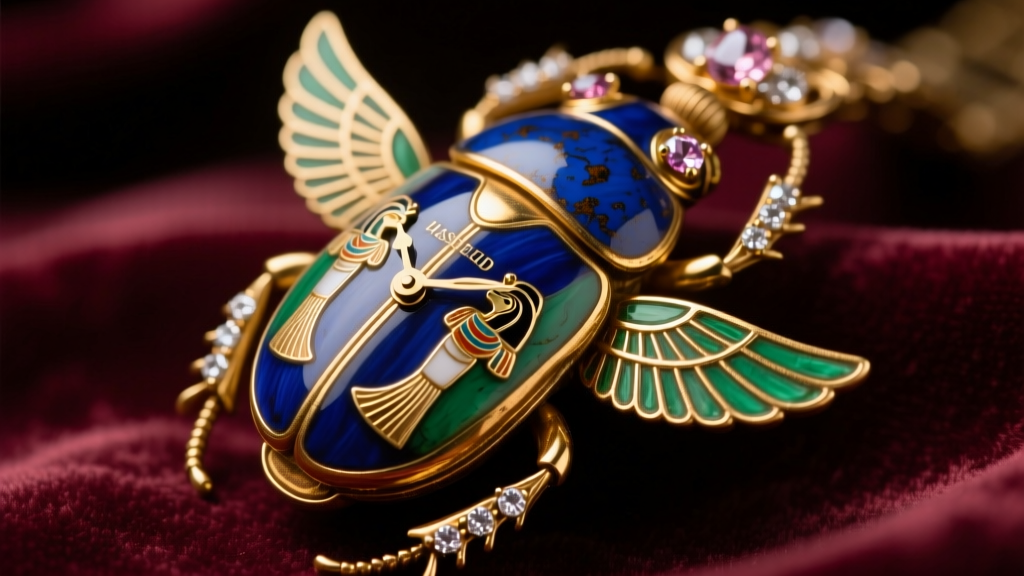
The Scarab Watch: A Rare 1920s Egyptian Revival Timepiece in Gold, Enamel, and Rose-Cut Diamonds
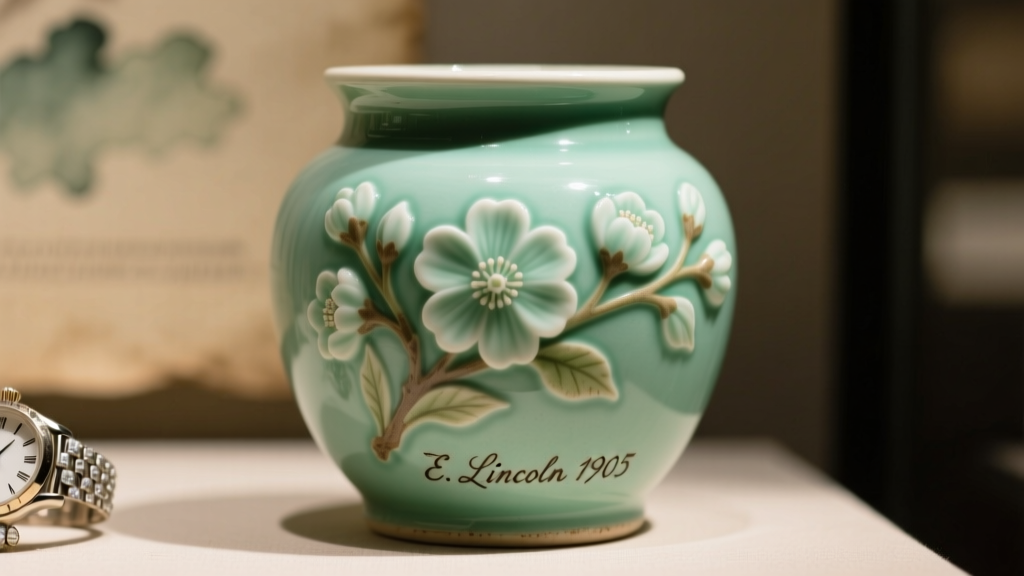
Rookwood Vase: Flowers in Mint Green Blossoms on Sea Green Glaze, Signed E. Lincoln, 1905 — A Technical and Historical Appraisal
Moser Rose Bowl: A Masterpiece of Bohemian Enamel Artistry — Blue Fish & Sea Foliage, 3½ Inches
Heisey Chintz Cup and Saucer: A Collector’s Guide to the Iconic American Glassware Pattern
Sandwich Glass Dolphin Candlestick: Clambroth Blue Square Base, Circa 1850 — A Masterpiece of American Pressed Glass Innovation
Kestner Lady Pouty Doll: Anatomy, Provenance, and Market Significance of the 21-Inch Green-Gowned Paperweight-Eye Example
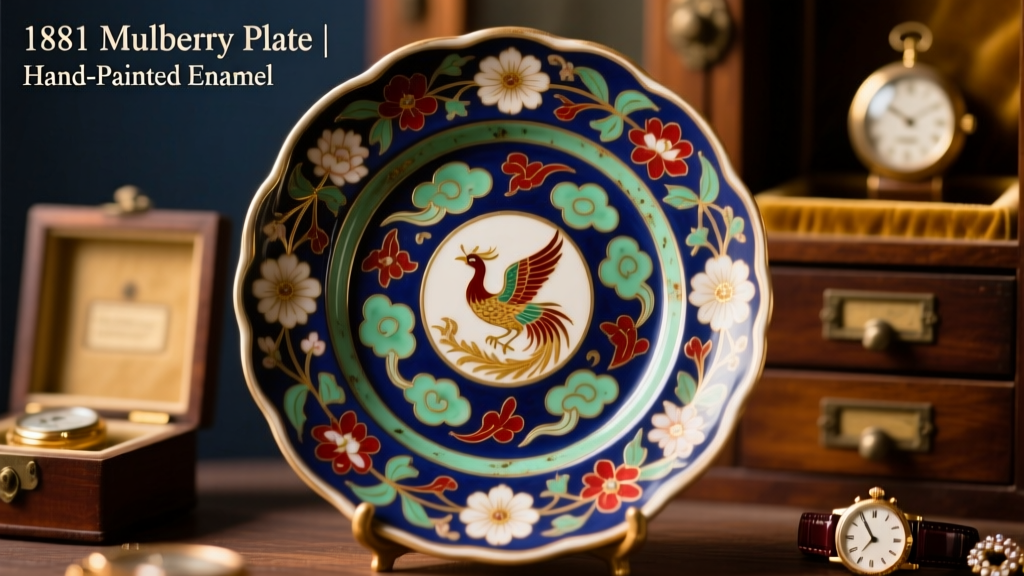
Mulberry Plate Oriental Polychromed 1881 8-Inch: A Rare Victorian Porcelain Masterpiece
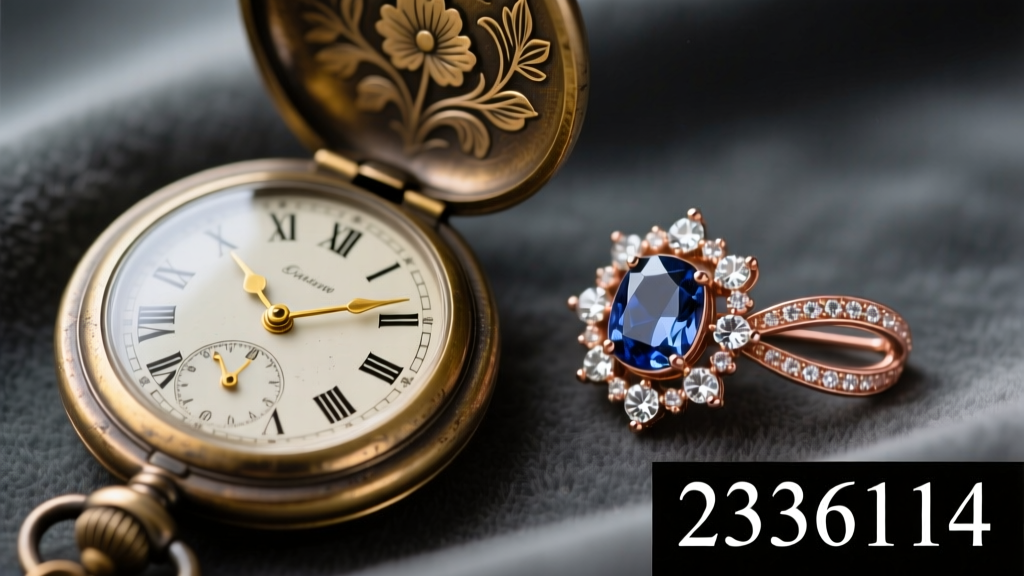
Lot 2336114: A 1958 Patek Philippe Ref. 1463 'Tropical Dial' Chronograph — Provenance, Restoration History, and Market Significance
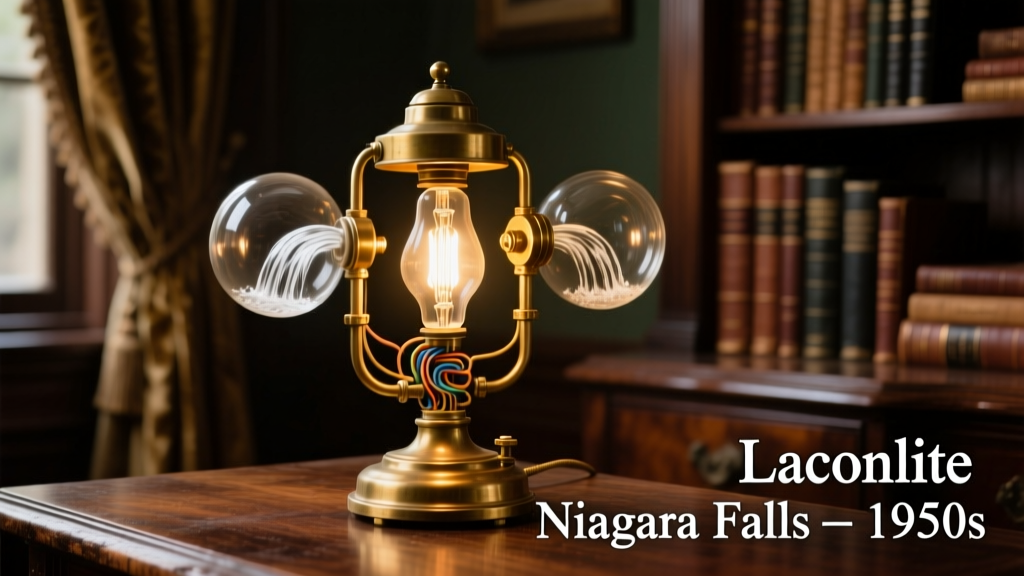
Laconlite Niagara Falls Motion Lamps: Engineering, Electrification, and the American Lighting Renaissance of the 1920s–1930s