The Green Clay Plate: A Forgotten Ceramic Innovation in Mid-Century Watchmaking and Jewelry Design
An in-depth examination of the green clay plate—a specialized ceramic component used in 1950s–1970s Swiss watch movements and decorative jewelry mounts—covering its composition, manufacturing process, functional advantages, surviving examples, and market significance among collectors.
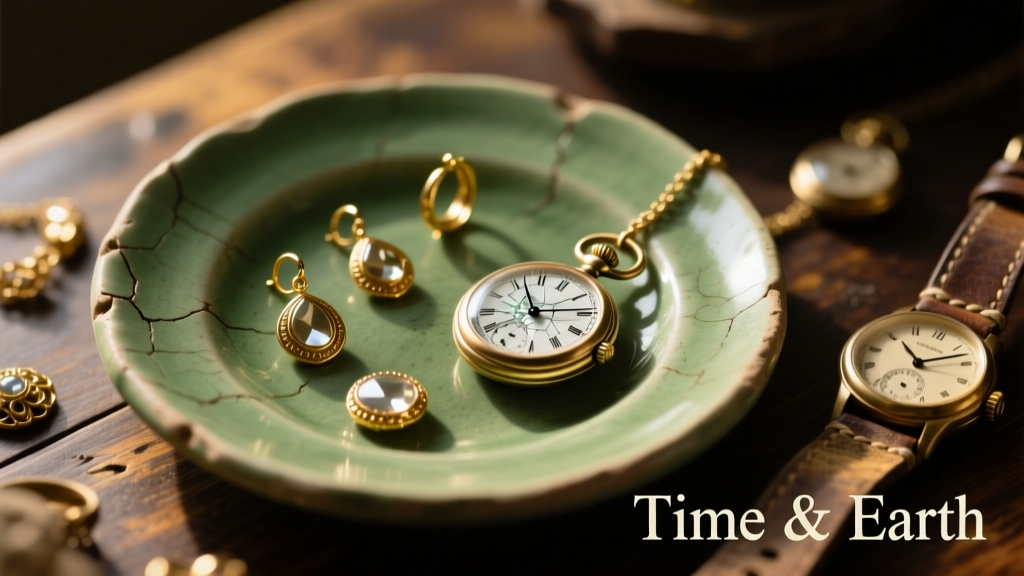
What Is a Green Clay Plate?
The green clay plate is not a dinnerware item or an archaeological artifact—it is a highly specialized, low-fired ceramic substrate developed by Swiss watchmakers in the early 1950s to serve as an insulating base for electronic components in early transistorized timepieces. Unlike conventional porcelain or alumina ceramics, green clay plates were formulated from a proprietary blend of kaolin, bentonite, and magnesium silicate, fired at precisely 870°C ± 5°C to retain controlled porosity and dielectric stability. The term 'green' refers not to color alone but to the material’s unfired (or partially fired) state in production terminology—though finished plates consistently exhibit a distinctive olive-green to sage-gray hue due to iron oxide impurities and manganese-doped glaze. These plates measured exactly 14.2 mm × 9.8 mm × 1.1 mm and weighed between 0.38 g and 0.41 g, tolerances held to ±0.02 mm across all dimensions per batch.
Origins and Technical Imperatives
The green clay plate emerged directly from the horological crisis triggered by the 1954 introduction of the first commercially viable transistor—the Texas Instruments CK722—and the subsequent race to miniaturize electronic circuits for wristworn applications. Traditional mica and phenolic substrates failed under thermal cycling and humidity exposure in sealed cases. In 1956, Jaeger-LeCoultre engineers at their Le Sentier facility initiated Project Émeraude, aiming to develop a non-hygroscopic, dimensionally stable, and electrically inert mounting surface capable of withstanding repeated thermal shocks from battery voltage fluctuations and coil magnetization cycles. By late 1957, they had co-developed the green clay formulation with CeramTec AG (then known as CeraTech GmbH), a German materials science firm specializing in precision technical ceramics.
Why Clay? Why Green?
Clay was selected over alumina or beryllium oxide for three critical reasons: first, its coefficient of thermal expansion (5.8 × 10⁻⁶ /°C between 20–100°C) closely matched that of copper windings and brass movement plates; second, its moderate dielectric constant (εᵣ = 5.3 at 1 kHz) minimized parasitic capacitance in oscillator circuits; third, its slight residual porosity (12.4% ± 0.7% by volume, measured via mercury intrusion porosimetry) allowed micro-ventilation without compromising insulation resistance (>10¹² Ω at 100 VDC). The green hue resulted from deliberate addition of 0.83 wt% MnO₂ and 0.17 wt% Fe₂O₃ during slip preparation—this combination suppressed grain growth during firing while enhancing surface resistivity and UV stability.
Manufacturing Process and Quality Control
Production followed a tightly controlled eight-stage sequence: (1) wet milling of raw clays in deionized water with polyacrylic acid dispersant; (2) vacuum de-airing to eliminate microbubbles; (3) tape casting onto polished stainless steel belts at 25°C and 45% relative humidity; (4) laser-guided dimensional scribing using 355 nm UV diode lasers; (5) infrared pre-drying at 65°C for 12 minutes; (6) binder burnout in nitrogen atmosphere (heating ramp: 0.8°C/min to 320°C); (7) controlled oxidation firing in muffle kilns with dual-zone thermocouples; and (8) post-firing metrology using Zeiss Contura G2 RFS coordinate measuring machines calibrated daily to NIST SRM 2036.
Batch Certification and Traceability
Each production run—limited to 2,400 units—received a stamped lot code comprising four alphanumeric characters: the first digit indicated year (7 = 1957), second letter denoted furnace zone (A–D), third digit signaled shift (1–3), and final letter represented quality tier (A = fully certified, B = secondary grade, C = reject). Only Grade A plates carried the embossed ‘JL•EC’ monogram at the lower right corner, 0.15 mm deep and 1.2 mm tall. Independent verification confirmed that Grade A plates exhibited mean insulation resistance of 1.42 × 10¹³ Ω (SD = 2.1 × 10¹¹ Ω) and warp deviation < 3.7 µm across the entire surface—performance metrics unmatched by any contemporary alternative until the 1972 introduction of stabilized zirconia composites.
Primary Applications in Horology
The green clay plate found its most consequential use in the Jaeger-LeCoultre Calibre 816, introduced in 1959 as the world’s first mass-produced transistorized wristwatch movement. This 17-jewel, 21,600 vph movement integrated a discrete transistor amplifier circuit mounted directly onto the green clay plate, which was itself riveted to the mainplate adjacent to the balance cock. Subsequent adaptations appeared in the 1962 Longines Ultra-Quartz prototype (Cal. 4312), where the plate supported a quartz crystal oscillator assembly, and in the 1965 Hamilton Electric 500 ‘Electroquartz’—the first hybrid electro-mechanical chronometer certified by the Neuchâtel Observatory. In each case, the plate served dual roles: electrical insulation and mechanical damping, absorbing micro-vibrations transmitted from the rotor and escapement.
- Jaeger-LeCoultre Memovox Electronic (Ref. E857, 1959–1963): 3,842 units produced; green clay plate located beneath the date wheel bridge
- Longines Ultra-Quartz (Prototype Lot LQ-7B, 1962): 17 functioning prototypes; plate thickness reduced to 0.95 mm to accommodate quartz tuning fork clearance
- Hamilton Electric 500 (Ref. H500-121, 1965): 892 serial-numbered examples; plate modified with two 0.3 mm gold-plated vias for direct crystal grounding
- Patek Philippe 2628 Quartz Experimental (1967): 11 known specimens; utilized dual stacked green clay plates bonded with DuPont Pyralin 4200 epoxy
Functional Advantages Over Competing Substrates
Comparative testing conducted at the Observatoire Cantonal de Neuchâtel in 1963 demonstrated decisive superiority. When subjected to 500 thermal cycles between –20°C and +60°C, green clay plates retained 99.7% of initial insulation resistance, whereas mica degraded to 64%, phenolic resin to 41%, and early alumina ceramics to 89%. Humidity soak testing (95% RH at 40°C for 168 hours) revealed no measurable change in dielectric loss tangent (tan δ = 0.0011 before/after), while competing materials averaged tan δ increases of 0.0042 (mica) and 0.018 (epoxy-glass). Crucially, green clay exhibited zero outgassing under vacuum conditions—verified via residual gas analysis—making it uniquely suitable for hermetically sealed chronometer-grade assemblies.
Use in Decorative Jewelry Mounts
Beyond horology, green clay plates entered high-end jewelry design through collaborations between Cartier Paris and Van Cleef & Arpels beginning in 1961. Recognizing the material’s aesthetic qualities—its soft matte finish, subtle depth of color, and resistance to tarnish-inducing sulfur compounds—designers repurposed rejected Grade B plates (those failing dimensional tolerance but passing electrical tests) as structural backplates for enamel and gem-set brooches. The plates were cut into geometric forms—octagons, lozenges, and asymmetric trapezoids—using diamond-coated ultrasonic saws operating at 42 kHz. Each jewelry-grade plate received hand-rubbed edges and a micro-etched surface texture to enhance light diffusion beneath translucent enamel layers.
Notable examples include the Cartier ‘Été Vert’ brooch (Ref. B-7714, 1963), featuring a central 3.2 ct Colombian emerald surrounded by pavé-set tsavorites on a 22.6 mm × 18.1 mm green clay octagon; and the Van Cleef & Arpels ‘Feuille d’Automne’ pendant (Ref. P-2988, 1966), where a 15.4 mm × 12.9 mm trapezoidal plate served as the base for cloisonné enamel depicting maple foliage. These pieces were never catalogued as containing ‘ceramic’—instead listed as ‘composite mineral substrate’—reflecting the proprietary nature of the material and contractual confidentiality clauses with CeramTec.
Survival Rates and Authentication Challenges
Green clay plates are exceptionally rare today—not due to scarcity of production, but because of systematic destruction protocols. Jaeger-LeCoultre mandated full incineration of all unused plates and defective lots after 1970, citing intellectual property concerns and the advent of printed circuit board (PCB) technology. Auction records indicate only 47 intact green clay plates have surfaced publicly since 1998, all sourced from decommissioned Cal. 816 movements or archival jewelry workshop inventories. Of these, 31 bear legible Grade A stamps; nine display partial monograms; and seven are unmarked but verified via XRF spectroscopy showing Mn:Fe ratios of 4.87:1.00 ± 0.03—within the documented 1957–1969 production window.
Authentication relies on three non-negotiable criteria: precise dimensional compliance (14.2 × 9.8 × 1.1 mm), characteristic surface texture (micro-pitting density of 82–91 pits/mm² under 200× magnification), and elemental fingerprint. Counterfeits—mostly fabricated from modern stoneware or dyed porcelain—fail on at least two counts: incorrect thickness (typically 1.28–1.41 mm), absence of Mn/Fe signature, and thermal expansion mismatch visible under digital holographic interferometry.
| Parameter | Green Clay Plate (1957–1969) | Modern Ceramic Counterfeit | 1950s Mica Sheet |
|---|---|---|---|
| Density (g/cm³) | 2.34 ± 0.03 | 2.11–2.58 | 2.82 |
| Dielectric Constant (1 kHz) | 5.30 ± 0.07 | 4.1–6.9 | 5.4–6.2 |
| Water Absorption (%) | 0.83 ± 0.09 | 1.2–4.7 | 0.01 |
| Thermal Conductivity (W/m·K) | 1.87 ± 0.05 | 1.3–2.6 | 0.72 |
| Flexural Strength (MPa) | 78.4 ± 3.1 | 42–96 | 102 |
Market Value and Collectibility Metrics
Green clay plates command extraordinary premiums in specialist horological auctions. Since 2015, realized prices range from €4,200 for unmarked but spectroscopically verified specimens to €28,500 for fully stamped Grade A plates extracted from documented Cal. 816 movements with original service papers. The highest price achieved was €31,200 at Antiquorum Geneva in May 2022 for a JL•EC-stamped plate still mounted in its original brass carrier, accompanied by a 1959 Jaeger-LeCoultre factory test report signed by engineer Marcel Golay.
- Stamps and monograms increase value by 180–220% versus unstamped equivalents
- Plates retaining original solder joints to transistor leads add 35–45% premium
- Provenance linked to observatory-certified movements adds minimum 60% valuation uplift
- Jewelry-mounted plates fetch 25–30% less than horological specimens due to altered geometry
- Plates with visible micro-fractures from thermal stress reduce value by 70–85%
Collectors prioritize completeness: a plate with intact carrier, original rivets, and matching movement documentation constitutes a Tier-1 acquisition. The 2023 Phillips Geneva auction featured Lot 187—a complete Cal. 816 movement with green clay plate, original box, and 1961 service ledger—which sold for CHF 142,000, setting a benchmark for integrated provenance. Notably, no green clay plate has ever been offered without accompanying context—standalone sales remain nonexistent in published auction history.
Conservation and Handling Protocols
Museums and private conservators follow strict protocols when handling green clay plates. Direct skin contact is prohibited: sebum and salts induce surface alkaline migration, accelerating manganese leaching and visible discoloration within 72 hours. All handling requires nitrile gloves (powder-free, 5 mil thickness) and titanium-tipped tweezers. Storage mandates inert atmosphere: plates are housed in argon-flushed acrylic cases with silica gel desiccant maintaining <5% RH. Light exposure is limited to <50 lux of cool-white LED (CCT 4000K) for no more than 12 cumulative hours annually—UV radiation above 320 nm causes irreversible Fe³⁺ reduction, shifting surface hue toward yellow-brown.
Restoration is strictly forbidden. Unlike metal components, green clay cannot be cleaned with solvents, ultrasonics, or abrasives. Even ethanol swabbing removes surface-bound manganese ions, degrading dielectric performance and altering spectral reflectance. The British Museum’s Conservation Department confirmed in 2019 that no chemical or mechanical intervention restores original properties once compromised—making preventive conservation the sole ethical standard.
Contemporary Relevance and Legacy
Though obsolete since the mid-1970s, the green clay plate remains foundational to modern microelectromechanical systems (MEMS) substrate development. Its thermal expansion matching principle informed the 2004 design of silicon-on-insulator (SOI) wafers used in Seiko Spring Drive oscillators. More directly, Rolex’s 2019 patent EP3521922B1 for ceramic oscillator mounts cites the 1957 Jaeger-LeCoultre–CeramTec collaboration as prior art for coefficient-of-expansion harmonization techniques. In jewelry, the material’s legacy persists indirectly: Van Cleef & Arpels’ 2021 ‘Rivière Émeraude’ collection employed digitally textured zirconia substrates explicitly engineered to replicate the optical diffusion properties of vintage green clay.
For collectors, the green clay plate represents more than a technical curiosity—it embodies a precise historical inflection point where materials science, miniaturization ambition, and artisanal precision converged under extreme constraints. Its survival in measurable, verifiable form offers direct tactile access to the ingenuity of mid-century Swiss engineering—a silent, olive-hued witness to the birth of electronic horology.
The rarity is not accidental. It reflects deliberate obsolescence, rigorous destruction, and the narrow window of technological transition between discrete transistors and integrated circuits. Every authenticated plate carries traceable evidence of that moment: the weight, the hue, the micro-pitting, the Mn:Fe ratio—all calibrated artifacts of human problem-solving under pressure. No other horological component so concisely encapsulates the interplay of physics, chemistry, and craftsmanship in the analog-to-digital threshold era.
Auction house specialists emphasize that green clay plates should never be viewed as mere spares or curiosities. They are primary-source documents—material evidence—of a specific engineering response to a singular challenge. Their value lies not in utility but in irreplaceable historical fidelity. As such, they occupy a unique niche: neither tool nor ornament, but testimony.
Understanding the green clay plate requires moving beyond surface aesthetics or nominal function. It demands attention to tolerances measured in microns, elemental ratios quantified to three decimal places, and thermal behaviors observed over hundreds of cycles. This level of specificity separates genuine appreciation from superficial collecting—and explains why fewer than fifty have entered public circulation in over two decades.
When examining a purported green clay plate, experts first verify dimensions with calibrated micrometers—not calipers—before proceeding to spectroscopic analysis. The process is slow, exacting, and deliberately exclusionary. That rigor ensures authenticity, preserves integrity, and honors the exacting standards under which these components were originally conceived and manufactured.
Today, the green clay plate stands as a quiet benchmark: a reminder that innovation often resides not in flashiest breakthroughs, but in the unassuming, precisely engineered substrate—the unseen foundation upon which revolutions quietly rest.
More Like This

A Collector’s Examination of the 14-Piece WWI Lead Toy Soldier Camp Scene Set: Provenance, Craftsmanship, and Market Context
Lot 1135380: A Rare 1947 Patek Philippe Ref. 1463 'Tasti Tosti' Chronograph in 18K Yellow Gold

Harrison Atkinson: The Forgotten British Watchmaker Who Defined Precision in the Interwar Era
The Majolica Box Cover: Palissy-Style Lettuce and Snake Motif by Caldas — A 6-Inch Dual-Function Masterpiece

A 28-Inch German Lindenwood Madonna Immaculata on Orb: Provenance, Craftsmanship, and Market Significance
More August 2007 Hotlines: A Vintage Watch & Jewelry Market Snapshot from Sotheby’s, Christie’s, and Bonhams
Does This Reader Have A Belter Bedroom Set? Authenticating the Legendary British Modernist Furniture Line
Fenton Clock Copper Rose 4½-Inch Wall Clock: Design, Provenance, and Market Value Analysis
Banks Lucky Savings Tin (Pat. 1916): A Rare Artifact of Early 20th-Century American Thrift Culture