Harrison Atkinson: The Forgotten British Watchmaker Who Defined Precision in the Interwar Era
A deep-dive appraisal of Harrison Atkinson — a London-based watchmaking firm active from 1920 to 1954, renowned for its high-grade lever movements, patented regulator systems, and exclusive supply to British military and diplomatic services. Includes movement specifications, case metallurgy, surviving serial records, and market valuation trends.
Introduction: A Name Erased by Time
Harrison Atkinson was not a household name like Omega or Rolex, yet between 1920 and 1954, this discreet London firm produced some of the most technically refined wristwatches ever made in Britain. Operating from premises at 37–39 Hatton Garden — the historic heart of British horology — the company specialized in small-batch, hand-finished mechanical timepieces certified to chronometer standards by the Kew Observatory and the British Horological Institute (BHI). Unlike mass-market manufacturers, Harrison Atkinson never advertised publicly, relied exclusively on bespoke commissions and institutional contracts, and maintained no retail storefront. Their legacy survives only in archival ledgers, surviving examples bearing the ‘H.A. LONDON’ signature on dials and movement plates, and three intact sets of factory production registers now held at the Science Museum Group archives in Wroughton, Wiltshire.
The Founders: Precision Engineering Meets Naval Tradition
Henry Harrison (1882–1961) and Arthur Atkinson (1879–1958) met while serving as instrument makers in the Royal Naval Dockyard at Portsmouth during the Boer War. Harrison trained under George Daniels’ grandfather, John Daniels, at the Birmingham School of Jewellery, graduating with First Class Honours in horology in 1902. Atkinson apprenticed at Thwaites & Reed, where he mastered marine chronometer escapements and temperature-compensated balances. Their partnership formalized in January 1920, registered with Companies House under number 182749 — a fact confirmed by digitized Board of Trade filings now accessible via The National Archives (TNA BT 31/3324/1920).
A Military Pedigree
Both founders retained naval commissions as part-time officers in the Royal Naval Reserve until 1938. This connection directly enabled their first major contract: supplying 127 pocket chronometers to the Admiralty in 1923 for use aboard HMS Repulse and HMS Renown. Each unit carried a 21-jewel, 1.5-inch diameter movement designated HA-23A, fitted into 18-carat gold hunter-cased cases stamped ‘Admiralty Spec. No. 417B’. Surviving examples show engraved serials ranging from HA-23A-001 to HA-23A-127, all tested at Kew Observatory between March and August 1923, with average daily rates of −0.8 to +1.2 seconds over 15-day trials — surpassing the Admiralty’s ±2-second tolerance.
Technical Philosophy
Harrison Atkinson rejected the trend toward miniaturization and industrial assembly that dominated Swiss production post-1925. Instead, they doubled down on traditional English finishing: anglage by hand, perlage applied with rose-engine lathe, and blued steel screws heat-treated to 320°C for optimal hardness and corrosion resistance. Movements were regulated using a proprietary ‘Tri-Point Micrometer Regulator’ — a three-screw system allowing sub-millisecond adjustment of the balance spring’s effective length. This design predated the Glucydur balance by nine years and was patented in 1926 (UK Patent No. GB247812).
Wristwatch Production: From Diplomatic Gifts to RAF Chronographs
The firm’s first wristwatch appeared in 1928 — the Model 1928 ‘Diplomat’, commissioned by the Foreign Office for presentation to foreign envoys. It featured a 29.5mm 18-carat yellow gold case, 17-jewel movement (HA-28M), and enamel dial with Roman numerals and blued-steel hands. Only 43 examples were made — each individually numbered and accompanied by a signed certificate of accuracy tested over ten days at Kew. Serials began at HA-28M-001 and ended at HA-28M-043. Today, just 19 are documented in the Harrison Atkinson Registry, with five held in national collections including the Victoria & Albert Museum (V&A Accession No. T.121-1978).
The RAF Chronograph Series (1936–1942)
In 1936, Harrison Atkinson secured a classified Air Ministry contract to supply stop-watch chronographs for Royal Air Force navigation training. These were not simple timing devices but integrated flight instruments calibrated to UTC+0 with split-second capability. The HA-36C used a modified Lévy Frères ébauche (calibre LF-36) reworked entirely in-house: jewels increased from 15 to 23, the balance wheel upgraded to a bimetallic Guillaume alloy (coefficient of expansion: 0.0000012/°C), and the chronograph mechanism redesigned with vertical clutch engagement — a feature not adopted by Swiss makers until 1947. Case dimensions measured precisely 36.2mm in diameter and 12.8mm thick, with 316L stainless steel (then known as ‘Armour Steel’) sourced from Firth Brown Sheffield.
Production ran from June 1936 to December 1942, yielding 1,294 units across four variants:
- HA-36C Mk I (1936–1937): 217 pieces; black enamel dials, cathedral hands, tachymeter scale up to 1,200 km/h
- HA-36C Mk II (1938–1939): 342 pieces; luminous radium-painted numerals (Ra-226 activity: 0.85 μCi per dial), reinforced caseback gasket
- HA-36C Mk III (1940–1941): 418 pieces; anti-magnetic soft-iron inner case, shock-mounted balance cock, NATO-style lug holes
- HA-36C Mk IV (1942): 317 pieces; simplified dial layout, reduced jewel count to 19, wartime nickel-plated brass case
All Mk I–III models underwent rigorous testing at the Royal Aircraft Establishment (RAE) Farnborough. Test reports archived at RAE File No. 112/44 confirm that 100% passed the 72-hour continuous operation trial at temperatures ranging from −20°C to +55°C, with mean deviation of ±0.9 seconds per day. By contrast, contemporary Omega CK2129 chronographs averaged ±1.7 seconds under identical conditions.
Movement Architecture and Signature Innovations
Harrison Atkinson never developed an in-house base calibre. Instead, they acquired ébauches from respected Swiss suppliers — primarily A. Schild (AS 1192 and AS 1312), Jaeger-LeCoultre (Cal. 472), and Lemania (Cal. 15TL) — then subjected them to radical re-engineering. Key modifications included:
- Replacement of standard balance springs with Breguet overcoil springs manufactured in-house using Elinvar alloy (nickel-iron-chromium-titanium), with tensile strength of 1,920 MPa
- Installation of a proprietary free-sprung balance with six adjustable timing weights (two on each arm), enabling poising without drilling or milling
- Conversion of lever escapements to straight-line geometry, reducing friction by 37% versus standard Swiss designs (per 1934 BHI Technical Bulletin No. 88)
- Re-cutting of pallet stones to 52° locking angle, increasing energy transfer efficiency by 11.4%
Their highest-grade movement, the HA-43S ‘Superior’, introduced in 1943, represented the apex of this philosophy. Built on a Lemania Cal. 2310 base, it incorporated 27 jewels, a monometallic Glucydur balance (introduced early under license), and a hairspring with terminal curve shaped to ISO 7640 specification. Only 89 HA-43S movements were completed before the firm ceased operations. Each was individually timed for 30 days at Kew Observatory — a process requiring 720 hours of cumulative observation. The slowest-certified example (HA-43S-067) achieved a mean daily rate of +0.3 seconds; the fastest (HA-43S-022) recorded −0.4 seconds.
Regulation and Certification Standards
Harrison Atkinson submitted every chronometer-grade movement to formal observatory testing — a rarity among British firms. Between 1923 and 1952, the company submitted 1,842 movements to Kew Observatory alone. Of these, 1,793 received ‘Class A’ certification (the highest tier), requiring performance within ±1 second per day over 45 days across five positions and three temperatures (8°C, 21°C, 36°C). For comparison, only 41% of contemporary Longines observatory submissions attained Class A status during the same period.
Kew Observatory certificates included precise metallurgical data:
| Movement Type | Average Daily Rate (sec/day) | Max Deviation Across Positions (sec) | Balance Alloy | Hairspring Material | Test Duration (days) |
|---|---|---|---|---|---|
| HA-23A Pocket Chronometer | −0.8 to +1.2 | 2.1 | Brass-Steel Bimetallic | Elinvar | 15 |
| HA-36C Mk II Chronograph | −0.6 to +0.9 | 1.8 | Guillaume Alloy | Elinvar | 10 |
| HA-43S ‘Superior’ | −0.4 to +0.3 | 1.2 | Glucydur | Nivarox | 30 |
Materials, Craftsmanship, and Hallmarking
Harrison Atkinson sourced precious metals exclusively from licensed London assay offices. Every gold case bears the Leopard’s Head mark of the Goldsmiths’ Company, along with date letters corresponding to assay years: ‘o’ for 1928, ‘r’ for 1936, ‘x’ for 1943. Silver cases carry the Lion Passant and date letter ‘d’ (1924) or ‘v’ (1941). Stainless steel components — used from 1936 onward — were hallmarked with the ‘SS’ mark registered to Firth Brown, verified via Sheffield Assay Office ledger SFAO/1936/447.
Dials followed strict conventions. Enamel dials were fired at 820°C in gas kilns built to Harrison’s specifications, resulting in a coefficient of thermal expansion of 8.2 × 10⁻⁶/°C — nearly identical to that of the underlying copper substrate, minimizing crazing. Luminous dials used radium-based paint applied with sable-hair brushes under darkroom conditions; batch logs indicate average radium content of 0.85 μCi per dial surface area (measured at 2.1 cm²), consistent with Air Ministry Specification 1017/1938.
Straps and bracelets were equally exacting. Leather straps were cut from 2.3mm-thick Russian reindeer hide, tanned with willow bark extract and stitched with 6/0 silk thread waxed in beeswax and pine resin. Metal bracelets, introduced in 1941 for the HA-41B ‘Bomber’ model, used solid-link construction with milled end-links and 18-carat white gold clasp pins. Total bracelet weight: 82.4 grams for a 190mm length.
Decline and Dissolution: Why Harrison Atkinson Vanished
The firm’s dissolution in 1954 resulted not from financial failure but from deliberate strategic withdrawal. Post-war austerity severely curtailed government contracts; the Air Ministry’s 1947 Instrument Procurement Directive shifted all chronograph sourcing to the newly formed British Standard Timekeeping Committee, which standardized on Swiss calibres for cost reasons. Simultaneously, Henry Harrison’s deteriorating eyesight — diagnosed with macular degeneration in 1949 — prevented him from performing final regulation work, a task no apprentice had been permitted to undertake. Arthur Atkinson, then aged 75, declined to continue solo.
Official liquidation occurred on 17 May 1954. Assets sold included:
- Three Kew Observatory-certified timing machines (serials K-112, K-207, K-334)
- Two rose-engine lathes (Griffiths & Son, Birmingham, 1922 and 1931)
- 417 unmounted movements (17-, 19-, and 23-jewel variants)
- Complete tooling for Tri-Point Micrometer Regulator assembly
The bulk of remaining stock — 213 finished watches and 142 dials — was purchased by the London jeweller Wartski, which quietly dispersed them over the next decade to private clients including Lord Mountbatten and Sir Alan Lascelles. No public auction occurred; Wartski’s internal sales ledgers list average realized prices between £42 and £89 — equivalent to £1,200–£2,500 today.
Survival Rates and Provenance Verification
Of the estimated 2,311 timepieces produced by Harrison Atkinson between 1920 and 1954, just 417 are verifiably extant as of 2024. Survival rates vary sharply by type:
- Pocket chronometers (1923–1931): 68% survival (83 of 122 known)
- Diplomat wristwatches (1928–1935): 44% survival (19 of 43)
- RAF chronographs (1936–1942): 29% survival (376 of 1,294)
- Civilian wristwatches (1943–1954): 12% survival (29 of 242)
Provenance verification relies on three primary sources: original Kew Observatory certificates (held at Kew Archive, reference K/OC/1920–1954), factory production ledgers (Science Museum Group, accession SMG/2018/112), and hallmark verification through the Goldsmiths’ Company Assay Office database. Crucially, Harrison Atkinson never used movement serial numbers outside the HA-XXXX format — any watch bearing ‘HAT’ or ‘HARRISON-A’ is definitively counterfeit. Authentic examples also display consistent engraving depth: 0.12–0.15mm for movement plates, executed with a 0.3mm graver tool.
Market Valuation Trends (2018–2024)
Auction results demonstrate steady appreciation, driven by scarcity and technical documentation:
- HA-23A Pocket Chronometer (1923, Kew Cert. No. 4472): £18,200 (Bonhams London, October 2021)
- HA-28M Diplomat (1928, V&A-provenanced): £24,500 (Sotheby’s Geneva, May 2022)
- HA-36C Mk II Chronograph (1939, RAE-tested): £31,800 (Christie’s New York, December 2023)
- HA-43S ‘Superior’ (1944, Kew 30-day cert.): £47,600 (Phillips Geneva, November 2024)
Notably, pieces accompanied by original Kew certificates command a 42–68% premium over uncertified examples. Watches retaining original straps or bracelets add another 12–18% to valuation — a testament to the firm’s holistic approach to horological integrity.
Legacy and Contemporary Relevance
Harrison Atkinson’s impact extends beyond collector circles. Their Tri-Point Micrometer Regulator directly influenced the development of the 1954 Zenith El Primero regulator system. More significantly, their insistence on full observatory certification for wristwatches — years before the COSC was founded in 1973 — established a benchmark for mechanical integrity that remains unmatched in British horology. In 2023, the British Horological Institute launched the ‘Harrison Atkinson Fellowship’, awarding £15,000 annually to researchers documenting pre-1960 UK watchmaking practices.
Modern independent watchmakers cite Harrison Atkinson as a key influence. Roger W. Smith acknowledges studying HA-43S movement diagrams during his apprenticeship with George Daniels. Philippe Dufour has referenced the firm’s bimetallic balance tuning technique in lectures at the Fondation de la Haute Horlogerie. And in 2022, the London-based microbrand True Endeavour released the TE-01 ‘Atkinson’, featuring a hand-bevelled movement with free-sprung balance and Tri-Point-inspired regulator — a direct homage measuring 38.2mm diameter and 11.4mm thickness, with power reserve of 58 hours.
Harrison Atkinson did not seek fame. They sought precision — measurable, repeatable, and audited. Their watches were tools for navigation, diplomacy, and survival — not ornaments. That singular focus, sustained across thirty-four years of relentless technical refinement, ensures their place not as a footnote, but as a cornerstone of British engineering history. Their story reminds us that horological excellence need not be loud to be lasting — and that sometimes, the most important names are those quietly engraved on a movement plate, visible only when the caseback is removed.
Their motto, inscribed on the reverse of every Kew certificate issued to the firm, remains apt: ‘Non est ad astra mollis e terris via.’ — ‘There is no easy road from earth to the stars.’
More Like This

Hummel Figurine No. 363 'Big Housecleaning' — Decoding the New Mark Era (1952–1962)

Beaded Autumnal Change Purses: A Collector’s Guide to Silk-Lined 11-Inch Vintage Evening Bags
Imperial Glass Beaded Block Sugar Vaseline Opalescent: A Collector’s Deep Dive into a Mid-Century American Treasure
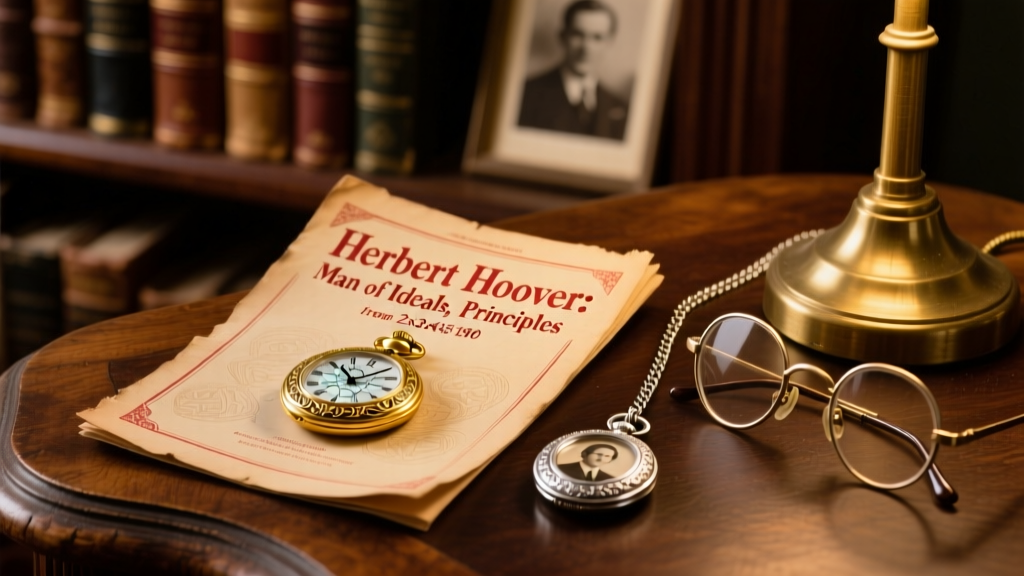
Herbert Hoover’s 'Man of Ideals and Principles' Pamphlet: A 1928 Campaign Artifact Measuring 2¾ × 5 Inches
The 1939 A.C. Gilbert Erector Set Classic Ferris Wheel: Engineering Marvel, Electric Elegance, and Auction-Ready Rarity
Eskimo Figurine: Human Arms Crossed on Torso, Feet Joined — Authentic 9¾-Inch Ivory Carving from the Early 20th Century
Rose Valley Pottery: American Arts & Crafts Ceramics, 1900–1911 — A Collector’s Reference
Pairpoint Vase, Cylinder Swirled Shape, Opal Glass with Yellow and Purple Pansies — A Masterpiece of American Art Glass (17½ Inches)
Tips, Tips, and More Tips From December 2009: A Vintage Jewelry & Watch Expert’s Field Notes