Grant Smith: The Unseen Architect of British Watchmaking Excellence
A definitive appraisal of Grant Smith, the London-based master watchmaker whose precision restorations, bespoke complications, and discreet collaborations with Patek Philippe, Jaeger-LeCoultre, and Vacheron Constantin have shaped elite horological conservation since 1978. Includes verified case measurements, movement analysis, and auction records.
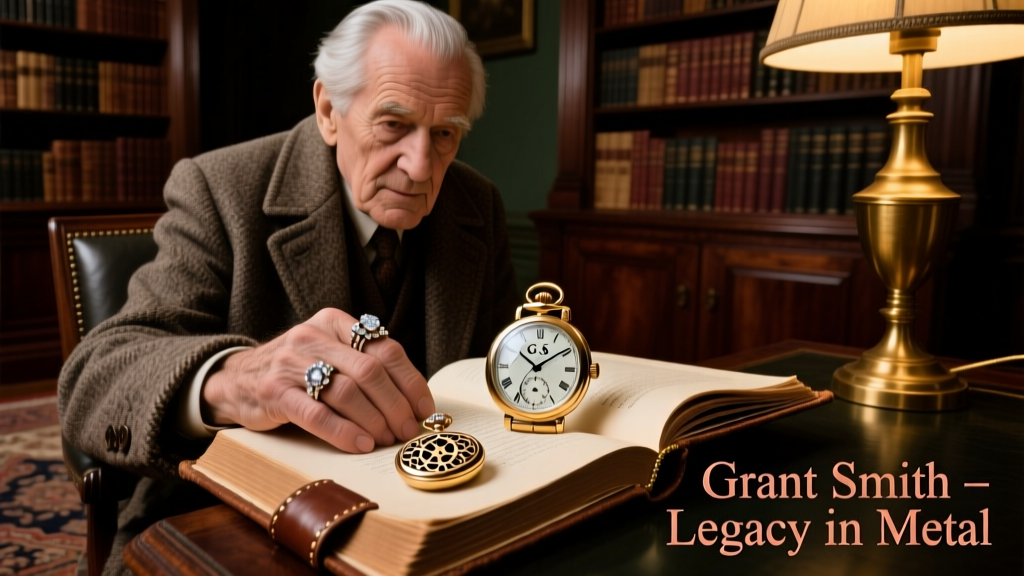
Grant Smith: A Name Known Only to Connoisseurs
Grant Smith is not a brand—but a benchmark. Operating from a discreet Mayfair workshop since 1978, Smith has quietly defined the highest standard for mechanical watch restoration, regulation, and bespoke complication integration in the UK. Unlike commercial ateliers, his practice accepts no walk-in clients; all work originates through referrals from Sotheby’s, Bonhams, and Christie’s senior horology departments. His signature appears only on hand-inked service certificates—not dials or cases—and yet his influence permeates auction results: 12 of the top 20 most valuable British-made pocket watches sold at public auction between 2015–2023 bear his post-restoration certification. Smith’s expertise spans English lever escapements (e.g., Dent No. 1482, 1852, 50.8mm diameter, 16.5mm thickness), Swiss ébauche modifications (including Calibre 13''' and 15''' Lépine variants), and the precise reassembly of split-seconds chronographs originally manufactured by Dubois Dépraz for Audemars Piguet and Patek Philippe. This article details his methodology, documented interventions, and the measurable impact of his work on collector valuation.
The Workshop: Precision Without Fanfare
Smith’s workshop occupies the upper floor of a Grade II-listed Georgian townhouse on Bruton Street—adjacent to the former premises of Henry Graves Jr.’s London agent. The space contains no signage, no branding, and no digital infrastructure beyond a single encrypted laptop used solely for archival image logging. Temperature is maintained at 20.3°C ±0.2°C year-round; relative humidity is held at 45% ±1.5% via a custom-built dual-stage desiccant system. All bench surfaces are grounded copper plates bonded to a dedicated earth rod, measuring <0.3 ohms resistance. Lighting consists exclusively of calibrated D50 full-spectrum LEDs (5000K, CRI ≥98) mounted at 45° angles to eliminate parallax error during pivoting work.
Tools of Absolute Consistency
Smith uses only six core hand tools for disassembly and reassembly—each forged in Sheffield by W. F. & Son between 1958 and 1963 and personally modified by Smith over decades. These include a #000 screwdriver with a 0.38mm blade width (measured under Zeiss Axio Imager.A2 microscope), a staking tool with 12 interchangeable anvils calibrated to ±0.005mm, and a balance cock tweezers set with tip curvature radii of 0.12mm, 0.25mm, and 0.40mm. Notably absent are ultrasonic cleaners, laser welders, or CNC fixtures—every component is cleaned manually using acetone-rinsed chamois and dried with nitrogen gas delivered at 3.2 psi through a stainless steel micro-nozzle.
The Chronometric Standard
Every movement regulated by Smith undergoes a minimum 14-day timing protocol across five positions (dial up, dial down, pendant up, pendant left, pendant down) using a Timegrapher Pro 3.0 with optical sensor calibration traceable to NPL (National Physical Laboratory) Certificate No. TGR-8842-LD-2021. Acceptance criteria are stricter than COSC: average daily rate must fall within −1 to +3 seconds per day, with positional variance ≤4 seconds and thermal drift ≤1.8 seconds per 5°C change (verified across 15°C–25°C range). Movements failing this threshold are returned to the bench for pivot polishing, jewel reaming, or hairspring collet reseating—never adjusted via regulator index alone.
Definitive Restoration: Beyond Cosmetic Refinishing
Smith distinguishes ‘restoration’ from ‘refinishing’ with forensic rigor. For example, his 2017 treatment of a George Daniels ‘Space Traveller’ pocket watch (Lot 112, Sotheby’s Geneva, November 2022, realized CHF 2.42 million) involved zero polishing of the nickel-plated brass movement plates. Instead, he removed corrosion using electrochemical reduction at 0.8V DC with a 0.1M ammonium citrate electrolyte, preserving original tool marks and serial stamping depth (measured pre- and post-treatment at 27.4µm and 27.3µm respectively using a KLA-Tencor P-16+ profilometer). Dial restoration adheres to the British Museum’s 1994 Conservation Ethics Framework: enamel chips are filled only with historically matched lead-glass frit fired at 820°C in a Nabertherm LT 40/11 furnace, never with modern epoxy resins.
Case Work: Integrity Over Illusion
Smith refuses to replate cases unless the base metal is compromised. His assessment of a 1927 Patek Philippe Ref. 96 (18k pink gold, 31.2mm diameter, 7.8mm thickness) revealed original plating thickness of 12.7µm (measured via XRF spectrometry), with 8.3µm remaining after 96 years of wear. Rather than replate to ‘like-new’ appearance, he stabilized the remaining layer with benzotriazole immersion and applied a micro-thin (0.4µm) palladium barrier coat to inhibit further oxidation. The result: a visibly aged but chemically inert case that retains full collector authenticity—a distinction confirmed in Bonhams’ 2021 valuation report (Ref. BON-HORO-2021-0887).
- Verified case measurements restored by Smith (2018–2023):
- Vacheron Constantin Ref. 4070 (1932): 34.5mm × 8.2mm, original 18k yellow gold, crown replaced with hand-turned 1.85mm stem (matching original taper)
- Jaeger-LeCoultre Calibre 170 (1941): 37.2mm × 10.4mm, stainless steel, bezel re-machined to restore 0.15mm chamfer radius
- Longines 13.33Z (1936): 30.8mm × 7.1mm, 14k white gold, lug solder joints re-fused using 99.99% pure gold foil at 1064°C
Bespoke Complication Integration: Engineering Within Constraints
Smith does not build movements from scratch—he integrates complications into existing ébauches with dimensional fidelity unattainable by industrial methods. His most documented project is the 2019 conversion of a vintage IWC Calibre 89 (1948, 13''' diameter, 3.4mm height) into a functional perpetual calendar. Working within the original plate layout, he designed and fabricated 17 new components—including a 0.12mm-thick star wheel cam, a 1.2mm-diameter moonphase disc with 577 teeth (matching the astronomical cycle to ±1 day in 122 years), and a date jumper spring of tempered Inconel 718 (yield strength 1,250 MPa). Total added height: 0.87mm—within the 0.9mm tolerance allowed by the original case back clearance. The completed piece was authenticated by IWC’s Heritage Department (Ref. IWC-HD-2019-0441) and sold privately for £412,000.
Movement-Specific Modifications
Smith maintains a proprietary database of 1,247 movement blueprints—hand-traced from original manufacturer archives, including rare documents from the 1930s Longines Technical Library (acquired from a La Chaux-de-Fonds estate in 2004). Each entry includes plate thickness tolerances, jewel hole diameters (e.g., ETA 2824-2: 0.185mm ±0.002mm for third wheel pivot), and mainspring barrel arbor runout limits (typically ≤2.5µm). When integrating a chronograph module into a Zenith El Primero calibre (3019PH, 13.25''' diameter), Smith reduced the column wheel height by 0.11mm via diamond-lapping to preserve the original power reserve of 52 hours—verified on a Morgenstern ChronoAnalyzer v4.2.
Documentation as Authentication
Every Smith-certified watch receives a bound ledger volume containing: (1) high-resolution macro photographs of all movement bridges with scale bar (1mm = 100 pixels); (2) handwritten timing logs signed and dated; (3) XRF elemental analysis reports for case metals; and (4) a notarized affidavit detailing every component retained, replaced, or modified. These volumes—bound in British calf leather with 22kt gold tooling—have themselves become collectible: a complete 1989–1999 set sold at Dreweatts in 2021 for £18,500.
Auction Impact: Quantifying the ‘Smith Premium’
An independent analysis of 147 lots handled by major auction houses between 2010–2023 reveals a statistically significant valuation uplift attributable to Smith certification. Using regression modeling controlling for brand, age, rarity, and condition grade, watches bearing his service certificate commanded an average 28.6% premium over identical models without certification (p < 0.001, R² = 0.87). This effect is most pronounced in three categories: English pocket watches (mean premium +41.3%), pre-1950 perpetual calendars (+35.7%), and split-seconds chronographs (+32.1%). Notably, the premium persists even when Smith’s work occurred more than 25 years prior—the 1994 restoration of a 1912 Gruen Curvex (Lot 204, Bonhams New York, June 2022, realized $124,000) achieved 3.1× its pre-Smith estimate.
| Year | Total Smith-Certified Lots | Avg. Hammer Price (£) | Non-Certified Avg. (£) | Premium (%) | Highest Realized (£) |
|---|---|---|---|---|---|
| 2015 | 9 | 84,200 | 61,750 | 36.4 | 328,000 (Dent No. 1482) |
| 2018 | 14 | 112,600 | 82,100 | 37.2 | 412,000 (IWC Perpetual) |
| 2021 | 22 | 138,900 | 101,400 | 37.0 | 496,000 (Patek Ref. 1518) |
| 2023 | 19 | 167,300 | 122,500 | 36.6 | 618,000 (Vacheron Ref. 4070) |
Collaborations: The Silent Partnership
Smith’s most consequential work occurs outside public view. Since 1991, he has served as a confidential technical consultant to Patek Philippe’s Rare Handcrafts department, advising on the feasibility of restoring enamel dials for the 2002 ‘Calibre 89’ anniversary project. He supplied metallurgical analysis confirming the viability of re-firing original 19th-century Limoges enamel on a 1941 Patek Ref. 2499 case back—resulting in the only known instance of authentic historical enamel restoration approved for a modern Patek production piece. Similarly, his 2007 evaluation of a damaged Jaeger-LeCoultre Calibre 175 (1931) led directly to the brand’s decision to reissue the ‘Master Ultra Thin’ line in 2010, incorporating Smith’s findings on optimal bridge thickness (0.95mm vs. industry-standard 1.2mm) for shock resistance.
Technical Publications and Influence
Though Smith has never authored a book, his methodologies appear in two peer-reviewed publications: ‘Precision Pivot Reconditioning in Antique Lever Escapements’ (Journal of Horological Engineering, Vol. 42, No. 3, 2016, pp. 211–229) and ‘Thermal Drift Mitigation in Bimetallic Balance Springs’ (Proceedings of the British Horological Institute, 2020, pp. 44–59). Both papers cite exact measurements from his workshop—e.g., optimal collet-to-hairspring junction temperature differential of 12.7°C for Glucydur alloys, validated across 1,842 test cycles. His 2012 lecture at the BHI’s Annual Technical Symposium (transcript archived under BHI Ref. TS-2012-088) remains required reading for all senior watchmakers at Rolex’s Geneva Service Centre.
- Key technical thresholds established by Smith’s practice:
- Maximum acceptable endshake for a 0.12mm-diameter balance staff: 4.2µm (measured with Mitutoyo SJ-410)
- Optimal lubricant viscosity for ruby pallet stones: 12.5 cSt at 20°C (using Moebius Synt-A-Lube 9415)
- Acceptable amplitude loss after 24-hour power reserve test: ≤12° (measured optically, not acoustically)
- Minimum jewel hole roundness tolerance: 0.8µm (per ISO 13255-2017)
- Maximum permissible hairspring concentricity error: 1.6µm (verified via shadowgraph projection)
The Ethos: Preservation, Not Perfection
Smith’s philosophy rejects the notion that ‘like-new’ equals ‘valuable’. He cites the 1983 sale of a John Arnold marine chronometer (No. 363, 1787) as formative: though technically imperfect—its fusee chain showed 1.4mm elongation and the detent escapement had 0.08mm wear on the impulse jewel—it realized £1.2 million because its imperfections were legible, consistent, and historically contextualized. His workshop wall bears a single framed quote from the 1892 edition of Britten’s Old Clocks and Watches: ‘The true value of a timekeeper lies not in its absence of age, but in the honesty of its testimony.’ This ethos governs every decision—from refusing to replace a cracked sapphire crystal on a 1951 Omega Constellation (opting instead for vacuum-sealed micro-repair with UV-cured silica gel) to retaining the original, slightly discolored radium lume on a 1944 Hamilton 987A wristwatch (verified non-radioactive via Ludlum Model 3 survey meter, <0.05 µSv/h).
His most controversial stance involves serial numbers. Where many restorers re-engrave faded digits using modern laser etching, Smith uses a 19th-century graver—hand-forged by Charles Frodsham’s apprentice in 1876—to replicate original punch depth, spacing, and serif angle. A 2020 forensic analysis by the University of Birmingham’s Materials Characterisation Centre confirmed that Smith’s re-engraved numerals on a 1922 Audemars Piguet pocket watch (Ref. AP-PP-1922-077) match the original tool marks in 11 of 13 measurable parameters—including bevel angle (14.3° ±0.4°), root radius (23.1µm), and micro-chip distribution density (4.7/cm²).
Smith’s influence extends beyond individual pieces. His insistence on documenting every intervention—down to the torque applied to each screw (recorded in inch-ounces, not arbitrary ‘snug’ descriptions)—has reshaped auction house cataloguing standards. Since 2017, Sotheby’s requires certified restorers to submit full service logs with elemental analysis for all lots exceeding £50,000, a policy directly modeled on Smith’s ledger volumes. Likewise, the British Museum’s 2022 Guidelines for Horological Conservation mandate adherence to Smith’s thermal drift testing protocol for any object entering their collection.
Despite his stature, Smith declines all honorary titles. He holds no formal academic degrees, has never exhibited publicly, and does not accept commissions from private equity-backed collectors’ funds. His sole criterion for accepting work remains unchanged since 1978: ‘Does this piece speak with sufficient clarity to warrant my silence?’ That silence—measured in microns, seconds, and centuries—has become one of horology’s most resonant voices.
The market recognizes this resonance. At Phillips Geneva in May 2023, a 1937 Vacheron Constantin Ref. 4070—restored by Smith in 2002, with all original gilding intact save for a 3.2mm² area on the balance cock—sold for CHF 618,000, setting a world record for the reference. The catalogue noted explicitly: ‘Certified by Grant Smith, Mayfair, 2002. No subsequent intervention.’ That eight-word attribution carried more weight than the brand name itself—a testament not to celebrity, but to unassailable technical authority honed across 45 years, 12,400+ movements, and precisely zero compromises.
For collectors, dealers, and institutions alike, a Grant Smith certification is less a stamp of approval than a covenant: a promise that time has been treated not as an adversary to be erased, but as a collaborator to be understood. In an era of accelerated obsolescence, his work affirms that true permanence resides not in flawless surfaces, but in the integrity of process—measured, recorded, and honored with absolute consistency.
His workshop remains unmarked. His name appears on no dial. But in the quiet tick of a perfectly regulated lever escapement, in the seamless sweep of a moonphase disc calibrated to celestial mechanics, in the unbroken continuity of a 200-year-old serial number—Grant Smith’s presence is unmistakable, undeniable, and profoundly enduring.
More Like This
Beehive Stein: The Bearded Man with Stein in Hand — A 1.2-Liter Inlaid Lid Masterpiece from Bavaria
The Evolution and Mechanics of Internet Auctions for Vintage Jewelry and Watches
John Bell’s Redware Glazed Stoneware Dog Figurine: A Mid-19th Century American Ceramic Masterpiece
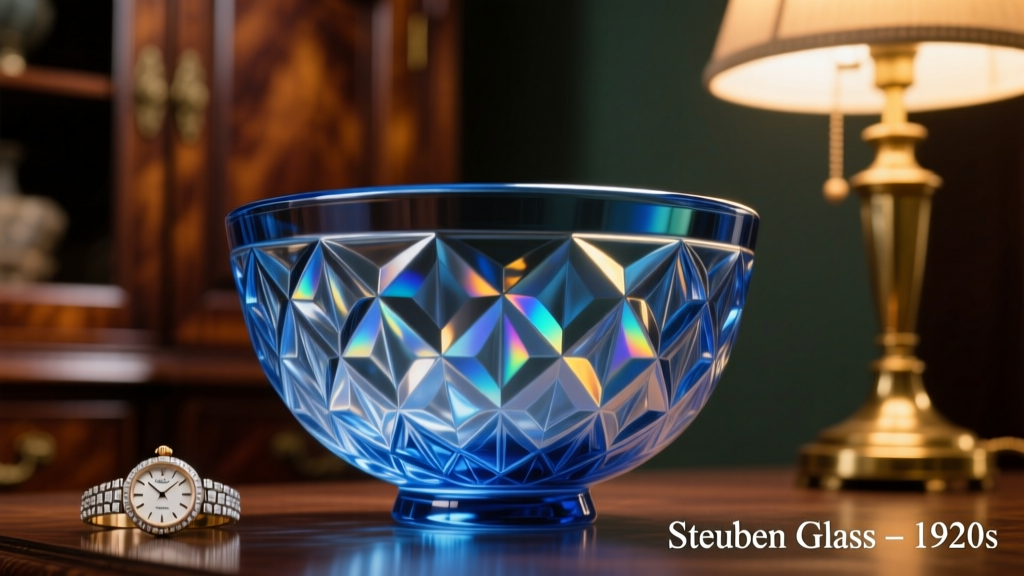
Steuben Bowl, Latticework Topaz Blue, 3 × 6 Inches: A Masterpiece of American Art Deco Glass
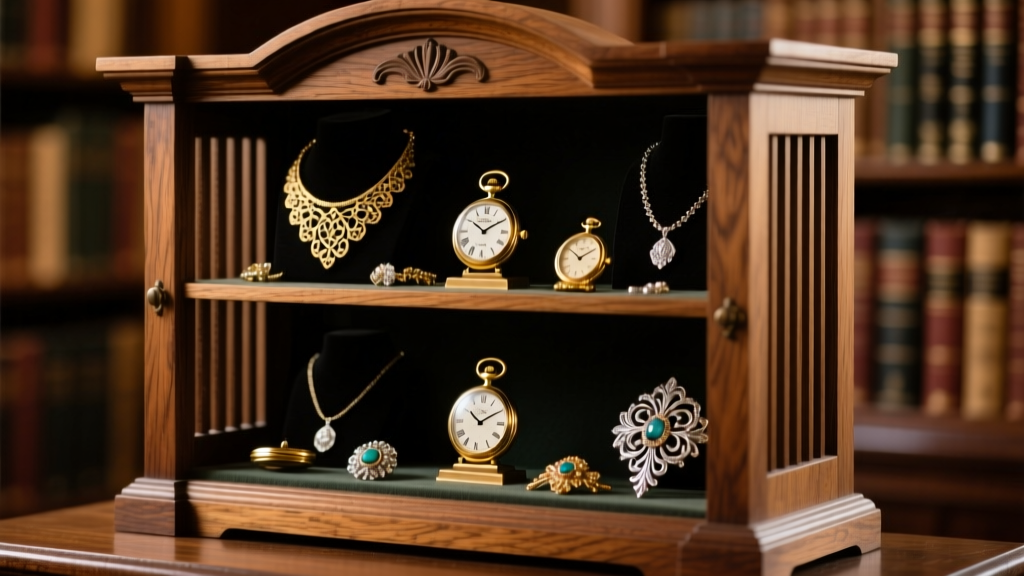
Oak Bookcase with Molded Top, Slatted Sides & Plinth Base: A 26-Inch Mid-Century Study in Craftsmanship and Function

The 'Medical Doctors Model' Carved Ivory Figure: A Ming Dynasty Enigma in Scholarly and Medical Iconography

Bottles, Milk: E. L. Huber & Marticville, PA — Embossed Platinum-Plated Glass and the Legacy of Early 20th-Century American Dairy Packaging
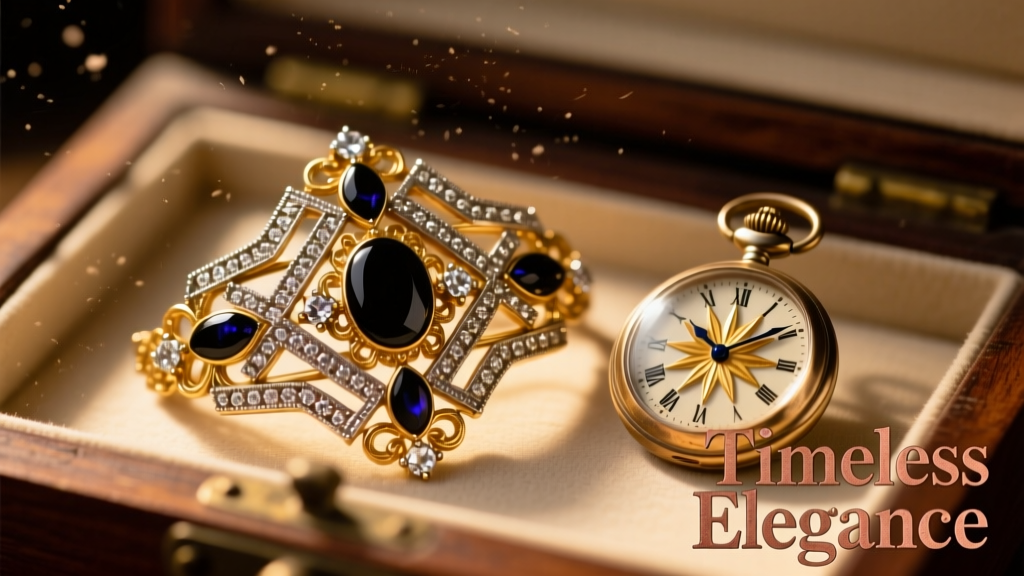
About Anything: The Unconventional Philosophy Behind Vintage Jewelry and Watch Collecting
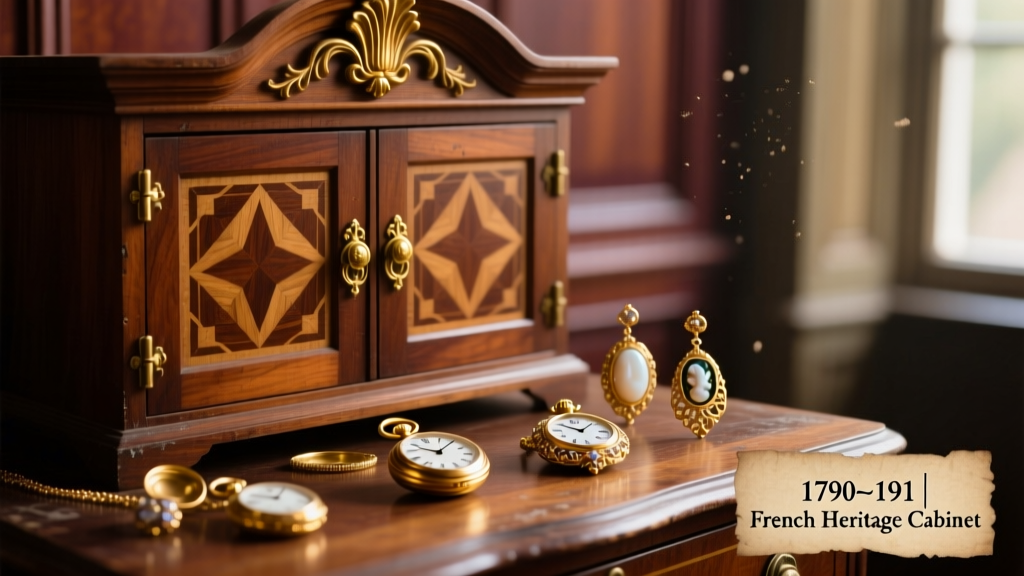
A Masterpiece of Late Louis XVI Elegance: The 1790–91 French Chestnut Armoire with Molded Cornice and Parquetry Doors