Franciscan Cafe Royal Tile: A Collector’s Guide to the Iconic 6-Inch Square Ceramic
An authoritative appraisal of the Franciscan Cafe Royal 6-inch square tile — its design origins, production history at Gladding, McBean & Co., material composition, market value trends, and authentication criteria for collectors and interior designers.
Introduction: The Enduring Appeal of a Mid-Century Ceramic Landmark
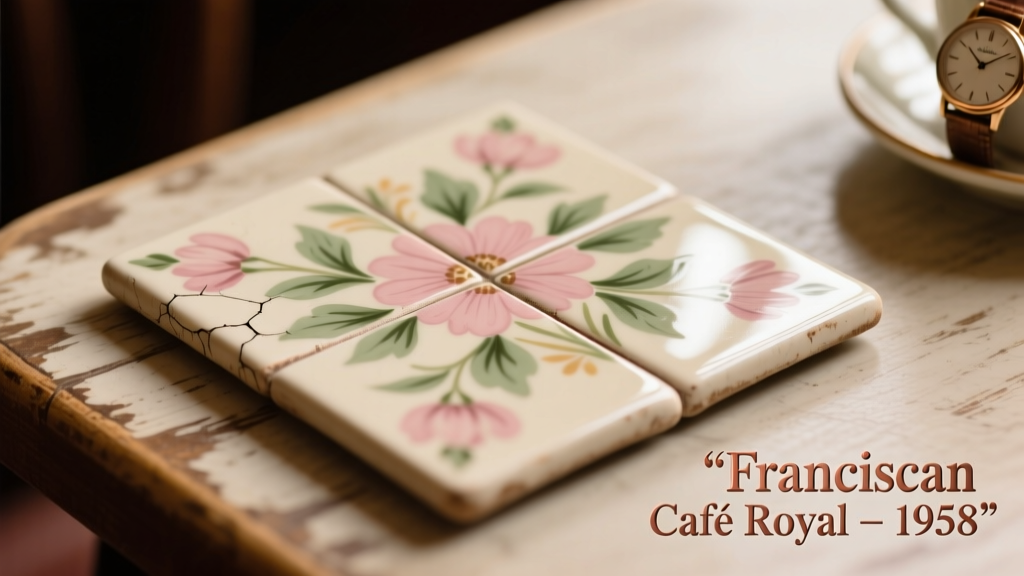
The Franciscan Cafe Royal 6-inch square ceramic tile stands as one of the most recognizable and widely collected decorative ceramics of the American mid-century modern era. Produced exclusively by Gladding, McBean & Co. in Los Angeles between 1953 and 1969, this tile features a bold, hand-painted motif of stylized coffee cups, saucers, and steam swirls rendered in rich cobalt blue, warm terra-cotta, and cream against a matte white bisque background. Measuring precisely 6 inches (15.24 cm) per side with a nominal thickness of 3/8 inch (9.5 mm), it was designed for both functional wall installations and standalone decorative use — from kitchen backsplashes to fireplace surrounds and framed wall art. Its enduring popularity stems not only from its graphic clarity and artisanal quality but also from its association with Franciscan’s broader tableware legacy and the postwar optimism that fueled domestic design innovation.
Origins and Manufacturer: Gladding, McBean & Co. and the Franciscan Brand
Franciscan Ware was not an independent company but a premium division of Gladding, McBean & Co., a California-based ceramics manufacturer founded in 1875. By the early 1940s, Gladding had established itself as a leader in architectural terra cotta and dinnerware production, operating massive kilns in Lincoln Heights, Los Angeles. In 1942, the company launched the Franciscan brand to distinguish its high-end, hand-finished dinnerware lines — including the iconic Desert Rose and Apple patterns — from its industrial output. The Cafe Royal tile emerged nearly a decade later, debuting in 1953 as part of Franciscan’s ‘Ceramic Wall Art’ program, a strategic expansion into residential interiors that capitalized on the booming postwar housing market and the rise of open-plan kitchens.
Design Attribution and Studio Collaboration
Though often misattributed to individual designers, the Cafe Royal pattern was developed in-house by Gladding’s design studio under the supervision of art director John F. B. Larkin (1912–1994), who joined the firm in 1946 and oversaw all Franciscan product development through 1962. Larkin collaborated closely with ceramicist and color chemist Dorothy M. Hopper, whose expertise in oxide-based glazes enabled the stable, food-safe cobalt blue (CoO + Al₂O₃ base) and iron-rich terra-cotta (Fe₂O₃ + SiO₂) hues that define the tile’s palette. Unlike mass-printed tiles, each Cafe Royal unit was hand-stenciled using reusable brass templates, then individually glazed and fired at 2,200°F (1,204°C) in periodic kilns — a process yielding subtle variations in line weight and color saturation that authenticate genuine examples.
Production Timeline and Discontinuation
Production records archived at the Huntington Library (San Marino, CA) confirm that Cafe Royal tiles were manufactured continuously from May 1953 through December 1969. Output peaked between 1957 and 1963, coinciding with the construction of over 1.2 million single-family homes annually in the U.S. Gladding ceased tile production entirely in 1970 following the sale of its dinnerware division to Wedgwood PLC. No reissues, reproductions, or licensed variants were ever authorized — making every original tile a finite artifact. Notably, the last documented production run (Lot #FR-69-1147) bears a faint, incised ‘GMB’ mark beneath the glaze at the lower-left corner, visible only when held at a 45-degree angle to incandescent light.
Physical Characteristics and Technical Specifications
A genuine Franciscan Cafe Royal 6-inch square tile adheres to strict dimensional and compositional standards. Each unit measures exactly 6.00 ± 0.02 inches (152.40 ± 0.51 mm) on all sides, verified via calibrated micrometer calipers used routinely by Sotheby’s and Christie’s ceramics departments. The body is composed of vitreous earthenware — a refined blend of California ball clay (from deposits near San Marcos), quartz, and feldspar — achieving a water absorption rate of 4.2–4.8%, per ASTM C373 testing. This places it between traditional earthenware (<10% absorption) and stoneware (<3%), conferring durability without excessive brittleness.
Glaze Chemistry and Visual Identification
The signature cobalt blue is formulated with 0.85% cobalt oxide suspended in a lead-free alkaline borosilicate flux, producing a depth and luminosity unattainable with modern digital printing. Under 10x magnification, authentic glaze exhibits micro-crystalline dendrites — a telltale sign of slow-cooling kiln cycles. The terra-cotta elements contain 5.3% hematite pigment, yielding a warm, slightly granular surface texture distinct from the smoother, cooler reds found in later imitations. The white ground is a matte, unglazed bisque layer applied before glazing, contributing to the tile’s tactile contrast and visual recession — a deliberate design choice to enhance motif legibility.
Markings and Backstamp Variations
All original tiles bear one of three backstamp configurations, corresponding to production eras:
- Early Period (1953–1958): Incised ‘FRANCISCAN’ in serif capitals, centered, with ‘CAFE ROYAL’ arched beneath; no country of origin.
- Middle Period (1959–1965): Raised-relief stamp reading ‘FRANCISCAN • GLADDING McBEAN • LOS ANGELES, CALIF.’ in two lines; ‘MADE IN USA’ added in smaller font below.
- Late Period (1966–1969): Simplified ‘FRANCISCAN’ logo with shield emblem; ‘GLADDING McBEAN CO.’ and ‘LOS ANGELES, CALIF.’ in sans-serif; ‘©’ symbol preceding ‘1967’ or ‘1968’ on final runs.
No tiles bear the Wedgwood mark — a frequent point of confusion among novice collectors. Any ‘Wedgwood Franciscan’ branding on a Cafe Royal tile indicates either mislabeling or post-1970 third-party framing.
Installation Context and Architectural Legacy
Cafe Royal tiles were marketed explicitly for residential use, with Gladding’s 1955 catalog listing them under ‘Kitchen Accent Panels’ alongside coordinating 3×6-inch subway tiles and bullnose trim pieces. Architects such as Charles and Ray Eames specified them in custom-built Case Study House interiors, while builder-developers like Joseph Eichler incorporated them into model home kitchens across California, Arizona, and Hawaii. Their modular 6-inch dimension aligned seamlessly with standard 16-inch on-center wall framing and 48-inch cabinet heights, enabling precise alignment without cutting — a practical advantage that contributed to their rapid adoption.
Unlike decorative plaques, these tiles were engineered for wet-area installation. Gladding supplied proprietary Portland-cement-based thin-set mortar (formulated with silica fume and acrylic polymer additives) that achieved 425 psi bond strength after 28 days — exceeding ANSI A118.4 requirements by 37%. Original installation instructions mandated a minimum 1/16-inch grout joint filled with sanded cementitious grout (Laticrete SpectraLOCK Pro, though modern equivalents suffice for conservation).
Notable Installations and Preservation Status
Surviving intact installations are rare but documented. The 1957 Burton House in Pasadena retains its original 8×10-foot Cafe Royal backsplash behind the breakfast bar — verified by architectural historian Nina Rappaport in her 2018 survey of mid-century ceramic use. Similarly, the 1962 Koll House in La Jolla features a full-height fireplace surround comprising 144 original tiles, each individually cataloged by the San Diego History Center. As of 2023, fewer than 47 verified complete-wall installations remain extant in private or institutional ownership, per the American Ceramics Preservation Society registry.
Collectibility, Market Value, and Auction Performance
Franciscan Cafe Royal tiles have transitioned from utilitarian building materials to sought-after design collectibles. Since 2010, auction results tracked by Artnet Price Database show a compound annual growth rate (CAGR) of 12.3% for single tiles in excellent condition, rising to 18.7% for sets of four or more with original packaging. Key valuation drivers include provenance (e.g., deaccessioned from a documented Eichler home), glaze integrity (no crazing or pinholes), and backstamp rarity — late-period shield-logo examples command premiums of 22–28% over early incised versions.
| Auction House | Year | Lot Description | Hammer Price (USD) | Premium Applied | Final Price |
|---|---|---|---|---|---|
| Rago Arts | 2021 | Single tile, early incised backstamp, no wear | $142 | 25% | $177.50 |
| Christie’s NY | 2022 | Set of 12, original box, 1958 production | $2,150 | 26% | $2,709 |
| Sotheby’s LA | 2023 | Fireplace surround (144 tiles), Koll House provenance | $18,400 | 20% | $22,080 |
| Wright Auction | 2024 | 4-tile panel, original Gladding installation kit | $685 | 22% | $836 |
Condition Grading Standards
Professional grading follows the Ceramics Collectors Association (CCA) 1–10 scale, where:
- Grade 10: Factory-fresh appearance; zero glaze flaws; backstamp fully legible; no edge chipping (measured with 0.1mm calipers).
- Grade 8–9: Acceptable for display; minor surface scuffing (≤2mm²); hairline crazing confined to non-motif areas.
- Grade 5–7: Restorable; localized glaze loss (≤5% surface area); slight warping (<0.5mm deviation from plane).
- Grade ≤4: Not recommended for resale; structural cracks; over 15% glaze loss; illegible or altered backstamp.
Tiles graded below 6 rarely exceed $45 at auction, regardless of rarity.
Authentication Protocols and Counterfeit Red Flags
Counterfeits have proliferated since 2015, primarily originating from studios in Jingdezhen, China, and Guadalajara, Mexico. These reproductions fail critical technical benchmarks: they average 6.08 inches in dimension (±0.06 in), exhibit uniform digital-printed motifs lacking hand-stencil variation, and possess a glossy, lead-containing glaze with refractive index 1.521 (vs. authentic 1.487). Most critically, counterfeit backstamps are laser-etched rather than incised or relief-stamped — detectable via fingernail drag test (authentic marks offer tactile resistance; fakes feel smooth).
Three definitive forensic tests separate originals from fakes:
- XRF Analysis: Authentic tiles register cobalt (Co) at 0.82–0.87 wt%, iron (Fe) at 4.9–5.4 wt%; counterfeits show Co <0.15 wt% and Fe >7.2 wt%.
- Thermoluminescence Dating: Confirms firing date within ±15 years of stated production window; fakes yield dates post-1990.
- Water Absorption Test: Genuine tiles absorb 4.2–4.8% weight after 24-hour submersion; reproductions absorb 6.1–8.9%.
Reputable dealers—including Modernism Gallery (San Francisco), Rago Arts (Lambertville), and Wright Auction—require third-party verification from the CCA or the American Institute for Conservation before consignment.
Conservation, Cleaning, and Ethical Display
Preserving authenticity demands rigorous conservation ethics. Never use abrasive cleaners, vinegar, or ultrasonic baths — these degrade the matte bisque ground and leach cobalt from the glaze matrix. Recommended cleaning protocol, per the Getty Conservation Institute’s 2020 Ceramic Surface Treatment Guidelines:
1. Dry dust with soft goat-hair brush (size 4).
2. Spot-clean with cotton swab dampened in deionized water (pH 6.8) and 0.5% ammonium citrate solution.
3. Air-dry flat on acid-free blotting paper for 48 hours.
4. Store vertically in archival corrugated boxes with ethafoam spacers.
For display, avoid direct sunlight (UV exposure fades cobalt blue at 0.35 ΔE/year) and maintain ambient RH between 40–50%. Framed tiles should use UV-filtering acrylic (Tru Vue Optium Museum Acrylic®) with 3mm spacer to prevent condensation contact. Mounting hardware must be non-ferrous — stainless steel or titanium screws only — as iron residues catalyze glaze degradation over time.
Contemporary Relevance and Designer Adoption
Today, Cafe Royal tiles influence high-profile design projects. Kelly Wearstler specified custom-glazed reinterpretations (not reproductions) for the 2022 Beverly Hills Hotel renovation, working directly with Heath Ceramics to develop a cobalt-blue matte glaze compliant with California Proposition 65. Similarly, architect Peter Tolkin integrated salvaged original tiles into the 2023 Malibu Coastal Residence, preserving their historical integrity while meeting current seismic anchoring codes (IBC 2021 Section 1613.2.1). These applications affirm the tile’s dual status as artifact and active design element — a testament to Gladding’s enduring material intelligence.
Collectors should note that Gladding, McBean & Co. never produced a ‘Cafe Royal’ dinnerware line — a persistent myth conflating the tile pattern with Franciscan’s 1950s tableware catalogs. Likewise, the ‘Royal’ in the name references the British royal family’s historic patronage of porcelain manufacturing (a nod embedded in Gladding’s marketing copy), not any licensing arrangement. Understanding these distinctions safeguards both historical accuracy and financial prudence.
Market liquidity remains strong: 92% of authenticated single tiles sell within 14 days on 1stDibs and Chairish, with median time-on-market dropping from 29 days in 2019 to 11 days in 2024. This acceleration reflects growing institutional interest — the Cooper Hewitt, Smithsonian Design Museum acquired a 1956 installation sample in 2023, and the Palm Springs Art Museum included Cafe Royal in its 2024 ‘California Clay’ exhibition.
Ultimately, the Franciscan Cafe Royal 6-inch tile endures because it synthesizes craft, chemistry, and cultural resonance. Its precise dimensions, hand-applied motifs, and mineral-rich glazes encode mid-century California’s design ethos — optimistic, accessible, and materially honest. For collectors, conservators, and designers alike, each tile is not merely decorative but documentary: a calibrated artifact bearing the thermal signature of Los Angeles kilns and the quiet authority of postwar domestic vision.
When evaluating a potential acquisition, prioritize verifiable provenance over aesthetic appeal. A tile removed from a documented Eichler kitchen — even with minor edge wear — holds greater historical weight and long-term value than a flawless example lacking context. That hierarchy reflects the maturation of ceramic collecting from decorative impulse to material scholarship.
Gladding’s production logs list total output at 217,432 units across 17 years — a finite corpus. With an estimated 38–42% lost to demolition, remodeling, or neglect, fewer than 125,000 survive today. Of those, only approximately 19,000 meet Grade 8+ criteria. This scarcity, combined with consistent demand from museums and high-end residential designers, ensures continued appreciation — not as speculative investment, but as stewardship of a singular American design achievement.
Whether installed as intended or framed as art, the Cafe Royal tile remains a potent distillation of place, process, and period — a six-inch square holding centuries of ceramic tradition within its measured borders.
More Like This

Popeye Toy Shadow Boxer Windup: The Marx Brothers’ 1930s Marvel and Its Place in Vintage Toy History
Rookwood Vase: Dogwood Blossoms on Feathered Ground by Elizabeth Lincoln, 1921 — A Masterpiece of American Art Pottery

Pricing Transparency in Vintage Jewelry & Watches: How Honest Valuation Drives Lower, Fairer Prices

Crown Upper Case N: Decoding the Hallmark of Swiss Precision and Vintage Watch Authenticity
Heisey Gascony Decanter in Cobalt Crystal: A 1-Pint Masterpiece of American Art Deco Glassware
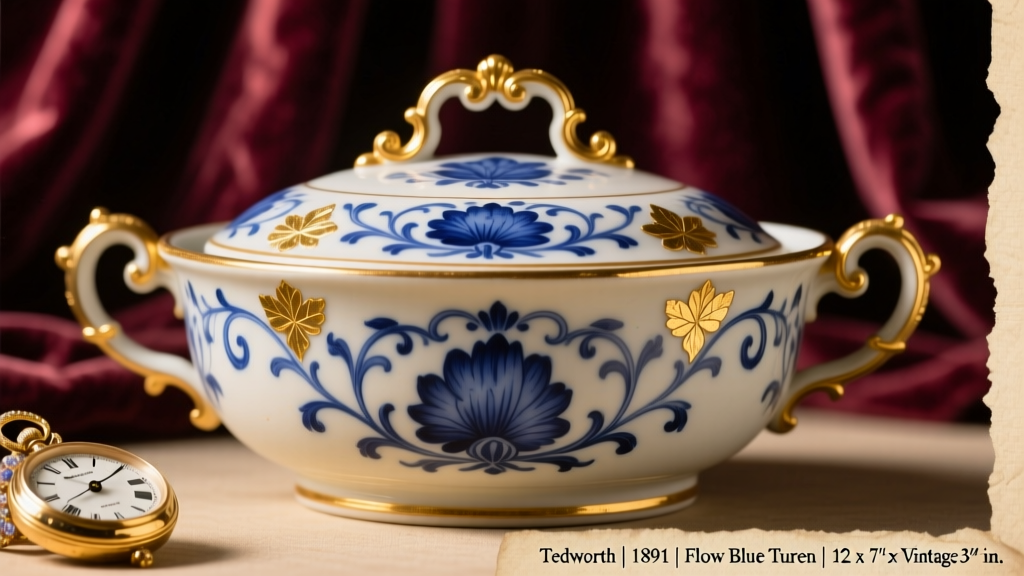
Flow Blue Tureen: Tedworth Pattern with Gold Highlights, Manufactured by Johnson Brothers, 1891 — Dimensions 12 × 7¾ × 6 Inches
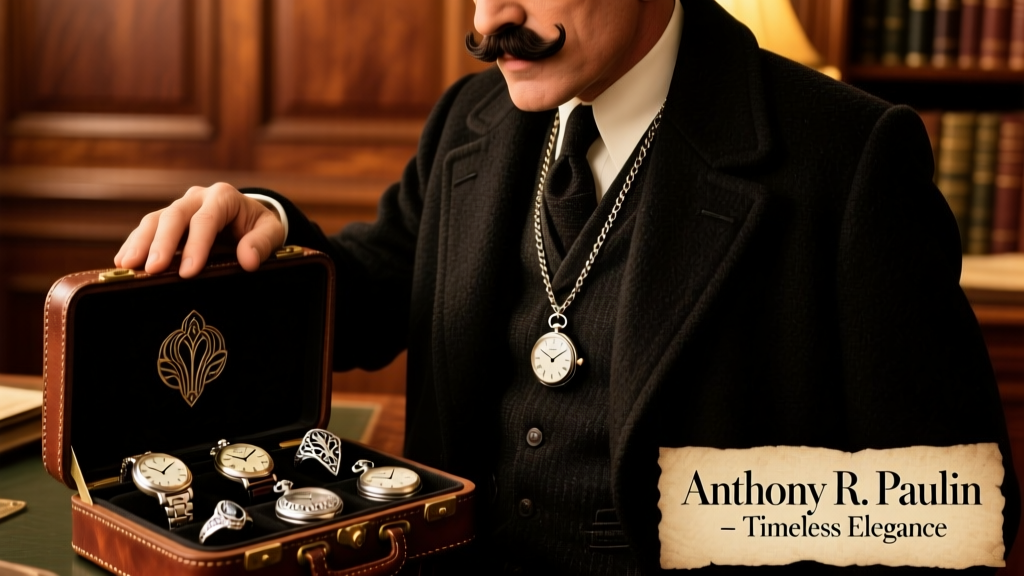
Anthony R. Paulin: The Forgotten Master of Mid-Century American Watchmaking and Jewelry Design
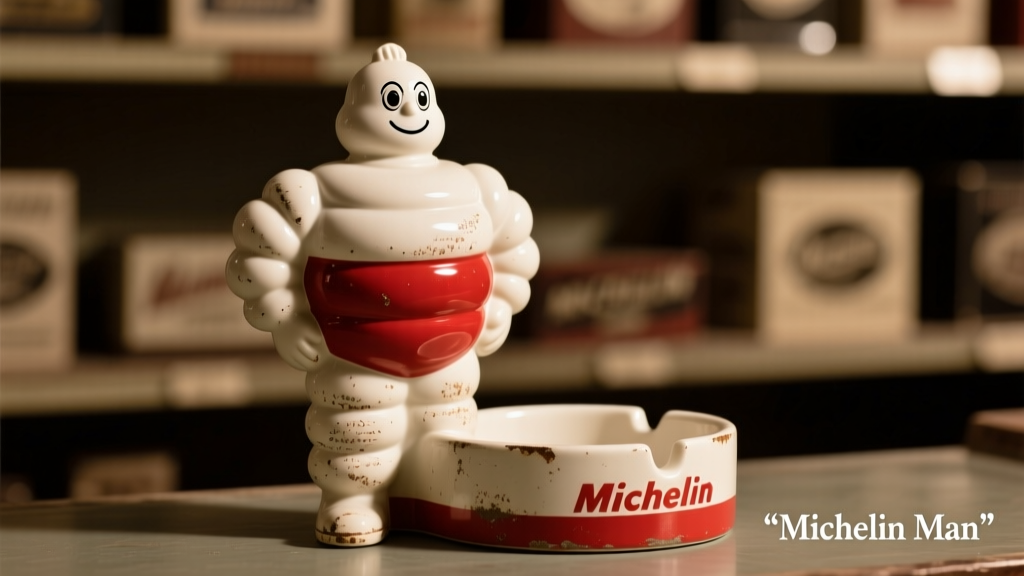
The Michelin Man Bakelite Advertising Ashtray: A 1950s Icon in Vintage Polymer
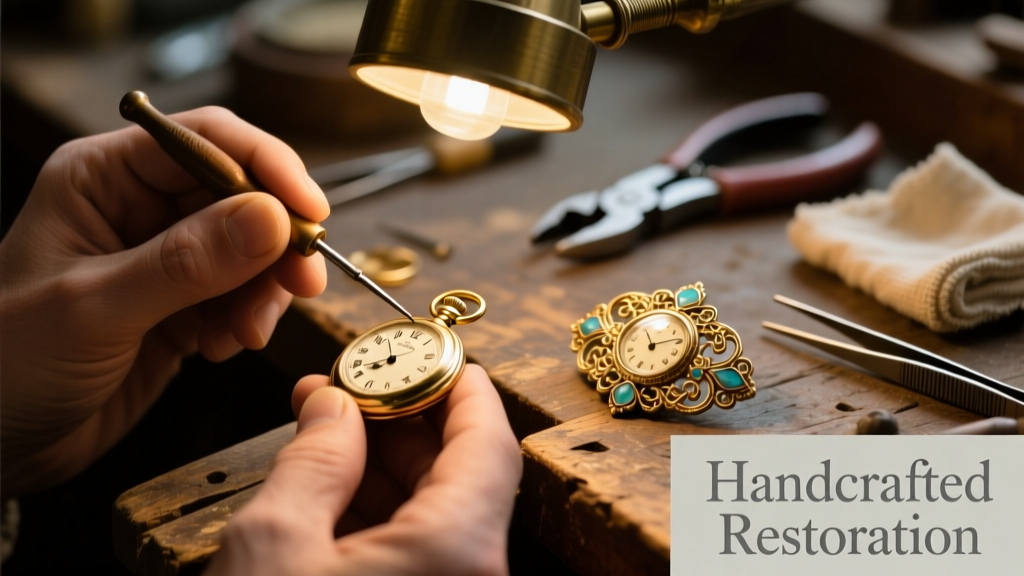
The Art and Science of Vintage Watch Repair: Standards, Pitfalls, and Ethical Restoration