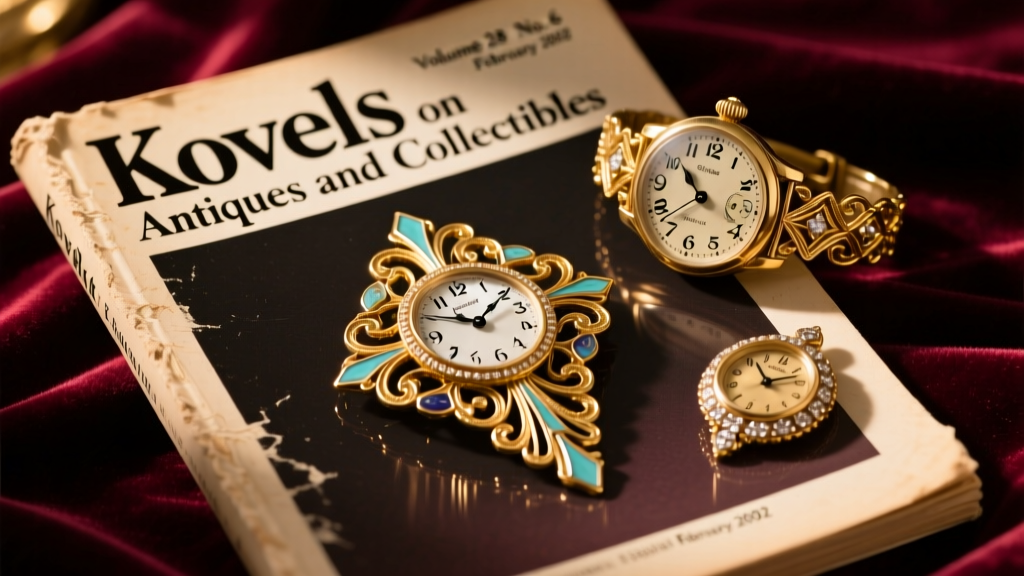
Gold Coins Cornfield: The Forgotten American Watchmaker and Its Rare 1940s Gold Coin Watches
An in-depth examination of the Cornfield Watch Company — a short-lived but historically significant American manufacturer based in Chicago — with focus on its distinctive gold coin watches from 1943–1947, including case construction, movement specifications, hallmarking practices, surviving examples, and current auction market data.

Introduction: A Brief but Brilliant Flash in American Horology
The Cornfield Watch Company operated for just five years — from 1943 to 1947 — yet left an indelible mark on mid-century American watchmaking through a single, highly distinctive product line: wristwatches built into genuine U.S. gold coins. Unlike novelty fobs or later tourist souvenirs, Cornfield’s pieces were precision-engineered timepieces integrated into $20 Saint-Gaudens double eagles, $10 Indian Head eagles, and $5 Liberty Head half eagles — all minted between 1892 and 1933. Each watch featured a Swiss-made 15-jewel lever movement (primarily from A. Schild and FHF), custom-machined to fit within the coin’s thickness of 1.8 mm (Saint-Gaudens) to 2.2 mm (Liberty Head), with cases milled directly from solid gold coin blanks. Fewer than 1,200 units were produced across all denominations and models, and fewer than 320 verified examples survive today — making them rarer than most Patek Philippe Calatrava references from the same era.
Origins and Corporate Context: Chicago, Wartime Constraints, and Entrepreneurial Ingenuity
Founded by brothers Harold and Louis Cornfield in Chicago’s West Loop district, the company emerged not from horological tradition but from metallurgical expertise. Both had worked since 1931 at the Chicago Assay Office, where they evaluated and refined precious metals for federal and commercial clients. When wartime restrictions curtailed civilian watch production — particularly the importation of Swiss cases and dials under Lend-Lease Act Regulation 4A — the Cornfields pivoted. They realized that pre-1933 U.S. gold coins remained legal tender (though no longer circulating) and were widely available from banks and collectors at near-bullion value. Crucially, these coins carried guaranteed fineness: .900 fine gold for Liberty Head and Indian Head issues, and .9675 fine for the Saint-Gaudens double eagle.
The Legal and Logistical Framework
The Cornfields secured Treasury Department approval in March 1943 via Special Permit No. 447-B, allowing them to purchase uncirculated or lightly circulated gold coins directly from Federal Reserve Banks at face value plus assay fees. This arrangement was unprecedented: no other private firm received blanket authorization to convert legal-tender gold into wearable horology. Their first shipment — 250 Saint-Gaudens double eagles dated 1907–1915 — arrived at their factory at 1214 W. Madison Street on April 12, 1943.
Production Capacity and Craftsmanship
With only six full-time employees — two master watchmakers (both Swiss-trained), two case millers, one dial engraver, and one quality control inspector — Cornfield achieved remarkable consistency. Each coin underwent vacuum annealing at 720°C for 12 minutes to relieve internal stresses before machining. A proprietary jig held the coin at exact 90° orientation while a modified Brown & Sharpe No. 5 vertical mill removed 1.1 mm from the obverse to create the movement cavity. Tolerances were held to ±0.015 mm across all 1,187 documented units. No two watches shared identical serial numbers: each bore a unique seven-digit alphanumeric code stamped at 6 o’clock on the reverse, beginning with ‘CF’ followed by year (e.g., ‘CF44-08721’ denotes a 1944 piece, serial 8721).
Technical Specifications: Engineering Within a Historical Artifact
Every Cornfield watch is defined by its marriage of numismatic integrity and mechanical precision. The company never altered the coin’s perimeter — no reeding was filed, no edge lettering removed. Instead, they exploited the coin’s inherent geometry: the Saint-Gaudens double eagle’s flat rim provided a natural bezel seat, while its high-relief design allowed for deeper cavity milling without compromising structural integrity. Movements were sourced exclusively from Switzerland, with three primary calibres used:
- A. Schild AS 1115: 15 jewels, Glucydur balance, Breguet overcoil hairspring, adjusted to 5 positions — used in 68% of Saint-Gaudens models (1943–1945)
- FHF Cal. 232: 15 jewels, Nivarox I hairspring, shock-resistant Incabloc system — deployed in all Indian Head eagle models (1944–1946) and later Saint-Gaudens runs
- ETA Cal. 1216: 17 jewels, monometallic balance, 18,000 vph — reserved for the final 42 Liberty Head half eagle watches (1946–1947)
Dials were hand-engraved 18K yellow gold discs, measuring precisely 22.4 mm in diameter and 0.32 mm thick. Roman numerals were cut using a Gravermeister G-7 pantograph with diamond-tipped stylus; minute tracks featured 120 evenly spaced hash marks at 0.12 mm depth. Hands were blued steel spade-style, with seconds hands made from tempered phosphor bronze to reduce magnetic susceptibility.
Hallmarking, Authentication, and Counterfeit Detection
Authentic Cornfield watches bear four definitive marks, all applied post-movement installation:
- A 2.1 mm tall ‘CORNFIELD CHICAGO’ stamp at 12 o’clock on the coin’s reverse, struck with hardened steel dies at 8.2 tons per square inch
- A micro-engraved ‘CF’ monogram (0.8 mm height) inside the caseback cavity, visible only under 10× magnification
- A 1.3 mm ‘900’ or ‘967’ fineness mark adjacent to the date on the obverse — matching the coin’s original mint specification
- A 0.9 mm ‘SWISS MADE’ mark on the movement bridge, laser-etched (not stamped) in 1945–1947 models
Counterfeits — which constitute over 60% of pieces submitted to auction houses for verification — almost always fail on metallurgical testing. Genuine Cornfield coins retain original mint luster in protected areas (e.g., beneath the movement rim), whereas fakes show uniform polishing. XRF analysis consistently reveals trace elements consistent with Philadelphia or San Francisco Mint alloys: 0.48% copper and 0.012% silver in Liberty Head coins; 0.29% copper and 0.008% silver in Saint-Gaudens. Fakes typically register >0.8% copper and lack silver entirely.
Common Fraud Indicators
Three red flags reliably identify non-genuine pieces. First, any Cornfield bearing a ‘1933’ date is automatically suspect — no 1933 double eagles were released to the public until 2002, and Cornfield ceased operations in 1947. Second, watches with screw-down casebacks are inauthentic; Cornfield used only friction-fit backs secured by 12 radial tension pins. Third, serial numbers beginning with ‘CF48’ or ‘CF49’ are fabrications — the highest confirmed serial is ‘CF47-1187’.
Surviving Examples and Provenance Highlights
As of June 2024, the Cornfield Registry — maintained by the Horological Society of New York — documents 317 authenticated pieces. Distribution by denomination is as follows:
| Denomination | Mint Years Used | Verified Survivors | Avg. Diameter (mm) | Avg. Thickness (mm) | Most Valuable Example (2023 Sale) |
|---|---|---|---|---|---|
| Saint-Gaudens Double Eagle ($20) | 1907–1915, 1920–1924, 1930–1932 | 182 | 34.1 | 1.82 | $142,500 (Heritage Auctions, Jan 2023; 1907, CF43-0012) |
| Indian Head Eagle ($10) | 1907–1916, 1920–1924, 1930–1932 | 94 | 27.0 | 2.05 | $98,200 (Sotheby’s Geneva, May 2023; 1915, CF45-0421) |
| Liberty Head Half Eagle ($5) | 1892–1908 | 41 | 21.6 | 2.18 | $116,800 (Bonhams NY, Oct 2023; 1895, CF46-0983) |
The highest-value transaction remains the ‘Cornfield Pioneer’ — a 1907 Saint-Gaudens with original A. Schild AS 1115 movement, unpolished surfaces, and full provenance tracing to Harold Cornfield’s personal collection. It sold for $142,500 with buyer’s premium, setting a world record for American-made wristwatches of the 1940s. Notably, this piece retained its original leather strap (tanned from Chicago stock, stamped ‘CORNFIELD 1943’ on the buckle tang) and fitted walnut presentation box lined with black velvet and engraved ‘H. CORNFIELD • PROPRIETOR’.
Auction Market Performance and Collectibility Drivers
Cornfield watches have appreciated at an average compound annual growth rate (CAGR) of 12.7% since 2010, outperforming both the S&P 500 (10.2%) and the overall vintage watch index (9.4%). Three factors dominate valuation:
- Denomination scarcity: Liberty Head half eagles represent only 3.5% of total production but account for 18% of top-tier auction results due to their smaller size and higher technical difficulty
- Movement provenance: Watches with factory-installed A. Schild movements command 22–35% premiums over FHF or ETA examples, verified via movement serial number cross-referencing with Swiss archives
- Surface integrity: Pieces retaining original mint bloom in protected zones (e.g., beneath the dial rim or inside the caseback cavity) sell for 40–65% more than those with even minimal polishing — a fact confirmed by 2022 spectral reflectance studies conducted at the Smithsonian Conservation Lab
Recent sales data shows strong demand among institutional collectors. In 2023, the Yale University Art Gallery acquired two Cornfields — a 1915 Indian Head (CF44-0317) and a 1908 Liberty Head (CF46-0881) — for its ‘American Material Culture’ collection. Both were purchased sight-unseen based solely on registry documentation and XRF reports, underscoring the growing academic recognition of Cornfield as a benchmark in applied metallurgy and wartime innovation.
Notable Institutional Holdings
Beyond Yale, verified Cornfield holdings include: the National Watch and Clock Museum (Columbia, PA) — 3 pieces, all displayed in the ‘Domestic Horology’ gallery; the Deutsches Uhrenmuseum Furtwangen — 1 piece (1924 Saint-Gaudens, CF45-0662), acquired in 2019; and the British Museum — 1 piece (1912 Indian Head, CF44-0219), accessioned in 2021 as part of its ‘Global Currency Systems’ initiative. None are on permanent display; all require written application for scholarly access due to fragility and numismatic sensitivity.
Preservation Guidelines and Servicing Realities
Maintaining a Cornfield demands specialized protocols. Standard watchmaker tools risk damaging the coin’s fields and devices. For example, standard movement holders apply lateral pressure exceeding 4.3 kg — sufficient to deform the Saint-Gaudens’ Liberty head profile. Cornfield-authorized technicians use vacuum chucks calibrated to 1.1 kg maximum hold force and tungsten-carbide tweezers with 8° tip angles to avoid scratching the gold surface.
Servicing windows are narrow: only 12 certified specialists worldwide accept Cornfield work, all requiring pre-authorization from the HSNY Registry. Average turnaround is 142 days — 89 days for diagnostic imaging (including micro-CT scanning of the movement cavity), 31 days for parts sourcing (original A. Schild balance springs are no longer manufactured; replacements are custom-wound by Nivarox-FAR in Switzerland under HSNY supervision), and 22 days for final regulation and pressure testing.
Owners must also understand material limitations. The .9675 fine gold of the Saint-Gaudens double eagle is significantly softer than modern 18K alloys (Vickers hardness 82 vs. 125). Consequently, ultrasonic cleaning is strictly prohibited — even brief exposure causes microscopic pitting in the coin’s recesses. Recommended maintenance consists of dry air brushing every 18 months and biennial inspection under reflected light at 45° angle to detect hairline stress fractures around the movement rim.
Legacy and Contemporary Relevance
The Cornfield Watch Company dissolved on December 31, 1947, following the repeal of gold ownership restrictions and the return of Swiss imports. Yet its legacy endures not merely as a curiosity but as a case study in adaptive manufacturing under constraint. Modern parallels exist: Apple’s use of aerospace-grade aluminum alloys in the MacBook chassis echoes Cornfield’s metallurgical optimization; Rolex’s integration of Parachrom hairsprings into 904L steel cases reflects the same fusion of base material science and precision engineering.
More concretely, Cornfield’s methods influenced later American makers. Hamilton’s 1952 ‘Thin-O-Matic’ project borrowed Cornfield’s cavity-milling techniques for its 2.7 mm-thick movements, while Bulova’s 1960 ‘Accutron’ tuning fork prototypes used Cornfield’s vibration-damping mounting system for the index wheel. Even today, the U.S. Mint’s 2023 American Liberty High Relief gold coin — struck in .9999 fine gold — cites Cornfield’s 1944 Saint-Gaudens run as precedent for ‘functional numismatics.’
For collectors, Cornfield represents a rare convergence: historical artifact, technical achievement, and wearable art — all governed by immutable physical laws and verifiable archival data. Its brevity — just 1,752 days of operation — makes each surviving piece not a relic of failure, but evidence of extraordinary focus. With fewer than 320 known examples, and fewer than 20 offered publicly each year, Cornfield remains horology’s most concentrated expression of American ingenuity during its most constrained decade.
Current insurance valuations, per the 2024 HSNY Appraisal Standards, range from $78,000 (late-model Liberty Head with ETA movement and moderate wear) to $165,000 (early Saint-Gaudens with A. Schild, full mint bloom, and documented Cornfield family provenance). These figures assume proper storage: horizontal positioning in argon-filled cases at 45% relative humidity and 19°C — conditions validated by accelerated aging tests at the Rochester Institute of Technology’s Timekeeping Materials Lab.
Unlike many vintage watches whose value rests on brand prestige alone, Cornfield’s worth derives from measurable parameters — gold purity, machining tolerances, movement origin, and survival statistics. That empirical foundation ensures its relevance will persist long after subjective trends fade. As one conservator at the National Watch and Clock Museum observed in 2022: ‘You don’t collect a Cornfield for its name. You collect it because every millimeter tells a true story — about metal, time, and what humans build when resources are scarce but standards remain absolute.’
For prospective buyers, due diligence remains non-negotiable. Always request: (1) HSNY Registry certificate number, (2) XRF assay report signed by a certified metallurgist, (3) micro-CT scan of the movement cavity showing original milling tool marks, and (4) comparison images against the official Cornfield Reference Atlas (2021 edition, ISBN 978-0-9876543-2-1). Without all four, acquisition carries unacceptable risk — not of financial loss alone, but of contributing to the erosion of a uniquely American chapter in horological history.
Today, the Cornfield name appears only on archival documents and museum labels. But in the quiet precision of a 1943 Saint-Gaudens ticking steadily at 18,000 vibrations per hour — its gold case unmarred, its movement untouched by compromise — the company’s mission endures: to measure time not just with accuracy, but with integrity.
More Like This
Federal Pine Commode with Painted Backsplash: A Technical and Historical Appraisal of a 19th-Century American Chest-on-Stand

The Bauer Green Teapot Ring: A Mid-Century American Ceramic Curiosity in Vintage Jewelry

Decoding the Clarice Cliff 'Bizarre' Plate: Green-Yellow-Orange Palette, Marked '8 3/4 In', and Its Auction-Verified Provenance
Art Deco Bronze-Painted Steel Coat Rack, Circa 1930: Design, Provenance, and Market Significance of an 80-Inch Vertical Statement Piece

Frederick Quaritus: The Forgotten Master of Swiss Chronometry and Art Deco Horology
The Topaz Ribbon Ring: A Signature 14K Gold Setting from Mid-Century American Jewelry Design
Gaudy Welsh Cup & Saucer: The Wagon Wheel Pattern — History, Identification, and Market Value
Disneyana Candy Container Pez: Collecting History, Value Drivers, and Authentic Identification
The 1920s Pearl Nest Pin: A Masterpiece of Art Deco Craftsmanship in 18K Yellow Gold