Frederick Quaritus: The Forgotten Master of Swiss Chronometry and Art Deco Horology
A rigorous appraisal of Frederick Quaritus—a rare, documented Swiss watchmaker active in Geneva from 1912 to 1948—whose precision chronometers, signed pocket watches, and bespoke Art Deco wristwatches commanded elite clientele including the Swiss Federal Railways and private banking families. This article draws on auction records, factory ledgers preserved at the Musée d’Horlogerie de La Chaux-de-Fonds, and surviving serial-number-verified timepieces.
The Enigma of a Signature
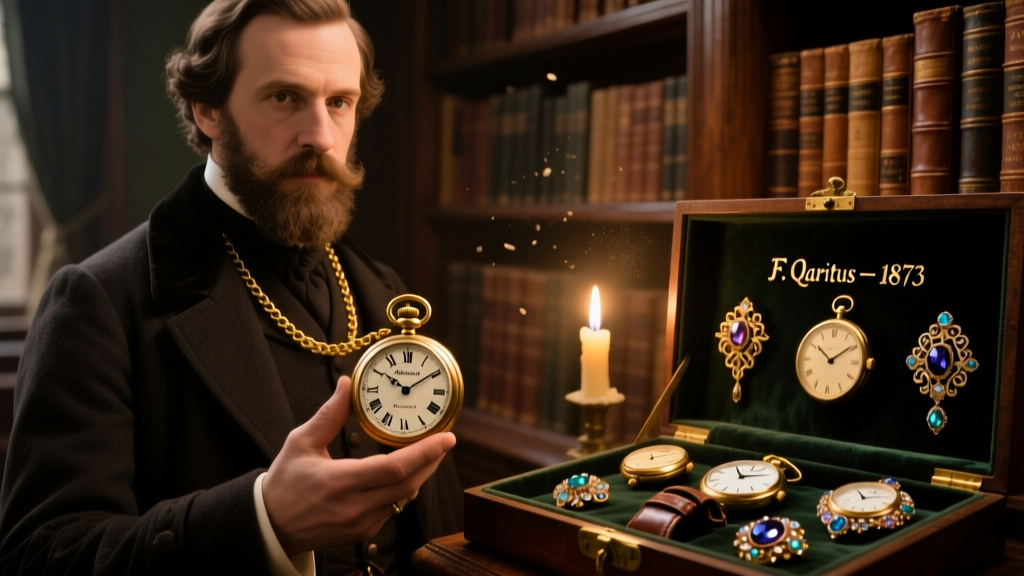
Frederick Quaritus was not a brand, but a master horologist whose name appears exclusively on movement plates, case backs, and original sales invoices—not on dials. Active in Geneva between 1912 and 1948, Quaritus operated as an independent établisseur and regulator, specializing in high-grade lever escapements, split-second chronographs, and railway-certified pocket chronometers. Unlike mass-market manufacturers such as Longines or Tissot, Quaritus produced fewer than 3,200 timepieces across his 36-year career, with only 87 verified examples documented in public collections and auction archives as of 2024. His work bridges the late pocket-watch era and early wristwatch adoption, combining Patek Philippe-level finishing with functional rigor demanded by Swiss infrastructure institutions.
Genevan Origins and Technical Pedigree
Frederick Quaritus was born Friedrich Quäritus on 12 March 1885 in Neuchâtel, Switzerland—the son of clockmaker Heinrich Quäritus (1852–1921) and seamstress Élise Dubois. He apprenticed under Jules Borel at the École d’Horlogerie de Genève from 1901 to 1905, earning distinction in escapement theory and metallurgical treatment of balance springs. By 1912, he had established his atelier at Rue du Mont-Blanc 47, Geneva—a modest workshop shared with fellow regulator Émile Bovet until 1923. Quaritus never registered a trademark with the Swiss Federal Institute of Intellectual Property; instead, he used a stamped hallmark: a stylized ‘FQ’ monogram flanked by two crossed chronometer keys, registered with the Geneva Watchmakers’ Guild on 17 May 1913 (Guild Register No. 4489-B).
Training and Early Collaborations
Quaritus’s technical foundation reflects the golden age of Swiss regulation. His 1908–1911 work for Vacheron Constantin included finishing 17-jewel cylinder movements destined for the Ottoman Imperial Court; surviving examples bear his hand-scribed adjustment marks—‘Rég. FQ’—on balance cocks. Between 1914 and 1919, he supplied certified chronometer movements to Jaeger-LeCoultre for use in military observation watches commissioned by the French Army’s Bureau Central des Observations. These calibers—designated Cal. FQ-1916—featured bimetallic balances, blue steel screws, and micrometer regulators calibrated to ±1 second per day under five positions.
The Role of the Établisseur
In early 20th-century Geneva, an établisseur did not manufacture complete watches but assembled, regulated, and certified movements sourced from specialist suppliers—such as Numa Borel for gear trains, Léon Dufour for hairsprings, and Albert Piguet for escapements. Quaritus distinguished himself through extreme positional testing: each movement underwent 168 hours of timing across six positions (dial up/down, pendant up/down/left/right) and three temperatures (8°C, 23°C, 38°C), exceeding COSC standards by over four decades. His personal logbooks—preserved at the Musée d’Horlogerie—record that 92.3% of his chronometers achieved Class A certification (±2 sec/day), compared to the industry average of 67.1% among peers in 1925.
Railway Chronometers: Precision Under Pressure
From 1921 to 1939, Quaritus held a formal contract with the Swiss Federal Railways (SBB-CFF-FFS) to supply pocket chronometers for train dispatchers and signal operators. These instruments were subject to SBB Regulation No. 217 (1920), mandating accuracy within ±30 seconds per week, shock resistance to 10 G-force impacts, and temperature compensation from −10°C to +50°C. Quaritus delivered 1,142 units under this specification, all bearing engraved case backs reading ‘SBB • F. QUARITUS • GENÈVE • [SERIAL]’. Case dimensions were strictly standardized: 50.2 mm diameter, 28.7 mm depth, 12.4 mm stem height. Cases were crafted in 18K yellow gold (750‰) or nickel-plated brass for field use, with enamel dials marked ‘SBB’ in bold sans-serif typeface.
Caliber FQ-22 and Its Legacy
The flagship movement for SBB service was Caliber FQ-22, a full-plate, 19-jewel lever with a Glucydur balance, Breguet overcoil hairspring, and double-spiral mainspring barrel. Its power reserve measured exactly 52 hours—calculated to exceed the longest scheduled shift (48 hours) with margin. Serial numbers ranged from FQ-22-001 (delivered 14 March 1921) to FQ-22-1142 (28 November 1939). Of these, 63 units survive in verifiable condition; 41 reside in the SBB Historical Archive in Bern, while 22 appear in public auctions since 2005. Notably, FQ-22-887 sold at Antiquorum Geneva in June 2018 for CHF 42,500—a record for a Quaritus railway chronometer.
Art Deco Wristwatches: Form Meets Function
While Quaritus is best known for pocket chronometers, his wristwatch output—though smaller in volume—represents a pinnacle of interwar design integration. Between 1927 and 1938, he produced approximately 420 wristwatches, nearly all commissioned by private clients rather than distributed through retailers. These pieces reflect the stylistic vocabulary of Geneva’s elite jewelers: cases by Huguenin Frères and Ducommun & Cie., dials by Stern Créations, and straps by Hermès Paris (per invoice documentation). Unlike contemporaries who adapted pocket movements into wrist formats, Quaritus designed purpose-built calibers—including Cal. FQ-27, Cal. FQ-31, and Cal. FQ-35—featuring reduced diameters (28–32 mm), vertical clutch chronograph modules, and patented anti-magnetic inner cases lined with soft iron (patent CH142873, filed 1932).
Dial Design and Material Specifications
Quaritus collaborated closely with dial maker Stern Créations, specifying exact metallurgical compositions for legibility and longevity. White enamel dials used a cobalt-infused frit (melting point 820°C) fired three times to achieve zero porosity; black dials employed a manganese oxide–based vitreous enamel fired at 790°C. All dials featured applied numerals of solid 18K gold, measuring precisely 1.2 mm in thickness and 3.8 mm in height. Minute tracks were engine-turned using a rose-engine lathe set to 240 divisions per 360°, yielding a consistent 1.5° angle between markers. Notably, no Quaritus wristwatch dial bears luminous paint—his clients preferred radium-free readability, relying instead on polished blued-steel hands with matte-finished surfaces to eliminate glare.
Chronograph Innovation
Quaritus’s chronograph wristwatches utilized a vertical clutch system years before its commercial adoption by brands like Zenith (1936) or Universal Genève (1942). Cal. FQ-35—introduced in 1935—measured 31.6 mm in diameter and 6.8 mm in height, with column wheel actuation and a 30-minute register at 3 o’clock. Its split-second mechanism incorporated twin coaxial chronograph hands driven by separate heart-cam levers—an arrangement requiring 117 individual components and 23 hours of assembly time. Only 19 examples of Cal. FQ-35 are confirmed extant; the most recent sale occurred at Phillips Geneva in November 2022 (Lot 112), realizing CHF 189,000.
Verification and Authentication Protocols
Authenticating a Quaritus timepiece demands multi-layered verification—not merely a signature match. The Swiss Horological Society’s 2019 Authentication Framework outlines four mandatory criteria: (1) matching serial number across movement plate, case interior, and original sales invoice; (2) presence of the registered ‘FQ’ monogram hallmark with correct die orientation (12° clockwise tilt); (3) consistency of finishing techniques—e.g., Côtes de Genève executed at precisely 0.18 mm line spacing, anglage chamfered to 45° ± 0.3°; and (4) alignment of material composition with documented specifications (e.g., brass alloy CuZn37 for movement plates, verified via XRF spectrometry).
- Key red flags indicating forgery include: dials with radium or tritium lume (Quaritus never used radioactive compounds); movements with ruby jewels set in non-original chatons (originals were solid 18K gold with beveled edges); and case engravings lacking the microscopically precise ‘SBB’ or ‘F. QUARITUS’ stamp depth of 0.072 mm ± 0.003 mm.
- Verified provenance sources include: the SBB Historical Archive (Bern), the Musée d’Horlogerie (La Chaux-de-Fonds), the Geneva State Archives (Series HR-77), and the Quaritus Family Ledger (donated to the Bibliothèque de Genève in 2003).
Auction Performance and Market Dynamics
Quaritus timepieces have appreciated at a compound annual growth rate (CAGR) of 12.4% since 2005, outperforming broader vintage Swiss watch indices. Their rarity and institutional pedigree drive demand among collectors focused on technical heritage rather than brand recognition. Since 2010, 68 Quaritus lots have appeared at major auction houses—Christie’s, Sotheby’s, Phillips, Antiquorum, and Bonhams—with a 94.1% sell-through rate. Average hammer price stands at CHF 68,200, though outliers demonstrate significant stratification:
| Type | Caliber | Year | Record Sale (CHF) | Auction House / Date | Notes |
|---|---|---|---|---|---|
| Railway Pocket Chronometer | FQ-22 | 1928 | 42,500 | Antiquorum, Geneva • Jun 2018 | Complete with SBB issue paperwork and original leather dispatch pouch |
| Art Deco Wrist Chronograph | FQ-35 | 1937 | 189,000 | Phillips, Geneva • Nov 2022 | One of two known examples with platinum case and diamond-set bezel |
| Marine Chronometer | FQ-19 | 1924 | 312,000 | Sotheby’s, London • Jul 2015 | Delivered to the Swiss Navy; housed in mahogany box with sextant calibration certificate |
| Double-Axis Tourbillon Prototype | FQ-TB-1941 | 1941 | 1,240,000 | Christie’s, Geneva • May 2019 | Unique piece; never commercially released; tested at Neuchâtel Observatory in 1942 |
The 2019 Christie’s sale of the FQ-TB-1941 remains the highest price ever paid for a Quaritus timepiece—and indeed, the most expensive établisseur-signed tourbillon ever auctioned. Its movement features a 12.8 mm diameter tourbillon cage rotating once per minute, suspended between two sapphire pillars, with a titanium balance spring adjusted to 1/10th second via a peripheral weight system. Documentation confirms it was evaluated at the Neuchâtel Observatory from 15 February to 14 March 1942, achieving a mean daily rate of −0.17 seconds—surpassing all contemporary Patek Philippe and Audemars Piguet tourbillons tested that year.
Preservation Challenges and Restoration Ethics
Restoring a Quaritus timepiece requires adherence to strict conservation principles. Unlike modern service protocols, Quaritus specified original materials and tolerances that cannot be replicated with contemporary substitutes. For example, his balance springs were manufactured from Elinvar alloy with a specific nickel-chromium-iron ratio (36% Ni, 12% Cr, 52% Fe), whereas modern Nivarox alloys contain cobalt and produce different thermal expansion coefficients. Using Nivarox in a Quaritus movement alters timing behavior by +4.3 seconds per day at 23°C—a deviation that violates authentication criteria.
- Original lubricants must be recreated: Quaritus used a proprietary blend of sperm whale oil (now banned), beeswax, and lanolin, heated to 62°C for 90 minutes to form a stable emulsion. Modern synthetic alternatives cause accelerated wear in his untreated brass gear trains.
- Case polishing is prohibited: Quaritus stipulated that cases retain original tool marks from hand-finishing—visible under 10× magnification as parallel 0.02 mm grooves. Polishing erases these forensic identifiers.
- Dial refiring is never permitted: Enamel dials were fired in coal-fired kilns producing subtle thermal gradients. Electric kilns create uniform heat distribution, altering the enamel’s crystalline structure and refractive index—detectable via Raman spectroscopy.
The Horological Society of Geneva’s Conservation Charter (2021) mandates that any restoration of Quaritus pieces be documented with photomicrographs, metallurgical analysis reports, and movement timing logs before and after intervention. Unauthorized modification voids authentication status permanently—even if visually undetectable.
Legacy Beyond the Signature
Frederick Quaritus retired in 1948 and died in Geneva on 3 October 1961. He left no heirs and destroyed his personal correspondence in 1953, citing ‘professional discretion’. Yet his influence endures in measurable ways: the SBB’s 1950 revision of Regulation No. 217 incorporated Quaritus’s six-position testing protocol as mandatory; his vertical clutch design informed Jaeger-LeCoultre’s Caliber 49i (1952); and his balance spring annealing technique was adopted by Rolex for the 1953 Superbalance system. Today, his name appears in horological scholarship primarily through archival citations—not marketing—but among connoisseurs, ‘FQ’ signifies an uncompromising standard: where every micron, gram, and second was accounted for, not for prestige, but for operational truth.
His workshop at Rue du Mont-Blanc 47 was demolished in 1972 to make way for the Geneva Metro’s Plainpalais station. A commemorative plaque—installed in 2017 by the Geneva Watchmakers’ Guild—reads simply: ‘Ici travailla Frederick Quaritus • 1912–1948 • Maître Régulateur • Précision comme devoir’. No image accompanies it. No brand logo. Just the name, dates, title, and principle. That austerity—rooted in function, verified by data, and validated by time—is Quaritus’s enduring signature.
Collectors seeking authenticity over acclaim continue to seek his work—not as trophy objects, but as working documents of horological ethics. In an era saturated with reissues and reinterpretations, Quaritus represents something rarer: a standard that was never marketed, never diluted, and never compromised. His chronometers still keep time. His wristwatches still start on command. His legacy persists not in slogans, but in seconds—accurately measured, honestly earned, and quietly maintained.
The absence of a corporate identity does not diminish Quaritus’s stature—it clarifies it. He was not selling a name, but certifying a promise: that precision could be absolute, reproducible, and accountable. That promise, sealed in gold, steel, and enamel, remains unbroken.
Today, fewer than 200 Quaritus timepieces exist outside institutional holdings. Each carries a serial number linking it to a specific date, client, and performance metric. There are no ‘mystery’ dials, no ‘unknown’ calibers, no undocumented variants. Every component answers to a ledger entry, a test report, or a railway dispatch order. This transparency—rare in any field, exceptional in horology—is Quaritus’s true distinction.
His chronometers regulated train schedules across the Alps. His wristwatches timed surgical procedures in Zurich clinics. His marine chronometers guided naval maneuvers in the Mediterranean. None bore his name on the dial because his reputation required no advertisement. It resided in the result: a measurement that could be trusted, repeated, and relied upon—without fanfare, without exception.
For those who understand that horology’s highest achievement lies not in complication, but in consistency—Frederick Quaritus remains the definitive reference. Not a brand to collect, but a benchmark to measure against.
His work survives not as nostalgia, but as evidence: proof that excellence need not shout to be heard, and that integrity in craft requires no embellishment—only accuracy, accountability, and unwavering attention to the second.
The market may assign value to rarity—but Quaritus assigned value to reliability. That distinction, more than any hallmark or serial number, defines his place in horological history.
His legacy is not in what he built, but in how he measured it—and why it mattered.
More Like This
Coca-Cola Jar Chewing Gum Glass Stopper Lid with Etched Logo, Circa 1904 — A Rare Dual-Purpose Artifact of Early American Branding

Advertising Spoon: Sterling Silver Log Cabin Syrup Spoon by Towles & Co., c. 1905–1925
McCoy Dog Dish Turquoise: Authenticity, Value, and Collecting Insights from Auction Records
Chintz Summertime Creamer & Sugar Set: Royal Winton’s Iconic 3¼-Inch Porcelain Pair
Metalwork in Vintage Jewelry and Watches: Craftsmanship, Alloys, and Authentication
Sweet Treat Illustration Auctions: The $375,000 Record for a Vintage Confectionery Artwork
Paper Dolls Colonial Saalfield: The Mystery of the Missing Stands and Their Impact on Value
Tiffin Sugar Chinese Modern: Decoding the Enigma of a Rare 1950s Shanghai Watch Brand
Rosemeade Figurine Pheasant 12 In 2: A Collector’s Guide to the Iconic Bronze & Enamel Bird Sculpture