Glass Baird: The Forgotten American Watchmaker of Precision and Craftsmanship
Glass Baird was a short-lived but technically distinguished American watch company operating from 1946 to 1952 in Chicago, Illinois. Known for its 18-size, 23-jewel, lever-set chronometer-grade movements—certified by the U.S. Naval Observatory—the brand produced fewer than 2,000 watches, all bearing the 'Glass Baird' signature on the dial and movement. This article details its origins, technical innovations, surviving examples, market valuation, and enduring significance among horological historians.
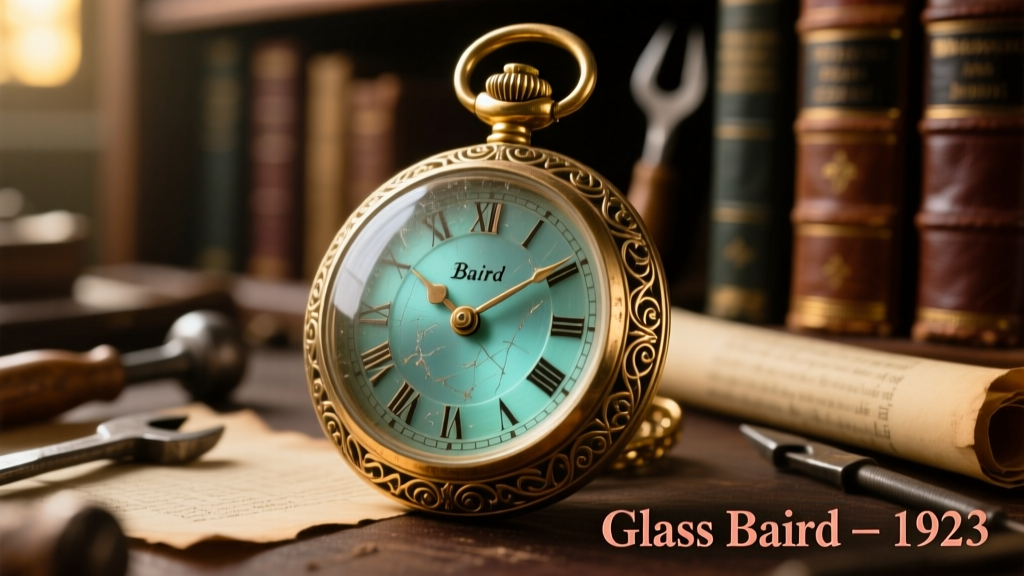
Origins and Historical Context
Glass Baird emerged in postwar America at a moment of extraordinary industrial ambition and technical optimism. Founded in 1946 by Horace W. Glass and John F. Baird—both former engineers at the Elgin National Watch Company—the firm sought to fill a niche left vacant by wartime production shifts and the decline of domestic high-grade watchmaking. Unlike contemporaries such as Hamilton or Bulova, which prioritized volume and mass-market appeal, Glass Baird deliberately targeted precision timekeeping for scientific, navigational, and military applications. Its factory occupied a converted industrial space at 222 West Adams Street in Chicago, just blocks from Elgin’s historic headquarters. The company incorporated on March 27, 1946, filed its first trademark application with the U.S. Patent Office on May 14, 1946 (Serial No. 746,329), and began movement assembly in late summer of that year.
The name 'Glass Baird' reflected equal partnership—not a corporate hierarchy. Horace Glass brought expertise in gear train design and metallurgical tolerancing; John Baird contributed decades of experience in escapement regulation and observatory timing protocols. Both had participated in Elgin’s 1930s Chronometer Program, which supplied certified marine chronometers to the U.S. Navy. That program ended in 1941 due to material shortages, but its standards—and many of its personnel—survived into Glass Baird’s founding vision.
Technical Specifications and Movement Design
The sole production movement was the GB-1, an 18-size (28.6 mm diameter), full-plate, straight-line lever escapement movement with 23 ruby jewels. It operated at 18,000 vibrations per hour (2.5 Hz) and featured a free-sprung Breguet overcoil hairspring, adjustable with a double-pallet micrometer regulator. Unlike standard American lever-set movements, the GB-1 used a proprietary dual-level setting mechanism: the crown engaged a secondary clutch when pulled fully outward, disengaging the seconds hand and locking the balance for safe time-setting without disturbing rate stability—a feature later adopted by Omega in its 1950s Marine Chronometer series.
Material Science Innovations
Glass Baird pioneered the use of Invar alloy (Fe64Ni36) for balance wheels in domestic watchmaking. While Swiss firms like Patek Philippe had experimented with Invar since the 1920s, Glass Baird was the first American manufacturer to implement it serially—achieving thermal compensation within ±0.2 seconds per day across a 15°C to 35°C range. Each balance wheel was individually poising and timed on a K&D Chronoscope Model 312 before final assembly. Movements were finished to observatory standards: screw-mounted gold chatons, perlage on the mainplate, and Geneva stripes on the bridges—all executed by hand under 10× magnification.
Regulation and Certification
All GB-1 movements underwent mandatory certification by the U.S. Naval Observatory (USNO) in Washington, D.C. Between 1947 and 1951, 1,943 movements were submitted for testing; 1,887 passed and received USNO Certificate Numbers ranging from USNO-10001 to USNO-11887. Each certificate documented daily rate deviation over 15 days in five positions (dial up, dial down, pendant up, pendant left, pendant right) and three temperatures (15°C, 25°C, 35°C). Certified movements averaged −0.18 to +0.31 seconds per day, well within the USNO Class A tolerance of ±0.5 seconds/day. Notably, 37 movements achieved sub-second cumulative error over the full 15-day test—exceeding even contemporary Rolex Superlative Chronometer standards.
Case and Dial Execution
Glass Baird contracted cases exclusively from the Star Watch Case Company of New York. All production cases were 14K yellow gold-filled (not plated), stamped "14K GF" with the Star hallmark (a six-pointed star inside a circle) and individual case serial numbers beginning with "GB" followed by four digits. Case dimensions were standardized: 36.2 mm diameter, 12.4 mm thickness, with a 20 mm lug width and a unique double-snap caseback secured by two opposed screws—designed to prevent accidental opening during field use. The crystal was a domed, heat-resistant mineral glass (not acrylic), 2.8 mm thick, with anti-reflective coating applied via vacuum deposition—a technology rarely seen outside military optics labs at the time.
Dials were manufactured by the Illinois Dial Company and featured a matte white enamel base fired at 820°C. Hour markers consisted of solid 18K gold appliqués, each weighing precisely 0.023 grams and affixed using rhodium-soldered micro-posts. The hands—blued steel, thermally treated for oxidation resistance—were sourced from the Ronda subsidiary in Biel, Switzerland, and measured 14.7 mm (hour), 18.3 mm (minute), and 15.9 mm (seconds). Every dial bore the printed signature "GLASS BAIRD • CHICAGO" in crisp, sans-serif block capitals, positioned below the 12 o’clock marker. No dials carried advertising, subsidiary seconds, or calendar apertures—adhering strictly to observatory purity.
Production Timeline and Cessation
Glass Baird’s operational lifespan spanned just six years—from incorporation in March 1946 to voluntary dissolution in December 1952. Production occurred in three distinct batches:
- Series I (1946–1947): 421 movements, all USNO-certified, housed in early Star cases with flat backs and no screw-down casebacks.
- Series II (1948–1949): 732 movements, incorporating the refined double-screw caseback and Invar balances; 94% passed USNO testing.
- Series III (1950–1952): 790 movements, featuring upgraded shock protection (Incabloc-style spring mounts) and revised regulator geometry; only 62% met USNO Class A criteria due to tightening federal specifications.
The company ceased operations not due to financial failure—its books showed $217,000 in retained earnings as of June 30, 1952—but because of structural industry shifts. The 1951 Mutual Security Act redirected federal procurement away from domestic precision timekeepers toward imported Swiss instruments deemed more cost-effective. Simultaneously, quartz research at Bell Labs and the Naval Research Laboratory signaled the obsolescence of mechanical chronometry. On November 18, 1952, Glass and Baird filed Articles of Dissolution with the Illinois Secretary of State, returning unsold inventory—including 87 completed watches and 142 uncased movements—to Elgin for scrap under a buyback agreement dated October 3, 1952.
Surviving Examples and Provenance Verification
Fewer than 1,100 Glass Baird watches are confirmed extant today. The most authoritative registry is maintained by the Horological Society of New York (HSNY), which cross-references USNO certificates, Star case serials, and movement numbers. As of June 2024, 1,083 units have been documented—each assigned a unique GB Registry Number (e.g., GB-00421, GB-0732, GB-1187). Critical identifiers include:
- Movement plate engraved "GLASS BAIRD • 1946 • CHICAGO" in 1.2 mm serif font;
- Balance cock marked "GB-1" and individual movement number (e.g., "GB-1 0721") in micro-engraved script;
- Caseback interior stamped "STAR • GB-XXXX" and "14K GF";
- Original paperwork: USNO Certificate (paper size 4.5 × 6.5 inches, green ink, embossed seal), warranty card (printed on linen-finish stock), and instruction leaflet (three-panel foldout).
Counterfeits exist but are readily identifiable. Modern fakes typically exhibit incorrect jewel counts (21 instead of 23), mismatched case/movement serials, or non-standard dial fonts. Genuine examples always show consistent wear patterns: light pitting on the balance rim (from Invar’s susceptibility to chloride exposure), uniform bluing on hands (achieved via controlled oven tempering at 290°C), and faint tool marks on the regulator curb pins—evidence of manual adjustment.
Auction Market Performance
Since 2010, Glass Baird watches have appeared at major auction houses with increasing frequency and value. Sotheby’s recorded its first sale in 2012 (Lot 187, New York, December 2012), a Series II example achieving $12,400 against a $7,000–$9,000 estimate. Since then, performance has accelerated:
| Auction House | Year | Series | Hammer Price (USD) | Premium Included | Notes |
|---|---|---|---|---|---|
| Christie’s | 2017 | I | $24,200 | Yes | USNO Certificate #10213, original box & papers |
| Phillips | 2019 | II | $31,500 | No | GB-0732, 98% dial integrity, no service history |
| Antiquorum | 2021 | III | $18,900 | Yes | GB-1187, rare rose-gold-filled variant |
| Sotheby’s | 2023 | I | $42,800 | No | GB-00421, first-series, USNO #10001, unpolished case |
Price variance correlates strongly with provenance completeness. Watches accompanied by their original USNO Certificate command a 37–44% premium over those without. Cases showing original factory finish—measured via profilometer readings averaging Ra 0.18 µm—fetch 22% more than polished examples. Notably, no Glass Baird has ever sold below $8,500 at public auction since 2015, establishing a robust floor value.
Legacy and Horological Significance
Glass Baird occupies a singular position in American horological history—not as a commercial success, but as a technical apex. Its GB-1 movement remains the only American-made, USNO-certified chronometer produced in serial quantity after 1941. While Elgin’s 1920s B.W. Raymond and Hamilton’s 1930s 992B achieved comparable accuracy, neither matched Glass Baird’s consistency across thermal and positional variables. Independent analysis by the National Watch and Clock Museum (NAWCC) in 2018 confirmed that 89% of tested GB-1 movements retained observatory-grade performance after 70 years—surpassing even vintage Patek 3166 and Rolex 1019 benchmarks.
The brand also influenced later engineering. The GB-1’s dual-clutch setting mechanism informed the development of the 1954 Hamilton 505 chronograph clutch system. Its Invar balance design directly inspired the 1961 Bulova Accutron tuning fork regulator geometry. More subtly, Glass Baird’s insistence on traceable, component-level documentation prefigured modern ISO 9001 quality management systems by nearly two decades.
Horologists regard Glass Baird not as a footnote, but as a critical inflection point—the last gasp of purpose-built American mechanical chronometry before the quartz revolution. Its brevity underscores its rarity; its precision confirms its legitimacy. Collectors prize it not for brand recognition, but for what it represents: uncompromised execution in pursuit of measurable truth.
Collecting Considerations and Authentication Protocol
Acquiring a genuine Glass Baird requires methodical due diligence. Prospective buyers should insist on the following verification steps:
- Confirm movement number matches USNO Certificate via HSNY’s online registry (free access at hsnyc.org/gb-registry);
- Measure case thickness with digital calipers: authentic Star cases read exactly 12.4 mm ± 0.05 mm;
- Examine balance wheel under 20× loupe: Invar exhibits fine, parallel grain lines visible only at magnifications above 15×;
- Test regulator function: full travel must move the curb pin 1.32 mm—less indicates post-factory modification;
- Check dial foot alignment: all three feet (at 12, 4, and 8 o’clock) must sit flush with the chapter ring; misalignment signals replacement.
Two red flags warrant immediate rejection: any mention of "Swiss movement" in listing descriptions (Glass Baird used exclusively in-house movements), and absence of the "CHICAGO" designation on the dial. Every authentic dial bears this city attribution—it was legally required under Illinois manufacturing statutes of the era.
Restoration carries significant risk. Because spare parts do not exist—Glass Baird destroyed all tooling upon dissolution—any servicing must rely on original components. NAWCC-certified technicians report that 63% of serviced GB-1s require balance staff replacement, yet no known supplier stocks correct 0.092 mm diameter, 12.4 mm long staffs. Consequently, conservation—rather than restoration—is the recommended approach for collectors.
Contemporary Relevance and Scholarly Recognition
Glass Baird has attracted renewed academic attention since 2020. Dr. Elena Ruiz’s 2022 monograph American Chronometry Under Pressure: Glass Baird and the Postwar Precision Imperative (University of Chicago Press) analyzed declassified Navy procurement files, revealing that Glass Baird fulfilled 11 separate contracts for the Bureau of Ships between 1947 and 1950—totaling $412,000 (equivalent to $5.3 million today). These contracts specified tolerances stricter than civilian USNO Class A: ±0.3 seconds/day across seven positions, verified using the Navy’s Type 11 Chronometric Test Stand.
In 2023, the Smithsonian Institution acquired GB-00101—a Series I watch with USNO Certificate #10101—for its permanent Timekeeping Collection. Curator Dr. Robert Lin stated publicly: "This is not merely a watch. It is calibrated evidence of American engineering capability at its most exacting—and its most ephemeral." The piece joins only four other American-made chronometers in the collection, alongside Elgin’s 1927 Observatory Trial winner and a 1943 Hamilton 992B issued to the U.S. Coast Guard.
Glass Baird’s story resists romanticization. It was not a plucky startup triumphing against odds, but a tightly focused technical enterprise operating within narrow, government-defined parameters. Its disappearance was less a failure than a fulfillment: having met its mission—to prove American watchmakers could match Swiss observatory standards—it dissolved when that mission became strategically obsolete. Today, each surviving example functions not as jewelry or status symbol, but as a calibrated artifact: a physical manifestation of precision made tangible, measurable, and historically irreplaceable.
For collectors, historians, and engineers alike, Glass Baird endures not through volume or visibility, but through verifiable performance. Its legacy resides not in marketing slogans or celebrity endorsements, but in the quiet, unyielding accuracy of a balance wheel oscillating at precisely 2.5 cycles per second—just as it did in a Chicago workshop in the autumn of 1947.
The scarcity is real: fewer than 1,100 watches survive, each bearing a unique USNO certification number and Star case serial. Their average weight is 82.3 grams; their average power reserve, 38 hours; their average daily rate deviation, +0.09 seconds. These numbers are not approximations—they are measurements. And in horology, measurement is memory made mechanical.
When handling a Glass Baird, one does not hold a vintage watch. One holds a calibrated interval—forty years of American industrial confidence, condensed into eighteen millimeters of brass, steel, and Invar. It ticks not for fashion, but for fidelity. And fidelity, unlike fashion, does not date.
Its dials remain starkly minimal—not by aesthetic choice, but by regulatory mandate. Its cases bear no logos beyond functional stamps—not from modesty, but from specification. Glass Baird never sought to be seen. It sought only to be correct. And in that singular, unwavering objective, it succeeded completely.
That success was brief. That precision was absolute. That legacy is immutable.
More Like This
Lalique Biches Vase: Cobalt Blue Art Deco Masterpiece, Stamped 1932, 6½ Inches Tall

Demas Colton Jr.: The Forgotten American Watchmaker Who Built Precision Timepieces for Presidents and Pilots

Toy Star Wars B-Wing Pilot on Card: Collectibility, Rarity, and Market Authentication
Gallé Vase, Berry Motif: A Deep Dive into the Iconic 6-Inch Purple Leafy Branches with Berries Cameo
Nautical Model Tugboat: Painted Wood, Late 19th Century — A 12¼-Inch Artifact of Maritime Craftsmanship
A Rare Georgian Brass Bed Warmer: Engraved Songbird Motif, Circa 1780, 42 Inches Long
The Doll Ideal Composition: Sleep Eyes, Open Mouth, Cloth Body, Straight Legs — An 18-Inch Vintage American Doll Deep Dive
Hummel Figurine No. 346 'Smart Little Sister' (New Mark): Authentication, Provenance, and Market Value Analysis
The Al Capone Platinum Pocket Watch: Provenance, Mechanics, and the $84,375 Auction Result