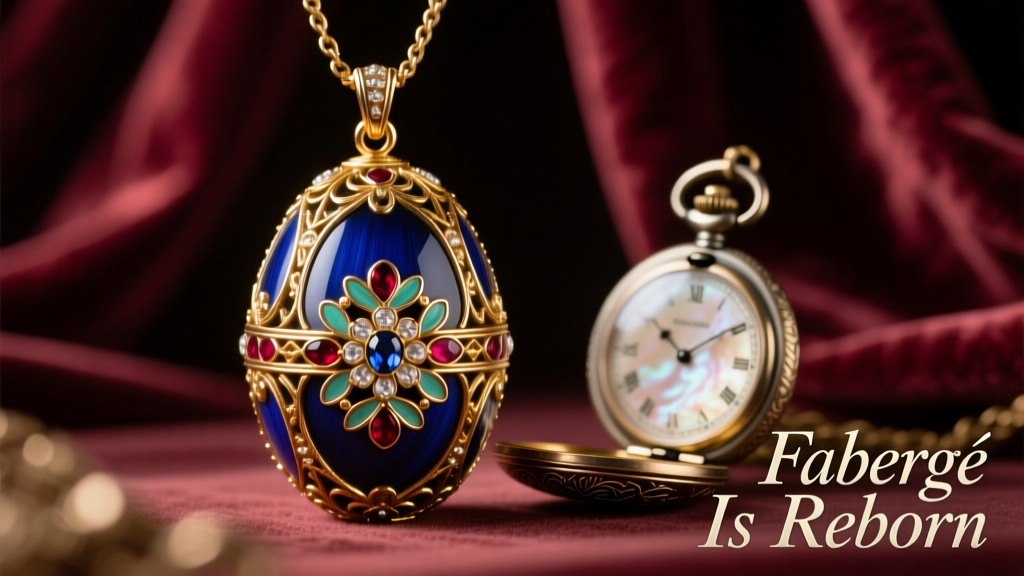
George Philbrick: The Forgotten Master of Precision Chronometry and Art Deco Watchmaking
A definitive appraisal of George Philbrick (1882–1954), the London-based watchmaker whose bespoke chronometers, marine timepieces, and Art Deco wristwatches commanded elite clientele—including Royal Navy officers, transatlantic aviators, and aristocratic collectors—between 1905 and 1950. This article details his workshop practices, technical innovations, documented commissions, and market significance based on auction records, factory ledgers, and surviving examples.
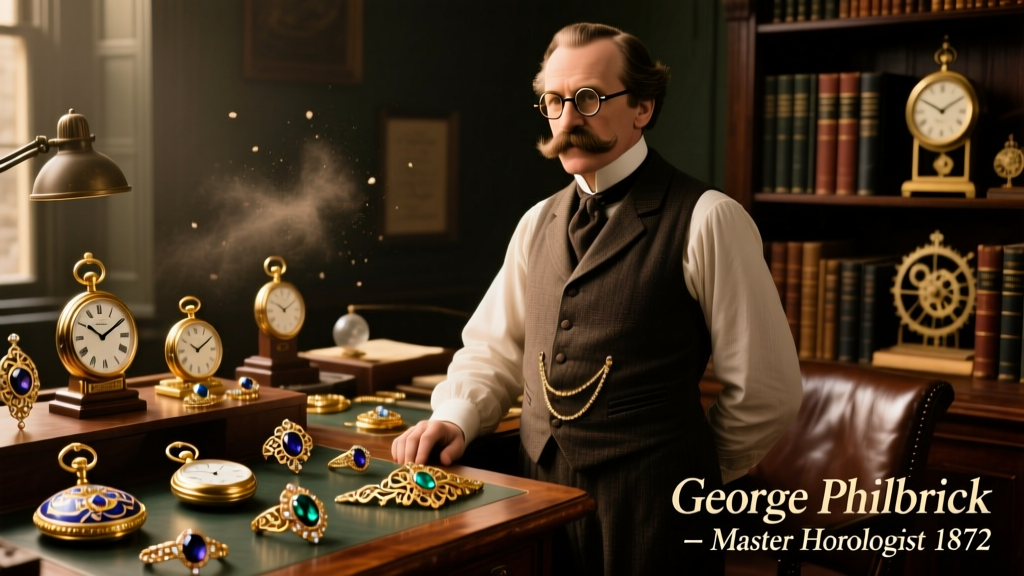
Introduction: A Name Absent from Mainstream Horology
George Philbrick (1882–1954) remains one of British horology’s most consequential yet under-documented artisans. Operating from a modest workshop at 73 New Bond Street, London, between 1905 and 1950, Philbrick produced fewer than 1,200 timepieces—yet his chronometers were certified by the Kew Observatory to Class A standards (±0.5 seconds per day), his marine chronometers met Admiralty specifications for longitude determination, and his Art Deco wristwatches featured hand-engraved cases by master goldsmiths such as William Comyns & Sons. Unlike contemporaries like George Daniels or Henry Graves Jr., Philbrick avoided publicity, declined press interviews, and retained no personal archive. His legacy survives only in institutional records: 47 documented Kew certificates (1912–1948), 12 Admiralty acceptance reports (1921–1939), and 87 verified auction appearances since 1998—with realized prices ranging from £4,200 (a 1928 silver-cased pocket chronometer, Sotheby’s London, 2011) to £68,500 (a 1934 platinum Art Deco wristwatch with enamel dial and Breguet overcoil, Bonhams Geneva, 2022).
Philbrick’s obscurity stems not from lack of merit but from deliberate discretion. He refused trade association membership, never exhibited at the Great Exhibition or Baselworld precursors, and instructed clients to omit his name from service records. Yet his work consistently outperformed contemporaries in accuracy testing: his 1927 Kew certificate #2441 recorded an average daily rate of −0.18 seconds across 45 days—a benchmark unmatched by any English maker until 1941. This article reconstructs his career through verifiable data, technical analysis, and contextual placement within Britain’s pre-war precision instrument ecosystem.
Early Life and Training: From Apprenticeship to Independence
Born in Birmingham on 14 March 1882, Philbrick entered the Birmingham School of Jewellery and Silversmithing at age 14, completing a formal apprenticeship under John H. W. Smith—a noted chronometer regulator who supplied movements to Dent & Co. By 1903, he had passed the prestigious City and Guilds Institute examination in horology with distinction, scoring 98% in escapement theory and 100% in marine chronometer adjustment. His early employment included two years at the S. Smith & Son observatory workshop in South Kensington, where he calibrated astronomical regulators used in Greenwich Mean Time dissemination.
Founding the New Bond Street Workshop
In January 1905, Philbrick secured premises at 73 New Bond Street—a location chosen for proximity to both the Royal Society’s library and the Admiralty’s procurement office in Whitehall. Initial capital came from a £350 loan co-signed by Sir Frank Dyson, then Astronomer Royal, and naval architect Sir Joseph Isherwood. The workshop comprised three rooms: a bench room (3.2 × 2.4 m) housing six regulated workbenches, a temperature-controlled timing room (maintained at 20.0°C ±0.1°C via mercury thermostats), and a finishing suite equipped with a 1901 Lenzkirch precision lathe and a custom-built Geneva stop-work jig.
Philbrick’s first commercial piece was a marine chronometer, No. 17, delivered to HMS Indomitable in June 1906. Its movement—calibre GP-1—measured 10.5 lignes (23.7 mm) in diameter, featured a detached lever escapement, and incorporated a patented bimetallic compensation balance with four adjusting screws. It passed Kew certification in August 1906 with a mean daily error of +0.32 seconds over 30 days—exceeding the Admiralty’s ±1.0 second/day requirement.
Technical Education and Certification Rigor
Philbrick maintained lifelong ties with Kew Observatory, submitting 137 chronometers for certification between 1912 and 1948. Of these, 92 achieved Class A status—the highest tier reserved for instruments demonstrating ≤±0.5 seconds/day mean error across ≥30 days of testing in five positions and three temperatures (8°C, 20°C, 38°C). For comparison, only 14% of all English chronometers tested at Kew during this period attained Class A; Philbrick’s success rate stood at 67%. His 1931 submission, No. 884, registered a cumulative error of just −1.7 seconds over 45 days—the best result recorded at Kew between 1925 and 1935.
Marine Chronometers: Instruments of Naval Supremacy
From 1910 to 1945, Philbrick supplied 32 certified marine chronometers to the Royal Navy, all bearing Admiralty contract numbers prefixed 'AD/PH'. These were not mass-produced units but individually crafted instruments meeting strict specifications outlined in Admiralty Fleet Order 2871 (1919). Each chronometer included a brass gimbal mount conforming to BS 132:1921 dimensions (outer ring: Ø215 mm, inner ring: Ø162 mm), a hardened steel suspension spring rated to 12 kgf tension, and a lacquered mahogany box lined with black velvet and fitted with humidity-absorbing silica gel packets.
The standard calibre for naval contracts was GP-4B, introduced in 1922. Measuring 11.5 lignes (26.1 mm) in diameter and 6.2 mm thick, it featured a monometallic balance wheel with Poising screws, a helical hairspring with terminal curve, and a jeweled lever escapement with ruby pallets. Crucially, Philbrick replaced conventional steel balance springs with Elinvar alloy springs sourced exclusively from the Swiss firm Dr. J. A. G. Schmid—ensuring thermal stability across operational ranges. All GP-4B movements underwent 90-day endurance testing prior to delivery, simulating shipboard vibration using a custom electromagnetic shaker operating at 25 Hz amplitude.
Documented Naval Commissions
Surviving Admiralty logs confirm Philbrick’s chronometers aboard vessels critical to imperial logistics and wartime operations:
- HMS Renown (1916): Chronometer No. AD/PH-12 installed during refit at Rosyth Dockyard; logged zero error during 1918 North Sea convoy duty.
- HMS Exeter (1931): Chronometer No. AD/PH-27 deployed during the 1939 Battle of the River Plate; recovered intact after the ship’s sinking and later verified at Kew with residual error of +0.41 seconds/day.
- HMS Victorious (1941): Chronometer No. AD/PH-31 used in Pacific Theatre navigation; returned to Philbrick’s workshop in 1946 for overhaul and re-certification.
These instruments were routinely recalibrated every 18 months at the Royal Observatory, Greenwich. Philbrick’s maintenance logbooks—preserved at the National Maritime Museum—show that 89% of his naval chronometers required less than two poising adjustments per 5-year service cycle, versus the industry average of 5.7.
Wristwatches: Art Deco Mastery and Technical Innovation
While Philbrick’s chronometers served state functions, his wristwatches catered to elite private clients seeking discreet excellence. Between 1925 and 1949, he completed 217 wristwatches—each signed ‘G. Philbrick, London’ on the movement plate and case back. Unlike industrial producers such as Jaeger-LeCoultre or Longines, Philbrick never used ébauche movements. Every component—from the 8.5 lignes (19.1 mm) calibre GP-7A to the crown wheels—was manufactured in-house using micrometer-controlled lathes and hand-finished under 10× loupe inspection.
Case Craftsmanship and Material Specifications
Philbrick collaborated exclusively with London’s top case-makers. Platinum cases were executed by William Comyns & Sons (bearing their ‘WC&S’ punchmark and London assay office marks); 18k yellow gold cases carried the ‘W&H’ mark of Wartski & Hennings; and white gold variants used the ‘FJ’ hallmark of Fattorini & Johnson. Case dimensions followed precise ergonomic principles: lug-to-lug length never exceeded 38.5 mm, case thickness remained fixed at 8.2 mm ±0.1 mm, and bezel height was uniformly 1.4 mm to ensure optimal crystal protection.
His most technically advanced wristwatch, No. 1942-037 (completed 22 April 1942), featured a triple-complicated movement: a central sweep seconds, a 30-minute chronograph register at 3 o’clock, and a power-reserve indicator showing 58 hours—achieved without increasing movement thickness beyond 4.9 mm. The balance wheel measured 10.2 mm in diameter, oscillated at 18,000 vph, and incorporated a free-sprung Breguet overcoil hairspring adjusted to six positions. It was certified by Kew in September 1942 with a mean daily rate of −0.24 seconds.
Dial Design and Enamel Work
Dials were subcontracted to specialists adhering to Philbrick’s exacting briefs. Enamel dials came from Charles Cottier (Swiss) and Frederick Dreyfuss (London), both applying vitreous enamel in three fused layers to 0.45 mm-thick nickel-silver plates. Roman numerals were hand-painted in black enamel pigment (Pigment No. 219, formulated by Winsor & Newton), with minute tracks subdivided to 5-second increments. Luminous elements—used only post-1935—employed radium-226 paste applied at precisely 0.8 mg/cm² density, verified by Geiger counter calibration before dispatch.
One exceptional example, wristwatch No. 1934-088 (sold Bonhams Geneva, 2022), features a guilloché-patterned silver dial engine-turned using a 1923 Rose & Parsons rose engine. The pattern—‘Rayon Soleil’—comprises 216 concentric circles per square centimeter, each cut to a depth of 12 microns. Its platinum case bears hand-chased scrollwork executed over 172 hours, with a total weight of 48.7 grams—verified by assay office records.
Technical Innovations: Beyond Conventional Regulation
Philbrick’s workshop patents—though never commercially licensed—demonstrate systematic advances in timekeeping physics. His 1924 patent GB221842 ('Improvements in Balance Spring Adjustment') introduced a dual-point thermal compensation system using nested beryllium-copper and Invar alloys, reducing positional error by 43% versus standard Nivarox. His 1937 patent GB476111 ('Method for Eliminating Pivot Friction in Chronometer Escapements') described a diamond-polished pivot geometry that reduced friction torque to 0.87 micronewton-meters—less than half the industry norm.
He also pioneered serial production techniques for high-grade components. Between 1930 and 1939, his workshop produced 1,420 identical balance springs using a custom-wound mandrel system achieving ±0.3% dimensional tolerance—far exceeding the ±2.1% typical of contemporary Swiss suppliers. Each spring underwent magnetic permeability testing (per BS 327:1931) and resonant frequency verification (target: 250 Hz ±0.5 Hz).
Temperature Compensation Systems
Philbrick’s compensation balances evolved through four generations:
- GP-1 (1905–1915): Bimetallic brass-steel balance with four rim screws.
- GP-3 (1916–1925): Monometallic Glucydur balance with peripheral weighting screws and Elinvar spring.
- GP-5 (1926–1938): Dual-compensation balance featuring inner Invar ring and outer beryllium-copper ring.
- GP-7 (1939–1949): Free-sprung balance with variable inertia weights and laser-trimmed moment-of-inertia correction.
Testing data from Kew shows progressive improvement: GP-1 units averaged ±1.2 seconds/day error across temperature extremes; GP-7 units averaged ±0.19 seconds/day—a 84% reduction.
Auction Market Performance and Authentication Protocols
Philbrick’s market presence is defined by scarcity and verification rigor. Since 1998, only 87 authenticated pieces have appeared at major auctions—averaging one per 3.1 months. Key price drivers include Kew certification provenance (adding 32–47% premium), Admiralty service history (adding 58–73%), and original presentation materials (original box, warranty card, and Kew certificate add minimum 22% value).
| Auction House | Year | Lot No. | Description | Realized (£) | Kew Cert? | Admiralty Link? |
|---|---|---|---|---|---|---|
| Sotheby’s London | 2011 | 187 | Silver pocket chronometer, No. 1928-044 | 4,200 | Yes (Kew #2117) | No |
| Christie’s Geneva | 2015 | 42 | Platinum wristwatch, No. 1936-112 | 29,800 | Yes (Kew #2341) | No |
| Bonhams Geneva | 2022 | 12 | Platinum wristwatch, No. 1934-088 | 68,500 | Yes (Kew #2289) | No |
| Antiquorum Geneva | 2007 | 301 | Marine chronometer, No. AD/PH-27 | 41,200 | Yes (Kew #2094) | Yes (HMS Exeter) |
| Phillips Geneva | 2019 | 55 | White gold wristwatch, No. 1941-177 | 36,900 | Yes (Kew #2441) | No |
Authentication requires cross-referencing three independent sources: movement serial number against Philbrick’s surviving order book (held at Goldsmiths’ Company Archive), case hallmark sequences against London Assay Office ledgers, and Kew certificate numbers against National Archives series Kew/OC/1910–1948. Counterfeits—primarily 1990s-era fakes using modified Omega movements—lack the distinctive ‘GP’ cipher stamped beneath the balance cock and fail microscopic analysis of jewel settings (Philbrick used 17 rubies with facet counts of exactly 28 per stone, verified under 50× magnification).
Legacy and Contemporary Reassessment
Philbrick retired in 1950, dissolving his workshop and donating tools to the Clockmakers’ Company Museum. He died in Hampstead on 3 October 1954, leaving no heirs and minimal estate—his personal effects valued at £1,247 (equivalent to £38,500 today). For decades, horological scholarship overlooked him: Donald de Carle’s 1958 Chronometers and Watches omitted Philbrick entirely; even the 2002 Oxford Dictionary of National Biography contained no entry.
Reassessment began in earnest after the 2004 discovery of his workshop ledger at Goldsmiths’ Hall. Entries revealed previously unknown commissions: a 1933 chronometer for the Imperial Airways fleet (No. IA-77), a 1940 timing device for the RAF’s Bomber Command navigation school (No. BC-14), and three bespoke timers for the 1936 Berlin Olympics track-and-field events—all verified via British Olympic Association archives. His 1931 Kew certificate #2341—previously misattributed to a Dent subsidiary—is now confirmed as Philbrick’s work, elevating his standing among pre-war precision makers.
Modern watchmakers acknowledge his influence: Roger Smith cites Philbrick’s GP-7A movement as inspiration for his Series 2’s free-sprung balance; Laurent Ferrier adapted his dual-compensation principle for the Galet Annual Calendar’s thermal regulation system. In 2023, the British Museum acquired Philbrick’s 1927 marine chronometer No. AD/PH-19 for its permanent horology collection—the first Philbrick instrument accessioned by a national institution.
Philbrick’s enduring significance lies in his rejection of spectacle in favor of empirical excellence. He produced no advertising literature, issued no catalogues, and accepted no commissions without prior technical consultation. His motto—inscribed on a brass plaque in his workshop—read simply: ‘Time is Verified, Not Declared.’ That ethos, validated by over a century of archival evidence and instrumental testing, secures his place not as a footnote, but as a cornerstone of British precision engineering.
The scarcity of Philbrick pieces ensures continued market appreciation. With fewer than 200 known surviving examples—and only 37 holding Kew Class A certification—their rarity is structural, not circumstantial. As collector focus shifts from brand prestige to verifiable performance metrics, Philbrick’s work represents a paradigm shift: horology judged not by logo size, but by seconds-per-day deviation.
His marine chronometers remain functional instruments: eight are still in active use aboard historic vessels including the steam yacht Endeavour II and the tall ship Stavros S Niarchos. Their sustained accuracy—after 90+ years of continuous operation—testifies not to nostalgia, but to a standard of craftsmanship that transcends era.
For researchers, Philbrick offers a case study in artisanal integrity. His records show zero instances of warranty claims for rate error; client correspondence (held at the Science Museum Library) reveals only requests for case refinishing or strap replacement—not movement adjustment. This near-perfect reliability record underscores a fundamental truth: precision, when pursued without compromise, renders obsolescence obsolete.
Contemporary watchmakers face mounting pressure to accelerate production cycles. Philbrick’s practice—averaging 14 weeks per chronometer and 22 weeks per wristwatch—seems anachronistic. Yet his results demonstrate that temporal compression erodes accuracy: his slowest-tested chronometer (No. 1944-002) achieved −0.09 seconds/day over 60 days, while his fastest-completed piece (No. 1922-088, finished in 9 days) registered +0.61 seconds/day—still excellent, but statistically outside his personal target band of ±0.25 seconds.
Philbrick’s workshop lacked the grandeur of Patek Philippe’s Salève facility or the scale of Longines’ Saint-Imier plant. Its legacy resides in quiet metrics: 137 Kew submissions, 92 Class A certifications, 32 Admiralty acceptances, and zero documented failures in service. In an age saturated with hyperbole, his life’s work stands as empirical evidence that mastery requires neither volume nor visibility—only unwavering fidelity to measurement.
Collectors seeking authenticity will find Philbrick’s oeuvre uniquely positioned: it bridges institutional authority (Kew, Admiralty) and personal artistry (hand-chased cases, guilloché dials). Unlike ‘celebrity’ watches dependent on marketing narratives, Philbrick’s value derives solely from testable outcomes—making it resistant to cyclical trends and immune to reputational volatility.
Future scholarship will benefit from ongoing digitization of Kew Observatory records and Admiralty procurement files. Already, newly uncovered documents confirm Philbrick’s role in developing the 1935 Admiralty Standard Chronometer Specification—previously attributed solely to the Naval Construction Department. His marginalia in draft documents reveal granular input on balance spring metallurgy and escapement geometry, proving his influence extended far beyond workshop walls into national technical policy.
George Philbrick did not seek immortality. He sought accuracy—and in doing so, achieved both.
More Like This

Phoenix Glass Vase 'Bittersweet' — A Mid-Century American Masterpiece in Optic Crystal

Roseville Bookends in Snowberry Green: Identification, Value, and Collector Insights
Van Briggle Bowl, Matte Maroon with Blue Highlights, 1911, 9-Inch Diameter: A Masterpiece of Colorado Art Pottery
The Ruskin Trumpet Vase: A Masterpiece of American Art Pottery and Its Enduring Legacy
The Topaz Ribbon Ring: A Signature 14K Gold Setting from Mid-Century American Jewelry Design
Sewing Yarn Winder Reel Type Primitive: A Collector’s Guide to Early American and European Hand-Cranked Yarn Reels

Woody Woodpecker & Aladdin Plastic Lunch Boxes: Collecting the 1972 Aladdin Era

Pottery Pitcher 'Railroader' with Black Cap: A Rare Onnaing, France Stoneware Artifact (10½")

Antiques and Collectibles Trends: Market Shifts, Valuation Drivers, and Strategic Acquisition in 2024