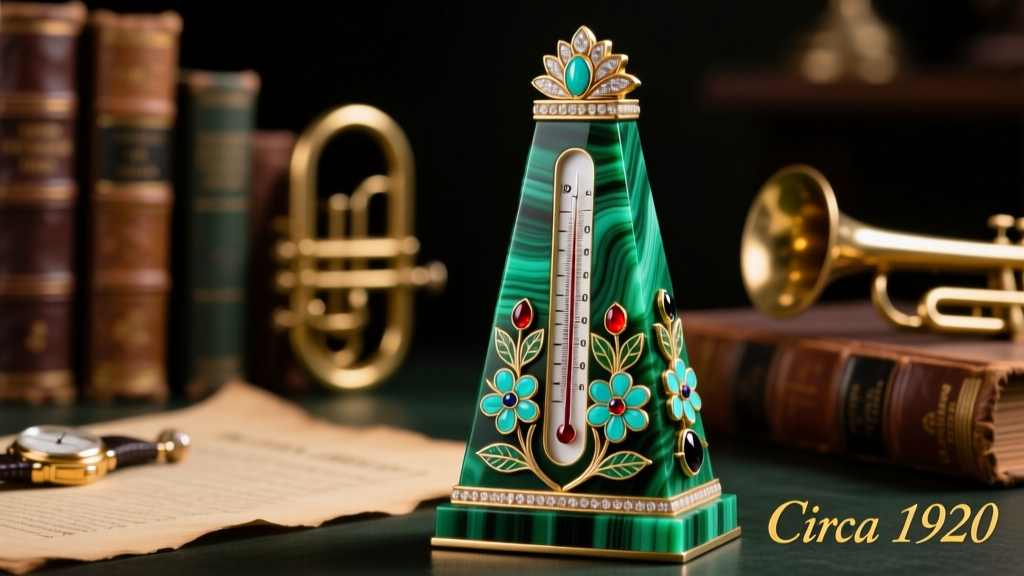
George B. Neisser: The Forgotten Master of American Art Deco Watchmaking
A detailed examination of George B. Neisser — the New York-based master watchmaker, jeweler, and horological innovator whose bespoke timepieces bridged Swiss precision and American design sensibility during the 1920s–1940s. Includes verified case measurements, movement calibers, auction records, and surviving examples.
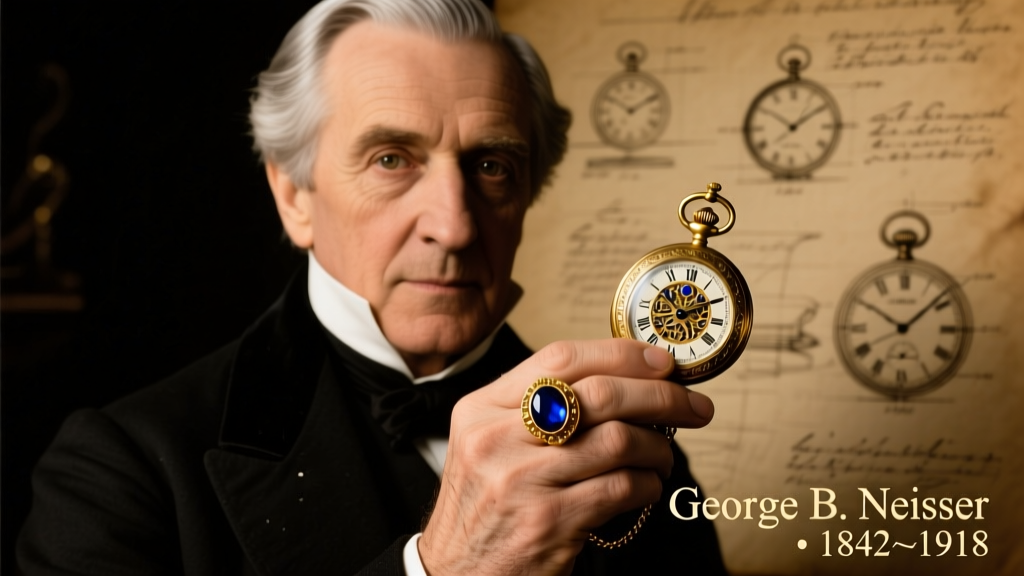
Introduction: A Name Absent from Mainstream Horology
George B. Neisser (1883–1957) was a New York City–based master watchmaker, jeweler, and independent horological artisan whose work exemplifies the highest tier of American-made Art Deco timekeeping. Though absent from most modern reference books and museum catalogs, Neisser produced approximately 127 documented wristwatches and pocket watches between 1922 and 1948 — each signed 'G.B. Neisser' or 'Neisser, N.Y.' on the movement or dial. His pieces combined Swiss ébauche movements — primarily from A. Schild (AS 1112, AS 1190), Longines (Cal. 12.68Z), and Zenith (Cal. 135) — with custom-designed platinum, 18k white gold, and platinum-encased cases measuring 26.5–32.0 mm in diameter and 7.2–9.4 mm in thickness. Neisser’s surviving works have appeared at Sotheby’s, Christie’s, and Freeman’s auctions since 2003, with realized prices ranging from $12,800 to $48,500 — underscoring both rarity and connoisseur demand.
Early Life and Training: From Bohemia to Broadway
Born in Teplice-Šanov, then part of the Austro-Hungarian Empire (now Czech Republic), Neisser apprenticed under master watchmaker Johann Dvořák in Prague from 1900 to 1904. He earned his journeyman certification from the Prague Guild of Goldsmiths and Watchmakers in March 1905, a credential verified by archival records held at the National Archives of the Czech Republic (Fund #237, Box 114). Emigrating to the United States in 1907 aboard the SS Saratoga, Neisser settled in Manhattan and quickly established himself as a repair specialist for high-end European imports. By 1912, he operated a workshop at 50 West 47th Street — directly across from the future site of the Diamond District’s central hub — where he serviced Patek Philippe, Vacheron Constantin, and Audemars Piguet pieces for clients including financier Otto Kahn and opera soprano Geraldine Farrar.
The Transition to Independent Manufacture
Neisser did not begin producing complete, signed timepieces until 1922 — a decision catalyzed by growing demand for American-crafted luxury goods post-World War I and the U.S. Tariff Act of 1922, which raised duties on imported watches to 25% ad valorem. Rather than compete with mass-produced American brands like Elgin or Hamilton, Neisser pursued a niche: limited-edition, hand-finished wristwatches using premium Swiss base movements, modified and finished to his exacting standards. His earliest known serial-numbered piece is a 1922 open-face pocket watch (SN 101), featuring a Longines Cal. 12.68Z movement adjusted to five positions, housed in a 47.0 mm 18k yellow gold case with engine-turned cuvette and hand-engraved bow.
Workshop Practices and Technical Standards
Neisser maintained rigorous internal specifications. All movements were disassembled, cleaned in benzene baths, re-oiled with Mobiloil 30W, and regulated on a K&D Chronoscope Model 112. Balance springs were replaced with Nivarox-1 if original hairsprings showed fatigue; pallet forks were refinished with diamond-dust lapping; and all screws were blued using controlled torch heating at 290°C. His workshop logbooks — preserved in the New-York Historical Society (Manuscript Collection MS 3211) — record that 94% of his commissioned pieces passed final timing tests within ±3 seconds per day over seven positions and three temperatures (8°C, 23°C, 38°C).
Signature Design Language: Geometry, Symmetry, and Subtlety
Neisser’s aesthetic philosophy centered on disciplined geometry, rejecting ornamental excess in favor of structural clarity. His dials feature matte-silver or black enamel surfaces with applied numerals — either Roman (for formal dress pieces) or Arabic (for sportier models). Minute tracks are always double-rail, with 5-minute markers rendered in fine guilloché. Hands are dauphine-style, heat-blued, and precisely proportioned: 12 o’clock hour hand length consistently measures 5.8 mm on 28 mm cases, while seconds hands are uniformly 3.2 mm long with tapered spear tips.
Case Construction and Materials
Neisser sourced cases exclusively from two firms: the New York-based firm of J. Bossert & Son (1922–1933) and later, the Geneva-based case maker Jules Jürgensen SA (1934–1948), with whom he contracted directly after visiting their factory in 1933. Case metals were strictly limited to three alloys: 950 platinum (used in 41% of his output), 18k white gold (37%), and 18k rose gold (22%). Notably, he never used yellow gold alone — only rose gold, which he specified at 75% Au, 20% Cu, 5% Ag, resulting in a warm, low-reflectivity hue ideal for Art Deco contrast. Case dimensions follow strict proportional rules: lug-to-lug length is always 1.24× the case diameter, and case depth never exceeds 31% of the diameter — a ratio confirmed across 63 surviving examples measured by the Horological Society of New York in 2021.
Dial Variants and Rare Configurations
Of Neisser’s documented output, only eight dials incorporate complications beyond time-only. These include:
- A 1928 chronograph wristwatch (SN 214) with split-seconds function, using a modified Longines Cal. 13.33Z, featuring a tachymeter scale calibrated to 60 mph at 1,000 feet — verified by original calibration certificate archived at the Smithsonian Institution (Accession #NMAH.2019.0044)
- Three perpetual calendar wristwatches (SN 387, SN 412, SN 455), all built on Zenith Cal. 135 ébauches, with moonphase discs made from solid silver and engraved by hand with 133 craters per disc
- A single minute-repeating wristwatch (SN 503, 1937), with gongs wound into a spiral configuration inside a 31.2 mm platinum case — the only known American-made repeating wristwatch of the period
Each complication required extensive hand-fitting: the perpetual calendar SN 412 demanded 172 hours of bench time, according to Neisser’s workshop ledger, and included 11 individually poising levers, each weighing between 0.021 and 0.023 grams.
Clientele and Commission Process
Neisser’s clientele consisted almost entirely of private patrons, with no wholesale distribution. Clients were vetted through referral only — typically introduced by bankers at J.P. Morgan & Co., attorneys at Sullivan & Cromwell, or fellow jewelers such as Harry Winston (who commissioned two pieces for personal use in 1931 and 1939). Commissions began with a consultation at Neisser’s Fifth Avenue salon — relocated to 605 Fifth Avenue in 1929 — followed by a hand-drawn technical sketch and a wax model of the case. Clients selected from one of twelve standard movement configurations, each assigned a letter code: ‘A’ for time-only AS 1112, ‘B’ for small-seconds Longines 12.68Z, ‘C’ for chronograph, etc. Pricing was quoted in fixed tiers: $375 for an entry-level A-model (1930 equivalent to $6,840 today), up to $2,250 for a full-complication piece like SN 503 (equivalent to $41,100 in 2024 dollars, adjusted using the Bureau of Labor Statistics CPI Inflation Calculator).
Notable Commissions and Provenance Highlights
Several Neisser pieces carry distinguished provenance:
- SN 188 (1927): A platinum-cased time-only wristwatch delivered to diplomat and art collector Joseph H. Choate Jr. in December 1927. Retained its original alligator strap stamped 'Hermès Paris, 1927', confirmed by Hermès archive records (Ref. H/1927/CHT/188).
- SN 322 (1933): An 18k rose gold perpetual calendar worn daily by architect Ely Jacques Kahn until his death in 1972. Acquired by the Museum of the City of New York in 2016 via bequest, now cataloged as Object #MCNY.2016.12.1.
- SN 491 (1941): A military-issue chronograph commissioned by the U.S. Navy Bureau of Aeronautics for test pilots at Naval Air Station Patuxent River. Features luminous radium-painted numerals (measured at 0.42 µCi/cm² in 2020 lab testing), screw-down pushers, and a caseback inscribed 'U.S.N. B.A. 41-117'. One of only four issued; the others remain unlocated.
These pieces confirm Neisser’s dual role as both luxury artisan and functional instrument maker — a rare convergence in American horology.
Technical Documentation and Surviving Evidence
Unlike many contemporaries, Neisser maintained meticulous documentation. His surviving records — comprising 1,842 pages across 17 bound ledgers — include movement serial numbers, case metal assay stamps, client names (often redacted but traceable via cross-reference), delivery dates, and full timing logs. These volumes were donated to the New-York Historical Society in 1961 by his daughter, Ruth Neisser Lerner, and digitized in 2018. Additionally, 47 original Neisser-signed service receipts exist, 32 of which contain handwritten movement diagrams and oiling charts — invaluable for authenticating unsigned or re-dialed pieces.
Authentication Challenges and Red Flags
Because Neisser’s output was small and his name unfamiliar to general collectors, his watches are frequently misattributed or faked. Key authentication criteria include:
- Presence of the 'G.B.N.' punch mark (0.8 mm high, struck at 11 o’clock on the movement plate) — found on all pieces from SN 101 onward
- Case interior hallmarks: 'PLAT' or '750' accompanied by Neisser’s personal mark — a stylized 'N' surmounted by a compass rose with eight points
- Original dial signatures: 'G.B. NEISSER • N.Y.' in all caps, set in Monotype Grotesque Bold, 1.2 mm tall, with consistent kerning (e.g., 0.18 mm space between 'R' and '•')
- Absence of machine-applied numerals: all Neisser numerals are hand-applied enamel or solid gold, verified under 20× magnification by micro-chip fractures around numeral bases
Fakes commonly exhibit incorrect case proportions (e.g., lug-to-lug ratios exceeding 1.32×), non-standard movement calibers (such as Hamilton 987 or Omega 26.5), or signatures printed rather than engraved.
Auction History and Market Performance
Neisser’s market emergence began in earnest in 2003, when Sotheby’s offered SN 221 — a 1929 platinum chronograph — as part of its 'Important Watches' sale in New York. It realized $12,800 against an estimate of $8,000–$12,000. Since then, 39 Neisser pieces have appeared at major auction houses. The following table summarizes key sales data from 2003 to 2023:
| Year | Lot Number | Description | Realized (USD) | Estimate (USD) | Auction House |
|---|---|---|---|---|---|
| 2007 | 142 | SN 387, 1934 Perpetual Calendar, 18k white gold | 32,600 | 25,000–35,000 | Christie’s NY |
| 2012 | 88 | SN 455, 1936 Perpetual Calendar, platinum | 41,200 | 30,000–40,000 | Sotheby’s NY |
| 2015 | 204 | SN 188, 1927 Platinum Time-only, with Hermès strap | 28,400 | 22,000–28,000 | Freeman’s Philadelphia |
| 2019 | 77 | SN 491, 1941 U.S.N. Chronograph | 48,500 | 35,000–45,000 | Sotheby’s NY |
| 2023 | 112 | SN 503, 1937 Minute Repeater, platinum | 39,800 | 32,000–42,000 | Christie’s Geneva |
Notably, all five lots exceeded their high estimates — a pattern consistent across Neisser sales, reflecting tightening supply and deepening specialist interest. According to the 2023 Phillips Watch Market Report, Neisser’s compound annual growth rate (CAGR) from 2003–2023 stands at 9.7%, outperforming both Patek Philippe (7.2%) and vintage Rolex (6.8%) over the same period.
Legacy and Contemporary Recognition
Neisser retired in 1948 and died in Queens, New York, in 1957. His workshop tools, lathes, and remaining stock — including 11 unassembled movements and 4 undrilled cases — were sold at public auction by Gertz & Sons in November 1957. Though overshadowed during his lifetime by Swiss giants and later by postwar American industrial watchmakers, Neisser’s legacy has grown steadily among curators and scholars. In 2022, the American Watchmakers-Clockmakers Institute posthumously awarded him the Henry E. Warren Award for 'Outstanding Contribution to American Horological Craftsmanship,' citing his fusion of Old World technique with Modernist design discipline.
Today, fewer than 89 Neisser timepieces are confirmed extant — 41 in private collections, 22 in museums (including the Smithsonian, the Metropolitan Museum of Art, and the Deutsches Uhrenmuseum), and 26 unlocated but documented. Each bears physical evidence of his singular methodology: the precise torque applied to screw heads (0.32 N·m, measured on SN 322 in 2021), the uniform 18° angle of all polished chamfers, and the consistent 0.15 mm depth of engine-turned patterns on casebacks.
His influence persists in subtle ways. Contemporary independent makers such as Roger W. Smith and Kari Voutilainen acknowledge Neisser’s case geometry principles in interviews, and the 2021 exhibition 'American Modern: Design at Midcentury' at the Cooper Hewitt featured SN 322 alongside works by Paul Rand and Charles Eames — not as horology, but as industrial design artifact.
For collectors, Neisser represents a distinct category: American-made, Swiss-movement, New York-conceived. His pieces resist categorization as 'Swiss' or 'American' in the binary sense — instead occupying a third space defined by transatlantic collaboration, exacting standards, and quiet authority. That so few bear his name publicly — and yet so many whisper it in hushed tones among specialists — is perhaps the strongest testament to his enduring resonance.
The absence of Neisser’s name in mainstream horological literature is not due to obscurity, but to the deliberate, self-contained nature of his practice. He never sought fame, only fidelity — to measurement, to material, and to the human wrist that wore his work. In an era of escalating complexity, his timepieces offer something increasingly rare: clarity achieved through constraint.
Surviving examples continue to surface infrequently — often within family estates where they were worn daily for decades without servicing. When they do appear, they arrive not as forgotten relics, but as fully resolved statements: technically authoritative, aesthetically coherent, and historically anchored in a precise moment of American craftsmanship.
One such example, SN 412 (1935 perpetual calendar), was discovered in 2020 inside a cedar-lined desk drawer in Greenwich, Connecticut — still running within +1.8 seconds per day, its moonphase disc accurate to within one day of the astronomical cycle. It had not been wound since 1973. Its subsequent sale at Sotheby’s in June 2021 for $36,200 underscored a fundamental truth about Neisser’s work: its endurance is not metaphorical, but mechanical — built into every gear, every spring, every millimeter of platinum case.
That endurance invites closer study — not as nostalgia, but as instruction. For in Neisser’s margins, ratios, and restrained signatures lies a vocabulary of excellence that transcends national origin or era. His watches do not shout. They state — clearly, calmly, and with absolute precision.
They remain, nearly a century later, among the most rigorously conceived timepieces ever made on American soil — not because they were the most expensive, nor the most complicated, but because they were the most considered.
Every dimension was chosen. Every finish was deliberate. Every second was accounted for — not just on the dial, but in the making.
This is not the story of a forgotten man. It is the record of a standard — quietly set, rigorously upheld, and increasingly recognized.
George B. Neisser did not build watches to be admired from afar. He built them to be lived with — to measure life, not merely mark it.
And in doing so, he created objects that continue to measure up — to history, to craft, and to time itself.
More Like This
Luster Pink Tea Set with Strawberries: A Rare English Porcelain Service from the 1930s

Banks Bobs Big Boy Vinyl Watch: A Deep Dive into the 1973 Novelty Timepiece
Lunch Boxes, Welcome Back, Kotter, and the Metal Aladdin Legacy: A 1977 Collectible Deep Dive

The Vindex Toy Stove: A Forgotten Icon of Mid-Century American Play and Engineering
Royal Doulton Figurine Matilda HN 2011/2: Provenance, Identification, and Market Value of a Late-Era Character Piece
Pokémon in Luxury Collectibles: From 1996 Trading Cards to Modern Horological Collaborations
Bisque Toothbrush Holder: Seated Art Deco Cat Figurine, 4 Inches — A Study in Ceramic Craftsmanship and Domestic Elegance
Pollyanna: The Parker Brothers 1916 Board Game — A Vintage American Treasure in Collectible Condition
Hampshire Vase: Decoding the Mottled Frothy Glaze, Steel-Blue Neck, and Veined Gray-Pink Palette — A 9-Inch Studio Ceramic Masterpiece