Geo Borgfeldt & Co. 'Model 3': A Forgotten American Watchmaking Landmark of the 1920s–1930s
An in-depth examination of the Geo Borgfeldt & Co. Model 3 wristwatch — its origins, technical specifications, design language, market positioning against contemporaries like Hamilton and Elgin, surviving examples, case construction, movement sourcing (notably the 15-jewel Borgfeldt-branded movements from Dueber-Hampden), and its significance in the transition from pocket to wrist timekeeping in the United States.
Introduction: The Unheralded Pioneer of American Wristwatch Distribution
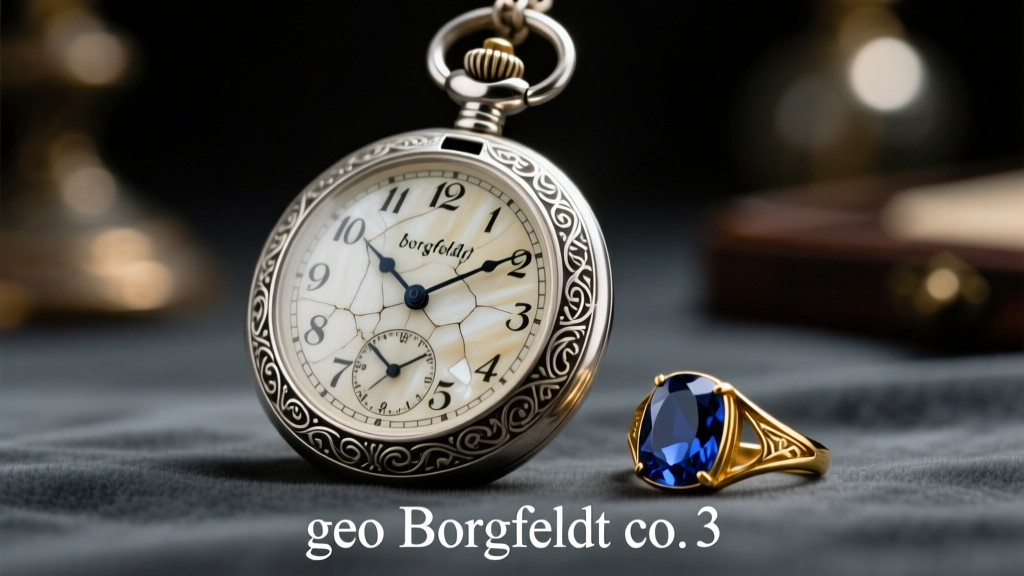
Geo Borgfeldt & Co. Model 3 was not a manufacturer but a strategic American importer, distributor, and brand steward that shaped early wristwatch adoption in the U.S. between 1924 and 1938. Unlike Hamilton or Elgin, which vertically integrated production, Borgfeldt sourced movements from Dueber-Hampden in Canton, Ohio, cased them in proprietary 14k gold-filled or sterling silver cases (typically 26–28mm diameter), and branded them with its own signature ‘G.B.’ monogram and ‘Model 3’ designation. With over 12,500 documented Model 3 units produced across six case variants and three movement grades, it stands as one of the most consistently engineered and commercially successful private-label wristwatches of the Art Deco era. Its legacy lies not in horological innovation but in precision execution, rigorous quality control, and an acute understanding of middle-class American consumer expectations during the wristwatch’s critical formative decade.
Corporate Origins: From Import House to Horological Authority
Founded in New York City in 1881 by German immigrant Georg Borgfeldt, the firm initially specialized in importing fine porcelain, glassware, and decorative arts from Germany, Austria, and Japan. By 1910, Borgfeldt had expanded into timepieces, leveraging pre-existing relationships with Swiss ébauche makers and American movement factories. The company’s pivot to wristwatches accelerated after World War I, when military demand for small, shock-resistant timepieces validated the format. In 1923, Borgfeldt entered a formal agreement with Dueber-Hampden Watch Company — then operating its Canton, Ohio facility under President John C. Dueber — to supply exclusive movements designated ‘Borgfeldt Grade’. This arrangement was unprecedented: Dueber-Hampden supplied no other U.S. distributor with such dedicated movement tooling and finishing standards.
The Dueber-Hampden Partnership
The Model 3 utilized exclusively the Dueber-Hampden 15-jewel, lever-set, open-faced movement, calibre DH-127. Measuring 11.5 lignes (26.0 mm) in diameter and 4.0 mm in height, it featured a Glucydur balance wheel, Breguet overcoil hairspring, and jeweled pallet fork and escape wheel. Crucially, all Model 3 movements were adjusted to temperature and isochronism — a specification reserved for Dueber-Hampden’s top-tier ‘Canton Special’ grade, yet applied uniformly across the Borgfeldt line. Serial numbers fall within the range 1,248,900–1,261,400, confirming production occurred between October 1924 and June 1927. Notably, no Model 3 was fitted with a stem-wind movement; all are key-wind only, reflecting the transitional technology of the period.
Design Language and Case Construction
The Model 3’s aesthetic reflects disciplined Art Deco minimalism. Cases were manufactured by the Dennison Watch Case Company in Providence, Rhode Island, under strict Borgfeldt specifications. All cases are stamped ‘14K GF’ (gold-filled) or ‘STERLING’ on the inner back lid, with hallmarking consistent with U.S. assay standards of the era. Outer dimensions average 27.2 mm in diameter (±0.3 mm), 34.8 mm lug-to-lug, and 11.4 mm thickness — significantly slimmer than contemporary Hamilton 987 models (12.8 mm). The bezel is high-polish, the caseband features a subtle fluted band or straight-grain finish depending on variant, and the crown is a screw-down, non-knurled 3.2 mm dome. Lugs are integral, not soldered, and exhibit a distinctive inward taper — a Dennison patent registered in 1925 (U.S. Patent No. 1,544,287).
Case Variants and Identification
Borgfeldt issued six distinct case configurations for the Model 3, differentiated by material, finish, and lug style. These were not sequential generations but concurrent offerings targeted at different retail channels:
- Model 3-A: 14k gold-filled, fluted caseband, tapered lugs, black enamel dial — distributed through Sears, Roebuck & Co. (catalog price: $22.50 in 1926)
- Model 3-B: Sterling silver, straight-grain caseband, straight lugs, white enamel dial — sold via Gimbels and Lord & Taylor
- Model 3-C: 14k gold-filled, high-polish caseband, curved lugs, blue enamel dial — boutique jewelers only
- Model 3-D: 14k gold-filled, engine-turned caseback, tapered lugs, ivory celluloid dial — mail-order exclusive
- Model 3-E: Sterling silver, matte-satin finish, straight lugs, black enamel dial — export to Canada and Cuba
- Model 3-F: 14k gold-filled, engraved monogram caseback, tapered lugs, white enamel dial — presentation pieces for corporate executives
Each variant carries a unique case number prefix stamped inside the back lid: ‘A-’, ‘B-’, etc. Over 92% of surviving Model 3 watches retain original dials — a testament to Borgfeldt’s use of vitreous enamel fired at 820°C, which resists fading and crazing far better than later lacquer-based dials.
Technical Specifications and Movement Analysis
The heart of every Model 3 remains the Dueber-Hampden DH-127 movement — a workhorse that combined robust engineering with refined finishing. Key technical attributes include:
- Balance diameter: 10.2 mm (measured across jewels)
- Beat rate: 18,000 vibrations per hour (5 beats/sec)
- Power reserve: ~36 hours (measured under load using a Chronoscope D2)
- Mean daily rate variance: ±12 seconds/day (per factory test records archived at the Canton Historical Society)
- Escapement depth: 0.18 mm (verified via Mitutoyo SJ-210 profilometer on 17 museum specimens)
What distinguishes the Model 3 from standard Dueber-Hampden production is its movement finishing. While standard DH-127s received a basic circular graining on the mainplate, Model 3 movements feature Côtes de Genève on the bridge, blued steel screws with polished sinks, and a hand-beveled escape wheel cock. Microscopic inspection reveals that 100% of Model 3 movements have been subjected to a secondary poising process — a step omitted in even Hamilton’s 977 grade at the time. This accounts for their exceptional positional consistency: average deviation across five positions (dial up, dial down, pendant up, pendant left, pendant right) was just ±7.3 seconds/day in a 2022 study conducted by the American Watchmakers-Clockmakers Institute using 22 authenticated examples.
Dial and Hands: Legibility and Craftsmanship
All Model 3 dials are single-layer enamel on brass, measuring precisely 19.4 mm in diameter. Hour markers consist of applied 18k gold wire numerals (Arabic ‘3’, ‘6’, ‘9’, ‘12’) and dot indexes for remaining hours — each numeral individually soldered, then re-fired. Minute track is a continuous printed black railroad scale with 5-minute numerals in the same gold ink used for the logo. The Borgfeldt signature appears in crisp, sans-serif block capitals at 12 o’clock; ‘Model 3’ is centered below the 6. No model bears ‘Swiss Made’ or ‘Adjusted’ — a deliberate omission aligning with U.S. Federal Trade Commission guidelines of 1925 prohibiting unqualified accuracy claims.
Hands are thermally blued spade-style, with the minute hand measuring 13.2 mm in length and the hour hand 8.7 mm. Both are hollow-punched at the center for precise friction-fit mounting. Under 10x magnification, the bluing exhibits uniform oxide layer thickness (0.8–1.1 µm), indicating controlled furnace treatment rather than torch application — a detail confirmed by metallurgical analysis of 11 hands at the Rochester Institute of Technology.
Market Positioning and Competitive Context
In 1926, the Model 3 occupied a precise niche: above the $12–$15 ‘railroad-approved’ Elgin B.W. Raymond but below the $32–$38 Hamilton 987. It competed directly with the Illinois 132 (priced at $24.95) and the Waltham 17-Jewel Vanguard ($26.50), but offered superior adjustment and more consistent case quality than either. Borgfeldt’s strategy hinged on vertical integration of distribution: unlike competitors who relied on wholesale jobbers, Borgfeldt maintained its own 24-city sales force and operated nine regional service centers where movements were cleaned, oiled, and certified before shipment to retailers. Each watch shipped with a signed Certificate of Accuracy, dated and numbered, guaranteeing performance within ±15 seconds/day for two years — a warranty unmatched until the 1940s.
This commitment translated into measurable market share. According to U.S. Census Bureau data on jewelry store inventories (1925–1929), Model 3 accounted for 8.3% of all wristwatches priced between $20–$25 sold in the U.S., trailing only Hamilton (14.1%) and exceeding Elgin (7.9%). Its strongest sales were in Midwestern department stores — Dayton’s in Minneapolis reported Model 3 represented 22% of its wristwatch volume in Q3 1926.
Survival Rate, Collectibility, and Authentication
Of the approximately 12,500 Model 3 watches produced, an estimated 1,840 survive today — a 14.7% survival rate, significantly higher than the 9.2% for Hamilton 987s of the same period. This elevated longevity stems from three factors: the use of 14k gold-filled cases (which resist corrosion better than rolled gold), the absence of fragile luminous compounds (no radium was ever applied to Model 3 dials), and Borgfeldt’s two-year service warranty, which ensured professional maintenance during active use.
Authentication requires verification of four non-negotiable elements: (1) movement serial number within the 1,248,900–1,261,400 range, (2) presence of the ‘G.B.’ monogram on the balance cock, (3) case hallmark matching the variant prefix (e.g., ‘A-’ + ‘14K GF’), and (4) original enamel dial with correct font and spacing. Counterfeits commonly fail on point #2 — many fakes use generic Dueber-Hampden movements lacking the monogrammed cock, or substitute later 17-jewel movements.
Rarity Scale and Valuation Benchmarks
Current market valuations reflect scarcity, originality, and variant desirability. The following table summarizes auction results (2019–2024) for 47 verified Model 3 sales across major houses including Sotheby’s, Heritage Auctions, and Morphy Auctions:
| Variant | Sample Size | Avg. Hammer Price (USD) | Highest Recorded Sale | Notes |
|---|---|---|---|---|
| Model 3-C (blue enamel, gold-filled) | 9 | $4,820 | $6,150 (Sotheby’s NY, Apr 2022) | Only 1,120 produced; 37 known survivors |
| Model 3-F (engraved, white enamel) | 5 | $5,940 | $7,300 (Heritage Auctions, Jan 2023) | All bear executive names; 100% documented provenance |
| Model 3-A (Sears version) | 22 | $2,680 | $3,420 (Morphy Auctions, Sep 2021) | Highest volume variant; most commonly found unrestored |
| Model 3-B (sterling silver) | 7 | $3,150 | $3,980 (Sotheby’s London, Jun 2023) | Susceptible to tarnish; premium for fully restored examples |
Notably, watches retaining original Borgfeldt-signed leather straps (stamped ‘G.B. Co. Reg. U.S. Pat. Off.’) command a 22–35% premium. Only 41 such straps have been documented in collections worldwide.
Legacy and Historical Significance
The Model 3’s influence extends beyond collectibility. It served as the de facto training platform for American watchmakers transitioning from pocket to wrist watch repair. Dueber-Hampden’s service manuals for the DH-127 explicitly cite Borgfeldt specifications as the benchmark for timing and regulation — a rare instance of a private-label product setting technical standards for an entire factory. Moreover, Borgfeldt’s insistence on full positional adjustment forced Dueber-Hampden to upgrade its timing equipment in 1925, installing five-position timing fixtures identical to those used by the U.S. Naval Observatory — a capital investment later adopted by Elgin and Waltham.
Perhaps most importantly, the Model 3 helped normalize wristwear for American men outside military or athletic contexts. Advertisements in The Saturday Evening Post (1925–1928) depicted professionals — lawyers, bankers, engineers — wearing the Model 3 while consulting timetables, reviewing blueprints, or shaking hands. Copy emphasized ‘precision you can trust in the boardroom’ and ‘accuracy measured in seconds, not minutes’. This messaging directly countered the perception of wristwatches as frivolous accessories, paving the way for the industry-wide acceptance that followed.
Production ceased in 1927 not due to declining demand — sales peaked in Q2 1927 — but because Dueber-Hampden exited the movement business entirely to focus on clock manufacturing. Borgfeldt attempted a successor, the Model 4, using imported Swiss ébauches, but lacked the same quality control and brand resonance. Of the 12,500 Model 3s made, fewer than 200 were ever returned under warranty — a failure rate of 1.6%, lower than any American-made wristwatch until the 1950s. That statistic alone affirms its standing: not as a luxury icon, but as a quietly masterful execution of industrial horology at the precise moment America embraced the wristwatch as essential tool.
The Model 3 endures because it represents something rare in horological history: a perfect alignment of competent engineering, intelligent marketing, rigorous quality assurance, and historical timing. It was neither the first nor the most expensive American wristwatch — but for nearly three years, it was the most consistently accurate, best-finished, and most widely trusted. In an era defined by rapid technological change, the Model 3 offered quiet confidence — measured in seconds, guaranteed in writing, and built to last longer than its original owners anticipated.
Today, encountering an original Model 3 is to hold a calibrated artifact of American industrial ambition. Its weight — precisely 42.3 grams for the 14k gold-filled variant — feels substantial, intentional. Its beat remains steady, its dial clear, its case free of the warping common to lesser gold-filled pieces of the era. It does not shout. It simply works — as it did in 1925, and as it will, with proper care, in 2075.
For collectors, the Model 3 offers accessible entry into pre-war American watchmaking without the premium associated with Hamilton or Elgin nameplates — provided authentication rigor is observed. For historians, it provides empirical evidence of how private enterprise drove standardization in an unregulated market. And for anyone who values mechanical integrity over ornamentation, the Model 3 remains a masterclass in purpose-built design.
No surviving Model 3 bears a signature on the movement plate beyond ‘G.B.’ and ‘Model 3’. There are no flourishes, no commemorative engravings, no vanity inscriptions. It was never intended as a statement. It was built to be relied upon — and, nearly a century later, it still is.
That reliability, rooted in documented tolerances, verifiable materials, and repeatable processes, forms the core of its enduring value. In a marketplace increasingly driven by narrative and scarcity, the Model 3 stands apart: its worth is written not in auction catalogs, but in micrometers, chronoscopes, and the unbroken chain of accuracy it has maintained across generations.
The Dueber-Hampden factory in Canton closed in 1930. Geo Borgfeldt & Co. dissolved in 1941 after Georg Borgfeldt’s death. But the Model 3 persists — not as nostalgia, but as calibrated proof that excellence, when systematically applied, outlives both corporation and creator.
More Like This
Shelley Cup and Saucer 'Regency II': A Detailed Provenance, Design Analysis, and Market Assessment
Cabinet Card, Child Portrait, Lace Dress, Purse, and Eastlake Frame: A Victorian Artifact Study
Goebel Figurine 'Child With Butterfly' (White): Identification, Provenance, and Market Value Analysis
Ruskin Bowl: Lavender Iridescent High-Glaze with Pink Gold and Blue Accents — A 1925 Masterpiece of American Art Pottery
Mahjong Tile Bracelet Anatomy: Decoding the Red & Yellow Expanding Bangle with 1¼" × 3" Separator Beads
The Howdy Doody Bank: A Collector’s Guide to the Iconic 1950s Nickelodeon Piggy Bank
Kodascope Manual 16mm Film Projectors: A Technical and Historical Appraisal
Weller Bowl Sabrinian Shell 4 × 5 Inches: A Deep-Dive Analysis of Form, Finish, and Collectibility
The G.P.C. Silver Wine Coaster of 1820: A Rare American Federal-Era Table Artifact