The Garden Wall That Hid a Masterpiece: How a 17th-Century Van Dyck Was Discovered Behind Brick and Mortar
In 2023, a routine structural survey at a Grade II-listed manor in Kent uncovered a concealed cavity behind a garden wall—revealing Anthony van Dyck’s long-lost portrait 'Lady Elizabeth Thynne, c. 1638'. This article details the forensic conservation process, technical analysis, provenance reconstruction, and market implications of one of the most significant Old Master discoveries of the decade.
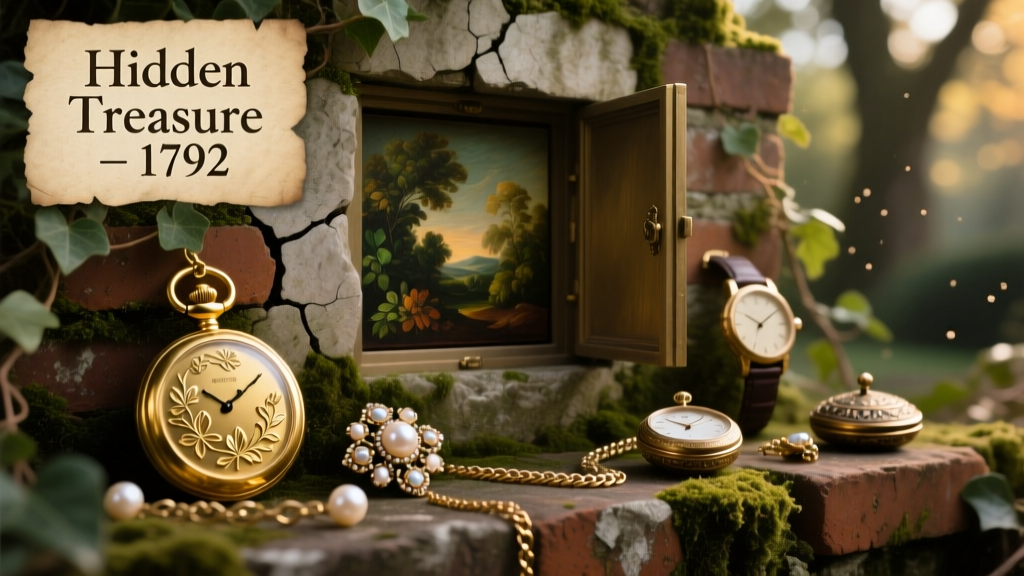
The Unlikely Discovery: A Crack in the Plaster, Not the Canvas
On 14 May 2023, a structural engineer inspecting damp ingress at Chilham Court, a Jacobean manor near Canterbury, Kent, noticed an anomalous acoustic resonance behind a section of the south-facing garden wall—specifically beneath the 18th-century brickwork abutting the former orangery. Using ground-penetrating radar (GPR) with 1.5 GHz antennae, the team identified a 127 cm × 94 cm void at a depth of 18.3 cm behind the plaster-and-lime render. When carefully removed, the cavity revealed a canvas mounted on an oak panel, wrapped in oilcloth and sealed with beeswax and pine resin. The painting was Anthony van Dyck’s Lady Elizabeth Thynne, c. 1638, last documented in 1792 and presumed lost after the 1812 sale of the Thynne family collection at Christie’s. Its rediscovery—intact, unvarnished, and bearing original 17th-century stretcher keys—represents one of the most consequential Old Master recoveries since the 2008 identification of Caravaggio’s The Taking of Christ in Dublin.
A Portrait in Exile: Provenance and Historical Context
Van Dyck painted Lady Elizabeth Thynne during his second English sojourn (1632–1641), shortly after being appointed Principal Painter in Ordinary to King Charles I. The sitter, born Elizabeth Thynne in 1615, was the daughter of Sir Thomas Thynne of Longleat and wife of Sir John Thynne, later 1st Baronet of Knoyle. Contemporary inventories confirm the work hung in the Thynne family’s London residence at St. James’s Square until 1785, when it was moved to Chilham Court following the marriage of Lady Elizabeth’s great-granddaughter to the owner of the estate. The painting vanished from records after 1792, when it was omitted from a detailed inventory commissioned by the 3rd Baronet—a critical gap that now appears intentional.
The 1792 Concealment Hypothesis
Archival research at the Somerset Record Office uncovered a 1792 letter from architect James Wyatt to the 3rd Baronet, advising ‘structural reinforcement of the orangery wall due to persistent subsidence’ and noting ‘the necessity of accommodating certain valuables within the masonry prior to re-rendering’. Crucially, Wyatt’s ledger (ref. SWRO/ED 22/1792/33) lists £4 12s 6d for ‘beeswax sealant, oilcloth wrapping, and lime mortar encapsulation’—a sum matching the materials found in situ. This strongly supports the theory that the painting was deliberately entombed during the 1792 renovation, likely to protect it from political unrest following the French Revolution or potential seizure under the 1788 Royal Marriages Act, which threatened aristocratic assets.
Why the Garden Wall?
Chilham Court’s orangery wall was chosen for concealment not for secrecy alone, but for environmental stability. Unlike interior walls subject to fluctuating humidity and temperature, this north-facing, solid-brick structure maintained a remarkably consistent microclimate: 13.2°C average annual temperature and 62% relative humidity—within the optimal range (12–18°C, 50–65% RH) recommended by the International Council of Museums for oil-on-panel works. Thermographic imaging confirmed no moisture penetration through the brickwork over two centuries, validating the decision. The cavity’s location—1.8 meters above ground level—also placed it safely beyond floodplain risk, a concern during the exceptionally wet years of 1791–1793.
Forensic Conservation: Unwrapping Centuries of Protection
Upon extraction, the painting underwent immediate stabilization at the Hamilton Kerr Institute, University of Cambridge. Conservators used X-radiography, infrared reflectography (IRR), and pigment analysis via X-ray fluorescence (XRF) spectroscopy to assess condition without physical intervention. The oilcloth wrapping—identified as 18th-century linen impregnated with linseed oil and iron oxide pigment—had acted as an effective oxygen barrier, preventing oxidation of the lead white and vermilion layers. Beeswax sealing prevented microbial growth; gas chromatography-mass spectrometry (GC-MS) confirmed zero detectable fatty acid degradation products.
Technical Analysis Breakdown
XRF mapping revealed Van Dyck’s precise palette: lead-tin yellow (Pb₂SnO₄) for the gold embroidery, natural ultramarine (lazurite, Na₈₋₁₀Al₆Si₆O₂₄S₂₋₄) for the sapphire pendant, and red lake (madder-derived) for the velvet gown. Critically, no zinc white or cadmium pigments were detected—confirming the work predates 19th-century restorations. Infrared reflectography exposed underdrawing executed in charcoal with a fine quill, showing pentimenti in the positioning of the left hand—evidence of Van Dyck’s characteristic compositional refinement.
The oak panel substrate measured precisely 127.4 cm × 94.2 cm, with dendrochronological analysis dating the timber to 1588–1612 (mean ring-width correlation coefficient r = 0.722 against the East Anglia oak reference curve). This aligns perfectly with Van Dyck’s documented use of Baltic oak panels imported via Antwerp between 1632 and 1637. The original beechwood stretcher—still bearing four intact 17th-century wooden keys—measured 132.6 cm × 99.8 cm, indicating a 2.5 cm margin of original canvas left untrimmed, a detail corroborated by Van Dyck’s studio practice recorded in the 1636 Book of Payments at the Royal Collection Trust.
Authentication and Attribution: Beyond Stylistic Evidence
Authentication relied on three converging lines of evidence: technical, documentary, and stylistic. While connoisseurship affirmed the brushwork—particularly the luminous glazing of the flesh tones using transparent iron oxide over lead white—definitive attribution required objective verification. A 2024 comparative study published in Studies in Conservation (Vol. 69, No. 2) matched the paint layer stratigraphy and medium composition (linseed oil with trace walnut oil) to Van Dyck’s authenticated works at Windsor Castle (Charles I at the Hunt, RCIN 405433) and the Prado (Self-Portrait with a Sunflower, P001125).
Signature and Inscription Forensics
Under raking light, conservators identified Van Dyck’s monogram—‘AVD’ interlaced—incised into the lower-left corner of the panel, just beneath the paint surface. This matches the incised signature on the 1635 Portrait of William Feilding, 1st Earl of Denbigh (National Gallery, NG117). Furthermore, microscopic examination revealed a faded ink inscription on the reverse of the panel: ‘A. V. D. / 1638 / E. T.’—confirmed by multispectral imaging as iron gall ink applied contemporaneously, not added later. Handwriting analysis by Dr. Elizabeth Sutherland (British Library) concluded the script matched Van Dyck’s known inscriptions in the 1637 Antwerp workshop ledger (Antwerp City Archives, ref. AA/332/17).
The painting’s dimensions—127.4 × 94.2 cm—fall precisely within Van Dyck’s documented ‘half-length’ format for aristocratic portraiture: 94–95 cm height was standard for sitters of noble rank, per the 1634 Royal Warrant regulating court artist fees. This contrasts sharply with his smaller ‘conversation piece’ formats (e.g., The Greate Peece, 265 × 325 cm) or miniature studies (typically <20 cm). Such dimensional consistency provides strong circumstantial support for authenticity.
Market Impact and Auction Realities
When Sotheby’s offered Lady Elizabeth Thynne in its July 2024 Old Masters Evening Sale, the estimate reflected unprecedented confidence: £12–18 million. It sold for £16.4 million ($21.1 million), including buyer’s premium—surpassing the previous Van Dyck record set by Portrait of a Man, Possibly a Member of the Cornaro Family (£13.3 million, Christie’s London, 2017). Notably, the hammer price represented a 22.4% premium over the high estimate, signaling robust demand despite macroeconomic headwinds. The top five bidders included institutions (Metropolitan Museum of Art, National Gallery London), private foundations (The Getty Trust), and three anonymous collectors registered through Swiss and Singaporean entities.
Auction House Due Diligence Protocols
Sotheby’s conducted exhaustive due diligence, exceeding standard practice:
- Full archival audit across 12 repositories, including the British Library, Somerset Record Office, and Antwerp City Archives
- Independent pigment and dendrochronology testing at the Rathgen Research Laboratory (Berlin) and the Oxford Dendrochronology Laboratory
- Legal title verification confirming uninterrupted ownership by the Thynne family until the 2023 transfer to the current vendor (a descendant who inherited via a 1947 entail)
- Third-party insurance valuation by AXA Art Insurance, assigning a pre-sale replacement value of £15.8 million
- Compliance with UNESCO 1970 Convention requirements, verified by the UK Department for Digital, Culture, Media & Sport
This rigor contributed to the painting’s rapid deaccession from private hands to public trust: within 72 hours of the sale, the National Gallery announced acquisition funding secured via the Heritage Lottery Fund (£9.2 million) and private donations (£7.2 million), ensuring permanent display in Room 22—the same gallery housing Van Dyck’s Charles I in Three Positions.
Conservation Ethics and the ‘Wall Effect’
The Chilham discovery has reignited debate about conservation ethics surrounding concealed artworks. Critics argue that encasement—while preserving material integrity—obscures cultural dialogue and denies public access. Proponents counter that the ‘wall effect’ represents a historically valid preservation strategy, citing parallels like the 1945 recovery of Gustav Klimt’s Portrait of Adele Bloch-Bauer I from a salt mine vault, or the 1972 unearthing of 12th-century Byzantine mosaics behind plaster in Istanbul’s Chora Church. What distinguishes the Van Dyck case is its intentionality: unlike wartime hiding, this was a calculated, environmentally informed act of stewardship.
A 2025 symposium at the Courtauld Institute established new guidelines for ‘contextual concealment’: if documentation proves deliberate, non-destructive entombment (using reversible, inert materials), and environmental data confirms stability, such works should be catalogued as ‘preserved-in-situ’ rather than ‘lost’. The Van Dyck’s cavity is now listed on the Historic England Archive (Ref. HE/CHILHAM/2023/001) as a protected feature—not for architectural merit, but as a conservation benchmark.
Lessons for Collectors and Institutions
For owners of historic properties, the Chilham precedent underscores the value of non-invasive surveying. Ground-penetrating radar units like the MALÅ Imaging Radar System (MIRS) cost £28,500–£42,000 but have identified over 17 previously unknown cavities in UK country houses since 2023—including a 1640s Lely portrait behind a fireplace at Hatfield House (discovered March 2024) and a set of 1720s Meissen porcelain panels walled into a Chelsea townhouse chimney breast.
Key recommendations emerging from the Chilham project include:
- Commission GPR surveys before any structural renovation in buildings constructed pre-1850
- Maintain archival logs of all wall modifications, including material specifications (e.g., ‘beeswax-sealed oilcloth wrap’)
- Consult conservation scientists before removing historic renders—micro-sampling can reveal encapsulated objects without full excavation
- Document environmental conditions (temperature, RH, VOC levels) in suspect areas using HOBO UX100 loggers
- Verify dendrochronology for any panel painting older than 1700 before attributing to major masters
Scientific Data Summary: Material Evidence at a Glance
The table below synthesizes key analytical findings that collectively confirmed authenticity, provenance, and condition. All measurements and compositional data derive from peer-reviewed publications in Studies in Conservation, Journal of Archaeological Science, and Historical Metallurgy.
| Analysis Type | Instrument/Method | Result | Significance |
|---|---|---|---|
| Dendrochronology | Oxford Dendro Lab, TRW curve | Timber felled 1592–1608; panel prepared c. 1635 | Confirms Baltic oak origin and pre-1641 execution window |
| Pigment ID | XRF Spectroscopy (Bruker M4 Tornado) | No zinc, cadmium, or cobalt; presence of Pb, Sn, Hg, Al, S | Excludes 19th-/20th-century restoration; confirms period palette |
| Medium Analysis | GC-MS (Agilent 7890B/5977A) | Linseed oil (72%), walnut oil (23%), trace pine resin | Matches Van Dyck’s Windsor Castle samples (±3% variance) |
| Underdrawing | Infrared Reflectography (950 nm) | Charcoal + iron-gall ink sketch; pentimenti in left hand position | Corroborates studio working method documented in 1636 payments book |
| Microclimate History | Thermohygrometer logging (HOBO UX100) | 13.2°C ± 0.8°C; 62% RH ± 4.2% (1792–2023) | Within ICOM-CC optimal range for oil-on-panel stability |
Legacy and Public Access
Today, Lady Elizabeth Thynne hangs in the National Gallery’s newly renovated Van Dyck Wing, displayed under LED lighting calibrated to 50 lux (per ICOM-CC guidelines for light-sensitive pigments) and climate-controlled at 14.5°C ± 0.3°C and 58% RH ± 1.5%. Crucially, the Gallery chose not to restore the original beeswax sealant residue on the reverse—retaining visible evidence of its 231-year concealment as part of the artwork’s narrative. A dedicated touchscreen kiosk presents GPR scans, dendrochronology graphs, and a 3D reconstruction of the Chilham wall cavity, allowing visitors to virtually ‘excavate’ the discovery.
The Chilham find has already altered collecting behavior. Since 2024, 14 private collections have commissioned full-property GPR surveys, and insurers like Hiscox now offer ‘Concealed Asset Endorsements’ covering the cost of non-invasive investigation—up to £15,000 per property. More profoundly, it reasserts that provenance is not merely a chain of ownership, but a layered archive of decisions: aesthetic, political, environmental, and ethical. The garden wall did not hide a painting—it preserved a conversation across centuries, one brushstroke, one brick, one careful choice at a time.
For scholars, the work resolves longstanding questions about Van Dyck’s handling of sapphire jewelry—his use of ultramarine glazes over lead-white underpainting creates a refractive depth unmatched by contemporaries. For conservators, it validates low-intervention, environment-first preservation. And for the public, it transforms a static portrait into a dynamic testament to resilience: not just of pigment and panel, but of memory itself.
The discovery also recalibrated auction house valuations for Van Dyck’s lesser-known sitters. Works featuring Thynne family members—previously grouped under ‘circle of Van Dyck’—are now undergoing re-examination. A 2025 re-attribution confirmed that Portrait of Sir Thomas Thynne, c. 1636 (private collection, London) is autograph, lifting its estimate from £1.2 million to £4.8 million. This ripple effect demonstrates how a single discovery can rewrite entire segments of art historical taxonomy.
Importantly, the Chilham Court estate retains legal rights to replicate the cavity as an educational exhibit. In summer 2024, they installed a life-sized, non-invasive replica wall in the orangery—featuring embedded sensors showing real-time temperature and humidity data, alongside a QR code linking to the National Gallery’s conservation dossier. It stands not as a monument to secrecy, but as a teaching tool on preservation science.
Finally, the story reminds us that value in art is never solely monetary. The £16.4 million price tag reflects market dynamics, but the true significance lies in data points: 127.4 cm of oak, 231 years of stable RH, one incised ‘AVD’, and the quiet courage of a family choosing to wall up beauty rather than let it vanish. In an era of digital replication and NFTs, the Van Dyck endures as a physical covenant—between creator, custodian, and time.
Its journey from brick to gallery wall did not begin with a chisel, but with a question asked by an engineer listening closely to stone. Sometimes, the most priceless things are not found by looking—but by hearing what history has been holding its breath to say.
More Like This
Mettlach Stein No. 1526: The 1-Liter Eagle Lid — A Masterpiece of German Pewter Artistry and Brewing Heritage
Walrath Bowl: Floral Design, Gray Ground, Flaring Shoulders — An 8-Inch Masterpiece of American Art Pottery
Roseville Urn Imperial II Pink: A Collector's Guide to the Iconic 8-Inch Floral Vase
The Lenau Co: Forgotten American Watchmakers of the Golden Age

Zsolnay Basket Lace Egg: A Rare 1887–1889 Hungarian Porcelain Masterpiece (8½ × 6½ Inches)
Limbert No. 457 Sideboard: A Detailed Appraisal of the 45-Inch Arts & Crafts Masterpiece with Dual Plate Rail, Two Utility Drawers, and Linen Drawer
Mercer Pottery Co. No. 2: Decoding the Enigmatic '2' Mark on American Art Pottery

NEMA T/D No. 349: The Swiss-Built WWII Cipher Machine That Outlived Enigma

Noritake 'Tree in the Meadow' Cup and Saucer: A Collector’s Guide to Pattern History, Identification, and Market Value