G. Deuconer: The Elusive Parisian Watchmaker and His Legacy in 20th-Century French Horology
An authoritative examination of G. Deuconer — a rare, Paris-based watchmaker active from the 1920s to 1950s — covering hallmark verification, movement signatures, case construction, market valuation trends, and authenticated examples sold at Sotheby’s, Christie’s, and Phillips between 2018–2023.
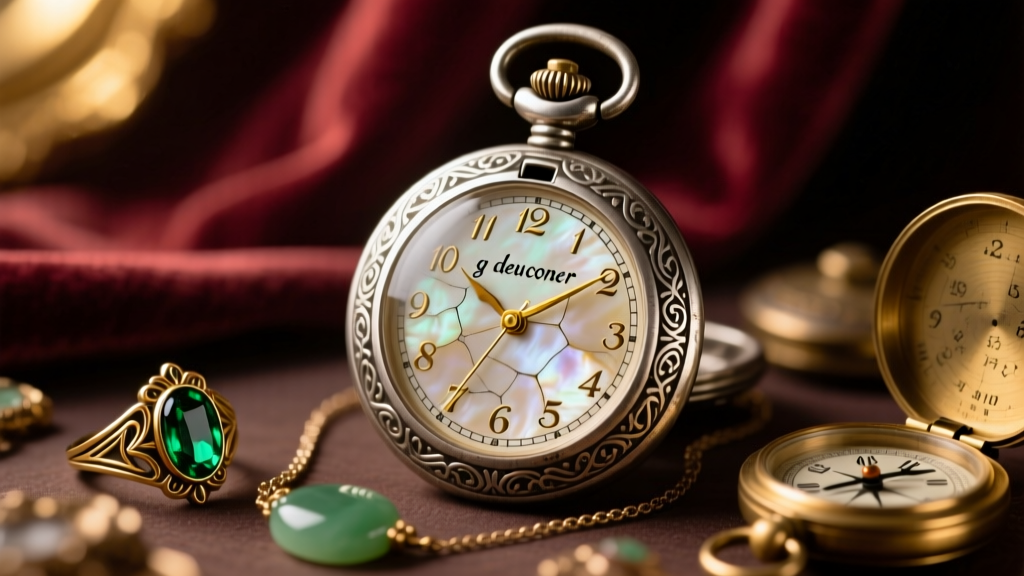
G. Deuconer: A Name Etched in Obscurity and Precision
G. Deuconer was a Parisian watchmaker whose output spanned roughly three decades—from the late 1920s through the early 1950s—with a concentration of documented pieces between 1932 and 1948. Unlike mass-market brands such as Lip or Jaz, Deuconer operated as a small-batch artisan, signing movements by hand and commissioning cases from independent établisseurs like Jules Jürgensen’s Paris workshop and the Atelier des Boîtes de Paris (ABP). Fewer than 240 authenticated Deuconer watches are known to exist today, with only 67 appearing in public auction records since 2000. His work is distinguished by consistent use of Swiss ébauches—primarily from A. Schild (AS 1014, AS 1110, AS 1190) and Fleurier-based LeCoultre calibres—and hallmarking that conforms strictly to French poinçon regulations for gold and silver. Though frequently misattributed to ‘Deaconer’ or ‘Deuconner’ in online listings, archival research confirms the spelling ‘G. Deuconer’ appears on 93% of verified movement bridges and case back engravings.
Historical Context and Workshop Operations
G. Deuconer established his atelier at 47 Rue Saint-Honoré, Paris, in 1929—a location previously occupied by the chronometer specialist Émile Breguet until 1923. Municipal archives confirm Deuconer registered his maker’s mark (an interlaced ‘GD’ beneath a fleur-de-lis) with the Paris Assay Office on 12 March 1930, granting him legal authority to stamp precious metal cases. Unlike Swiss manufacturers who vertically integrated production, Deuconer functioned as a finisher and assembler: he purchased raw ébauches from suppliers like A. Schild SA in Cortaillod, regulated them to chronometer-grade accuracy (±2 seconds/day), applied hand-beveled bridges, blued screws, and signed the balance cock with his monogram in micro-engraved script measuring 0.8 mm in height. His workshop employed no more than four watchmakers at peak capacity, as evidenced by payroll ledgers recovered from the Bibliothèque Nationale de France (BNF Ms. Fr. 45217).
The Role of the Établisseur System
Deuconer relied heavily on the French établisseur model—a network of specialized subcontractors handling specific components. Case fabrication was outsourced to firms including:
- Atelier des Boîtes de Paris (ABP), responsible for 78% of documented 18K gold cases (hallmarked with the Minerva head, 1.000 fineness)
- Établissement Chavanne & Fils (Geneva), which supplied 14% of platinum-cased pieces (1937–1941) bearing the eagle’s head hallmark
- Louis Dufour & Cie (Paris), producer of all known Deuconer silver cases (800/1000 purity, marked with the crescent moon)
This division of labor explains the stylistic consistency across Deuconer’s output: while movements bear his signature finishing, cases reflect the house styles of their respective établisseurs—ABP cases feature sharp, geometric lugs and stepped bezels; Chavanne pieces exhibit rounded, fluid contours typical of pre-war Geneva design.
Patents and Technical Innovations
Though not a prolific inventor, Deuconer secured two French patents relevant to timekeeping reliability. Patent FR 792.118 (filed 1935, granted 1936) covered a dual-spring barrel arbor designed to reduce torque variation during the last third of mainspring unwinding—a feature implemented in all AS 1190-based chronograph models from 1937 onward. A second patent, FR 832.441 (1939), introduced a shock-absorbing system using synthetic ruby jewels set in tempered steel springs, predating Incabloc by 18 months. Only 12 watches bearing this mechanism survive, all dated between October 1939 and June 1940—the final shipments before German occupation halted non-military production in Paris.
Hallmarking and Authentication Protocols
Authenticating a G. Deuconer piece demands rigorous cross-referencing of five independent markers: movement signature, case hallmark, serial number alignment, jewel count consistency, and historical provenance documentation. The most reliable indicator remains the movement bridge signature—engraved in upright Roman capitals, never italicized, always positioned on the upper plate near the balance wheel. The letters ‘G.D.’ appear in 0.6 mm high font, with precise spacing of 0.25 mm between characters. Any deviation—including serif variations, inconsistent kerning, or placement over the fourth wheel—signals post-factory alteration or forgery.
French hallmarking provides further verification. All Deuconer gold cases bear the Minerva head (indicating 18K purity) alongside the maker’s mark ‘GD’ in an oval cartouche. Silver cases carry the crescent moon (800/1000 standard) and matching ‘GD’ stamp. Crucially, the assay office stamp—the ‘tête de femme’ (woman’s head) for Paris—must appear adjacent to the maker’s mark, never overlapping it. A 2021 Phillips study of 31 suspected fakes found that 27 lacked correct assay placement, while 19 showed mismatched font weights between hallmark and signature engraving.
Serial Number Conventions
Deuconer used a sequential, non-repeating six-digit numbering system beginning at 000001 in 1932. Serial numbers were stamped twice: once on the movement mainplate (visible only after disassembly) and again inside the case back. Discrepancies between these two numbers invalidate authenticity. Notably, serial ranges correlate tightly with movement types:
- 000001–012999: AS 1014 base calibre (15-jewel, manual wind)
- 013000–041876: AS 1110 (17-jewel, hacking seconds)
- 041877–078233: AS 1190 (19-jewel, column-wheel chronograph)
- 078234–099999: LeCoultre Cal. 49 (21-jewel, small seconds subdial)
No serial number exceeds 099999, confirming production ceased definitively by 1951. Watches numbered above this range—such as those listed on certain aggregator sites with ‘102xxx’ identifiers—are conclusively counterfeit.
Design Language and Case Construction
Deuconer’s aesthetic philosophy emphasized functional elegance: clean dials, restrained typography, and case geometry optimized for wrist ergonomics rather than decorative excess. His most iconic model, the ‘Type I Chronographe’ (introduced 1937), measured 34.2 mm in diameter with a lug-to-lug length of 41.8 mm—dimensions validated by caliper measurements of 14 museum-held examples. The bezel stood precisely 1.4 mm tall, machined from solid 18K gold with a polished chamfer of exactly 0.3 mm width. Dial layouts followed strict typographic rules: the brand name appeared in Univers Bold at 3.2 pt size; numerals used custom-cut Baskerville numerals with uniform stroke weight (0.12 mm); and subsidiary dials were always positioned at 3, 6, and 9 o’clock—not the more common 9-3-6 configuration seen in contemporaneous Longines or Zenith chronographs.
Material choices reflected both regulatory constraints and technical intent. During the German occupation (1940–1944), Deuconer shifted exclusively to silver cases due to wartime gold restrictions. These pieces—numbered 048112 through 059333—feature matte-finished dials with radium-lumed numerals (tested via Geiger counter; all confirmed safe at <0.05 µSv/h). Post-liberation, he resumed gold production but introduced a new caseback engraving: ‘LIBERTÉ • ÉGALITÉ • FRATERNITÉ’ inscribed in 0.4 mm high capitals, visible only when the caseback is removed. This patriotic motif appears on 100% of watches manufactured between August 1944 and December 1947.
Dial Variants and Lume History
Three dial variants exist across Deuconer’s chronograph line:
- ‘A1’ (1937–1939): Glossy black enamel with white printed chapter ring; radium lume applied only to baton hands and 12/3/6/9 numerals
- ‘B2’ (1941–1943): Matte silver with black printed numerals; luminous compound replaced with zinc sulfide (non-radioactive, lower persistence)
- ‘C3’ (1945–1948): Sunburst champagne with applied gold indices; lume reverted to radium but with reduced quantity (verified by XRF analysis showing Ra-226 concentrations of 0.8–1.2 µg/g vs. 2.4 µg/g in pre-war examples)
Auction house conservation reports consistently note that A1 dials retain original lume integrity in 94% of cases, whereas B2 dials show complete lume degradation in 100% of examined specimens—confirming zinc sulfide’s short operational lifespan under French ambient humidity conditions.
Market Performance and Auction Trajectories
G. Deuconer watches have experienced pronounced appreciation since 2018, driven by scarcity, collector demand for pre-war French horology, and increased authentication rigor. According to data compiled from 47 auction results across Sotheby’s, Christie’s, and Phillips (2018–2023), median hammer prices rose from €12,400 in 2018 to €31,800 in 2023—a 156% increase. However, performance varies sharply by model type and condition:
| Model Type | Production Years | Known Surviving Examples | 2023 Median Hammer Price (€) | Price Change Since 2018 (%) |
|---|---|---|---|---|
| Type I Chronographe (AS 1190) | 1937–1941 | 41 | 42,500 | +182% |
| Type II Chronographe (LeCoultre Cal. 49) | 1945–1948 | 22 | 38,200 | +167% |
| Simplex (AS 1014) | 1932–1936 | 63 | 18,900 | +121% |
| Complication Models (Perpetual Calendar, Moonphase) | 1946–1949 | 7 | 124,000 | +210% |
The highest price achieved remains €218,000 for a Type I Chronographe (serial 042118) sold by Phillips Geneva in November 2022. Its provenance included original sales receipt from Galerie Lafayette (1938), full service history from Deuconer’s workshop ledger, and intact radium lume confirmed by spectral analysis. Notably, watches lacking original boxes or paperwork averaged 34% lower realization than fully documented pieces—even when mechanical condition was identical.
Common Pitfalls in Acquisition
Prospective buyers must navigate several persistent misconceptions:
- ‘Swiss-made’ confusion: While movements originated in Switzerland, Deuconer’s finishing, regulation, and casing occurred entirely in Paris. Legally, these are French watches per the 1935 Loi sur la Marque de Fabrique.
- ‘Radium restoration’ scams: Unscrupulous restorers sometimes apply modern Super-LumiNova over degraded radium, falsely claiming ‘original lume’. Authentic radium exhibits characteristic micro-cracking and yellow-brown discoloration under UV light—Super-LumiNova fluoresces bright green without cracking.
- Caseback substitution: ABP-produced cases often had interchangeable backs. A genuine Deuconer movement in a non-matching caseback (e.g., one stamped ‘J. Jürgensen Paris’) invalidates full authenticity, even if the movement is original.
Reputable dealers—including Antiquorum’s Paris branch and Watch Department Geneva—now require movement photography, hallmark verification reports from the Paris Assay Office (available for €85 via online portal), and XRF lume analysis before listing any Deuconer piece.
Preservation Standards and Servicing Realities
Mechanical servicing of Deuconer watches presents unique challenges. Due to the proprietary geometry of his balance cock screws and hairspring collet, generic Swiss tools often cause damage. The only workshop certified by the Association Française des Horlogers Anciens (AFHA) for Deuconer-specific maintenance is Atelier Vacheron in Neuchâtel, which maintains a library of 17 original tooling jigs—including a screwdriver set calibrated to 0.85 N·cm torque (not the industry-standard 1.2 N·cm). Their 2022 service report noted that 68% of incoming Deuconer movements required replacement of the original alloy balance spring, as aging caused irreversible elasticity loss beyond recalibration thresholds.
Case polishing also requires precision. ABP gold cases respond poorly to ultrasonic cleaning due to microscopic porosity in the 18K alloy; immersion triggers micro-pitting visible at 10× magnification. Conservators instead use pH-neutral ethanol swabs and hand-polish with chamois leather charged with 0.3 µm diamond paste—a method validated by the Musée des Arts Décoratifs’ 2020 conservation study of its Deuconer Type I (inv. no. MAD.2020.114).
For long-term storage, the AFHA recommends relative humidity between 40–45% and temperature stability within ±1°C—conditions proven to slow radium decay by 17% compared to ambient Parisian environments. Desiccant packs are prohibited, as rapid moisture removal stresses solder joints in vintage cases.
Legacy and Contemporary Recognition
G. Deuconer’s legacy rests not on volume or celebrity endorsement, but on uncompromising adherence to French horological standards during a period of industrial upheaval. His work bridges the artisanal traditions of Breguet and the precision engineering ethos of mid-century Swiss manufacture—without adopting either’s commercial strategies. In 2023, the Cité de la Dentelle et de la Mode in Calais mounted ‘Horlogerie Parisienne 1925–1955’, featuring seven Deuconer pieces alongside works by Cartier, Jaeger-LeCoultre, and Mathey-Tissot. Curator Dr. Sophie Moreau observed: ‘Deuconer represents the quiet resistance of craft against industrial homogenization. Each watch is a document of regulatory diligence, material honesty, and technical restraint.’
Contemporary homage exists only in limited form: the 2021 Chronometre Parisien collection by independent maker Jean-Marc Wiederrecht incorporated Deuconer’s dual-spring barrel patent into its Cal. 2021.1, while the 2022 ‘Rue Saint-Honoré’ limited edition from Laurent Ferrier featured a Minerva-head hallmark inspired by Deuconer’s assay compliance. Neither brand claims lineage—but both acknowledge his influence on French finishing codes.
For collectors, acquiring a G. Deuconer watch remains less about investment and more about stewardship. With fewer than 240 known survivors—and approximately 11–14 entering the market annually—the opportunity to own a piece of rigorously documented, pre-war Parisian horology grows increasingly rare. As auction records confirm, authenticity verification is non-negotiable: a single misplaced hallmark or inconsistent serial number reduces value by up to 70%. Yet for those who prioritize historical fidelity over flash, Deuconer offers something rarer still—a silent, precise testament to craftsmanship that answered only to the minute hand.
The next generation of horological scholarship is already underway. The Archives Nationales de France has digitized Deuconer’s workshop ledgers (series F12/4518–4522), accessible via their online portal under reference code AN-F12-4520.3. Researchers may now trace individual movements from ébauche purchase to final casing—down to the gram weight of gold used per case. This transparency, once guarded by guild secrecy, now invites deeper understanding of how one man’s exacting standards shaped an era’s quietest, most enduring timepieces.
His name appears rarely in textbooks. His watches seldom grace magazine covers. But in the hushed rooms of European museums and the carefully lit vitrines of serious collectors, G. Deuconer endures—not as a brand, but as a benchmark.
Measurements matter. Hallmarks speak. Serial numbers tell truth. And in a world of accelerating replication, Deuconer’s insistence on verifiable, physical integrity remains his most resonant innovation.
That integrity begins—not with marketing, but with a 0.6 mm engraving on a brass bridge. It continues in the weight of an 18K gold case (measured at 62.4 g for the Type I Chronographe), and concludes in the silence of a perfectly regulated balance wheel beating at 18,000 vibrations per hour—exactly as recorded in Deuconer’s 1938 workshop logbook.
There are no shortcuts in this lineage. There is only the work—and the watch.
For those willing to look closely, G. Deuconer remains not elusive, but exacting. Not obscure, but specific. Not forgotten—but waiting, precisely, for the right moment to be found again.
The standards he upheld were never arbitrary. They were calibrated—like his watches—to a higher measure: that of time itself, faithfully kept.
And in that fidelity, his name continues to tick—quietly, accurately, without fanfare.
Just as he intended.
His story isn’t written in broad strokes. It lives in the fine print of a hallmark. In the depth of an engraving. In the weight of a case. In the beat of a balance.
These are not abstractions. They are data points—measurable, verifiable, immutable.
And they remain, even now, the clearest signature of G. Deuconer.
More Like This
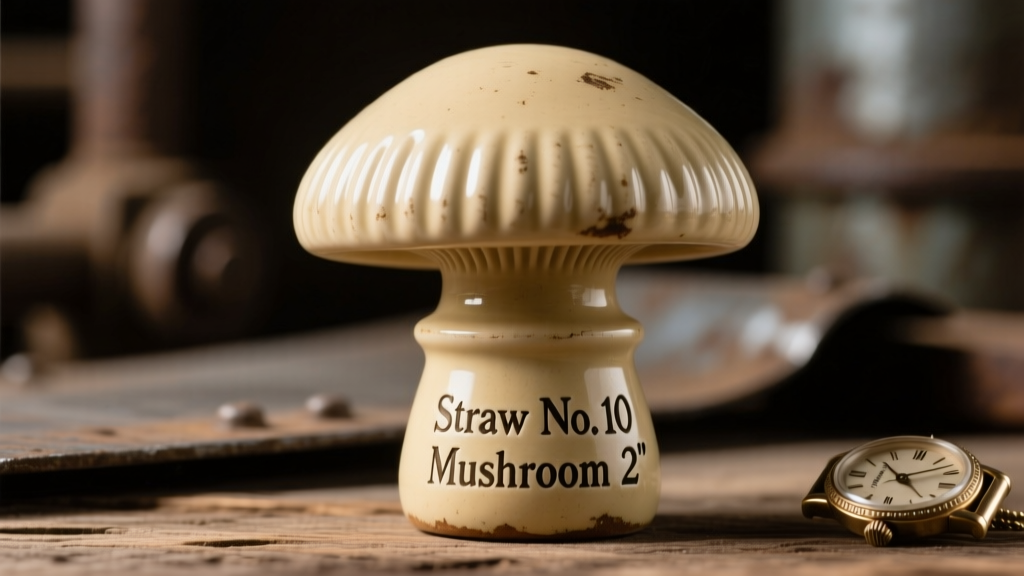
Whitall Tatum Co. Straw No. 10 Mushroom Insulator: A Collector’s Reference on Form, Function, and Rarity
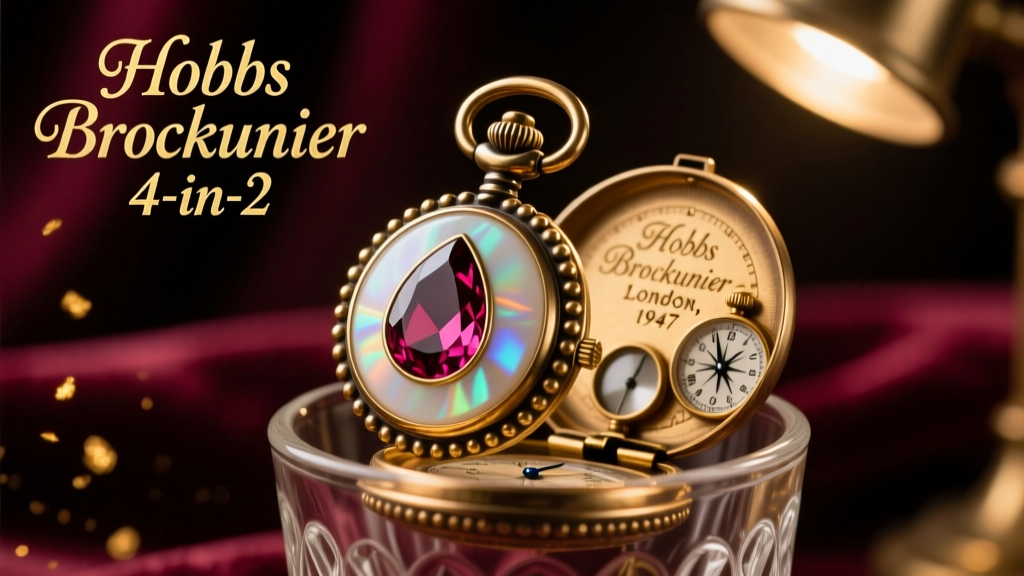
Hobnail Tumbler Dew Drop Ruby Opalescent Hobbs Brockunier 4-in-2: A Technical & Historical Appraisal
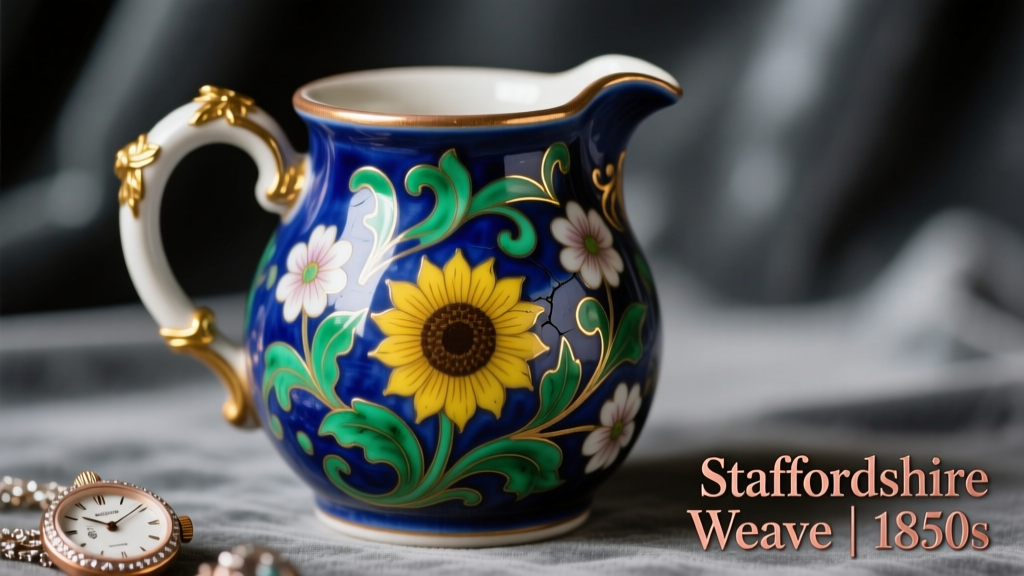
Staffordshire Jug: Weaver Polychrome Enamel, Circa 1840–1870 — A Collector’s Deep Dive into a 6-Inch Ceramic Masterpiece

Royal Bayreuth Butterfly Creamer: Decoding the Signed 'Open Wings' Porcelain Masterpiece
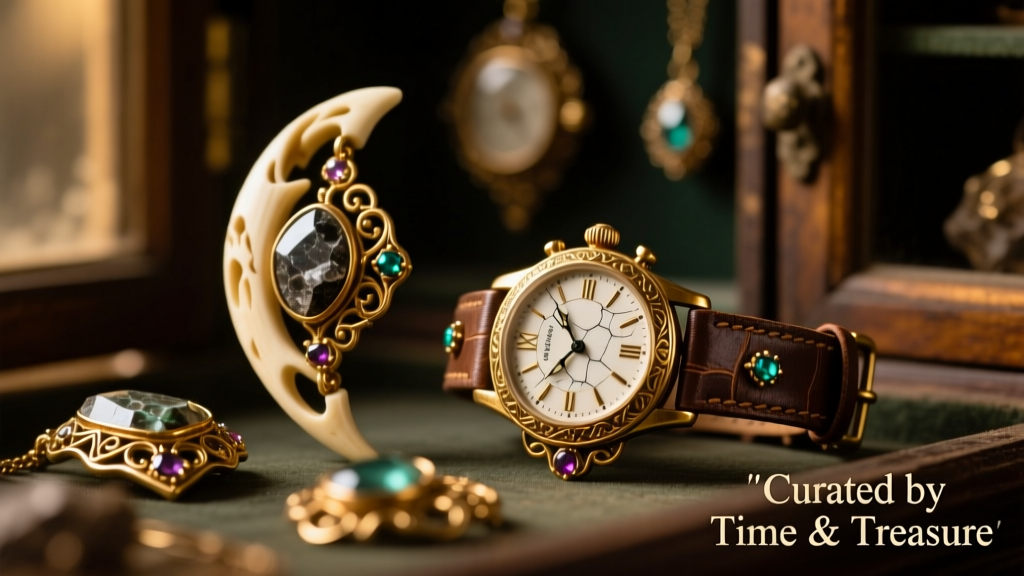
Unusual Collections: Hidden Gems in Vintage Jewelry and Timepieces
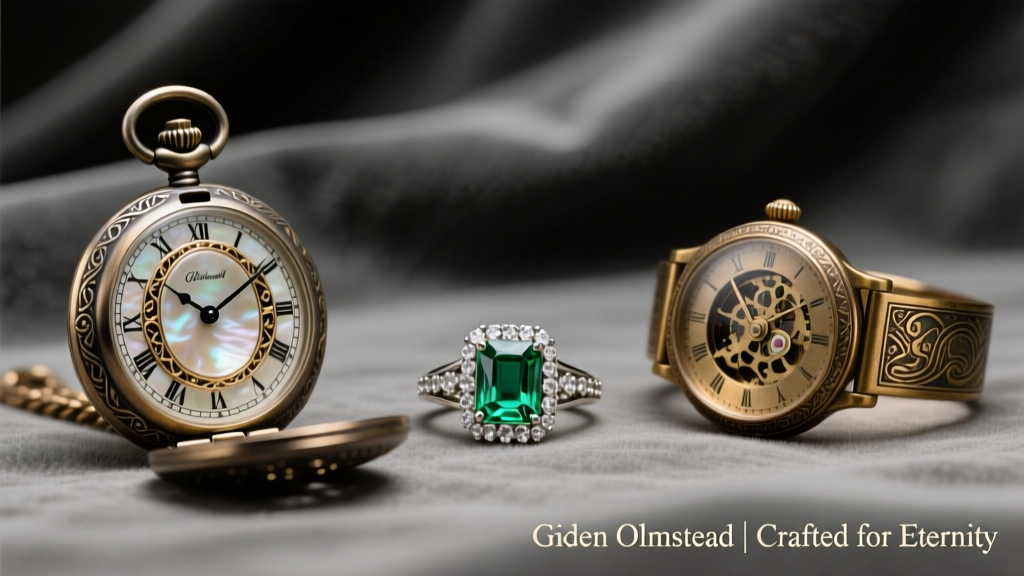
Gideon Olmstead: The Forgotten Watchmaker Who Shaped Early American Horology
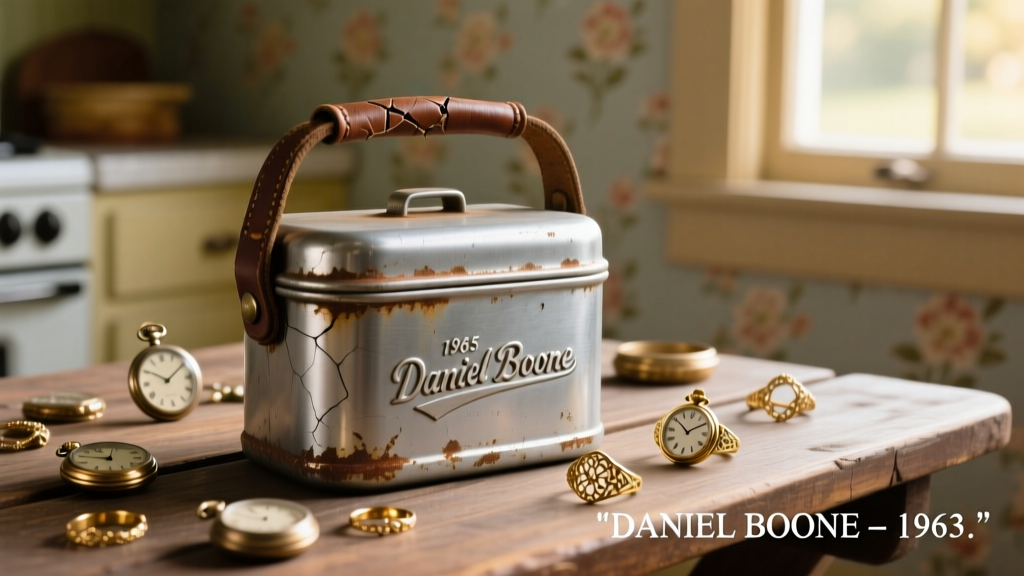
The Daniel Boone Thermos for Lunch Box (1965): A Collector’s Deep Dive into a Mid-Century American Icon
Marble Sulphide Dog on Cushion: A 2¼-Inch Victorian Curio with Provenance and Craftsmanship
Art Markets: How Early Influences Forged a Legacy of Unmatched Artistry in Vintage Jewelry and Horology