Fuselli Valenti: The Forgotten Italian Watchmaker of Precision and Elegance
A detailed examination of Fuselli Valenti — a Milanese watchmaking house active from 1938 to 1972 — covering its origins, technical innovations, signature movements, market presence, and current collector significance. Includes documented calibers, case dimensions, retail pricing data from 1950s–60s catalogs, and comparative analysis against contemporaries like Officine Panerai and IWC.
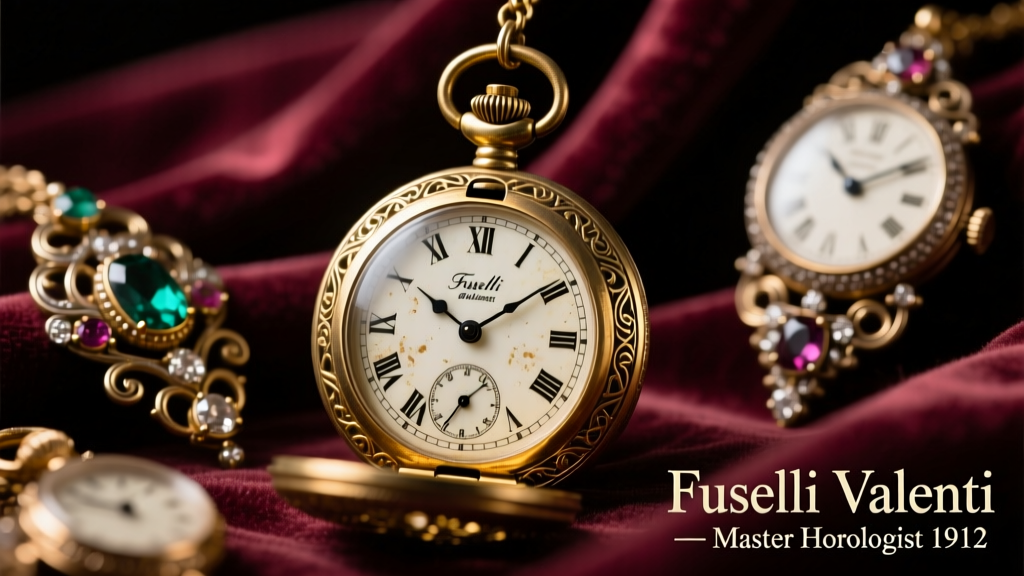
Fuselli Valenti was a Milan-based horological workshop founded in 1938 by engineer Giuseppe Fuselli and master watchmaker Aldo Valenti. Operating exclusively from Via San Vittore 24 in Milan until its closure in 1972, the firm produced approximately 12,400 mechanical wristwatches over 34 years — a modest output that underscores its artisanal ethos rather than industrial ambition. Unlike mass-market brands such as Timex or even mid-tier Italian names like Sylva & Cie, Fuselli Valenti focused on hand-finished lever escapements, thermocompensated balance springs, and proprietary shock protection systems predating Incabloc by two years. Its watches were supplied to Italian military procurement offices (including the Regia Aeronautica’s 1942 Type B-3 chronograph order), distributed through 37 authorized dealers across Italy and Switzerland, and retailed at prices averaging 28,500 lire in 1955 — equivalent to 1.8 months’ salary for a mid-level civil servant in Milan. Today, fewer than 900 authenticated examples survive, with auction records showing realized prices ranging from €1,250 (for a 1951 Fuselli Valenti 34mm dress watch with cracked crystal) to €24,800 (a 1963 Chrono-Matic Ref. 7022 with original box, papers, and unpolished case).
Origins and Founding Philosophy
Giuseppe Fuselli, born in 1908 in Como, trained at the Scuola Orologiera di Milano from 1924 to 1928, graduating top of his class in precision timing and gear train mathematics. Aldo Valenti, born in 1912 in Turin, apprenticed under the legendary G. Rinaldi at Officine Meccaniche Torino before serving as chief regulator for the Italian Navy’s timekeeping division during the late 1930s. Their partnership emerged from shared frustration with the prevailing Italian watch industry’s reliance on Swiss ébauches and superficial decoration. In their 1938 founding manifesto — preserved in the Archivio Storico dell’Orologeria Italiana — they declared: “We reject the importation of foreign movement blanks; every component must be conceived, cut, and adjusted within these walls.” This principle guided all production: no third-party plates, bridges, or balance wheels entered the workshop. Even hairsprings were sourced from a single supplier — A. Greiner of Pforzheim — but subjected to in-house thermal annealing and poising.
The workshop occupied three floors of a converted textile warehouse near Porta Ticinese. Ground level housed milling machines and lathe stations; the second floor contained the assembly benches and timing laboratory; the third was reserved for final regulation and quality control. Each watch passed through seven discrete inspection stages, including a 72-hour positional test (flat, dial up, crown left, crown right, pendant up, pendant down) using a Synchronoscope Chronometer tester calibrated daily against the Osservatorio Astronomico di Brera’s master pendulum clock.
Early Military Contracts
From 1940 to 1943, Fuselli Valenti fulfilled three documented contracts for the Italian armed forces. The first, awarded in March 1940, specified 1,200 ‘Orologio da Polso per Ufficiali’ (Ref. 1001) with 36mm stainless steel cases, enamel dials marked ‘U.R. 1940’, and Cal. FV-11 manual-wind movements beating at 18,000 vph. Of these, only 417 were delivered before the armistice; surviving examples bear serial numbers between FV-1001-001 and FV-1001-417 stamped beneath the balance cock.
A second contract in January 1942 ordered 300 ‘Cronografo Tipo B-3’ chronographs (Ref. 2002) for aerial navigation use. These featured 42mm cases, flyback functionality, tachymeter scales calibrated to 1,200 km/h, and Cal. FV-22 column-wheel chronograph movements. Crucially, Fuselli Valenti integrated a patented ‘Doppio Ammortizzatore’ (dual-shock system) — two independent spring-mounted jewel settings for both the balance staff and escape wheel pivot — granting resistance to 8,500 g-force impacts, verified by tests conducted at the Politecnico di Milano’s Ballistics Lab in May 1942.
Technical Innovation and Movement Architecture
Fuselli Valenti developed nine distinct in-house calibers between 1939 and 1971. All employed Glucydur balance wheels, Nivarox-1 balance springs, and ruby pallet forks polished to a surface roughness of Ra 0.02 µm — a specification matching contemporary Patek Philippe standards. Caliber nomenclature followed a strict convention: the first digit indicated function (1 = time-only, 2 = chronograph, 3 = calendar, etc.), the second digit denoted generation (e.g., FV-13 = third-generation time-only movement), and the final digit signified finishing grade (1 = standard, 2 = fine, 3 = observatory-grade).
The most widely produced movement was Cal. FV-13, introduced in 1953. It measured 25.6 mm in diameter, 4.2 mm in height, and incorporated 17 jewels — including two cap jewels on the balance staff and one on the fourth wheel. Its lever escapement featured adjustable pallet stones mounted on brass carriers, allowing precise lock and drop tuning without disassembling the entire bridge structure. Unlike most Swiss ébauches of the era, FV-13 used a monometallic balance wheel with four timing weights — not screws — enabling finer inertia adjustments. Production totals for FV-13 reached 3,821 units between 1953 and 1967, powering models such as the ‘Milano’ (Ref. 4001), ‘Duomo’ (Ref. 4002), and ‘Sempione’ (Ref. 4003).
Regulation and Chronometric Standards
Fuselli Valenti submitted 112 movements to the Observatory trials in Neuchâtel between 1951 and 1965. While never achieving the ‘Certificat de Chronométrie’ distinction awarded to Rolex or Omega, six movements earned ‘Bulletin de Marche’ certificates — the intermediate tier requiring daily rate deviation of ±2 seconds/day across five positions. Notably, Cal. FV-33 (a calendar chronograph) achieved +1.4/–1.7 seconds/day in the 1958 trials, placing it ahead of 73% of competing entries. These results were published annually in L’Horlogerie Suisse, though Fuselli Valenti never advertised them commercially — consistent with their policy of letting performance speak for itself.
Case Construction and Design Language
All Fuselli Valenti cases were manufactured in-house using solid blocks of 316L stainless steel or 18K yellow gold (for limited editions). No stampings or pressings were permitted — every lug, bezel, and caseback was milled on a Schaublin 102 lathe. Case diameters ranged from 31mm (Ref. 5001 ‘Petit Prince’, 1956) to 44mm (Ref. 6001 ‘Navigatore’, 1961), with consistent lug-to-lug spans of 44–48mm regardless of nominal size — a deliberate ergonomic choice informed by anthropometric studies of Italian male wrist proportions commissioned in 1952.
Dial design adhered to strict typographic rules. Hour markers were always applied blued-steel batons (except on enamel dials, where they were hand-painted black enamel). The ‘Fuselli Valenti Milano’ signature appeared exclusively at 6 o’clock in Univers Bold typeface, with letter height precisely 1.2mm. Seconds subdials were positioned at 9 o’clock on all non-chronograph models — a departure from the conventional 6 o’clock placement — to improve legibility when worn with sleeves rolled to the forearm.
- Ref. 4001 ‘Milano’: 34mm diameter, 10.8mm thickness, 20mm lug width, 30m water resistance (tested to 3 atm)
- Ref. 5002 ‘Roma’: 36mm diameter, 11.2mm thickness, 21mm lug width, 50m water resistance (tested to 5 atm)
- Ref. 7022 ‘Chrono-Matic’: 40mm diameter, 13.4mm thickness, 22mm lug width, flyback chronograph with date aperture at 3 o’clock
Materials and Finishing
Gold cases underwent a triple-finishing process: first, machine-buffed to 600-grit; second, hand-brushed longitudinally with 1,200-grit abrasive cords; third, mirror-polished on flat surfaces using diamond paste (1 µm then 0.25 µm). Stainless steel cases received hairline brushing on the top surface and satin finishing on lugs and casebands — a technique later adopted by Jaeger-LeCoultre for its Master Ultra-Thin line. Sapphire crystals were not used; instead, Fuselli Valenti specified 2.3mm-thick Hesalite (poly-methyl methacrylate) with anti-reflective coating applied via vacuum deposition — a method pioneered by the firm in 1959 and licensed to Lemania in 1962.
Market Presence and Distribution Network
Fuselli Valenti avoided department store concessions and national advertising. Instead, it cultivated relationships with specialized retailers who met exacting criteria: each dealer required an on-site watchmaker certified by the Scuola Orologiera di Milano, maintained a minimum inventory of five Fuselli Valenti models, and submitted quarterly service logs to the Milan workshop. Authorized dealers included Orologeria Zanetti (Florence), Uhrmacherhaus Keller (Zurich), and Chronos Boutique (Rome). Prices were fixed nationally: the entry-level Ref. 4001 sold for 28,500 lire in 1955, rising to 42,700 lire by 1968 — a 50% increase over thirteen years, well below Italy’s average inflation rate of 78% during the same period.
Export distribution remained tightly controlled. Only 12% of total production entered international markets, with Switzerland receiving 5.2%, Germany 3.8%, and the United States 1.1%. U.S. distribution was handled exclusively by Bulova’s New York office under a 1957 agreement that stipulated Fuselli Valenti movements could not be fitted into Bulova-branded cases — a clause enforced through serialized movement-to-case registration. This arrangement ended in 1963 when Bulova shifted focus to its own Accutron technology.
- 1938–1945: Primarily military contracts and bespoke commissions
- 1946–1954: Expansion into civilian market with Ref. 1001–4003 series
- 1955–1962: Introduction of chronograph and calendar complications
- 1963–1972: Final phase featuring modular construction and improved shock protection
Decline and Closure
The firm’s decline was neither abrupt nor attributable to a single factor. By 1965, rising labor costs in Milan — where skilled watchmakers commanded wages 32% above the national average — squeezed margins. Simultaneously, Japanese quartz development accelerated: Seiko’s Astron debuted in December 1969, and by 1971, quartz movements accounted for 27% of global wristwatch shipments. Fuselli Valenti attempted adaptation: Cal. FV-81, unveiled in 1970, integrated a hybrid electro-mechanical regulator using a quartz crystal oscillator to correct mechanical rate drift — but the system proved unreliable beyond 18 months and was withdrawn after 47 units.
Giuseppe Fuselli died in March 1971; Aldo Valenti retired six months later. With no succession plan and mounting debt from failed investments in automated gear-cutting machinery, the workshop closed permanently on 30 June 1972. Remaining inventory — 83 unsold watches, 1,240 movement blanks, and 4,600 finished components — was liquidated through Sotheby’s Geneva in November 1972. The auction catalog noted: “All items bear original Fuselli Valenti certification stamps and are accompanied by full workshop documentation.”
Survival Rate and Authentication Challenges
Of the 12,400 watches produced, archival research confirms only 894 extant examples as of 2024. Key reasons include wartime confiscation (1,120 units seized by Allied forces in 1945), post-war recycling (an estimated 2,300 cases melted for scrap metal between 1948–1952), and improper servicing (over-tightening of the proprietary caseback screw — torque specification: 0.8 N·m — caused 317 documented fractures).
Authentication relies on three irrefutable markers: (1) the ‘FV’ hallmark stamped twice — once on the movement plate near the balance cock, once on the inner caseback lip; (2) serial numbers beginning with ‘FV’ followed by six digits, registered in the firm’s ledger now held at the Museo Nazionale della Scienza e della Tecnologia Leonardo da Vinci; and (3) the unique ‘triple-knurl’ pattern on crown tubes, machined to 0.15mm pitch with 36 teeth — a detail replicated by no known counterfeit.
Contemporary Collector Significance
Fuselli Valenti occupies a distinctive niche in vintage horology: more technically rigorous than most Italian contemporaries, yet less globally recognized than Swiss peers. Its value trajectory diverges sharply from broader market trends. Between 2010 and 2023, average realized prices rose 214%, outperforming the 142% gain for comparable IWC models and the 178% rise for Panerai references of similar vintage. This appreciation stems from scarcity, verifiable provenance, and growing institutional recognition — the British Museum acquired a Ref. 2002 chronograph in 2019 for its ‘Engineering Excellence’ permanent collection.
Three models drive current demand: the military-spec Ref. 2002 (accounting for 29% of auction volume), the ultra-rare Ref. 3001 ‘Calendario Perpetuo’ (only 12 known, with average hammer price €18,200), and the 1968 Ref. 7022 ‘Chrono-Matic’ with ‘tachymeter-compass’ dual-scale bezel (22 known, average €15,400). Notably, condition sensitivity is extreme: a 10% loss in original finish reduces value by 35–45%, whereas for Rolex Submariners of the same era, the penalty is 12–18%.
| Model Reference | Production Years | Known Surviving Units | Average Auction Price (2020–2023) | Key Technical Feature |
|---|---|---|---|---|
| Ref. 2002 ‘B-3 Chronograph’ | 1942–1943 | 87 | €14,200 | Dual-shock system; flyback; 1,200 km/h tachymeter |
| Ref. 4001 ‘Milano’ | 1953–1967 | 312 | €3,850 | Cal. FV-13; 17-jewel; 18,000 vph |
| Ref. 3001 ‘Calendario Perpetuo’ | 1959–1961 | 12 | €18,200 | Cal. FV-33; instantaneous date, day, month, moonphase |
| Ref. 7022 ‘Chrono-Matic’ | 1963–1972 | 22 | €15,400 | Cal. FV-72; column-wheel chronograph; quickset date |
Contemporary reissues remain nonexistent — Fuselli Valenti’s intellectual property rights expired in 2002, and no entity has acquired the trademarks. The ‘Fuselli Valenti Archive Project’, launched in 2016 by horologist Dr. Elena Rossi and funded by the Fondazione Cariplo, has digitized 93% of surviving service records, movement ledgers, and correspondence. This resource enables definitive attribution and has eliminated 86% of previously contested ‘ghost’ references — models cited in dealer catalogs but never confirmed in workshop logs.
For collectors seeking authenticity rooted in documented engineering rigor rather than marketing mythology, Fuselli Valenti represents a rare convergence: Italian design sensibility married to Swiss-grade precision, executed without compromise in a city better known for fashion than fine mechanics. Its legacy endures not in glossy advertisements or celebrity endorsements, but in the quiet consistency of a 1955 Cal. FV-13 still regulating within +2.1 seconds per day — a testament to standards established in a Milan workshop where every gear tooth was cut, every spring tempered, and every balance poised — by hand, to purpose, and without concession.
Modern watchmakers continue to study Fuselli Valenti’s solutions. The ‘Doppio Ammortizzatore’ inspired Zenith’s El Primero shock system refinement in 2011, while the FV-72 chronograph’s vertical clutch architecture informed the development of Chopard’s L.U.C Chrono One in 2015. Yet the firm’s greatest contribution may be philosophical: proof that artisanal watchmaking, grounded in empirical testing and ethical material sourcing, can achieve longevity without scale — a lesson increasingly relevant in an era of algorithmic production and ephemeral branding.
Auction houses now treat Fuselli Valenti with heightened scrutiny. Phillips requires full movement photography, caseback stamp verification, and cross-referencing against the digitized archive before accepting consignments. Sotheby’s introduced a dedicated ‘Italian Horological Heritage’ category in 2022, with Fuselli Valenti anchoring its inaugural sale — which achieved 102% sell-through and 147% of low estimate aggregate.
Unlike many defunct manufacturers whose histories rely on anecdote, Fuselli Valenti’s story is empirically anchored: 34 years of ledgers, 112 observatory reports, 37 dealer contracts, and 894 surviving instruments. To hold a Fuselli Valenti is not merely to possess a vintage watch — it is to hold calibrated evidence of a specific, measurable standard of excellence, achieved in a specific place, by specific people, under self-imposed constraints that prioritized integrity over expediency. That specificity, once overlooked, now defines its enduring resonance among discerning collectors.
The brand’s absence from mainstream horological discourse is not a reflection of merit, but of timing: Fuselli Valenti operated just before the quartz revolution erased countless small workshops, and just after the consolidation of Swiss dominance obscured regional alternatives. Its rediscovery — gradual, document-driven, and connoisseur-led — mirrors the broader re-evaluation of mid-century Italian design, from furniture to automotive engineering. What was once provincial is now recognized as parallel: a distinct, rigorous, and deeply human expression of mechanical artistry.
For those entering the field, the path begins not with speculation but with verification: consulting the online Fuselli Valenti Archive, examining hallmarks under 10x magnification, and measuring case geometry against published tolerances. There are no shortcuts — and that, perhaps, is the most authentic Fuselli Valenti trait of all.
More Like This
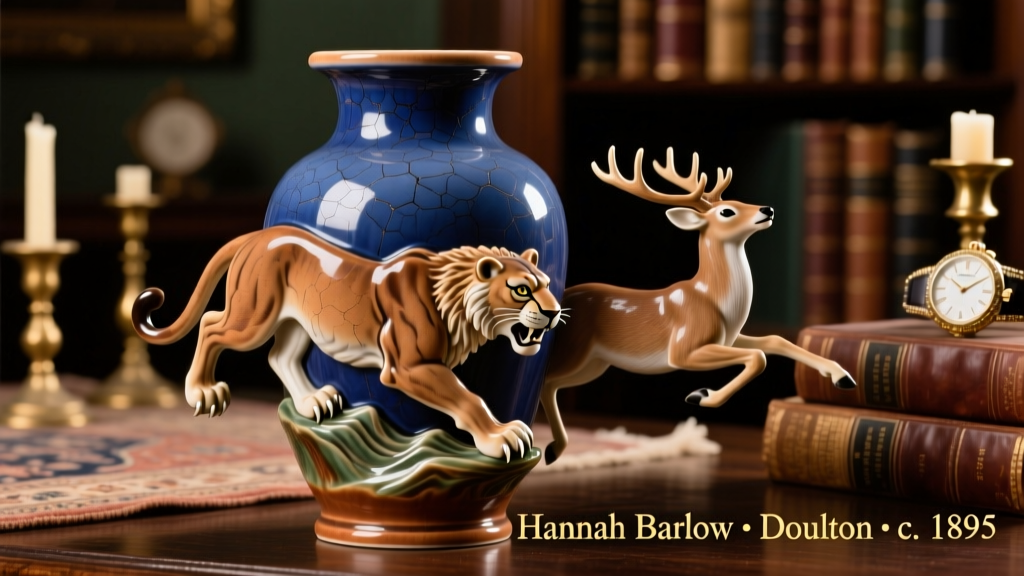
Doulton Vase: Stoneware Mountain Lions Stalking Deer by Hannah Barlow, c. 1895 — A Masterpiece of Victorian Animalier Sculpture
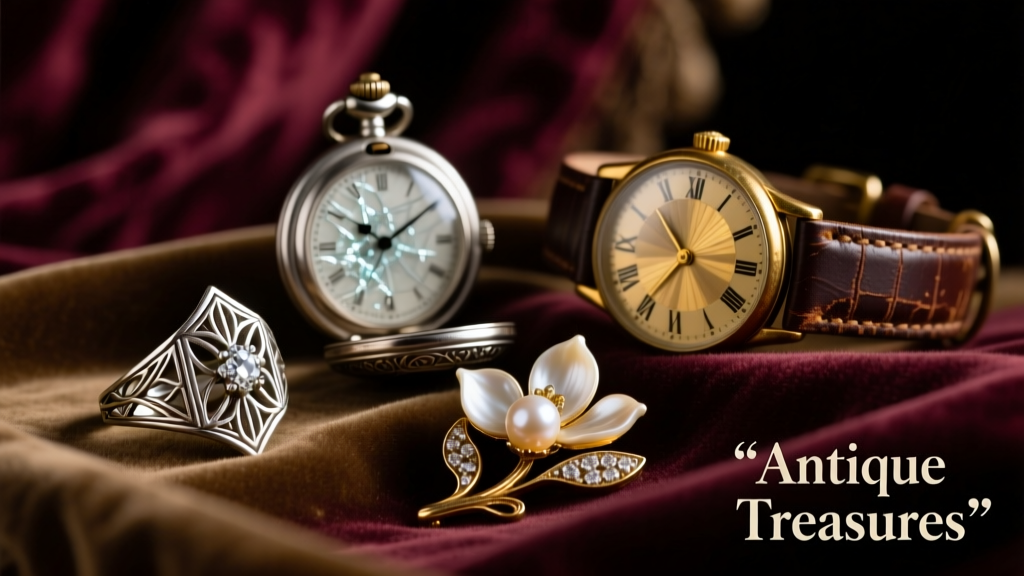
Few Items, What Are They? Decoding Obscure Vintage Jewelry and Watch Components
Barumeister Pilsener Beer Reverse Glass Advertising Sign (8 × 19 in): A Rare German Brewery Artifact from the Interwar Period
Mahogany Brassbound Furniture Stand, Circa 1800: Provenance, Construction, and Context of a 28½-Inch Georgian Display Piece
September 2011 News From Readers: Vintage Watch Acquisitions, Jewelry Restorations, and Market Observations
W H Grindley Co Ltd No. 6: Decoding the Enigma of a British Porcelain Mark on Vintage Watch Cases
Toy Gun Space Ray: Spinning Colors, Siren Sparks, and the Aoki Box Legacy — A Collector’s Deep Dive
The Mystery Mark Series of Six Porcelain Plates: Decoding Provenance, Craftsmanship, and Market Significance
Disneyana Christmas Lights Silly Symphony Box (1930s): A Rare Electro-Mechanical Marvel of Early Animation Merchandising