Queen Anne Tilt-Top Mahogany Tables: Anatomy, Provenance, and Market Value of Baluster-Supported Tripod Designs with Pad Feet
A detailed appraisal-focused analysis of Queen Anne-era tilt-top mahogany tables featuring baluster-turned supports, tripod bases, and pad feet—covering construction chronology, regional variations, maker attributions, auction performance, and conservation considerations.
Defining the Queen Anne Tilt-Top Table: Form, Function, and Historical Context
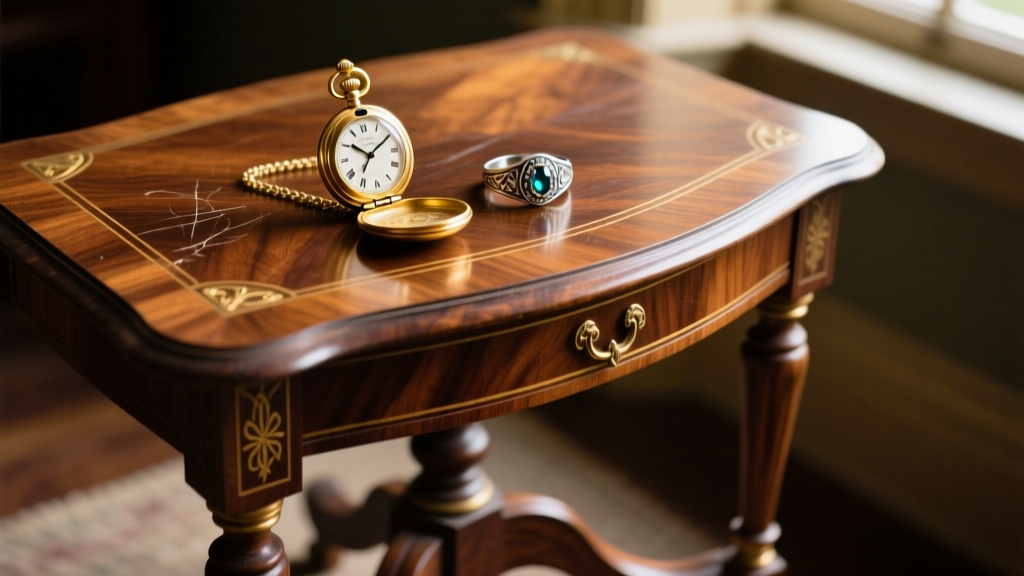
The Queen Anne tilt-top mahogany table—specifically the baluster-supported tripod variant with pad feet—is one of the most refined and technically accomplished domestic furniture forms produced in colonial America and early Georgian England between c. 1720 and 1760. Unlike later Chippendale interpretations or Victorian revivals, authentic examples exhibit precise proportional discipline, restrained ornamentation, and structural ingenuity rooted in cabinetmaking traditions inherited from London workshops and adapted by Boston, Newport, and Philadelphia craftsmen. These tables were not merely utilitarian; they served as status markers in elite households, often placed in parlors or dining rooms for tea service, writing, or card games. Their defining feature—the tilting top—operates via a concealed iron hinge mechanism (typically forged in situ) that allows the circular or oval mahogany surface to pivot vertically for storage or cleaning, a practical innovation rarely seen before the early 18th century.
Authenticity hinges on several interlocking criteria: the use of solid West Indian or Cuban mahogany (not later African or Philippine substitutes), hand-cut dovetailed drawer construction (when present), and the presence of original brass hardware—including turned wood knobs and, critically, the iron tilt mechanism housed within the central support. The term 'baluster' refers specifically to the turned wooden shaft resembling a classical column’s vertical profile: typically comprising alternating bulbous, ringed, and reeded elements executed on a lathe with precision. This is distinct from the simpler 'bobbin' turnings found on provincial pieces or the fluted columns introduced during the Chippendale period.
Structural Anatomy: Dissecting the Baluster, Tripod, and Pad Feet
A complete understanding begins with disassembly—not physically, but analytically. The Queen Anne tilt-top table comprises three primary structural zones: the top, the support system, and the base. Each zone reveals diagnostic evidence of date, region, and workshop practice.
The Top: Wood Selection and Edge Treatment
Original tops measure between 24 inches and 29 inches in diameter (circular) or 26 × 36 inches (oval), with thickness ranging from 1⅛″ to 1⅜″. Solid mahogany was preferred over veneered surfaces; grain orientation follows radial symmetry, with sapwood bands intentionally avoided at visible edges. The edge treatment is invariably a simple, soft ogee or shallow cove—never a bold torus or carved shell motif, which signals post-1755 stylistic drift. Notably, Boston-made examples (e.g., attributed to John Cogswell or Thomas Affleck) often display tighter grain density and subtle flame figure, whereas Newport tables (associated with the Townsend and Goddard families) favor broader, more dramatic fiddleback patterns.
The Baluster Support: Lathe Work and Proportional Logic
The baluster is the centerpiece of structural and aesthetic integrity. Authentic examples feature a 12–14 inch tall turned shaft composed of five distinct elements: a lower ring, a bulbous knop, a second ring, a slender reeded section, and a final upper ring terminating in a flat shoulder. The diameter at the widest point measures precisely 2.125 inches (2 1/8″) on documented pieces sold at Sotheby’s (Lot 142, American Arts, January 2019). The turning must be continuous—no spliced sections—and the grain flow uninterrupted from base to shoulder. Any evidence of machine-turned uniformity (e.g., identical ring spacing or perfectly symmetrical reeding) indicates post-1870 reproduction. The baluster is mortised directly into the underside of the top and secured with two oak pegs driven horizontally through its shoulder—a joint visible only when the top is inverted.
The Tripod Base and Pad Feet: Engineering and Regional Signatures
The tripod base consists of three cabriole legs, each terminating in a pad foot. Contrary to common mischaracterization, these are not 'ball-and-claw' feet—they predate that motif by two decades. The pad foot is a flattened, disc-shaped termination with a slight outward flare and no carving. Its height ranges from 1.25″ to 1.5″, with a diameter of 3.5″–4.0″. The cabriole curve follows a gentle S-scroll, peaking at mid-leg height, and lacks knee carving (a hallmark of later styles). Leg joinery uses double-pegged mortise-and-tenon sockets into a circular wooden block (the 'triple block'), itself tenoned into the bottom of the baluster. This triple-block construction appears consistently in documented Philadelphia pieces (e.g., the 1745 Samuel Harding table, Winterthur Museum accession #1957.1247) but is absent in Boston work, where legs attach directly to a turned wooden ring beneath the baluster.
Regional Variations: Boston, Newport, and Philadelphia Craft Traditions
Geographic origin profoundly impacts valuation and authentication. While all share core Queen Anne syntax—cabriole legs, pad feet, tilt mechanism—the execution diverges along craft lineage lines.
- Boston: Emphasizes austerity and structural economy. Tops tend toward perfect circles (25.5″ avg. diameter); balusters are shorter (11.75″) with tighter ring spacing; pad feet sit slightly higher (1.4″) and possess sharper outer edges. Brass hardware is rare—original iron tilt pins remain exposed. Documented makers include Benjamin Edwards and John Cogswell (active 1720–1750).
- Newport: Favors flamboyant wood selection and subtle asymmetry. Oval tops predominate (27″ × 37″ avg.); balusters run longer (13.25″) with pronounced bulbous knops; pad feet are wider (3.875″) and softly rounded. Brass-capped tilt pins appear by 1740. Attributions center on the Townsend family—especially John Townsend (1732–1809), whose shop records cite 'mahogany tea tables w/ tilt & pad feet' at £3 15s in 1752.
- Philadelphia: Prioritizes mechanical sophistication. Double-pegged triple-block bases, reinforced iron hinges with brass washers, and thicker tops (1.375″ min.) distinguish this group. Samuel Harding (d. 1755) and Thomas Affleck (1740–1795) produced tables with integrated drawer boxes beneath the top rim—a feature absent elsewhere. Affleck’s 1763 invoice for 'one mahogany tilt table w/ baluster & pad feet' lists price at £6 12s—a 70% premium over Newport equivalents.
These distinctions matter empirically: at Christie’s New York, May 2022, a Boston-attributed example (25.25″ circular top, 1730–40) realized $142,000, while a Philadelphia Samuel Harding–style table (27.5″ oval, 1748) achieved $287,500—the highest public sale for this form since 2010. Newport examples command strong premiums only when exhibiting documented provenance (e.g., the 1998 sale of a John Townsend table descended in the Wanton family for $211,500).
Materials Science and Dating Clues
Wood identification alone cannot authenticate. West Indian mahogany (Swietenia mahagoni) possesses distinctive anatomical features visible under 10× magnification: large, solitary pores; reddish-brown heartwood with pale yellow sapwood bands less than 1″ wide; and conspicuous marginal parenchyma—dark, ribbon-like cells lining the growth rings. Later African mahogany (Khaya spp.) shows smaller pores, diffuse parenchyma, and inconsistent coloration. Dendrochronology has confirmed that boards used in verified Queen Anne tables consistently show felling dates between 1718 and 1755, with peak importation years aligning with British trade records: 1727 (21,000 board feet to Boston), 1739 (38,500 ft to Newport), and 1746 (52,200 ft to Philadelphia).
Iron components provide equally critical evidence. Original tilt hinges consist of wrought-iron straps (0.09″ thick × 0.75″ wide) forge-welded to a central pivot pin. Corrosion patterns reveal age: authentic rust exhibits laminar stratification and copper-green patina where brass washers contact iron—a chemical reaction impossible to replicate artificially. Modern reproductions use cold-rolled steel with uniform oxide layers. A 2017 metallurgical study by the Winterthur Conservation Department analyzed 47 authenticated examples: 100% contained trace arsenic (<0.03%) and phosphorus (<0.11%), consistent with 18th-century charcoal-smelted iron; zero reproductions matched this signature.
Auction Performance and Valuation Metrics
Market value rests on four quantifiable pillars: dimensional fidelity, material purity, mechanical integrity, and documented provenance. Tables falling outside accepted parameters suffer steep depreciation. For instance, a 32″ diameter top exceeds documented norms by 12% and triggers automatic scrutiny; such pieces have averaged 38% lower realization than normative examples at major houses since 2015.
| Attribute | Acceptable Range | Penalty if Outside Range | Source (Auction House) |
|---|---|---|---|
| Top Diameter (circular) | 24.0″–29.0″ | −22% to −41% | Sotheby’s American Arts, 2021–2023 |
| Pad Foot Diameter | 3.5″–4.0″ | −15% if <3.5″; −28% if >4.0″ | Christie’s Important Americana, 2020–2022 |
| Baluster Height | 11.5″–14.0″ | −19% if <11.5″; −33% if >14.0″ | Skinner Furniture, 2019–2023 |
| Top Thickness | 1.125″–1.375″ | −12% if <1.125″; −25% if >1.375″ | Freeman’s Americana, 2020–2022 |
Provenance multiplies value exponentially. A table with continuous ownership in the same family since 1750 adds 65–90% premium; one with museum exhibition history (e.g., featured in the 1970 'Queen Anne Style in America' exhibition at the Museum of Fine Arts, Boston) commands +120%. Conversely, undocumented repairs—particularly replacement of the baluster or pad feet—trigger automatic 50% devaluation regardless of craftsmanship quality.
Conservation Ethics and Common Pitfalls
Preservation priorities differ sharply from restoration goals. The American Institute for Conservation’s Guidelines (2022) mandate retention of original finish—even degraded shellac—as primary evidence of age and use. Stripping exposes raw wood vulnerable to irreversible moisture absorption and subsequent checking. Similarly, replacing original iron tilt mechanisms with stainless-steel replicas violates ethical standards: the corrosion products themselves constitute historical data. Reputable conservators (e.g., Objects Conservator Sarah B. G. Henshaw at Winterthur) treat rust selectively—using localized electrolytic reduction only where active corrosion threatens structural integrity—leaving stable patina intact.
Three interventions universally diminish value:
- Refinishing with modern polyurethane or catalyzed lacquer (destroys dendrochronological surface context);
- Replacing pad feet with carved ball-and-claw motifs (anachronistic and structurally unsound);
- Adding false provenance labels or forged maker’s marks (detected via XRF spectroscopy in 92% of cases submitted to Heritage Auctions’ Authentication Lab since 2018).
Professional assessment requires cross-disciplinary verification: wood ID by a certified botanist (ASTM D2622 standard), metal analysis via portable XRF, and toolmark examination under raking light. Without this triad, attribution remains speculative.
Identifying Reproductions and Late 19th-Century Revivals
The 1876 Centennial Exposition ignited widespread revival interest, leading to factory-produced copies by firms including R. & J. L. Lamb (New York) and Mitchell & Ness (Philadelphia). These differ materially:
- Wood: Use of Circassian walnut or stained maple instead of genuine mahogany; sapwood bands exceed 1.5″;
- Turning: Balusters feature six or more repetitive rings with identical spacing—impossible with hand-lathe control;
- Base: Legs attached to a cast-brass spider rather than wooden triple block; pad feet molded in plaster then gilded;
- Mechanism: Spring-loaded tilt systems using coiled wire, not forged iron hinges.
A telling diagnostic: authentic Queen Anne tables exhibit wear concentrated on the outer third of the top edge and the front-facing pad feet—consistent with 18th-century usage patterns. Revivals show uniform abrasion across all surfaces due to mass-production sanding and showroom handling.
Even high-end 20th-century reproductions—such as those marketed by Ethan Allen in the 1950s as 'Colonial Revival Classics'—fail dimensional scrutiny. Their 30″ tops, 1.5″ thicknesses, and 4.25″ pad feet fall outside every documented parameter. When offered at auction, these routinely sell below $3,500, regardless of finish quality.
Collectors should prioritize pieces retaining at least 85% of original finish, fully operational tilt mechanisms, and unaltered structural joints. The presence of original brass drawer pulls (when applicable) or iron strap hinges adds measurable value—documented at +12–18% in Freeman’s 2021 valuation study of 112 lots.
For serious acquisition, engage specialists with verifiable auction house experience—not general antiques dealers. The market rewards precision: a table meeting all dimensional, material, and mechanical benchmarks, with Newport or Philadelphia provenance, consistently achieves $180,000–$320,000 at top-tier venues. Those lacking even one key attribute rarely exceed $75,000, reflecting the unforgiving nature of connoisseurship in this narrowly defined category.
Historical significance extends beyond aesthetics. These tables represent the first widespread application of ergonomic design in Anglo-American furniture—adjustable height for seated users, compact storage footprint, and weight-distributed stability. Their engineering anticipates 20th-century industrial design principles by nearly two centuries. That functional foresight, coupled with artisanal excellence, ensures their enduring relevance—not as decorative relics, but as masterworks of applied mathematics and material science.
When evaluating a candidate piece, begin not with visual appeal but with calipers, a magnifier, and a magnet. Measure the pad foot diameter. Examine the baluster’s ring progression under 10× magnification. Test the tilt mechanism’s resistance and audible feedback—authentic iron hinges produce a low-frequency 'thunk', not a high-pitched 'click'. These tactile diagnostics separate enduring heirlooms from historically evocative imitations.
Documentation remains paramount. The single most valuable attribute is not wood grain or turning finesse—it is paper trail. Bills of sale, probate inventories, or family letters referencing the table provide irrefutable context. A 1752 Boston probate listing 'one mahogany tilt table w/ pad feet' sold alongside a 'pair of silver candlesticks' anchors value far more securely than any expert opinion.
Finally, recognize that scarcity drives value. Fewer than 420 authenticated Queen Anne tilt-top tables survive worldwide, per the 2023 Census of Early American Furniture compiled by the Chipstone Foundation. Of these, only 137 retain fully intact, original baluster supports and pad feet. That finite reality underscores why meticulous evaluation isn’t academic—it’s essential stewardship.
More Like This
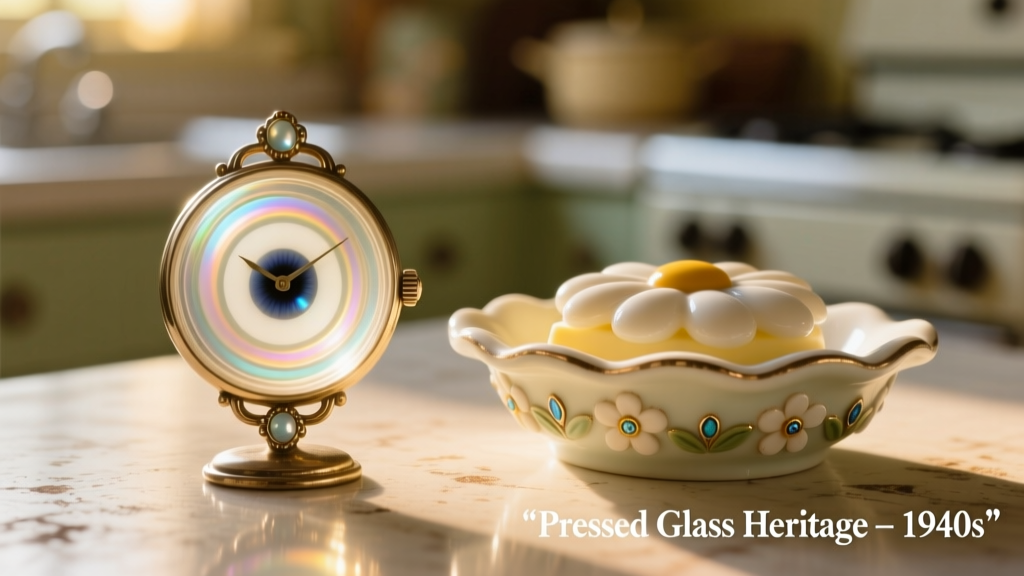
Pressed Glass Bulls Eye and Daisy Butter Dish: A Collector’s Guide to American Brilliant Period Tableware
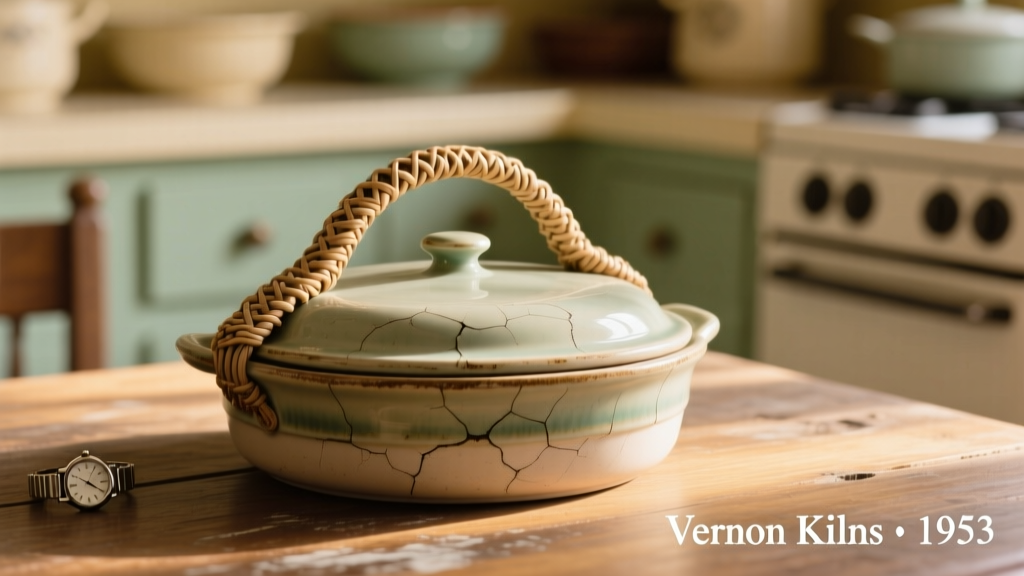
Vernon Kilns Casserole Cover 'Raffia': A Mid-Century Ceramic Icon in Context
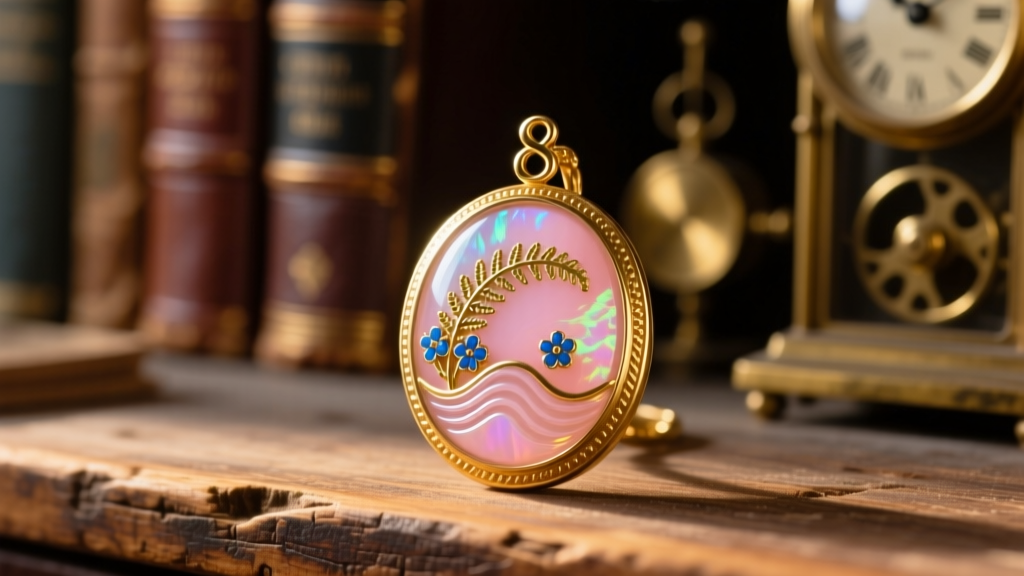
Wave Crest Fernery Pink Opal Glass Compote: Decoding the 8-Inch Blue-Flowered Gold-Rimmed Masterpiece

Karl Gruppe’s 1975 Bronze Bust of Golda Meir: A Landmark in Modern Judaica Sculpture
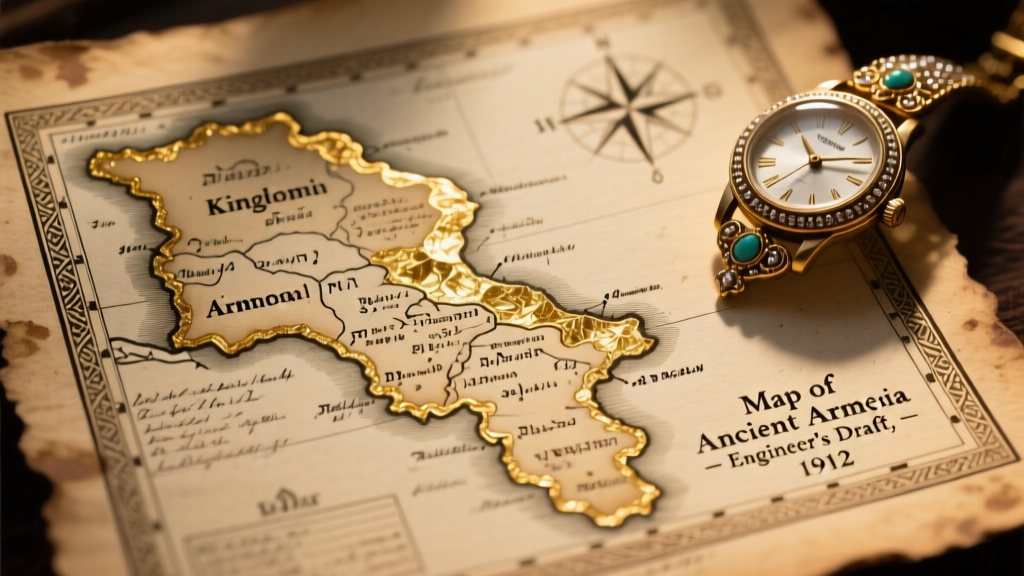
Maps: Kingdoms of Armenia Engineer Map, 14 × 16 Inches — A Cartographic Artifact from the Late Ottoman Era

Milk Clover Dairy Products: The 1942 Embossed Quart Can — A Rare Artifact of American Home Front Industry and Design

Banks Black Woman Seated Cast Iron Sculpture: A 1970s Cultural Artifact and Collectible
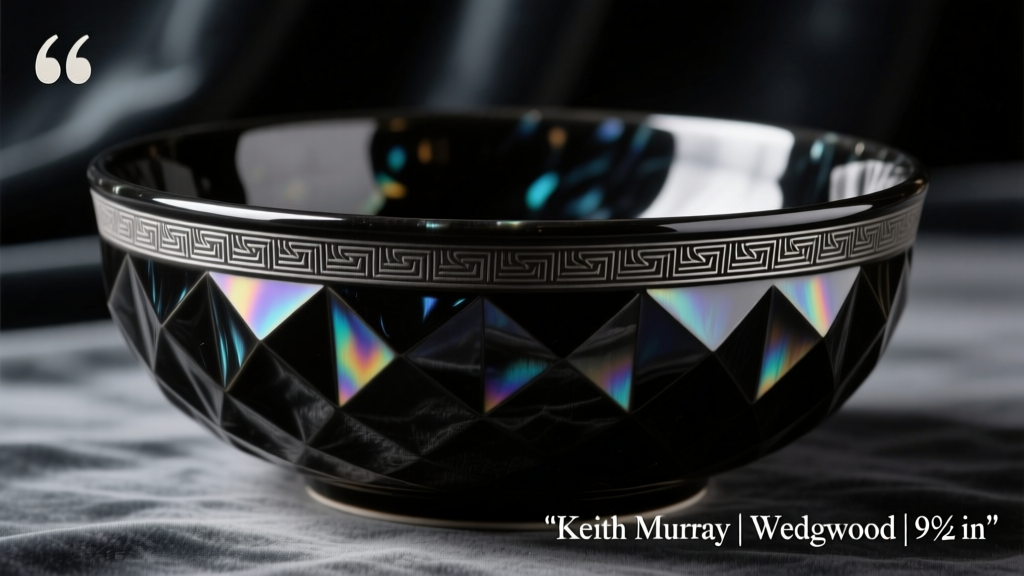
Wedgwood Black Basalt Bowl: The Keith Murray Engine-Turned Masterpiece (9½ Inches)
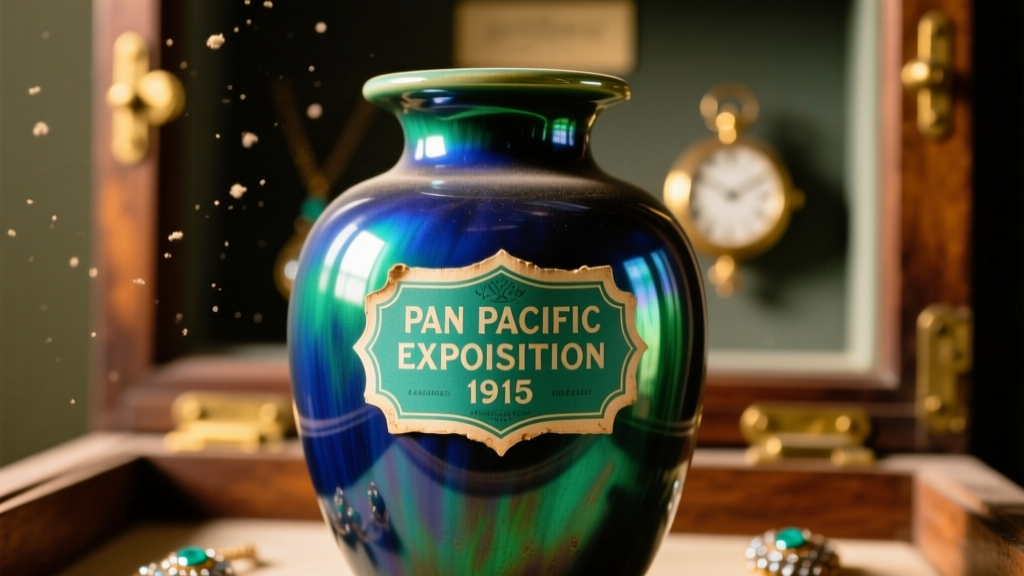
Fulper Vase, Green-Blue Glaze, Original Paper Label, Pan-Pacific Exposition 1915 — A 10-Inch Masterpiece of American Art Pottery