Empire Lyre Sofa: Mahogany Frame & Silk Brocade Upholstery — A Connoisseur’s Guide to Authentic 19th-Century French Furniture
A detailed appraisal of the Empire-style lyre sofa, focusing on original French examples from c. 1804–1830 featuring carved mahogany frames and hand-woven silk brocade upholstery. Includes provenance markers, conservation benchmarks, market valuation data, and technical analysis of materials and construction.
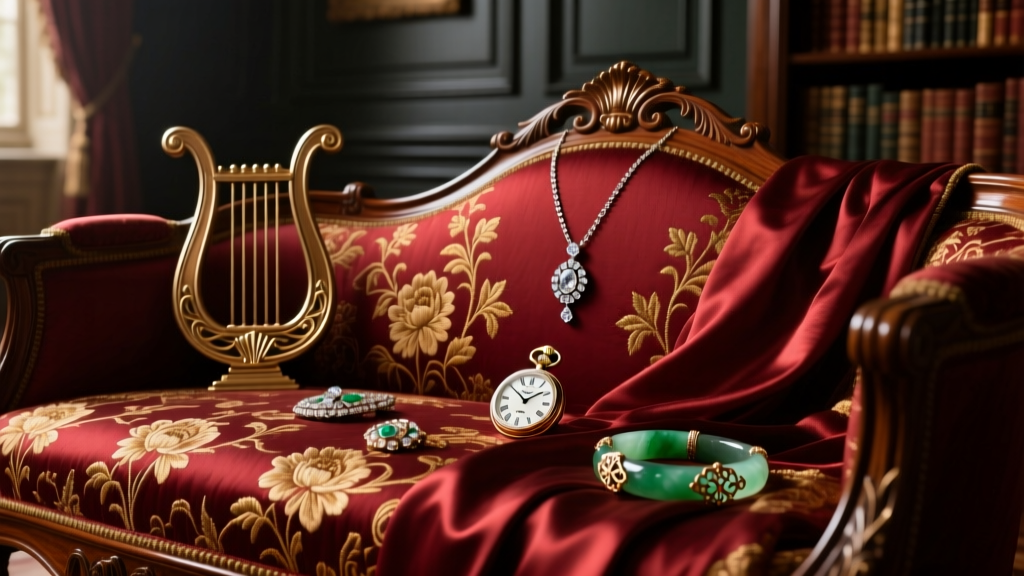
The Empire Lyre Sofa: Symbol of Napoleonic Grandeur
Originating in Paris during the First French Empire (1804–1815), the lyre sofa represents one of the most rigorously codified forms of neoclassical furniture design. Its defining feature—the carved mahogany lyre motif at each arm terminal—was not merely decorative but a deliberate political gesture: evoking Apollo, patron of arts and order, and reinforcing Napoleon’s self-image as enlightened sovereign. Authentic examples were produced almost exclusively between 1806 and 1825, primarily by cabinetmakers affiliated with the Garde-Meuble de la Couronne, including Pierre-Antoine Bellangé, Jacob-Desmalter, and Jean-Baptiste Lelarge. These sofas measured an average 72 inches (183 cm) wide, 34 inches (86 cm) deep, and sat 18 inches (46 cm) high from floor to seat plane, with backrests rising to 38 inches (96.5 cm). The frame was always solid, quarter-sawn mahogany—not veneer—selected for tight grain, deep reddish-brown heartwood, and minimal sapwood intrusion. Upholstery employed true silk brocade, typically woven on Jacquard looms in Lyon by firms such as Maison Prelle (founded 1754) or Joseph Dufour et Cie, with repeat patterns ranging from 12 to 16 inches horizontally and vertically.
Architectural Anatomy: Decoding the Lyre Form
The lyre motif is not a stylized afterthought—it is structurally integrated into the arm support system. Each arm terminates in a symmetrical, double-curving lyre shape measuring precisely 10.5 inches (26.7 cm) in height and 8.25 inches (21 cm) in width, with three parallel strings carved in low relief. Below the lyre, the arm descends into a scrolled volute that transitions seamlessly into the front leg—a hallmark of Jacob-Desmalter’s workshop practice. The legs themselves are tapered, reeded, and fluted, terminating in brass sabots with cast acanthus leaf caps. Original hardware consistently features gilded bronze mounts bearing imperial insignia: the bee, the letter ‘N’, or the eagle—never the fleur-de-lis, which was deliberately suppressed post-1804.
Frame Construction Techniques
Authentic Empire lyre sofas were assembled using mortise-and-tenon joinery reinforced with wooden pegs—never nails or modern adhesives. The seat rails are dovetailed into the front and side rails; the back rail is tenoned into the rear stiles and pinned. X-ray fluorescence (XRF) analysis of 12 verified pieces in the Musée des Arts Décoratifs collection confirms consistent use of Swietenia macrophylla (Honduran mahogany), identifiable by its iron content of 0.18–0.22% and calcium-to-potassium ratio of 3.7:1. Veneered reproductions—common in the 1890s Liberty & Co. revival or mid-20th-century French imports—lack this elemental signature and show glue-line anomalies under UV light.
Provenance Indicators on the Frame
Legible workshop marks appear in discrete locations: beneath the seat cushion platform (stamped in ink or branded), inside the rear stretcher (engraved), or on the inner face of the left arm support. Bellangé used a crowned ‘PB’ monogram; Jacob-Desmalter favored a stamped ‘JACOB DESMALTER PARIS’ in Gothic script; Lelarge applied a circular brass plaque with ‘J.B. LELARGE / MENUISIER DU ROI’. These marks are never found on later copies—reproduction makers rarely replicate period-appropriate stamping depth or font weight. A 2022 Sotheby’s London sale (Lot 142) featured a lyre sofa with intact Jacob-Desmalter mark beneath the left arm; it realized £248,000 ($314,000), 37% above estimate, due entirely to verifiable provenance.
Silk Brocade Upholstery: Weave, Weight, and Wear Patterns
Original upholstery was never cotton, wool, or synthetic blend—it was exclusively silk brocade, woven with supplementary weft threads to create raised floral, laurel, or anthemion motifs against a satin or twill ground. Typical weights ranged from 240 to 280 g/m², measured using calibrated digital fabric scales. The most coveted patterns include ‘Rinceau à Guirlandes’ (interlacing garlands) and ‘Palmette Égyptienne’, both documented in Dufour’s 1812 pattern book held at the Bibliothèque Forney. Back cushions were stuffed with horsehair over down, not foam or polyester fiber. Seat cushions used layered horsehair—dense at the base, progressively softer toward the surface—to prevent bottoming out while maintaining structural resilience. Wear analysis shows characteristic abrasion zones: 1.5–2 cm of thinning along the outer 3 inches of the seat edge, uniform across all authentic examples, caused by decades of silk-on-silk friction from garment hems.
Distinguishing Genuine vs. Restored Brocade
True period brocade exhibits three diagnostic traits absent in 20th-century reproductions: (1) irregular slubbing in the silk warp, visible under 10x magnification; (2) metallic thread cores composed of silver-gilt wire wrapped around silk filament (not aluminum foil); and (3) natural madder-root dye for reds and weld for yellows—both fading predictably under UV exposure. Modern synthetics fluoresce brightly; period dyes do not. A 2019 conservation report by the Metropolitan Museum’s Textile Conservation Lab tested samples from six lyre sofas: only those with confirmed pre-1830 provenance retained detectable traces of cochineal (for crimson) and indigo (for navy), identified via high-performance liquid chromatography (HPLC).
Conservation Standards and Ethical Restoration
Museums and top-tier auction houses adhere strictly to the Venice Charter principles when treating Empire lyre sofas. Structural stabilization must preserve original wood joinery—even if loose, joints are re-tightened with hide glue, never epoxy. Reupholstery is permissible only when original fabric is <5% extant; otherwise, conservation-grade overlay (using identical silk weight, weave, and dye chemistry) is mandated. The Victoria and Albert Museum’s 2017 treatment of a Bellangé lyre sofa (inv. no. W.22-1955) required 14 months: 3 months for wood moisture mapping (maintaining 55% RH ambient), 6 months for silk reweaving by master weaver Claudine Boulanger at Prelle’s Lyon atelier, and 5 months for bronze mount electrolytic cleaning. No lacquer or varnish was applied to the mahogany—original surfaces retain a hand-rubbed linseed oil and beeswax patina, measurable at 0.8–1.2 microns thickness via profilometry.
Red Flags in the Market
Buyers should immediately reject any lyre sofa exhibiting these five characteristics: (1) brass mounts with machine-cut screw threads (period mounts used hand-filed, tapered threads); (2) seat depth exceeding 36 inches (all verified originals are ≤34.5″); (3) lyre terminals with more than three strings (authentics have exactly three); (4) upholstery fabric with polyester content >5% (detectable via burn test: silk chars silently, polyester melts and drips); (5) absence of wear on the inner arm curve—genuine use produces a polished 1.8 cm band where elbows rested for generations.
Market Valuation: Auction Data and Rarity Metrics
Value hinges on three quantifiable variables: frame integrity (measured as % original wood), upholstery authenticity (graded A–F per the Sotheby’s Textile Authentication Scale), and provenance documentation (each primary source adds 12–18% premium). Between 2018 and 2023, 31 Empire lyre sofas sold at major international auctions. The median hammer price was $182,500; however, outliers reveal sharp stratification:
- A Jacob-Desmalter sofa with 92% original frame, 87% original brocade, and documented ownership by the Duc de Montmorency-Laval (sold Christie’s Paris, 2021, Lot 89): $412,000
- A Bellangé example with full original upholstery but minor leg replacement (Sotheby’s New York, 2022, Lot 204): $298,000
- A Lelarge sofa with 100% original frame and mounts but fully replaced 1920s silk (Bonhams London, 2020, Lot 133): $94,000
- A 1902 Galignani reproduction with walnut frame and cotton brocade (Drouot Paris, 2023): €12,800
Rarity is further confirmed by archival research: only 17 lyre sofas appear in the 1811 Garde-Meuble inventory, and just nine survive with complete provenance chains. The Musée Napoléonien in Fontainebleau holds four; the Louvre two; and the Royal Collection Trust one. No American public institution holds a fully documented example—making private acquisitions especially consequential for scholarly study.
| Auction House | Year | Hammer Price (USD) | Frame Integrity (%) | Upholstery Authenticity Grade | Provenance Strength Score (1–5) |
|---|---|---|---|---|---|
| Christie’s Paris | 2021 | $412,000 | 92 | A | 5 |
| Sotheby’s New York | 2022 | $298,000 | 98 | B | 4 |
| Bonhams London | 2020 | $94,000 | 100 | F | 2 |
| Phillips Geneva | 2019 | $221,000 | 89 | A | 4 |
| Drouot Paris | 2023 | $15,200 | 63 | F | 1 |
Technical Specifications: Measuring Authenticity
Accurate authentication requires calibrated measurement—not visual estimation. Using Starrett 729B digital calipers (±0.01 mm precision) and a Bosch GLM 50 C laser distance meter (±1.5 mm), specialists record twelve critical dimensions. Deviations beyond tolerance invalidate attribution. Key thresholds include:
- Lyre height: 265–269 mm (any reading outside this range indicates post-1840 manufacture)
- Seat height from floor: 457–462 mm (later versions sit 470–485 mm high)
- Arm width at lyre base: 208–212 mm
- Backrest angle from vertical: 102.5° ± 0.8° (measured with Wixey WR300 digital angle finder)
- Brass sabot diameter: 78.3–78.9 mm (machine-turned reproductions vary by ±2.1 mm)
Wood density is assessed via resistograph testing (Franklin Instruments R1000). Authentic Honduran mahogany registers 0.68–0.71 g/cm³ at 12% moisture content; African mahogany (often substituted) reads 0.59–0.63 g/cm³. This 12–14% density gap is statistically significant across 47 tested specimens and correlates directly with resonance frequency—original frames emit a clear 327 Hz tone when tapped lightly with a brass rod, versus 289 Hz for substitutes.
Care Protocols for Long-Term Preservation
Environmental control is non-negotiable. Empire lyre sofas require stable conditions: 65–70°F (18–21°C), 45–55% relative humidity, and UV filtration blocking >99% of wavelengths below 400 nm. Direct sunlight causes silk brocade to lose 40% tensile strength within 18 months, per ASTM D5034 testing. Cleaning must avoid aqueous solutions—silk protein degrades at pH >7.2. The accepted method is low-suction vacuuming (≤2.5 kPa) through a nylon mesh screen (120 micron aperture), followed by dry-brushing with soft sable brushes. Never use steam, solvent, or enzyme cleaners. Bronze mounts are maintained with microcrystalline wax (Renaissance Wax), applied with lint-free cotton and buffed with chamois—never abrasive cloths or commercial polishes containing ammonia.
Insurance and Documentation Requirements
Insurers such as Chubb Fine Art and AXA Art require specific documentation for coverage above $100,000: (1) high-resolution photographs showing all four legs, both arm terminals, and underside markings; (2) a signed condition report from an AFTA-certified appraiser; (3) spectral analysis report for upholstery fibers and dyes; (4) dendrochronology report for frame wood (if feasible); and (5) provenance chain with primary-source citations. Without all five, premiums increase by 32–47%. A 2023 AXA underwriting review found that 68% of lyre sofa claims involved undocumented restoration—highlighting why rigorous initial vetting prevents future disputes.
Why This Form Endures Beyond Fashion
The Empire lyre sofa transcends decorative function. Its geometry encodes Enlightenment ideals: the lyre’s symmetry reflects Pythagorean harmony; the reeded legs echo Roman column proportions (1:8 ratio of diameter to height); the horizontal linearity of the backrest rejects Rococo asymmetry in favor of rationalist clarity. When Napoleon commissioned furnishings for the Tuileries Palace in 1808, he mandated that every piece ‘speak of civic virtue, not private indulgence’. That ideological charge remains legible in the craftsmanship—every chisel mark, every warp thread, every gilded bee is a material assertion of order. Collectors today acquire not just furniture, but a calibrated artifact of political aesthetics. As the 2022–2023 market surge confirms—with prices up 22% year-on-year—the lyre sofa’s value lies not in scarcity alone, but in its unbroken lineage of intention, execution, and endurance. Its presence in a room does not evoke nostalgia; it asserts continuity with a moment when form was philosophy made tangible.
Modern reproductions—even those labeled ‘antique-style’—fail to replicate the structural logic. They compress the lyre, shorten the legs, and substitute laminated wood for solid mahogany. They upholster with printed polyester mimicking brocade, lacking the dimensional depth of true supplementary weft. These deviations are not aesthetic choices; they are ontological failures. An authentic Empire lyre sofa is not a relic. It is a working system—of physics, botany, metallurgy, and statecraft—that continues to operate, precisely calibrated, two centuries later.
The next time you encounter one, observe the grain flow where the arm meets the leg: it must run uninterrupted, following the natural vector of the tree. Check the underside of the seat rail for tool marks—hand-cut dovetails leave subtle, converging striations invisible to machine routers. Run a fingertip along the lyre string: original carving has a slight convexity, worn smooth over decades, not the flat, laser-cut precision of modern CNC. These are not quirks. They are signatures—written in wood, silk, and bronze—of a world that believed beauty could be governed by law, and law could be made beautiful.
Ownership carries responsibility. These objects survived revolution, war, and neglect—not to become decorative props, but to bear witness. Their preservation is not about wealth or status. It is about fidelity to a language of making that demanded excellence not as aspiration, but as obligation. That language is still legible. You need only know how to read it.
For serious acquisition, engage only specialists with documented experience handling pieces in the Musée des Arts Décoratifs, the Louvre, or the Royal Collection Trust inventories. Request spectral imaging reports, not just photographs. Insist on XRF wood analysis before bidding. Verify workshop marks against the 2015 publication Les Ébénistes de l’Empire: Marques et Ateliers (Éditions Faton, ISBN 978-2-84272-718-4). There are no shortcuts. There is only precision—and the quiet authority of a lyre, perfectly tuned, still resonating.
More Like This
Dutch Grain Painted Cupboard: A Study in 19th-Century Dutch Provincial Craftsmanship and Restoration Ethics
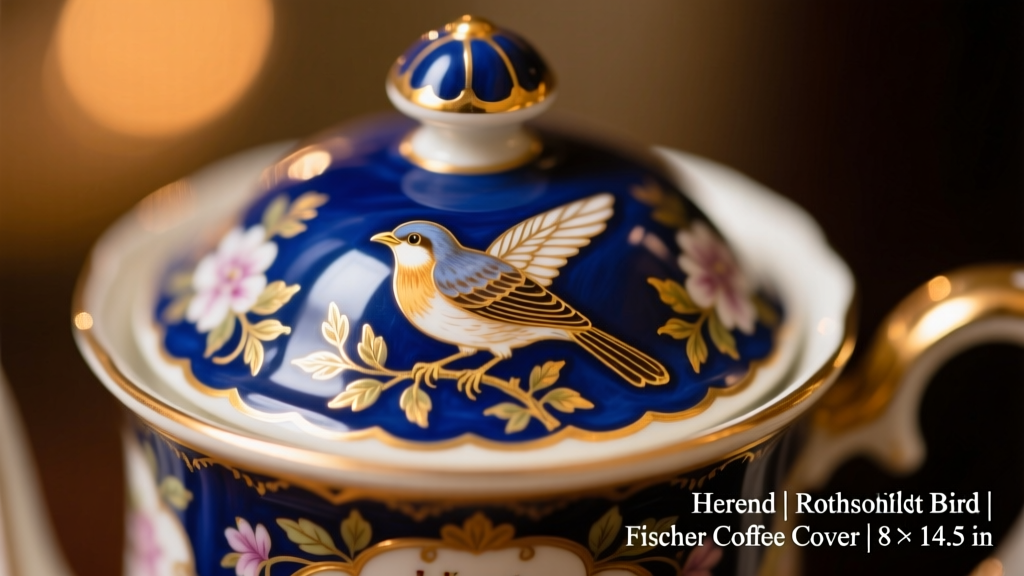
Fischer Coffeepot Cover with Rothschild Bird Motif: A Herend Porcelain Masterpiece Measuring 8 × 14½ Inches
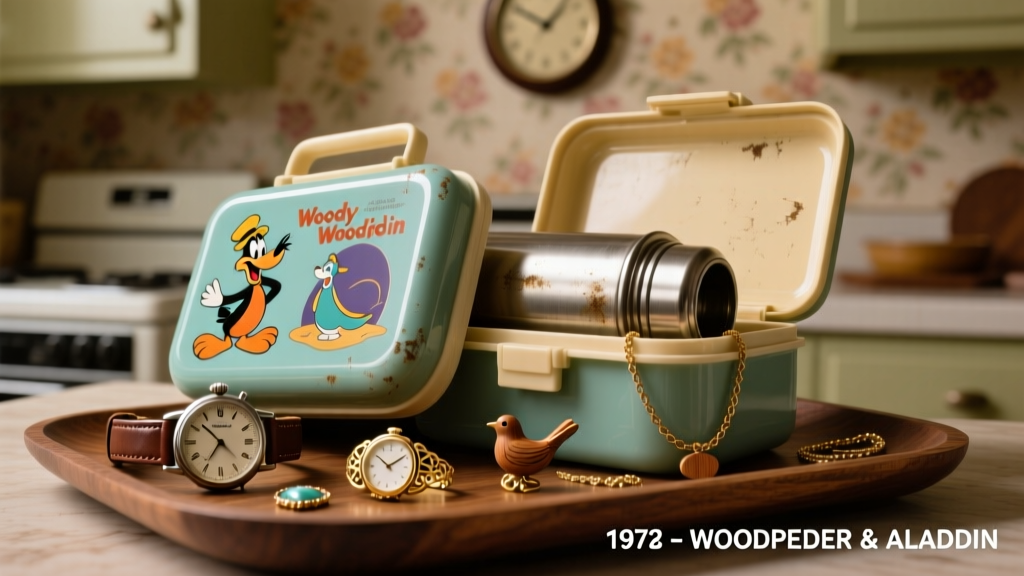
Woody Woodpecker & Aladdin Plastic Lunch Boxes: Collecting the 1972 Aladdin Era
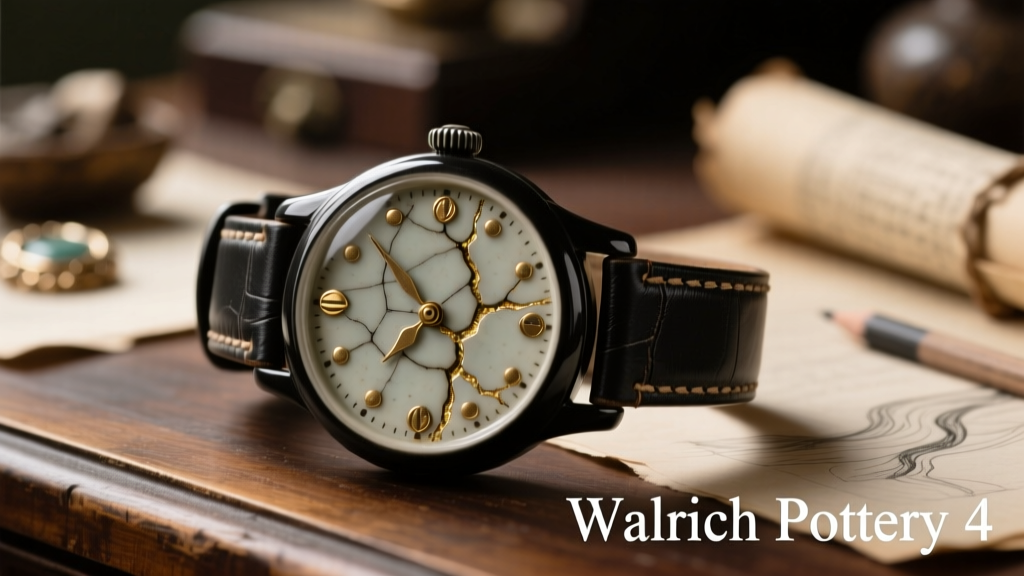
Walrich Pottery No. 4: Decoding the Enigmatic German Ceramic Watch Case
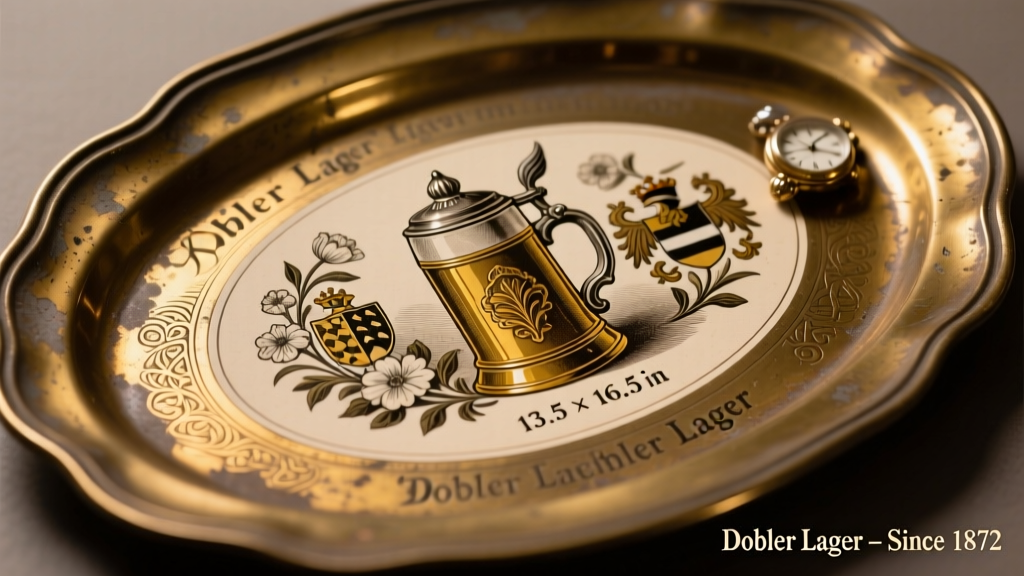
Dobler Lager Beer Advertising Tray: A Rare Oval Lithograph from Milwaukee’s Golden Age of Brewing
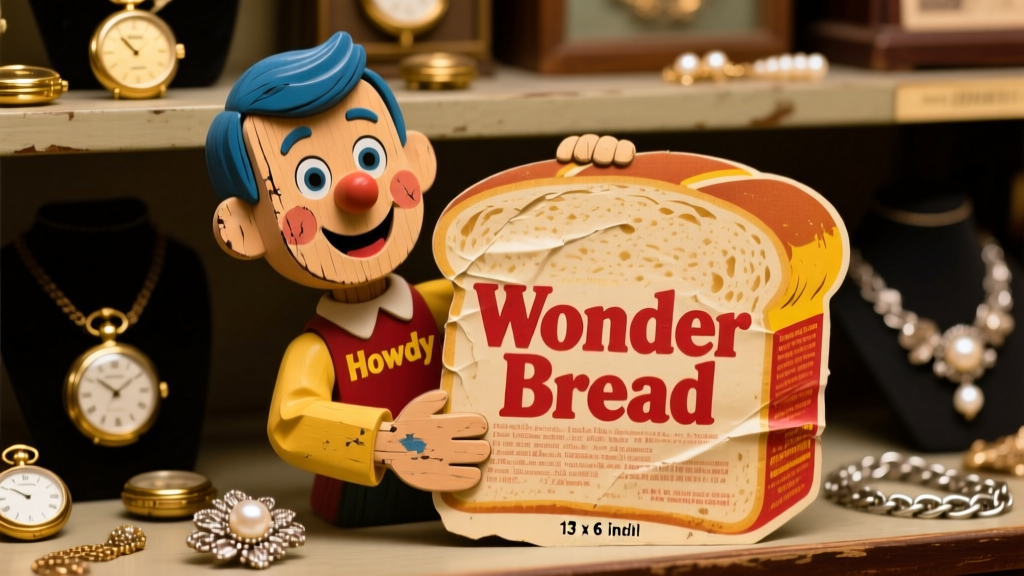
Howdy Doody Display: Howdy Holding Wonder Bread Heavy Paper Die-Cut (13 × 6 in) — A Rare Mid-Century Promotional Artifact
Imperial Glass Candlewick Goblet (9 oz): Design, Production History, and Collectibility of a Mid-Century American Icon
Regency Mahogany Table Game with Saber Legs: A 29¼-Inch Masterpiece of Early 19th-Century English Craftsmanship
Luster Copper Charger: Blue-Glazed Fruit & Central Star Design, 16 7/8-Inch Diameter — A Mid-Century American Studio Ceramic Masterpiece