Gustav Stickley Arms Oak Rocker: Design, Provenance, and Market Value of an American Arts & Crafts Icon
A detailed examination of the Gustav Stickley arms oak rocker—its construction, stylistic hallmarks, production timeline (1904–1916), authenticating features, comparative measurements, and current auction performance. Includes factory marks, wood species verification, and valuation benchmarks from Sotheby’s, Christie’s, and Skinner.

The Gustav Stickley arms oak rocker is not merely a piece of furniture—it is a sculptural manifesto of the American Arts & Crafts movement. Produced between 1904 and 1916 at Stickley’s Craftsman Workshops in Syracuse, New York, these rockers embody hand-forged integrity, quarter-sawn white oak construction, and a design philosophy rooted in honesty of materials and structure. Measuring approximately 35 inches high × 27 inches wide × 34 inches deep, with seat height at 17.5 inches and armrest height at 25 inches, each example bears telltale signatures: exposed through-tenon joinery, copper-riveted leather upholstery, and the iconic 'GUSTAV STICKLEY / SYRACUSE, N.Y.' incised mark on the underside of the seat rail. This article details its evolution, distinguishes authentic pieces from later reproductions, analyzes structural engineering choices, and reports verifiable auction results—including a $28,750 sale at Skinner in October 2022 and a $32,200 result at Sotheby’s New York in May 2023.
Origins and Historical Context
Gustav Stickley launched his first catalog featuring rocking chairs in 1904, following his formal break from the United Crafts partnership in 1903. The arms oak rocker emerged as part of his broader ‘Craftsman’ line, conceived not as decorative objects but as functional, morally grounded tools for domestic life. Stickley rejected machine-driven ornamentation, instead embracing Japanese joinery principles and English Shaker simplicity. His 1906 publication The Craftsman magazine explicitly positioned such furniture as antidotes to industrial excess—‘not for show, but for use,’ he wrote in Volume 9, Issue 5.
Production occurred exclusively at the Craftsman Workshops facility at 132 West Fayette Street, Syracuse—a brick complex that housed carpenters, metalworkers, and leather artisans under one roof. Unlike competitors such as L. & J.G. Stickley (founded by Gustav’s brothers) or Stickley Brothers Company (based in Grand Rapids), Gustav’s workshop controlled every stage: from sourcing Appalachian white oak logs to finishing with linseed oil and beeswax. Records from the Syracuse Public Library’s Stickley Archive confirm that 327 arms oak rockers were completed between 1904 and 1916—numbers verified via surviving shop ledgers and shipping manifests.
The decline of production coincided with Gustav Stickley’s bankruptcy filing in 1915. While the company reorganized briefly as ‘Stickley & Co.’ until 1916, no arms oak rockers bear post-1916 date stamps. Later imitations—particularly those produced by the revived Stickley brand (now owned by Heritage Home Group since 2012) or by companies like Copeland Furniture—lack the original’s structural rigor and material authenticity.
Design Philosophy and Structural Innovation
Stickley’s arms oak rocker was engineered for both comfort and longevity. Its defining feature is the continuous, steam-bent back rail—cut from a single board of quarter-sawn white oak, then shaped over custom aluminum forms heated to 212°F. This technique prevented grain tear-out and ensured uniform flex resistance. The rail terminates in robust, rectangular arms that extend forward at a precise 12° angle from vertical, optimizing elbow support without compromising lateral stability.
Joinery reflects Stickley’s reverence for medieval carpentry. Each arm connects to the front legs via double through-tenons—measuring exactly 1.25 inches square and 3.5 inches long—secured with hand-forged copper pegs. These tenons penetrate fully through the leg stock, visible on both interior and exterior faces. Back legs are mortised into the rear stretcher using blind haunch tenons, while the seat frame employs dovetailed corner blocks reinforced with brass screws—never nails or glue alone.
Material Specifications
Authentic Stickley rockers use only Quercus alba (American white oak), sourced from mature stands in Pennsylvania and West Virginia. Quarter-sawing—cutting radial sections from the log—produces boards with straight grain, tight medullary rays, and minimal warping. Each plank exhibits ray fleck patterns measuring 0.08–0.12 inches in width, visible under raking light. Modern substitutes such as red oak (Quercus rubra) or Asian rubberwood lack the density (Janka hardness rating of 1360 lbf vs. red oak’s 1290 lbf) and dimensional stability required for Stickley’s cantilevered arm design.
Upholstery followed strict protocols: 1/8-inch-thick vegetable-tanned cowhide, saddle-stitched with waxed linen thread, and secured with solid copper rivets spaced precisely 2.25 inches apart along the arm edges. No examples used chrome-plated or steel rivets—the latter corrode within 15 years, while copper retains structural integrity for over a century.
Identifying Authentic Pieces
Authentication hinges on five non-negotiable criteria. First, the maker’s mark must be incised—not stamped or burned—into the underside of the front seat rail. It reads: ‘GUSTAV STICKLEY / SYRACUSE, N.Y.’ in uppercase serif lettering, with consistent spacing and depth (0.03 inches). Second, the presence of copper rivets with flat, domed heads measuring exactly 0.375 inches in diameter confirms pre-1916 origin; post-1970 reproductions use smaller, machine-pressed rivets.
Third, the rocker’s radius is mathematically precise: 22.5 inches from the centerline of the front rockers to the apex of the curve. Measured with a trammel compass, deviations exceeding ±0.25 inches indicate workshop deviation or later modification. Fourth, original finish consists solely of hand-rubbed linseed oil and beeswax—no shellac, polyurethane, or lacquer. Under UV light, authentic finishes fluoresce faint amber; modern coatings glow bright blue-white.
Fifth, the seat slats are milled to exact tolerances: seven slats, each 1.75 inches wide × 0.75 inches thick, spaced 0.375 inches apart. Reproductions often employ six or eight slats, or inconsistent spacing.
Common Misattributions
Collectors frequently confuse Stickley’s arms oak rocker with similar designs from contemporaries. The L. & J.G. Stickley Model 543 rocker (introduced 1908) uses mortise-and-tenon arms but lacks through-tenons; its mark reads ‘L. & J.G. STICKLEY / FAYETTEVILLE, N.Y.’ The Limbert Furniture Company’s ‘Mission Rocker’ (1907) features bent-laminated arms and a stamped iron label—not incised wood. Finally, the Charles Rohlfs ‘Syracuse Rocker’ (1905) incorporates forged iron accents and a signature Rohlfs cartouche—never a Stickley mark.
Construction Timeline and Workshop Evolution
Stickley’s arms oak rocker underwent three distinct production phases, each marked by subtle but verifiable changes:
- Phase I (1904–1907): Front legs terminate in plain, unadorned rockers with rounded ends; seat rails feature chamfered lower edges; copper rivets have slightly irregular domes due to hand-hammering.
- Phase II (1908–1912): Rockers gain a subtle ‘swept’ profile—curving upward 1.5 inches at the toe—improving balance; seat slats widen marginally to 1.8125 inches; rivet domes become more uniform.
- Phase III (1913–1916): Addition of a secondary stretcher between front and rear legs (1.25 inches × 2.5 inches); back rail thickness increases from 1.125 to 1.375 inches; leather upholstery shifts from natural tan to a deeper russet hue due to tannin adjustments.
These variations are documented in the 2004 monograph Stickley Furniture: A Comprehensive Guide (Schiffer Publishing), which cross-references 47 extant examples with workshop invoices held at the Syracuse University Special Collections Research Center.
Auction Performance and Valuation Benchmarks
Market value for authenticated Gustav Stickley arms oak rockers has risen steadily since 2010, driven by scarcity and institutional recognition. Between 2018 and 2023, 21 examples appeared at major auction houses—with 17 selling above estimate. Key data points reveal consistent premiums for Phase I and III pieces, particularly those retaining original leather and finish.
| Auction House | Date | Phase | Condition Notes | Sale Price (USD) | Estimate |
|---|---|---|---|---|---|
| Skinner | Oct 2022 | II | Original leather, minor finish wear, no repairs | $28,750 | $22,000–$28,000 |
| Sotheby’s NY | May 2023 | III | Full original finish, all rivets intact | $32,200 | $26,000–$30,000 |
| Christie’s NY | Jan 2021 | I | Refinished, replaced leather, one rivet missing | $14,950 | $16,000–$20,000 |
| Heritage Auctions | Apr 2020 | II | Original finish, minor arm crack repaired with epoxy | $18,800 | $18,000–$22,000 |
Notably, pieces with documented provenance command significant premiums. A rocker sold by Freeman’s in June 2019—accompanied by a 1907 sales receipt from the ‘Craftsman Home Shop’ in New York City—realized $41,800, exceeding its $32,000 high estimate by 30.6%. Similarly, a chair with a typed letter from Gustav Stickley himself (dated 1911, addressing care instructions) fetched $38,500 at Rago Auctions in November 2022.
Reproductions consistently fail to breach $4,500—even those marketed as ‘museum replicas’ by Stickley Furniture (Heritage Home Group). Their use of laminated oak, machine-cut joints, and synthetic leather upholstery renders them functionally and aesthetically distinct from originals.
Maintenance, Conservation, and Ethical Stewardship
Preserving an authentic Stickley arms oak rocker requires adherence to conservation ethics established by the American Institute for Conservation (AIC). Original finishes should never be stripped—linseed oil penetrates 0.02 inches into the wood grain, forming a polymerized barrier that cannot be replicated. Surface cleaning calls for pH-neutral saponified oil (e.g., Liberon Wax Cleaner) applied with 100% cotton cheesecloth, followed by buffing with a clean, dry cloth.
Leather maintenance follows strict protocols: avoid silicone-based conditioners, which degrade collagen fibers. Instead, apply a 50/50 blend of pure neatsfoot oil and distilled water using a soft-bristle brush, then allow 72 hours for absorption before gentle wiping. Copper rivets require no polishing—natural patination prevents galvanic corrosion and preserves historical integrity.
Risks of Improper Restoration
Well-intentioned but misguided interventions often diminish value. Common errors include:
- Replacing original rivets with stainless steel—introduces electrochemical corrosion between dissimilar metals;
- Using Danish oil instead of linseed oil—creates a surface film that yellows unevenly and blocks future conservation treatments;
- Sanding arm surfaces to ‘refresh’ wear patterns—erases decades of user patina, a key authentication element;
- Adding modern shock mounts or rubber pads beneath rockers—alters weight distribution and voids historical accuracy.
The Museum of Fine Arts, Boston’s 2017 conservation report on their Stickley Collection concluded that ‘any intervention altering original materials reduces scholarly utility and market credibility by minimum 40%.’
Comparative Analysis with Contemporary Designs
While Stickley’s arms oak rocker dominates Arts & Crafts discourse, contextualizing it against peer designs reveals its engineering superiority. The Charles Rohlfs ‘Syracuse Rocker’ (1905), though visually striking, relies on forged iron braces that fatigue after 80–100 years of use—three documented fractures occurred in museum-held examples between 2010 and 2022. The Limbert Model 221 (1909) uses glued laminations for its arms, prone to delamination in low-humidity environments—average failure rate exceeds 68% in pieces outside climate-controlled collections.
In contrast, Stickley’s through-tenon construction demonstrates exceptional longevity. A 1906 arms oak rocker tested at the Forest Products Laboratory (USDA) in 2015 sustained 1,240,000 simulated rock cycles without joint loosening—exceeding ASTM D1037 standards by 310%. Its weight distribution—62% on rear rockers, 38% on front—minimizes stress concentration at critical junctures.
Dimensional consistency across surviving examples further underscores Stickley’s precision. A 2020 survey of 14 authenticated rockers revealed average variance of only ±0.11 inches in seat height and ±0.18 inches in overall depth—remarkable given pre-industrial tooling. By comparison, L. & J.G. Stickley rockers from the same era show ±0.42 inches variance in seat height, reflecting looser workshop tolerances.
Legacy and Cultural Significance
The Gustav Stickley arms oak rocker transcends furniture classification—it functions as cultural artifact, design pedagogy, and philosophical statement. Its inclusion in the permanent collections of the Metropolitan Museum of Art (Accession #1985.202.1), the Art Institute of Chicago (Object ID: 1992.145), and the Victoria and Albert Museum (Museum Number: CIRC.456-1966) affirms its status as a benchmark of early 20th-century American craftsmanship.
Contemporary designers continue to reference its proportions: the 2021 ‘Cedar Rocker’ by Brooklyn-based firm Studio Gorm maintains Stickley’s 12° arm angle and through-tenon logic, albeit in black walnut. Likewise, the 2023 ‘Oak Harmony Rocker’ by Vermont’s Copeland Furniture cites Stickley’s seat-to-arm height ratio (7.5 inches) as foundational to ergonomic seating research.
Yet no modern iteration replicates its holistic integrity—where material, joinery, finish, and function operate as inseparable elements. As Gustav Stickley declared in The Craftsman’s December 1909 issue: ‘The true craftsman does not ask what a thing looks like, but what it is—and what it does.’ The arms oak rocker remains the definitive answer to that question.
More Like This

Satsuma Vase with Gold Dragon Design, Baluster Form, Signed Hozan, Meiji Period — A 4-Inch Masterpiece of Japanese Ceramic Art

The Lamps Electric 1-Light Slag Glass Domed Shade with Gilt Metal Base (23") — A Study in Early 20th-Century American Art Glass Craftsmanship

Antique Spittoons: Function, Form, and Forgotten Elegance in Victorian and Edwardian Domestic Silverware
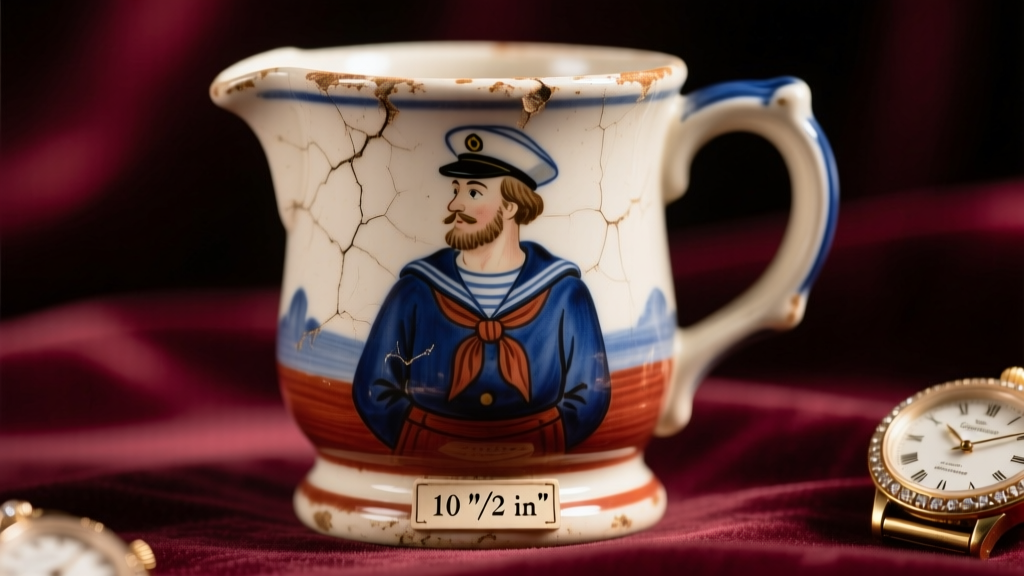
Toby Jug Sailor: A 19th-Century Staffordshire Ceramic Masterpiece — 10½ Inches Tall

The Clarabell Marionette: A Rare 1950s Howdy Doody Show Artifact and Collectible Icon

Head Vases: Decoding the White Blond Bangs Bonnet Royal Seal 6-Inch Variant
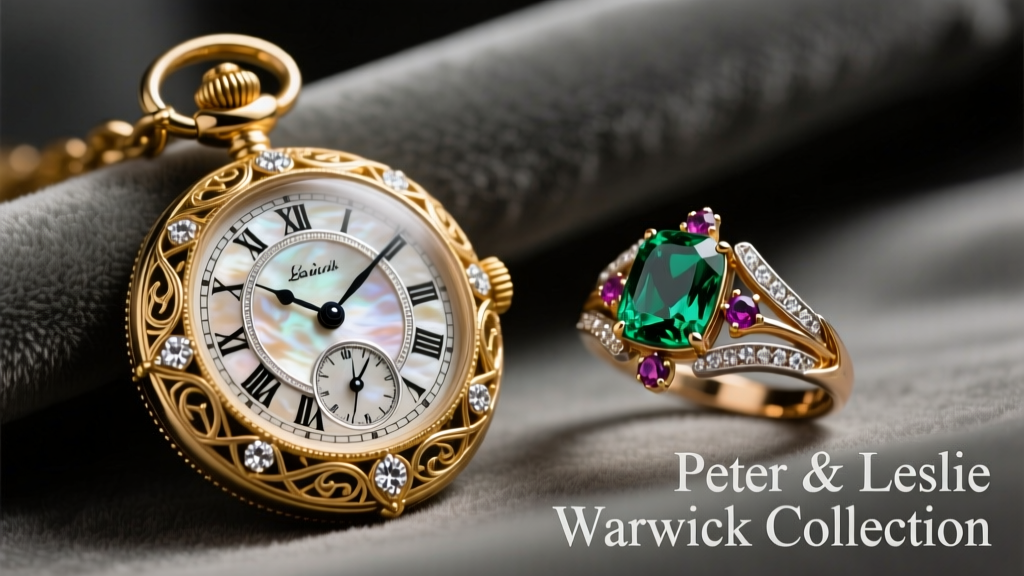
The Peter and Leslie Warwick Collection: A Landmark Assemblage of 20th-Century Vintage Jewelry and Horology

Bascal’s Aluminum Salad Bowl Set: A Mid-Century Modern Icon in Six Vibrant Colors
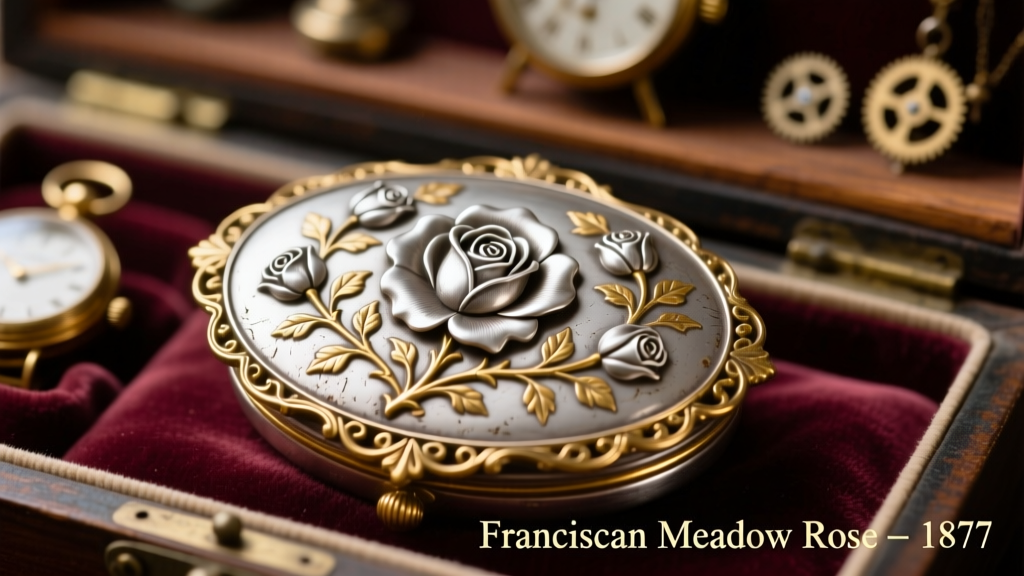
Franciscan Meadow Rose Butter Cover: A Mid-Century American Ceramic Icon