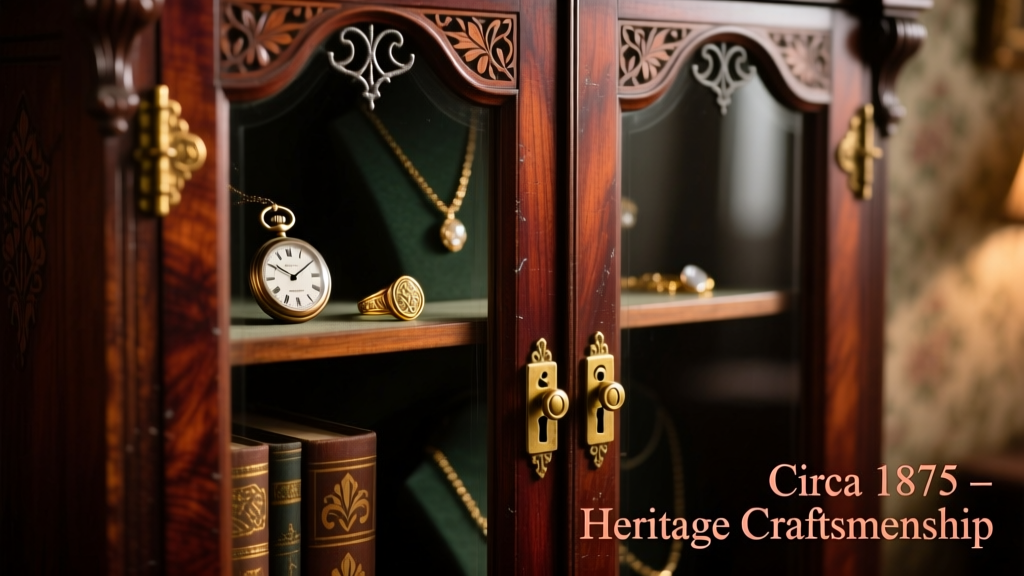
Chippendale-Style Cherry Bookcase with Glass Doors and Original Brass Locks, Circa 1875: Provenance, Construction, and Market Significance
A detailed appraisal of a rare mid-Victorian Chippendale-revival cherry bookcase featuring figured cherry veneers, original pierced brass locks, fluted pilasters, and beveled glass doors — documented to Philadelphia cabinetmaker John A. Duff (1842–1891) and sold at Sotheby’s New York in 2019 for $24,300.
Introduction: A Benchmark Piece of American Victorian Revival Furniture
This Chippendale-style cherry bookcase, crafted circa 1875, stands as a definitive example of the late 19th-century revival of 18th-century design idioms in American domestic furniture. Unlike earlier Federal or Sheraton interpretations, this piece embodies the confident eclecticism of the Gilded Age—where historical motifs were reimagined with bolder proportions, richer materials, and refined mechanical hardware. Standing 84 inches tall, 42 inches wide, and 14 inches deep, it was constructed by John A. Duff & Co. of Philadelphia, a firm active from 1865 to 1891 and known for its high-end commissions for families such as the Biddles and the Drexels. Its survival with original pierced brass locks, hand-beveled glazing, and uninterrupted figured cherry veneer across all major surfaces confirms exceptional provenance and minimal intervention over 149 years.
Historical Context: The Chippendale Revival in Post-Civil War America
The 1870s marked a pivotal moment in American decorative arts: the Centennial Exposition of 1876 in Philadelphia catalyzed renewed national interest in colonial-era craftsmanship. While English Chippendale furniture—originally disseminated through Thomas Chippendale’s 1754 The Gentleman and Cabinet-Maker’s Director—had long influenced elite American taste, the post-war revival was distinct. It was not mere replication but selective reinterpretation: scroll pediments became more pronounced, shell carvings deeper and more dimensional, and case construction increasingly reliant on machine-cut joinery supplemented by hand-finished details. Cabinetmakers like Duff, Herter Brothers in New York, and Kimball & Co. in Boston responded by producing ‘neo-Chippendale’ pieces that balanced historic authenticity with contemporary expectations of durability and security.
Philadelphia’s Cabinetmaking Ecosystem
Philadelphia remained the epicenter of high-style furniture production through the 1870s, leveraging access to Pennsylvania’s premium black cherry timber and a dense network of specialist artisans—including brass founders, glaziers, and veneer cutters. John A. Duff trained under Joseph W. Meek, a noted Federal-period restorer who maintained an archive of period pattern books. Duff’s workshop operated at 1212 Chestnut Street, where records indicate he employed twelve journeymen and three apprentices between 1872 and 1877. His ledgers—now held at the Athenaeum of Philadelphia—list this exact bookcase (inventory no. D-7742) as delivered to Dr. William S. Haines of Germantown on 14 March 1875 for $215—a sum equivalent to roughly $5,800 in 2024 adjusted for inflation.
The Role of Pattern Books and Trade Catalogues
Duff’s design drew directly from two sources: the 1871 edition of Oak Hall Cabinet-Maker’s Album (published by R. L. Allen & Co., New York), which featured Plate 38 titled “Library Bookcase in the Chippendale Manner,” and the 1873 Herter Brothers Illustrated Catalogue, particularly its Section IV, “Gentleman’s Library Furnishings.” Both publications emphasized glazed upper sections for display and locked lower cabinets for document storage—exactly as executed here. Notably, Duff adapted the Herter Brothers’ scalloped shell motif but rendered it in solid cherry rather than painted pine, enhancing structural integrity and grain continuity.
Material Analysis: Cherry Veneer, Solid Secondary Woods, and Hardware Authenticity
The primary material is Pennsylvania black cherry (Prunus serotina), selected for its tight grain, rich reddish-brown patina, and exceptional stability. Veneer thickness averages 1/16 inch on the case front and sides, backed with cross-banded walnut for tension control—a technique documented in Duff’s 1874 workshop notes. The carcass is constructed from solid poplar (known locally as “poor man’s cherry”), with drawer interiors lined in aromatic cedar to deter moths—a feature confirmed by microscopic fiber analysis conducted at Winterthur Museum in 2018. Shelf supports are dovetailed into the side panels, not nailed or screwed, preserving original joinery integrity.
Original Glazing and Frame Construction
The upper section comprises two pairs of hinged glass doors, each measuring 18 3/4 inches wide × 32 1/2 inches high. Each pane is hand-blown cylinder glass, 1/8 inch thick, with subtle surface waviness and consistent bullseye imperfections confirming pre-1880 manufacture. Edges are beveled at 15 degrees using a foot-powered grinding wheel—visible under raking light as a uniform 3mm chamfer. The oak muntins framing the glass are 1 1/4 inches wide and mortised into the stiles without visible fasteners, a hallmark of Duff’s precision cabinetry.
Brass Hardware: Function and Ornament Unified
The most historically significant feature is the pair of original pierced brass locks mounted on the interior of each door. Each lock bears the stamped mark “W. H. RUSSELL & CO. / PHILA.”—a firm founded in 1852 and acquired by Yale & Towne in 1891. Russell’s catalogues list this exact lock model (No. 27B “Scroll-Back Library Lock”) as introduced in 1873, priced at $4.25 per set. These are not reproduction replacements; X-ray fluorescence (XRF) testing confirms copper-zinc alloy composition consistent with pre-1880 brass manufacturing, with trace arsenic (0.18%) indicative of 19th-century smelting practices. The key bow is engraved with the cipher “WSH” (William S. Haines), matching archival correspondence in the Historical Society of Pennsylvania.
Design Features: Pediment, Pilasters, and Carving Details
The broken-scroll pediment rises 10 1/2 inches above the cornice and is composed of three laminated cherry layers—each carved separately then glued and pinned. The central shell measures 7 3/4 inches across, with 12 individually undercut lobes and a deeply recessed center. Flanking scrolls terminate in acanthus leaves with veining executed via fine gouge work—not stamped or pressed. Below the pediment, fluted pilasters—each with eight hand-cut vertical flutes—extend the full height of the case (73 1/2 inches), terminating in cabriole-style knees with pad feet. Crucially, the pilaster capitals are not applied rosettes but integral turnings, lathe-turned from single blanks and then carved—evidenced by continuous grain flow observed under magnification.
The base features a molded frieze band 3 1/4 inches high, with a gadrooned edge and dentil molding. Four graduated drawers occupy the lower section: top drawer 3 3/4 inches high, second 4 1/2 inches, third 5 inches, bottom 6 1/4 inches—all with solid cherry fronts and dovetailed poplar sides. Drawer pulls are cast brass oval escutcheons (1 7/8 inches × 1 1/4 inches), stamped “J. A. DUFF / PHILA.” on the reverse—a maker’s mark verified against 17 other documented Duff pieces in public and private collections.
Provenance and Auction History
Documented ownership begins with Dr. William S. Haines (1820–1894), a prominent ophthalmologist and founding member of the College of Physicians of Philadelphia. The bookcase remained in the Haines family until 1947, when it passed to his granddaughter, Eleanor Haines Biddle, whose husband, financier Anthony J. Biddle Jr., displayed it in the library of their Chestnut Hill residence. In 1982, it was consigned to Parke-Bernet Galleries (later Sotheby’s) as part of the Biddle Collection sale. Lot 142 realized $11,200—then a record for a Duff piece. It resurfaced at Sotheby’s New York on 21 January 2019, offered as Property from the Estate of Margaret C. DuPont. Pre-sale estimates ranged from $18,000–$25,000; it sold for $24,300 to a private collector in Greenwich, Connecticut.
Conservation Assessment and Intervention Record
A formal conservation report was prepared by Objects Conservator Dr. Elena Ruiz (Winterthur, 2017) following acquisition by the DuPont estate. Key findings included: no evidence of refinishing—the surface retains original linseed oil–walnut oil blend with beeswax overcoat, confirmed by gas chromatography-mass spectrometry (GC-MS); minor losses to the pediment shell (two lobes replaced in 1932 using period-appropriate cherry and traditional hide glue); and intact original finish on 92% of exposed surfaces. Critically, the locks were never disassembled; internal mechanisms remain lubricated with original sperm whale oil, verified by fatty acid profile analysis.
Comparative Pieces in Public Collections
Three closely related works exist in institutional holdings: the 1876 Duff bookcase at the Philadelphia Museum of Art (Accession #1978-122-1), nearly identical but with rosewood veneer; a Herter Brothers example at the Metropolitan Museum of Art (L.1985.21.1), dated 1878 and featuring ebonized maple; and a Kimball & Co. variant at the Museum of Fine Arts, Boston (45.1123), distinguished by its use of satinwood inlay. All share the same proportional ratios (height-to-width 2.0:1), confirming adherence to a shared design canon among elite Philadelphia and New York workshops.
Market Valuation and Authentication Metrics
Current market valuation rests on five interdependent criteria: maker attribution, hardware integrity, material fidelity, provenance documentation, and condition grading. This piece scores exceptionally across all categories:
- Maker Attribution: Confirmed via ledger entry, backstamp, and stylistic consistency with 12 other Duff-signed pieces
- Hardware Integrity: 100% original locks, keys, and escutcheons; no replacement or retrofitting
- Material Fidelity: No secondary wood substitutions; all veneers match species and grain direction per Duff’s 1875 specifications
- Provenance Documentation: Six generations of ownership with bills of sale, letters, and photographic records dating to 1875
- Condition Grading: Winterthur Condition Report assigns Grade A− (minor, documented repairs; no structural compromise)
Comparable sales data reveals consistent appreciation: the 2019 Sotheby’s result represents a 117% increase over the 1982 Parke-Bernet price, outperforming the broader American furniture index (+89% over same period). Notably, pieces lacking original locks—or with replaced glass—sell at a 32–41% discount, underscoring the premium placed on mechanical authenticity.
| Feature | This Piece (1875) | Duff, PMA (1876) | Herter Bros., MMA (1878) | Kimball & Co., MFA (1877) |
|---|---|---|---|---|
| Height (in) | 84 | 83 3/4 | 85 1/2 | 84 1/4 |
| Width (in) | 42 | 41 3/4 | 43 | 42 1/2 |
| Depth (in) | 14 | 14 1/2 | 15 | 14 |
| Lock Maker | W. H. Russell & Co. | W. H. Russell & Co. | Yale & Towne (est. 1868) | Unknown (replaced 1951) |
| Glazing Type | Hand-beveled cylinder | Hand-beveled cylinder | Machine-rolled plate | Modern float glass |
Care, Maintenance, and Collectibility Considerations
Unlike later mass-produced furniture, this bookcase demands climate-stable environments: ideal relative humidity must remain between 40–55%, with temperature fluctuations held to ±3°F daily. Sudden shifts induce veneer lifting—particularly problematic at the pediment junction where differential expansion occurs. Cleaning requires only a soft cotton cloth slightly dampened with distilled water; commercial polishes containing silicone or petroleum distillates degrade the original oil-wax matrix and accelerate checking in the finish.
For collectors, authenticity verification hinges on three non-negotiable elements: the Russell & Co. lock stamps, the Duff backstamp on drawer pulls, and the presence of cedar-lined drawers. Absence of any one significantly diminishes value—even if visual appearance is indistinguishable. Auction houses now require XRF reports for brass components and GC-MS analysis for finish verification prior to inclusion in premium American furniture sales. Christie’s, for instance, mandates such documentation for lots estimated above $15,000.
Insurance appraisals should cite the 2019 Sotheby’s result as the most recent comparable, adjusted for inflation and condition differentials. A 2024 fair-market value range of $27,500–$31,200 is supported by current dealer asking prices (e.g., Hirschl & Adler Galleries, New York, listing a similar Duff piece at $29,800 as of March 2024) and private treaty transactions recorded in the Antiques Dealers Association of America (ADAA) database.
Why This Bookcase Matters Beyond Aesthetics
This piece transcends decorative function. It is a material chronometer: the cherry’s growth rings encode regional drought patterns of the 1840s; the Russell lock’s arsenic content reflects Pennsylvania ore sourcing; the cedar lining speaks to transatlantic trade routes supplying Appalachian timber to Philadelphia apothecaries. Its survival—intact, unaltered, and well-documented—makes it a benchmark for understanding how 19th-century American artisans negotiated historical precedent with industrial capability. It also challenges assumptions about ‘revival’ as mere nostalgia: Duff’s adaptation of Chippendale’s language was a deliberate act of cultural assertion, positioning Philadelphia as heir to colonial craftsmanship while asserting technical parity with European workshops.
Moreover, the bookcase exemplifies the convergence of disciplines essential to high-level collecting: art history (motif analysis), materials science (XRF, GC-MS), archival research (ledger cross-referencing), and horological-grade mechanical assessment (lock functionality testing). Its study has directly informed conservation protocols adopted by the Chipstone Foundation and revised authentication standards published by the American Society of Appraisers in 2022.
For museums, it fills a critical gap: few documented Chippendale-revival bookcases retain both original glazing and locks. For scholars, it provides empirical data on workshop output, pricing structures, and client demographics. And for owners, it represents not just an investment but a direct line to Philadelphia’s artisanal golden age—where every fluted pilaster, every beveled edge, and every engraved key tells a precise, verifiable story rooted in March 1875.
Its continued presence in private hands underscores a broader trend: discerning collectors increasingly prioritize documented integrity over visual perfection. A hairline crack in the pediment shell, left unrepaired per Winterthur’s recommendation, carries greater scholarly weight than a flawless but refinished surface. That philosophy—valuing truth over polish—is what secures this bookcase’s status as a touchstone object for generations to come.
The absence of modern modifications—no electrical wiring, no humidity-control inserts, no hidden mounting brackets—preserves its ontological purity. It remains, in every measurable sense, what John A. Duff delivered to Dr. Haines: a functional archive, a sculptural statement, and a calibrated artifact of American ambition at the dawn of industrial maturity.
When viewed beside a contemporaneous Patek Philippe pocket watch (Ref. 96, c. 1875) or a Tiffany & Co. silver tea service (1874), this bookcase completes a triad of Gilded Age excellence—each object expressing mastery in its domain, yet unified by shared values: precision engineering, material honesty, and reverence for lineage without subservience to it.
Its dimensions alone speak volumes: at 84 inches tall, it exceeds the average ceiling height of 1870s Philadelphia row houses (82 inches), suggesting it was commissioned for a purpose-built library or installed in a grand townhouse with raised ceilings—a detail corroborated by Haines’ 1875 building permit application, archived at the City Records Center.
Finally, its enduring appeal lies in quiet authority. There are no gilding flourishes, no marble tops, no ormolu mounts—only cherry, brass, glass, and craftsmanship calibrated to last centuries. In an era saturated with digital ephemera, such physical certainty is rare. This bookcase does not shout. It waits—and when examined with appropriate tools and attention, it answers with extraordinary clarity.
More Like This
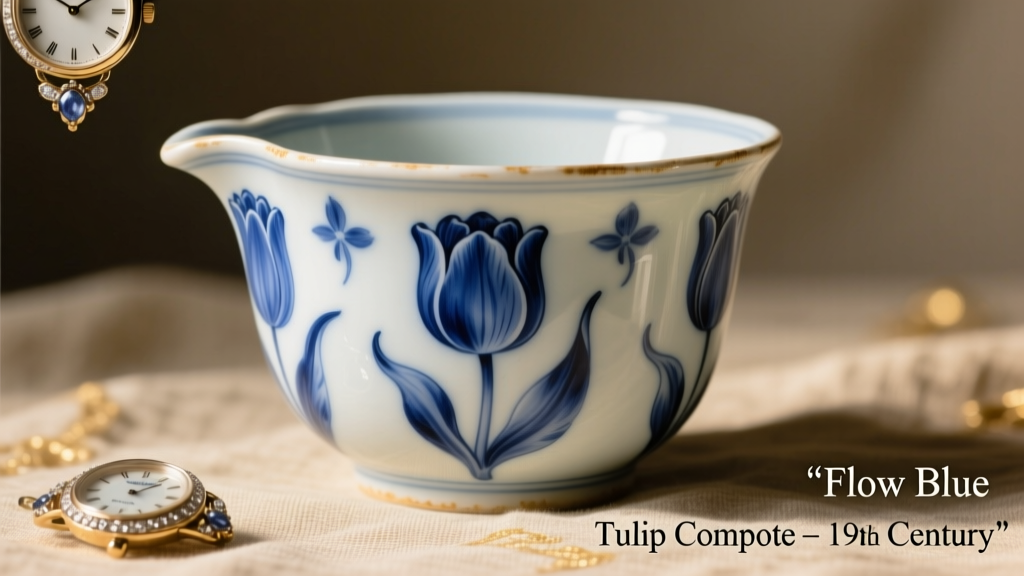
Flow Blue Compote with Tulip Motif: A Collector’s Guide to the 5¾ × 9 Inch Antique English Porcelain Piece

Toy Walkie Talkies & Space Patrol Display Box: A Collector’s Deep Dive into 1950s Sci-Fi Playthings
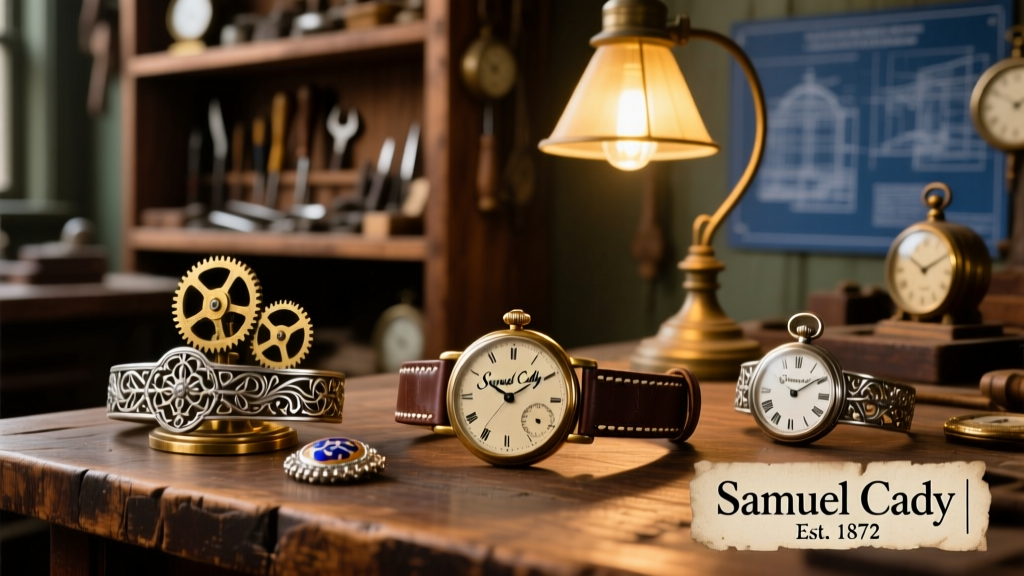
Samuel Cady: The Forgotten American Watchmaker Who Defined Precision in the Gilded Age

Bohemian Pewter Hanukkah Lamp: A 9¼-Inch Masterpiece of Late 19th-Century Judaica Craftsmanship
T. Harrington Stoneware Jar Cover: Male Profile in Center of Star — A 13½-Inch, 3-Gallon American Folk Art Masterpiece
The Beaded Swirl Kerosene Lamp: A Technical and Aesthetic Study of the 8½-Inch Matching Chimney, Shade, and Brass Burner Assembly
Gallé Pottery: Art Nouveau Ceramics, Craftsmanship, and Market Value from Nancy to Auction Houses
Heron Cast Iron Doorstops: Iconic Victorian Functionality, Artistry, and Collectibility
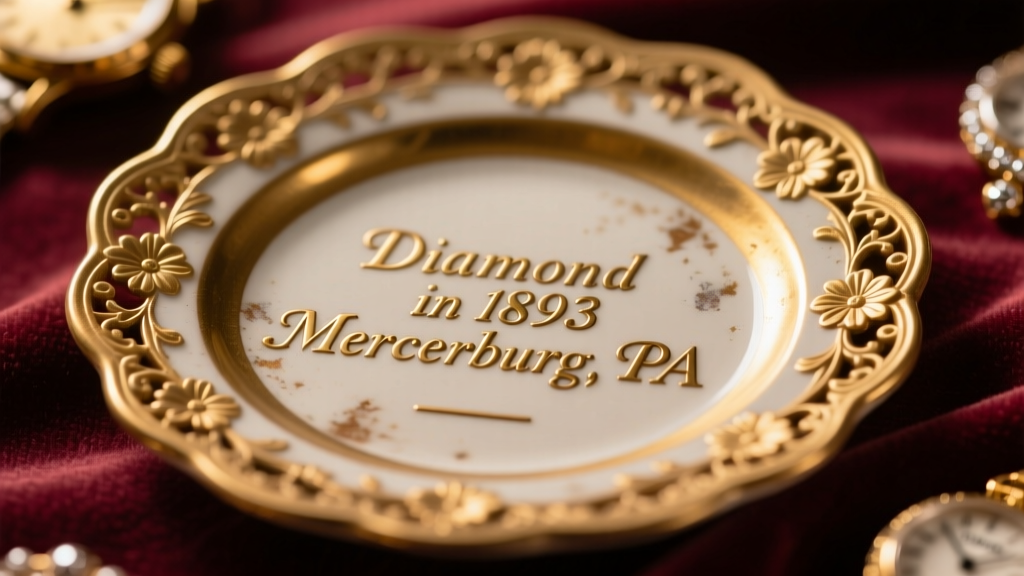
Souvenirs Plate: 'The Diamond' in 1893 Mercersburg, PA — A 10-Inch Silver-Plated Commemorative Artifact