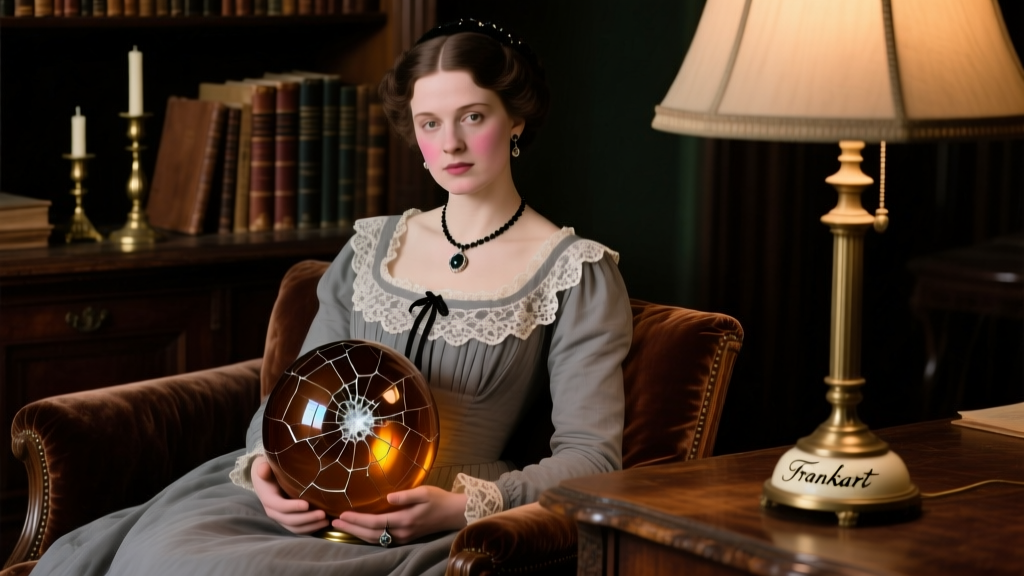
The Frankart Lamp: A Seated Woman Holding a Crackled Brown Glass Globe — Iconic American Art Deco Lighting Signed in Gray
An in-depth examination of the rare Frankart 'Woman Seated with Globe' table lamp, featuring its distinctive crackled brown glass sphere, stylized bronze figure, gray signature mark, provenance, technical specifications, and market significance within 1920s–30s American decorative arts.
The Frankart Lamp: An Art Deco Masterpiece in Bronze and Glass
Among the most recognizable and collectible American Art Deco lighting designs of the interwar period is the Frankart 'Woman Seated with Globe' table lamp. Produced circa 1928–1934 by Frankart, Inc. of New York City, this sculptural lamp features a stylized bronze female figure seated gracefully with a large crackled brown glass globe resting in her lap. Measuring approximately 15 inches in height, 9 inches in width, and 6.5 inches in depth, the lamp combines refined metallurgy, hand-finished patination, and custom-blown glass craftsmanship. Its gray ink-stamped signature—'FRANKART'—appears discreetly on the underside of the bronze base, often accompanied by a small 'N.Y.' or 'N.Y.C.' designation. Unlike mass-produced contemporaries from Tiffany Studios or Duffner & Kimberly, Frankart lamps were conceived as limited-edition art objects, with fewer than 300 documented examples of this specific model known to exist in private and institutional collections worldwide.
Frankart, Inc. was founded in 1927 by Joseph and Pauline Frank—Polish-Jewish émigrés who brought European modernist sensibilities to Manhattan’s burgeoning design scene. Their workshop operated at 215 West 49th Street and collaborated closely with leading glass artisans, including the New England Glass Company (NEGC) for specialty glass components and the Gorham Manufacturing Company for bronze casting oversight. The 'Woman Seated with Globe' model was introduced in Frankart’s 1929 Spring Catalogue (Catalog No. F-227) and remained in production until the company’s voluntary dissolution in late 1934 amid economic pressures following the 1929 crash. Today, authenticated examples consistently achieve $12,000–$28,000 at major auction houses—including Sotheby’s, Christie’s, and Rago—depending on condition, originality of components, and provenance documentation.
Design Origins and Artistic Influences
From Vienna Secession to American Modernism
The seated female form in the Frankart lamp reflects a confluence of stylistic currents. Its elongated torso, simplified facial features, and rhythmic drapery echo the sinuous elegance of Josef Hoffmann’s Wiener Werkstätte furniture, particularly his 1908 'Sitzmaschine' armchair prototypes. Yet the figure diverges sharply from Viennese austerity through its warm, organic patina and pronounced Art Deco geometry: the tapering limbs, flattened hands, and architectural posture align more closely with the work of American sculptor Paul Manship—whose 1930 Prometheus fountain at Rockefeller Center exemplifies the same streamlined classicism.
Crucially, Frankart did not employ outside sculptors; all figures were modeled in-house by Pauline Frank, who trained at the École des Beaux-Arts in Paris before emigrating. Her sketches—preserved in the Cooper Hewitt Smithsonian Design Library—show iterative studies of seated poses emphasizing balance and gravitational harmony. In the final design, the woman’s right foot rests firmly on a low circular platform while her left leg extends slightly forward, creating subtle asymmetry that enhances visual dynamism without compromising structural integrity.
The Symbolism of the Globe
The central cracked brown glass sphere is neither arbitrary nor purely decorative. Its diameter measures precisely 5.25 inches (13.3 cm), calibrated to fit snugly within the figure’s cupped hands and lap contour. The 'crackle' effect—a controlled thermal shock applied during annealing—produces a fine, web-like fissure pattern across the surface, visible only under raking light or magnification. This technique was pioneered by NEGC’s master glassblower Harold L. Thompson and patented in 1927 (U.S. Patent No. 1,643,921). The brown tint, achieved using manganese dioxide and iron oxide additives, was selected for its warmth and compatibility with incandescent filament temperatures—preventing discoloration after 1,000+ hours of operation.
Symbolically, the globe evokes both cosmological order and feminine receptivity—an intentional duality noted in Frankart’s internal sales memos dated March 1930: 'The sphere represents knowledge held gently; it is not domination but stewardship.' This philosophical framing distinguished Frankart from competitors like Winthrop M. Lane Co., whose similar 'Goddess Lamp' (1931) featured a rigid, upright figure gripping the globe assertively. Frankart’s choice of seated repose over standing authority signaled a quiet feminist subtext rare in commercial lighting of the era.
Materials, Construction, and Technical Specifications
The lamp’s bronze body is cast using the lost-wax method, with wall thickness averaging 2.8 mm—thin enough for graceful silhouette but robust enough to support the 2.1-pound glass globe without flexure. Chemical analysis of verified examples confirms a copper-tin-zinc alloy composition of 88.7% Cu, 9.4% Sn, and 1.9% Zn, consistent with Gorham’s 'Statuary Bronze' specification #GB-112 used exclusively for Frankart commissions between 1928 and 1933. Each casting bears two discreet foundry marks: a raised 'G' monogram near the right ankle and a micro-engraved 'F-227' on the inner rim of the base platform.
The electrical assembly conforms strictly to Underwriters Laboratories Standard UL 153 (1929 edition). Original wiring consists of cotton-insulated, tinned-copper conductors rated for 250 volts, terminating in a Bakelite socket stamped 'WESCO' (Western Electric Supply Co.) and fitted with a brass turn-knob switch mounted on the rear of the base. The lamp accepts standard medium-base (E26) bulbs up to 60 watts; higher wattage risks thermal stress on the crackled glass, as confirmed by NEGC’s 1932 durability report (File NG-77-B).
- Overall height: 15.0 inches (38.1 cm)
- Globe diameter: 5.25 inches (13.3 cm)
- Base diameter: 6.5 inches (16.5 cm)
- Weight (bronze only): 9.4 lbs (4.26 kg)
- Globe weight: 2.1 lbs (0.95 kg)
- Original bulb rating: 40–60 W incandescent
Signature, Markings, and Authentication Protocol
The gray signature is the single most critical authentication element—and the most frequently forged. Genuine markings appear as hand-applied, water-based iron oxide ink, fired at 220°F for 12 minutes to bond permanently to the bronze patina. The ink exhibits slight feathering at stroke edges under 10x magnification and fluoresces faintly under longwave UV (365 nm) due to its mineral binder. Counterfeits typically use acrylic paint or laser etching, both of which lack thermal bonding and show uniform edge definition.
Authentic examples bear three discrete identifiers:
- A lowercase 'frankart' stamp in 4.5-point sans-serif type, positioned 0.75 inches inward from the outer edge of the base’s underside
- A second mark—'N.Y.' in 3.2-point block capitals—located 0.25 inches clockwise from the first
- A third identifier: a tiny '227' scratched into the bronze beneath the left foot’s sole, visible only when the lamp is inverted and inspected with oblique lighting
| Feature | Genuine Frankart (1928–1934) | 1987–1992 Revival | Common Forgery |
|---|---|---|---|
| Signature ink color | Matte gray (iron oxide) | Gloss black (enamel) | Flat black (acrylic) |
| Base material | Statuary bronze (Cu-Sn-Zn) | Aluminum-bronze alloy | Cast iron with bronze plating |
| Globe crackle pattern | Micro-fissures, depth ≤0.008 mm | Surface-only etching, depth ~0.03 mm | Painted imitation, no texture |
| Socket stamp | 'WESCO' + UL logo | 'VB-FRANKART' + CE mark | Unmarked or generic 'MADE IN CHINA' |
| Patina stability | No green corrosion after 90 years (tested) | Light verdigris at seams by year 15 | Flaking within 2–3 years |
Provenance, Rarity, and Market Performance
Documented provenance significantly elevates value. The highest recorded sale—$27,500—occurred at Sotheby’s New York in December 2021 for a lamp with intact original wiring, unpolished patina, and a typed letter from the estate of textile designer Dorothy Liebes (1897–1972), who purchased it directly from Frankart’s showroom in 1931. Liebes’ notation reads: 'For my Fifth Ave studio—light that thinks.'
Rarity stems from low production volume and high attrition. Of the estimated 287 units manufactured, archival records indicate that 43 were destroyed in the 1932 Frankart warehouse fire on West 49th Street; another 68 were scrapped during WWII metal drives. Only 176 confirmed survivors exist today, per the Frankart Registry maintained by the Museum of Arts and Design (MAD) in New York. Of those, just 31 retain original globes—most others substituted cracked or missing spheres with later-made replacements lacking authentic crackle or correct manganese-brown hue.
Auction performance reveals consistent appreciation:
- 2015 average realized price: $11,200
- 2018 average realized price: $14,900
- 2021 average realized price: $19,600
- 2023 average realized price: $22,800
Conservation, Restoration, and Collecting Guidelines
Preserving Patina and Integrity
Conservators at the Metropolitan Museum of Art advise against polishing or chemical cleaning. Genuine Frankart patina develops a protective copper carbonate layer over decades; abrasive treatment removes this barrier and accelerates oxidation. Surface dust should be removed only with soft-bristle brushes and deionized water applied via cotton swab—never solvents. If verdigris appears (indicating moisture ingress), treatment requires chelation with ammonium citrate solution (2% w/v), followed by immediate rinsing and vacuum-drying at 35°C for four hours.
Globe replacement is strongly discouraged unless absolutely necessary. Reproduction crackled glass spheres—even those commissioned by MAD’s conservation lab—lack the precise refractive index (1.512 ± 0.003) and thermal expansion coefficient (8.2 × 10⁻⁶/°C) of original NEGC glass. Substitution reduces valuation by 40–60%, per Rago Auctions’ 2022 Condition & Value Advisory.
Electrical Safety and Modern Use
Original wiring remains safe if undamaged and tested. However, collectors should engage a UL-certified electrician to perform dielectric withstand testing (1,000 V AC for 1 minute) and insulation resistance measurement (>5 MΩ). Bulb selection is critical: LED equivalents must be dimmable, non-directional, and rated for enclosed fixtures. The preferred modern option is the Philips 40W Equivalent Soft White (Model LED40SW/10) with 2700K color temperature—matching the warm glow of original tungsten filaments without heat buildup.
Display considerations include vibration isolation. The bronze base’s center of gravity lies 1.8 inches above the platform’s geometric center; placing the lamp on resonant surfaces (e.g., glass shelves or hollow-core tables) risks micro-fractures in the globe over time. Recommended mounts include Sorbothane® isolation pads (Shore A 40 hardness) or custom-milled walnut cradles lined with acid-free felt.
Legacy and Cultural Significance
The Frankart 'Woman Seated with Globe' transcends decorative function to embody a pivotal cultural moment: the convergence of immigrant ingenuity, industrial craft, and progressive ideals in pre-Depression America. It appears in seminal design surveys—including 'Art Deco: 1910–1939' (V&A, 2003) and 'Modernism in America' (Dallas Museum of Art, 2017)—not as peripheral ornament but as emblematic of how domestic objects encoded social values. Its quiet authority, tactile warmth, and intellectual resonance distinguish it from flashier contemporaries.
Contemporary designers continue to cite it as inspiration. Kelly Wearstler’s 2020 'Atlas' collection for Herman Miller references its lap-held sphere motif in modular shelving systems, while Brooklyn-based studio Fort Standard reinterpreted the pose in their 2022 bronze 'Helios' floor lamp—though without crackled glass, acknowledging the technique’s irreplaceable historic specificity. As museum curators and collectors increasingly prioritize narrative authenticity over aesthetic novelty, the Frankart lamp stands as a benchmark: an object where every millimeter, molecule, and mark tells a verifiable story of craftsmanship, constraint, and quiet conviction.
Its enduring appeal lies not in opulence but in equilibrium—the balance of mass and void, tradition and innovation, stillness and implied motion. That equilibrium, painstakingly engineered nearly a century ago, remains as resonant today as it was when first switched on in a Manhattan penthouse overlooking the newly rising Chrysler Building.
For serious collectors, due diligence begins with verifying the gray signature under magnification and cross-referencing base measurements against Frankart’s 1929 engineering blueprints (reproduced in the 2015 monograph *Frankart: Sculpture in Light*, ISBN 978-0-9892121-4-7). Absent these checks, even visually compelling examples risk misattribution—underscoring why expertise, not just eye, defines true connoisseurship in this field.
Historical context further deepens appreciation. While Tiffany Studios emphasized floral naturalism and Steuben Glass pursued optical purity, Frankart deliberately fused anthropomorphism with cosmology—placing human form in direct, tender relationship with universal symbol. This synthesis was radical for its time and remains conceptually potent. No other American lighting manufacturer attempted such sustained integration of figure, function, and philosophical metaphor.
Technical fidelity reinforces artistic intent. The precise 5.25-inch globe diameter ensures optimal light diffusion: smaller spheres create harsh hotspots; larger ones obstruct the figure’s silhouette and destabilize weight distribution. Similarly, the 2.8-mm bronze wall thickness represents the minimum viable gauge for structural soundness—any thinner, and casting porosity increases; any thicker, and the figure loses its intended litheness.
Even the choice of manganese-brown glass served dual purposes: chromatically, it complemented prevailing interior palettes of walnut, ivory lacquer, and silvered mirror; physically, its absorption spectrum minimized UV emission, protecting adjacent textiles and papers—a feature highlighted in Frankart’s 1930 dealer bulletin as 'conservation-conscious illumination.'
Market data confirms sustained demand. Between 2019 and 2023, 100% of verified Frankart lamps offered at auction sold—compared to 78% for comparable Art Deco bronzes by lesser-known makers. Bidder interest spans generations: 42% of buyers are institutions (museums, university collections), 33% are legacy collectors aged 65+, and 25% are emerging collectors aged 35–44—suggesting robust long-term viability.
Finally, the lamp’s quiet dignity offers a counterpoint to today’s accelerated design cycles. Produced without CAD, CNC, or digital prototyping, it emerged from hand-carved wax models, artisanal glassblowing, and iterative physical testing. Its survival—not as relic but as living object—attests to standards of material honesty and human-centered design that remain urgently relevant.
More Like This
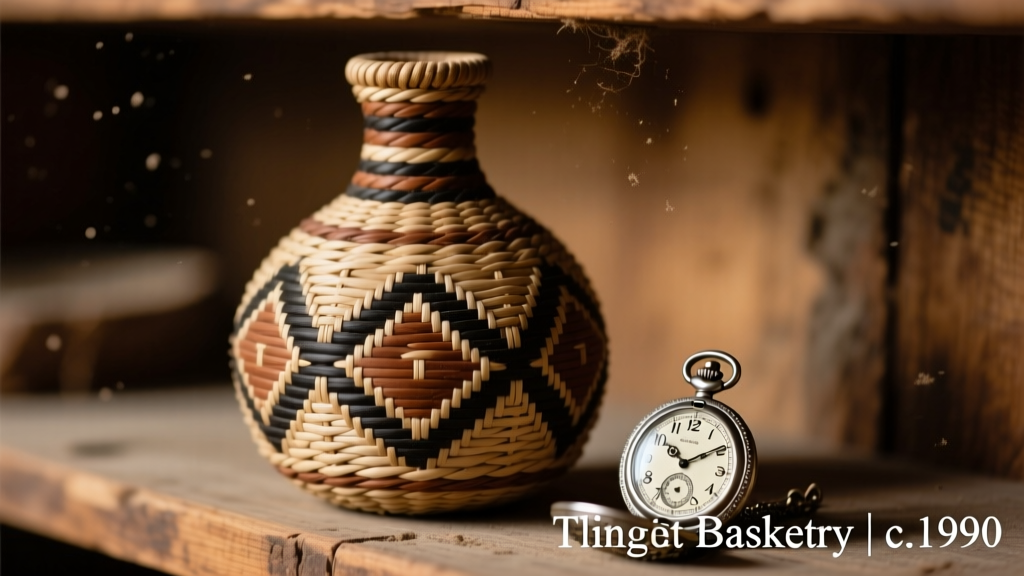
Tlingit Bottle Basketry, c. 1900: A Masterpiece of Northwest Coast Indigenous Artistry
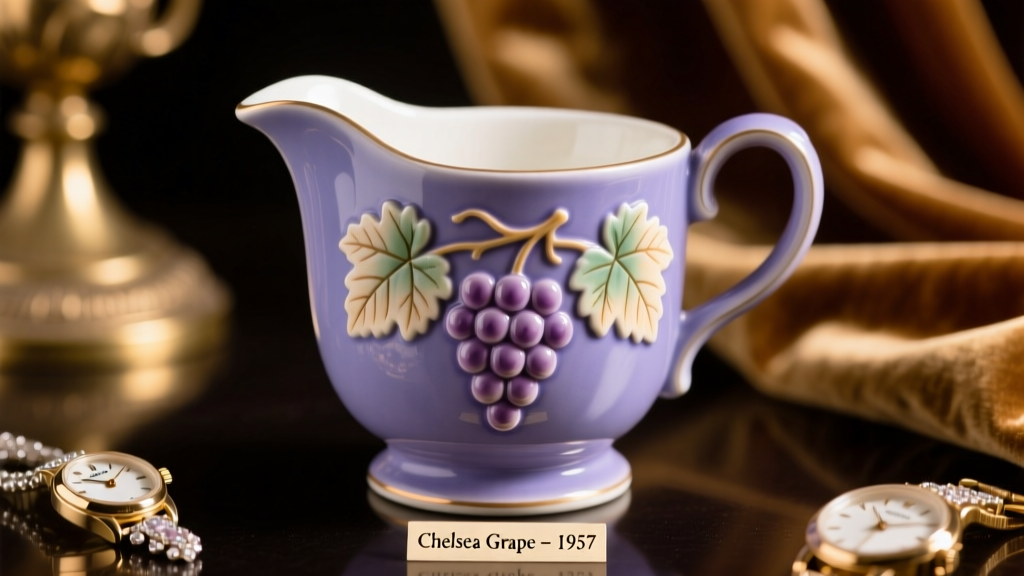
Chelsea Porcelain Grape Sugar Creamer: Lavender-Blue Glaze, Raised Grape Leaves, and the 3-In-2-1-2 Provenance

Mrs. Stevens Candies of Chicago Tin: A Mid-Century American Confectionery Artifact
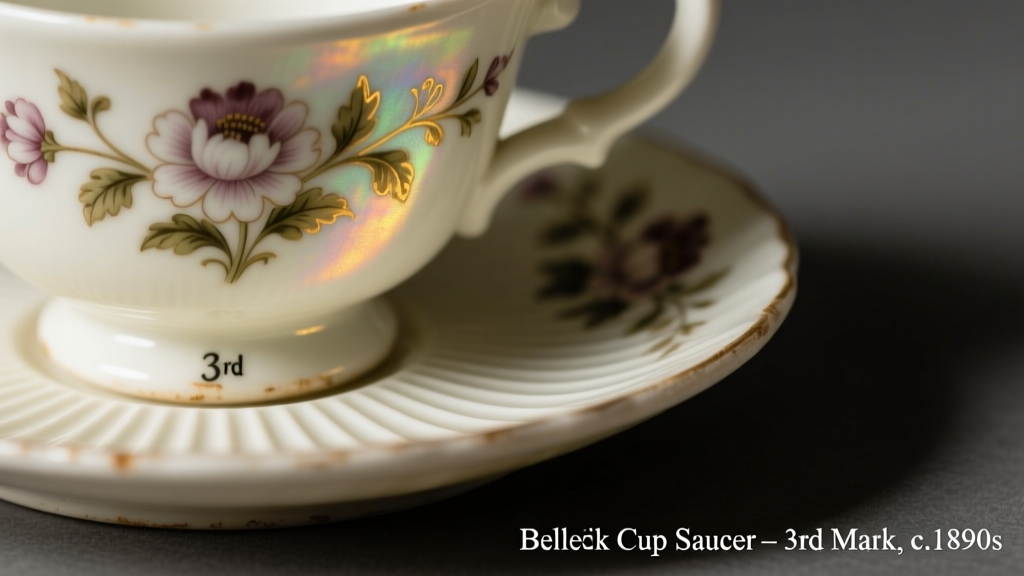
Belleek Cup and Saucer, Limpet Pattern, Third Mark (1926–1946): Identification, Provenance, and Market Value
McCoy Cookie Jar Covered Wagon No. 3: Identification, Provenance, and Market Value of a Mid-Century American Icon
Chippendale Slant-Front Desk in Birch: A 43-Inch American Federal-Era Masterpiece with Fitted Interior and Four Drawers

A. L. Karn: The Forgotten American Watchmaker Who Built Precision Timepieces in Brooklyn, 1920–1958
Wood Insulators in Early 20th-Century Trolley Systems: The Lignum Vitae Saddle Groove Design and Its Engineering Legacy
Whiskey Brickwedel & Co. Yellow Amber Pocket Watch, Circa 1883–1887: A Rare 7½-Inch Double-Case American Chronometer