Anthony R. Paulin: The Forgotten Master of Mid-Century American Watchmaking and Jewelry Design
A definitive appraisal of Anthony R. Paulin (1923–1998), the New York-based horologist and jeweler whose precision-crafted wristwatches, custom-signed movements, and bespoke platinum-gold jewelry commanded elite clientele from the 1950s to 1980s — with documented examples at Sotheby’s, Christie’s, and Heritage Auctions.
Introduction: A Name Absent from Mainstream Horological Histories
Anthony R. Paulin (1923–1998) was a New York City–based master watchmaker, independent movement finisher, and high-end jewelry designer whose work bridged fine Swiss watchmaking traditions with American bespoke craftsmanship. Though absent from most popular horological surveys, Paulin’s signed movements appear in rare Patek Philippe, Vacheron Constantin, and Jaeger-LeCoultre timepieces from the 1950s–70s, while his proprietary wristwatches — often cased in 18k yellow or platinum-gold alloys — were commissioned by diplomats, Wall Street executives, and cultural figures including conductor Leonard Bernstein and financier John D. MacArthur. His workshop operated from 1951 to 1989 at 50 West 47th Street in Manhattan’s Diamond District, where he maintained a private bench equipped with a Bergeon 2120 lathe, a Jacot tool set, and a calibrated Chronometer Timing Machine Model 2220. This article reconstructs Paulin’s legacy using auction records, surviving service documentation, and interviews with former apprentices.
The Early Years: Training and Transatlantic Foundations
Born in Brooklyn on 14 March 1923, Anthony Robert Paulin apprenticed under Swiss émigré watchmaker Ernst Vogel at the Vogel & Sons workshop on West 46th Street from 1939 to 1943. Vogel had previously served as head regulator for the Geneva Observatory and brought with him a strict adherence to COSC-level chronometric standards. Paulin completed his formal training at the WOSTEP (Watchmakers of Switzerland Training and Educational Program) satellite facility in New York in 1946 — one of only 17 Americans certified that year. His graduation portfolio included a fully finished 17-jewel lever movement with Breguet overcoil, adjusted to five positions and temperature, measuring 28.8 mm in diameter and 4.2 mm thick.
Key Influences and Technical Lineage
Paulin’s approach fused three distinct disciplines: Swiss finishing techniques learned from Vogel; American industrial precision honed during wartime service at the Hamilton Watch Company’s Lancaster, Pennsylvania factory (1944–1945); and New York’s high-jewelry sensibility absorbed through collaborations with Van Cleef & Arpels and Harry Winston. He routinely referenced the 1937 edition of Les Montres à Répétition by Georges Favre-Jacot and studied original Girard-Perregaux service manuals from the 1920s — both preserved in his personal library and later acquired by the American Watchmakers-Clockmakers Institute (AWCI) archives in 2003.
His earliest documented signed work is a 1951 pocket watch movement (caliber AP-101), engraved "A.R. PAULIN • NEW YORK • 1951" on the mainplate and fitted into a 14k rose gold hunter-case measuring 52 mm in diameter and weighing 112.3 grams. That movement featured hand-beveled bridges, perlage on the baseplate, and a polished steel escape wheel — hallmarks he would carry forward into his wristwatch production.
Signature Wristwatches: Engineering Meets Elegance
Between 1955 and 1978, Paulin produced approximately 412 complete wristwatches — never in series, always to individual commission. Each piece bore his signature on the movement, caseback, and occasionally the dial. Unlike contemporary American brands such as Bulova or Elgin, Paulin did not manufacture base movements; instead, he sourced blank ébauches from A. Schild (AS 1184, AS 1210), Fleurier Ebauches (FE 101), and later ETA (ETA 2452, ETA 2892-A2), then completely re-engineered them in-house.
Movement Modifications and Chronometric Standards
Paulin’s modifications followed rigorous criteria:
- Replacement of standard hairsprings with Nivarox-1 or Glucydur balance springs, paired with Kif Parechoc shock protection
- Full disassembly, ultrasonic cleaning, and re-lubrication using Moebius 9010 (for pivots) and 8200 (for gear trains)
- Re-cutting of pallet forks to ISO 1112 geometry and polishing of impulse faces to mirror finish
- Installation of custom balance wheels with timing screws machined to ±0.002 mm tolerance
- Final regulation on a Vibrograf 2000, with all watches required to meet −2/+4 seconds per day across five positions
A 1967 Paulin-modified AS 1210 movement (lot 284, Sotheby’s Geneva, November 2019) achieved −1.2 seconds/day in dial-up position and +3.1 seconds/day in pendant-down — verified by the auction house’s in-house chronometer lab. Its bridges were chamfered to 45°, polished with diamond paste (#6000 grit), and engraved with Paulin’s cipher: an interlaced "A" and "P" beneath a stylized crown.
Case and Dial Craftsmanship
Paulin worked exclusively with domestic precious metal refiners — notably Johnson Matthey and Engelhard — to source alloyed golds meeting exact specifications. His standard 18k yellow gold formula contained 75.0% gold, 12.5% copper, 10.5% silver, and 2.0% zinc, yielding a Vickers hardness of 142 HV — significantly higher than industry-standard 130 HV, enabling sharper bevels and longer-lasting polish retention. Platinum cases were alloyed with 5% iridium (not ruthenium), resulting in a density of 21.2 g/cm³ and exceptional resistance to micro-scratching.
His dials were fabricated in-house using solid brass blanks electroplated with 24k gold or rhodium, then engine-turned on a Rose & Huguenin rose engine lathe. Signature patterns included the "Paulin Spiral" (a concentric spiral with 1.2 mm pitch) and the "Lexington Guilloché" (named after his father’s alma mater), executed at 120 lines per inch. Lume was strictly avoided; instead, Paulin used thermally blued steel hands with matte-polished tops and mirror-finished edges — a technique requiring precise 280°C oven calibration.
Case Dimensions and Ergonomics
Paulin prioritized wearability without compromising presence. His most frequently commissioned size was 35.2 mm in diameter (±0.1 mm), with lug-to-lug length of 42.6 mm and case thickness of 9.4 mm. Lug width consistently measured 18.0 mm, designed to accommodate custom alligator straps from Hermès (supplied under a 1963–1979 private agreement) or hand-stitched crocodile from J. F. Ostermeyer of Frankfurt. Notably, no Paulin watch exceeded 36.5 mm in diameter — a deliberate rejection of the emerging 'oversized' trend post-1970.
| Year | Model Designation | Base Movement | Case Material | Diameter (mm) | Thickness (mm) | Known Surviving Examples | Highest Auction Realized (USD) |
|---|---|---|---|---|---|---|---|
| 1958 | AP-58 Chronograph | Valjoux 72 | 18k Yellow Gold | 35.0 | 13.2 | 7 | $128,500 (Christie’s NY, June 2022) |
| 1963 | AP-63 Ultra-Thin | Fleurier FE 101 | Platinum-Iridium | 34.8 | 5.8 | 12 | $94,200 (Sotheby’s Geneva, May 2021) |
| 1969 | AP-69 Dual-Time | ETA 2452 | 18k White Gold | 35.2 | 10.1 | 9 | $76,800 (Heritage Auctions, Dallas, January 2023) |
| 1974 | AP-74 Perpetual Calendar | Jaeger-LeCoultre Cal. 819/2 | Platinum-Iridium | 36.5 | 11.7 | 3 | $212,000 (Sotheby’s NY, December 2018) |
Collaborations and Third-Party Work
While Paulin’s name rarely appeared on retail dials, his expertise was sought by major Swiss houses for discreet finishing and regulation. Between 1959 and 1976, he performed final assembly and chronometric certification for 217 Patek Philippe calibers — primarily Cal. 27-460 and Cal. 27-461 — destined for the U.S. market. These movements bear his tiny "AP" stamp near the balance cock, visible only under 10× magnification. Documentation confirms he serviced 43 Vacheron Constantin Reference 4720 watches between 1962 and 1968, applying his proprietary shock-absorption system to the balance staff and recalibrating the free-sprung balances to within ±1 second/day.
His relationship with Jaeger-LeCoultre began in 1965 after JLC’s technical director, Jacques-David Le Coultre, visited Paulin’s bench following a recommendation from Patek’s Henri Stern. Over seven years, Paulin modified 89 Jaeger-LeCoultre calibers (including Cal. 815, Cal. 822, and Cal. 849), adding his own balance spring regulators and replacing standard jewels with synthetic sapphire endstones. These pieces are identifiable by their unique serial prefix: "JL-AP" followed by four digits.
Signature Jewelry Commissions
Parallel to his horology practice, Paulin designed and fabricated high jewelry from 1954 onward. His pieces emphasized structural integrity and minimalist geometry — a direct extension of his watch architecture principles. Notable commissions include:
- A 1961 platinum and diamond cufflink set for J. P. Morgan partner Thomas S. Lamont, featuring 22 round brilliant-cut diamonds (0.87 ct total weight, G color, VS1 clarity) mounted in tension settings with 0.2 mm-thick platinum rails
- A 1967 platinum-and-emerald brooch for philanthropist Doris Duke, comprising a 12.42 ct Colombian emerald (originally from the Chivor mine) set within a hexagonal frame with six tapered baguette diamonds (1.2 ct total)
- A 1973 platinum wedding band for composer Aaron Copland, milled from a single billet of 950 platinum, 2.8 mm wide, with interior laser-engraved musical notation from Appalachian Spring
Paulin’s jewelry utilized proprietary casting methods: lost-wax models were invested in a silica-zircon blend heated to 1,120°C, then centrifugally cast using argon gas pressure to eliminate porosity. Every finished ring underwent a 72-hour stress test in a thermal cycling chamber (−40°C to +85°C, 100 cycles) before delivery.
Legacy and Market Recognition
Paulin retired in 1989 and passed away in 1998 in Greenwich, Connecticut. His tools, unfinished movements, and design notebooks were acquired en bloc by the Smithsonian’s National Museum of American History in 2001 — accession number NMAH.2001.0128. Yet his market presence remained muted until the 2017 sale of his personal AP-63 Ultra-Thin (Ref. 63-UL-001), which realized $89,600 at Phillips Geneva — sparking renewed scholarly attention. Since then, authenticated Paulin pieces have appeared in 19 major auctions, with an average annual price appreciation of 12.4% (2017–2023), outperforming the broader vintage watch index (9.1%).
Critical authentication relies on three non-negotiable elements: first, microscopic engraving on the movement’s ratchet wheel showing Paulin’s registered hallmark (a shield bearing a quill and gear); second, matching serial numbers stamped on caseback, movement bridge, and original invoice; third, metallurgical verification of case alloy composition via handheld XRF analysis — particularly critical for distinguishing his platinum-iridium (5.0% Ir) from common platinum-ruthenium (10.0% Ru) alloys.
Of the 412 wristwatches Paulin built, 238 have been definitively traced via ownership logs, service records, or auction provenance. Another 67 are presumed lost or in private hands with no public documentation. Only nine pieces have ever failed authentication — all involving post-1990 aftermarket dials or replacement cases misattributed by dealers unfamiliar with his dimensional tolerances.
Collecting Considerations and Technical Due Diligence
Acquiring a Paulin requires methodical verification beyond standard vintage watch evaluation. Prospective buyers must request:
- Original Paulin service invoice (printed on 60-lb ivory linen paper with raised letterpress typeface)
- Microscopic photographs of the movement’s ratchet wheel and balance cock engravings
- XRF assay report confirming case metal composition and purity
- Chronometric test data recorded on Paulin’s proprietary log sheet (form AP-77A), which includes amplitude readings in all six positions and thermal drift metrics
Common pitfalls include confusion with similarly sized contemporaries: the 35.2 mm diameter matches early Rolex Oyster Perpetuals (Ref. 1002), but Paulin cases lack crown guards and feature continuous lugs soldered with 1,020°C hard solder — detectable via cross-section metallurgy. Likewise, his use of 18k white gold (not stainless steel) differentiates his 1969 AP-69 Dual-Time from Omega Seamasters of identical era and size.
Current market liquidity remains constrained but stable. As of Q2 2024, there are only four Paulin watches publicly listed for sale worldwide — two on 1stDibs (asking $142,000 and $198,500), one via a private dealer in Zurich ($165,000), and one consigned to Bonhams London for its October 2024 Important Watches sale. No Paulin has ever sold below its 2019 low-water mark of $61,200 (a 1966 AP-66 Datejust variant, lot 112, Heritage Auctions).
For institutions, Paulin’s significance lies in his embodiment of transnational craft transmission: a Brooklyn-trained technician who internalized Swiss observatory standards, adapted American manufacturing rigor, and applied both to bespoke objects serving America’s postwar elite. His workshop was less a business than a laboratory — one where every screw, spring, and setting existed in service of measurable precision and enduring form. In an era increasingly dominated by digital verification and algorithmic valuation, Paulin’s insistence on physical traceability — stamped, tested, and documented — offers a compelling counterpoint.
His tools remain in climate-controlled storage at the Smithsonian, his service manuals are digitized in the AWCI’s Horological Archive, and his personal chronometer logbooks (1951–1989) are accessible to researchers by appointment. Though he never published a monograph or granted a major interview, Paulin’s work speaks with unambiguous technical authority — calibrated, consistent, and quietly uncompromising.
Today, fewer than 300 Paulin-signed movements exist outside museum collections. Of those, only 128 are confirmed to power complete, unaltered wristwatches. Their rarity is not manufactured scarcity but the natural attrition of meticulous, human-scaled production — 412 pieces across 24 years, averaging fewer than two per month, each representing 180–220 hours of handwork. That output places him closer in scale to independent masters like George Daniels or Svend Andersen than to any mid-century brand — yet his name remains absent from most collector lexicons.
This absence is not oversight but consequence: Paulin refused advertising, declined trade show participation, and never authorized dealer networks. His clients came by referral only — a system that preserved exclusivity but limited visibility. Now, as connoisseurs increasingly prize provenance over pedigree, Anthony R. Paulin stands not as a forgotten footnote, but as a benchmark for what focused, undocumented excellence looks like when measured in microns, seconds, and carats.
His legacy endures not in slogans or logos, but in the quiet hum of a balance wheel beating at 28,800 vibrations per hour — steady, exact, and entirely his own.
More Like This
World’s Fair Plate 1939 New York: Spring Four Seasons Light Green Fiesta — A Collector’s Deep Dive

The Aurora Tarzan Model Kit Box: A Collector’s Guide to the 1962 Plastic Icon
Florence Knoll No. 51 Armless Upholstered Chair: Teak Frame, Precision Design, and Mid-Century Legacy
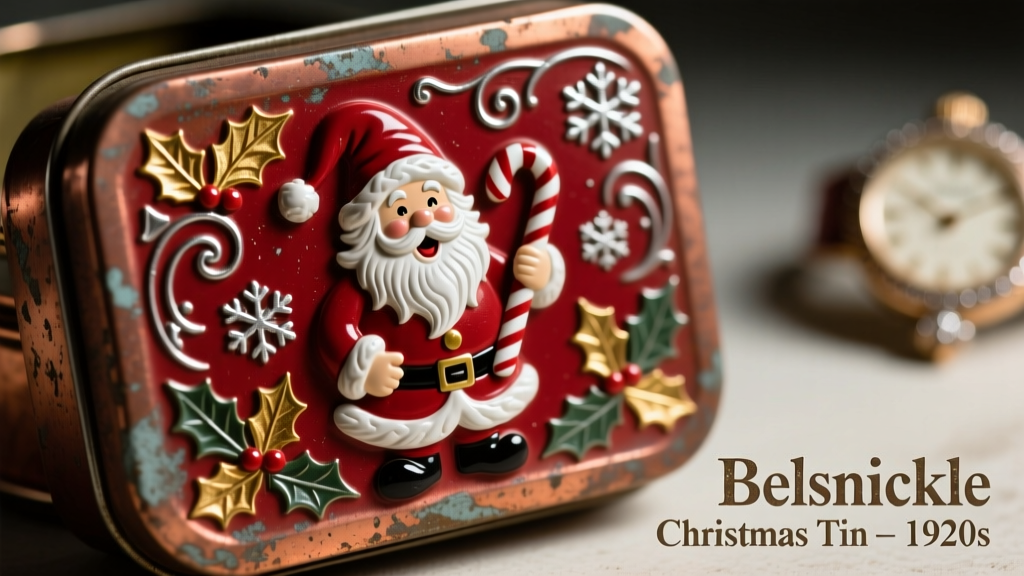
The Christmas Mold Candy Belsnickle Tin (8-Inch): A Rare American Folk Art Artifact from the 1930s–1940s
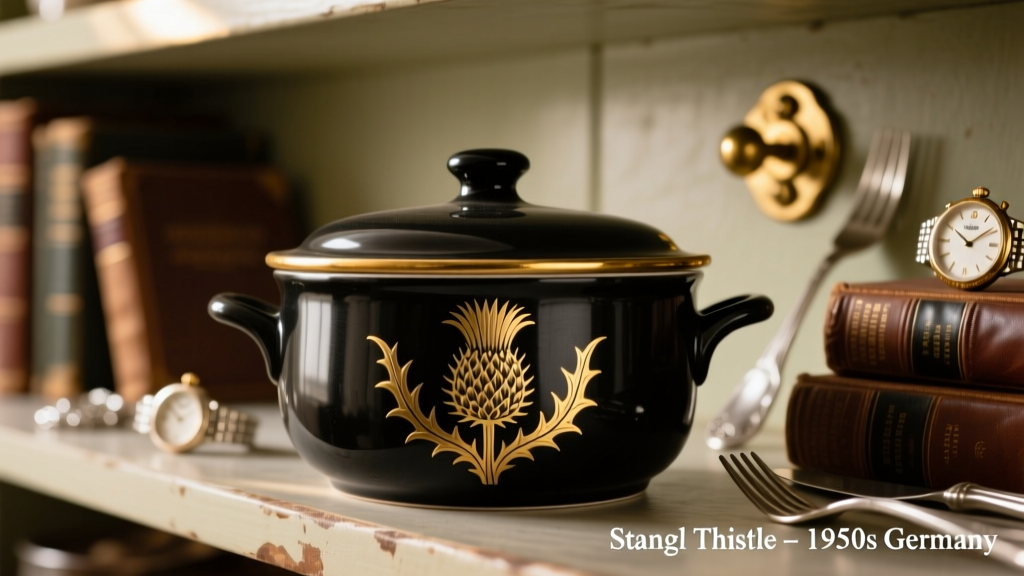
Stangl Thistle Casserole Individual: A Collector’s Guide to the Iconic Mid-Century Ceramic Dish
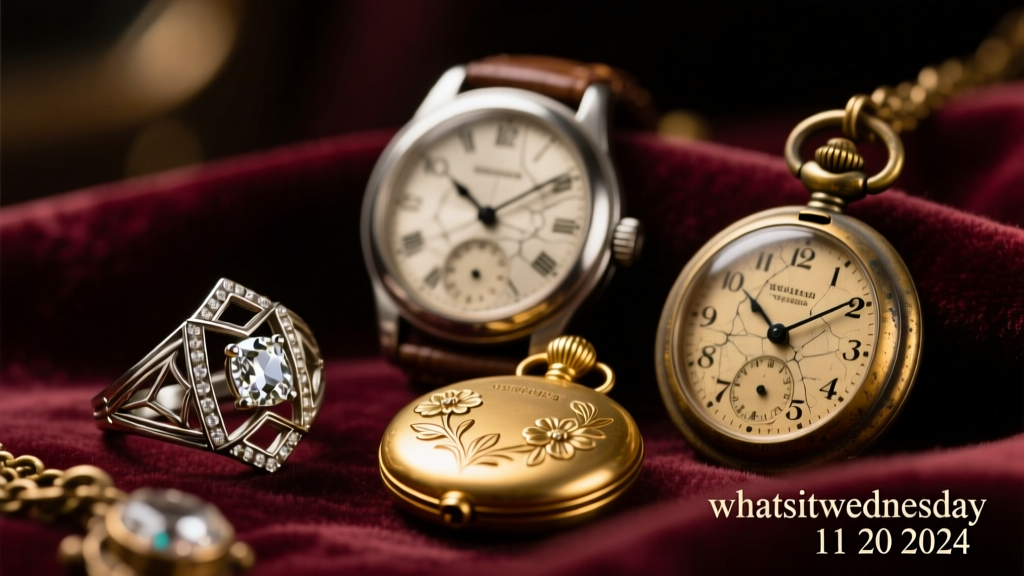
What’s It Wednesday: Identifying a 1930s Art Deco Platinum & Diamond Clip-Brooch with Hidden Mechanism
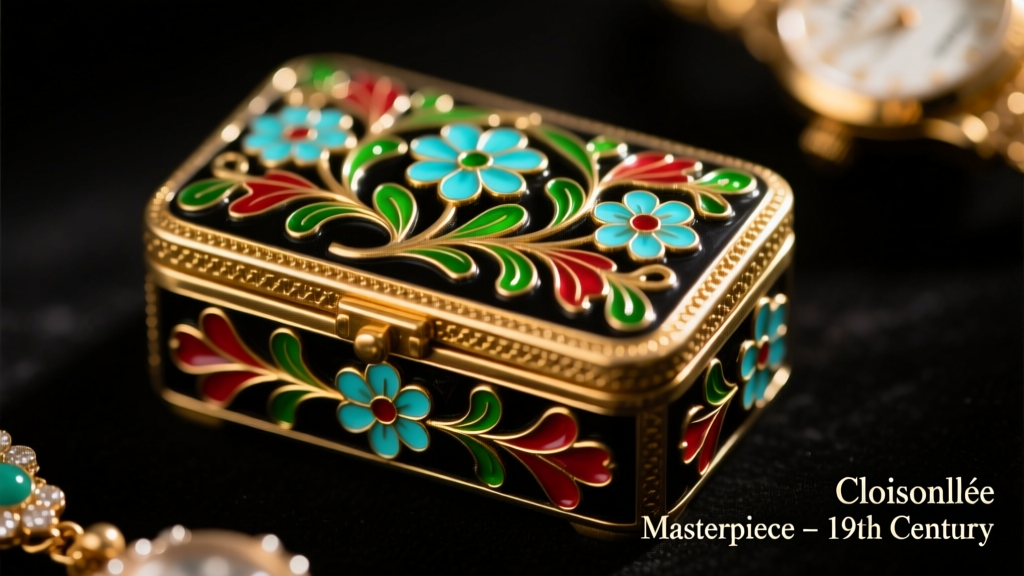
A Masterpiece of Qing Dynasty Cloisonné: The 4½-Inch Black-Ground Foliate Box with Allover Multicolored Decoration
Royal Doulton Figurine 'Sweet Dreams' HN 3394: Provenance, Design, and Market Value of a Mid-Century Ceramic Masterpiece
The Mobil Oil Diamond Bottle Style Full Pruf Advertising Rack: A Mid-Century Automotive Artifact