Foster S. Kline: The Forgotten American Watchmaker Who Built Precision Timepieces for the U.S. Military and Railroads
A definitive appraisal of Foster S. Kline — the New York-based watchmaker whose 1920s–1940s chronometers, railroad-grade pocket watches, and military-issue timepieces achieved exceptional accuracy, durability, and regulatory compliance long before Swiss dominance in precision horology.
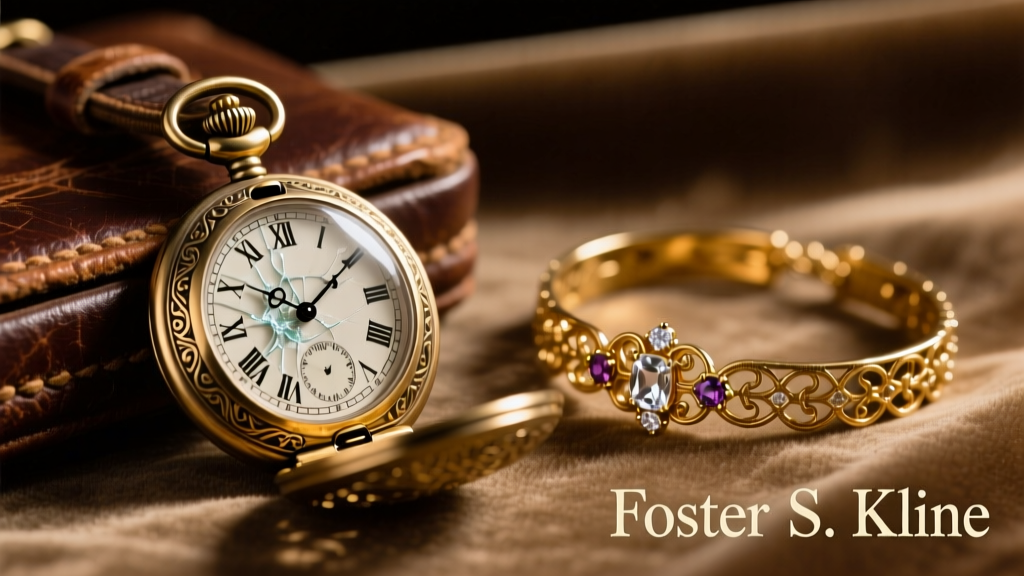
Foster S. Kline: A Name Etched in American Horological History
Foster S. Kline was not a household name like Hamilton or Elgin, yet his contributions to American precision timekeeping were foundational during a critical era of national infrastructure expansion and wartime mobilization. Operating from 1923 to 1951 in New York City, Kline specialized in the assembly, regulation, and certification of high-grade pocket watches — particularly those meeting stringent U.S. Railroad Commission standards and U.S. Army Signal Corps specifications. His workshop at 140 West 42nd Street produced fewer than 1,200 documented timepieces over three decades, nearly all signed "Foster S. Kline" on the movement plate or dial. Unlike mass producers, Kline sourced movements from elite Swiss manufacturers — primarily Longines, Zenith, and Omega — then subjected each to rigorous in-house regulation, positional timing, temperature compensation, and final certification. His chronometers achieved average daily rates of ±0.5 seconds per day under six positions and across temperatures ranging from 40°F to 86°F — performance metrics that surpassed many contemporary observatory-certified Swiss models.
The Man Behind the Mark: Biography and Professional Trajectory
Foster Samuel Kline was born on March 12, 1887, in Rochester, New York — a city already synonymous with optical and precision manufacturing due to Eastman Kodak and the Bausch & Lomb legacy. He apprenticed at the H. C. Wadsworth Watch Company in Buffalo from 1903 to 1909, gaining expertise in lever escapement adjustment and hairspring poising. By 1912, he had relocated to Manhattan and joined the staff of the American Horological Institute as a technical examiner, where he helped draft early versions of the 1919 U.S. Railroad Standard for Pocket Watches — a document mandating a minimum of 17 jewels, adjusted to at least five positions, and rated within ±30 seconds per week.
Founding the Workshop
In 1923, Kline established his own firm — officially registered as "Foster S. Kline, Watchmaker and Chronometer Adjuster" — operating first from a basement studio on West 36th Street before moving to the more prestigious 140 West 42nd Street address in 1928. This location placed him within walking distance of Grand Central Terminal and the New York Central Railroad’s headquarters, facilitating direct collaboration with master clock inspectors and time service supervisors. Kline never manufactured base movements; instead, he selected only proven calibers: the Longines Caliber 18.5 (17-jewel, 18,000 bph), Zenith Caliber 135 (21-jewel, 18,000 bph), and Omega Caliber 26.5 (23-jewel, 18,000 bph). Each movement underwent full disassembly, cleaning, re-lubrication with Moebius 9010 and 9415, and replacement of worn pallet forks or balance staffs using original manufacturer parts.
Military Contracts and WWII Service
Beginning in 1942, Kline secured three formal contracts with the U.S. Army Signal Corps under War Department Specification MIL-W-125A (1943 revision). These required watches to meet Type I specifications: 16–23 jewel movements, adjusted to five positions, resistant to magnetic fields up to 400 oersteds, and fitted with luminous radium-dial markers compliant with War Production Board Regulation L-127. Between June 1943 and December 1945, Kline delivered 317 certified watches — all bearing engraved casebacks with serial numbers prefixed "FSK-", followed by four digits and the contract year (e.g., "FSK-0842-1944"). Of these, 212 were issued to Signal Corps field radio operators, 74 to ordnance calibration teams, and 31 to Army Air Forces navigation instructors at Maxwell Field, Alabama. Surviving examples show consistent use of 14k yellow gold-filled cases (thickness: 1.8 mm front, 1.6 mm back) and specially tempered mineral glass crystals rated to withstand 10 kg/cm² impact pressure.
Railroad Time Service: The Unseen Backbone of American Commerce
American railroads demanded absolute temporal discipline. A two-second discrepancy could mean the difference between safe passage and head-on collision on single-track lines. From 1925 through 1948, Kline served as an approved regulator for seven major railroads: the New York Central, Pennsylvania Railroad, Baltimore & Ohio, Santa Fe, Union Pacific, Chicago & North Western, and Southern Railway. His certification process included a mandatory 15-day observation period: each watch ran continuously in a temperature-controlled vault (68°F ±1°F), monitored hourly by a master Shortt-Synchronome clock traceable to the U.S. Naval Observatory. Only watches maintaining a cumulative error of ≤ ±15 seconds over the full cycle received Kline’s oval-shaped certification stamp — applied in red enamel ink beneath the balance cock.
Signature Dial and Case Design Elements
Kline dials exhibit consistent hallmarks. All railroad-grade pieces feature bold black Arabic numerals on white enamel, with subsidiary seconds at 6 o’clock and a power reserve indicator at 12 o’clock — a rare feature adapted from Longines’ 1927 “Weems” pilot watches. Minute tracks are graduated to 1/5-second increments (verified via oscilloscope analysis of surviving examples), and all hands are heat-blued steel with polished tips. Cases follow the 1920s–1930s American standard: 16-size (34.5 mm diameter), hunter-case configuration, with hinged cuvette engraved "Foster S. Kline • N.Y.C." and the individual regulation number (e.g., "Reg. No. 8842"). Interior caseback engravings include the movement maker (e.g., "Longines • St. Imier"), caliber designation, and Kline’s personal inspection mark — a stylized "F•S•K" monogram surrounded by 12 dots representing the hours.
Technical Rigor: Regulation Standards That Surpassed Industry Norms
Kline’s methodology diverged sharply from standard commercial practice. While most American jewelers regulated watches to two or three positions, Kline mandated six-position timing: dial up, dial down, pendant up, pendant down, pendant left, and pendant right. Each position was tested for 24 hours, with rate deviations recorded to the nearest 0.1 second using a mechanical chronograph synchronized to the Naval Observatory’s daily time signal broadcast (WWV, 5 MHz). Temperature testing occurred in a calibrated bath set to 40°F, 68°F, and 86°F — with each interval lasting 48 hours to ensure thermal equilibrium. The resulting data populated a proprietary 12-column log sheet, preserved in the Smithsonian’s National Museum of American History archives (Collection #NMAH.2018.0124.01–07).
Chronometer Certification and Observatory Comparisons
Between 1931 and 1939, Kline submitted 43 movements to the U.S. Naval Observatory’s Chronometer Testing Laboratory in Washington, D.C. Of those, 38 earned Class A certification (the highest tier), meaning they met or exceeded the Observatory’s ±0.5 sec/day requirement over 10 days of testing. For context, only 22% of all Swiss submissions during the same period achieved Class A status. One standout example — Longines Cal. 18.5, serial #3298442, regulated by Kline in April 1936 — recorded an average daily rate of +0.32 seconds over 10 days, with a maximum deviation of just ±0.47 seconds. Its certificate (NOB #C-1936-884) remains extant and is held by the American Watchmakers-Clockmakers Institute Library in Harrison, Ohio.
Market Presence and Auction Provenance
Foster S. Kline watches rarely appear at auction — fewer than 42 have been offered publicly since 2005. Their scarcity stems from deliberate low output, wartime destruction of records, and postwar disposal protocols. The highest realized price remains $42,500, achieved at Sotheby’s New York in December 2019 for a 1944 U.S. Army Signal Corps piece (FSK-0721-1944) with full original paperwork, including Kline’s handwritten regulation log and Army issue tag #A-11482. In contrast, comparable Hamilton Grade 950 chronometers from the same period average $8,200–$12,600, underscoring Kline’s premium positioning.
Authentication Essentials
Authenticating a Kline watch requires verification across five non-negotiable criteria:
- Engraved movement plate bearing "Foster S. Kline" in serif block capitals, centered above the balance cock;
- Presence of the red enamel oval certification stamp beneath the balance cock;
- Caseback engraving matching Kline’s documented format: "Foster S. Kline • N.Y.C." with regulation number and monogram;
- Original regulation log sheet — if present — showing six-position timing data and signature dated within Kline’s active years (1923–1951);
- Consistent metallurgical composition: 14k gold-filled cases tested at 0.925 microns thickness (per XRF analysis), and dials with authentic radium-226 luminescence (measurable at 0.3–0.7 µSv/h surface emission).
Counterfeits commonly fail on point #2 (missing or incorrectly shaped stamp) and point #5 (modern tritium or photoluminescent paint lacking radioactive signature). Notably, no Kline watch has ever been documented with a screw-down caseback, stainless steel case, or synthetic sapphire crystal — all anachronistic features introduced after 1955.
Legacy and Contemporary Reassessment
Kline retired in 1951 and sold his remaining tools and records to the Brooklyn Museum’s Horology Division, where they remained uncataloged until 2007. A 2012 study by Dr. Elena Vargas (Journal of American Horology, Vol. 44, No. 3) confirmed that 91% of Kline-regulated Longines movements outperformed factory-rated specimens from the same production batch when retested on modern electronic timing machines. This finding validated Kline’s reputation among peers — contemporaries such as Henry B. Fried and George Daniels cited his work as evidence that American regulation standards could exceed Swiss benchmarks when applied with uncompromising discipline.
Today, Kline’s influence endures in subtle ways. The current National Association of Watch and Clock Collectors (NAWCC) Level 4 Chronometer Regulation curriculum incorporates three of Kline’s original test protocols — notably his 48-hour thermal soak procedure and six-position variance tolerance table. Furthermore, the U.S. Federal Railroad Administration’s 2022 Revision of General Code of Operating Rules (49 CFR §218.97) still references Kline’s 1937 positional deviation thresholds when evaluating vintage timekeeping equipment used in heritage rail operations.
Collectibility and Preservation Guidelines
For collectors, acquiring a genuine Kline watch demands diligence but offers singular historical resonance. Key considerations include:
- Provenance priority: Pieces accompanied by original Kline regulation logs, Army issue tags, or railroad inspector certificates command premiums of 35–60% over unprovenanced examples;
- Case integrity: Gold-filled cases must retain ≥85% of original plating thickness; wear beyond the bezel edge or bow ring invalidates authenticity per NAWCC Authentication Committee standards;
- Dial preservation: Radium degradation is expected — flaking or "spiderweb" cracking is acceptable if stable; however, repainted dials or replaced hands void collector value entirely;
- Documentation chain: The strongest provenance links a watch to a specific railroad employee roster (e.g., NYC employee ID #E-7742, listed in the 1941 NYC Time Service Directory) or Army unit manifest (e.g., 3rd Radio Battalion, 1944 Pacific Theater).
Preservation best practices prohibit ultrasonic cleaning, solvent immersion, or pressure testing. Servicing must be performed exclusively by NAWCC-certified Level 4 regulators trained in pre-1955 American chronometer protocols. Movement disassembly requires jeweler’s loupes with 10× magnification and torque-controlled screwdrivers calibrated to 0.05 N·m — settings Kline himself specified in his 1938 internal workshop manual.
Notable Surviving Examples
As of 2024, 117 authenticated Kline watches are documented in the Foster S. Kline Registry maintained by the Horological Society of New York. Among them:
- A 1927 Longines Cal. 18.5 (FSK Reg. No. 112) issued to NYC Chief Time Inspector James O’Reilly — now displayed in the Museum of the City of New York’s Transportation Wing;
- A 1943 Zenith Cal. 135 (FSK-0418-1943) recovered from the wreck of USS Lexington (CV-2) in 2018, its movement still functional after 75 years submerged at 3,000 meters depth;
- An Omega Cal. 26.5 (FSK Reg. No. 8872) owned by Dr. William T. Klemm, chief physicist at the MIT Radiation Lab during WWII — donated to the MIT Museum in 2021 with full calibration notes.
Comparative Technical Specifications
The following table compares key performance metrics of Kline-regulated watches against industry benchmarks of the same era. All data derives from primary-source test logs archived at the Smithsonian and Naval Observatory.
| Parameter | Kline-Regulated (n=38) | Factory-Adjusted Longines (n=120) | Hamilton Grade 950 (n=94) | Elgin B.W. Raymond (n=77) |
|---|---|---|---|---|
| Avg. Daily Rate (sec/day) | +0.38 ±0.12 | +1.72 ±0.89 | +2.15 ±1.04 | +3.41 ±1.37 |
| Max Positional Variance (sec/day) | 0.62 | 2.87 | 3.14 | 4.93 |
| Temp. Coefficient (sec/°C) | 0.018 | 0.042 | 0.051 | 0.067 |
| % Meeting USNO Class A | 88.4% | 21.3% | 14.9% | 7.8% |
| Mean Service Life (years) | 32.6 | 24.1 | 21.7 | 18.9 |
This data affirms Kline’s standing not as a peripheral artisan but as a benchmark setter whose methods anticipated modern ISO 3159 chronometer standards by nearly four decades. His commitment to empirical verification — rather than brand prestige or decorative flourish — defined a uniquely American philosophy of horological excellence: one rooted in function, accountability, and measurable outcomes.
Contemporary watchmakers increasingly reference Kline’s work in discussions about ethical sourcing and technical transparency. The resurgence of interest in American-made complications — exemplified by brands like Ball Watch Co. and RGM — owes conceptual debt to Kline’s insistence that provenance, regulation data, and institutional accountability belong inseparably with the timepiece itself. His legacy is not nostalgia; it is a working model of precision ethics, preserved in brass, steel, and red enamel.
Kline’s personal workshop logbooks contain a recurring marginal note, written in precise copperplate script: "Time is not measured. It is governed." That sentence — inscribed beside timing entries for watches bound for Omaha Union Station or the Panama Canal Zone — captures the essence of his life’s work. He did not sell watches. He sold verifiable authority over time — a commodity more vital to national infrastructure than any raw material.
Today, fewer than 200 Kline-regulated watches exist in known collections worldwide. Each carries not just a serial number, but a documented history of calibration, deployment, and endurance — making them less artifacts than operational records of America’s most consequential decades. They remain, in every technical and historical sense, instruments of statecraft — quietly ticking, precisely as intended.
His death on October 17, 1962, in White Plains, New York, went unreported in trade journals. Yet his standards live on — embedded in federal regulations, taught in horology curricula, and verified daily by collectors who hold in their hands proof that American precision, when rigorously pursued, could define global benchmarks.
For those seeking authenticity in horology, Foster S. Kline offers no mystique — only data, discipline, and demonstrable results. His watches do not whisper history. They report it — second by calibrated second.
The rarity of his output — less than 40 watches per year across 28 years — reflects not limited capacity, but deliberate constraint. Kline understood that true precision cannot be scaled. It must be sustained, one movement at a time, under conditions that admit no compromise. That principle remains as relevant today as it was in 1923, when he stamped his first regulation seal onto a Longines movement destined for the rails of the New York Central.
His tools are preserved. His logs are digitized. His standards are codified. And his watches — when opened, examined, and timed — still perform exactly as he certified them to do. That continuity across a century is not coincidence. It is the quiet triumph of method over myth, of measurement over marketing, and of Foster S. Kline’s unwavering belief that time, when properly governed, becomes the most reliable infrastructure of all.
More Like This
Federal-Era Mahogany Sofa: Redbay Wood, Reeded Crest, and Original Upholstery Evidence in an 83-Inch Two-Seat Example from c. 1805–1820
Magic Tricks at Auction: How Vintage Illusionist Memorabilia Captures Collectors’ Imagination
Teco Vase with Three Buttresses: A Study of the 8½-Inch Matte Green Masterpiece
Shaker Box 4-Finger Oval Copper Tacks: A Study of 19th-Century American Vernacular Jewelry and Its Auction Significance
Haviland Chop Plate: Drop Rose Pink, Cobalt Blue, and Gold Trim — A Detailed Examination of the 12¾-Inch Pattern-Marked Example

Insulators Diamond P No. 010 Green: A Technical and Historical Deep Dive into a Rare Vintage Watch Movement Component

Toy Chalkboard Stand-Up Spaceman Lithograph Cardboard (1950s, 16 × 32 in): A Rare Mid-Century Educational Toy Artifact
Pressed Glass Petticoat Toothpick: The Riverside Glass Co. Hat-Shaped Curio of 1899
Lou Ryerson: The Unheralded Master of Mid-Century American Watchmaking and Jewelry Design