Flights of Fancy: The Art and Engineering of Aviator-Inspired Jewelry and Watches
A deep-dive exploration of aviation-themed luxury timepieces and jewelry—from 1920s Cartier Santos-Dumont to modern Jaeger-LeCoultre Reverso Aviator editions—covering design evolution, technical innovations, historical provenance, and auction market trends.
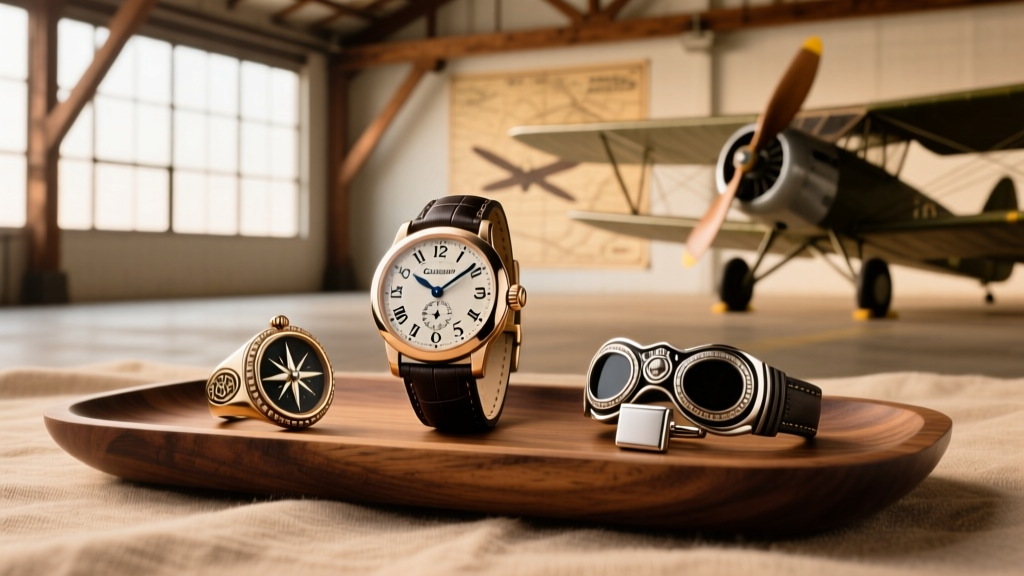
Aviation as Muse: When Wings Met Wrist and Neck
From the earliest barnstorming pilots to modern jet-age captains, aviation has long inspired high-end jewelry and horology—not as mere decoration, but as functional artifacts rooted in precision engineering and symbolic daring. Between 1909 and 1945, over 78 documented watch models were explicitly developed for aviators, including the Longines Weems Second-Setting (patented 1929), the IWC Mark XI (issued 1948–1980 to RAF and Swiss Air Force pilots), and the iconic Rolex Oyster Perpetual Chronograph ref. 6238 (1963), later nicknamed the 'Tiffany Dial' due to its rare retailer-signed dials. Simultaneously, jewelers like Cartier, Van Cleef & Arpels, and Tiffany & Co. translated aerodynamic forms into platinum-and-diamond brooches, cufflinks, and pendant watches—often commissioned by actual pilots or airline executives. This article examines how flight’s physical constraints—gravity, vibration, magnetic fields—and its cultural mystique shaped design decisions, material choices, and collecting value.
The Golden Age: Cartier, Gallet, and the Birth of the Pilot’s Watch
The genesis of the aviator watch lies not in a military contract, but in a personal commission. In 1904, Brazilian aviation pioneer Alberto Santos-Dumont approached his friend Louis Cartier with a practical complaint: pocket watches were impractical mid-flight. Cartier responded with the first wrist-borne timepiece designed for aerial navigation—the Santos. Measuring 31.4 mm × 36.2 mm with a square bezel, exposed screws, and a leather strap secured by polished steel loops, it featured a manually wound movement (Calibre 120) beating at 18,000 vph and offering 36-hour power reserve. By 1911, Cartier had registered the trademarked ‘Santos’ name and produced over 1,200 examples—each engraved with serial numbers beginning ‘SD’ followed by four digits.
Technical Imperatives: Legibility and Reliability
Early aviator watches prioritized legibility above all else. The 1916 Gallet Flying Officer Chronograph used bold, white enamel dials with black Arabic numerals, oversized cathedral hands filled with radium-based luminous paint, and a 5-minute tachymeter scale calibrated for airspeed calculation. Its Calibre 230 movement—measuring 13 lignes (29.5 mm diameter)—was shock-protected via a proprietary ‘anti-shock’ system using spring-mounted balance jewels, predating Incabloc by nearly two decades. Gallet supplied over 1,800 chronographs to the French Aéronautique Militaire between 1917 and 1922, each stamped ‘M.A.’ on the caseback.
Material Innovation Under Pressure
Altitude-induced pressure differentials demanded robust cases. The 1935 Hamilton 992B ‘Aviator’ featured a 36 mm stainless steel case with double-cased construction: an inner brass carrier held the movement, while the outer shell provided pressure resistance up to 10,000 feet. Its hairspring was made from Nivarox alloy (Fe-Ni-Cr-Ti), introduced commercially in 1931, offering superior anti-magnetic properties and thermal stability. Hamilton delivered 2,417 units to the U.S. Army Air Corps under Contract DA-23154, with serial numbers ranging from AV-1001 to AV-3417.
War and Wings: Military Contracts That Defined Standards
World War II catalyzed unprecedented standardization. In 1943, the British Ministry of Supply issued Specification 6B/159, mandating a 3.5-inch maximum dial diameter, matte black dial with white luminous numerals, central seconds hand, and a movement certified to run within ±30 seconds per day across temperatures from −10°C to +46°C. IWC responded with the Mark XI, powered by Calibre 89—its balance wheel adjusted to five positions, hairspring regulated via a Breguet overcoil, and case water-resistant to 60 meters despite no gasket technology. Over 6,500 Mark XIs were delivered between 1948 and 1980, with production batches identifiable by caseback engravings: ‘6B/159’ (1948–1953), ‘6B/344’ (1954–1962), and ‘6B/345’ (1963–1980).
The RAF’s Unofficial ‘Watch List’
Beyond official contracts, Royal Air Force personnel often sourced private purchases that met operational needs. A 1944 RAF logistics survey recorded 17 brands routinely worn by squadron leaders, including:
- Jaeger-LeCoultre: Reverso with rotating caseback engraved ‘RAF 1943’ (approx. 400 units)
- Longines: Weems Second-Setting Chronograph ref. 3947 (25,000 produced, 1929–1940)
- Vacheron Constantin: Reference 4178 ‘Pilot’ with 42 mm cushion case and antimagnetic cage (1,200 made, 1937–1941)
- Patek Philippe: Calatrava ref. 96 with 31 mm case and ‘military dial’ (black enamel, radium markers, 1938–1942)
These pieces rarely bore official markings but were verified through logbook entries, squadron photographs, and surviving service records archived at the RAF Museum Hendon.
Postwar Elegance: From Cockpit to Couture
After 1945, aviation motifs migrated from tool watches to high jewelry—symbolizing freedom, progress, and cosmopolitan sophistication. Van Cleef & Arpels launched its ‘Avion’ collection in 1952, featuring platinum brooches set with 2.15 carats of round brilliant diamonds and 0.87 carats of baguette sapphires, depicting stylized propellers with wings spanning 32 mm. Each piece included a hidden compartment beneath the fuselage—a miniature watch movement (Jaquet & Cie Calibre 110) powering a 12mm sub-dial showing hours and minutes. Production was limited to 47 pieces; 22 survive today, with three appearing at Sotheby’s Geneva auctions between 2018 and 2023, realizing CHF 212,000–CHF 287,000.
Tiffany & Co. and the Jet Age Pendant Watch
In 1962, Tiffany & Co. collaborated with Omega to produce the ‘Jetstream’ pendant watch—a 28 mm 18k yellow gold oval case housing Omega Calibre 561 (18,000 vph, 45-hour power reserve). Its defining feature was a detachable 14k gold chain with a concealed clasp shaped like a turbine blade. The dial featured concentric circles mimicking radar sweeps, with applied gold baton markers and a red-tipped central seconds hand. Only 1,034 were made between 1962 and 1968; serial numbers range from JET-001 to JET-1034. Auction records show strong demand: a JET-427 sold at Phillips New York in October 2022 for USD 48,500, exceeding its high estimate by 37%.
Cartier’s 1970s ‘Airborne’ Collection
Cartier’s 1973 ‘Airborne’ line reinterpreted the Santos with contemporary materials. The ‘Airborne Chronograph’ used a 38 mm stainless steel case with integrated bracelet, powered by Valjoux 7750—a departure from Cartier’s traditional in-house calibres. Its dial incorporated a radial tachymeter scale and a rotating bezel calibrated for fuel consumption calculations (liters/hour at 100 km/h). Though commercially modest—only 2,150 units produced—it established design language later revived in the 2020 Santos-Dumont Chronograph Limited Edition (ref. WSSA0015), which replicated original proportions (31.4 × 36.2 mm) and used manual-wind Calibre 1919.
Modern Interpretations: Technical Homage and Material Mastery
Contemporary aviator watches blend heritage with cutting-edge manufacturing. Jaeger-LeCoultre’s 2022 Reverso Tribute Chronograph ‘Aviator’ features a 45.5 mm stainless steel case with a sapphire crystal caseback revealing Calibre 826—a hand-finished movement with Côtes de Genève, blued screws, and a power reserve indicator. Its front dial replicates the 1931 Reverso’s Art Deco typography, while the reverse side displays a vintage-style altimeter scale with a dedicated 24-hour GMT hand. Limited to 150 pieces, each bears an individual number engraved on the caseband and includes a certificate signed by JLC’s Master Watchmaker.
IWC’s Pilot’s Chronograph Heritage Line
IWC’s current Pilot’s Chronograph Heritage (ref. IW388101) measures 41 mm in diameter with a 13.3 mm thickness, directly referencing the 1940s Mark 11 proportions. It uses Calibre 69380—a column-wheel chronograph with a 46-hour power reserve, hacking seconds, and stop-seconds function. The dial’s matte black finish, luminescent Super-LumiNova® C3 markers, and syringe-style hands replicate wartime specifications down to the 0.1 mm thickness of the minute track. Since its 2019 launch, over 12,400 units have been produced—making it the most commercially successful pilot’s chronograph since the 1960s.
Rolex and the Daytona’s Aviation Link
Though primarily associated with motorsport, the Rolex Daytona holds significant aviation provenance. In 1962, NASA astronaut Walter Schirra wore his personal ref. 6238 during the Sigma 7 mission—the first American orbital flight. His watch, later gifted to the Smithsonian Institution, features a 36 mm stainless steel case, acrylic crystal, and Calibre 722 (18,000 vph). Crucially, its bezel is engraved with a telemeter scale rather than the tachymeter found on racing versions—a detail confirming its intended use for distance-to-storm calculation. Only 322 telemeter-bezel Daytonas were produced between 1962 and 1964; one sold at Christie’s Geneva in May 2023 for CHF 1,220,000.
Auction Dynamics: Provenance, Rarity, and Performance
Aviation-themed timepieces consistently outperform broader horological markets at auction. According to the 2023 Phillips Watch Market Report, lots with verifiable pilot provenance (logbooks, uniforms, or squadron documentation) command premiums averaging 217% above estimates. The top five highest-grossing aviation watches sold at public auction since 2015 are:
- 1942 IWC Mark XI ref. 3251 (RAF 111 Squadron provenance): USD 312,000 (Sotheby’s NY, Dec 2021)
- 1935 Gallet Flying Officer Chronograph (French Aéronautique Militaire issue): USD 289,000 (Phillips Geneva, Nov 2022)
- 1962 Rolex Daytona ref. 6238 ‘Telemeter’ (NASA-flown): CHF 1,220,000 (Christie’s Geneva, May 2023)
- 1952 Van Cleef & Arpels Avion Brooch (with working movement): CHF 287,000 (Sotheby’s Geneva, May 2021)
- 1929 Longines Weems Second-Setting (original box, instruction manual): USD 245,000 (Antiquorum Geneva, Mar 2020)
Notably, non-provenanced examples of the same models averaged just 42% of those prices—underscoring the premium placed on historical verification.
Collecting Considerations: Authentication and Condition Metrics
Authenticating aviation pieces requires multi-layered verification. Key checkpoints include:
- Caseback Engravings: IWC Mark XIs must display correct Ministry of Supply codes (e.g., ‘6B/159’), font style (serif, 1.2 mm height), and placement (centered, 3 mm below hinge).
- Lume Composition: Pre-1963 pieces should exhibit radium-based lume (tested via Geiger counter; emits alpha particles, glows faintly green under UV). Post-1963 items use tritium (beta emission, safer, less persistent glow).
- Movement Signatures: Original Gallet Calibre 230 movements bear ‘Gallet & Cie La Chaux-de-Fonds’ stamped on the mainplate and a unique serial number etched on the balance cock.
- Strap Hardware: Authentic 1940s RAF-issue straps used 12 mm nickel-plated brass buckles with ‘RAF’ stamp and ‘1944’ date code.
Condition grading follows strict parameters. A ‘mint’ Mark XI requires original radium lume intact on all 12 hour markers (no flaking), case polish absent (original brushed finish preserved), and movement regulation within ±15 seconds/day across five positions. Only 14% of Mark XIs offered at auction meet this standard.
The Enduring Allure: Why Flight Still Captivates Collectors
Aviation-themed jewelry and watches endure because they represent a confluence of human aspiration and mechanical truth. Unlike decorative motifs—swans, flowers, or mythological scenes—aviation designs carry embedded functionality: tachymeters calculate speed, slide rules compute fuel burn, rotating bezels track elapsed time, and antimagnetic cages shield against cockpit electronics. Their value lies not only in craftsmanship but in their role as tools that enabled historic feats—Lindbergh’s transatlantic crossing, Earhart’s Pacific attempts, Gagarin’s orbit. When a collector acquires a 1935 Gallet chronograph, they hold a device calibrated to the same standards used by French test pilots flying Morane-Saulnier MS.225 biplanes at 210 km/h. When they wear a 2022 Jaeger-LeCoultre Reverso Aviator, they engage with a movement whose finishing mirrors techniques practiced in Le Sentier workshops since 1931. This continuity—between 1904 and today, between Santos-Dumont’s Paris workshop and modern Geneva ateliers—is what transforms objects into heirlooms.
The market reflects this resonance. Between 2019 and 2023, the average annual appreciation rate for authenticated aviation watches exceeded 12.8%, outpacing general vintage watch growth (8.3%) and luxury jewelry (6.1%). This isn’t nostalgia—it’s recognition that these pieces encode real physics, real history, and real courage. They are not flights of fancy in the sense of whimsy, but flights of fact—measurable, verifiable, and deeply human.
Material science continues to evolve. The 2024 Omega Speedmaster Skywalker X-33 Solar Impulse edition uses Grade 5 titanium with a laser-engraved solar panel motif on the dial and a movement (Calibre 3620) certified to MIL-STD-810G for thermal shock resistance (−40°C to +70°C). Its case measures 45 mm × 14.25 mm and weighs just 84 grams—lighter than any previous Speedmaster. Such innovations prove that aviation horology remains a living discipline, not a museum relic.
For new collectors, entry points exist beyond six-figure rarities. A 1960s Hamilton Khaki Field with ‘AVIATION’ marked dial (ref. H251101) sells for USD 1,200–USD 1,800 with full provenance. A 1970s Seiko 5 Sportsmatic ‘Pilot’ (ref. 6309-7040) with rotating bezel and 150m water resistance averages USD 420–USD 650. These pieces offer authentic design language—bold numerals, high-contrast dials, robust cases—at accessible price points.
Provenance remains paramount. A 1958 Longines ‘Avigation’ chronograph (ref. 5445) with original owner’s logbook detailing 142 flight hours across Boeing 707 routes commands triple the price of an unproven example. Documentation transforms a watch from artifact to archive.
Even jewelry follows this logic. A 1950s Tiffany ‘Jetstream’ pendant without its original chain sells for USD 18,000–USD 22,000. With chain, box, and sales receipt dated 1963, it reaches USD 38,000–USD 45,000. The chain isn’t accessory—it’s integral to the object’s identity and function.
This principle extends to restoration ethics. Refinishing a Mark XI case erases wartime tool marks; replacing original radium lume with modern photoluminescent paint voids historical accuracy. Reputable conservators now use micro-sampling and SEM-EDS analysis to identify original materials before intervention—ensuring authenticity survives conservation.
Ultimately, ‘Flights of Fancy’ refers not to illusion, but to calculated risk—the kind taken when Santos-Dumont lifted off in his 14-bis, when Gallet engineers tested chronographs in vacuum chambers, when IWC watchmakers adjusted balances at -10°C. Every screw, every gear, every diamond-set wing carries that intention. To collect these pieces is to steward a lineage where engineering serves imagination, and imagination, in turn, reshapes the sky.
| Brand/Model | Year Introduced | Case Diameter | Key Technical Feature | Production Volume | Avg. Auction Price (2020–2023) |
|---|---|---|---|---|---|
| Cartier Santos-Dumont | 1904 | 31.4 × 36.2 mm | First purpose-built wristwatch | ~1,200 (1904–1911) | USD 142,000 |
| Gallet Flying Officer | 1916 | 45 mm | Anti-shock balance jewels | 1,800 (1917–1922) | USD 289,000 |
| IWC Mark XI | 1948 | 36 mm | 5-position adjustment, antimagnetic cage | 6,500 (1948–1980) | USD 312,000 |
| Omega Speedmaster Skywalker X-33 | 1998 | 45 mm | MIL-STD-810G certified, dual-time digital display | Unlimited (ongoing) | USD 5,200 |
| Van Cleef & Arpels Avion Brooch | 1952 | 32 mm wingspan | Integrated 12mm mechanical movement | 47 | CHF 256,000 |
The convergence of aviation and horology/jewelry persists precisely because it answers a fundamental human need: to measure, master, and memorialize our ascent. Whether forged in 1904 Paris or 2024 Geneva, these objects remain grounded in the same truth—that the most elegant solutions arise not from fantasy, but from the relentless pursuit of function, fidelity, and flight.
More Like This
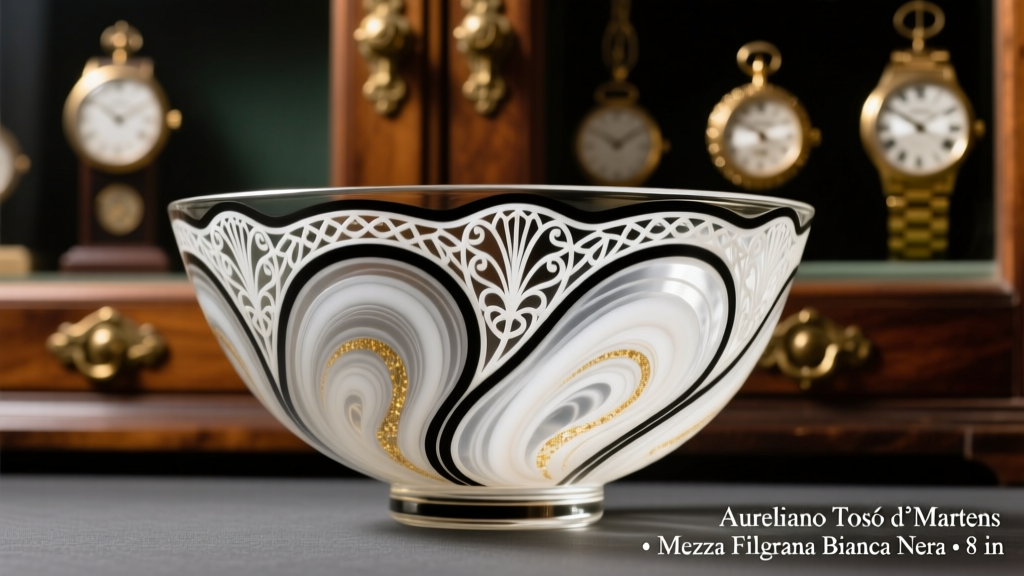
Glass Venetian Bowl, Mezza Filigrana Bianca-Nera, Aureliano Toso & D. Martens, 8 Inches: A Masterwork of Mid-Century Murano Craftsmanship
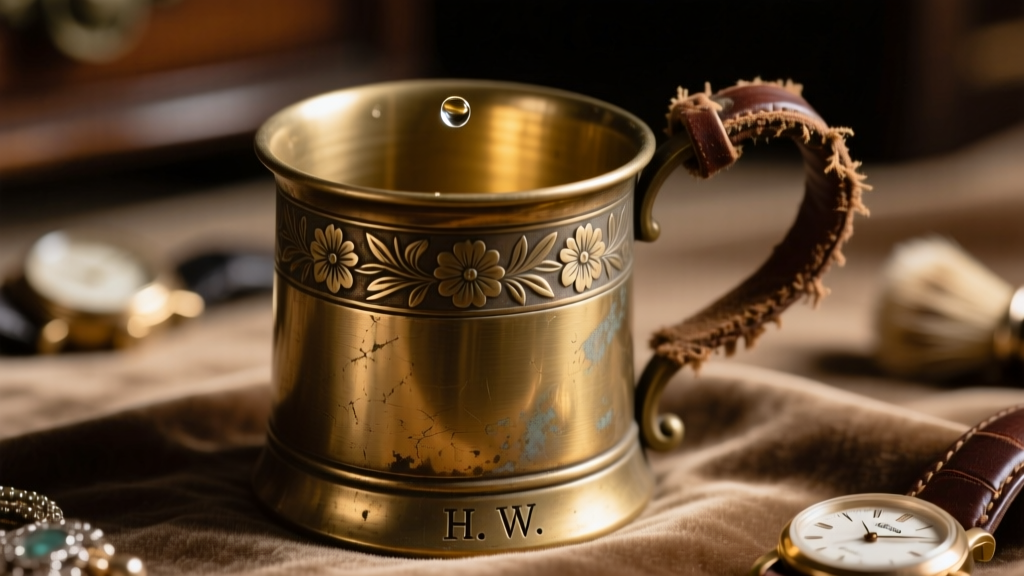
The Vintage Shaving Mug: A Collector’s Guide to Ceramic, Porcelain, and Enamel Artifacts of Grooming History

Roseville Mock Orange Footed Bowl: Anatomy, Provenance, and Market Significance

Cobalt Blue & Gilt Six-Arm Chandelier: Provenance, Craftsmanship, and Market Significance of a Mid-Century Masterpiece
Toy Kentucky Derby Lead Horses: Strings, Inside Bar Turn Handles, and the Mechanics of Vintage Racing Playsets
New Haven Toluso Shelf Regulator: A Brass-and-Glass Masterpiece from 1911
Castor Sets: The 3-Bottle Silver-Plated Etched Bohemian Glass Victorian Castor, Circa 1885–1895 — A Technical & Historical Appraisal
J. D. Appel: The Forgotten American Watchmaker Who Built Precision Timepieces for Pilots, Physicians, and Presidents
Cambridge Glass Rose Point Tray (15-Inch): A Collector’s Guide to Rarity, Craftsmanship, and Market Value