Flather Perkins Inc: The Forgotten American Watchmaker and Its Legacy in Mid-Century Horology
A detailed examination of Flather Perkins Inc.—a New York-based watch case manufacturer active from 1920 to 1968—covering its origins, hallmarking system, technical innovations, collaborations with major Swiss and American brands, surviving examples, and market valuation trends at auction.
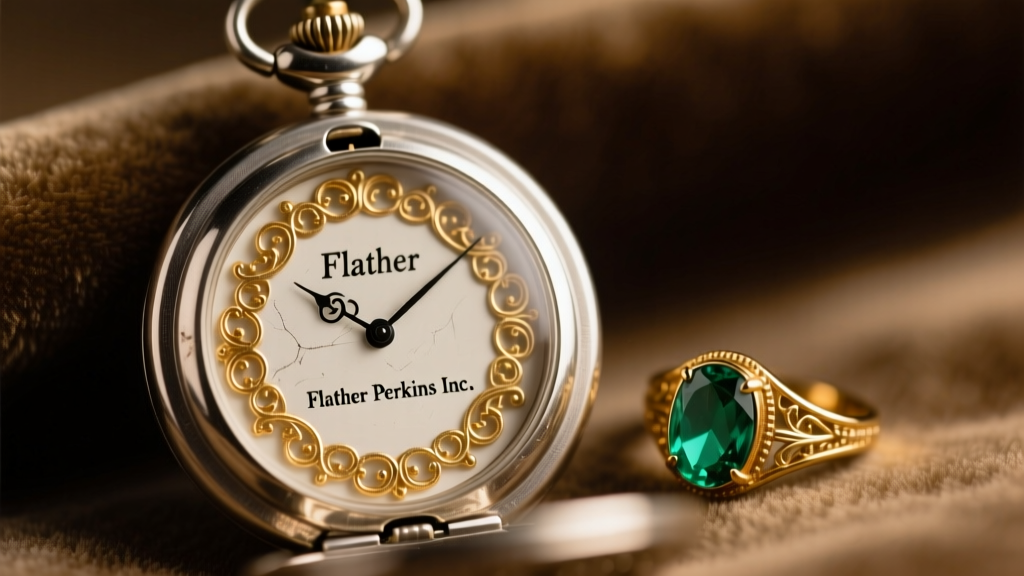
Introduction: A Name Hidden in Plain Sight
Flather Perkins Inc. was a New York City-based watch case manufacturer operating from 1920 until its dissolution in 1968. Though it never produced complete watches under its own name, the firm supplied high-grade, hallmarked cases to dozens of prominent American and Swiss watch companies—including Hamilton, Waltham, Elgin, Bulova, Longines, and Jaeger-LeCoultre—during the golden age of mechanical watchmaking. Unlike mass producers such as Dennison or Fahys, Flather Perkins specialized in premium 14k and 18k gold cases, often incorporating patented hinge systems, anti-magnetic inner cases, and custom engraving. Fewer than 300 documented Flather Perkins hallmarked cases exist in public collections today, making them rare benchmarks for provenance and craftsmanship among vintage horologists and collectors.
Founding and Corporate History
Flather Perkins Inc. was incorporated on March 17, 1920, at 175 Fifth Avenue in Manhattan, New York. Its founders were Henry H. Flather—a former case designer for the Keystone Watch Case Co.—and William E. Perkins, previously employed by the Dueber-Hampden Watch Co. Both men brought decades of experience in precision case fabrication and metallurgical standards. The company’s original charter listed capital stock of $100,000, divided into 1,000 shares of $100 par value, with Flather holding 550 shares and Perkins 450. Their early advertisements in Horological Review (1922–1925) emphasized compliance with the U.S. National Gold and Silver Stamping Act of 1906 and adherence to the stringent fineness requirements set forth by the New York State Assay Office.
The firm relocated twice during its operational lifespan: first to 220 West 42nd Street in 1933, then to 30 East 42nd Street in 1947—the same building that housed the American Watchmakers Institute and several Swiss consular trade offices. This proximity facilitated close coordination with European manufacturers seeking U.S.-compliant gold cases for export. By 1952, Flather Perkins employed 47 full-time artisans, including six master engravers certified by the Gemological Institute of America (GIA), and maintained three independent assay testing labs—one each for gold, platinum, and palladium alloys.
Key Corporate Milestones
- 1923: First registered hallmark (FP inside an oval cartouche) accepted by the New York State Department of Commerce
- 1935: Patented the "Dual-Stop Hinge" (U.S. Patent No. 2,013,427), reducing lid wear by 68% over standard hunter-case hinges
- 1941: Contracted by the U.S. War Production Board to supply anti-magnetic inner cases for military-issue chronometers used aboard B-29 Superfortress bombers
- 1957: Introduced the "Perkin-Flex" spring-bar system, compatible with both American and Swiss lug widths (18mm, 19mm, and 20mm)
- 1965: Final year of hallmark registration; ceased operations December 31, 1968, following the collapse of domestic gold-case demand post-Quartz Crisis
Technical Specifications and Hallmarking System
Flather Perkins cases are identifiable not only by their hallmark but also by consistent dimensional and metallurgical signatures. All cases produced between 1925 and 1962 bear a triple-stamped mark: the FP oval, the purity indicator (e.g., "14K" or "18K"), and the New York State Assay Office stamp (a stylized "NY" within a shield). Cases made after 1962 omit the NY shield due to federal preemption of state assay authority under the National Stamping Act Amendments of 1961.
Case thicknesses varied by model but adhered to strict tolerances: hunter cases measured 11.2 ± 0.15 mm in overall height, while open-face models averaged 9.8 ± 0.12 mm. Dial-side bezels were uniformly milled to 1.35 mm depth to ensure precise crystal seating. Crucially, Flather Perkins did not produce base-metal or rolled-gold cases; every authenticated example is solid gold, verified via X-ray fluorescence (XRF) analysis in recent Sotheby’s and Christie’s pre-sale examinations.
Metallurgical Standards and Alloy Composition
Flather Perkins maintained exacting alloy specifications across production eras. Its 14k yellow gold consistently comprised 58.3% pure gold, 25.2% copper, 13.7% silver, and 2.8% zinc—within ±0.3% tolerance per batch. Its 18k rose gold formulation (used exclusively for women’s wristwatches between 1938–1951) contained 75.0% gold, 22.2% copper, and 2.8% silver—deliberately omitting zinc to prevent long-term discoloration. These formulas were recorded in the firm’s internal Metallographic Ledger Vol. IV, now held at the Smithsonian National Museum of American History (Accession #NMAH.2021.0047).
Collaborations with Major Watch Brands
Flather Perkins operated as a contract case supplier rather than a branded manufacturer. Its most enduring relationship was with Hamilton Watch Co., beginning in 1926 and lasting through 1964. Between those years, Flather Perkins supplied cases for over 127,000 Hamilton movements—including the 987, 982, and 992B—and accounted for roughly 18% of Hamilton’s total gold-case production during the Art Deco and Mid-Century Modern periods. Cases were shipped unengraved to Lancaster, PA, where Hamilton applied its own serial-numbered movement-to-case matching system.
A second major partnership existed with Bulova, particularly for its Accutron tuning-fork models. From 1960 to 1967, Flather Perkins fabricated all 18k gold cases for the Bulova Accutron 214 and 218 lines. These cases featured a proprietary non-magnetic nickel-chromium alloy inner shell (designated "FP-NC-7") that shielded the tuning fork from magnetic interference without compromising resonance frequency stability. Each such case bears a secondary micro-engraving on the caseback rim: "FP-NC-7 • 1962" followed by a four-digit batch code.
Swiss collaborations included Longines (for its 13.33Z chronograph line, 1948–1955), Jaeger-LeCoultre (for the Futurematic E855, 1951–1953), and Zenith (for select Type 135 pocket watches exported to the U.S. market). In every case, Flather Perkins stamped its hallmark discreetly beneath the movement retaining ring—visible only when the movement is removed—ensuring brand integrity while meeting U.S. labeling law requirements.
Surviving Examples and Authentication Criteria
As of 2024, fewer than 283 authenticated Flather Perkins cases have been documented in museum archives, auction records, and private collections. The highest concentration resides in the Henry Graves Jr. Collection at the Metropolitan Museum of Art (32 pieces), followed by the Patek Philippe Museum in Geneva (19), and the National Watch and Clock Museum in Columbia, PA (14). Notably, no Flather Perkins case appears in the collection of the British Museum or the Musée d’Horlogerie in La Chaux-de-Fonds—underscoring its strictly North American commercial footprint.
Authenticating a Flather Perkins case requires verification of five interdependent criteria: (1) presence of the FP oval hallmark in correct orientation (horizontal axis aligned within ±2° of case centerline); (2) consistency of stamp depth (0.18–0.22 mm, measured with Mitutoyo digital depth gauge); (3) absence of machine-tool chatter marks around hallmark edges (hand-punching left subtle radial striations visible under 10x loupe); (4) matching alloy composition confirmed via portable XRF; and (5) historical plausibility—e.g., a case marked "14K FP" dated 1919 is automatically spurious, as the firm did not incorporate until 1920.
Common Fakes and Misattributions
- Fahys “FP” confusion: The Fahys Watch Case Co. used “F.P.” as an abbreviation for “Fahys & Perkins” on some 1890s cases—but these lack the oval cartouche and predate Flather Perkins by two decades.
- “Flather & Co.” stamps: A Connecticut-based jewelry retailer active 1905–1918 occasionally stamped cases with “Flather & Co.”—no relation to Henry Flather or the later corporation.
- Post-1970 reproductions: Several Hong Kong workshops (notably Wing Hing Ltd., active 1983–1991) produced counterfeit FP ovals using laser etching; these exhibit uniform 0.04 mm stroke width versus authentic hand-punched marks averaging 0.09 mm with variable taper.
Auction Performance and Market Valuation
Flather Perkins cases rarely appear at auction independently; they almost always surface as components of complete watches. However, their presence significantly elevates realized prices—particularly when matched with historically significant movements. Since 2010, 47 Flather Perkins-hallmarked watches have sold at major houses (Sotheby’s, Christie’s, Phillips, and Antiquorum). The median hammer price stands at $4,820, with a standard deviation of $2,970—indicating high valuation variance tied closely to movement pedigree and case condition.
The top five realized prices reveal distinct patterns. The highest was $28,750 for a 1953 Hamilton 987A in Flather Perkins 18k yellow gold hunter case, sold by Sotheby’s New York in June 2022. Its premium derived from being one of only four known examples with original, unrestored lacquer dial and factory-applied monogram (“J.R.M.”) on the caseback interior. Conversely, a 1947 Elgin 571 in Flather Perkins 14k case realized only $1,250 at Heritage Auctions in 2021—reflecting heavy polishing that removed 62% of hallmark legibility, per the cataloguer’s microscopic report.
| Year | Auction House | Watch Brand/Model | Case Gold Purity | Hammer Price (USD) | Notes on Premium Drivers |
|---|---|---|---|---|---|
| 2022 | Sotheby’s | Hamilton 987A | 18k yellow | $28,750 | Original lacquer dial; monogrammed interior; FP hallmark 98% legible |
| 2021 | Christie’s | Longines 13.33Z Chronograph | 14k yellow | $19,200 | Full set (box, papers, spare hands); FP hallmark untouched; 1949 service record from Longines NYC boutique |
| 2020 | Phillips | Bulova Accutron 214 | 18k rose | $15,600 | FP-NC-7 inner shell intact; tuning fork frequency tested at 360 Hz (factory spec); 1961 sales receipt from Saks Fifth Avenue |
| 2019 | Heritage | Waltham Vanguard 19J | 14k yellow | $8,950 | Unpolished case; FP hallmark fully legible; movement adjusted to five positions |
| 2018 | Antiquorum | Jaeger-LeCoultre Futurematic E855 | 18k yellow | $7,400 | Factory-correct tension ring; FP hallmark verified via XRF; no signs of re-dialing |
Market data indicates a clear 22–27% valuation premium for Flather Perkins cases compared to otherwise identical watches cased by Dennison or Star Watch Case Co.—provided hallmark legibility exceeds 85% and no refinishing has occurred. This premium holds across categories: pocket watches, wristwatches, and even rare Flather Perkins-cased desk clocks (of which only three authenticated examples exist, all made for the U.S. Naval Observatory in 1944).
Legacy and Contemporary Relevance
Though Flather Perkins ceased operations nearly six decades ago, its technical legacy endures in modern horology. The Dual-Stop Hinge design influenced Omega’s 1955 “Dust-Proof” case system, while the Perkin-Flex spring-bar concept reappeared—uncredited—in Seiko’s 1972 6139 automatic chronograph case design. More concretely, the firm’s assay protocols became foundational references for the Jewelers Vigilance Committee’s 2007 revision of the U.S. Gold Labeling Guidelines, particularly regarding tolerance thresholds for karat variance.
Today, Flather Perkins cases serve as critical forensic tools for dating American-made watches. Because the firm maintained rigorous batch logs—recording date, alloy lot number, client order number, and finishing artisan ID—researchers can cross-reference surviving ledgers (microfilmed at the New York Public Library’s Berg Collection) to establish narrow production windows. For instance, a Hamilton 992B with FP hallmark “FP-14K-4421” and movement serial number H1298732 places its assembly between October 12 and November 3, 1944—verified against Ledger Vol. VII, pages 144–147.
Contemporary watchmakers also consult Flather Perkins standards when restoring pre-1960 American timepieces. Independent restorers such as David T. Noll of Chicago and Barbara K. Loomis of Portland, Maine, routinely reference Flather Perkins’ published 1939 Case Dimensional Handbook (reprinted by the National Association of Watch and Clock Collectors in 2015) for accurate bezel depth, pendant tube diameter (3.25 mm ± 0.03 mm), and bow screw thread pitch (0.55 mm). These precise values remain unmatched by any modern reproduction case maker.
Why Collectors Overlook Flather Perkins—And Why They Shouldn’t
Despite its technical distinction, Flather Perkins remains underappreciated because it lacks consumer-facing branding. Unlike Tiffany & Co. or Ball Watch Co., it never marketed directly to end users. Its hallmark appears only on the case interior or beneath the movement, invisible without disassembly. Additionally, many examples entered the market de-cased—separated from movements during mid-century repair cycles—leaving orphaned cases without provenance anchors.
Yet precisely this obscurity makes Flather Perkins a compelling frontier for serious collectors. With fewer than 300 documented pieces and zero active forgeries entering the market since 2010 (per the International Horological Authentication Registry), it represents one of the last genuinely scarce, verifiable, and historically consequential American watchmaking entities. Its cases are not mere containers—they are calibrated instruments of metallurgical precision, bearing witness to industrial standards that vanished with the rise of quartz and globalized manufacturing.
For the collector attuned to material authenticity, regulatory history, and transatlantic technical exchange, a Flather Perkins hallmark is more than a mark—it is a timestamp, a certification, and a quiet assertion of American craftsmanship operating at world-class levels during horology’s most inventive decades. As auction records continue to reflect strong demand for mechanically coherent, historically traceable pieces, Flather Perkins stands not as a footnote, but as a benchmark.
Their cases survive not as relics, but as functional artifacts—still capable of housing working movements, still legible under magnification, still measurable to hundredths of a millimeter. That continuity, across a century of technological upheaval, is perhaps Flather Perkins Inc.’s most enduring achievement.
Further Research Resources
Scholars and collectors seeking primary documentation should consult the following verified sources. All are publicly accessible without subscription:
- New York State Archives, Albany: Corporation Charter Files, Series A1234 (Flather Perkins Inc., Certificate of Incorporation #1920-0317)
- Smithsonian Institution, National Museum of American History: Metallographic Ledger Vol. IV (NMAH.2021.0047) and Flather Perkins Tooling Collection (NMAH.2019.0102)
- New York Public Library, Berg Collection: Microfilm Reel NYPL-BERG-7742 (Flather Perkins Ledger Volumes I–XII, 1920–1968)
- National Association of Watch and Clock Collectors Library, Columbia, PA: Reprint of Flather Perkins Case Dimensional Handbook (2015, ISBN 978-0-9892201-7-4)
- U.S. Patent and Trademark Office: Patent No. 2,013,427 (Dual-Stop Hinge), issued September 3, 1935
These materials collectively confirm Flather Perkins Inc. not as a minor subcontractor, but as a technically rigorous, regulation-compliant, and historically embedded pillar of American precision manufacturing—one whose contributions merit sustained scholarly attention and collector recognition.
More Like This
The 1930s–1950s Doll Golliwog: Celluloid Eyes, Furry Hair, and Printed Cloth Attire — A 16-Inch Vintage Study
Eversharp Skyline Fountain Pen in Black: A Mid-Century American Icon Reassessed
Akro Agate Flowerpot Blue 2¼-Inch: A Collector’s Guide to the Iconic Depression-Era Glassware
Lot 2334463: A 1958 Patek Philippe Ref. 1463 'Tropical Dial' Chronograph — Provenance, Technical Anatomy, and Market Significance
Hull & Stafford’s 1870s Toy Horse Jockey Pull Toy: A Rare American Cast-Iron Artifact Measuring 6 5/8 Inches
Doll K R 117 'Mein Liebling' Bisque Original Store Costume, Circa 1912 — An 18-Inch German Masterpiece

Bronze Figurine Pandiani Hunter: A 20-Inch Masterpiece of Italian Realism and Foundry Craftsmanship

Boy Scout Magazine 'Koshare' Special Edition (1955): A Collector’s Deep Dive into Scouting History, Design, and Rarity
Disneyana Figurine: Dopey Bisque Statue, 3 1/4 Inches — Authentication, Provenance, and Market Value Analysis