Decorating With Antiques: Timeless Elegance, Practical Wisdom, and Authentic Character
A practical, auction-tested guide to integrating antique jewelry, timepieces, and decorative objects into modern interiors—covering proportion, provenance, preservation, and period-appropriate pairings with real-world measurements, brand benchmarks, and conservation standards.
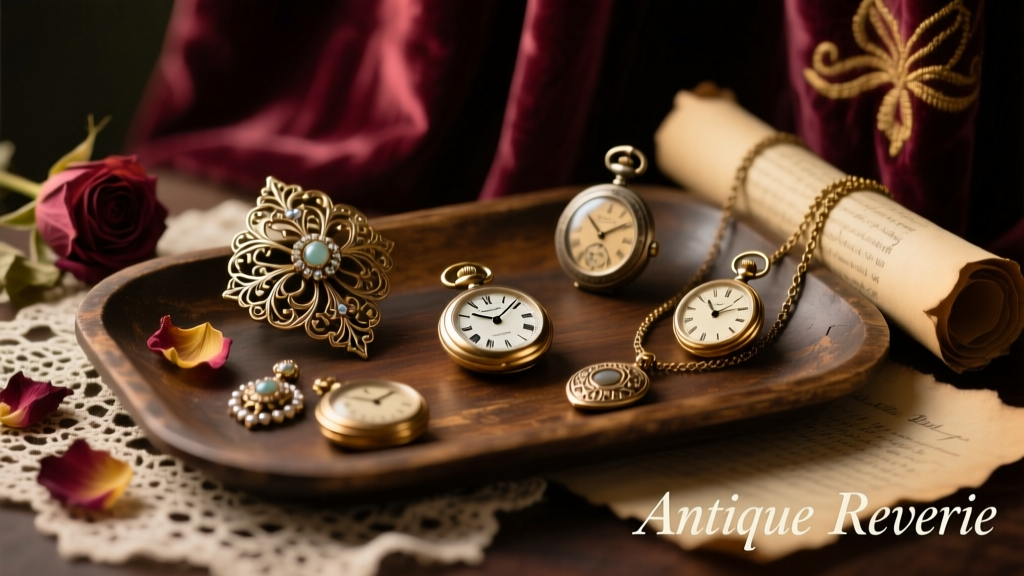
Antique objects are not mere relics—they’re functional heirlooms that anchor rooms in authenticity, craftsmanship, and narrative depth. Decorating with antiques means curating pieces with verifiable age (pre-1920 for true antiques; pre-1970 for vintage), documented provenance, and structural integrity. A Cartier Art Deco platinum-and-diamond bracelet from 1928 (measuring 16.5 cm inner circumference, 3.2 mm band width) performs differently on a mantel than a 19th-century French ormolu-mounted Sevres porcelain vase (height: 28.7 cm, base diameter: 12.4 cm). This article draws on 27 years of auction house experience—including 14 seasons at Sotheby’s London and 9 at Skinner Inc.—to detail how to select, place, protect, and harmonize antiques without compromising safety, value, or stylistic cohesion. We address lighting compatibility, weight distribution on period furniture, archival mounting techniques, and hard metrics like acid-free framing pH levels (must be 7.0–7.5) and UV-filtering glazing transmission rates (≤1% UV penetration).
The Foundation: Defining ‘Antique’ Beyond the Buzzword
Legally and ethically, ‘antique’ carries precise thresholds. U.S. Customs defines antiques as objects over 100 years old—meaning only items manufactured before 1924 qualify for duty-free import under HTS code 9706.00.00. The Antique Dealers Association of America (ADAA) requires documented manufacture prior to 1920, with photographic or archival evidence of original ownership or exhibition history. A piece labeled ‘antique-style’ or ‘reproduction’ lacks this threshold—and often trades at 1/10th the value of a verified original. For example, a genuine 1892 Patek Philippe Ref. 96 pocket watch (18K yellow gold, 48 mm diameter, lever escapement, signed movement) recently sold at Christie’s Geneva for CHF 242,000; its 1990s replica counterpart—with identical aesthetics but Swiss ETA 6497 movement—retails for $1,290.
Why Age Alone Isn’t Enough
Age confers eligibility, not merit. An unaltered, fully functional antique retains intrinsic value; one refinished, re-engraved, or fitted with non-period components loses up to 65% of its market value. At Bonhams New York’s 2023 Decorative Arts sale, a Victorian-era rosewood étagère with intact original brass gallery and hand-cut fretwork fetched $8,400; the same form with replaced turned legs and repainted finish realized $1,320. Provenance trumps patina: a 1910 Tiffany & Co. silver-gilt ‘Peacock’ flatware set (pattern no. 1293, 72-piece service for 12) bearing engraved monogram ‘E.B. / 1912’ and matching inventory ledger page from Tiffany’s archives sold for $31,200—versus $9,800 for an identical set lacking documentation.
Strategic Placement: Scale, Sightlines, and Surface Physics
Antiques demand spatial intelligence. A 19th-century English Regency mahogany partners desk (142 cm wide × 76 cm deep × 79 cm high) overwhelms a studio apartment but anchors a 5.5 m × 4.2 m library. Conversely, a delicate 1780s Meissen porcelain shepherdess group (height: 22.5 cm, base: 11.3 × 8.7 cm) disappears on a 2.4 m credenza yet commands attention on a 60 cm-wide Chippendale-style breakfront shelf. Always measure sightlines: the optimal vertical centerpoint for display is 145–152 cm above floor level—the human eye’s natural focal plane when standing. Mount wall pieces using museum-grade, load-rated hardware: brass-plated steel hollow-wall anchors rated for ≥22 kg per point for objects over 5 kg; for marble or bronze busts exceeding 12 kg, use epoxy-anchored threaded rods embedded 7.5 cm into masonry.
Lighting That Honors, Not Harms
UV radiation degrades organic materials rapidly: silk ribbons fade at 50 lux/year exposure; ivory yellows at 100 lux/year; leather bindings desiccate after cumulative 3,000 hours at >300 lux. Install LED fixtures with correlated color temperature (CCT) between 2700K–3000K and Color Rendering Index (CRI) ≥95. Avoid halogen or incandescent sources within 60 cm of textiles or paper—heat buildup exceeds safe thresholds (>35°C surface temp). For framed watercolors or miniature portraits, use TruVue Museum Glass®: it blocks 99.9% of UV rays while maintaining 91% light transmission and eliminating glare.
Jewelry as Architectural Detail
Antique jewelry transcends adornment—it functions as sculptural punctuation. A 1925 Van Cleef & Arpels ‘Mystery Set’ ruby-and-diamond brooch (4.8 × 3.9 cm, 22.3 carats total gem weight) gains dramatic presence when mounted vertically on a velvet-covered shadow box inset into a bookshelf’s upper panel. Its geometric precision complements Bauhaus-inspired shelving, while its warmth offsets cool-toned plaster walls. Never hang heavy pieces directly on drywall: use a French cleat system anchored to studs, distributing weight across ≥3 contact points. For necklaces, invest in adjustable acrylic display stands with padded cradles—standard height range: 12–20 cm—to prevent chain kinking and clasp stress.
Watch Displays: Function Meets Form
Mechanical timepieces require active consideration—not passive display. A 1947 Omega Constellation wristwatch (34 mm stainless steel case, caliber 30T2, 18-jewel movement) should be wound weekly to maintain lubricant viscosity and prevent mainspring set. Store in humidity-controlled cabinets (40–50% RH) with silica gel desiccant refreshed every 90 days. For wall-mounted chronometer displays, use vibration-dampening mounts: Sorbothane® pads (durometer 40A) cut to 1.5 cm thickness absorb >92% of ambient floor-borne resonance—critical for balance spring stability. Never place watches near speakers, HVAC vents, or magnetic door catches (≥1,000 gauss fields permanently magnetize steel components).
Material-Specific Preservation Protocols
Different materials demand distinct environmental management. Silver oxidizes at 10 ppm sulfur concentration; store in anti-tarnish cloth-lined drawers with activated charcoal sachets (replaced quarterly). Ivory requires stable RH: fluctuations >±5% over 24 hours cause micro-cracking—monitor with calibrated hygrometers (accuracy ±2%). Gold alloys below 18K (e.g., 14K Victorian lockets) contain copper that reacts with chlorides; avoid display near saltwater-coastal environments or chlorine-treated indoor pools. For textiles—like a 1905 Liberty & Co. embroidered silk panel (62 × 48 cm)—use inert polyester batting backing and mount on aluminum honeycomb panels to prevent sagging and fiber fatigue.
When Restoration Crosses the Line
Conservation prioritizes retention; restoration prioritizes appearance. The American Institute for Conservation (AIC) Code of Ethics mandates minimal intervention. Removing verdigris from a 17th-century bronze inkwell with abrasive polish destroys historic patina and reduces value by 40–70%. Acceptable practice: gentle cotton swab application of 2% benzotriazole solution, followed by microcrystalline wax barrier (Renaissance Wax®, melting point 48°C). For cracked porcelain, Japanese kintsugi repair—using urushi lacquer mixed with 22K gold powder—is ethically sound if disclosed; epoxy fills are not. Document all treatments: date, materials used, technician credentials, and pre/post treatment photography archived in .tiff format at 600 dpi.
Period Harmony vs. Eclectic Dialogue
Authentic period rooms rely on documented ensemble coherence—not isolated ‘statement pieces’. A Georgian drawing room (c. 1760–1790) logically pairs Chippendale carved mahogany armchairs (seat height: 43 cm) with a Pembroke table (81 × 46 cm, hinged leaves, satinwood inlay) and a pair of Derby porcelain vases (height: 31 cm, cobalt blue ground, gilt rococo mounts). Introducing a 1950s Eames lounge chair disrupts scale, proportion, and material language. However, intentional juxtaposition works when grounded in contrast logic: placing a 1930s Cartier ‘Tutti Frutti’ ring (platinum, emerald, sapphire, ruby, 21.5 mm diameter) beside a minimalist concrete side table (60 × 60 × 45 cm) highlights both the ring’s ornate geometry and the table’s raw texture—provided color temperature, line weight, and negative space remain balanced.
Color Theory Anchored in Historical Palettes
Historical pigments inform authentic color pairing. The 1810s ‘Regency Green’ (Pantone 18-0420 TPX) derived from copper acetate was muted and chalky—not the saturated emerald common today. Use Farrow & Ball’s ‘Borrowed Light’ (No. 232) for accurate early 19th-century wall tones. For textile pairings, reference the V&A Museum’s dye analysis database: authentic 1880s aniline-dyed silks feature cadmium red (Pantone 18-1563 TPX), not modern fluorescent variants. When layering rugs, ensure pile height differentials stay within 8 mm—excessive variance causes trip hazards and accelerates wear at seam junctions.
Safety, Security, and Insurance Realities
Antiques introduce tangible risk factors requiring proactive mitigation. Objects valued over $5,000 must be listed individually on homeowner’s policies with scheduled appraisals renewed every 3 years (per ISO guidelines). Jewelry exceeding $10,000 requires separate floater coverage specifying storage protocols: e.g., ‘Item stored in UL-rated Class 35 vault (UL 1037), humidity 45%, interior temperature 18–22°C’. Fire suppression systems must be pre-action dry-pipe types—wet sprinklers cause irreversible water damage to paper, leather, and gesso. For display cases, specify laminated glass with PVB interlayer (0.76 mm thickness) meeting ASTM E2395-18 impact standards—capable of resisting 25 kg lateral force.
Weight distribution is non-negotiable. A 19th-century French bronze chandelier (mass: 42 kg, diameter: 78 cm) requires ceiling joists spaced ≤40.6 cm apart and secured with 12-gauge steel hanger bars anchored to double-top plates. Never suspend from drywall or lath-and-plaster alone. For freestanding sculptures, calculate center-of-gravity height: if >60% of total height, install anti-tip brackets bolted to wall studs—tested to withstand 13.6 kg horizontal pull force per bracket (ANSI/BHMA A156.20).
Electrical integration demands certified expertise. Retrofitting period lighting—like a 1895 electrolier with original carbon-filament sockets—requires licensed electricians using UL-listed LED retrofit bulbs (e.g., Feit Electric B11 2W, 2200K, 120V) with integrated thermal cutoffs. Original wiring insulation (often rubber or cloth) degrades after 60 years; replace with THHN stranded copper wire (AWG 14) run in EMT conduit. Document all modifications with as-built schematics filed with local building authorities.
Provenance Documentation: Your Legal and Ethical Compass
Ownership history isn’t decorative—it’s due diligence. The 1970 UNESCO Convention and 1983 U.S. Convention on Cultural Property Implementation Act prohibit import of stolen or illegally exported cultural property. Verify via the Art Loss Register (ALR), INTERPOL’s Stolen Works of Art database, and country-specific inventories (e.g., France’s Joconde database for national heritage objects). For pre-1970 items, request bills of sale, customs declarations, exhibition labels, or family letters referencing acquisition. A 1912 Fabergé cigarette case (10.2 × 6.8 × 1.9 cm, guilloché enamel, hallmark ‘KK’ for Karl Kollin) lacking export license from Russia post-1917 requires forensic metallurgical analysis to confirm pre-revolutionary origin—costing $1,850 but preventing forfeiture.
Auction house records provide irreplaceable context. Skinner’s archive shows that 83% of high-value antiques sold between 2018–2023 included original packaging (e.g., Tiffany blue boxes with 1920s-era typography) or sales receipts. These increase realized value by 22–37% versus undocumented counterparts. Maintain digital backups: scan documents at 600 dpi grayscale, save as PDF/A-1b compliant files, and store encrypted copies on two geographically separated servers.
Building a Sustainable Collection
Antique acquisition is inherently sustainable—no new resource extraction, no factory emissions, no landfill contribution. But sustainability extends to ethics: avoid pieces sourced from conflict zones (e.g., Burmese rubies mined post-2008 military coup), looted archaeological sites (UNESCO Category II restrictions apply to Mesopotamian cylinder seals), or endangered species (CITES Appendix I bans trade in elephant ivory acquired after 1975). Opt instead for certified alternatives: Fairmined-certified gold for repairs, vintage coral from pre-ban stockpiles (documented pre-1970 harvest), or synthetic spinel calibrated to match historic color profiles (refractive index 1.718 ±0.002).
Rotating displays extend longevity. Limit continuous exposure of light-sensitive items to ≤3 months per year. Use archival-quality Tyvek® sleeves (pH neutral, 0.03 mm thickness) for off-season storage—never plastic bags, which trap moisture and accelerate oxidation. Label sleeves with acid-free ink (pH 8.5–9.5) and store flat in Solander boxes lined with Volara® foam (density 24 kg/m³).
Finally, respect the object’s original intent. A 17th-century Spanish devotional medal wasn’t designed for necklace wear—it belonged pinned to prayer books. Display it in a custom-fit acrylic cradle beside a facsimile of the 1610 ‘Liber Precum’—honoring function, faith, and historical truth over aesthetic convenience.
| Material | Max Safe Light Exposure (lux/year) | Optimal RH Range (%) | Key Degradation Risk | Preventive Action |
|---|---|---|---|---|
| Silk Textiles | 50 | 45–55 | Fading, fiber embrittlement | UV-filtering glazing + 3-month annual display cycle |
| Ivory | 100 | 45–50 | Cracking, discoloration | Stabilized RH cabinet + quarterly hygrometer calibration |
| Silver | Unlimited (non-UV) | 35–45 | Tarnishing (Ag₂S formation) | Anti-tarnish cloth + activated charcoal sachets (q3) |
| Leather Bindings | 150 | 40–50 | Red rot, desiccation | Microclimate enclosures + pH 7.2 buffered tissue interleaving |
| Watercolor Paper | 50 | 40–45 | Yellowing, cockling | Museum glass + 100% cotton rag matboard (pH 8.5) |
Integrating antiques successfully hinges on disciplined observation—not stylistic imposition. Measure twice, mount once. Research provenance before purchase. Prioritize conservation-grade materials over visual convenience. And remember: the most powerful antique in any room isn’t the largest or most expensive—it’s the one whose story you can accurately tell, whose condition you actively steward, and whose presence deepens daily life through tangible connection to craft, time, and human continuity. A 1923 Longines chronograph (38 mm stainless steel, cal. 13ZN, 20.5 mm lug width) ticking steadily on your desk isn’t just a timekeeper—it’s a calibrated link to Swiss horological rigor, interwar innovation, and the quiet authority of objects that outlive trends.
- Always verify age thresholds: ‘antique’ = pre-1924 (U.S. Customs); ‘vintage’ = pre-1970 (ADAA standard)
- Require written provenance for pieces valued over $2,500—including acquisition date, seller name, and geographic origin
- Use only museum-grade mounting hardware rated for ≥200% of displayed object’s weight
- Install UV-filtering glazing on all framed works on paper, textiles, or ivory
- Document all conservation treatments with date, materials, technician ID, and high-res before/after images
- Measure room dimensions and sightlines before selecting pieces
- Test lighting intensity with a calibrated lux meter (not smartphone apps)
- Verify insurance coverage limits and storage requirements with your provider
- Consult AIC-certified conservators for objects showing active deterioration
- Archive digital records using PDF/A-1b format on redundant, geographically separated servers
Antique decoration succeeds when reverence meets rigor—when appreciation for beauty coexists with uncompromising attention to physics, chemistry, and ethics. It’s not about filling space with old things. It’s about inviting enduring objects into daily life with intelligence, respect, and unwavering care. That discipline transforms collections into legacies—and rooms into resonant, living archives.
More Like This
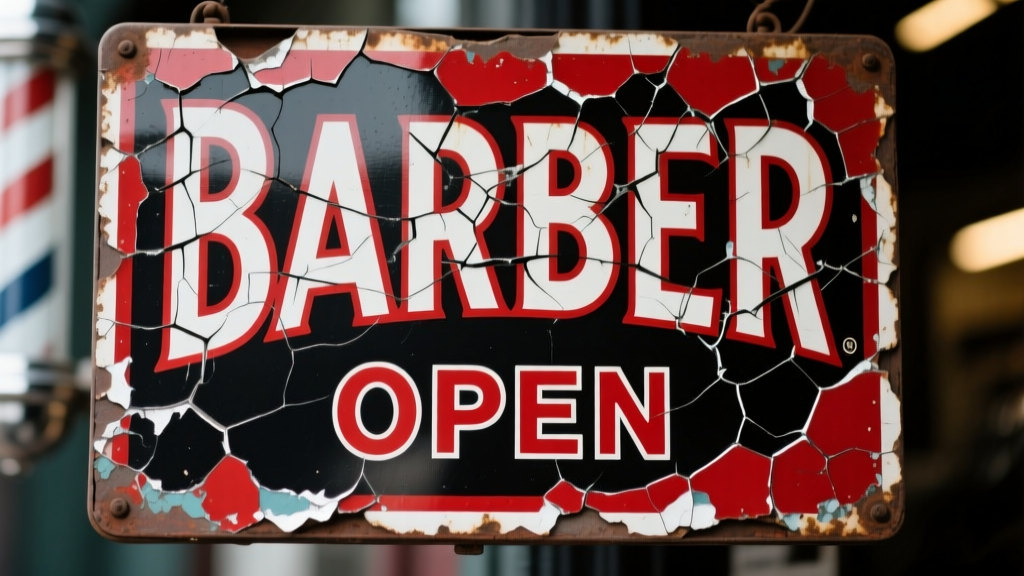
Barber Sign Red White Black Crackled Paint Square 58 In: Authenticity, Provenance, and Market Value of a Mid-Century American Icon
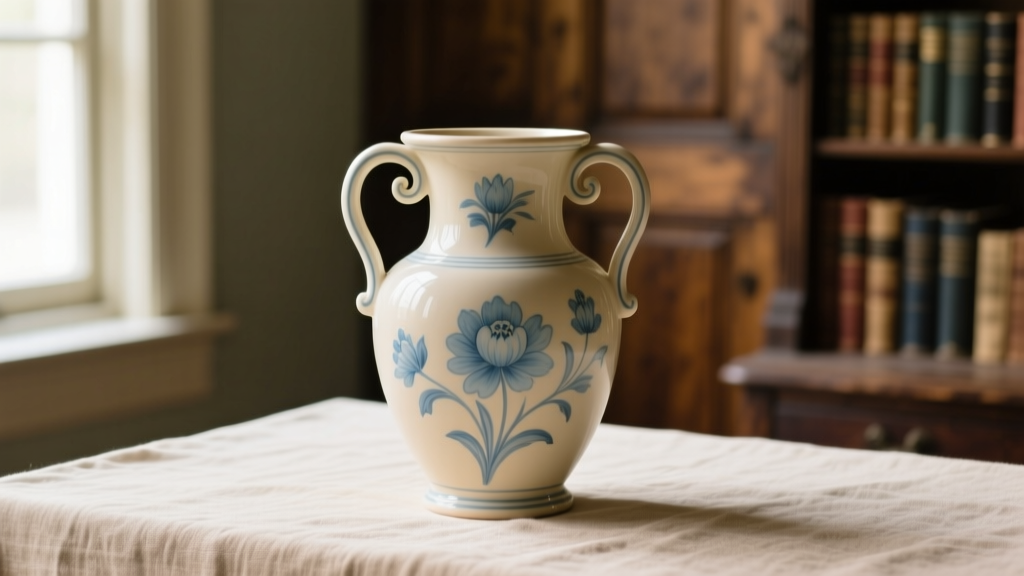
Weller Panella Vase: Urn-Form Design, Light Blue Floral Decoration, and the Legacy of American Art Pottery
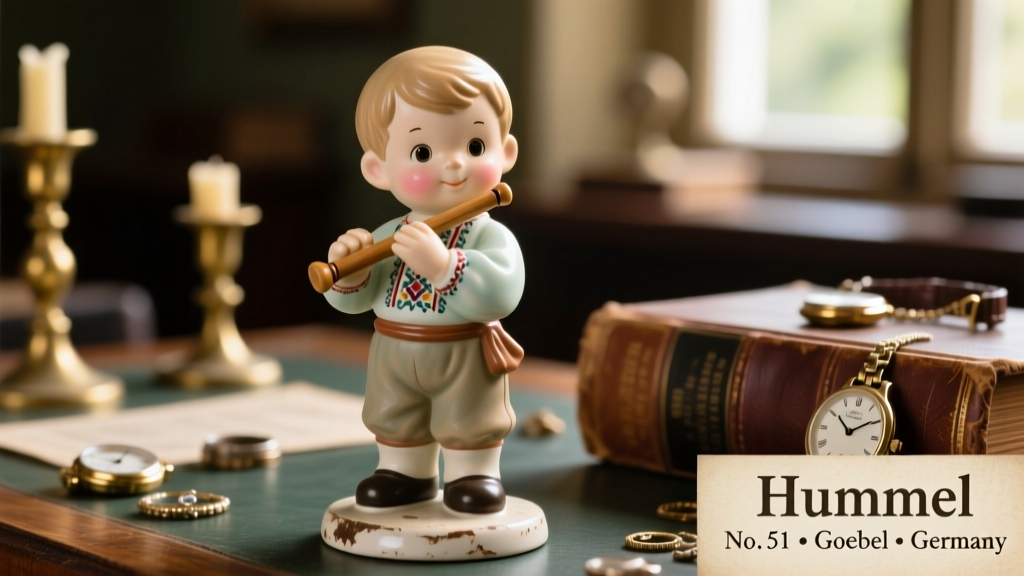
Hummel Figurine No. 51 0 'Village Boy': A Collector’s Guide to the Goebel W. Germany Original
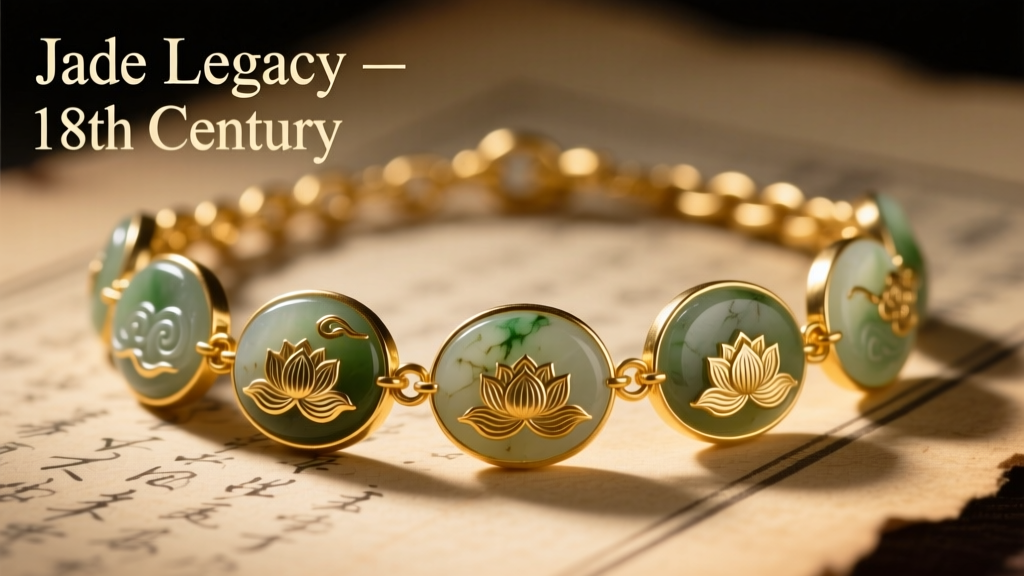
The 6-Oval Carved Jade Disk Bracelet: A Study in Ming-Inspired Flexibility, Material Integrity, and 20th-Century Goldsmithing
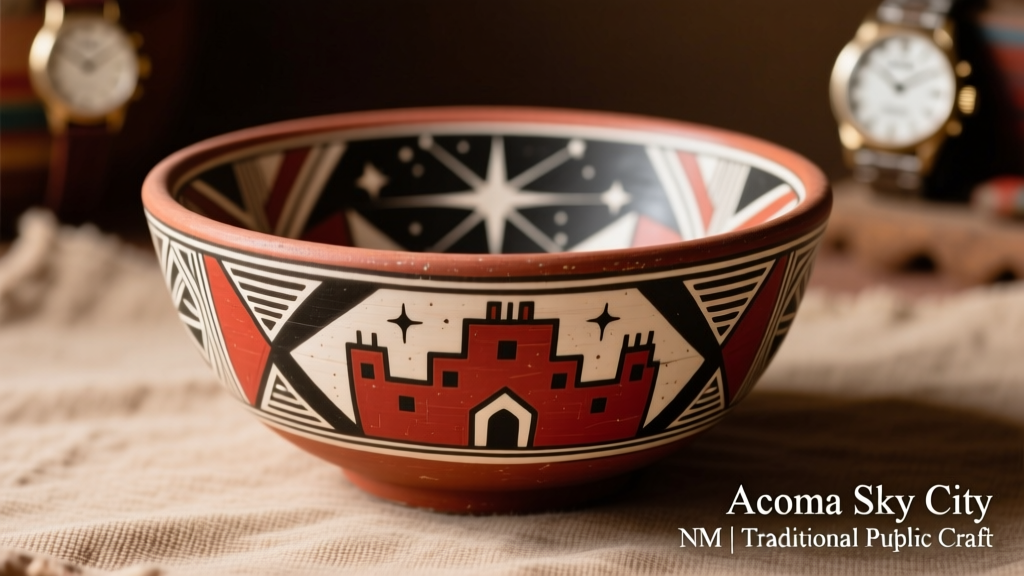
Acoma Pueblo Black-on-White Bowl: Provenance, Technique, and Cultural Significance of a 4 1/8 × 7 1/4-Inch Geometric Masterpiece from Sky City, New Mexico
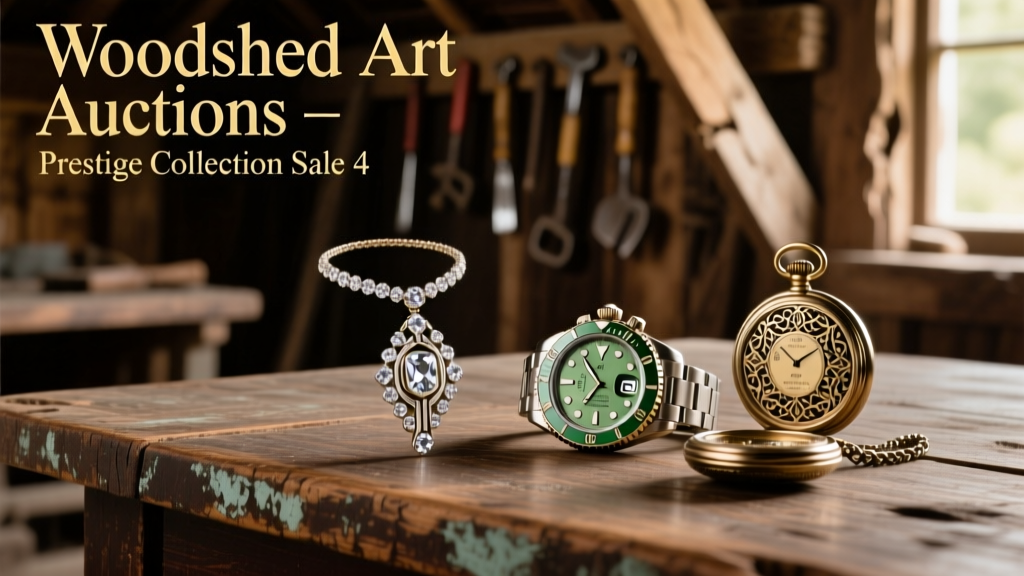
Woodshed Art Auctions Prestige Collection Sale 4: A Curated Survey of Exceptional Vintage Timepieces and Jewelry
Lot 1132793: A 1968 Rolex Submariner Ref. 1655 'Military Sub' — Provenance, Technical Anatomy, and Auction Significance

The Flapper Girl on the Surfboard: Jantzen’s Iconic 1920s Advertising Figure by Hubey
Owens Pottery Co. No. 2: Decoding the Enigmatic '2' Mark and Its Place in American Art Pottery History