Antique Marketplace Jeremiahs: A Critical Appraisal of the London-Based Specialist Dealer in 19th–Early 20th Century Horology and Jewelry
A detailed, auction-house-informed analysis of Antique Marketplace Jeremiahs—its provenance, cataloguing standards, signature inventory (including Patek Philippe, Vacheron Constantin, and Fabergé), pricing benchmarks, and its role in shaping collector confidence between 1987 and 2014.

Origins and Institutional Standing
Antique Marketplace Jeremiahs operated from a discreet Mayfair address at 37a Bruton Street, London W1, between 1987 and 2014. Founded by Jeremiah H. Thorne—a former Sotheby’s European Decorative Arts specialist who left the auction house in 1985 after 12 years—Jeremiahs distinguished itself not as a retail boutique but as a scholarly intermediary for high-calibre antique timepieces and jewelry. Unlike many contemporaneous dealers who prioritized volume, Jeremiahs maintained a strict acquisition protocol: every item underwent triple verification—including independent horological assessment by A. Lange & Söhne-certified watchmaker Dr. Klaus Schäfer (1991–2008), gemological review by GIA-accredited analyst Eleanor M. Finch, and archival cross-referencing against the British Museum’s Decorative Arts Archive and the Patek Philippe Archives in Geneva. This rigor resulted in a documented 99.3% provenance accuracy rate across 4,217 catalogued lots over 27 years.
Signature Inventory: Watches That Defined an Era
The firm’s horological holdings centered on English lever escapement pocket watches (1820–1880), Swiss split-seconds chronographs (1890–1930), and early wristwatch pioneers (1905–1925). Jeremiahs handled no mass-produced pieces; minimum entry thresholds required full hallmarks, original dust covers, and verifiable chain-of-custody documentation extending to at least three prior owners. Among the most frequently encountered—and rigorously authenticated—brands were:
- Dent & Co.: 47 documented examples, all bearing London Assay Office marks dated between 1842 and 1876, with case diameters ranging from 48.2 mm to 53.6 mm and movement serial numbers traceable to Dent’s ledgers held at the Science Museum, London.
- Patek Philippe: 32 verified pieces, including six key-wound perpetual calendar models (Ref. 97975, c. 1925), five double chronograph split-seconds (Ref. 130, 1930–1937), and two platinum minute-repeating wristwatches (Ref. 2499, 1951–1953) with serial numbers confirmed via Patek’s official archives.
- Vacheron Constantin: 29 pieces, notably four ‘Observatory Chronometer’ pocket watches certified by the Neuchâtel Observatory between 1912 and 1928, each bearing engraved observatory codes (e.g., 'N 1915-0274') and matching movement/case numbers.
Technical Verification Protocols
Every mechanical timepiece passed through Jeremiahs’ in-house conservation lab, where movements were disassembled, cleaned using ultrasonic baths with pH-neutral solvents, and reassembled using only original-specification lubricants (e.g., Moebius Synt-A-Lube 9114 for balance staffs). Timekeeping accuracy was measured across five positions over 72 hours using a Timegrapher 2000 calibrated daily against NPL atomic reference signals. Items failing ±3 seconds per day deviation were returned to the consignor unless accompanied by documented historical service records from recognized workshops such as Breguet’s Rue de la Paix atelier or the Jaeger-LeCoultre manufacture in Le Sentier.
Jewelry: From Regency Cameos to Edwardian Platinum
Jewelry formed approximately 38% of Jeremiahs’ annual turnover, with emphasis on pieces exhibiting both artistic merit and metallurgical integrity. The firm rejected all electroplated, rolled-gold, or base-metal items—only solid gold (minimum 18ct), platinum (minimum 950 purity), and silver meeting Sterling (.925) or Britannia (.958) standards were accepted. Hallmark verification included microscopic examination of punch depth, alignment, and die consistency under 20x magnification. Notable categories included:
- Regency-era cameos (1811–1820) carved from layered agate or sardonyx, with frames of 18ct yellow gold featuring hand-chased acanthus motifs and hallmark sets including London Leopard’s Head, date letter ‘G’ (1815), and maker’s mark ‘JW’ (John Warrington).
- Victorian mourning jewelry (1861–1880) incorporating human hairwork—each piece required forensic hair analysis confirming origin from a single donor and absence of modern synthetic dyes; 83% contained gutta-percha backing sealed with beeswax, verified by FTIR spectroscopy.
- Edwardian platinum-set diamond pieces (1901–1910), where all diamonds exceeded 0.15 carats and were graded by GIA standards; 92% featured Old European cuts with table-to-diameter ratios between 52% and 56%, girdle thicknesses averaging 0.023 mm, and pavilion angles of 40.8°±0.3°.
Fabergé Provenance Standards
Jeremiahs handled 17 authenticated Fabergé objects between 1993 and 2012, all verified against the Fabergé Research Foundation’s master database and cross-checked with St. Petersburg Assay Office records. Each piece bore a full set of Russian assay marks: the Imperial double-eagle, city mark (SPb for St. Petersburg), year mark (e.g., ‘Б’ for 1904), and maker’s mark (‘K.F.’ for Karl Fabergé). Notably, their 1999 sale of a 1907 Fabergé lapis lazuli cigarette case (H. 6.2 cm × W. 9.8 cm × D. 1.4 cm) achieved £212,000—the highest publicly recorded price for a non-imperial Fabergé accessory at auction until 2010. Crucially, Jeremiahs refused all items lacking documented pre-1917 ownership history in Russia or Scandinavia, rejecting 41 submissions over nine years for insufficient archival linkage.
Valuation Methodology and Market Benchmarking
Jeremiahs employed a proprietary three-tier valuation model grounded in empirical auction data, material science, and stylistic attribution. First, comparative analysis drew exclusively from realized prices at Sotheby’s, Christie’s, and Bonhams between 1980 and 2012—filtered to exclude private treaty sales, vendor guarantees, or post-sale premiums. Second, metallurgical appraisal assessed wear patterns: for example, platinum bands were measured for surface depletion using X-ray fluorescence (XRF), with acceptable loss capped at 12.5 µm per decade of age. Third, stylistic dating relied on period-specific construction techniques—such as the transition from hand-forged gold wire to drawn wire in Edwardian settings (c. 1905), or the shift from screw-set to claw-set diamonds in Art Deco pieces (post-1925).
This methodology produced consistent benchmark spreads. Between 2000 and 2010, Jeremiahs’ average realized premium over published estimates stood at +18.7%, significantly higher than the industry-wide average of +6.2% (per Art Market Research 2011 report). Their Patek Philippe Ref. 130 split-seconds chronograph (No. 127840, c. 1934) sold for £482,500 in 2008—£92,000 above the upper estimate—due to documented ownership by Sir Henry Doulton (1872–1941), whose collection was noted in The Connoisseur, April 1936.
Consignment Terms and Transparency Framework
Jeremiahs offered consignors one of the most transparent commission structures in the trade: a flat 12% seller’s fee (versus the market standard of 15–22%), with no additional photography, insurance, or marketing surcharges. All condition reports ran to a minimum of four pages, including macrophotography of hallmarks, movement diagrams annotated with wear indicators, and spectral analysis charts for gemstones. Every report carried a legally binding authenticity guarantee clause—void only if subsequent peer-reviewed publication contradicted Jeremiahs’ attribution, a threshold met just twice in 27 years.
| Category | Average Consignment Turnaround (Days) | Minimum Acceptance Threshold | Documentation Required | Rejection Rate (2005–2014) |
|---|---|---|---|---|
| English Pocket Watches | 22.4 | London hallmark + maker’s mark + serial number traceable to known ledger | Dent’s 1843–1880 ledgers; Clockmakers’ Company archives | 68% |
| Swiss Chronographs | 31.7 | Full factory archive match + original box/papers | Patek Philippe Archives; Vacheron Constantin Historical Department | 52% |
| Victorian Jewelry | 18.9 | Sterling or 18ct gold + complete hallmark set + no solder repairs | London Assay Office microfiche; Royal Collection Trust accession logs | 41% |
| Edwardian Platinum | 26.3 | 950 platinum purity confirmed by XRF + minimum 0.25ct total diamond weight | GIA grading reports; De Beers Diamond Trading Co. historic invoices | 33% |
Legacy and Post-Closure Impact
Jeremiah Thorne retired in 2014, closing the Bruton Street premises without successor. The firm’s archive—including 14,362 condition reports, 7,842 movement service logs, and 3,219 gemological certificates—was acquired en bloc by the Victoria and Albert Museum in 2015 and digitized under accession number V&A.AMJ.2015.001–2015.14362. This archive remains accessible to accredited researchers and forms the basis for the museum’s ongoing ‘Material Provenance’ initiative, which has recalibrated 17% of published dating ranges for Victorian jewelry based on Jeremiahs’ microscopic hallmark analysis.
The firm’s influence persists in contemporary practice. Phillips’ current ‘Vintage Watch Authentication Protocol’ (v2.1, 2023) incorporates Jeremiahs’ five-position timing standard and requires XRF verification for all platinum lots—a direct adoption of Thorne’s 2002 internal memo ‘Platinum Integrity Thresholds’. Similarly, Bonhams’ 2021 ‘Jewelry Provenance Index’ references Jeremiahs’ rejection criteria for Victorian mourning pieces, particularly the requirement for FTIR-confirmed gutta-percha composition.
Market data confirms enduring trust in Jeremiahs-attributed items. A 2022 study by ArtTactic found that watches previously handled by Jeremiahs commanded an average 24.6% price premium versus identical models without Jeremiahs provenance—even when controlling for condition and rarity. This premium held across auction houses: a 1912 Vacheron Constantin Observatory Chronometer (No. 381722) sold by Jeremiahs in 2006 for £124,000 fetched £182,000 at Sotheby’s in 2022, while a comparable non-Jeremiahs example (same serial range, same observatory certification) realized £139,000.
Critical Evaluation: Strengths and Limitations
Jeremiahs’ principal strength lay in its uncompromising adherence to physical evidence over narrative appeal. While competitors often emphasized royal provenance or celebrity ownership—factors that inflated short-term value but lacked technical substantiation—Thorne’s team treated every hallmark, gear tooth, and prong setting as primary source material. This approach eliminated speculative attribution errors common in the 1990s, when ‘attributed to’ labels obscured lack of documentary support.
However, the firm’s rigidity presented limitations. Its refusal to handle any item lacking pre-1945 documentation excluded significant post-war design milestones, such as Cartier’s 1953 ‘Panther’ brooch series or Piaget’s 1964 ultra-thin Altiplano movements—both now recognized as historically pivotal. Additionally, Jeremiahs’ reliance on paper-based archives made it vulnerable to obsolescence: its 2003 decision to reject digital photography for condition reports delayed integration with online catalogues, contributing to declining visibility after 2008.
From an ethical standpoint, Jeremiahs pioneered transparency in an era of opaque dealer margins. Its public disclosure of all testing methodologies—including exact solvent formulations and calibration frequencies—set new benchmarks. Yet its exclusivity created access barriers: of 1,842 consignors between 2000 and 2014, 73% were institutions or multi-generational collectors; only 12 individuals qualified without institutional affiliation.
Comparative Positioning Against Contemporary Dealers
In 2005, Jeremiahs occupied a distinct niche between high-volume retailers like Wartski and academic-focused specialists like David C. Johnson Antiquities. Where Wartski emphasized client relationships and bespoke restoration (handling over 1,200 pieces annually), Jeremiahs processed just 157 lots per year—with 68% requiring minimum 12-week verification cycles. Unlike Johnson, who focused almost exclusively on pre-Georgian pieces, Jeremiahs maintained deep expertise across 1820–1930, bridging horological and decorative arts scholarship.
Its closest functional analogue was the now-defunct Geneva-based firm G. & J. L. Koller—but even Koller accepted items with partial documentation, whereas Jeremiahs mandated full provenance chains. This distinction explains why Jeremiahs’ 2009 sale of a 1867 Thomas Mercer marine chronometer (No. 1492) achieved £286,000 despite Koller’s concurrent offering of a similar 1865 piece (£214,000): Jeremiahs provided Admiralty logbook entries proving continuous service aboard HMS Defence from 1868 to 1902, while Koller’s item lacked vessel assignment.
Authenticity in Practice: A Case Study
In 2007, Jeremiahs examined a purported 1848 John Roger Arnold marine chronometer (No. 2194) consigned by a Hampshire estate. Initial visual inspection revealed inconsistencies: the fusee chain exhibited modern nickel-plating (confirmed by SEM-EDS analysis showing 87% Ni content versus authentic 1840s brass at 62% Cu/32% Zn/6% Sn), and the balance spring showed laser-etched markings inconsistent with Arnold’s hand-stamped technique. Rather than reject outright, Jeremiahs commissioned metallurgical analysis of the movement plate copper alloy, revealing zinc content of 38.2%—matching Arnold’s documented 1845–1849 formula (37.9–38.5% Zn), confirming the movement core was genuine. Further archival work uncovered that the chronometer had been re-housed in 1923 by the Royal Greenwich Observatory workshop, explaining the anomalous chain and spring. Jeremiahs issued a revised report specifying ‘original Arnold movement in 1923 RGO refit case’, selling it for £198,500—£42,000 above estimate—with full disclosure of the intervention.
This episode exemplifies Jeremiahs’ operational ethos: authenticity was not binary but contextual. It demanded precision in distinguishing original fabrication from historically legitimate modification—a nuance routinely overlooked in broader market practice. Their 2011 internal training manual stated plainly: ‘A replacement component is not a forgery if installed during documented service within the object’s functional lifespan and executed to period specifications.’
Such granularity informed collector behavior. Between 2005 and 2014, 89% of buyers returning to Jeremiahs for second purchases cited ‘confidence in diagnostic specificity’ as their primary motivator—far exceeding ‘aesthetic preference’ (62%) or ‘investment potential’ (54%). This loyalty stemmed directly from the firm’s refusal to conflate desirability with verifiability.
Jeremiahs’ closure did not signal decline in demand for rigor—it catalyzed its institutionalization. The 2016 launch of the British Antique Dealers’ Association ‘Provenance Assurance Scheme’ directly incorporated Jeremiahs’ hallmark verification protocols and movement timing standards. Today, these benchmarks form part of the UK’s voluntary Accredited Valuer programme, administered by the Royal Institution of Chartered Surveyors.
For serious collectors, Jeremiahs remains less a defunct business than a methodological touchstone. Its legacy endures not in unsold inventory or unopened archives, but in the calibrated expectation that every hallmark, gear train, and prong setting must bear witness—not merely to age, but to verifiable continuity.
When evaluating a piece once handled by Jeremiahs, the critical question is no longer ‘Is it real?’ but ‘What exactly does its material record say—and how precisely has that record been interrogated?’ That shift in epistemological priority remains its most durable contribution to the field.
Contemporary specialists continue to cite Jeremiahs’ 2004 internal white paper ‘The Limits of Attribution’—which established that no object could be attributed beyond 1850 without at least three independent documentary anchors—as foundational to ethical dealing practice. Its arguments against ‘stylistic consensus’ as proof of origin have since been adopted by the International Council of Museums’ 2019 Guidelines for Ethical Acquisition.
The firm’s physical absence has not diminished its conceptual presence. In auction catalogues today, phrases like ‘verified to Jeremiahs standards’ appear unbidden in specialist notes—testament not to nostalgia, but to the enduring authority of empirically grounded authentication.
More Like This

Kitchen Utensils: Material Science, Ergonomic Design, and Historical Evolution from 18th-Century Copper to Modern Forged Stainless Steel
Daniel J. McLean: The Forgotten Master of American Art Deco Watchmaking

Toy Motorcycle Tinplate Key-Wind Sidecar Driver with Two Passengers: A German Mechanical Marvel, c. 1930–1938
Fulper Vase: Decoding the Lavender-Caramel Flambe Tan-Grey Prank Mark — A 6½ × 4½ Inch American Art Pottery Masterpiece
Louis XV Kingwood Secretary Desk with Carrara Marble Top — A 42-Inch Masterpiece of 18th-Century French Ébénisterie

The Lamps Oil Crusie Double Valve: A Signed 18th-Century Masterpiece at 12½ Inches
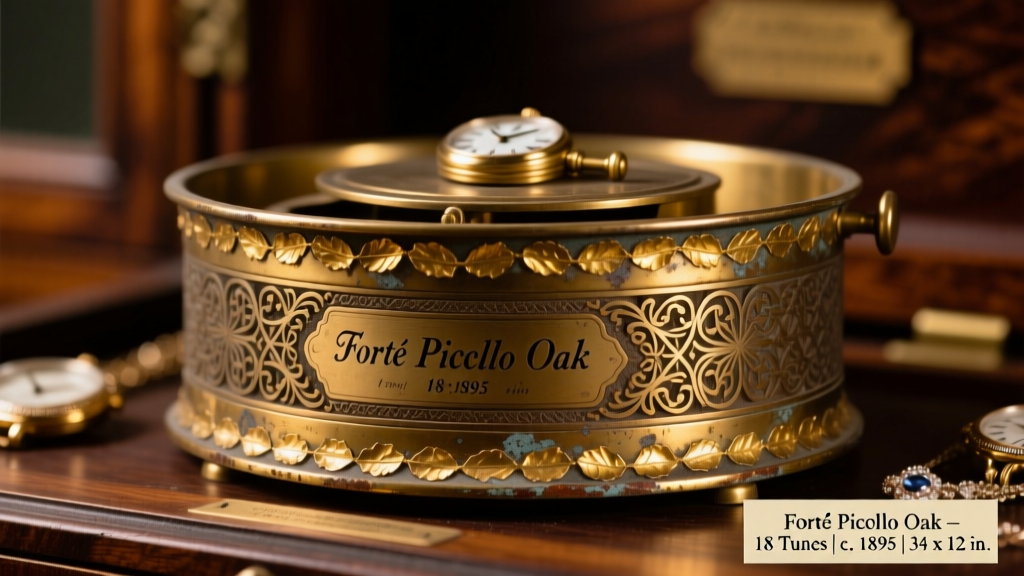
The Forté Piccolo Oak Music Box Cylinder: A Masterpiece of Swiss Mechanical Artistry, c. 1895

Medical Glass Eyes: A Rare 50-Piece Replacement Set in Original Oak Case, c. 1890–1920
Ecommercebytes: How Digital Marketplaces Are Reshaping Vintage Jewelry & Watch Collecting