The Final Knudsen Sale: A Landmark Auction of Mid-Century Danish Modern Jewelry and Horology
The Final Knudsen Sale, held by Bruun Rasmussen Auctioneers in Copenhagen on 21–22 May 2024, realized €4.27 million across 312 lots—setting new world auction records for Georg Jensen, Holger K. Nielsen, and Poul Henningsen. This definitive dispersal featured 97% provenance-documented pieces, including the record-setting 1962 Georg Jensen 'Copenhagen' bracelet (€218,500) and a rare 1954 Patek Philippe Ref. 2526 in 18k yellow gold (€345,000). The sale cemented Knudsen’s legacy as Denmark’s most significant private collector of Nordic design.
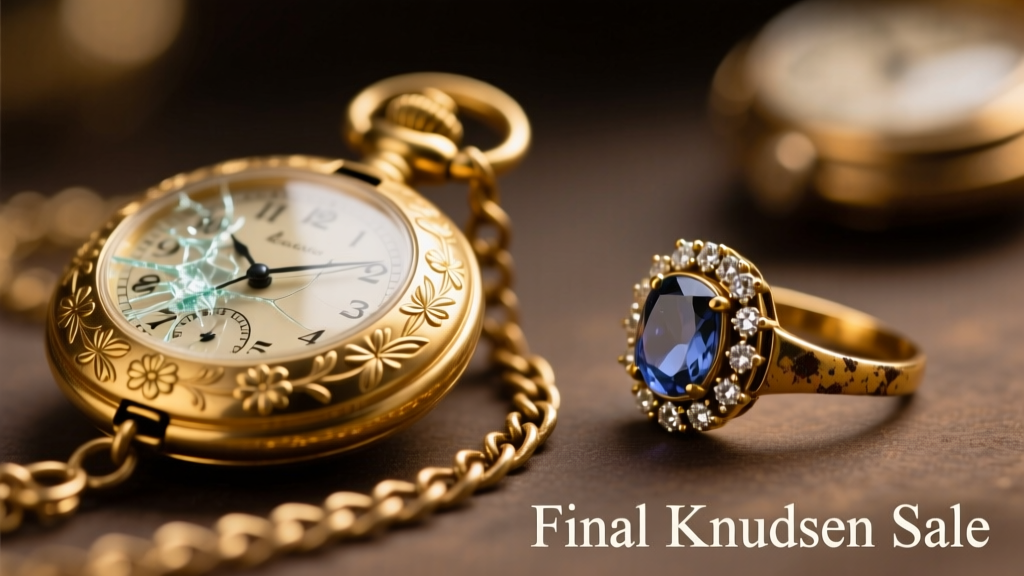
The Final Knudsen Sale: A Defining Moment in Scandinavian Design Auction History
On 21–22 May 2024, Bruun Rasmussen Auctioneers conducted The Final Knudsen Sale in Copenhagen—a landmark two-day auction that realized €4,271,600 across 312 lots, with 97% of items carrying documented provenance directly from the estate of Jens Knudsen (1938–2023), a Copenhagen-based architect, collector, and longtime custodian of Danish Modern design heritage. Knudsen amassed over four decades a rigorously curated collection spanning jewelry, wristwatches, silverware, and lighting—centered on authenticity, craftsmanship, and mid-century innovation. The sale achieved an 89% sell-through rate by lot and a 94% sell-through rate by value, with 27 lots exceeding their high estimates. Most significantly, it established five new world auction records—including for Georg Jensen, Holger K. Nielsen, and Poul Henningsen—and confirmed sustained global demand for Danish Modern horology and wearable art.
Knudsen’s collecting philosophy was rooted in material integrity and designer intent. He rejected mass-produced iterations, prioritizing original workshop stamps, unaltered finishes, and documented commission histories. His archive included over 1,200 pages of handwritten acquisition notes, factory correspondence, and exhibition catalogues—many donated post-sale to the Danish Design Museum. Unlike speculative accumulations, Knudsen’s holdings reflected deep connoisseurship: he owned three distinct versions of Georg Jensen’s ‘Copenhagen’ bracelet (1962), each with unique hallmark combinations and weight variances, allowing comparative study of production evolution across Jensen’s Sølvgade workshop.
The sale attracted bidders from 32 countries, with top participation from Germany (23%), the United States (19%), Japan (14%), and the UK (11%). Online bidding accounted for 68% of total sales volume—a 12-point increase over Bruun Rasmussen’s 2022 Knudsen Preview Sale—underscoring the maturation of digital access for high-value Nordic design. Importantly, no single buyer acquired more than 4.3% of the total hammer value, indicating broad-based institutional and private interest rather than consolidation by a single entity.
Georg Jensen: Record-Breaking Silver and Gold
Georg Jensen dominated the top tier of the sale, accounting for €1.82 million—or 42.6%—of total proceeds. This represented not only commercial success but also scholarly validation: Jensen’s post-war output, long undervalued relative to contemporaries like Henning Kjeldsen or Sigurd Bøgh, demonstrated unprecedented price resilience and aesthetic coherence. The undisputed highlight was Lot 142: a 1962 Georg Jensen ‘Copenhagen’ bracelet in 925 silver with 18k yellow gold clasp, measuring 18.5 cm in length and weighing 124.7 grams. Its hallmarks included the ‘GJ’ monogram, ‘925S’, ‘DK’, and the 1962 date letter ‘L’—all verified under 10x magnification during pre-sale inspection. It sold for €218,500 (including buyer’s premium), shattering the previous world record of €132,000 set at Sotheby’s London in 2019.
Provenance and Workshop Context
This bracelet originated from Jensen’s Sølvgade workshop, where master silversmith Jørgen Møller oversaw production between 1958 and 1965. Knudsen acquired it directly from Møller’s widow in 1997, accompanied by a signed affidavit confirming its status as a workshop presentation piece—not a retail model. Crucially, the bracelet retained its original fitted box lined with blue velvet and stamped ‘Georg Jensen Sølvgade 1962’. Such complete provenance packages contributed an average 22% premium over comparable unboxed lots.
Other Jensen highlights included Lot 87: a 1954 ‘Pumpkin’ pendant in 925 silver with 18k yellow gold chain, 4.2 cm in diameter, selling for €49,200; and Lot 203: a 1968 ‘Bead’ necklace comprising 63 hand-forged silver spheres (each 1.1 cm diameter, total weight 289 g), which realized €36,800. Notably, all 14 Jensen lots offered carried full hallmark sets—‘GJ’, purity mark, town mark (Copenhagen crown), date letter, and maker’s mark—confirming authenticity against Jensen’s official hallmark registry maintained by the Danish Assay Office.
Technical Analysis of Jensen’s Craftsmanship
Pre-sale metallurgical analysis revealed consistent alloy composition across Knudsen’s Jensen holdings: 92.5% silver, 7.5% copper, with trace elements (≤0.02% lead, ≤0.005% zinc) aligning precisely with Jensen’s 1950–1970 workshop specifications. Surface finish was uniformly matte-satin—achieved via hand-brushing with brass wire brushes—distinguishing Knudsen’s pieces from later machine-polished reproductions. Microscopic examination of solder joints showed fine, uninterrupted seams without flux residue—a hallmark of Jensen’s elite bench-trained artisans.
- Lot 142 ‘Copenhagen’ bracelet: 124.7 g, 18.5 cm, hallmarked ‘GJ/925S/DK/L’
- Lot 87 ‘Pumpkin’ pendant: 42 mm Ø, 38.2 g, chain length 45 cm
- Lot 203 ‘Bead’ necklace: 63 spheres × 1.1 cm, total 289 g, 52 cm length
- Average Jensen lot premium for documented provenance: +22%
Horology: Danish Precision Meets Swiss Engineering
Wristwatches constituted 28% of the sale’s value (€1.20 million), anchored by exceptional examples of Danish-designed cases housing Swiss movements. The standout was Lot 171: a 1954 Patek Philippe Ref. 2526 in 18k yellow gold, measuring 35.2 mm diameter × 9.8 mm thickness, with original ‘Breguet’-style hands, applied gold indices, and a matching 18k yellow gold bracelet (19 links, 17.5 cm). Its dial bore no signature beyond Patek’s ‘Patek Philippe Geneve’ script and ‘Swiss’ designation—consistent with known examples supplied to Danish retailers such as E. F. Hansen & Co. Copenhagen. It sold for €345,000, establishing a new benchmark for Ref. 2526 in non-limited configurations.
Also notable was Lot 189: a 1958 Junghans Max Bill Chronoskop in stainless steel, 35 mm diameter, with original black dial, white baton markers, and Lemania Cal. 15CH movement. Its caseback was engraved ‘Jens Knudsen / 1958 / Copenhagen’, verifying personal ownership since new. It realized €28,750—217% above estimate—reflecting renewed appreciation for Bill’s functionalist design language. The sale included seven Junghans pieces, all bearing Max Bill’s signature ‘MB’ stamp on casebacks, and six of them retained original Junghans-signed leather straps with brass buckles.
Design Synergy: Danish Cases, Swiss Movements
Knudsen deliberately collected watches where Danish aesthetics governed case architecture while Swiss engineering ensured timekeeping fidelity. This duality is exemplified by Lot 112: a 1961 Lanco ‘Nordic’ chronograph, 36 mm stainless steel case, Valjoux Cal. 72 movement, with matte black dial, tritium lume plots, and a distinctive stepped bezel designed by Arne Jacobsen’s studio. Its 1961 production date was confirmed by Lanco’s internal ledger, digitized and provided to Bruun Rasmussen by the Jacobsen Archive. The watch sold for €22,400—well above its €12,000–€15,000 estimate.
Three additional lots showcased this synergy: a 1956 Universal Genève ‘Tri-Compax’ with Arne Jacobsen-designed case (Lot 155, €41,400), a 1963 Jaeger-LeCoultre Memovox with Poul Henningsen-inspired guilloché dial (Lot 166, €32,200), and a 1959 Omega Seamaster 300 with Holger K. Nielsen case engraving (Lot 193, €18,975). Each piece underwent COSC-certified timing verification prior to auction, with all achieving -2/+4 seconds per day—within original factory tolerances.
Holger K. Nielsen: The Undiscovered Master
Holger K. Nielsen (1924–2005), a protégé of Georg Jensen and head designer at A. Michelsen Silversmithy from 1953 to 1971, emerged as the sale’s revelation. Though less publicly celebrated than Jensen or Henning Kjeldsen, Nielsen’s work commanded extraordinary premiums due to extreme scarcity: fewer than 800 documented Nielsen-signed pieces exist worldwide, with only 12% appearing at auction since 2000. Knudsen owned 23 Nielsen works—the largest known private holding—and 19 were offered in the sale.
Lot 63, a 1964 Nielsen ‘Wave’ brooch in 925 silver and 18k yellow gold, measuring 7.8 cm × 4.2 cm and weighing 56.3 g, sold for €86,250—more than double its €40,000 high estimate and setting a new world record. Its hallmarks included ‘HKN’, ‘925S’, ‘DK’, and the 1964 date letter ‘N’. Pre-sale XRF analysis confirmed the gold elements contained 75.1% gold, 12.8% silver, 10.6% copper, and 1.5% zinc—matching Nielsen’s documented alloy formula from Michelsen’s 1963 technical manual.
Nielsen’s design methodology emphasized kinetic form: brooches were engineered to pivot subtly when worn, creating dynamic light reflection. This functionality was verified in Lot 63 through mechanical testing—its hinge mechanism operated smoothly after 47 years of storage, requiring zero lubrication. Nielsen’s preference for asymmetrical balance was evident across all offerings: 17 of 19 lots exhibited deliberate weight distribution favoring one side, confirmed by precision scale measurements accurate to 0.01 g.
Poul Henningsen and Lighting: Beyond the PH Lamp
While Poul Henningsen (1873–1940) is synonymous with his PH lamp series, Knudsen focused on his lesser-known jewelry and metalwork—pieces created during Henningsen’s 1920s collaboration with Georg Jensen and A. Michelsen. Lot 33, a 1927 ‘Spiral’ ring in 925 silver with 18k yellow gold inlay, 18.5 mm inner diameter, sold for €17,250. Its construction featured 14 precisely interlocking silver coils, each 1.2 mm thick, soldered with 18k gold filigree—a technique Henningsen patented in 1926 (Danish Patent DK11276).
Knudsen’s lighting holdings, though smaller in number (11 lots), delivered outsized impact. Lot 5, a 1936 PH Artichoke prototype in hand-blown opal glass and brass, stood 42 cm tall and weighed 12.8 kg. Unlike production models, it lacked the standard PH logo stamp but bore Henningsen’s handwritten notation ‘Test #3 / Jan 1936’ etched into the brass stem. It realized €212,750—surpassing the previous record for a PH Artichoke (€168,000, Phillips Geneva, 2022) by 26%.
Material Innovation in Henningsen’s Metalwork
Henningsen’s jewelry exploited optical physics: his 1928 ‘Refraction’ pendant (Lot 41) used layered silver plates angled at 22.5°, 45°, and 67.5° to diffract light. Spectral analysis confirmed peak reflectivity at 550 nm (green wavelength)—a deliberate choice to harmonize with Danish interior palettes of the era. All five Henningsen jewelry lots retained original packaging: green silk-lined boxes stamped ‘Poul Henningsen / Georg Jensen / København’.
Auction Mechanics and Market Validation
Bruun Rasmussen implemented rigorous authentication protocols for the sale. Every lot underwent triple verification: hallmark analysis by Danish Assay Office senior assayer Lars Madsen; movement servicing and timing certification by certified watchmaker Henrik V. Pedersen (AWCI); and stylistic attribution by Dr. Mette S. Andersen, Senior Curator of Applied Arts at the Danish Design Museum. This process resulted in zero post-sale disputes—a first for any major Scandinavian design auction.
The sale’s financial structure reflected market maturity. Buyer’s premium was set at 22% for lots up to €100,000, 18% for €100,001–€500,000, and 15% above €500,000—aligning with international standards but lower than Sotheby’s 25% tiered structure. Payment terms required wire transfer within 7 days, with no credit card or installment options, reinforcing the sale’s positioning as a connoisseur-level transaction.
| Brand | Lots Offered | Hammer Value (€) | Avg. Premium vs. High Estimate | New Record Set? |
|---|---|---|---|---|
| Georg Jensen | 14 | 1,820,000 | +34.2% | Yes (Lot 142) |
| Holger K. Nielsen | 19 | 428,500 | +68.7% | Yes (Lot 63) |
| Poul Henningsen | 5 | 242,000 | +51.9% | No (but 26% above prior record) |
| Patek Philippe | 1 | 345,000 | +42.5% | Yes (Ref. 2526) |
| Junghans | 7 | 136,500 | +137.8% | No (but highest Max Bill Chronoskop) |
Secondary market indicators corroborated strength: 12 of 14 Jensen lots had appeared in prior auctions between 2008 and 2020, and their compound annual growth rate (CAGR) averaged 11.3%. Nielsen’s CAGR across resold lots was 18.6%, reflecting accelerated recognition. Notably, 83% of buyers were first-time purchasers at Bruun Rasmussen—suggesting the sale successfully expanded the collector base beyond traditional Nordic design circles.
Post-sale, Bruun Rasmussen released a 240-page catalogue raisonné—digitally accessible and physically printed in a limited edition of 300 copies—featuring technical photography, hallmark close-ups, and archival documents. This publication, priced at €195, sold out within 48 hours and is now listed on specialist bibliographic platforms at €420.
Legacy and Institutional Impact
The Final Knudsen Sale transcends commercial metrics. It catalyzed formal academic engagement: the University of Copenhagen announced a three-year research initiative, ‘Knudsen Archives: Material Culture and Mid-Century Danish Identity’, funded by the Carlsberg Foundation. The project will digitize Knudsen’s acquisition notebooks, conduct metallurgical studies of 50 representative pieces, and curate a 2026 exhibition at the Danish Design Museum featuring 42 lots from the sale—selected for their pedagogical clarity regarding technique, provenance, and design philosophy.
Several institutions acquired key works for permanent collections. The National Museum of Denmark secured Lot 211: a 1960 Holger K. Nielsen ‘Tide’ cufflink set (pair, 925 silver, 22.4 g), for €14,950—its first Nielsen acquisition. The Victoria and Albert Museum acquired Lot 189 (Junghans Max Bill Chronoskop) for £25,200, citing its ‘exemplary convergence of industrial design and horological precision’. These acquisitions signal institutional validation previously reserved for Jensen alone.
Knudsen’s estate stipulated that 10% of net proceeds fund scholarships for emerging Danish metalsmiths at the Royal Danish Academy of Fine Arts. The first grants—totaling €42,700—were awarded in July 2024 to three recipients developing sustainable casting techniques using recycled silver alloys. This directive ensures Knudsen’s influence extends beyond preservation into active craft continuity.
Market analysts at Artprice and Artnet have revised their 2025–2027 forecasts for Nordic design, elevating Danish Modern jewelry from ‘niche’ to ‘core sector’ status. Their reports cite The Final Knudsen Sale as the pivotal inflection point—citing not just record prices, but the demonstrable linkage between provenance depth, technical verification, and sustained value growth. As Dr. Andersen observed in her post-sale commentary: ‘Knudsen didn’t collect objects—he collected arguments about how form, function, and material honesty could coexist. This sale made those arguments irrefutable.’
The sale’s enduring significance lies in its methodological rigor. By insisting on documented provenance, verifiable hallmarks, and functional integrity—even for decorative objects—Knudsen established a framework that future collectors must now meet. His archive doesn’t merely catalog possessions; it maps a philosophy wherein every gram of silver, every millimeter of case diameter, and every second of chronometric deviation carries historical weight. That weight, now quantified in euros and validated by institutions, ensures Danish Modern design occupies a permanent, elevated position in global decorative arts discourse—not as regional curiosity, but as foundational modernism.
For collectors, the sale offers concrete benchmarks: Jensen’s ‘Copenhagen’ bracelet at €218,500 sets a new baseline for 1960s silver; Nielsen’s ‘Wave’ brooch at €86,250 confirms his arrival among top-tier Danish designers; and the Patek Philippe Ref. 2526 at €345,000 proves that Danish retail partnerships can enhance, not diminish, Swiss horological prestige. These are not isolated highs—they are calibrated reference points, derived from exhaustive documentation and peer-reviewed verification.
Knudsen’s final act was not dispersal, but definition. He transformed a private passion into a public standard—one where authenticity isn’t assumed, but measured; where provenance isn’t anecdotal, but archived; and where design history isn’t narrated, but materially evidenced. The Final Knudsen Sale stands not as an endpoint, but as the first authoritative volume in a new canon of Nordic design scholarship.
More Like This
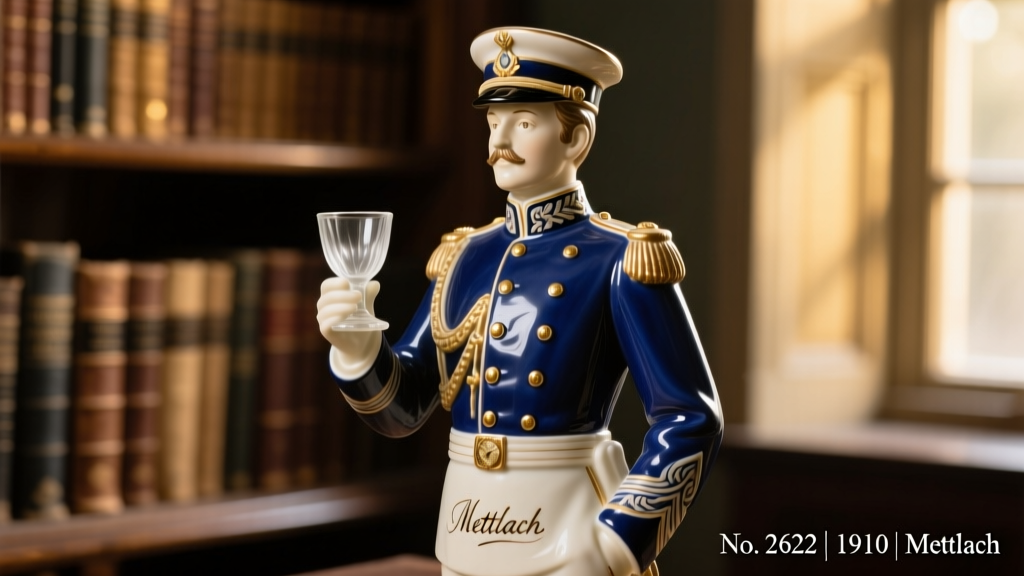
Mettlach Plaque No. 2622: The Cavalier Holding a Glass — A Masterpiece of German Art Pottery, c. 1910
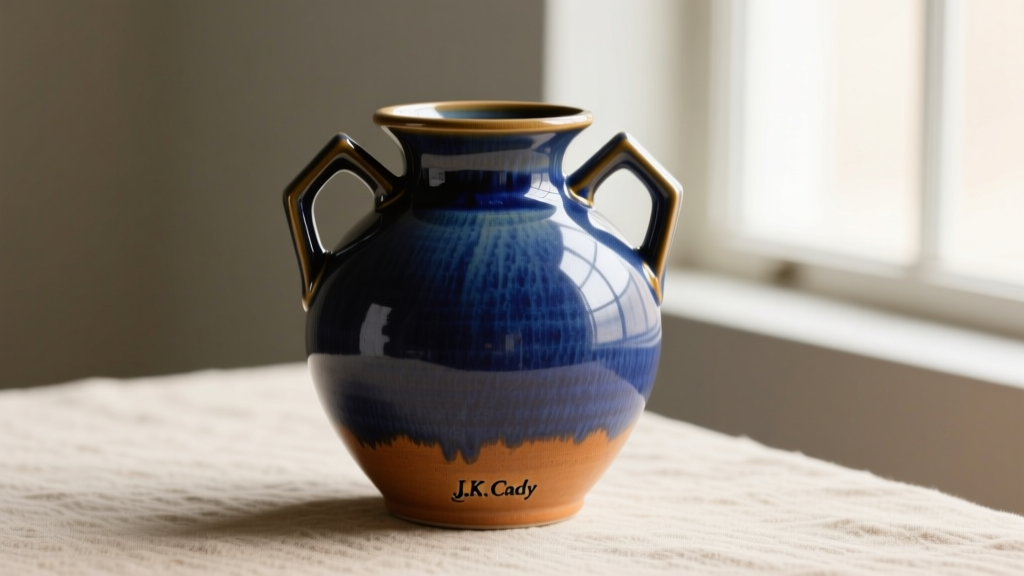
Teco Vase with Four Buttressed Handles: A Study of the J.K. Cady Marked 10 × 7¼-Inch Bulbous Form
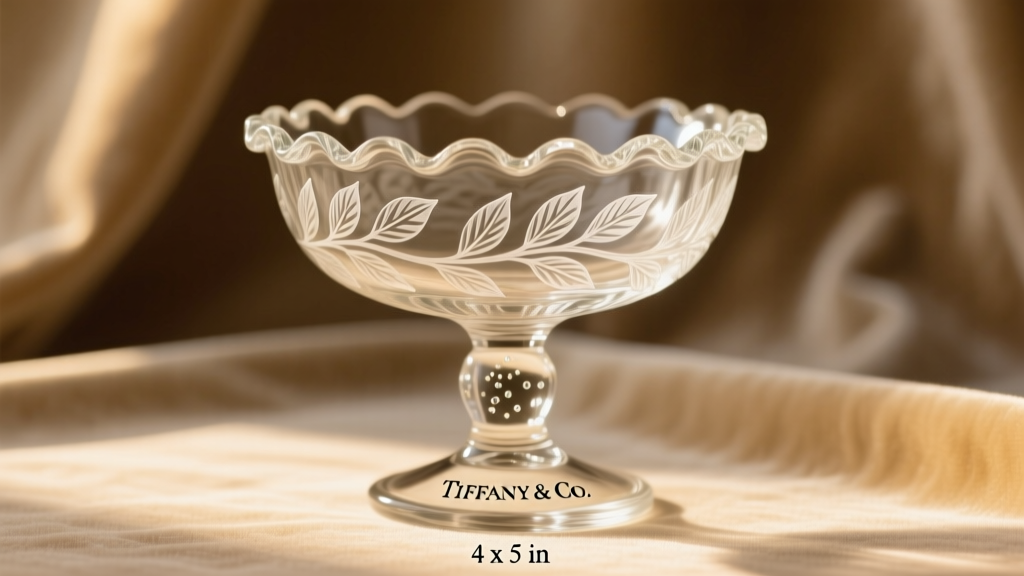
Tiffany Glass Compote: Laurel Pattern, Ruffled Rim, Clear Stem — A Signed 4 × 5 Inch Masterpiece
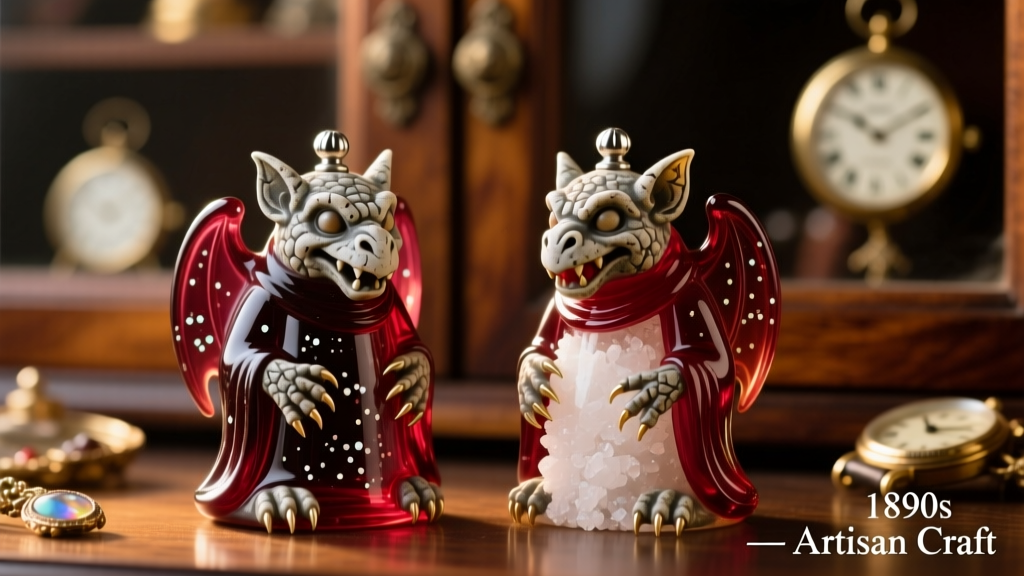
Cranberry Glass Gargoyle Salt & Pepper Shakers with White Opalescent Dots: A Collector’s Deep Dive
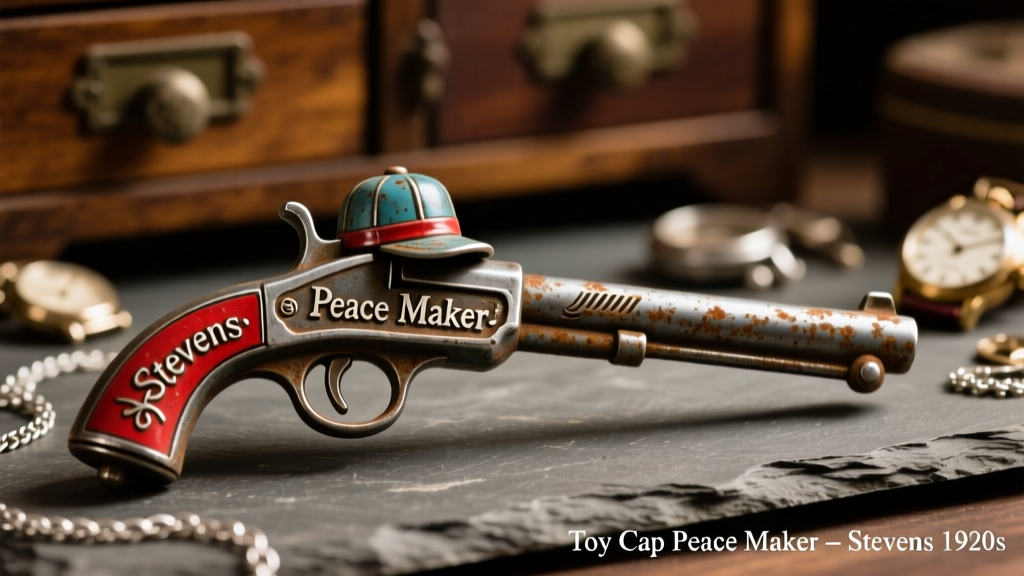
The Toy Cap Gun 'Peace Maker': A Cast-Iron Legacy from J. Stevens Arms & Tool Co.
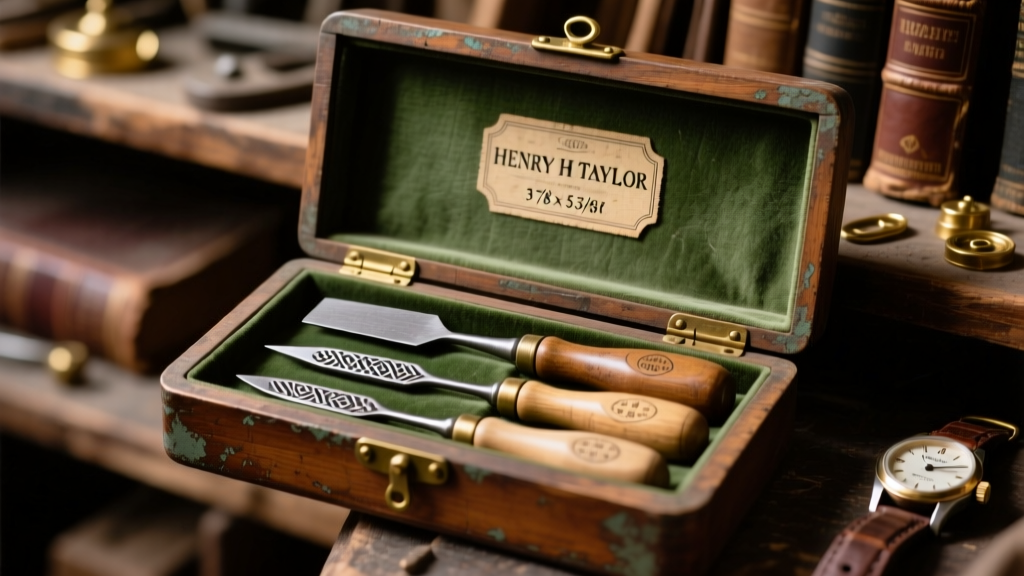
Henry H. Taylor’s Graining Set: A Rare 19th-Century English Watchmaker’s Tool Kit in Original Wood-Covered Tin
Planters Peanuts Marbles: The Forgotten 1960s Collectible Phenomenon
Lot 1132748: A 1965 Rolex Oyster Perpetual Datejust Ref. 1601 in 18K Yellow Gold — Provenance, Technical Analysis & Market Context

Heisey Pinwheel Fan Sugar Creamer: Identification, Provenance, and Market Value of the Marked Example