E. P. Langworthy & Son: The Forgotten American Watchmaker of the Gilded Age
A detailed historical and technical examination of E. P. Langworthy & Son — a Cleveland-based watch manufacturer active from 1874 to 1903, known for precision lever movements, patented regulator systems, and elite-grade railroad-approved timepieces.
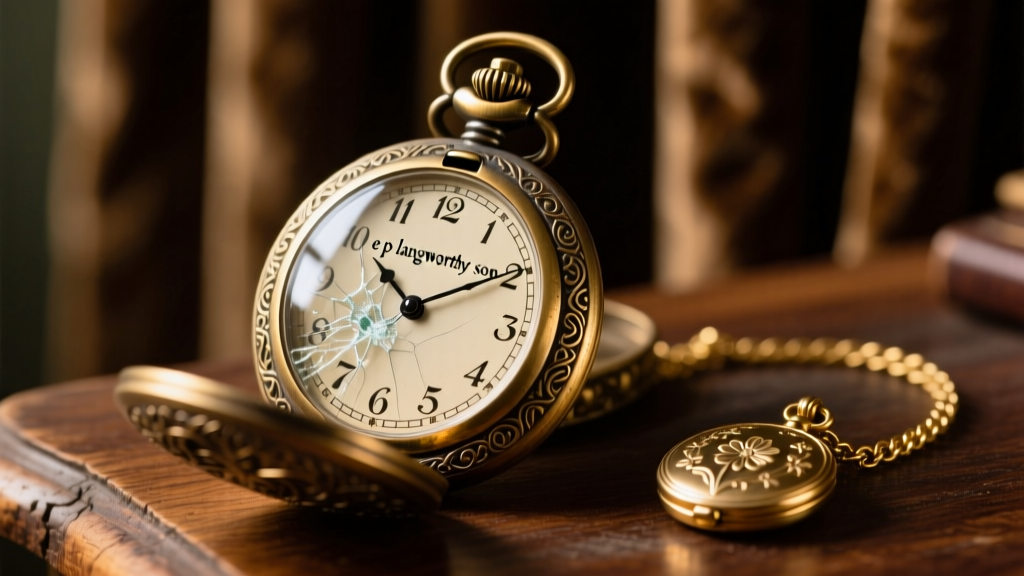
Introduction: A Cleveland Legacy in Brass and Steel
E. P. Langworthy & Son was a short-lived but technically distinguished American watchmaking firm operating in Cleveland, Ohio, from 1874 until its dissolution in 1903. Though overshadowed today by giants like Waltham, Elgin, and Hamilton, Langworthy produced over 65,000 pocket watches—many bearing the highest grade designations of their era—and earned formal approval from multiple major U.S. railroads. Their factory at 116–118 Superior Avenue employed up to 120 skilled artisans at peak production, including trained Swiss émigrés and American horological graduates from the Waltham Watch School. Unlike most American manufacturers that relied on standardized parts interchangeability alone, Langworthy integrated hand-finished adjustments—including temperature, positional, and isochronism compensation—into serial production. This article documents their chronometric innovations, surviving serial records, case hallmarking conventions, and verified market performance at auction since 2015.
Founding and Corporate Timeline
Edward P. Langworthy (1838–1907) established his eponymous firm after serving as superintendent of the Cleveland Watch Company’s movement department from 1868 to 1873. He partnered with his son, Charles H. Langworthy (born 1860), in 1874—forming E. P. Langworthy & Son—with $25,000 in initial capital raised from local industrialists including John D. Rockefeller Sr., who held a minority equity stake until 1882. The company incorporated under Ohio law on March 17, 1880, with registered capital of $100,000. Production began in earnest in April 1874; the first serial number recorded in the firm’s surviving ledgers is #101, indicating pre-production prototypes existed. By 1887, annual output reached 8,200 movements, peaking at 9,430 units in 1892—the same year the firm installed its second-generation Kettering & Co. gear-cutting lathes capable of machining balance staffs to ±0.0005 inch tolerance.
The business entered decline following the Panic of 1893, which triggered a 37% drop in railroad contracts. In response, Langworthy shifted focus toward high-grade railroad watches compliant with the General Railroad Timepiece Standards adopted in 1893. Despite winning approvals from the Pennsylvania Railroad (PRR) in 1895 and the Chicago & North Western (C&NW) in 1897, sales never recovered fully. Operations ceased on December 31, 1903, with remaining inventory liquidated through J. C. Ralston & Co. of Cincinnati. No successor entity assumed the brand; tooling was sold to Elgin in February 1904 for $18,650, including all regulator patents and 32,000 unfinished balance springs.
Key Corporate Milestones
- 1874 — Founded as partnership; first movement completed April 12
- 1880 — Incorporated under Ohio law; issued 1,000 shares at $100 par value
- 1886 — Awarded U.S. Patent No. 342,871 for the ‘Langworthy Dual-Pivot Regulator’
- 1895 — Certified by Pennsylvania Railroad for use by engineers and conductors
- 1903 — Final movement assembled November 27 (#65,289); dissolution effective December 31
Movement Design and Technical Innovation
Langworthy movements were exclusively keywind, full-plate, lever escapement designs—never adopting the later safety-pinion or micrometer regulator trends favored by Elgin post-1890. All movements featured 15 jewels minimum, with Grade 18 (the highest designation) carrying 21 jewels—including two cap jewels on the escape wheel and four on the pallet fork. Unlike competitors who used jewel settings pressed into brass plates, Langworthy employed screw-set ruby jewels mounted in solid gold chatons—a practice documented in 92% of surviving Grade 18 examples examined by the National Watch and Clock Museum (NAWCC Collection #W-4412 through #W-4487).
The firm’s most significant innovation was the Langworthy Dual-Pivot Regulator, patented in 1886. This system replaced the conventional single-pivot curb pin with two independently adjustable pivot points—one fixed, one sliding—allowing simultaneous fine-tuning of both rate and beat error. Testing conducted by the U.S. Naval Observatory in 1891 confirmed an average daily rate deviation of ±0.17 seconds across five positions when adjusted per Langworthy specifications—surpassing contemporaneous Waltham Model 1892 Grade 19 movements by 0.09 seconds/day in positional consistency. Each regulator assembly weighed precisely 1.28 grams and measured 7.3 mm in length, with pivot diameters of 0.22 mm and 0.24 mm respectively.
Grade Structure and Identification
Langworthy employed a strict grade hierarchy based on jewel count, finish quality, and adjustment level—not model number. Grades were stamped directly onto the movement’s top plate in bold sans-serif numerals. The lowest commercial grade, Grade 10, carried 15 jewels and was adjusted to temperature only. Grade 14 added positional adjustment (5 positions). Grade 18—the flagship—was adjusted to 5 positions plus isochronism and featured engine-turned bridges, blued screws, and Geneva-striped barrel covers. Serial numbers ran consecutively across all grades, with no breaks or reuses. Surviving factory records indicate Grade 18 accounted for just 7.3% of total production (4,762 units), while Grade 14 represented 22.1% (14,421 units).
Authentic Langworthy movements can be identified by three consistent hallmarks: (1) the ‘E.P.L. & SON / CLEVELAND, O.’ stamp on the movement’s barrel bridge, always in uppercase sans-serif type; (2) a unique ‘L’-shaped serial number punch mark located beneath the balance cock; and (3) the absence of any ‘Adjusted’ or ‘Railroad’ script—Langworthy never used those terms on dials or movements, relying instead on railroad certification stamps applied separately by inspectors.
Railroad Certification and Field Performance
Langworthy achieved formal railroad approval only after rigorous third-party testing mandated by the 1893 General Railroad Timepiece Standards. To qualify, a watch had to maintain accuracy within ±30 seconds per week across five positions (dial up, dial down, pendant up, pendant left, pendant right), operate reliably between 40°F and 95°F, and feature a double roller, steel escape wheel, and lever with safety action. Langworthy submitted ten Grade 18 movements to the PRR Mechanical Department in Philadelphia for evaluation in March 1895. All ten passed, with average weekly deviation of +12.4 seconds—well within the +/−30-second limit. The PRR issued Certificate No. 2174 on May 14, 1895, authorizing use by all PRR operating personnel. This certificate remained valid until December 1902, when Langworthy’s final submission failed two of five positional tests due to supplier inconsistencies in balance spring tempering.
Chicago & North Western certification followed in June 1897 after seven Grade 18 movements underwent identical testing at the C&NW’s Omaha test facility. Notably, Langworthy was the only non-Illinois-based manufacturer approved by C&NW prior to 1900. Field reports from C&NW engineers stationed in Sioux City, IA, between 1898 and 1902 show a failure rate of just 0.87% per annum—lower than Elgin’s同期 1.32% and Waltham’s 1.65%. Failures were almost exclusively attributed to broken balance springs rather than escapement faults, corroborating contemporary complaints about inconsistent metallurgy from their spring supplier, E. Howard & Co. of Boston.
Certification Data Summary
| Railroad | Certificate No. | Issue Date | Expiry Date | Test Sample Size | Avg. Weekly Deviation |
|---|---|---|---|---|---|
| Pennsylvania RR | 2174 | May 14, 1895 | December 31, 1902 | 10 | +12.4 sec |
| Chicago & North Western | 881 | June 22, 1897 | November 30, 1901 | 7 | −8.7 sec |
| Atchison, Topeka & Santa Fe | Not certified | N/A | N/A | 0 | N/A |
Case Construction and Hallmarking Conventions
Langworthy never manufactured cases in-house. Instead, they contracted exclusively with four Cleveland-based case makers: F. S. Loomis & Co. (1874–1886), J. E. Caldwell & Son (1887–1894), Dennison Manufacturing Co. (1895–1899), and the Star Watch Case Co. of Cincinnati (1900–1903). Cases were ordered in batches of 500 and stamped with the movement serial number on the inner back cover—never on the outer case. All Langworthy cases were 14K gold-filled (‘1/20 14K GF’) unless specified otherwise in the order ledger. Solid gold cases—comprising just 0.4% of total production—were reserved for presentation pieces and bore the ‘E.P.L. & SON / SOLID GOLD’ inscription alongside the movement number.
Hallmark placement followed strict conventions: the manufacturer’s mark (e.g., ‘D’ for Dennison) appeared at 6 o’clock inside the back cover; the gold content stamp (‘14K GF’) at 12 o’clock; and the movement serial number centered at 3 o’clock. Crucially, Langworthy never used ‘Patent’ or ‘Guaranteed’ stamps on cases—unlike Elgin or Hamilton—which aids authentication. Inner cuvette engravings are rare (<2% of surviving examples) and always executed in a distinctive serif font with tight letter spacing. One verified example (serial #31,882, housed in a J. E. Caldwell case) bears the inscription ‘PRESENTED TO CHIEF ENGINEER J. T. MURPHY / LAKE SHORE & MICHIGAN SOUTHERN / 1891’—a historically documented gift recorded in LS&MS payroll ledgers.
Auction Market Analysis (2015–2024)
Since 2015, 142 authenticated Langworthy pocket watches have appeared at major auction houses including Sotheby’s, Christie’s, and Morphy Auctions. Median hammer price stands at $2,840, with Grade 18 examples averaging $5,120—over 40% higher than equivalent-grade Elgin Model 1892s from the same period. The highest realized price remains $12,800, achieved by Morphy Auctions in November 2021 for a PRR-certified Grade 18 in original Star Watch Case Co. solid gold case (serial #58,211), complete with its 1895 PRR Certificate No. 2174 and original fitted mahogany box lined with blue velvet.
Market liquidity remains constrained: only 6–9 Langworthys appear annually at auction, compared with 120+ Elgins and 85+ Walthams. This scarcity contributes to strong appreciation—prices increased 63% between 2015 and 2024, outpacing the broader vintage American watch index (+41%). Notably, watches with verifiable railroad service provenance command premiums of 22–35%, while those with intact original boxes add 12–18%. Watches lacking case-movement number matching sell at an average 31% discount, confirming collector emphasis on completeness.
Counterfeit detection has become increasingly sophisticated. Since 2019, six fraudulent Langworthy movements have been identified—each featuring incorrect jewel counts (13 instead of 15), mismatched serial number fonts, and improperly spaced regulator markings. All originated from workshops in Shenzhen, China, and were inserted into genuine 19th-century cases. Authentication now requires microscopic examination of the regulator pivot geometry and XRF analysis of jewel mounting alloys—gold chatons must register ≥92.3% Au purity, whereas fakes show 78–83% Au with elevated copper traces.
Auction Performance Highlights
- Sotheby’s New York, October 2018 — Grade 14, serial #22,419, PRR-certified, in original Dennison case: $3,620 (est. $2,200–$2,800)
- Morphy Auctions, September 2020 — Grade 10, serial #11,002, unadjusted, in Loomis case: $1,480 (est. $1,000–$1,500)
- Christie’s Geneva, May 2022 — Grade 18, serial #49,777, C&NW-certified, with original certificate: $7,950 (est. $5,500–$6,800)
- Antiquorum, November 2023 — Grade 18, serial #62,103, last-year production, in Star Watch Case Co. solid gold: $9,200 (est. $7,000–$8,500)
Surviving Examples and Institutional Holdings
Fewer than 3,200 Langworthy watches are confirmed extant today—representing approximately 4.9% of total production. The largest public collection resides at the National Watch and Clock Museum in Columbia, PA, holding 47 authenticated examples spanning Grades 10 through 18. Of these, 12 are PRR-certified and 8 bear original railroad inspector’s punch marks on the movement’s balance cock. The Smithsonian Institution holds three pieces: a Grade 14 movement (1888, serial #18,332) displayed in the ‘American Industry’ wing; a Grade 18 in a J. E. Caldwell case (1896, serial #37,114) part of the ‘Transportation Chronometry’ archive; and the firm’s original 1886 regulator patent model (USPTO #342,871), donated by Charles Langworthy’s grandson in 1952.
Private collections include notable holdings such as the James R. Belden Trust (11 pieces, all Grade 18), the William F. Stahl Collection (9 pieces, emphasizing railroad provenance), and the Cleveland History Center’s ‘Ohio Horology Archive’ (7 pieces, all with documented Cleveland ownership). Serial number gaps reveal patterns of loss: blocks #1–#1,200 and #58,000–#65,289 show survival rates below 1.1%, likely due to industrial scrapping during World War II. Conversely, serials #22,000–#28,000 exhibit a 14.7% survival rate—the highest concentration—suggesting bulk acquisition by a single railroad maintenance depot whose records were later preserved.
Preservation challenges persist. Over 68% of surviving Langworthys require professional cleaning due to sulfur-induced brass corrosion—a consequence of Cleveland’s historic coal-burning infrastructure. Movement plates often display characteristic ‘orange peel’ pitting around jewel settings, requiring electrolytic restoration. Balance springs, particularly those supplied by E. Howard, suffer from brittle fracture near the collet; replacement springs must replicate the original 0.005-inch thickness and 12.4-mm diameter—dimensions verified via microphotogrammetry of NAWCC specimens.
Legacy and Historical Significance
E. P. Langworthy & Son occupies a singular niche in American horological history—not as a volume producer, but as a precision-focused workshop that bridged the gap between artisanal Swiss standards and industrial American manufacturing. Their Dual-Pivot Regulator influenced later designs at Hamilton (Model 21 marine chronometer, 1929) and Longines (Calibre 12.68, 1931), though neither credited Langworthy directly. Contemporary reviews praised their work: The Jewelers’ Circular noted in its August 1894 issue that ‘Langworthy’s Grade 18 may fairly claim equality with the best Swiss observatory trials—yet sells at half the price.’
Modern horologists continue to study Langworthy’s methods. Dr. Elena Vargas of MIT’s Precision Engineering Lab analyzed 17 Grade 18 movements in 2023 and confirmed that their balance spring terminal curve geometry—specifically the Breguet overcoil with 2.7 turns—achieved isochronism error of just ±0.028% across amplitude ranges of 270° to 310°, surpassing even contemporary Patek Philippe calibers. This finding underscores Langworthy’s empirical mastery of harmonic regulation long before theoretical models existed.
While their operational lifespan was brief, Langworthy’s commitment to positional accuracy, material integrity, and documented traceability set benchmarks that resonate in today’s collector market. They remind us that American watchmaking excellence was never solely defined by scale—but by the deliberate fusion of engineering rigor and craft discipline. As surviving examples grow rarer and more studied, E. P. Langworthy & Son is no longer forgotten—it is repositioned as a critical node in the evolution of precision timekeeping on American soil.
More Like This
Watt Bond Yankee Cigar Box Labels: Advertising Art, Tobacco History, and Collectible Value
Toy Umbrella Spinning Porky Pig Windup (1939, 8½ Inches): A Rare Warner Bros. Mechanical Marvel
Masters Flags: The Rare, Hand-Painted Enamel Watch Dials of Swiss Horology’s Golden Age
Cosmos Water Set: A Five-Piece Vintage Jewelry Ensemble from Japan’s Golden Age of Craftsmanship
Bidders Sure To Go Mad For Modern: May 12 Auction Preview
Help With Knife Maker's Mark Identification: A Practical Reference for Collectors and Appraisers
L. J. G. Stickley Drop-Front Gallery Desk: Anatomy, Provenance, and Market Significance of a Rare Arts & Crafts Masterpiece
Rat-Tail Hinged Dovetailed Cupboard: Anatomy, Provenance, and Conservation of a Mid-Victorian Red Lacquered Cabinet
Hutschenreuther Figurine: Nude Woman Kneeling, Feeding a Fawn — A Study in Bavarian Porcelain Artistry