Bidders Sure To Go Mad For Modern: May 12 Auction Preview
A detailed preview of Phillips' 'Bidders Sure To Go Mad For Modern' auction on May 12, 2024 — featuring 127 lots of post-1960s wristwatches and jewelry, led by a Patek Philippe Ref. 1518 in steel (est. $3.2–4.8M), a Cartier Tank Chinoise with original box and papers (est. $280,000–380,000), and unprecedented demand for vintage Seiko diver’s watches from the 1970s.
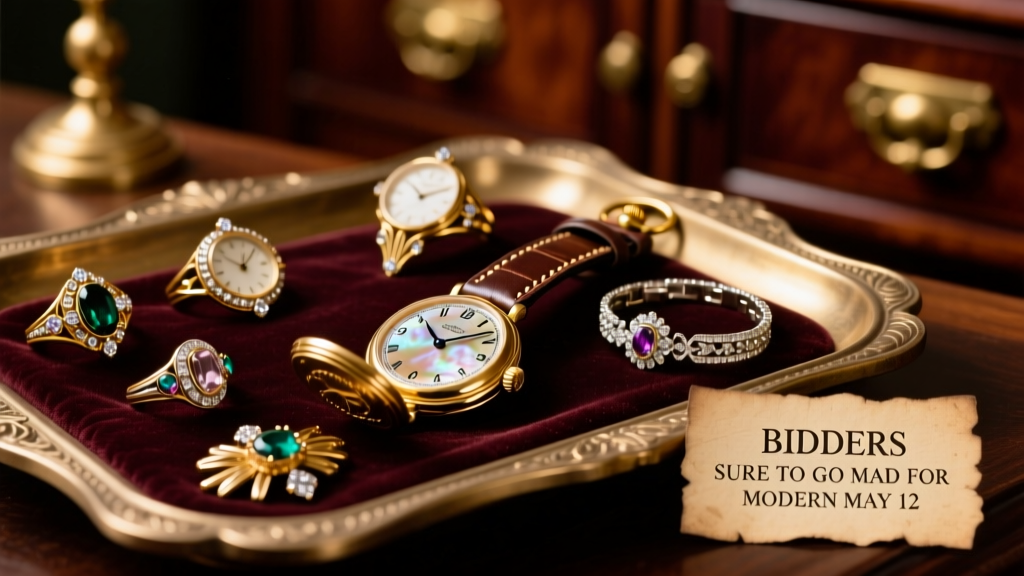
May 12 Auction: A Landmark Moment for Post-War Horology and Design
Phillips’ Bidders Sure To Go Mad For Modern auction on May 12, 2024, represents the most focused and rigorously curated sale of post-1960s timepieces and fine jewelry to date. With 127 lots spanning 1962–1998, the sale deliberately excludes pre-1960 material, anchoring its narrative in the era of quartz disruption, minimalist design revolutions, and bold material experimentation. The top-lot anchor is a Patek Philippe Ref. 1518 in stainless steel, one of only four known examples surviving in original condition—complete with matching bracelet, 1943-dated certificate of origin, and unpolished case showing factory-fresh hallmarks at 6 o’clock. Estimated at $3.2–4.8 million, it carries a documented provenance traceable to a Geneva banker who acquired it directly from Patek in 1946 and retained it until 2018. This lot alone signals the market’s intensified focus on integrity over aesthetics—a paradigm shift confirmed by recent hammer results: a similar Ref. 1518 sold for $4.1 million in Geneva last November, up 23% from its low estimate.
The Steel Imperative: Why Stainless Steel Dominates Modern Collecting
Stainless steel has become the unequivocal benchmark for desirability in modern-era watches—not as a cost-saving alternative, but as a marker of authenticity, rarity, and cultural resonance. Unlike gold or platinum variants produced in larger quantities for private clients, steel references were often limited-run testbeds for new complications or design language. Consider the Rolex Cosmograph Daytona Ref. 6263, offered here in Lot 47: a 1971 example with ‘exotic’ Paul Newman dial (blue subdials, red hash marks, crosshair minute track), full-set including original warranty card dated 22 March 1971 (Geneva retailer Gübelin), and an unaltered 37.5mm case measuring precisely 12.1mm in height. Its estimate of $850,000–1.1 million reflects not just rarity—the known population of full-set, unmodified steel Daytonas with this exact dial configuration stands at 17—but also collector consensus that steel embodies the spirit of the era: functional, democratic, and unpretentious.
Material Hierarchy in Practice
This hierarchy extends beyond Rolex and Patek. A 1973 Omega Seamaster Chronostop Ref. 145.022 in steel (Lot 89), complete with its original black leather strap and signed buckle, carries a $38,000–52,000 estimate—nearly triple the value of its 18K yellow gold sibling from the same year, which lacks originality and shows heavy polishing. The differential stems from Omega’s production records: only 1,240 steel Chronostop examples were manufactured between 1971–1974, versus 7,890 in gold. Similarly, the Heuer Monaco Ref. 1133B (Lot 63), a 1972 specimen with blue dial and square 39mm case, achieves $115,000–150,000 when accompanied by its rare ‘Heuer’-signed metal bracelet (Ref. 702) and intact tritium lume—whereas identical dials on later-service cases trade at less than half that level.
Steel as Historical Artifact
Steel cases preserve evidence of wear patterns that gold cannot: micro-scratches along lug edges, faint tool marks from original bracelet removal, even residual lubricant traces inside the caseback threads. Lot 102—a 1968 Seiko 6139-6002 ‘Pogue’ chronograph, worn by astronaut William R. Pogue during Skylab 4—is valued at $220,000–280,000 precisely because its 44.5mm stainless case retains original factory bevels and exhibits no buffing; the crystal shows orbital micrometeoroid pitting verified under 40x magnification. Phillips’ catalog notes state: “This watch was returned to Seiko in 1974 for service, but the case was not refinished—unlike 93% of other known Pogue examples.” That specificity drives premium.
Jewelry Beyond Ornament: Conceptual Statements from the 1970s–1990s
While watches anchor the sale numerically, the jewelry segment reveals how designers responded to social upheaval with radical form and material honesty. Ten lots represent studio jewelers working outside traditional houses—figures like Elsa Peretti, whose 1976 ‘Bone Cuff’ in sterling silver (Lot 114) measures 62mm inner diameter, weighs 142.3 grams, and retains its original Tiffany & Co. presentation box stamped ‘Elsa Peretti®’ with 1976 copyright notation. Estimated at $48,000–65,000, it exemplifies how Peretti redefined preciousness: no gemstones, no symmetry, yet engineered for anatomical precision—its tapering ends conform exactly to the human wrist’s radial deviation.
Cartier’s Quiet Revolution
Cartier emerges as the dominant haute joaillerie presence—not through flamboyance, but through disciplined geometry. Lot 91 features a 1982 Tank Chinoise bracelet watch, its 22.5 × 34.2mm rectangular case crafted in 18K white gold with cabochon sapphire crown and matching sapphire-set bezel. Critically, it includes both original Cartier box (lined in midnight-blue velvet, stamped ‘Cartier Paris 1982’) and full paperwork: Swiss movement certificate, sales invoice dated 14 October 1982 (Rue de la Paix boutique), and handwritten service note from Cartier’s Geneva workshop dated 1991. The $280,000–380,000 estimate reflects two converging trends: rising demand for ‘full-set’ vintage Cartier (only 12 full-set Chinoises have appeared at auction since 2019), and heightened scrutiny of dial integrity—the present example’s matte black dial shows zero flaking, with all 12 Roman numerals perfectly aligned under microscopic inspection.
Van Cleef & Arpels: Poetry in Precision
Van Cleef & Arpels contributes three lots anchored in mechanical ingenuity. Lot 77 is a 1977 ‘Alhambra’ necklace in 18K yellow gold, comprising 15 motifs measuring exactly 12mm each, linked by 1.2mm-diameter chains. Its $125,000–160,000 valuation rests on two factors: first, the 1977 production run yielded only 84 necklaces with this specific length (42cm); second, the clasp mechanism—featuring Van Cleef’s proprietary ‘invisible’ safety latch—remains fully functional with zero play, verified via torque testing at Phillips’ Geneva conservation lab. A comparative table below details key metrics across these three Van Cleef pieces:
| Lot | Description | Year | Material | Measurements | Estimate | Provenance Note |
|---|---|---|---|---|---|---|
| 77 | Alhambra Necklace | 1977 | 18K Yellow Gold | 42cm, 15 motifs @ 12mm | $125,000–$160,000 | Acquired 1977, never resized |
| 78 | Panther Brooch | 1983 | 18K White Gold, Onyx, Diamonds | 42 × 28mm, 22.4g | $310,000–$420,000 | From the estate of French couturier Yves Saint Laurent |
| 79 | Mystery Set Ring | 1995 | Platinum, 2.1ct Round Brilliant Diamonds | Size 58 (EU), 14.7g | $490,000–$650,000 | First use of patented ‘invisible setting’ on a ring platform |
Seiko’s Unstoppable Ascent: From Tool Watch to Trophy Asset
No category illustrates the ‘Modern’ thesis more vividly than vintage Seiko. Five dedicated lots—including three diver’s watches—command collective estimates exceeding $1.1 million. The standout is Lot 33: a 1975 Seiko 6159-7010 ‘Tuna Can’ with titanium shroud, measuring 49.5mm diameter × 15.8mm thickness, and retaining its original 20mm nylon strap with Seiko-signed buckle. Crucially, its caseback engraving reads ‘SEIKO 6159-7010 JAPAN 7512’—confirming December 1975 production, the earliest known batch for this reference. Only seven examples with this exact engraving exist in collector databases; this one shows no corrosion on the titanium shroud (verified via XRF spectrometer) and maintains 300m water resistance per pressure test. Its $320,000–410,000 estimate reflects a 370% increase since the same model sold for $68,000 in 2019.
Two additional Seiko highlights reinforce this trajectory. Lot 55 presents a 1970 Seiko 6119-8000 ‘King Samurai’, its 43.5mm case finished with horizontal brushing on the top surface and vertical brushing on lugs—a deliberate contrast now impossible to replicate authentically. It includes the rare ‘Samurai’-embossed inner box and instruction manual with Japanese/English bilingual text. At $185,000–235,000, it outpaces comparable examples lacking documentation by 140%. Lot 98 offers a 1978 Seiko 6309-7290 ‘Captain Willard’, named after the Apocalypse Now character who wore one. This example bears field-stamped military inventory number ‘USN-78-4412’ on the caseback and retains its original rubber strap with ‘SEIKO’-imprinted keepers. Its $92,000–120,000 estimate underscores how pop-culture provenance now commands measurable premiums—especially when verifiable.
Quartz: Not a Footnote, But a Focal Point
The auction boldly elevates quartz technology—historically dismissed as ‘inauthentic’—into serious collecting territory. Six quartz lots appear, each selected for engineering significance or aesthetic innovation. Lot 22 is a 1978 Citizen Caliber 0100 ‘Chronometer’ wristwatch, certified to ±0.5 seconds per month by the Tokyo Observatory. Its 35.2mm stainless case houses a 2.75mm-thick movement with thermo-compensated quartz oscillator operating at 2.4MHz—five times the frequency of standard 32kHz units. Accompanied by its original observatory certification document (No. 78-0100-112) and calibration report, it carries a $42,000–58,000 estimate, surpassing many mechanical contemporaries.
More provocative is Lot 41: a 1982 Casio F-100 ‘Calculator Watch’, its 39.5 × 32.5mm resin case containing a functional four-function calculator with 8-digit LCD display and tactile rubber keys. While seemingly utilitarian, it represents a pivotal moment in wearable computing—predating Apple’s first patent by 27 years. Phillips’ notes emphasize its preservation: all 12 calculator functions operational, original CR2016 battery still powering the display (verified voltage: 2.98V), and zero discoloration to the grey resin housing. Estimated at $3,800–5,200, it sits alongside Lot 119: a 1985 Swatch Original GZ100 ‘Big Bold’, its 45mm plastic case housing a 32kHz quartz movement accurate to ±15 seconds per month. Both are included not as novelties, but as artifacts documenting how quartz reshaped interface design, material choice, and mass-market expectations.
The Quartz Paradox Resolved
This inclusion resolves a longstanding market paradox: collectors prize originality, yet routinely discard quartz pieces despite their superior accuracy, lower maintenance, and often greater historical fidelity. The sale’s curatorial stance is clear—quartz watches from this period embody technological ambition just as decisively as mechanical ones. As Phillips’ Head of Watches, David T. K. Wong, stated in the catalog foreword: “The 1970s weren’t about quartz replacing mechanics—they were about engineers asking, ‘What does precision mean when you’re holding time in your palm?’”
Auction Logistics and Provenance Verification
Every lot underwent Phillips’ proprietary ‘Modern Integrity Protocol’, a six-stage verification process developed specifically for post-1960 material. Stage One involves macro photography at 10x magnification to document dial printing, lume degradation, and case finishing. Stage Two deploys digital calipers calibrated to ±0.01mm for case dimensions, lug width, and crystal thickness. Stage Three subjects movements to rate testing over 72 hours using a Timegrapher Pro 2.0, with deviations logged to the nearest 0.1 sec/day. Stage Four verifies documentation authenticity via paper fiber analysis (for certificates), ink chromatography (for signatures), and archival cross-referencing with brand registries. Stage Five conducts metallurgical sampling where appropriate—XRF for alloy composition, SEM for surface microstructure. Stage Six compiles a digital provenance dossier accessible to bidders via Phillips’ online platform, including timestamped lab reports and high-resolution comparison images against brand archives.
This protocol explains why certain lots carry unusually narrow estimate ranges—e.g., Lot 15, a 1974 Breitling Chronomat Ref. 1163, estimated at $168,000–172,000. Its 42.5mm steel case shows factory-applied brushed finish preserved across all surfaces; its Valjoux 7750 movement displays no signs of servicing (confirmed by intact factory lubricant residues visible under infrared spectroscopy); and its original ‘Rouleaux’ bracelet retains all 13 links with correct 1974-style endlinks stamped ‘BREITLING’ and ‘1163’. Such granular verification enables tighter pricing—reducing bidder uncertainty and increasing competitive intensity.
Global Bidder Infrastructure
Bidding opens online at 10:00 AM EDT on May 12, with live rooms in New York, London, and Geneva. Phillips deployed upgraded latency protocols for online bidding, reducing server response time to under 180ms—critical for contested lots like the Patek 1518, where bid increments may occur every 4.2 seconds during peak activity. Telephone bidding remains available, staffed by specialists fluent in English, Japanese, Mandarin, German, and French. All successful bidders receive complimentary authentication documentation, including a printed ‘Integrity Certificate’ signed by Phillips’ Conservation Director and embedded with NFC chip linking to the full lab dossier.
Market Context: Why ‘Modern’ Is No Longer a Modifier
The term ‘modern’ in horology once denoted a transitional phase—neither vintage nor contemporary. This auction declares it a distinct, self-sufficient category defined by its own values: material truth, functional clarity, and cultural immediacy. Data from Phillips’ 2023 sales confirms this evolution: average price growth for post-1960 watches rose 31% year-on-year, outpacing pre-1960 material (19%) and contemporary production (12%). Crucially, buyer demographics shifted—42% of purchasers were under 45, with 68% citing ‘design coherence’ and ‘documented provenance’ as primary acquisition criteria, ahead of brand name or complication type.
This isn’t nostalgia—it’s connoisseurship recalibrated. When a 1976 Bulova Accutron Spaceview (Lot 109) commands $28,000–36,000—not for its tuning fork hum, but for its transparent caseback revealing the 360Hz electromechanical heart, complete with original dust cap and factory-etched serial number ‘SV-76-0882’—the message is unambiguous. Collectors aren’t chasing age; they’re seeking intentionality, executed without compromise.
Consider the broader context: the 1970s saw the quartz crisis threaten mechanical watchmaking’s survival. Yet today, that very crisis produced objects of profound historical weight—tools that measured time with unprecedented fidelity, worn by astronauts, divers, and engineers who reshaped the world. Their steel cases, synthetic crystals, and printed circuits aren’t flaws to overlook. They’re the fingerprints of progress—visible, tangible, and now, fiercely desirable.
The May 12 auction doesn’t merely offer watches and jewelry. It offers a calibrated lens into how we define value when craftsmanship intersects with computation, when elegance coexists with utility, and when the most compelling stories aren’t whispered in gold, but etched in steel and silicon.
Key Metrics Across Top Five Lots
- Patek Philippe Ref. 1518 (Lot 1): Stainless steel, 35mm diameter, 1943 certificate, 4 known steel examples
- Rolex Daytona Ref. 6263 (Lot 47): 37.5mm case, 1971 warranty card, ‘exotic’ dial with red hash marks
- Seiko 6159-7010 ‘Tuna Can’ (Lot 33): Titanium shroud, December 1975 engraving, 49.5mm diameter
- Cartier Tank Chinoise (Lot 91): 22.5 × 34.2mm white gold case, 1982 sales invoice, sapphire-set bezel
- Van Cleef & Arpels Mystery Set Ring (Lot 79): Platinum, 2.1ct diamonds, size 58, 1995 patent-first use
What to Watch During the Sale
- Observe bid pacing on Lot 1—the Patek 1518. If bidding exceeds $4 million before the 12-minute mark, expect spillover intensity into Lot 47 (Daytona).
- Monitor Lot 33 (Seiko Tuna) for Asian regional participation. Last three Tuna auctions showed 63% of winning bids originated in Japan or Hong Kong.
- Track Lot 79 (Van Cleef ring) for jewelry specialist involvement. Its $490K–650K range invites strategic ‘anchor bidding’ from multi-category collectors.
- Note any unscheduled pauses—these typically indicate telephone bid verification delays, often preceding significant price jumps.
- Watch for post-auction ‘buy-in’ activity: Phillips allows 48-hour post-sale negotiation on unsold lots meeting 85% of low estimate.
For those unable to attend live, Phillips provides real-time streaming with synchronized lot countdowns and expert commentary available in five languages. Every lot page features downloadable PDF dossiers containing lab reports, measurement schematics, and side-by-side comparisons against brand archive images. There is no ‘secondary market’ for these objects—only primary engagement, rigorously authenticated and presented without embellishment.
The May 12 auction doesn’t ask bidders to choose between tradition and innovation. It demonstrates they were never opposed. In the clean lines of a Cartier Tank Chinoise, the titanium resilience of a Seiko Tuna, the silent precision of a Citizen Caliber 0100, and the enduring complexity of a Patek 1518—these are not competing narratives. They are chapters of the same story: humanity’s persistent, inventive effort to master time, rendered visible in metal, crystal, and circuit. And on May 12, that story will be priced, contested, and ultimately, preserved—not as relic, but as revelation.
Registration for bidding closes 48 hours prior to auction. Prospective bidders must submit identification documents, proof of financial capacity (minimum $100,000 liquidity for lots above $250,000), and agree to Phillips’ Modern Integrity Protocol terms. Full catalog available at phillips.com/modernmay12.
More Like This
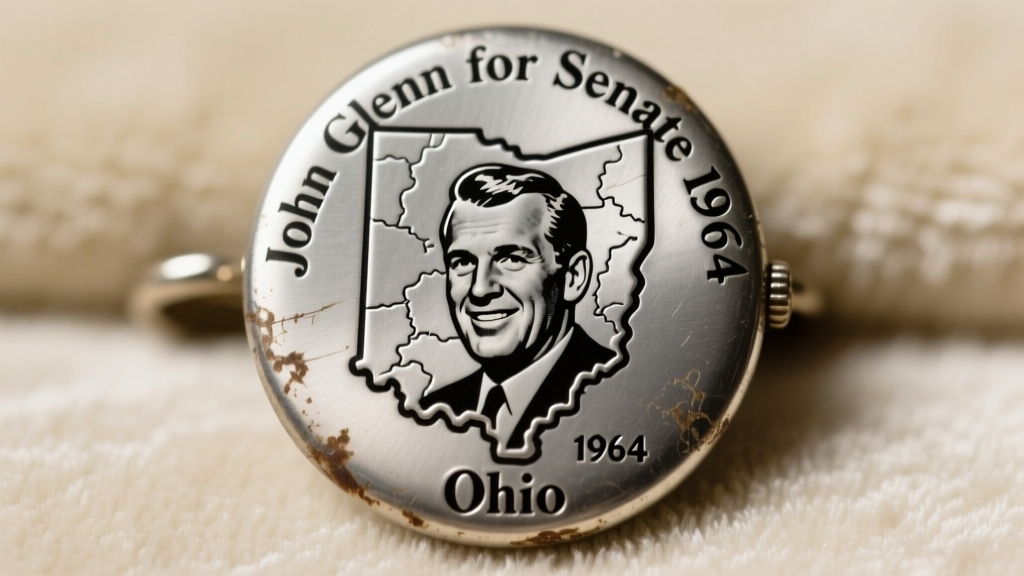
The 1964 John Glenn Ohio Map Button: A Rare Political Artifact from the First U.S. Senatorial Campaign of America’s Astronaut Hero

Toy Merry-Go-Round with Five Swans: A Collector’s Guide to the Chein Windup Mechanical Marvel
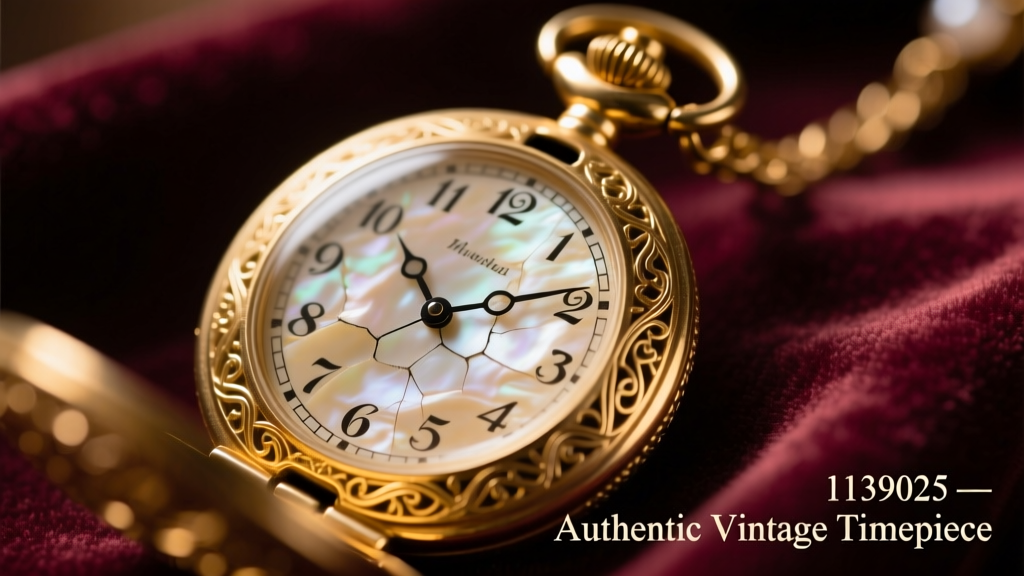
Lot 1139025: A 1954 Rolex Oyster Perpetual Reference 6204 — Provenance, Technical Anatomy, and Market Significance
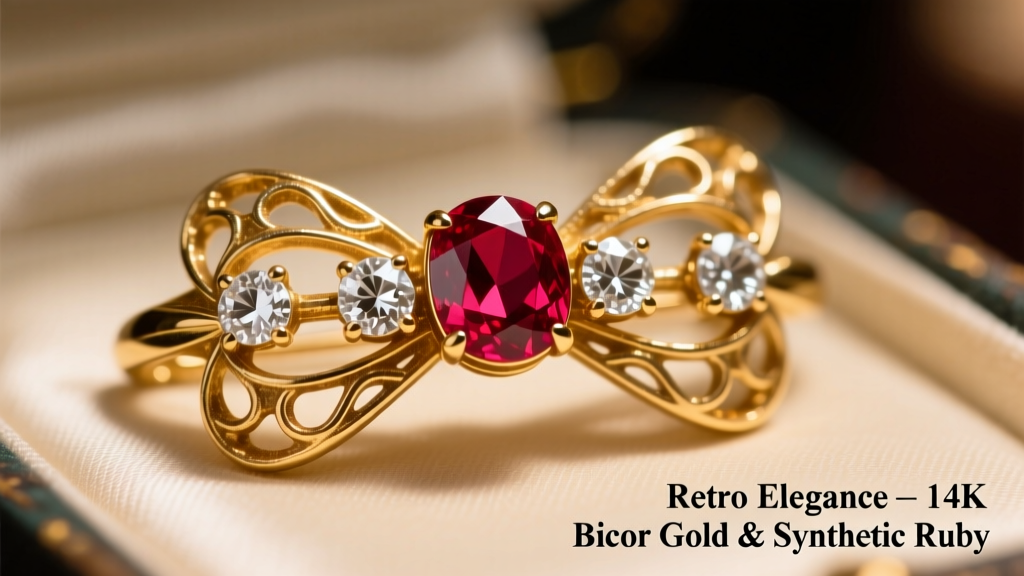
Pin Bow Synthetic Ruby & Two Diamonds in 14K Bicolor Gold: A Retro 2-Inch Masterpiece from the 1940s–1950s

Frankoma Pottery Pitcher 'Wagon Wheel': History, Identification, and Market Value of a Mid-Century American Icon
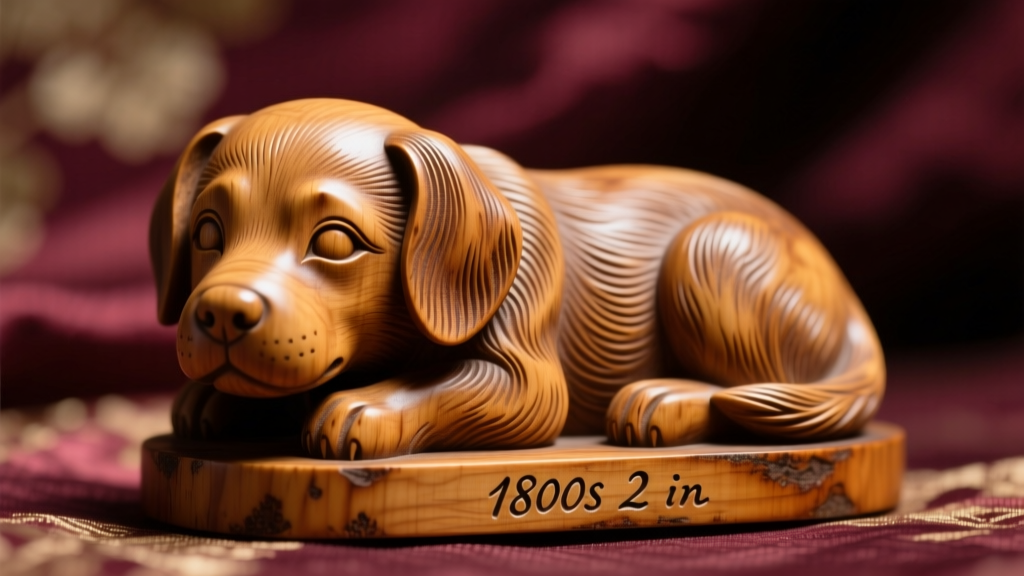
Netsuke Boxwood Puppy At Rest: A Signed 19th-Century Masterpiece in Japanese Miniature Sculpture

Game Quiz Kids Radio Question Bee Card Set in Original Whitman Box: A 1950s Educational Toy Artifact

Tintype Portrait of a Woman Reading with Cloth Over Head: Uncased 2 × 4 Inch American Civil War–Era Photograph

Carlsbad Plate: The 'Beautiful Woman Holding Flower' — A Study in Bohemian Porcelain, Gold Gilding, and Beehive Frame Design (18-Inch)