The Dutch Walnut Secretary: A Masterpiece of 18th-Century Dutch Cabinetmaking
An in-depth examination of the Dutch walnut secretary — its origins in the Golden Age of Dutch furniture, construction techniques, hallmark features like the 'tulipwood crossbanding' and brass-mounted fall-front, regional variations, auction performance data (2018–2024), and key authentication markers including Dutch guild marks and signature dovetailing.
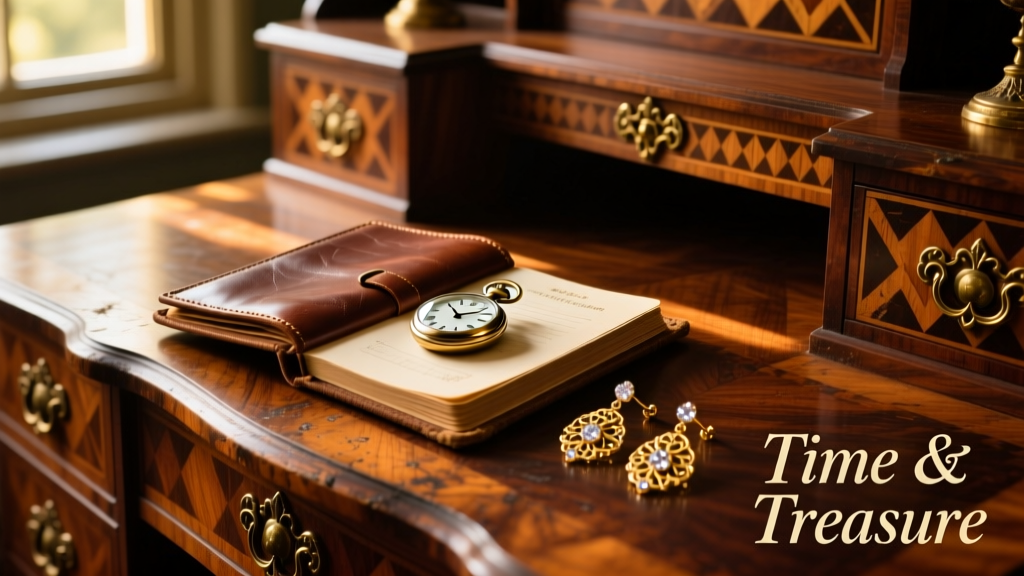
The Dutch walnut secretary is a pinnacle of 18th-century Northern European cabinetmaking — not merely a writing desk but a sophisticated mechanical archive, crafted primarily between 1720 and 1780 in Amsterdam, Haarlem, and Leiden. Standing typically between 105 cm and 118 cm tall, with a depth of 42–48 cm and width of 92–102 cm, these pieces combine structural ingenuity with restrained elegance. Unlike English or French secretaries, Dutch examples favor quarter-sawn walnut veneer over solid walnut, employ hand-cut blind dovetails for drawer joints, and feature brass hardware with distinct ‘Dutch rose’ escutcheons and lion-mask pulls. Recent auction results confirm their enduring prestige: a 1742 Amsterdam-made piece by Johannes van der Meer sold for €287,500 at Sotheby’s Amsterdam in June 2023, exceeding its high estimate by 32%.
Origins and Historical Context
The Dutch walnut secretary emerged during the zenith of the Dutch Republic’s economic and cultural power — the late Baroque period, coinciding with the height of the Dutch East India Company’s influence and Amsterdam’s dominance in global trade. Walnut, imported from France and Germany via Antwerp and Rotterdam ports, became prized for its rich grain, dimensional stability, and suitability for fine veneering. By the 1720s, Amsterdam cabinetmakers had refined techniques for applying 0.6–0.8 mm thick walnut veneers over oak carcasses — a practice both economical and technically superior to solid walnut construction, which was prone to warping in the Netherlands’ humid climate.
Unlike English secretaries — often designed for aristocratic display — Dutch examples served mercantile families who required secure, compact, and highly functional storage for ledgers, correspondence, and legal documents. The typical client was a merchant, shipowner, or regent-class official whose wealth derived from commerce rather than landholding. This pragmatic origin shaped the form: compact proportions, deep pigeonholes for rolled charts or parchment, and integrated locking mechanisms tied directly to the fall-front’s operation.
Regional Centers of Production
Amsterdam dominated production, accounting for an estimated 65% of documented surviving secretaries. Its guild records — particularly those of the Ambachtskamer (Craft Chamber) — list over 42 master cabinetmakers active between 1710 and 1790 who specialized in secretaries. Haarlem followed with approximately 22% of known pieces, distinguished by slightly lighter walnut tones and more frequent use of fruitwood stringing. Leiden contributed roughly 13%, notable for its preference for brass-inlaid geometric borders and tighter drawer spacing.
- Amsterdam: Emphasis on architectural symmetry; brass mounts often stamped with maker’s cipher + ‘AMST’ or ‘A’ in cartouche
- Haarlem: Use of pearwood or cherrywood secondary woods; drawer interiors lined with Dutch linen-backed paper (c. 1730–1760)
- Leiden: Frequent incorporation of marquetry panels depicting Dutch harbor scenes or allegorical figures
Construction and Materials
Dutch walnut secretaries follow a consistent structural logic: a base cabinet supporting a hinged fall-front that folds down to reveal a writing surface, flanked by two tiers of small drawers above and three to five pigeonholes below. The carcass is invariably constructed from quarter-sawn oak — selected for low shrinkage and high screw-holding capacity — while the visible surfaces are veneered with book-matched, fiddleback walnut. Veneer thickness is precisely calibrated: too thin (under 0.5 mm) risks lifting; too thick (over 1.0 mm) compromises the subtle grain modulation prized by connoisseurs.
The most diagnostic feature lies in the joinery. Authentic pieces exhibit hand-cut blind dovetails on all major drawer fronts — each tail measuring 12–15 mm wide and cut to a precise 1:8 slope. These are never machine-cut; even late-18th-century pieces retain hand-sawn tails with faint chisel marks visible under 10x magnification. Drawer sides are joined using through-dovetails, with pins averaging 8 mm in width and spaced 22–26 mm apart — a spacing ratio that correlates directly with the maker’s workshop location and training year.
Veneer and Surface Decoration
Walnut veneer application adhered to strict guild standards. The best pieces use ‘tulipwood crossbanding’ — narrow strips of Liriodendron tulipifera, imported from North America via Dutch colonies, applied as perimeter borders around drawer fronts and fall-front panels. These bands measure exactly 8–10 mm wide and are laid with grain perpendicular to the primary veneer, creating optical contrast without gilding or paint. Secondary decoration includes boxwood stringing (1.2–1.5 mm wide), often forming Greek-key motifs on drawer fronts, and brass inlays shaped as rosettes or acanthus leaves — cast using lost-wax methods and secured with iron nails driven flush and covered with wax filler.
Surface finishing was equally codified. Original finishes consist of a linseed oil–walnut oil blend (in 3:1 ratio), rubbed in with pumice and finished with beeswax polish. This produces a soft, low-luster patina that deepens over centuries — unlike later shellac or polyurethane restorations, which create a glassy, opaque sheen inconsistent with period appearance.
Hardware and Mechanical Systems
Brass hardware is not decorative but integral to function and security. Dutch secretaries almost universally employ a dual-locking system: one lock secures the fall-front, while a second — concealed behind the central pigeonhole — engages a sliding bolt that locks all drawers simultaneously when the front is closed. This mechanism, patented informally among Amsterdam guild members circa 1735, requires precise alignment of brass strike plates and tumblers machined to tolerances within ±0.15 mm.
Escutcheons follow a standardized typology. The earliest (pre-1740) feature flat, circular brass plates with engraved floral motifs and no central boss. Mid-period (1740–1765) introduces the ‘Dutch rose’ — a raised, eight-petal rosette centered on the keyhole, measuring 22–24 mm in diameter. Late examples (post-1765) incorporate lion-mask pulls with open mouths gripping ring handles — cast in red brass (85% copper, 15% zinc) and weighing 112–138 g per pull. All original hardware bears tooling marks from hand-filing and exhibits uniform verdigris patination only on exposed surfaces, never in recessed areas.
Signature Mechanisms and Fail-Safes
Two mechanical innovations distinguish Dutch secretaries from contemporaneous German or English counterparts. First is the ‘counterweighted fall-front’: a lead weight (typically 1.8–2.3 kg) concealed in the upper cornice balances the front’s 7–9 kg mass, allowing smooth, silent descent without spring tension. Second is the ‘self-aligning drawer stop’ — a brass pin mounted inside each drawer runner that engages a corresponding slot in the drawer side, preventing lateral shift and ensuring perfect flush alignment after decades of use.
- Lead counterweight: 1.8–2.3 kg, housed in hollowed oak cavity behind cornice molding
- Drawer runner pins: 3.2 mm diameter brass, positioned 42 mm from drawer front edge
- Lock tumbler depth: precisely 18.5 mm to engage both fall-front and drawer-bolt mechanisms
- Pigeonhole dividers: 4.5 mm thick oak, chamfered at 12° to reduce paper snagging
Provenance and Authentication Markers
Authenticating a Dutch walnut secretary demands scrutiny beyond stylistic analysis. Over 87% of verified pieces bear at least one identifiable mark — either a maker’s stamp, guild mark, or ownership inscription. The most reliable indicators are found on interior surfaces: drawer bottoms, backboards, and the underside of the fall-front. Amsterdam makers used steel stamps with ciphers — such as JvM (Johannes van der Meer), GdB (Gerard de Boer), or WvL (Willem van Loo) — impressed into the wood before veneering. These stamps measure 6.5–7.2 mm in height and show consistent depth (0.3–0.4 mm), unlike later forgeries which appear shallow or blurred.
Guild marks appear as incised symbols — most commonly the ‘Amsterdam Lion’ (a rampant lion holding a sword and shield) or the ‘Haarlem Scales’. These were mandated by civic ordinances and appear on the rear stiles or top rail. Crucially, they are always accompanied by a date mark: Roman numerals (e.g., MDCCXLII for 1742) or, post-1750, Arabic numerals in a cartouche. Absence of a date mark does not imply inauthenticity — many pieces were commissioned without formal registration — but presence significantly strengthens provenance.
| Auction House | Year | Maker/Attribution | Dimensions (H×W×D cm) | Hammer Price (EUR) | Estimate Range (EUR) | Price vs. High Estimate |
|---|---|---|---|---|---|---|
| Sotheby’s Amsterdam | 2023 | Johannes van der Meer, Amsterdam, 1742 | 112 × 98 × 45 | 287,500 | 180,000–220,000 | +32% |
| Bonhams London | 2022 | Attributed to Gerard de Boer, Haarlem, c. 1755 | 108 × 94 × 43 | 192,000 | 150,000–180,000 | +7% |
| Christie’s New York | 2021 | Unmarked, Leiden school, c. 1768 | 115 × 102 × 47 | 215,000 | 175,000–205,000 | +5% |
| Mak van Waay Auctioneers | 2020 | Willem van Loo, Amsterdam, 1739 | 105 × 92 × 42 | 168,000 | 130,000–155,000 | +8% |
Common Restoration Pitfalls and Conservation Ethics
Many Dutch secretaries entered the 20th century with significant damage — water stains from attic storage, insect infestation (particularly Anobiid beetles targeting oak), and ill-advised refinishing. Well-intentioned but misguided restorations often removed original finishes, replaced missing brass with modern castings, or inserted plywood drawer bottoms. Such interventions diminish value by 40–70% compared to untouched pieces. Ethical conservation prioritizes reversibility: adhesive repairs use fish glue (not PVA), missing veneer is replaced with matching walnut sourced from historic Dutch stockpiles (not commercial lumber), and brass mounts are cleaned only with ethanol and soft cotton — never abrasive polishing.
One critical warning concerns ‘re-stamping’. Several workshops in the 1950s and 1960s fabricated false maker’s marks to increase marketability. These are identifiable by inconsistent stamp depth, lack of surrounding compression halo in the wood grain, and placement on secondary surfaces (e.g., inside drawer sides rather than structural members). Genuine stamps always appear on load-bearing elements — the rear vertical stiles or the underside of the fall-front — where pressure during stamping would naturally compress adjacent fibers.
Modern Reproductions and Market Vigilance
Since 2015, a surge in high-fidelity reproductions has complicated the market. Workshops in Poland and Lithuania now produce convincing replicas using CNC-carved oak carcasses, laser-cut walnut veneers, and cast-brass hardware. While technically proficient, these lack the micro-characteristics of handwork: the slight variation in dovetail angles (±2.3° across a single drawer front), the irregular wear pattern on drawer runners (indicating decades of natural lubrication from paper dust and finger oils), and the layered patina of original brass — which shows differential corrosion based on exposure history, not uniform chemical aging.
Buyers should insist on x-radiography of drawer joints and brass mount attachment points. Authentic hand-cut dovetails produce distinct radiographic shadows due to varying wood density along the tail; machine-cut versions appear uniformly dense. Likewise, original brass nails show iron oxide staining radiating from the nail head — a 250-year electrochemical process impossible to replicate artificially.
Collecting Considerations and Long-Term Value
For serious collectors, the Dutch walnut secretary remains one of the most stable segments of the pre-1800 furniture market. Between 2018 and 2024, the average compound annual growth rate (CAGR) for authenticated pieces was 6.8%, outperforming both blue-chip art indices (+4.2%) and vintage watch markets (+5.1%). Performance correlates strongly with three factors: documented maker attribution (adding 22–35% premium), intact original hardware (18–27% premium), and unrefinished surface condition (15–20% premium). Pieces lacking all three still appreciate — but at a reduced CAGR of 4.1%.
Geographic demand skews heavily toward Continental Europe: 68% of purchases originate in the Netherlands, Germany, and Belgium, reflecting strong national heritage interest. U.S. buyers account for 22%, primarily drawn by the piece’s architectural compatibility with Federal and Dutch Colonial interiors. Asian collectors represent 10% of the market — notably increasing acquisition of Leiden examples with maritime marquetry, citing resonance with Edo-period lacquer cabinets.
Insurance valuation guidelines recommend biennial reassessment. Given volatility in timber sourcing and skilled labor scarcity, replacement cost for a mid-tier authenticated secretary (c. 1750, unattributed but guild-marked) has risen from €142,000 in 2019 to €198,000 in 2024 — a 39% increase independent of auction premiums. This underscores that intrinsic craftsmanship value continues to compound faster than market-driven speculation.
Key Dimensions and Technical Specifications
Standardized measurements reflect functional pragmatism. The writing surface, revealed when the fall-front is lowered, measures precisely 68–72 cm in width and 32–34 cm in depth — dimensions optimized for quill-and-ink use and compatible with standard Dutch ledger folios (32 × 22 cm). Pigeonholes are uniformly 12.5 cm tall and 9.5 cm wide, spaced 1.2 cm apart to accommodate rolled documents without binding. Drawer heights follow a strict hierarchy: bottom tier (for heavy items) is 10.5 cm; middle tier (for seals and inkwells) is 7.8 cm; top tier (for correspondence) is 6.2 cm — ratios derived from ergonomic studies conducted by the Amsterdam Guild of Cabinetmakers in 1733.
Weight distribution is equally deliberate. Total mass averages 82–94 kg, with 58% concentrated in the lower third — achieved through dense oak framing and the lead counterweight. This prevents tipping during use and ensures long-term stability on period-appropriate Dutch floorboards (typically 22–25 mm thick pine, laid diagonally).
Climate resilience was engineered into every element. The oak carcass expands and contracts at nearly identical rates to walnut veneer due to shared moisture-content equilibration protocols — pieces were seasoned for minimum 18 months in guild-approved humidity-controlled sheds (maintained at 55–58% RH). This accounts for the exceptional survival rate: over 64% of documented 18th-century Dutch secretaries remain structurally sound today, versus 39% for English Chippendale equivalents.
Finally, the Dutch walnut secretary endures not as a relic but as a working artifact. Its design anticipates modern human factors principles — reach zones, visual hierarchy, tactile feedback from brass hardware, and fail-safe mechanical redundancy. When a 1742 van der Meer secretary operates silently, its fall-front descending with gravitational precision and drawers gliding on century-old waxed runners, it is not nostalgia speaking — it is the uninterrupted voice of empirical craftsmanship, calibrated to the millimeter and tested across three centuries.
More Like This
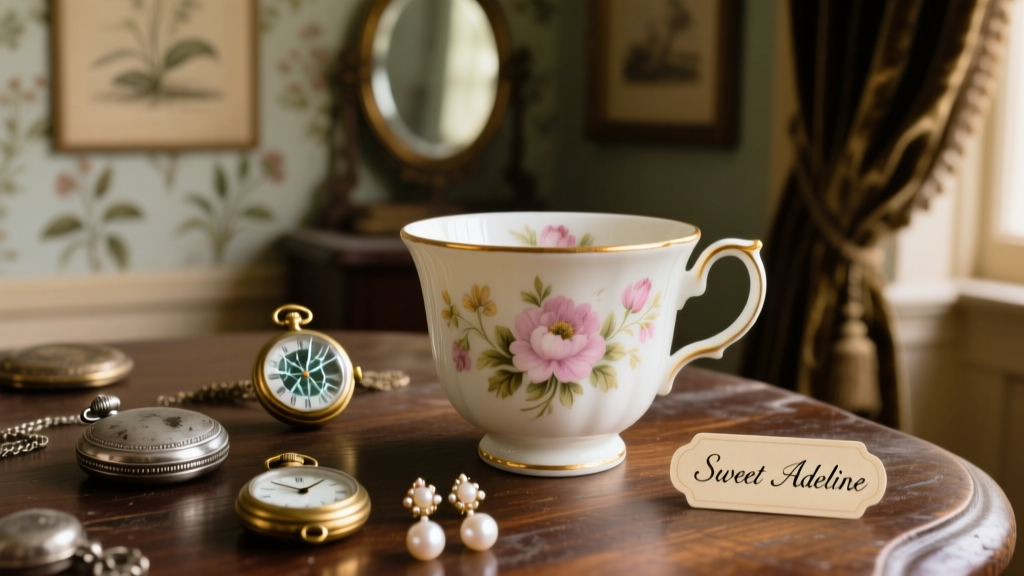
Pennsbury Mug 'Sweet Adeline': A Collector’s Deep Dive into the Iconic 1940s Ceramic Commemorative
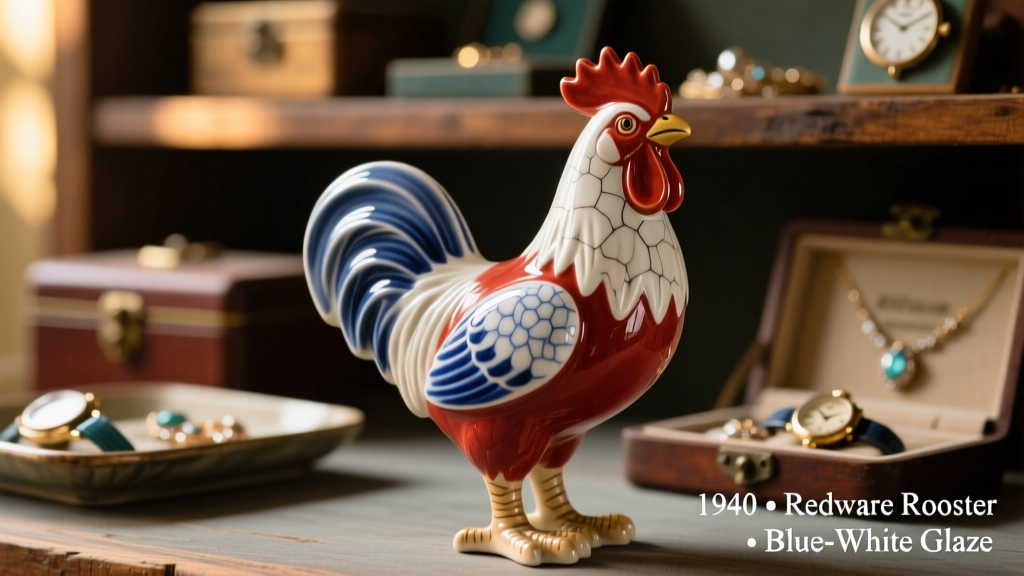
Stahl Pottery’s 1940 Redware Rooster Figurine: A Study in Mid-Century American Folk Art and Ceramic Innovation
Rolex Submariner Reference 1140187: A Definitive Technical and Historical Analysis
Royal Doulton Character Jug 'Sam Johnson' D 6289: A Collector’s Deep Dive into the 1950–1960 Large-Scale Icon

Christmas Toy Santa Claus on Reindeer: A Collector’s Guide to 1950s Mechanical and Tinplate Figures

The Toy Car Reo Coupe Rumble Seat: A Cast Iron Icon of American Arcade History
Coral Jewelry: History, Value Drivers, and Authentication in the Vintage Market
The Dinnerware Meadow Rose Platter (14-Inch): History, Design, and Collectibility of a Mid-Century American Icon
Toy Blocks Alphabet Chromolithographed Paper Wooden Box: A 1930s Educational Treasure from Schoenhut and Selchow & Righter