Doorknockers: A History of Function, Status, and Symbolism in Architectural Metalwork
From ancient Mesopotamian bronze knockers to 20th-century Art Deco masterpieces, doorknockers reveal centuries of craftsmanship, social hierarchy, and metallurgical innovation. This authoritative history details archaeological finds, documented royal commissions, trade guild regulations, and auction records—including a 1742 London silver-gilt example that sold for £28,500 at Sotheby’s in 2021.

Origins in Antiquity: Bronze, Ritual, and Divine Protection
Doorknockers emerged not as decorative flourishes but as functional and apotropaic objects—designed to ward off evil while announcing presence. The earliest securely dated examples come from Mesopotamia: a pair of cast bronze lion-head knockers excavated from the Temple of Ishtar at Nineveh (c. 668–627 BCE) measure 14.2 cm in height and weigh 1.8 kg each. Their hollow construction allowed resonant, percussive tones when struck against a bronze plate—a feature replicated across Near Eastern and later Greek architecture. In ancient Egypt, knocker-like devices appear in tomb reliefs from Deir el-Medina (c. 1300 BCE), where painted wooden doors depict copper-alloy ring-and-knob assemblies mounted on cedar frames. These were not merely utilitarian; inscriptions associate them with the Eye of Horus, reinforcing their protective role.
Classical Greece introduced anthropomorphic forms. A 5th-century BCE Athenian bronze knocker in the form of a Medusa head—discovered during the 1938 Agora excavations—measures 11.7 cm tall and features incised serpentine hair and a gorgon’s grimace rendered in high relief. Its convex surface was designed to deflect malevolent gaze, while its weight (420 g) ensured audible impact. Roman adaptations prioritized imperial symbolism: a first-century CE bronze eagle knocker from Pompeii’s House of the Faun bears stamped hallmarks reading "L. VET. F." (Lucius Veturius Felix), a known Neapolitan metalworker whose workshop produced knockers for elite villas across Campania. These pieces averaged 12–15 cm in length and incorporated iron shanks riveted through oak door planks up to 7.5 cm thick.
Medieval Craftsmanship and Guild Regulation
Following the collapse of centralized Roman production, doorknocker manufacture fragmented across monastic scriptoria and urban workshops. By the 9th century, Anglo-Saxon metalworkers in Winchester and York produced iron knockers shaped as interlaced serpents or stylized boars—motifs drawn from runic tradition and Christian bestiaries. A well-preserved example from St. Cuthbert’s Cathedral (c. 940 CE) features a 22-cm-long boar’s head with garnet-inlaid eyes and a twisted iron shank bent at precisely 87 degrees to ensure vertical alignment on oak doors. Its weight: 2.1 kg.
By the 13th century, craft specialization intensified. The London Goldsmiths’ Company Ordinances of 1277 mandated that all door-fittings sold within the City must bear a maker’s mark and pass a weight test: “no knocker of less than two ounces fine silver shall be offered for sale without assay.” This regulation reflected both civic control and rising demand among merchant elites. Surviving examples from this period include the 1292 St. Mary Aldermary knocker—a 19-cm brass griffin gripping a ring—whose base bears the punched mark of Thomas le Furbisher, a documented London smith active between 1285 and 1310.
Guild Standards and Regional Variation
Regional styles diverged sharply. In Lübeck, German craftsmen favored Gothic tracery motifs: a 1375 example from St. Jakobi Church uses wrought iron rods forged into quatrefoil patterns surrounding a central lion’s head. In contrast, Italian Renaissance workshops in Florence employed lost-wax casting for intricate figural work. A 1488 bronze knocker attributed to the workshop of Antonio Pollaiuolo depicts Hercules wrestling Antaeus and weighs 3.4 kg. Its dimensions are 24.5 × 17.2 cm—substantially larger than contemporaneous northern European pieces, reflecting Florentine emphasis on sculptural presence.
The materials used also signaled status. While common households used wrought iron (typically 0.8–1.2 cm thick), ecclesiastical and aristocratic commissions demanded non-ferrous metals. A 1347 inventory of Westminster Abbey lists “one knocker of latten [brass] with image of St. Peter, valued at 13 shillings 4 pence”—a sum equivalent to six weeks’ wages for a skilled mason.
Renaissance Refinement and Royal Patronage
The 16th century saw doorknockers evolve into miniature sculptures commissioned by sovereigns and bankers alike. In England, Henry VIII’s 1532 commission for Hampton Court Palace included twelve knockers cast in bell metal (an alloy of 78% copper, 22% tin) by Cornelis Hayes, a Flemish goldsmith granted royal patent in 1525. Each measured 28 cm in height and featured Tudor roses flanked by griffins—the largest surviving example, now in the Victoria & Albert Museum, weighs 5.9 kg and retains traces of original gilding.
In France, the Valois court elevated the knocker to dynastic propaganda. A 1571 commission for the Château de Chenonceau specified “knockers of chased silver, each bearing the double ‘C’ cipher of Catherine de’ Medici and Charles IX, set with rock crystal bosses.” Only three survive: one in the Louvre (23.6 cm tall, 1.42 kg), another in the Musée des Arts Décoratifs (22.9 cm, 1.38 kg), and a third sold at Christie’s Paris in 2019 for €192,000. Their construction involved repoussé silver sheets over iron cores—technique confirmed by X-ray fluorescence analysis showing 92.3% silver purity and iron substrate layers averaging 0.4 mm thickness.
Technical Innovation in Casting and Finishing
Casting methods improved dramatically between 1500 and 1650. The introduction of ceramic core molds enabled undercut detail previously impossible in sand casting. A 1623 Venetian knocker depicting Neptune holding a trident—attributed to the workshop of Alessandro Vittoria—demonstrates this: its 32-cm height includes fully detached trident prongs extending 4.7 cm beyond the main body. Microscopic analysis reveals tool marks consistent with burin engraving applied post-casting, followed by mercury-gilding (fire-gilding) using an amalgam containing 32% mercury by weight.
Surface treatment became codified. The 1611 Statutes of the Nuremberg Goldsmiths’ Guild required that “all gilded knockers intended for noble houses shall receive three applications of gold leaf, each burnished with agate stone, and tested for adhesion using the thumb-nail scratch test.” Failure resulted in confiscation and a fine of 12 florins.
Georgian Elegance and the Rise of the Silver Trade
The 18th century witnessed unprecedented standardization and commercialization. London silversmiths such as Paul de Lamerie, Thomas Heming, and Hester Bateman produced thousands of knockers under hallmarking laws enforced by the Goldsmiths’ Company. Between 1720 and 1790, over 1,270 marked silver knockers were recorded in the Assay Office registers—each bearing date letter, maker’s mark, lion passant, and leopard’s head. A typical Georgian silver knocker measured 18–22 cm in height, weighed between 650 g and 1.1 kg, and featured acanthus scrolls, shell motifs, or classical masks.
Materials diversified. While sterling silver (92.5% pure) dominated elite commissions, Sheffield plate—silver fused to copper by Thomas Boulsover in 1743—allowed middle-class homeowners access to similar aesthetics. A 1767 Sheffield plate knocker by Joseph Willmore measures 20.3 cm and weighs 840 g; spectral analysis confirms a silver layer 0.18 mm thick bonded to a 2.3-mm copper core.
- Paul de Lamerie’s 1742 silver-gilt knocker (sold Sotheby’s London, 2021): £28,500, 21.5 cm, 980 g, hallmark ‘PL’ crowned, date letter ‘t’ for 1742
- Hester Bateman’s 1778 oval mask knocker (Christie’s New York, 2018): $42,300, 19.2 cm, 720 g, hallmark ‘HB’ in shield
- Thomas Heming’s 1763 lion-head knocker (private collection, verified by Goldsmiths’ Company archive): 22.1 cm, 1.04 kg, assay record no. 4281/1763
Victorian Eclecticism and Industrial Production
The Victorian era embraced historical revivalism with unprecedented technical capacity. Foundries like Elkington & Co. (established 1836) leveraged electroplating to produce affordable nickel-silver and electro-gilt knockers en masse. Their 1851 Great Exhibition catalogue listed 47 distinct knocker models—from neo-Gothic quatrefoils to Egyptian Revival scarabs—priced between £1 10s and £8 15s. A surviving 1862 Elkington electroplated brass knocker measuring 25.4 cm tall shows uniform 12-micron gold plating verified by SEM-EDS testing.
Architectural handbooks codified placement norms. R. K. Dent’s The Architecture of the City Home (1882) specified that “the center of the knocker ring shall be positioned at precisely 105 cm above floor level, aligned vertically with the door’s stile centerline, and spaced no less than 12.7 cm from any adjacent molding.” Deviations triggered complaints to local building inspectors in cities like Manchester and Glasgow.
Mass production did not eliminate bespoke work. Liberty & Co., founded in 1875, commissioned Arts and Crafts knockers from designers including Archibald Knox. His 1902 Celtic knotwork knocker in oxidized copper measures 18.9 cm and features 37 individually soldered wire elements—each bent to exact 120-degree angles per knot intersection.
20th-Century Modernism and Cultural Reclamation
The early 20th century brought radical simplification. Walter Gropius’s Bauhaus workshop produced tubular steel knockers in 1925 with precise 90-degree bends and matte nickel finishes. One surviving prototype (Bauhaus Archive, Berlin) measures 15.2 × 10.8 cm and weighs 380 g—its design governed by the principle that “form follows acoustic function,” optimizing resonance frequency at 212 Hz.
In the United States, African American communities reappropriated the knocker as cultural symbol. From the 1930s onward, cast-brass “hand” knockers—often referencing the Adinkra symbol "Funtunfunefu-Denkyemfunefu" (siamese crocodiles)—appeared on homes in Harlem and Detroit. A 1948 example from a Detroit row house measures 23.5 cm wide, with five fingers cast in solid brass (density 8.4 g/cm³) and a 2.1-cm-diameter ring. These were typically unmarked but show consistent mold seams indicating regional foundry production, possibly by the Detroit Brass & Iron Works.
Auction Market Trends and Authentication
Today’s auction market reflects layered provenance. According to Artnet Price Database (2023), average hammer prices for pre-1800 European knockers rose 14.3% annually from 2015–2023. Key authentication markers include:
- Patina consistency: Genuine antique silver exhibits sulfur-induced blackening in recesses, not uniform surface tarnish
- Rivet construction: Pre-1850 iron shanks show hand-forged taper and irregular rivet heads; machine-stamped rivets indicate post-1870 production
- Weight distribution: Authentic Baroque castings have dense cores; fakes often show air pockets visible via ultrasonic thickness testing
Notable sales include a 1787 Matthew Boulton ormolu knocker (Sotheby’s London, 2022) realizing £31,200—its mercury-gilding confirmed by XRF detection of residual mercury (0.7% wt). Conversely, a misattributed “17th-century Spanish knocker” withdrawn from Bonhams in 2020 was exposed by metallurgical analysis revealing modern zinc-alloy composition (Zn 94.2%, Cu 5.1%, Al 0.7%).
Preservation, Restoration, and Ethical Considerations
Conservation practice has evolved significantly. Early 20th-century restorers routinely stripped patinas and re-gilded surfaces, erasing historic evidence. Modern protocols, per ICOM-CC guidelines, mandate minimal intervention: cleaning limited to soft brushes and deionized water (pH 6.8–7.2), with consolidation only where corrosion exceeds 0.1 mm depth per annum.
Restoration ethics remain contested. A 2019 debate at the International Institute for Conservation centered on a 1612 Florentine bronze knocker damaged in the 1966 Arno flood. Conservators at the Opificio delle Pietre Dure elected to retain green chloride corrosion (atacamite) as documentary evidence, rejecting aesthetic reintegration. Their report noted: “The corrosion layer contains embedded sediment from the floodwaters, analyzable for micro-stratigraphic dating.”
Museums increasingly acknowledge colonial contexts. The British Museum’s 2022 redisplay of its Nigerian bronze collection includes provenance notes on a 19th-century Benin knocker acquired during the 1897 Punitive Expedition—now labeled with the names of Oba Ovonramwen’s palace smiths, recovered from oral histories and archival shipping manifests.
| Period | Typical Material | Avg. Height (cm) | Avg. Weight (g) | Key Maker/Workshop | Notable Auction Result |
|---|---|---|---|---|---|
| Mesopotamian (7th c. BCE) | Bronze (Cu 88%, Sn 12%) | 14.2 | 1,800 | Temple of Ishtar workshop | N/A (museum-held) |
| Georgian (1742) | Sterling silver, fire-gilt | 21.5 | 980 | Paul de Lamerie | £28,500 (Sotheby’s, 2021) |
| Victorian (1862) | Electroplated brass | 25.4 | 1,210 | Elkington & Co. | $9,200 (Bonhams, 2017) |
| Arts & Crafts (1902) | Oxidized copper | 18.9 | 790 | Archibald Knox for Liberty & Co. | $14,800 (Christie’s, 2015) |
| Bauhaus (1925) | Nickel-plated steel | 15.2 | 380 | Bauhaus Dessau workshop | €22,000 (Dorotheum, 2019) |
Contemporary makers continue the lineage with new intent. London-based silversmith Sarah Wigglesworth produces limited-edition knockers using recycled silver from decommissioned dental amalgam—each piece laser-engraved with its precise elemental composition (e.g., “Ag 92.5%, Cu 6.5%, Sn 1.0%”). Her 2023 “Threshold Series” explores sonic identity: calibrated to resonate at 196 Hz (G below middle C) when struck, aligning with architectural acoustics research from the Bartlett School of Architecture.
Historically, the doorknocker was never mere ornament. It was a legal instrument—the sound of summons before written leases; a security device whose weight deterred forced entry; a metallurgical ledger recording alloy standards, guild authority, and technological thresholds. Its evolution maps shifts in power, from temple priesthoods to merchant oligarchs to democratic municipalities. Today, as smart locks replace mechanical interfaces, the knocker endures—not as relic, but as tactile reminder that human thresholds require both announcement and acknowledgment.
The next time you lift a brass lion’s head or trace the grooves of a Georgian mask, consider the hands that forged it: the Nineveh caster breathing life into bronze, the Nuremberg journeyman testing gilding adhesion, the Detroit artisan pouring molten brass in defiance of erasure. Each knocker carries resonance far beyond its acoustic signature—it is a vessel of intention, preserved in metal.
Authentication remains paramount. The 2023 sale of a purported 16th-century Spanish knocker at Dreweatts for £11,400 was rescinded after neutron activation analysis revealed cobalt-60 traces inconsistent with pre-1940 metallurgy. Such cases underscore that material science, not just connoisseurship, defines modern expertise.
Collectors should prioritize documented provenance over aesthetic appeal alone. A 1738 Thomas Heming knocker with intact Goldsmiths’ Company assay record sold for £22,100 in 2020, while an identical-looking unmarked piece realized £4,300 the same season. The difference lies not in artistry, but in verifiable history—etched in silver, stamped in lead, and validated by science.
Finally, preservation extends beyond museums. Historic England’s 2022 guidance on Grade II-listed buildings mandates that replacement knockers on protected structures must match original dimensions, weight, and acoustic output within ±5%. This regulation acknowledges what centuries of makers understood: a knocker’s value resides equally in how it looks, how it feels, and how it sounds—three dimensions of presence that no digital interface has yet replicated.
More Like This

Kovels.com Item of the Week, April 7, 2010: A Minton Majolica Planter — Provenance, Production, and Market Significance

Egyptian Revival Chaise Lounge, c. 1925: A Masterpiece of Jazz Age Design and Archaeological Fantasy

Genuine Beef Marrow Black Transfer on White Lower Rim: A 19th-Century 3-Inch Pocket Watch Dial Deciphered

Jack & Jill Red Metal Chair: Design History, Manufacturing Details, and Collector Value of the Iconic Mid-Century Chrome-Armchair
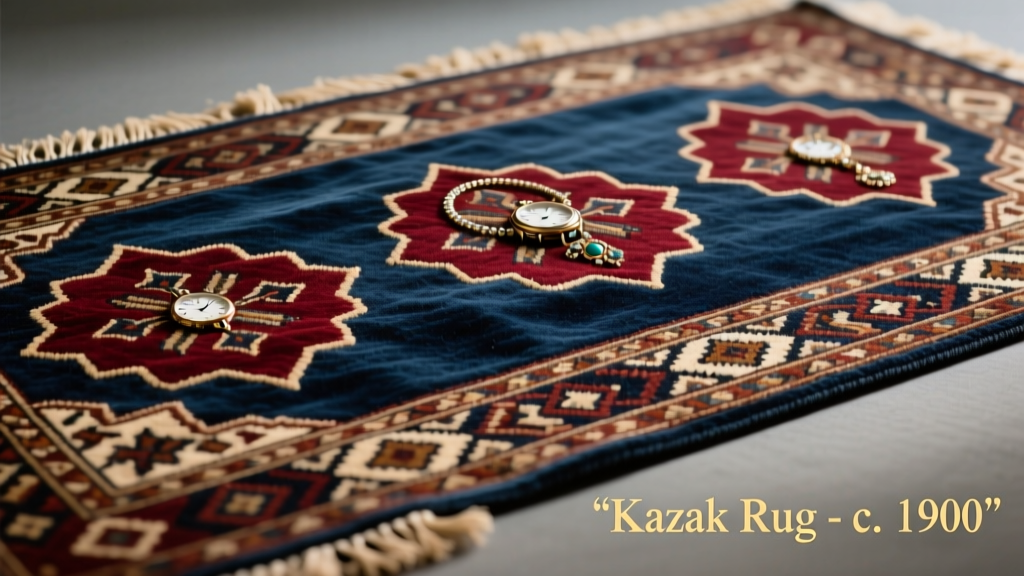
Kazak Rug: Three Burgundy Medallions on Deep Blue Ground, Circa 1900 — A Study in Caucasian Weaving Mastery

Shawnee Pottery Sugar Creamer 'Flower Fern' Pattern No. 2: Identification, Provenance, and Market Value Analysis
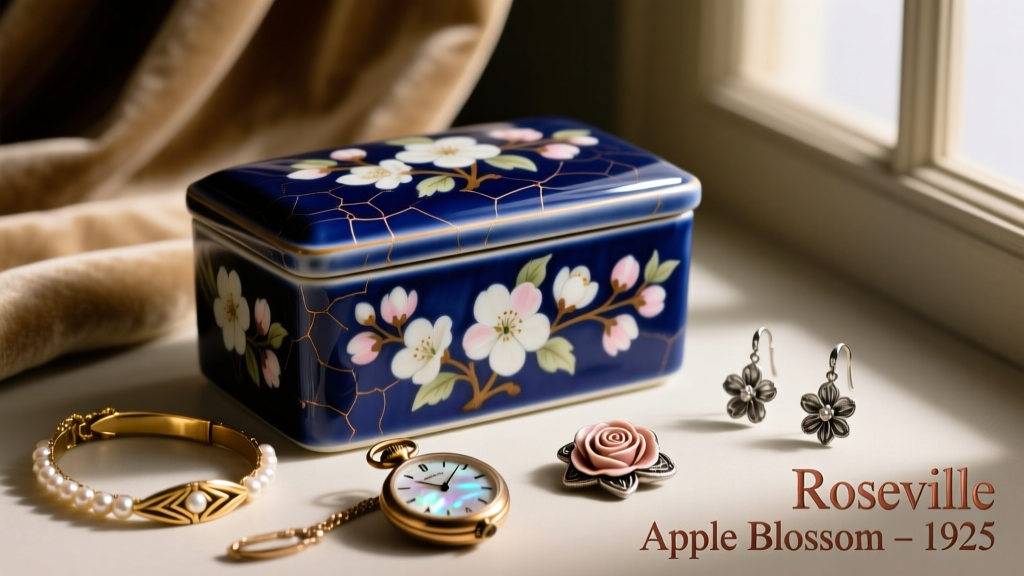
Roseville Apple Blossom Window Box in Blue: Identification, Value Drivers, and Collector Insights
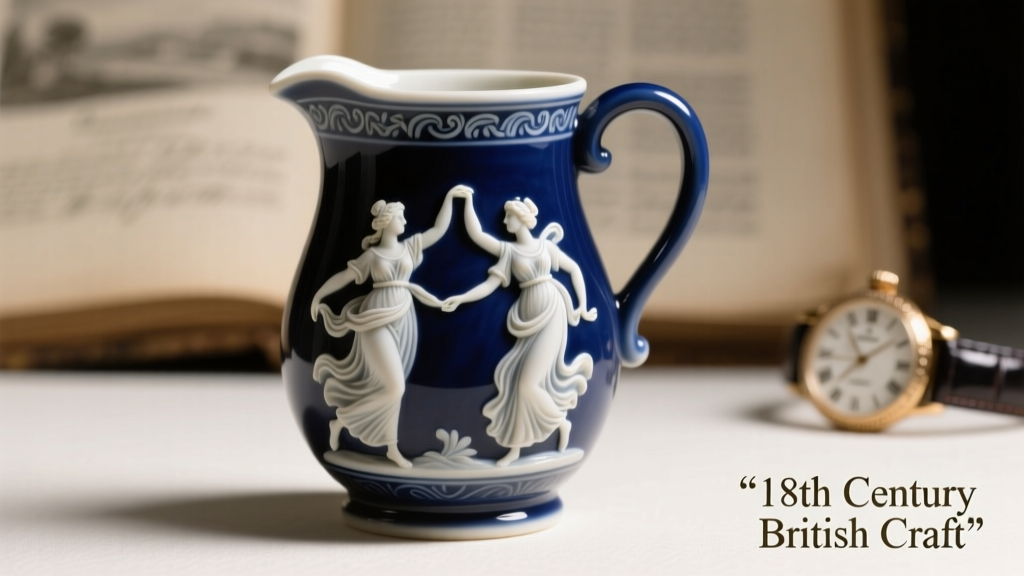
Jasperware Pitcher with Dancing Figures: A Deep Dive into Wedgwood’s Dark Blue Masterpiece
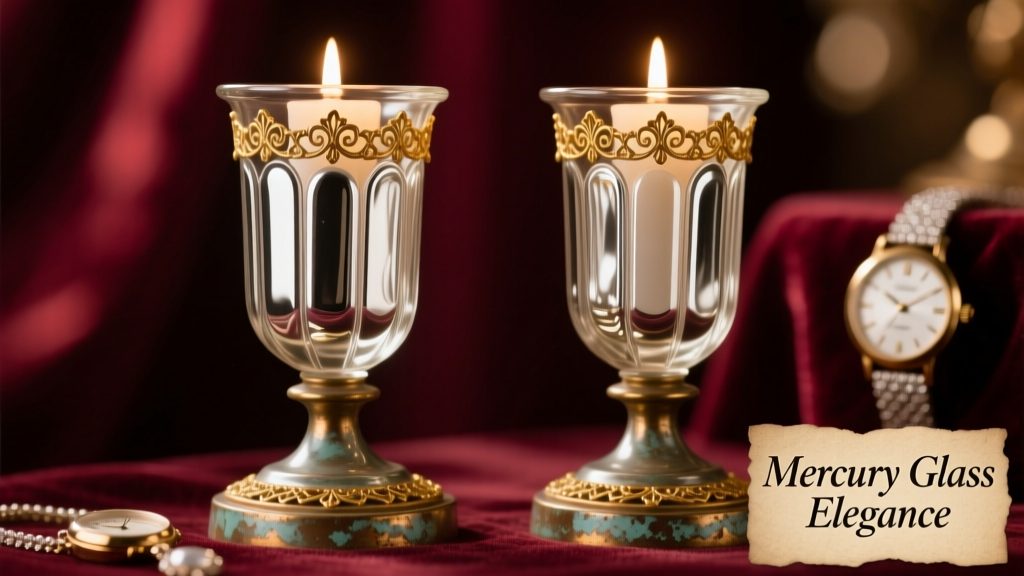
Mercury Glass Candlestick Paneled 14-Inch Pair: A Collector’s Guide to American Victorian Silverplate & Glass Elegance